
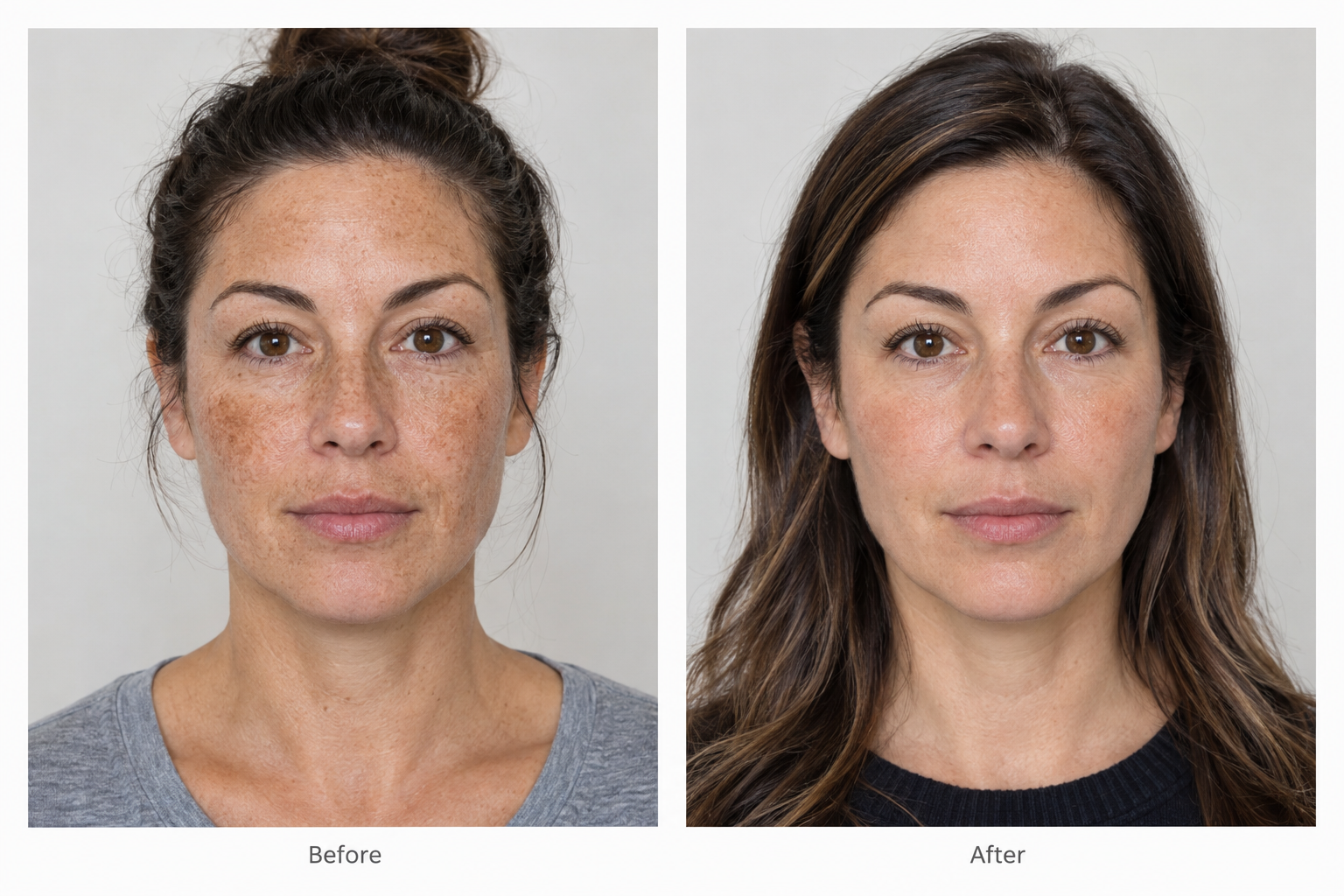

Chemical peel before and after photos are everywhere online, but understanding what those images actually represent — which peel was used, how long healing took, and whether the result is typical — is far less straightforward. This guide explains what real chemical peel results look like across different peel depths and skin concerns, what the recovery timeline involves day by day, and how to set realistic expectations before booking a consultation.
Key Takeaways
- Chemical peels range from superficial to deep, and the depth largely determines both the results achievable and the downtime required.
- Visible improvement in skin texture, uneven skin tone, sun damage, and acne scars is possible, but results depend on peel type, skin type, and aftercare.
- The peeling phase typically begins two to three days after treatment and can last up to a week; final results often take four to eight weeks to fully appear.
- Darker skin tones require careful peel selection to reduce the risk of post-inflammatory hyperpigmentation (PIH), and pre-treatment priming is often recommended.
- A single peel may produce noticeable improvement, but a treatment series often delivers more consistent, cumulative results for concerns like acne scars or persistent pigmentation.
How Chemical Peels Work
A chemical peel applies an acid solution to the skin surface to create controlled exfoliation of the outer skin layers. The depth of that exfoliation — whether it reaches only the epidermis or extends into the dermis — determines what the treatment can realistically address. Superficial peels remove dead cells from the outermost epidermal layer, prompting faster cell turnover and a refreshed appearance. Medium-depth peels penetrate into the upper dermis, triggering a more significant wound-healing response that stimulates collagen production and remodels existing tissue. Deep peels reach the mid-dermis and produce the most dramatic skin resurfacing, but they also carry the longest recovery and the greatest risk profile.
The acids used vary by peel depth. Glycolic acid, salicylic acid, lactic acid, and mandelic acid are common in superficial peels. Alpha hydroxy acids (AHAs) such as glycolic and lactic acid work primarily on the epidermis, while beta hydroxy acids (BHAs) like salicylic acid are oil-soluble and penetrate pores, making them particularly useful for acne-prone skin. Trichloroacetic acid (TCA) is the workhorse of medium-depth peels, used at concentrations typically between 15% and 35%. Jessner's solution — a combination of salicylic acid, lactic acid, and resorcinol — is often layered with TCA to enhance penetration. Phenol-based formulas are reserved for deep peels and require careful patient selection and medical supervision.
Types of Chemical Peels and What They Can Achieve
| Peel Depth | Common Acids | Best For | Downtime | Results Duration |
|---|---|---|---|---|
| Superficial (light) | Glycolic, salicylic, lactic, mandelic | Dull skin, mild texture, clogged pores, mild pigmentation | 1–3 days mild redness/flaking | 2–4 weeks per session; cumulative with series |
| Medium-depth | TCA 15–35%, Jessner's solution, VI Peel | Sun damage, moderate pigmentation, acne scars, fine lines | 5–10 days peeling and redness | Several months; longer with maintenance |
| Deep | Phenol, phenol-croton oil | Deep wrinkles, significant sun damage, severe scarring | 2–3 weeks or more | Years, though skin continues to age |
Named peel formulas such as the VI Peel, Perfect Derma Peel, and ZO Stimulator Peel are proprietary blends that typically fall in the superficial-to-medium range. They combine multiple acids and often include antioxidants or brightening agents such as kojic acid or vitamin C. These formulas are designed to be tolerable with manageable downtime while still delivering meaningful improvement in pigmentation and texture. Results from these branded peels are broadly comparable to other medium-light peels of similar depth, though the specific blend may influence tolerability and the pattern of peeling.
Chemical Peel Before and After: Results by Skin Concern
Sun Damage and Age Spots
Sun damage — including solar lentigines (flat brown spots caused by cumulative UV exposure) and diffuse discoloration — responds well to medium-depth peels. Before treatment, skin typically shows irregular brown patches, a dull or leathery surface texture, and uneven skin tone. After a TCA peel or a medium-depth branded formula, many patients see a significant reduction in the intensity of dark spots and a more even complexion once healing is complete. Improvement is usually visible by week two, with continued fading over the following four to six weeks as collagen remodeling progresses. A single medium peel can produce meaningful results for mild-to-moderate sun damage; more extensive photodamage may benefit from a series or a combination approach.
Acne Scars
Acne scars vary considerably in type, and peel depth needs to match scar morphology. Superficial peels can improve post-inflammatory hyperpigmentation (PIH) — the flat dark marks left after acne heals — and mildly rough texture. Medium-depth peels using trichloroacetic acid (TCA) can reduce the depth of shallow atrophic scars, including some boxcar and rolling scars, by stimulating collagen production in the dermis. Deep, tethered ice-pick scars respond poorly to peels alone and typically require additional treatments such as subcision, punch excision, or microneedling. Setting realistic expectations here is important: peels can meaningfully improve the appearance of acne scarring, but they are unlikely to eliminate deep structural scars entirely.
Hyperpigmentation and Melasma
Hyperpigmentation — including melasma, age spots, and post-inflammatory discoloration — is one of the most common reasons patients seek a chemical peel. Superficial peels with glycolic or salicylic acid can accelerate epidermal turnover and gradually fade surface pigmentation with repeated sessions. Medium-depth peels can address deeper pigment deposits more efficiently. However, melasma is a complex, hormonally influenced condition that tends to recur, and peels should be considered part of an ongoing management strategy rather than a permanent fix. Combining peels with topical agents such as hydroquinone, kojic acid, azelaic acid, or niacinamide before and after treatment generally improves outcomes and reduces the risk of rebound pigmentation.
Fine Lines and Skin Texture
Superficial peels produce a polished, smoother surface by removing dead skin cells and accelerating cell turnover, which can make fine lines appear less prominent. Medium-depth peels go further by stimulating dermal collagen production, which can soften fine lines and improve overall skin firmness over the weeks following treatment. Deep peels produce the most significant improvement in deeper wrinkles and severely sun-damaged skin, but the extended downtime and higher risk profile mean they are reserved for patients with specific indications and appropriate medical supervision. It is worth noting that no peel depth reliably eliminates deep dynamic wrinkles caused by repeated muscle movement — those are better addressed with botulinum toxin.
The Chemical Peel Recovery Timeline
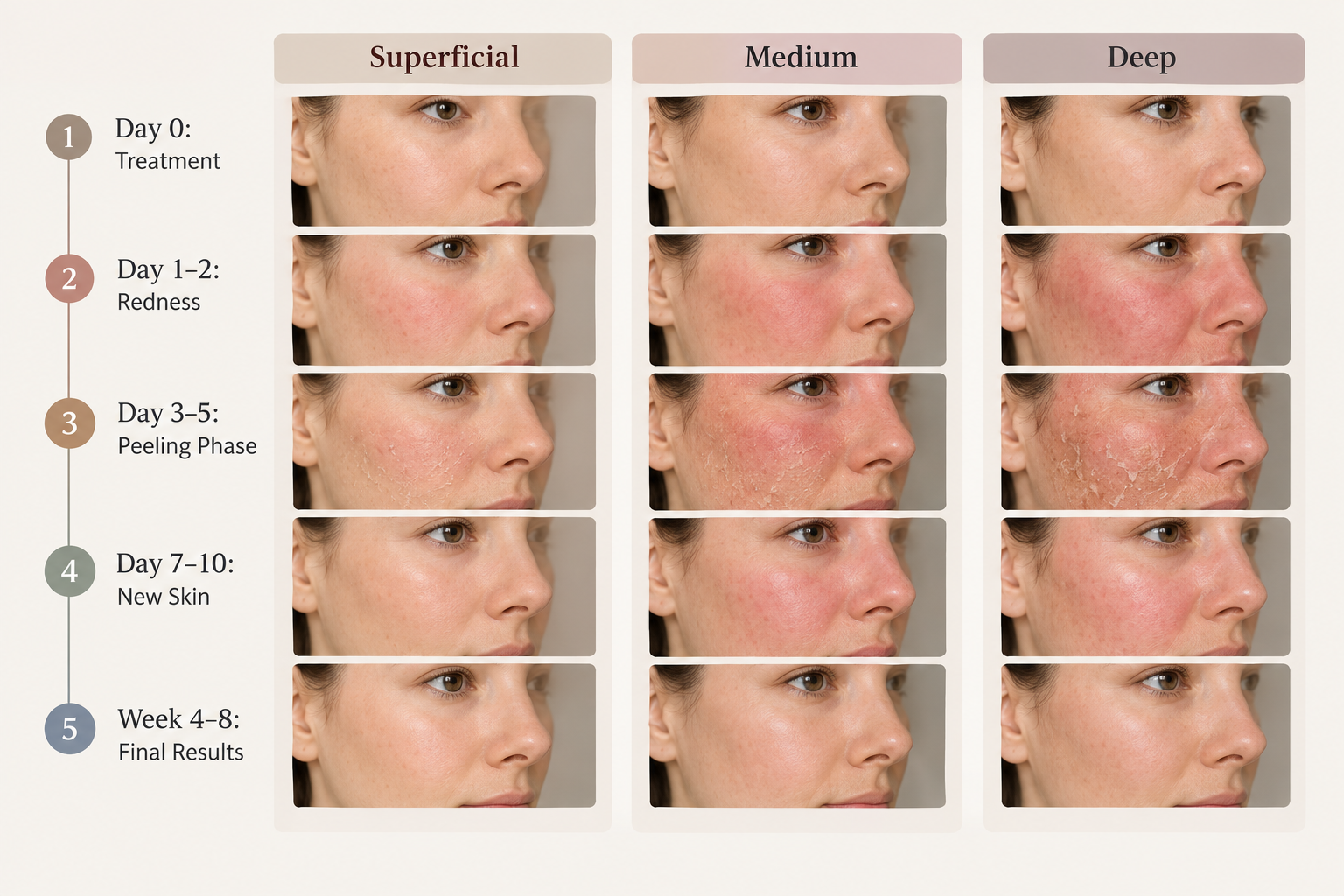
Understanding the recovery timeline helps patients prepare practically and avoid misinterpreting normal healing as a complication. The experience differs meaningfully by peel depth.
Superficial Peel Recovery (Days 1–5)
Immediately after a superficial peel, skin may appear slightly pink and feel tight or mildly sensitive. Visible peeling is often subtle — more like fine flaking than dramatic shedding — and typically begins on day two or three. Most patients can return to normal activities the same day or the following morning, which is why superficial peels are sometimes called lunchtime peels. By day five, the skin usually looks refreshed and more even, though the full benefit of a single session is modest and builds with a treatment series.
Medium-Depth Peel Recovery (Days 1–10)
The first 24 to 48 hours after a medium-depth peel typically involve redness, swelling, and a sensation of tightness or heat. The peeling phase begins around day three and can be pronounced — skin may peel in sheets rather than fine flakes, and the underlying skin may appear raw or deeply pink. Patients should plan for approximately five to ten days of social downtime. Picking or forcibly removing peeling skin significantly increases the risk of scarring and prolonged pigmentation changes, so allowing the skin to shed naturally is essential. By the end of week two, the new skin surface is usually visible, though redness may persist for several more weeks.
Deep Peel Recovery (Weeks 1–3+)
A deep peel produces a more intense wound-healing response. Significant swelling, crusting, and weeping are expected in the first few days. Full re-epithelialization — the regrowth of the outer skin layer — typically takes two to three weeks, and persistent pinkness or redness can last for several months. Deep peels are generally performed under sedation or local anaesthesia in a clinical setting, and post-procedure monitoring is important. The extended downtime and recovery demands mean that deep peels are appropriate only for patients with significant skin concerns who have been thoroughly assessed and counselled by a qualified medical professional.
When Do Chemical Peel Results Appear?
Initial improvement in skin brightness and texture is often visible within one to two weeks of a superficial or medium peel, once the peeling phase has resolved. However, the most meaningful results — particularly improvements in collagen production, scar depth, and deeper pigmentation — develop gradually over the following two to six months as the skin's remodeling process continues. Patients who assess their results at two weeks and feel disappointed may be evaluating too early. Photographing the skin before treatment and at regular intervals afterward provides a more accurate record than relying on memory alone.
For a treatment series of superficial peels, cumulative improvement typically becomes apparent after three to six sessions spaced two to four weeks apart. Each session builds on the last, progressively refining texture, evening skin tone, and reducing the appearance of mild pigmentation. This compounding effect is one of the strongest arguments for committing to a planned series rather than a single treatment.
Chemical Peels for Darker Skin Tones
Patients with Fitzpatrick skin types IV through VI can benefit from chemical peels, but the risk of post-inflammatory hyperpigmentation (PIH) is meaningfully higher, and peel selection requires careful clinical judgment. Aggressive peels or those applied without adequate pre-treatment preparation can trigger PIH that is more difficult to treat than the original concern. Superficial peels using salicylic acid, mandelic acid, or lactic acid are generally considered safer starting points for darker skin tones because they carry a lower risk of triggering an inflammatory pigmentation response. Trichloroacetic acid (TCA) can be used at lower concentrations with appropriate technique, but medium and deep peels require particular caution and should only be performed by practitioners experienced in treating diverse skin types.
Pre-treatment priming with topical agents such as hydroquinone, kojic acid, or azelaic acid for four to six weeks before a peel can reduce baseline pigmentation and lower the risk of PIH. Strict daily sunscreen use throughout the pre- and post-treatment period is equally important. Patients with darker skin tones should seek a consultation with a practitioner who has specific experience in this area and can discuss realistic outcome expectations honestly.
How to Evaluate Before and After Photos Critically
Before and after photos are a useful reference point, but they require critical interpretation. Lighting differences between the before and after images can dramatically alter the apparent improvement — consistent, diffuse lighting in both photos is a sign of a more reliable comparison. The time elapsed between the after photo and the treatment matters: a photo taken at two weeks captures early results, while one taken at three months reflects more mature collagen remodeling. Skin preparation also affects appearance; the before photo should ideally show bare, unmoisturized skin, and the after photo should be makeup-free. When reviewing chemical peel before and after images, look for consistency in camera angle, distance, and skin preparation rather than simply comparing the overall impression.
Chemical Peel Aftercare: What to Do and Avoid
Post-peel care directly influences both the quality of results and the risk of complications. The skin barrier is temporarily compromised after any peel, and supporting its recovery is the priority during the healing period.
- Cleanse gently: Use a mild, fragrance-free cleanser twice daily. Avoid exfoliating cleansers or scrubs entirely during recovery.
- Moisturize consistently: A ceramide-based moisturizer or one containing hyaluronic acid helps maintain hydration and supports skin barrier repair. Apply as often as needed to prevent tightness.
- Apply SPF daily: Daily sunscreen — ideally a mineral SPF 30 or higher — is non-negotiable during and after recovery. UV exposure during the healing phase can trigger PIH and undermine results. Sun avoidance during peak hours is also advisable.
- Do not pick or peel: Removing peeling skin prematurely increases scarring risk and can cause uneven pigmentation.
- Avoid active ingredients temporarily: Retinoids, AHAs, BHAs, and vitamin C serums should be paused during the peeling phase and reintroduced gradually — typically after one to two weeks for superficial peels and longer for medium or deep peels. Your practitioner will advise on a specific reintroduction timeline.
- Avoid heat and sweat: Saunas, intense exercise, and hot showers can increase inflammation and should be avoided for several days after medium or deep peels.
Risks, Limitations, and Who May Not Be Suitable
Chemical peels are generally well tolerated when performed by a qualified practitioner on appropriately selected patients, but risks exist at every depth. Common side effects include temporary redness, sensitivity, and dryness. More significant risks include prolonged redness, hyperpigmentation, hypopigmentation (permanent lightening of the skin), infection, and — in rare cases with deep peels — scarring. Patients with a history of cold sores (herpes simplex) may experience reactivation after a peel and are typically prescribed antiviral medication prophylactically before medium or deep treatments.
Chemical peels are generally not recommended during pregnancy or breastfeeding, for patients with active skin infections or inflammatory skin conditions in the treatment area, or for those who have used oral isotretinoin within the past six to twelve months (the timeframe varies by practitioner and peel depth). Patients who are prone to keloid scarring should approach medium and deep peels with caution. A thorough consultation that covers medical history, current medications, and skin type is essential before any peel treatment.
It is also worth being clear about what peels cannot do. Deep tethered acne scars, significant volume loss, and dynamic wrinkles caused by muscle movement are not effectively addressed by chemical peels alone. Combining peels with complementary treatments — such as microneedling for scar remodeling, or topical retinoids as part of a long-term skin health programme — can extend and enhance results, but this should be discussed with a qualified practitioner rather than self-managed.
At-Home Peels vs. Professional Peels
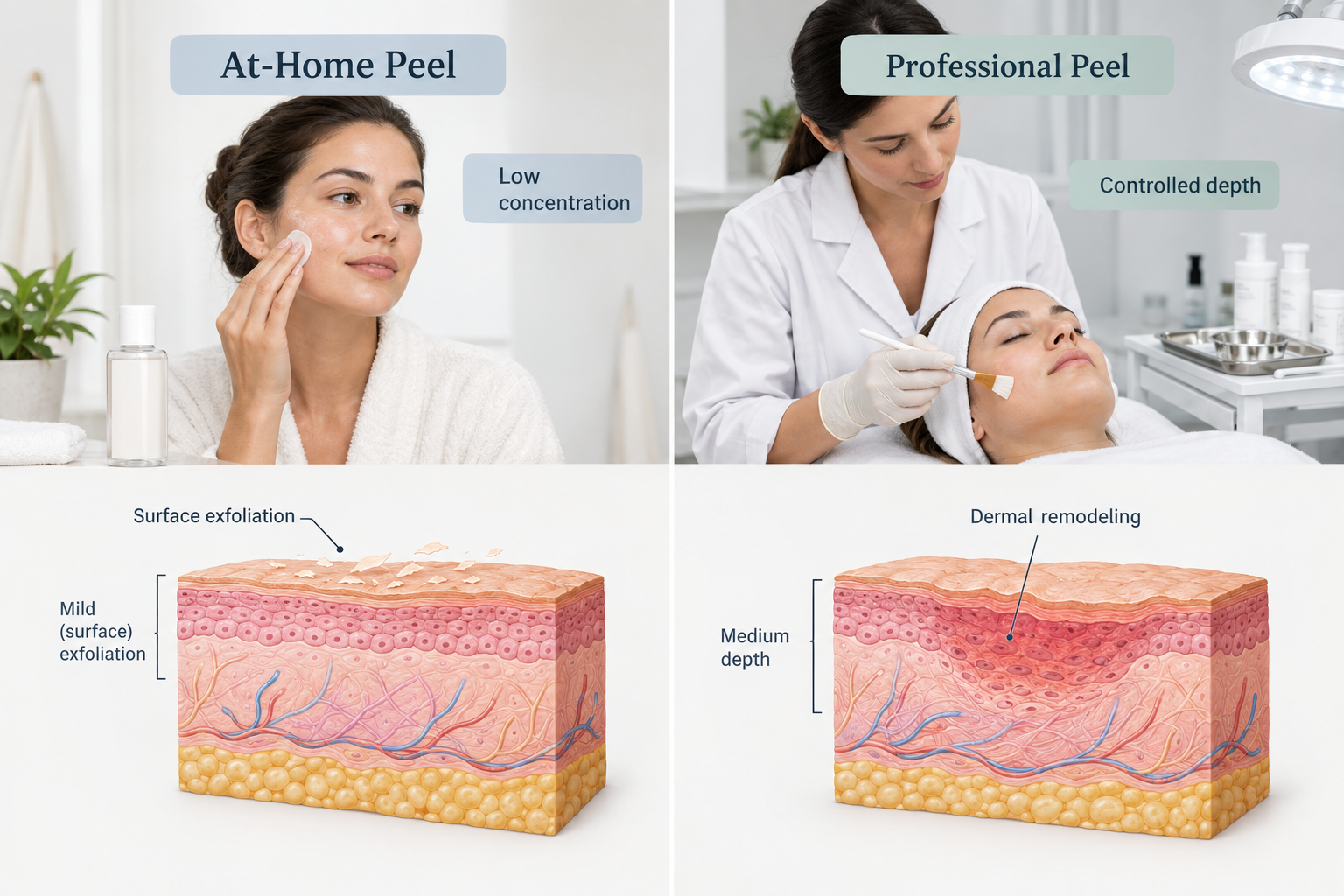
At-home peel products are widely available and typically contain low concentrations of glycolic, salicylic, or lactic acid — usually well below the levels used in professional treatments. They can support ongoing skin maintenance, improve surface texture, and mildly brighten the complexion with regular use, but they are not equivalent to professional peels in terms of depth or clinical outcome. At-home products are unlikely to produce meaningful improvement in acne scars, significant sun damage, or moderate-to-deep pigmentation. The risk of misuse — applying too frequently, combining with other actives incorrectly, or using on unsuitable skin — is also a consideration. Professional peels performed by a trained practitioner offer controlled depth, appropriate acid selection for the individual's skin type and concern, and clinical oversight during recovery.
Frequently Asked Questions
Will my skin look worse before it looks better?
Yes, temporarily. The peeling phase — which typically begins two to three days after treatment — can make skin look flaky, uneven, or raw before the new skin surface is revealed. This is a normal part of the healing process and not a sign that something has gone wrong. Medium and deep peels involve more pronounced peeling and redness than superficial treatments.
How many chemical peel sessions will I need?
This depends on the concern being treated and the peel depth. A single medium-depth peel may produce satisfying results for mild sun damage or pigmentation. Acne scarring, melasma, and persistent texture concerns often respond better to a planned treatment series of superficial or medium peels spaced several weeks apart. Your practitioner should outline a realistic treatment plan at consultation.
How long do chemical peel results last?
Superficial peel results are temporary and require maintenance sessions to sustain. Medium-depth peel results can last several months to over a year depending on sun protection habits and skin care. Deep peel results are longer-lasting — sometimes years — but the skin continues to age naturally, and sun protection remains essential to preserve the outcome.
Can chemical peels be used on the neck and chest?
Yes, peels can be applied to the neck, décolletage, and hands, though these areas have thinner skin and may be more sensitive than the face. Lower acid concentrations and shorter contact times are typically used, and the risk of complications is slightly higher. A practitioner experienced in treating these areas should assess suitability individually.
Is a chemical peel suitable for sensitive skin?
Sensitive skin is not an absolute contraindication, but it does influence peel selection. Lactic acid and mandelic acid are generally better tolerated by sensitive skin types than glycolic or salicylic acid at equivalent concentrations. A patch test and a conservative starting point are advisable. Patients with active rosacea or eczema in the treatment area are usually advised to wait until the condition is well controlled before proceeding.
Can I wear makeup after a chemical peel?
After a superficial peel, light mineral makeup is usually acceptable from day two onward, though many practitioners recommend waiting until flaking has resolved. After a medium or deep peel, makeup should be avoided until the skin has fully re-epithelialized — typically one to two weeks — to reduce infection risk and avoid irritation.
Is a Chemical Peel the Right Choice for Your Skin Concern?
Chemical peels offer a well-established, evidence-supported route to improving skin texture, reducing uneven skin tone, fading sun damage, and addressing certain types of acne scarring. The key to a satisfying outcome is matching the peel depth and acid type to the specific concern, skin type, and acceptable downtime — and approaching the process with realistic results in mind rather than expecting transformation after a single session.
Superficial peels are a low-commitment starting point that suits most skin types and can be built into a regular maintenance schedule. Medium-depth peels offer more meaningful skin resurfacing with manageable recovery for patients who can plan around five to ten days of downtime. Deep peels remain an option for significant photodamage or deep wrinkles, but they require thorough medical assessment and are not appropriate for everyone. For patients with darker skin tones, careful practitioner selection and pre-treatment preparation are particularly important to achieve safe, effective results.
If you are considering a chemical peel, a consultation with a qualified dermatologist or experienced aesthetic practitioner is the most reliable way to determine which peel depth and formula may suit your skin, discuss your recovery timeline, and understand what the before and after journey is likely to look like for your specific concerns.
