

Key Takeaways
- A lip flip typically lasts 6 to 16 weeks, with most patients seeing results fade between weeks 8 and 12.
- Duration depends on individual metabolism, muscle activity, dosage, injection technique, and lifestyle factors such as exercise intensity.
- The lip area metabolises botulinum toxin faster than areas like the forehead because the orbicularis oris muscle is in near-constant use.
- Lip filler (hyaluronic acid) generally lasts 6 to 12 months — significantly longer — but adds volume rather than reshaping the lip’s position.
- A qualified injector can help you plan a maintenance schedule that keeps results consistent without gaps.
What Is a Lip Flip and How Does It Work?
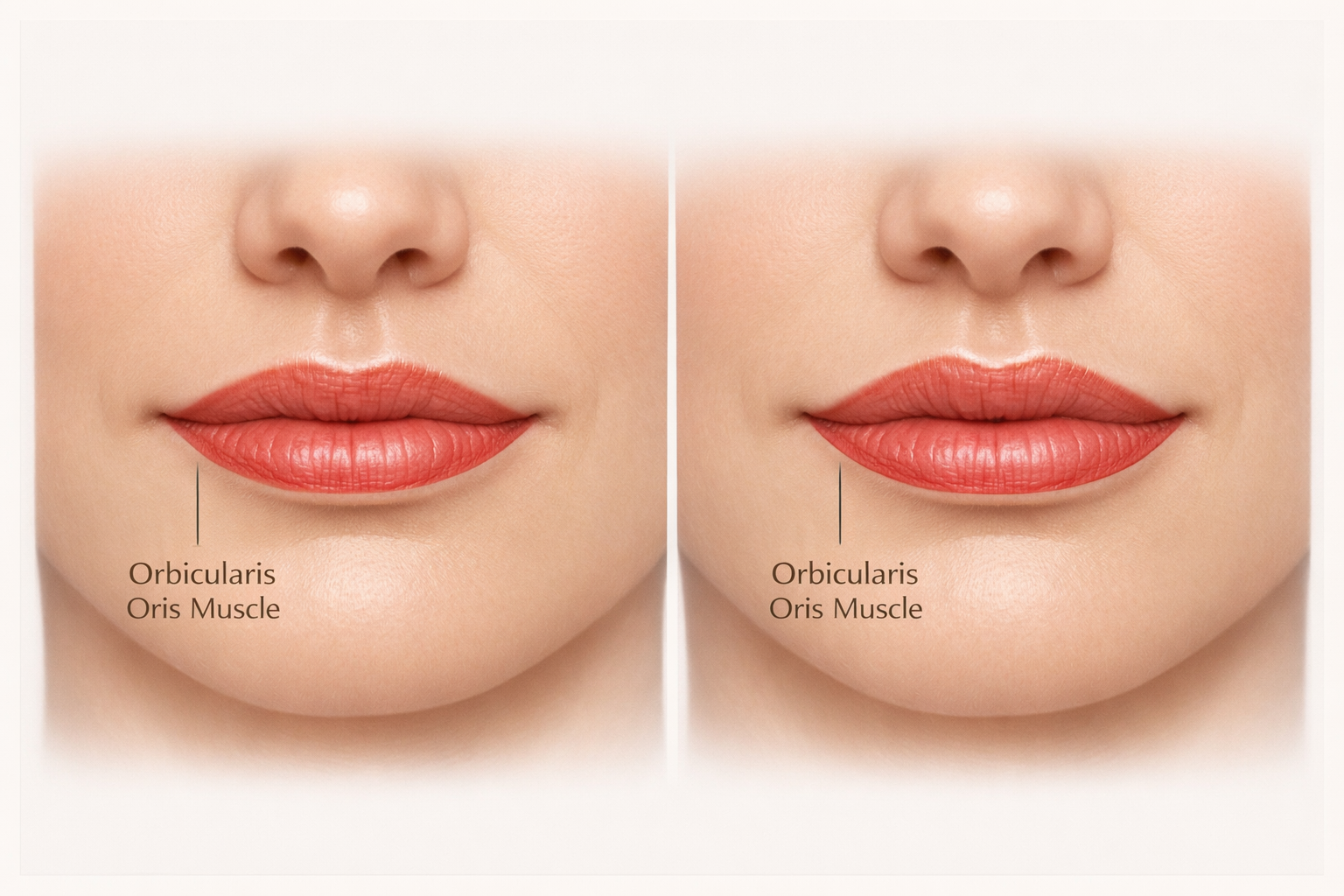
A lip flip is a non-surgical lip augmentation technique that uses a small amount of botulinum toxin — commonly known by brand names such as Botox or Dysport — to relax the orbicularis oris muscle, the circular muscle that surrounds the mouth. When a few precise units of this neuromodulator are placed along the upper lip border, particularly near the Cupid’s bow and the corners of the mouth, the muscle relaxes slightly and the lip rolls gently outward and upward. The result is a subtle lip enhancement: the upper lip appears fuller and more defined without any volume being added.
This is an important distinction. A lip flip does not inject filler into the lip tissue; it changes the resting position of the lip itself. Because the effect depends entirely on temporary muscle relaxation rather than a physical substance sitting within the tissue, the results wear off gradually as the botulinum toxin is metabolised and normal muscle activity returns. Understanding this mechanism is key to understanding why duration varies so much between individuals.
How Long Does a Lip Flip Last? The Direct Answer
Most patients find that a lip flip lasts between 6 and 16 weeks, with the most commonly cited range sitting around 8 to 12 weeks. Some individuals — particularly those having the treatment for the first time — may notice results beginning to fade as early as four to six weeks. Others, especially repeat patients whose muscles may have adapted over multiple treatments, occasionally report results lasting closer to four months.
It is worth noting that this is a shorter duration than botulinum toxin treatments in less active areas, such as the forehead or between the brows. The reason is straightforward: the orbicularis oris muscle is one of the most active muscles in the face. Talking, eating, smiling, and drinking all engage it repeatedly throughout the day, which accelerates the breakdown of the neuromodulator at that site. This is not a flaw in the treatment — it is simply the physiological reality of treating a highly mobile area.
Week-by-Week Results Timeline
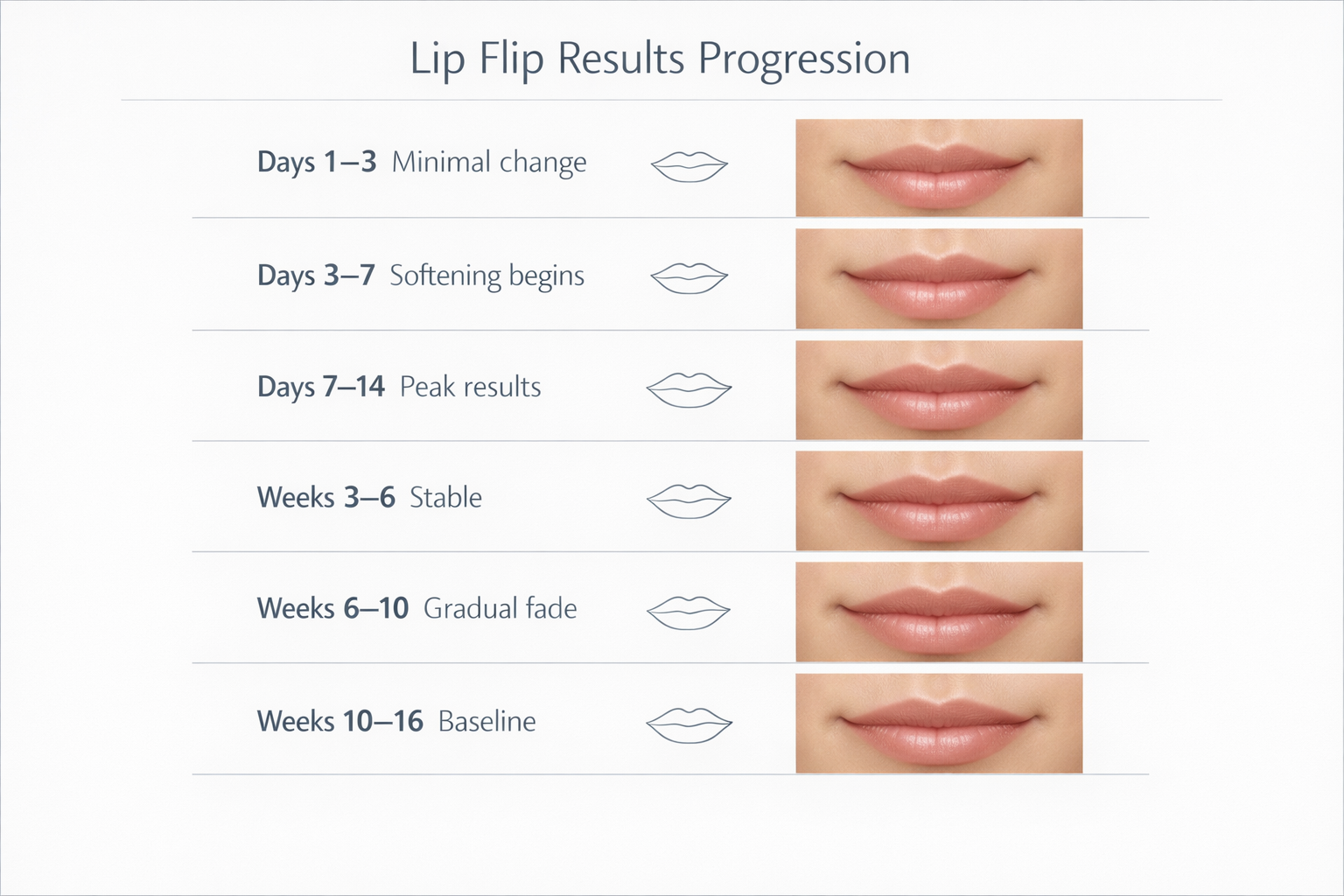
Understanding the progression of a lip flip from injection day to full fade helps set realistic expectations and makes it easier to plan a maintenance schedule.
- Days 1–3: Little to no visible change. The botulinum toxin has been injected but has not yet fully bound to the nerve-muscle junction. Some mild swelling or redness at the injection site is normal and typically resolves within 24 to 48 hours.
- Days 3–7: Initial softening becomes noticeable. The orbicularis oris muscle begins to relax, and the upper lip may start to roll slightly outward. The change is subtle at this stage.
- Days 7–14: Peak results are reached for most patients. The lip sits in its new, slightly elevated position, the Cupid’s bow appears more defined, and the overall effect looks natural and refreshed. This is generally the best point to take reference photos.
- Weeks 3–6: Results remain stable. Most patients enjoy the full effect during this window.
- Weeks 6–10: Gradual fade begins. Muscle activity slowly returns as the neuromodulator breaks down. The lip’s position shifts incrementally back toward baseline.
- Weeks 10–16: Results continue to diminish. By the end of this period, most patients have returned to their pre-treatment baseline, though the timeline varies considerably between individuals.
Factors That Affect How Long a Lip Flip Lasts
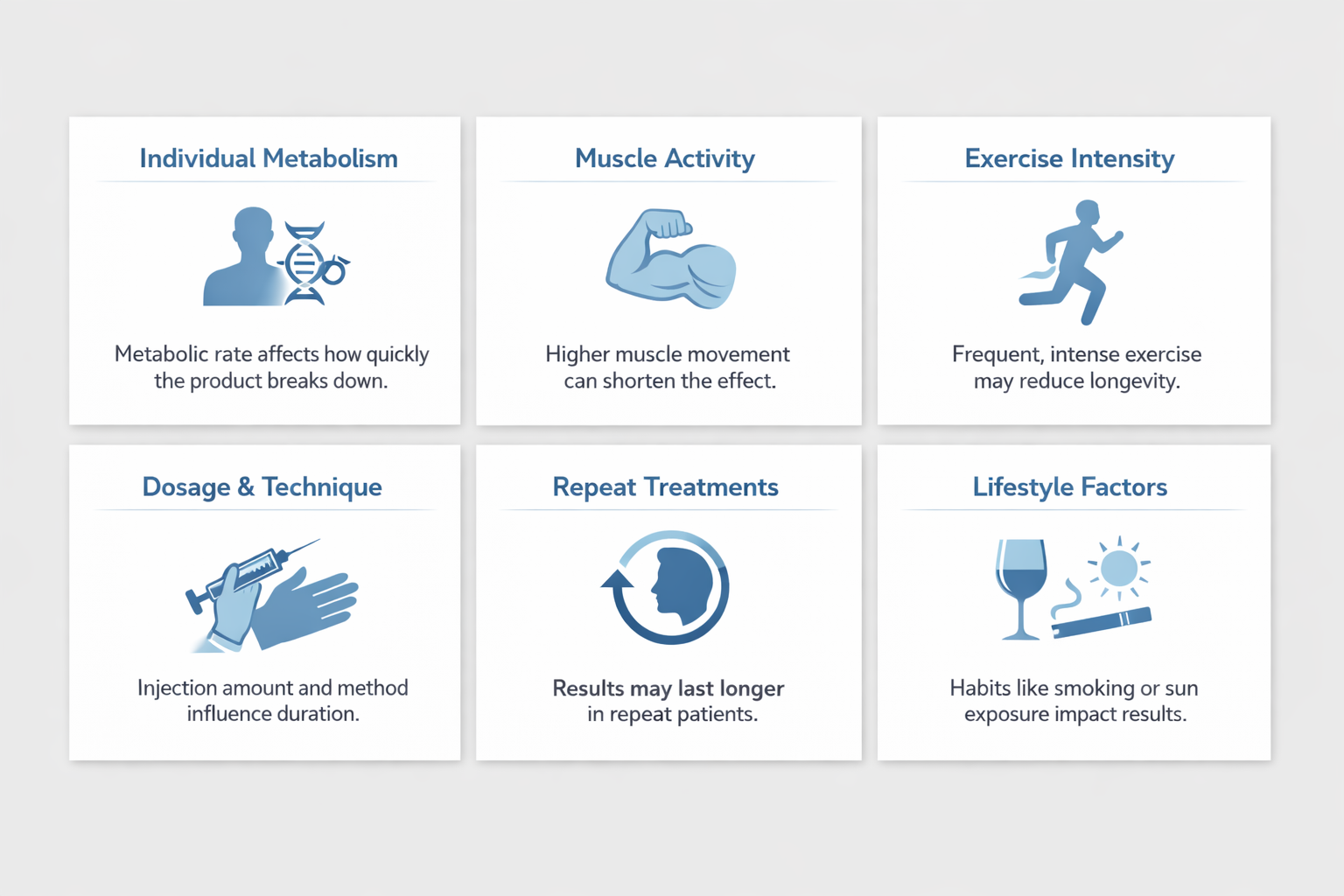
No two patients metabolise botulinum toxin at exactly the same rate. Several factors influence how quickly results wear off, and being aware of them helps you anticipate your own experience more accurately.
Individual Metabolism
Individual metabolism is one of the most significant variables. People with a faster metabolic rate tend to break down botulinum toxin more quickly, leading to a shorter duration of effect. This is partly genetic and partly influenced by factors such as fitness level and overall health. There is no reliable way to predict your personal metabolism from a lip flip until you have had at least one treatment and observed how long the results last for you.
Muscle Activity and Strength
Because the lip flip works by relaxing muscle activity, the more vigorously and frequently the orbicularis oris muscle is used, the faster the neuromodulator is consumed. Patients who talk extensively for work, play wind instruments, or habitually purse their lips may notice a shorter duration. Muscle strength also plays a role: individuals with stronger, more developed perioral muscles may require a slightly higher dose and may still find that results fade more quickly.
Dosage and Injector Technique
The number of units used in a lip flip is intentionally small — typically in the range of a few units of botulinum toxin — because over-injection carries meaningful functional risks such as difficulty drinking from a straw or temporary speech changes. A qualified injector balances adequate relaxation with functional safety. Precise placement at the correct anatomical points along the upper lip is essential; imprecise injection can shorten results or produce uneven fading.
Exercise Intensity
High-intensity exercise increases circulation and metabolic rate, which may accelerate the breakdown of botulinum toxin. While the effect of a single workout on results is unlikely to be dramatic, patients who train intensively several times a week may consistently notice a shorter duration compared to less active individuals. Most practitioners advise avoiding strenuous exercise for the first 24 hours after treatment as a precaution.
First-Time Versus Repeat Patients
First-time patients often report a shorter duration with their initial lip flip treatment. With repeated treatments over time, some patients find that results begin to last slightly longer, possibly because the treated muscle becomes accustomed to periodic relaxation. This pattern is not universal, but it is a reason not to judge long-term duration solely on your first experience.
Lifestyle Factors
Sun exposure, smoking, and dehydration are all associated with faster breakdown of cosmetic injectables generally. UV radiation accelerates skin and tissue metabolism, while smoking impairs local circulation and tissue health. Staying well hydrated and using SPF lip balm are simple steps that may support, at the margin, the longevity of your results.
Lip Flip vs. Lip Filler: Duration and Key Differences
The lip flip and hyaluronic acid lip filler are both popular non-surgical options for lip enhancement, but they work differently, last for very different lengths of time, and suit different goals. Understanding the distinction helps you decide which treatment — or combination — may be worth discussing with a practitioner.
| Characteristic | Lip Flip | Lip Filler (HA) |
|---|---|---|
| Active ingredient | Botulinum toxin (neuromodulator) | Hyaluronic acid filler |
| Mechanism | Relaxes orbicularis oris muscle; lip rolls outward | Adds physical volume within the lip tissue |
| Effect on volume | No volume added; illusion of fullness | Direct volume addition |
| Typical duration | 6–16 weeks | 6–12 months |
| Reversibility | Not reversible; must wait for it to wear off | Reversible with hyaluronidase enzyme |
| Downtime | Minimal to none | Minimal; swelling more common |
| Typical cost | Generally lower per session | Generally higher per session |
| Best suited for | Subtle definition, gummy smile, testing enhancement | Noticeable volume, longer-lasting results |
| Can be combined? | Yes — often used alongside filler | Yes — often used alongside lip flip |
The most significant practical difference is duration. A hyaluronic acid filler placed in the lip body can last six to twelve months, making it a considerably more time-efficient option for patients who want sustained volume. However, lip filler cannot replicate the specific effect of a lip flip: the outward roll of the upper lip border and the subtle lengthening of the pink tissue that becomes visible when smiling. For patients with a gummy smile — where excessive gingival display occurs when smiling — a lip flip can help the upper lip sit lower and reduce the appearance of the gums, which filler alone cannot achieve.
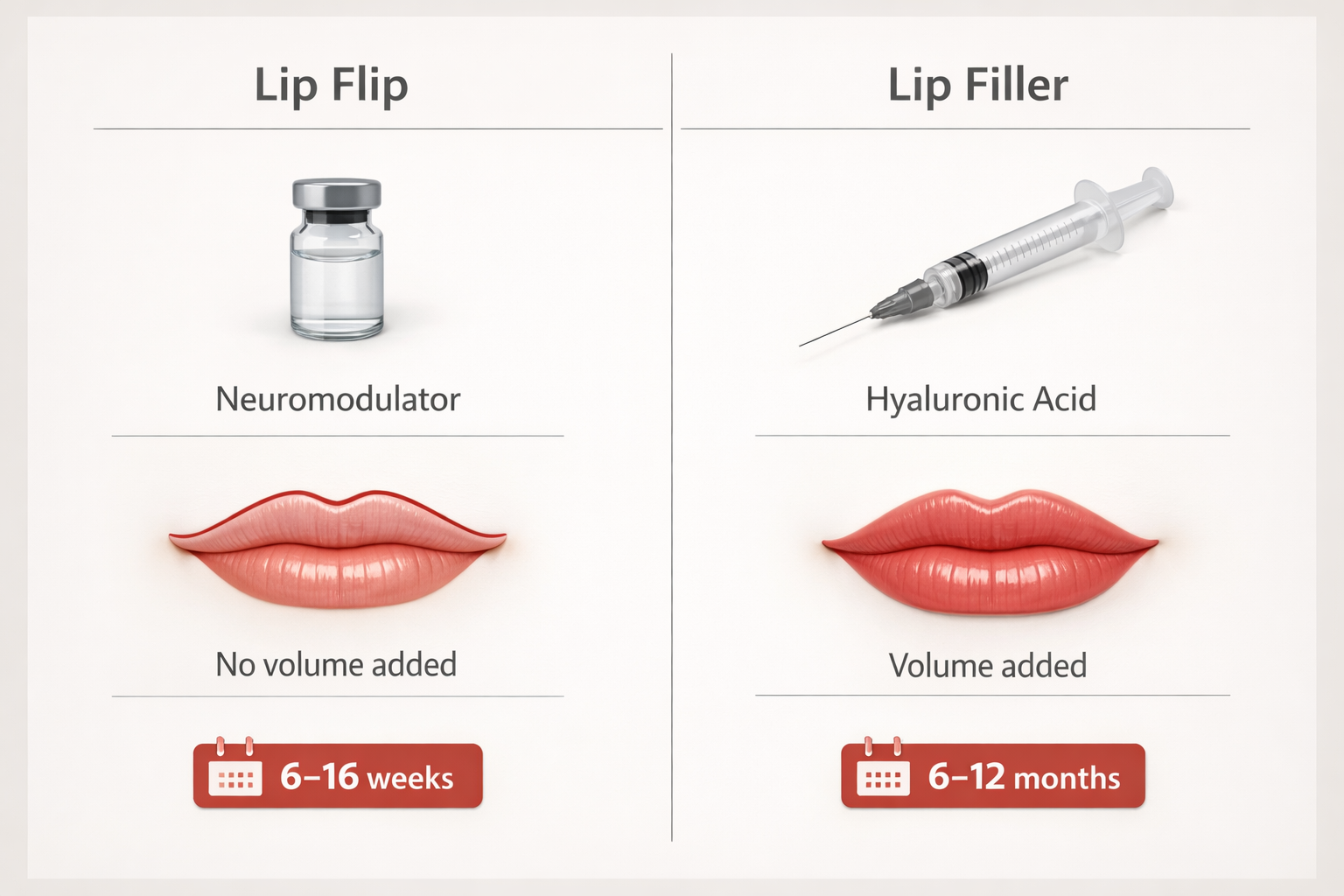
Because the lip flip is not reversible in the way that hyaluronic acid filler is (hyaluronidase can dissolve HA filler quickly if needed), it is worth having a clear conversation with your injector about the expected result before proceeding. If you dislike the outcome, you will need to wait for the botulinum toxin to wear off naturally.
Combining both treatments is a strategy some patients and practitioners choose: the filler provides lasting volume, while the lip flip maintains the outward roll and upper lip definition during filler maintenance intervals. When used together, the overall effect can appear more comprehensive, though combining treatments also means managing two different maintenance schedules.
Alternative Neuromodulators: Dysport and Daxxify
Botox is the most widely recognised brand of botulinum toxin used for lip flips, but it is not the only option. Dysport is another botulinum toxin type A product used in aesthetic practice. Some practitioners prefer Dysport for certain areas due to its diffusion characteristics, though units between different botulinum toxin brands are not directly interchangeable, and results can differ between products and individuals.
Daxxify is a newer botulinum toxin formulation that has received regulatory attention for its potentially longer duration of effect in some treatment areas. Whether this extended longevity translates meaningfully to a lip flip — where the high muscle activity of the orbicularis oris is the primary limiting factor — is less well established than in less mobile areas. If duration is a significant concern for you, it is worth asking your practitioner which neuromodulator they use and why, and whether alternatives might be appropriate for your specific situation.
How to Make a Lip Flip Last as Long as Possible
While you cannot override your individual metabolism, some practical steps may support the longevity of your lip flip results.
- Avoid strenuous exercise for 24 hours after treatment. Increased blood flow and body temperature in the immediate post-injection period may affect how the botulinum toxin settles.
- Avoid sleeping face-down on the night of treatment to minimise pressure on the injection area.
- Do not rub or massage the lip area for at least 24 hours, as this can potentially disperse the product beyond the intended injection points.
- Protect your lips from excessive sun exposure and use an SPF-containing lip balm regularly. UV radiation accelerates tissue metabolism and may marginally reduce longevity.
- Stay well hydrated and avoid smoking where possible. Both hydration status and smoking affect tissue health and circulation in ways that can influence injectable results.
- Attend follow-up appointments promptly. If you want to maintain a consistent look, scheduling your touch-up appointment before results have fully faded — typically around weeks 6 to 8 — avoids a noticeable gap in your appearance.
When to Schedule a Touch-Up Appointment
Planning your maintenance schedule thoughtfully makes a practical difference to the consistency of your results. Most patients who want to maintain a lip flip continuously find that booking a touch-up appointment every 8 to 12 weeks works well as a starting point, though your individual duration will guide the right interval for you.
A useful approach is to note when you first feel that your results have faded noticeably — perhaps at week 8 — and then book your next appointment one to two weeks before that point in your next cycle. This way, results remain visible throughout rather than cycling between full effect and baseline. After two or three treatments, most patients have a reliable sense of their personal duration and can schedule accordingly.
It is also worth discussing your maintenance schedule openly with your injector. A practitioner familiar with your anatomy and response can advise on whether small adjustments to dosage or placement might improve longevity without compromising safety or natural appearance.
Who May Be Suitable for a Lip Flip?
A lip flip may be worth considering if you are looking for a subtle, natural-looking change to your upper lip without the commitment or cost of filler. It is particularly well suited to patients who want to reduce the appearance of a gummy smile, define the Cupid’s bow, or restore the visibility of an upper lip that tends to disappear when smiling. It can also serve as a useful introduction to lip enhancement for patients who are curious about the results but not yet ready to try hyaluronic acid filler.
A clinical assessment is always necessary before treatment. Suitability depends on individual anatomy, medical history, current medications, and specific aesthetic goals. A lip flip may not be appropriate during pregnancy or breastfeeding, or for patients with certain neuromuscular conditions, allergies to botulinum toxin components, or active infection near the treatment area. Patients on anticoagulant medications may have an increased risk of bruising and should discuss this with their practitioner in advance.
Risks and Limitations Worth Knowing
A lip flip is a low-downtime procedure, but it is not without risks. Most side effects are mild and temporary. Swelling, redness, and minor bruising at the injection site are the most common and typically resolve within a few days. Because the orbicularis oris muscle controls fine lip movements, over-injection can cause temporary functional difficulties, including trouble drinking from a straw, drooling, or slight changes in speech. These effects are transient but can be inconvenient, which underlines the importance of conservative dosing and precise technique by a qualified injector.
Uneven results are possible, particularly if muscle relaxation is not symmetrical. Unlike hyaluronic acid filler, a lip flip cannot be reversed — there is no equivalent of hyaluronidase for botulinum toxin. If the outcome is not what you hoped for, patience is the only remedy while the product wears off gradually over the following weeks.
The treatment is not suitable for everyone, and an honest consultation with a practitioner experienced in perioral botulinum toxin injections is the appropriate first step.
Frequently Asked Questions
Does a lip flip hurt?
Most patients find a lip flip to be well tolerated. The injections are made with a fine needle, and the treatment takes only a few minutes. Topical numbing cream can be applied beforehand if you are concerned about discomfort. Some mild sensitivity at the injection site for a day or two afterward is normal.
Is a lip flip suitable for a gummy smile?
Yes. When the upper lip curls upward or sits high at rest, relaxing the orbicularis oris muscle with a small amount of botulinum toxin can encourage the lip to sit slightly lower, reducing the amount of gum visible when smiling. This is one of the most clinically practical applications of the lip flip technique. The extent of improvement depends on the degree of gingival display and individual anatomy.
Can I combine a lip flip with lip filler at the same appointment?
This is possible and some practitioners do offer combined treatment. However, the sequencing and approach require clinical judgement — combining treatments at the same time introduces more variables, and some practitioners prefer to separate the appointments to assess each treatment’s effect independently. Discuss this with your injector during your consultation.
Will results last longer after multiple treatments?
Some patients who have repeated lip flip treatments over time report that results last slightly longer as treatment continues, possibly due to gradual reduction in muscle bulk. This is not guaranteed and varies between individuals, but it is a reason not to draw firm conclusions about your long-term duration from your very first session.
How does a lip flip compare to filler in terms of cost over time?
A lip flip typically costs less per session than lip filler, but because it requires more frequent maintenance — roughly every 2 to 4 months versus every 6 to 12 months for filler — the annual cost can be comparable depending on your frequency of treatment and your clinic’s pricing. Some patients choose the lip flip specifically for its lower per-session commitment; others find filler more cost-effective over a 12-month period. It is worth calculating both options against your personal maintenance preferences.
Can I have a lip flip if I have existing lip filler?
In many cases, yes. A lip flip can complement existing hyaluronic acid filler by enhancing the definition of the upper lip border. However, your injector will need to assess the amount and placement of existing filler before treating. Always disclose previous cosmetic treatments during your consultation.
Planning Your Lip Flip: What to Realistically Expect
A lip flip delivers a genuinely subtle lip enhancement — which is both its appeal and its limitation. If you are expecting a dramatic transformation, this is not the right treatment; that goal is better served by hyaluronic acid filler. But if you want a natural-looking refinement, a slightly more defined Cupid’s bow, reduced gummy smile, or a way to explore lip enhancement before committing to filler, a lip flip is a practical, lower-risk starting point.
Expect results to last roughly 8 to 12 weeks in a typical first treatment, build a picture of your personal duration after one or two sessions, and plan your maintenance schedule around that knowledge. Choosing a qualified injector with specific experience in perioral botulinum toxin is the single most important factor in achieving safe, consistent results. A thorough consultation before treatment — covering your anatomy, goals, medical history, and realistic expectations — will always give you the most useful foundation for deciding whether a lip flip is the right choice for you.
