


Quick Comparison
| Feature | Microdermabrasion | Microneedling |
|---|---|---|
| Treatment type | Non-invasive mechanical exfoliation | Minimally invasive collagen induction therapy |
| Mechanism | Abrasive tip or crystal spray removes dead skin cells via suction | Controlled micro-injuries stimulate wound-healing response |
| Depth of action | Epidermis (outermost layer only) | Epidermis and upper dermis |
| Primary goals | Surface-level brightening, texture, dull skin, fine lines | Acne scars, deeper wrinkles, skin laxity, stretch marks |
| Pain level | Minimal — mild sandpapering sensation | Mild to moderate — numbing cream applied beforehand |
| Downtime | None to minimal (often called a lunchtime treatment) | 1–3 days redness and sensitivity |
| Results onset | Immediately visible brightness after first session | Gradual improvement over 4–12 weeks as collagen remodels |
| Sessions typically needed | 5–10 sessions for a full treatment series | 3–6 sessions spaced 4–6 weeks apart |
| Results longevity | 4–6 weeks per session; ongoing maintenance needed | Several months; collagen remodelling continues for up to 6 months |
| Suitable for darker skin tones | Generally yes — lower risk of post-inflammatory hyperpigmentation | Yes, with appropriate settings and practitioner experience |
| Average cost per session | Lower per session; more sessions may be needed | Higher per session; fewer sessions typically required |
Two Different Approaches to Skin Resurfacing
Microdermabrasion and microneedling are both well-established skin resurfacing treatments, but they operate at fundamentally different depths and trigger different biological responses. Choosing between them depends on your specific skin concerns, tolerance for downtime, and realistic expectations about the depth of improvement achievable.
Microdermabrasion is a non-invasive epidermal resurfacing technique that mechanically removes dead skin cells from the surface of the skin. Microneedling, by contrast, is a minimally invasive cosmetic procedure that uses fine needles to create controlled micro-injuries in the epidermis and upper dermis, activating the skin’s natural wound-healing response to stimulate collagen and elastin production. Understanding where each treatment acts in the skin is the most useful starting point for comparing them.
How Microdermabrasion Works
Microdermabrasion uses either a diamond-tip microdermabrasion wand or a fine spray of crystals — typically aluminium oxide or sodium bicarbonate — combined with a suction device to physically buff away the stratum corneum, which is the outermost layer of dead skin cells. The suction simultaneously removes the loosened debris and mildly stimulates circulation in the skin beneath.
Because microdermabrasion acts entirely within the epidermis, it does not reach the dermis where collagen fibres reside. This limits its ability to address deeper structural concerns such as atrophic acne scars or significant skin laxity, but it makes it exceptionally well tolerated, with no meaningful downtime for most people. The treatment typically takes 30–45 minutes, requires no topical anaesthetic, and most patients can return to their normal routine immediately — which is why it is commonly described as a lunchtime treatment.
Crystal-free diamond-tip microdermabrasion has largely replaced the older crystal-spray method in professional settings because it avoids the risk of inhaling fine particles and offers more precise control over abrasion intensity.
How Microneedling Works
Microneedling — also referred to as collagen induction therapy — uses a motorised pen device such as the SkinPen, or a dermaroller, fitted with very fine sterile needles. As the device is passed over the skin, it creates thousands of microscopic punctures that penetrate into the dermis at a controlled depth. These microscopic channels trigger the skin’s wound-healing cascade: growth factors are released, fibroblasts are activated, and the body begins producing fresh collagen and elastin to repair the perceived injury.
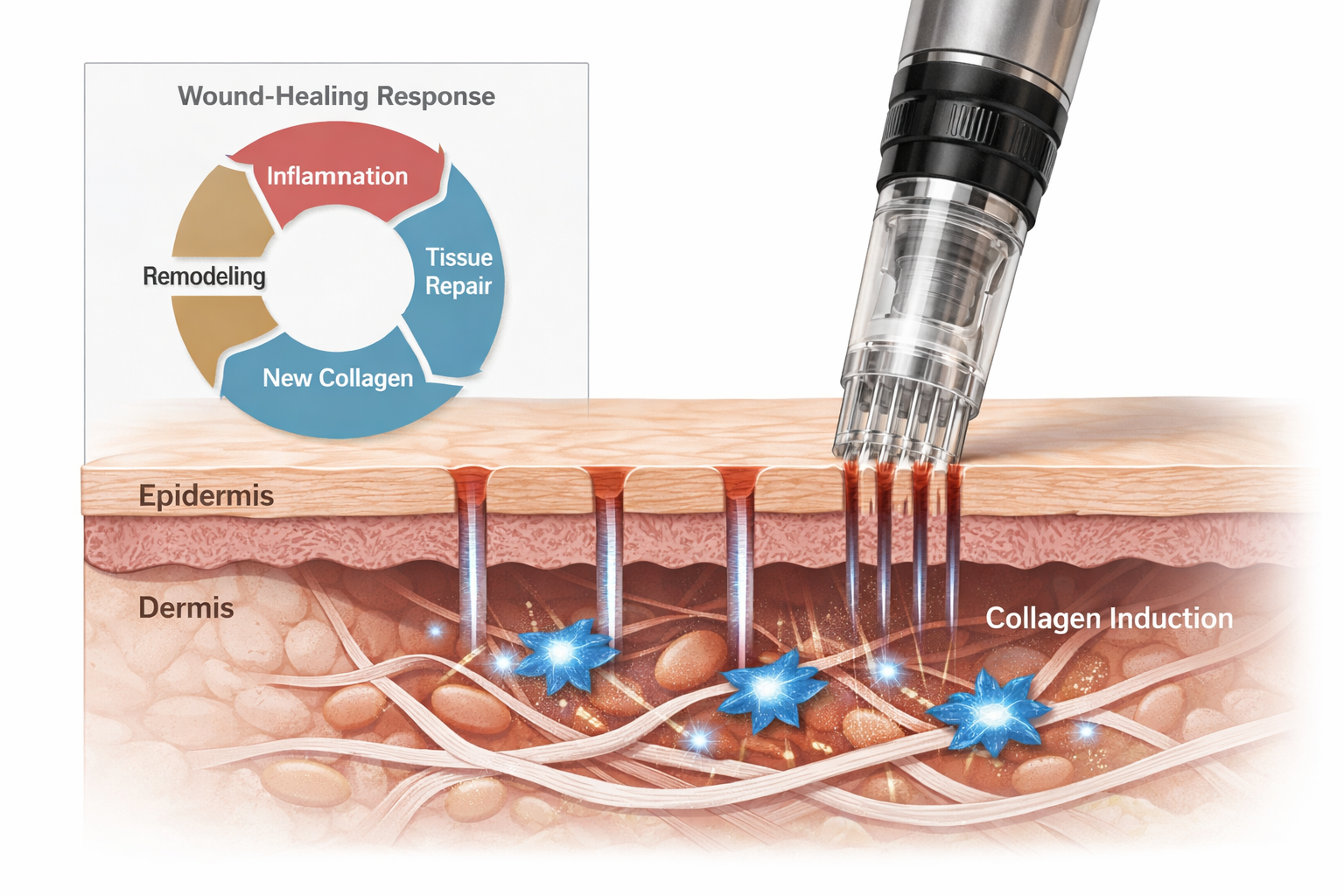
Because microneedling reaches the dermis, it can influence the structural layer of the skin where scar tissue forms and where age-related collagen loss occurs. This is what allows it to address concerns that microdermabrasion cannot, including atrophic acne scars, stretch marks, and more pronounced skin laxity. A topical numbing cream is applied before the session to manage discomfort, and the appointment typically lasts 60–90 minutes including preparation time.
Needle depth is adjustable — shallower settings are used for general skin rejuvenation and fine lines, while deeper settings are reserved for acne scars and stretch marks. A skilled practitioner will select the depth appropriate for each area of the face or body.
Which Skin Concerns Does Each Treatment Address?
The depth at which each treatment works largely determines which skin concerns it can realistically improve. The table below sets out condition-specific guidance, but individual results always depend on concern severity, skin type, and number of sessions completed.
Microdermabrasion is generally more suitable for:
- Dull complexion and uneven skin tone — removing the outermost layer of dead skin cells produces immediate surface-level brightening after just one session.
- Mild hyperpigmentation, sunspots, and age spots — superficial pigmented cells are exfoliated with repeated treatment, though deeper pigmentation may not respond adequately.
- Enlarged pores and oily or congested skin — mechanical exfoliation and suction can temporarily reduce the appearance of large pores.
- Very fine lines and superficial textural irregularities — light surface smoothing is achievable, though results are modest for lines with deeper structural causes.
- Skin maintenance between more intensive treatments — microdermabrasion works well as part of a regular skincare routine for patients who want ongoing surface refinement without recovery time.
Microneedling is generally more suitable for:
- Atrophic acne scars — including rolling, boxcar, and ice-pick scars. By stimulating collagen remodelling within the dermis, microneedling can meaningfully reduce the depth and visibility of these scars over a treatment series. Multiple studies and reviews support its use for acne scarring.
- Moderate to deep wrinkles and skin laxity — collagen and elastin production in the dermis contributes to firmer, more resilient skin over time.
- Stretch marks — microneedling can improve the texture and colour of stretch marks by stimulating dermal remodelling, though complete resolution is not typically achievable.
- Photoaging and sun damage — dermal stimulation addresses the structural changes associated with long-term UV exposure more effectively than surface exfoliation alone.
- Melasma and deeper hyperpigmentation — microneedling may be used for melasma, sometimes in combination with topical brightening agents delivered through the microchannels, though this requires expert management as aggressive treatment of melasma can trigger rebound pigmentation.
Skin Type Suitability and Fitzpatrick Skin Tones
Both treatments can be used across a range of skin types, but Fitzpatrick skin type — a clinical scale used to classify skin’s response to ultraviolet light — is an important consideration, particularly for patients with medium to dark skin tones (Fitzpatrick types IV–VI).
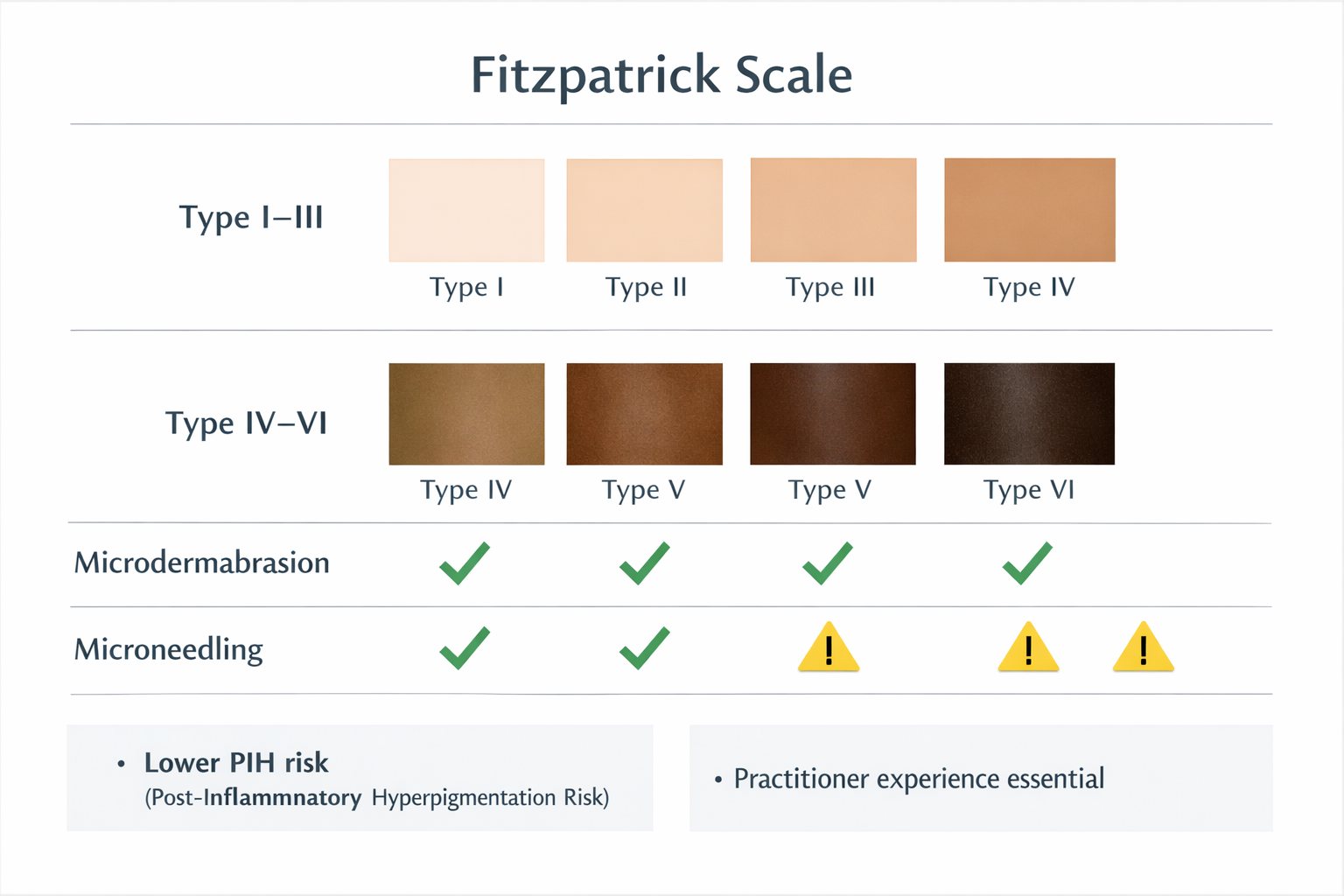
Microdermabrasion carries a low risk of triggering post-inflammatory hyperpigmentation (PIH) because it does not penetrate beyond the epidermis and does not cause thermal injury. For this reason, it is often considered a safer introductory option for patients with darker complexions who are concerned about PIH from more intensive treatments.
Microneedling can also be safely performed on darker skin tones, but practitioner experience and appropriate needle depth selection are essential. Unlike laser resurfacing treatments, microneedling does not generate heat, which significantly reduces the PIH risk associated with thermally ablative devices. Patients with darker skin tones should specifically discuss their Fitzpatrick skin type at consultation so the practitioner can tailor the protocol accordingly.
Patients with active acne, open wounds, rosacea flare-ups, eczema, or psoriasis affecting the treatment area should postpone either treatment until the skin has settled. Those with a history of keloid scarring should approach microneedling with caution and discuss this with their practitioner beforehand.
Pain, Comfort, and What to Expect During Treatment
Microdermabrasion is widely considered a comfortable, painless procedure. Most patients describe the sensation as a mild scratching or sandpapering feeling combined with the suction of the wand moving across the skin. No anaesthetic is required, and the experience is similar to a slightly more intense facial treatment.
Microneedling involves a greater degree of sensation, which varies depending on the needle depth used and the sensitivity of the area being treated. A topical anaesthetic cream is applied 20–30 minutes before the session to significantly reduce discomfort. During treatment, patients typically feel a mild vibrating pressure. Areas closer to bony structures — such as the forehead or jawline — tend to be more sensitive. After the session, skin may feel warm and tight, similar to mild sunburn, for a few hours.
Downtime, Recovery, and Post-Treatment Aftercare
Microdermabrasion aftercare
Microdermabrasion has essentially no clinical downtime for most patients. Skin may appear slightly pink immediately after treatment, but this usually resolves within a few hours. Post-treatment aftercare is straightforward: use a gentle cleanser and a fragrance-free moisturiser, apply SPF 30 or higher daily, and avoid abrasive skincare products such as retinoids or exfoliating acids for 24–48 hours. Makeup can typically be worn the same day, though mineral-based formulas are preferable in the first 24 hours.
Microneedling aftercare
Microneedling involves a more structured recovery period. Redness, mild swelling, and skin sensitivity are expected for 24–72 hours after treatment. Some patients experience minor pinpoint bruising or a degree of skin peeling as the healing process progresses over the following days. During this period, patients should avoid direct sun exposure, use only gentle skincare products, skip strenuous exercise for 24–48 hours, and avoid applying makeup for at least 24 hours. Retinoids, exfoliating acids, and active ingredients should be paused for approximately one week. Broad-spectrum SPF 30+ is essential throughout the recovery period and beyond to protect the remodelling skin and reduce the risk of PIH.
Results: Timeline and Longevity
One of the most practical differences between these two treatments is when results become visible and how long they last. Microdermabrasion delivers an almost immediate improvement in skin brightness and smoothness after a single session. However, because the treatment only addresses the surface layer of skin, these results are relatively short-lived — typically lasting around four to six weeks before the skin naturally cycles through new dead cells and the complexion returns to its pre-treatment baseline. Regular maintenance sessions are needed to sustain the effect.
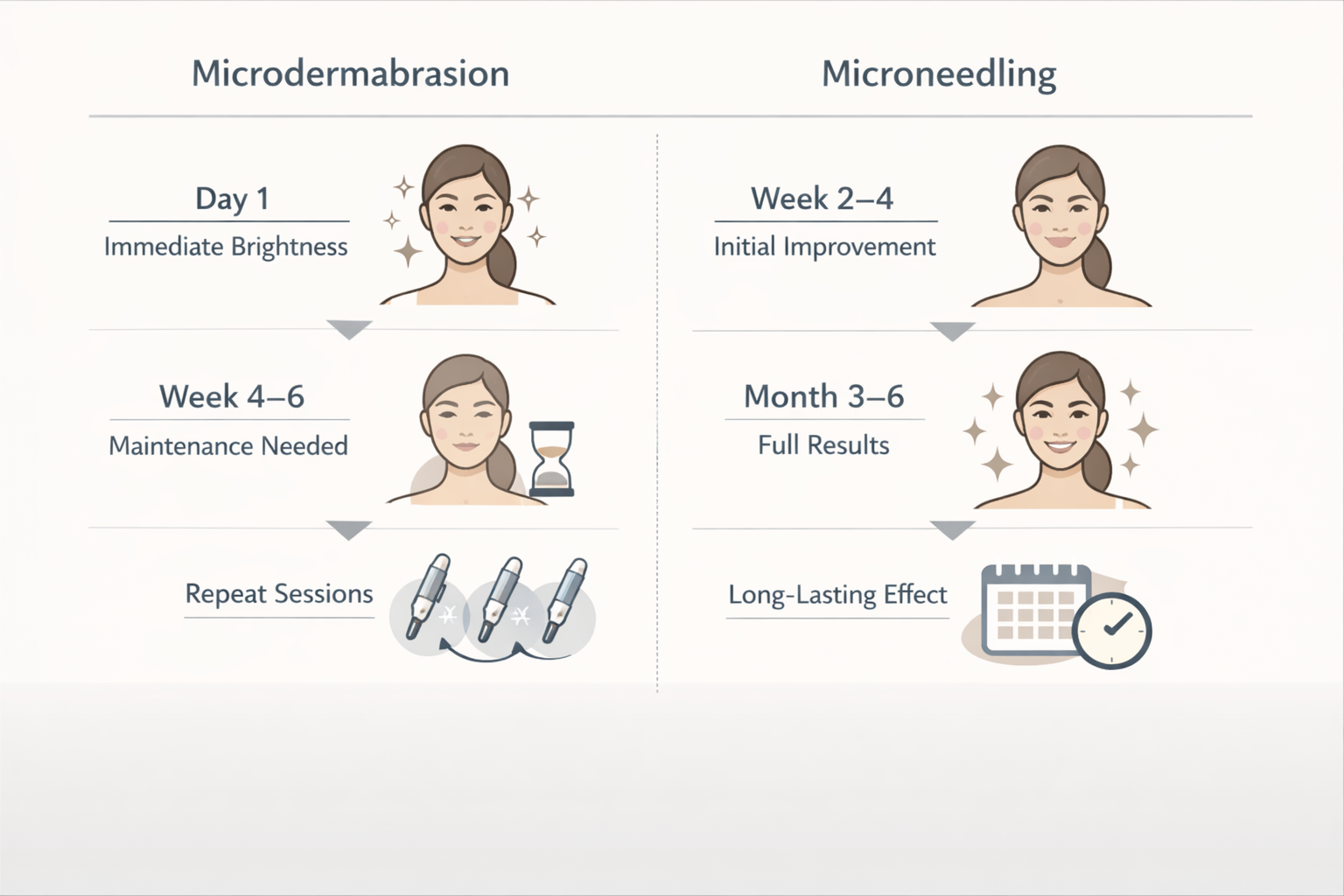
Microneedling results follow a slower, more progressive timeline because the mechanism depends on collagen remodelling rather than instant exfoliation. Most patients notice initial improvements in skin texture within two to four weeks of their first session, but the full effect — including meaningful reduction in acne scars or improved skin firmness — typically develops over three to six months as collagen and elastin production continues. Because the improvements are structural, results from a completed treatment series tend to be longer lasting, though periodic maintenance sessions are still advisable to sustain collagen levels over time.
How Many Sessions Are Typically Needed?
Microdermabrasion generally requires more sessions to achieve a visible improvement in a specific concern. A standard treatment series involves five to ten sessions, usually spaced one to two weeks apart. For general skin maintenance, ongoing monthly appointments are common.
Microneedling typically requires fewer sessions within an initial course — usually three to six treatments spaced four to six weeks apart — but each session represents a more significant biological intervention. The total number of sessions depends on the severity of the concern being treated: mild skin texture concerns may improve noticeably with three sessions, while more pronounced acne scarring may benefit from five or six sessions or more, assessed on an individual basis.
Advanced Variants and Combination Treatments
Both treatments have evolved beyond their standard forms, and combining them with complementary technologies can enhance outcomes for specific concerns.
RF microneedling (radiofrequency microneedling) adds controlled radiofrequency energy to the microneedling process, delivering heat directly into the dermis via the needle tips. This combination stimulates greater collagen contraction and production than standard microneedling alone, making RF microneedling particularly useful for skin laxity and more significant textural concerns. It also requires more recovery time and is typically performed in fewer sessions.
Platelet-rich plasma (PRP) combined with microneedling — sometimes referred to as the Vampire Facial — involves applying the patient’s own concentrated platelet-rich plasma to the skin immediately after microneedling. The open microchannels created by the needles allow deeper absorption of growth factors from the PRP, which may enhance collagen stimulation and accelerate healing. Evidence for PRP combinations is still developing, but clinical interest in this approach is growing.
Hydradermabrasion is a more advanced version of microdermabrasion that combines mechanical exfoliation with simultaneous infusion of hydrating or brightening serums. It offers a gentler experience than standard microdermabrasion with the added benefit of active ingredient delivery into freshly exfoliated skin.
Sequential treatment programmes — for example, using microdermabrasion sessions to maintain skin between periodic microneedling courses — are sometimes recommended for patients seeking both surface brightening and deeper structural improvement. Any combination approach should be planned carefully by an experienced practitioner.
At-Home Devices vs Professional Treatments
At-home microdermabrasion kits and consumer dermarollers are widely available, but they differ meaningfully from professional treatments. At-home microdermabrasion devices use lower suction pressure and less abrasive tips than clinic equipment, producing a gentler result suitable for maintenance between professional sessions rather than as a replacement for them.
At-home dermarollers typically use shorter, smaller-gauge needles than professional microneedling devices and cannot achieve the consistent depth control of a motorised clinical pen. Improper use of dermarollers — including inadequate sterilisation or excessive pressure — carries a risk of skin irritation, infection, and potential skin damage. For patients with specific concerns such as acne scarring, professional treatment with a calibrated device operated by a trained practitioner will produce substantially better and safer results than any at-home alternative.
Frequently Asked Questions
Can microdermabrasion and microneedling be combined in the same treatment programme?
Yes, many practitioners recommend using both treatments in a structured programme — for example, periodic microneedling sessions for deeper structural improvement, with microdermabrasion used in between to maintain surface brightness and skin tone. They should not be performed on the same day, and the sequencing should be planned by your practitioner based on your skin concerns and recovery schedule.
Which treatment is better for acne scars?
For atrophic acne scars — the depressed, pitted type most commonly seen after inflammatory acne — microneedling is the more effective option. Because it reaches the dermis and stimulates collagen remodelling, it can reduce the depth and visibility of scars over a treatment series in a way that surface exfoliation cannot. Microdermabrasion may help with post-inflammatory redness or mild surface irregularity but is not suited to addressing the structural deficit of a true acne scar.
Which treatment is less painful?
Microdermabrasion is the more comfortable of the two treatments — most patients experience only a mild scratching or suction sensation and require no anaesthetic. Microneedling involves more sensation, particularly at deeper settings, although a topical numbing cream applied before the session makes it well tolerated for the majority of patients.
Is microneedling safe for sensitive or darker skin tones?
Microneedling can be suitable for sensitive and darker skin tones when performed by an experienced practitioner who uses appropriate settings. Because it does not use heat or light energy, it carries a lower risk of post-inflammatory hyperpigmentation than laser treatments. Patients with darker Fitzpatrick skin types should ensure their practitioner has specific experience treating their skin tone, and a test patch may be recommended.
How long before I see results from microneedling?
Initial improvements in skin texture may be noticeable within two to four weeks of a session. However, because the main mechanism relies on collagen remodelling, the most significant improvements — particularly for acne scars and deeper skin concerns — typically develop over three to six months following a completed treatment series.
Can either treatment be used on the body as well as the face?
Both treatments can be applied beyond the face. Microdermabrasion is sometimes used on the neck, décolletage, and hands. Microneedling is used on the body for concerns including stretch marks on the abdomen, thighs, or buttocks, and for certain areas of hair loss on the scalp. Treatment protocols for body areas differ from facial protocols and should be discussed at a specific consultation.
Choosing Between Microdermabrasion and Microneedling: A Practical Guide
The right choice between these two treatments comes down to the specific concern you want to address and how much recovery time you can accommodate. If your priority is surface-level brightening, mild texture improvement, or a refreshed complexion with zero downtime, microdermabrasion is a practical, well-tolerated option that delivers immediate visible results. It functions well as a regular skin maintenance treatment and suits most skin types.
If you are dealing with deeper skin concerns — atrophic acne scars, significant skin laxity, stretch marks, or wrinkles with a structural component — microneedling offers a meaningfully greater depth of action through collagen induction therapy. The trade-off is a higher cost per session, a few days of recovery, and a results timeline measured in weeks to months rather than days. For patients with these concerns, however, the longer-lasting structural improvement that microneedling can produce is likely to be more satisfying than repeated surface exfoliation.
Many patients find that both treatments have a role within a broader non-surgical skin rejuvenation plan. A qualified aesthetic practitioner can assess your skin, discuss your goals, and recommend a personalised treatment approach — whether that involves one treatment, the other, or a structured combination of both. A thorough consultation is always the appropriate starting point before committing to any treatment course.
