

Key Takeaways
- A wrinkly neck develops due to a combination of natural ageing, collagen and elastin loss, sun damage, lifestyle habits, and genetics — rarely one cause alone.
- Two distinct types of neck wrinkles exist: horizontal necklace lines and vertical platysmal bands, and they may respond to different treatments.
- Non-surgical neck treatments — including botulinum toxin, radiofrequency, Profhilo, and microneedling — can produce meaningful improvement with little or no downtime, though results are not permanent.
- A consistent skincare routine using broad-spectrum SPF, retinol, and peptides is one of the most underrated tools for preventing and slowing neck ageing.
- Surgical neck lift remains the most significant intervention for advanced skin laxity, but carries real recovery time and surgical risks that should be weighed carefully.
Why Does the Neck Age So Visibly?
The skin on the neck is thinner than facial skin, contains fewer sebaceous glands, and is exposed to the same environmental stressors — yet it is routinely neglected in most skincare routines. This combination makes the neck one of the first areas where ageing becomes noticeable. A wrinkly neck is not simply a cosmetic concern; it reflects a complex set of structural changes happening beneath the skin surface.
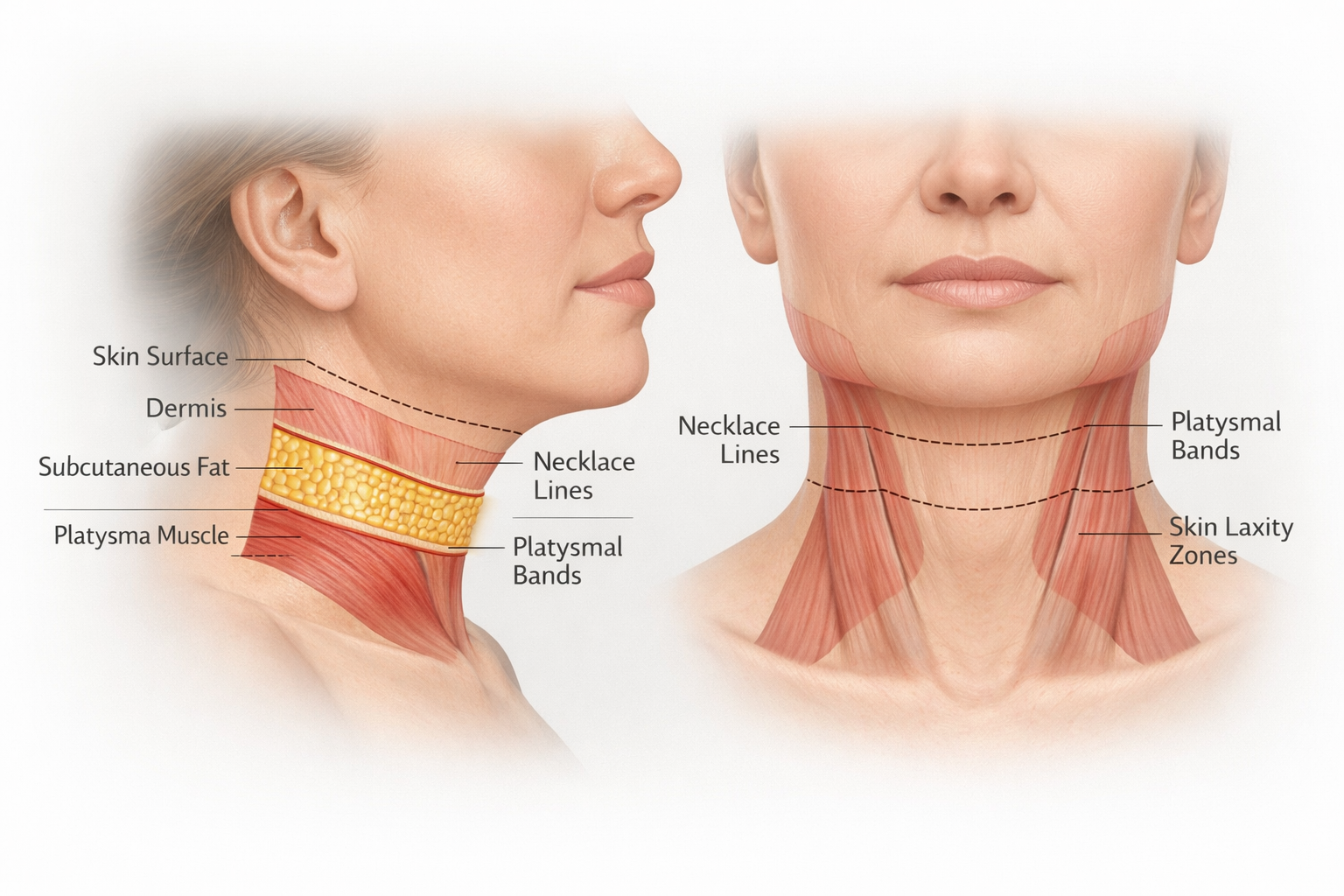
From the mid-thirties onward, the body produces progressively less collagen and elastin — the proteins responsible for skin firmness and rebound. As dermal thickness decreases, the skin loses its ability to spring back after movement, and lines begin to set in. The underlying platysma muscle, a thin sheet of muscle running from the jaw to the chest, also gradually loosens and can separate, creating visible vertical neck bands. Subcutaneous fat redistributes, gravity exerts its pull continuously, and the cumulative result is the sagging, crepey skin many people associate with an ageing neck.
Types of Neck Wrinkles: Understanding What You Are Dealing With
Not all neck wrinkles are the same, and identifying the type helps determine which approaches are likely to be most useful.
Horizontal Necklace Lines
Necklace lines are the horizontal creases that run across the front and sides of the neck. They are partly structural — many people are born with mild versions — but they deepen significantly over time due to repeated neck flexion, collagen loss, and sun exposure. Tech neck, the term used to describe the postural habit of looking down at smartphones and screens for extended periods, is increasingly recognised as a contributor to earlier and deeper necklace lines in younger adults.
Vertical Platysmal Bands
Platysmal bands are the vertical rope-like cords that become visible on the front of the neck, particularly when tensing the jaw or speaking. They develop as the platysma muscle ages, loses tone, and its medial edges separate and become more prominent. These bands are distinct from surface wrinkles and typically require treatments that address the muscle itself rather than just the overlying skin.
Crepey or Sagging Skin
Generalised skin laxity — crepey skin with a fine, tissue-paper-like texture — usually reflects a broader loss of collagen, elastin, and subcutaneous support. This type of wrinkling is more diffuse and often extends down to the décolletage. It tends to be more challenging to treat with a single approach and may benefit from combination protocols.
What Causes a Wrinkly Neck?
Understanding the causes helps set realistic expectations about both prevention and treatment outcomes.
Natural Ageing and Collagen Decline
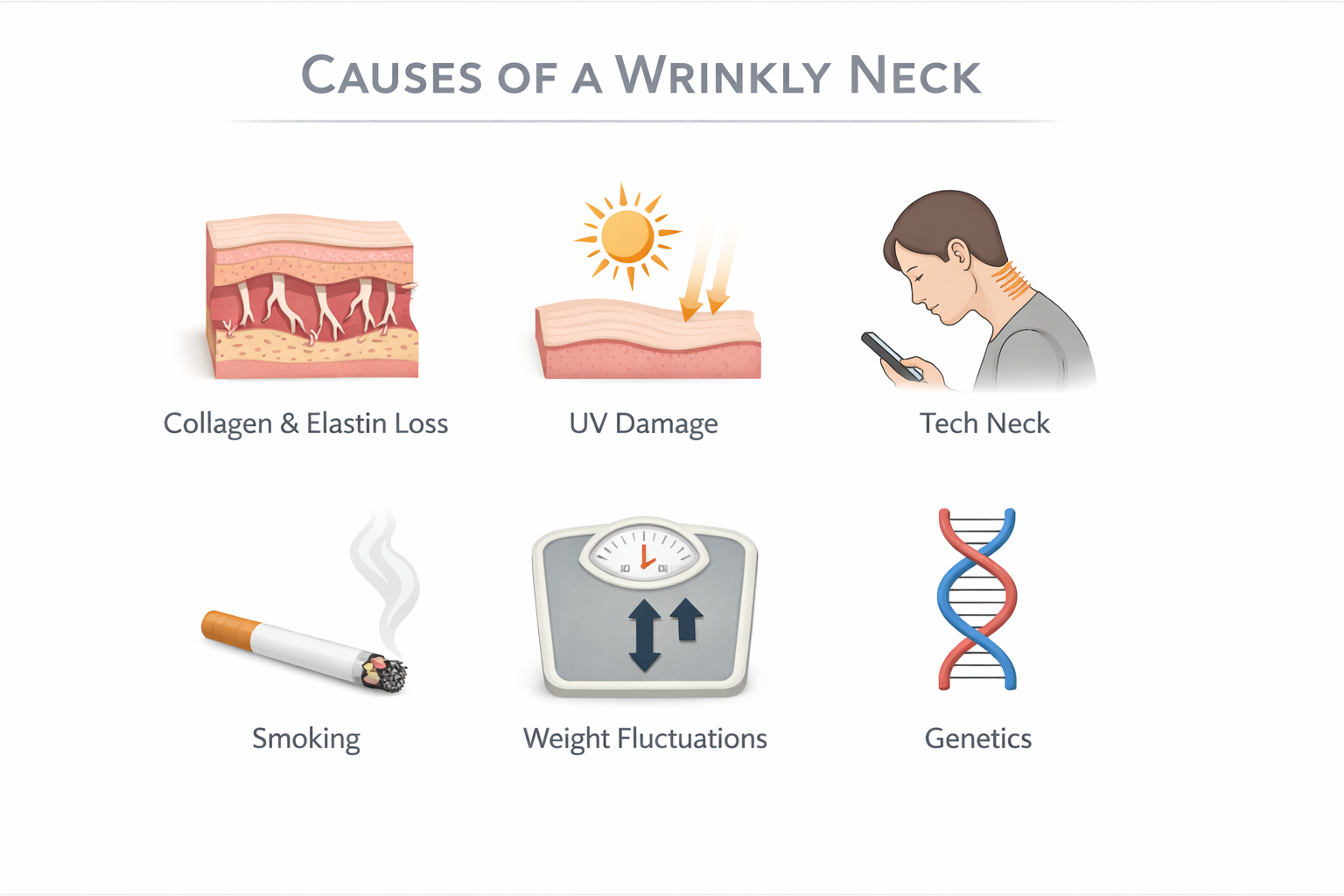
The most fundamental cause is biological ageing. Collagen production declines at roughly 1% per year after the mid-twenties. Elastin fibres become stiffer and less functional. The dermis thins, sebum production falls, and the skin’s natural moisture retention decreases. These changes happen to everyone, though the rate and extent vary considerably based on genetics.
Sun Exposure and Photoageing
Cumulative UV damage is one of the most significant accelerators of neck ageing. UV rays degrade collagen and elastin fibres directly, trigger inflammatory pathways, and cause uneven pigmentation. Because many people apply sunscreen to their face but forget the neck entirely, photoageing on the neck can outpace facial ageing — sometimes by years. Broad-spectrum SPF protection is the single most evidence-supported preventive measure available.
Tech Neck and Posture
The average adult spends several hours daily looking down at a phone or laptop screen. This repeated downward flexion of the neck compresses the skin and reinforces horizontal crease lines over time. Tech neck is a genuine and growing contributor to neck wrinkling in people in their thirties and even twenties, and improving posture — sitting more upright, raising screens to eye level — is a genuinely useful preventive step.
Sleeping Position
Side and stomach sleepers repeatedly compress the neck skin against a pillow during sleep, which can reinforce lines over years. Sleeping on your back reduces this compression, though most people find it difficult to maintain consistently.
Smoking, Diet and Lifestyle
Smoking impairs microcirculation and accelerates collagen breakdown, making it one of the more damaging lifestyle habits for skin quality. A diet high in processed foods and sugar promotes glycation — a process that damages collagen fibres structurally. Alcohol dehydrates the skin and contributes to inflammation. None of these factors act in isolation, but they do accumulate.
Weight Fluctuations
Significant or repeated weight gain and loss stretches and contracts the skin. Once elastin has been sufficiently stressed, the skin may not fully retract, leaving visible looseness particularly in the neck and jaw area. Rapid weight loss can make a wrinkly neck more apparent even in younger adults.
Genetics
Family history plays a meaningful role. Some people are genetically predisposed to earlier or more pronounced collagen loss, lower baseline skin thickness, or platysmal anatomy that makes bands more visible. Genetics cannot be changed, but their effects can be moderated with consistent preventive care.
Prevention: What Can Actually Make a Difference
Preventive measures are most effective when started before significant changes develop, but they retain value at any age by slowing further progression.
Daily Broad-Spectrum SPF
Applying a broad-spectrum SPF 30 or higher to the neck every morning — not just the face — is the most evidence-supported habit for slowing photoageing. This should include the décolletage, which is equally vulnerable to UV damage. Reapplication during prolonged outdoor exposure matters just as much as the initial application.
Extending Your Skincare Routine Downward
Most people treat their face carefully and stop at the jawline. Applying the same active ingredients to the neck and chest — cleansing gently, using a moisturiser, and including any active serums — can make a measurable difference over time. The neck deserves the same daily attention as the face.
Posture and Screen Habits
Positioning screens at eye level, being mindful of sustained downward head positions, and taking regular breaks during desk work all reduce the repetitive compression that contributes to tech neck. Neck exercises that strengthen supporting musculature and encourage upright posture may also help over the longer term, though evidence on specific exercises for wrinkle reduction is limited.
Skincare Ingredients That Support Neck Skin Health
Not all topical products provide meaningful benefit to the neck, but several ingredients have a reasonable evidence base for improving skin quality over consistent use.
Retinol and Retinoids
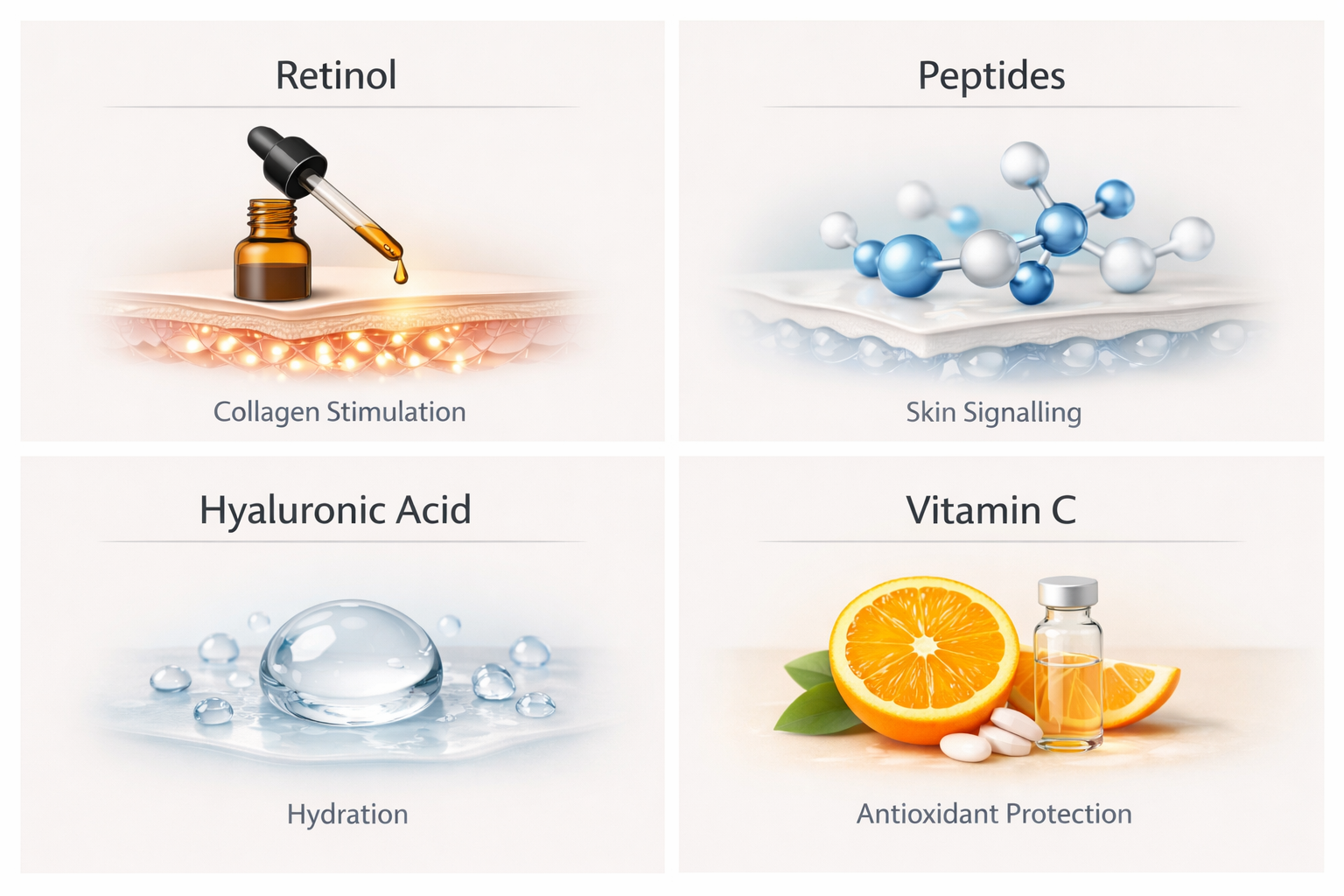
Retinol — and its prescription-strength equivalent, tretinoin — stimulate collagen production and increase cell turnover. They are among the most studied topical anti-ageing ingredients available. The neck skin can be sensitive to retinoids, so starting at a lower concentration and applying every other night before building frequency is generally advisable. Results require consistent use over months.
Peptides
Peptides are short chains of amino acids that signal the skin to produce more collagen and elastin. They are well-tolerated, making them suitable for daily use even on sensitive neck skin. While they are unlikely to produce dramatic visible change on their own, they complement other actives usefully.
Hyaluronic Acid
As a topical ingredient, hyaluronic acid draws moisture into the skin and temporarily plumps the appearance of fine lines. It does not reverse structural skin laxity, but it improves skin texture and hydration, which matters particularly on the neck where sebum production is lower. Applied to slightly damp skin, it performs better.
Antioxidants
Vitamin C serums help neutralise free radical damage from UV exposure and pollution, and may support collagen synthesis. Vitamin E works synergistically with vitamin C. Used in the morning before SPF, antioxidants add a useful layer of protection against environmental ageing.
Non-Surgical Treatments for a Wrinkly Neck
Non-surgical neck treatments have advanced considerably and can produce significant improvements in skin quality, texture, and laxity without the recovery demands of surgery. The right choice depends on the type and degree of concern, individual anatomy, and realistic expectations.
| Treatment | Primary Target | Downtime | Duration of Results | Sessions Typically Needed |
|---|---|---|---|---|
| Botulinum toxin / Nefertiti lift | Platysmal bands, necklace lines | Minimal | 3–4 months | 1 per treatment cycle |
| Profhilo / bio-remodelling injectables | Skin quality, hydration, laxity | Minimal | 6–12 months | 2 initial, then maintenance |
| Dermal fillers | Deep necklace lines, volume | Minimal to mild | 9–18 months (varies) | 1–2 |
| Radiofrequency (e.g. Morpheus8) | Skin tightening, collagen stimulation | Mild to moderate | 12–18 months | 1–3 |
| Ultherapy (focused ultrasound) | Deeper tissue tightening and lifting | Minimal | 12–18 months | 1–2 |
| Microneedling | Skin texture, fine lines, collagen | Mild (1–3 days) | 6–12 months | 3–6 |
| Fractional laser resurfacing | Skin texture, crepey skin, lines | Moderate (5–7 days) | 12–24 months | 1–3 |
| Thread lift (e.g. Silhouette Soft) | Skin laxity, lifting, collagen stimulation | Mild to moderate | 18–24 months | 1 |
Botulinum Toxin and the Nefertiti Lift
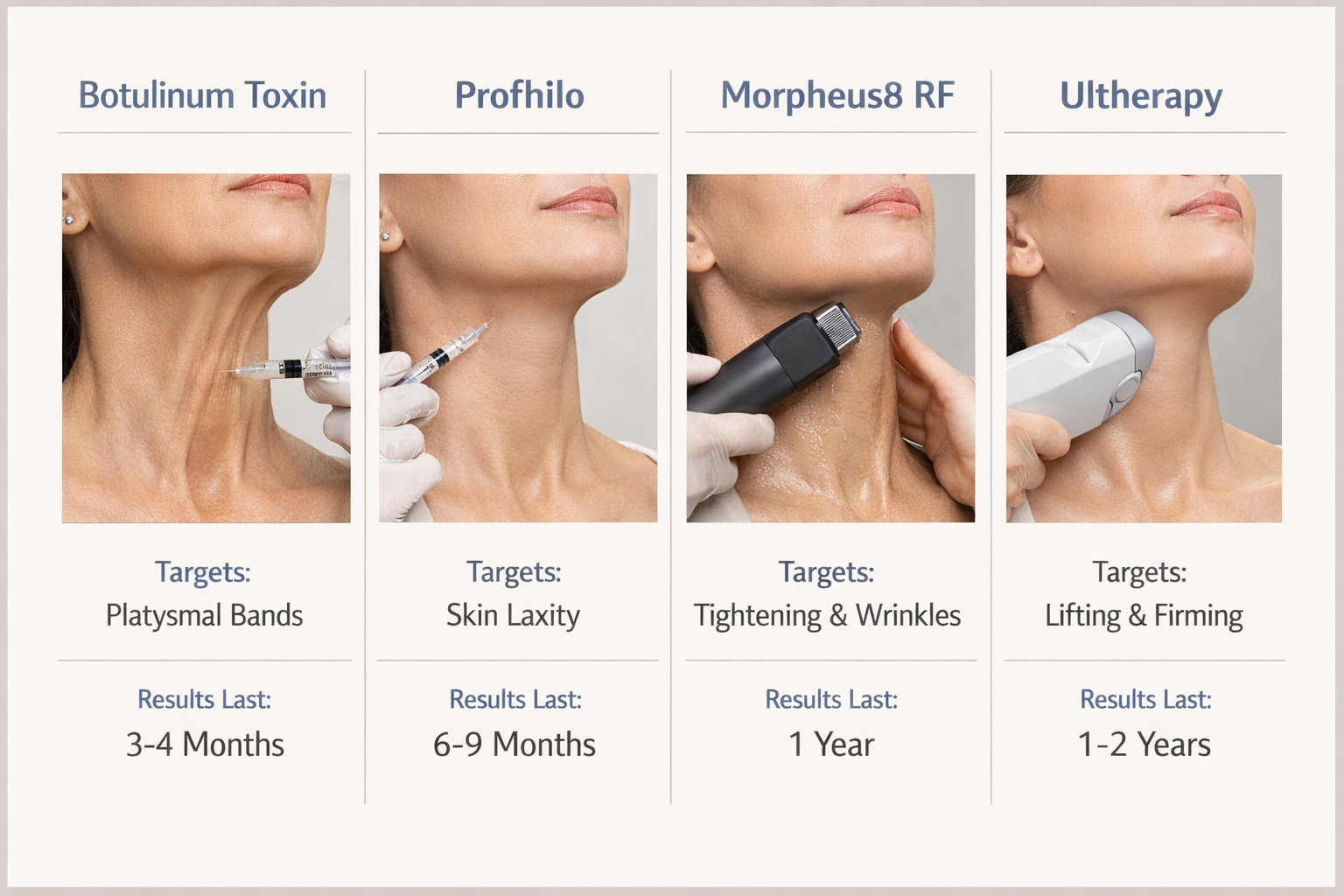
Botulinum toxin injected into the platysma muscle relaxes the downward pull that platysmal bands exert on the lower face and neck. The Nefertiti lift is a specific technique that targets both the platysmal bands and the jawline, producing a mild lifting effect on the lower face as well as softening vertical neck cords. Results typically last three to four months and require repeat treatment to maintain. Side effects are generally mild — bruising and temporary discomfort — when administered by a trained practitioner, though neck injections require careful dosing to avoid affecting adjacent muscles involved in swallowing or head movement.
Profhilo and Bio-Remodelling Injectables
Profhilo is an injectable that delivers a high concentration of hyaluronic acid into the skin to improve hydration, stimulate collagen and elastin production, and improve overall skin quality. It is particularly useful for crepey skin and diffuse laxity rather than for targeted wrinkles. Two initial treatment sessions are spaced four weeks apart, with maintenance typically every six to twelve months. Profhilo does not add volume or fill lines directly; its effect is progressive skin remodelling over several weeks after each session.
Radiofrequency Treatments
Radiofrequency energy heats the deeper layers of the skin to stimulate collagen production and encourage tissue contraction. Devices such as Morpheus8 combine radiofrequency with microneedling, delivering heat at a controlled depth while also creating micro-channels in the skin surface. This dual mechanism targets both skin texture and deeper laxity. Morpheus8 treatments on the neck typically involve mild to moderate redness and swelling for a few days. Results develop gradually over two to three months as new collagen forms, and improvements may last twelve to eighteen months.
Focused Ultrasound (Ultherapy)
Ultherapy delivers focused ultrasound energy to the deeper structural layers of the skin — depths not typically reached by surface treatments — to stimulate collagen and produce a gradual lifting and tightening effect. It is non-invasive with minimal downtime, though the treatment itself can be uncomfortable. Results appear slowly over two to three months and may last up to eighteen months. Ultherapy is generally considered more suitable for mild to moderate skin laxity rather than advanced sagging.
Thread Lifting
Thread lifts use dissolvable sutures — often made from poly-L-lactic acid — inserted beneath the skin to physically lift and reposition lax tissue. Over the following months, the sutures dissolve and stimulate a collagen response around them, maintaining some of the lifting effect. Results from thread lifting can last eighteen to twenty-four months. The procedure involves mild bruising and swelling and carries a small risk of thread visibility, migration, or dimpling if not placed correctly. Suitable candidates are those with mild to moderate laxity rather than significant excess skin.
Microneedling
Microneedling creates controlled micro-injuries in the skin using fine needles, triggering a wound-healing response that increases collagen and elastin production. It is particularly effective for improving crepey skin texture, fine necklace lines, and overall skin quality. Multiple sessions are usually needed — commonly three to six — spaced four to six weeks apart. Downtime is mild, with redness lasting one to three days. Microneedling alone has limited effect on significant skin laxity but works well as part of a combination protocol.
Fractional Laser Resurfacing
Fractional laser treatments resurface the skin by creating thousands of microscopic treatment zones, stimulating collagen remodelling and improving texture, tone, and fine lines. They can produce more significant improvement in skin quality than microneedling but involve greater downtime — typically five to seven days of redness and peeling. Laser treatments on the neck require careful settings, as neck skin is thinner than facial skin and more prone to adverse effects if overtreated.
Combination Treatment Approaches
Experienced practitioners often combine treatments to address multiple aspects of neck ageing simultaneously. For example, pairing a bio-remodelling injectable like Profhilo with a radiofrequency treatment such as Morpheus8 targets both skin quality and deeper tissue tightening in the same treatment course. Botulinum toxin may be added to address platysmal bands while other treatments work on skin texture. Combination protocols are not inherently superior for every patient — the right approach depends on the specific concerns, skin condition, budget, and tolerance for downtime — but they allow practitioners to target causes at different structural levels.
Surgical Options: Neck Lift
For patients with significant skin laxity, excess skin, or prominent platysmal bands that do not respond adequately to non-surgical approaches, a surgical neck lift — also called platysmaplasty — may be discussed with a plastic or reconstructive surgeon. The procedure addresses excess skin and the underlying muscle directly, producing more substantial and longer-lasting results than any non-surgical treatment. Recovery typically takes two to four weeks, with swelling, bruising, and tightness during that period. Scars are generally placed in discreet locations such as behind the ears or under the chin. A neck lift is an irreversible surgical procedure with real anaesthetic and procedural risks, and it is not appropriate for mild or moderate concerns where non-surgical options remain viable.
Age-Related Expectations: What to Consider by Decade
In your thirties, the focus is largely preventive — consistent SPF, extending skincare to the neck, and addressing posture and tech neck habits. Early collagen-stimulating treatments such as microneedling or Profhilo may be worth considering if early crepiness or light necklace lines are present.
In your forties, more visible necklace lines and early platysmal bands often develop as collagen loss accelerates and the platysma muscle begins to detach and loosen. This is typically when patients first seek professional assessment. Botulinum toxin for the Nefertiti lift, radiofrequency, and bio-remodelling injectables are commonly considered at this stage.
In your fifties and beyond, generalised skin laxity, more prominent platysmal bands, and crepey skin across the neck and décolletage are common. Combination non-surgical protocols can still produce meaningful improvement, though patients with significant excess skin may be better served by a surgical consultation.
Frequently Asked Questions
Can a wrinkly neck be reversed?
Partial improvement is realistic with the right treatments, but complete reversal is not. Non-surgical treatments can meaningfully improve skin quality, reduce the appearance of necklace lines and platysmal bands, and restore some skin firmness — but they cannot replicate the structural correction of surgery, and no treatment stops the ageing process. Managing expectations honestly before starting any treatment is important.
At what age do neck wrinkles typically start?
Mild necklace lines may be visible even in the twenties due to anatomy and posture. More noticeable changes — including visible skin laxity and platysmal bands — typically develop from the late thirties to mid-forties, accelerating with cumulative sun exposure, lifestyle factors, and genetics.
Is tech neck a real concern?
Yes. The sustained downward head position associated with looking at phones and screens repeatedly compresses the neck skin and reinforces crease lines over time. It is a genuine contributor to earlier and deeper horizontal necklace lines, particularly in younger adults. Adjusting screen height and posture can reduce this mechanical stress.
What is the Nefertiti lift?
The Nefertiti lift is a technique using botulinum toxin injections placed along the jawline and into the upper platysma muscle. It relaxes the downward muscular pull on the lower face and neck, producing a subtle lifting and smoothing effect. It is named after the Egyptian queen known for her long, defined neck. Results are temporary, lasting approximately three to four months.
Does losing weight cause a wrinkly neck?
Significant weight loss can make existing skin laxity more apparent, particularly if it occurs rapidly. When fat beneath the skin is reduced, the overlying skin — especially if it has lost elasticity — may not fully retract, resulting in a more visibly loose or wrinkly neck. Gradual weight loss gives the skin more time to adapt, though it does not eliminate this effect entirely.
Can neck exercises reduce neck wrinkles?
Neck exercises may improve muscle tone and posture, which can have a modest influence on the appearance of the neck over time. However, there is limited clinical evidence that specific exercises meaningfully reduce established neck wrinkles. They are best regarded as a supportive measure alongside skincare and professional treatments rather than a standalone solution.
When should I start a neck skincare routine?
The honest answer is as early as your mid-twenties, when collagen production begins to decline. Prevention is considerably more straightforward than correction. Extending SPF, moisturiser, and gradually introducing a retinol to the neck from an early age is a genuinely useful long-term habit.
Taking the Next Step for Your Neck Concerns
A wrinkly neck is one of the most common aesthetic concerns that patients raise, yet it is also one of the most undertreated — partly because people are unsure whether effective options exist and partly because they are not sure where to begin. The reality is that a range of well-established non-surgical treatments can produce visible improvement in skin quality, texture, and laxity, particularly when matched carefully to the individual’s specific concerns, anatomy, and treatment goals.
Skincare forms a meaningful foundation — broad-spectrum SPF, retinol, and peptides used consistently on the neck and décolletage genuinely slow the progression of neck ageing over time. For those already experiencing visible changes, a consultation with a qualified aesthetic practitioner can help identify which treatments — or combinations of treatments — are most appropriate. Not every patient needs the most intensive option, and many achieve good outcomes from minimally invasive approaches with little downtime.
A thorough clinical assessment is always the appropriate starting point. It allows the practitioner to evaluate the underlying causes of your specific concerns, review your medical history for relevant considerations, and recommend a realistic, personalised treatment plan rather than a one-size-fits-all approach.
