

Key Takeaways
- Tear lines is a broad term that covers two distinct concerns: tear troughs (under-eye hollows) and marionette lines (grooves running from the mouth corners downward), each with different anatomy and treatment approaches.
- Volume loss, fat pad migration, collagen depletion, and bone resorption are the primary drivers — and genetics can cause tear troughs to appear as early as the late teens or twenties.
- Hyaluronic acid filler is the most widely used non-surgical treatment for both areas, but patient selection matters enormously — particularly in the periorbital region where risks are higher.
- A combination treatment approach addressing multiple facial zones often produces more natural-looking results than isolating a single area.
- Surgical options including lower blepharoplasty and fat repositioning remain appropriate for patients with significant structural changes that fillers cannot adequately address.
What Are Tear Lines?
The term tear lines is used colloquially to describe the visible grooves, hollows, and creases that develop on the face as part of the aging process — most commonly referring to tear troughs beneath the eyes and marionette lines at the corners of the mouth. While these two concerns sit in different areas of the face, they share common underlying causes and are often treated together as part of a broader facial rejuvenation plan.
Understanding the distinction between them is important because the anatomy involved, the treatment options available, and the risks associated with each area differ considerably. What works well for one may not be appropriate for the other, and an experienced practitioner will assess both zones as part of the same clinical picture.
Tear Troughs: The Under-Eye Hollow Explained
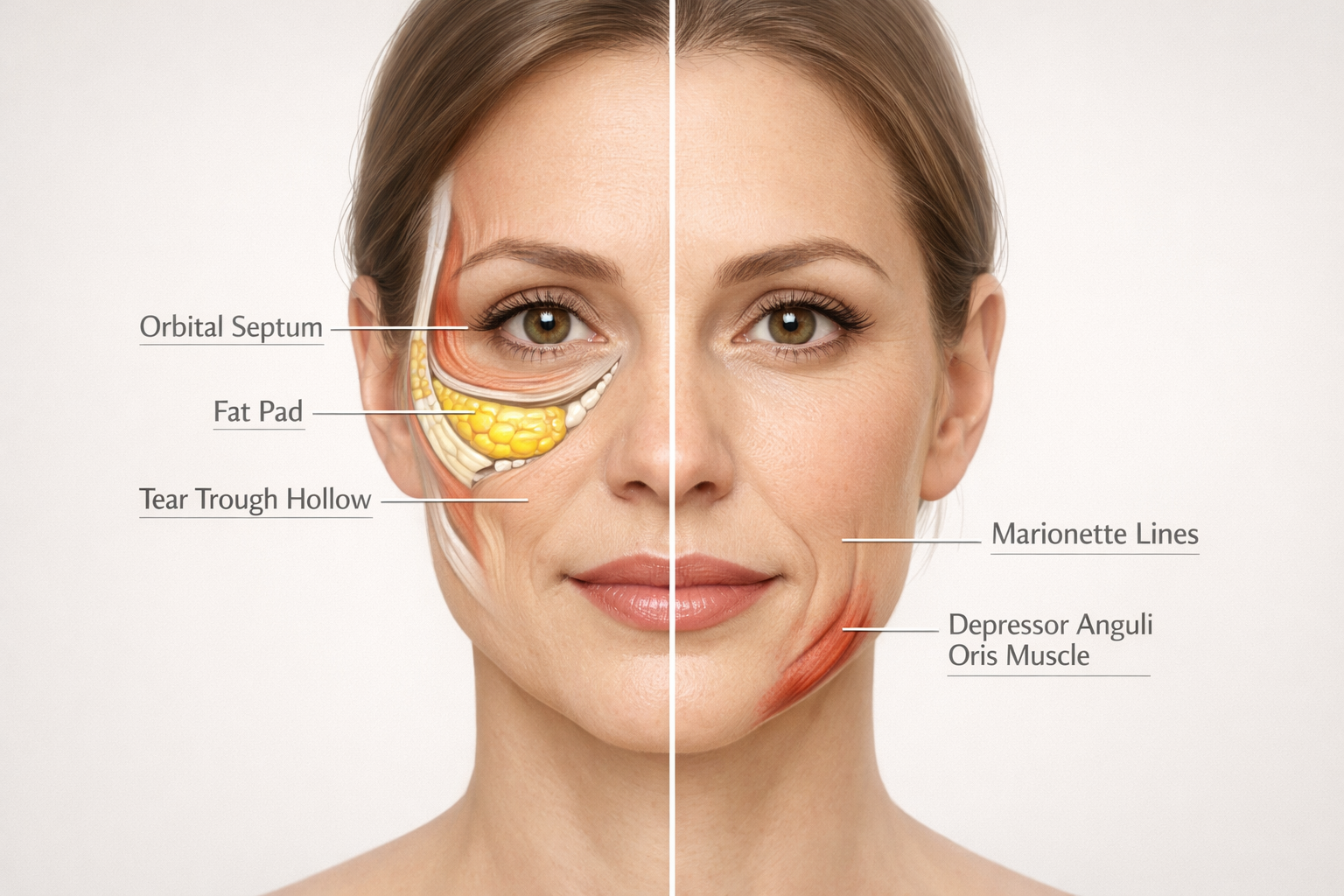
A tear trough is the groove that forms between the lower eyelid and the upper cheek. Clinically described as a tear trough deformity, it creates an under-eye hollow that casts a shadow — producing the appearance of dark circles, a tired expression, or sunken eyes, even in people who are well-rested and healthy.
The eyelid-cheek junction is anatomically complex. The lower eyelid is supported by the orbital septum — a thin membrane that holds the orbital fat pads in place behind the eye. With age, the orbital septum weakens, allowing fat to prolapse forward. Simultaneously, the cheek fat pads descend due to gravity and ligamentous loosening, creating a step-off or depression at the junction where the eyelid meets the cheek. The result is the characteristic hollow or shadowed appearance associated with the tear trough.
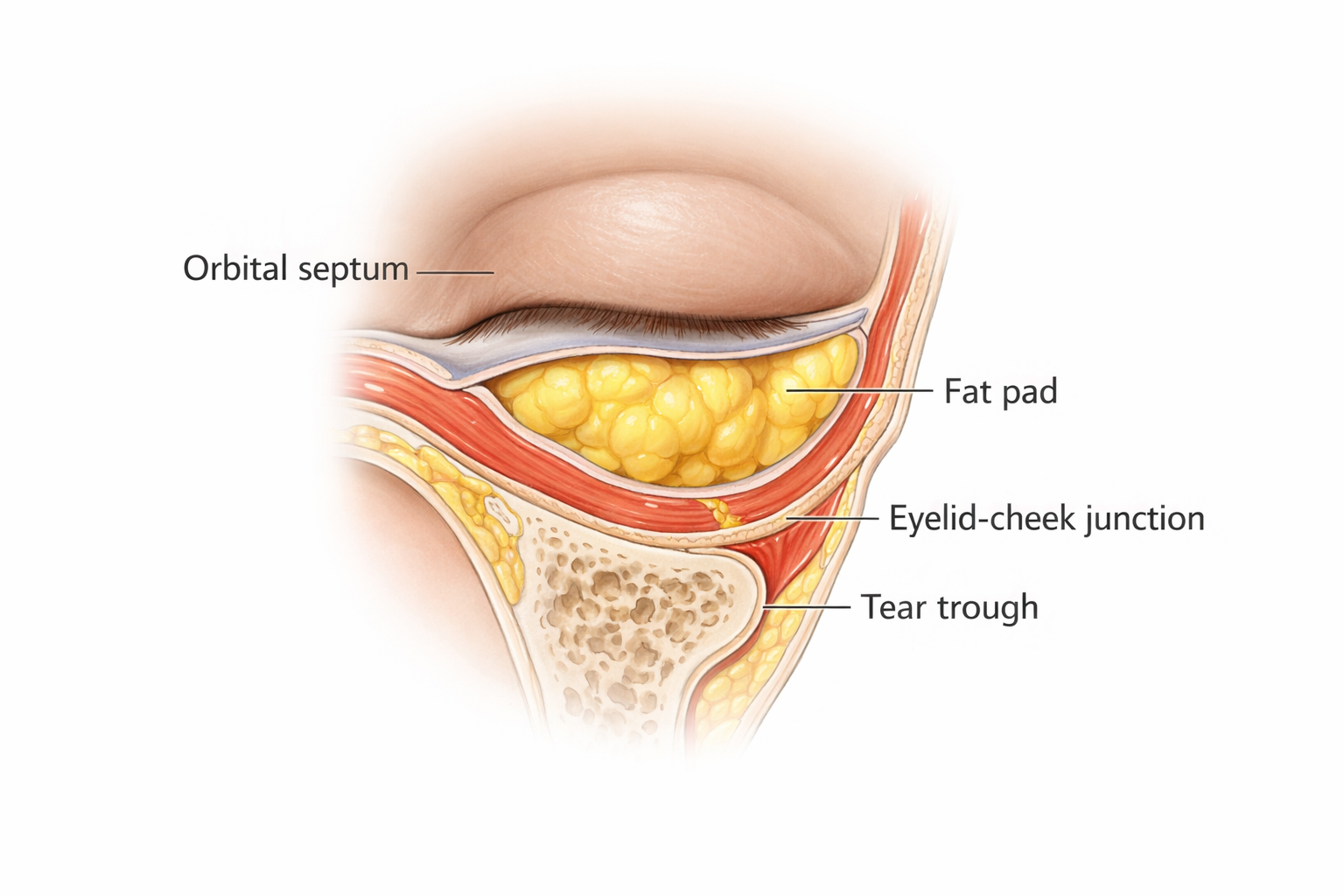
The skin in the periorbital region is among the thinnest on the face, which means that changes in the underlying soft tissue and bone are visible earlier here than in other areas. Bone resorption — the gradual loss of the orbital rim and midface skeleton that occurs with aging — further deepens the hollow by reducing the structural support beneath the soft tissue.
Who Gets Tear Troughs and Why?
Tear troughs are not exclusively a concern of older patients. Because the anatomy of the eyelid-cheek junction is partly determined by skeletal structure, some individuals develop a visible tear trough in their late teens or early twenties due to genetic factors — particularly those with a naturally deep-set orbital rim or limited midface projection. This early-onset pattern is frequently hereditary.
In older patients, the progressive nature of volume loss, fat pad migration, collagen and elastin depletion, and UV-related photodamage all compound over time. Lifestyle factors including poor sleep, smoking, and chronic allergies (which cause repetitive rubbing and venous congestion) can accelerate the appearance of dark circles and shadowing in this area.
Marionette Lines: What They Are and Why They Form
Marionette lines — also called melomental folds — are the vertical grooves that run downward from the corners of the mouth toward the chin. The name refers to the hinged jaw of a marionette puppet, as the lines can create the visual impression of a permanently downturned or sad expression. Clinically, they form at the junction between the mobile lower face and the more structurally supported area of the chin.
Several anatomical factors contribute. The depressor anguli oris muscle, which pulls the corners of the mouth downward, becomes more prominent with age as surrounding soft tissue support diminishes. The mandibular ligament — a retaining ligament anchoring the skin to the underlying bone along the jaw — creates a fixed attachment point, while the tissue above it descends with age, deepening the fold. Progressive loss of collagen, elastin, and subcutaneous fat in the lower face accelerates this process.
Marionette lines are often grouped with nasolabial folds (the lines running from the nose to the mouth corners) and considered part of the same pattern of lower-face descent. However, treating the nasolabial fold alone without addressing the marionette lines — or vice versa — can produce an unbalanced result. Many practitioners assess the oral commissures and lower face as a single aesthetic unit.
How Tear Troughs and Marionette Lines Differ
| Feature | Tear Trough | Marionette Lines |
|---|---|---|
| Location | Under-eye, eyelid-cheek junction | Mouth corners to chin |
| Primary cause | Fat prolapse, volume loss, bone resorption | Muscle activity, ligamentous descent, fat loss |
| Skin thickness | Very thin, high risk area | Thicker, more forgiving |
| Muscle involvement | Minor | Significant (depressor anguli oris) |
| Common non-surgical treatment | HA filler (fine, low-viscosity product) | HA filler ± botulinum toxin |
| Risk level for fillers | Higher (vascular anatomy, Tyndall effect) | Moderate |
| Surgical option | Lower blepharoplasty, fat repositioning | Facelift, fat grafting |
| Onset of concern | Can appear in late teens (genetic) | Typically mid-thirties onward |
Non-Surgical Treatment Options
Non-surgical facial rejuvenation has advanced considerably over the past decade, and most patients seeking improvement of tear lines are suitable candidates for one or more of the approaches below. The right choice depends on the severity of the concern, the patient’s anatomy, their general health, and their expectations regarding downtime and longevity.
Hyaluronic Acid Dermal Fillers
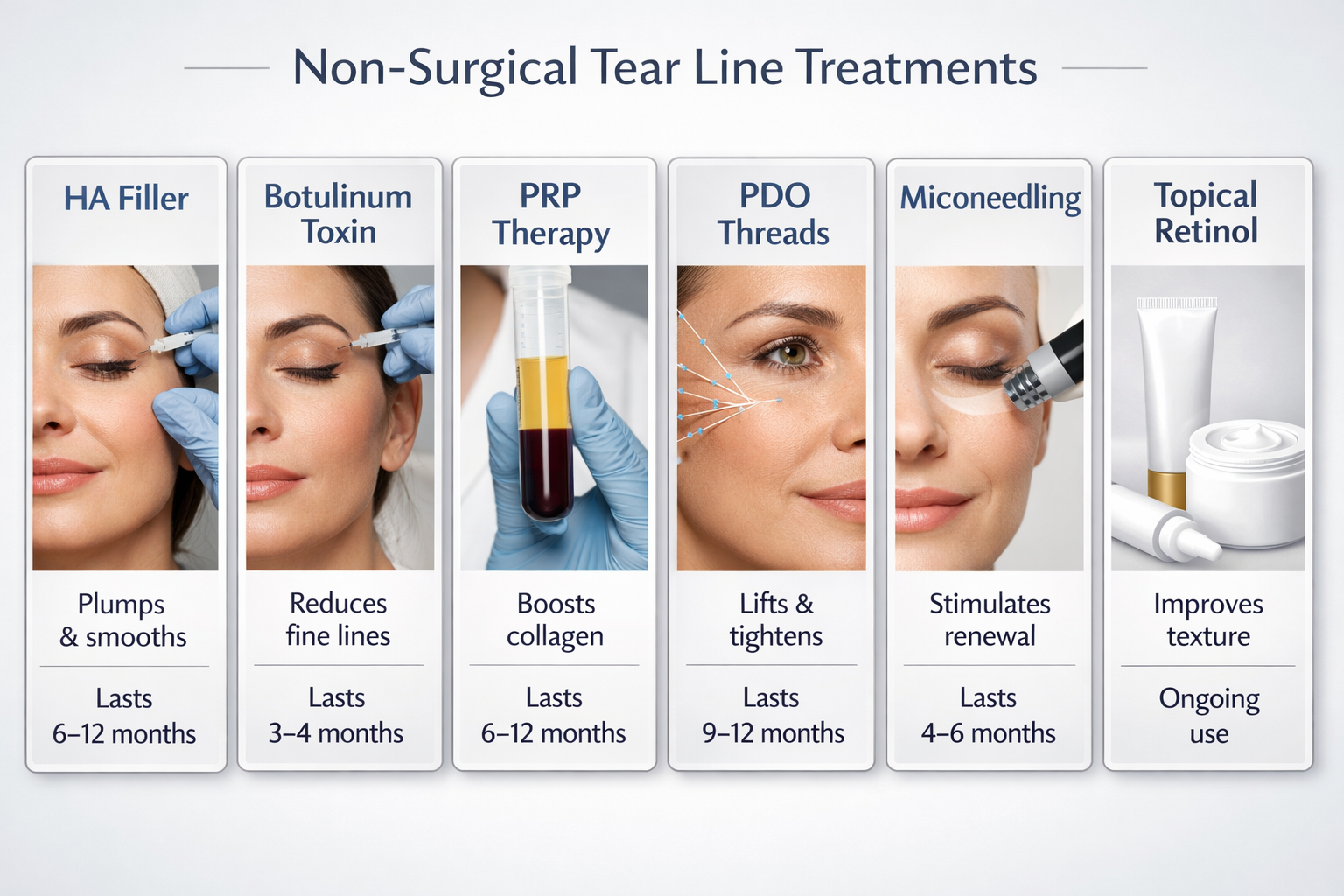
Hyaluronic acid filler is the most frequently used treatment for both tear troughs and marionette lines. Hyaluronic acid is a naturally occurring molecule in the skin that attracts and retains water; when injected in gel form, it restores lost volume and supports the overlying skin. The results are immediate and reversible — hyaluronidase enzyme can dissolve the filler if needed, which is an important safety consideration particularly in the under-eye area.
For tear troughs, practitioners typically select a low-viscosity, hydrophilic filler with fine particle size. Products such as Belotero Balance and Restylane are often preferred in the periorbital region because they integrate smoothly with the thin tissue and carry a lower risk of swelling or lumpiness than thicker formulations. Volbella and similar soft-consistency products may also be used. The cannula technique — where a blunt-tipped flexible cannula is used instead of a sharp needle — is commonly favoured in this area because it reduces bruising, minimises trauma to blood vessels, and lowers the risk of intravascular injection.
For marionette lines, slightly more structured fillers such as Juvederm Voluma or Restylane Lyft may be used to provide lift and support in the deeper tissue layers, with finer products used superficially for the fold itself. Treatment of the cheeks alongside the marionette lines is often recommended, as restoring midface volume reduces the degree of lower-face descent and produces a more harmonious outcome.
Filler longevity in both areas typically ranges from around nine months to two years, depending on the product used, the volume injected, the treatment area, and individual factors such as metabolism and muscle activity. Top-up treatments are usually recommended before the product has fully degraded to maintain a consistent result.
Botulinum Toxin
Botulinum toxin injections are not a primary treatment for tear troughs, but they play a useful supporting role in marionette line management. Because the depressor anguli oris muscle actively pulls the mouth corners downward, carefully placed botulinum toxin can reduce this downward pull and allow the elevator muscles of the face to dominate — subtly lifting the oral commissures. This is often combined with filler for a more comprehensive result. The effect is temporary, typically lasting three to four months, and repeat treatment is needed to maintain it.
Polynucleotides and PRP Therapy
Regenerative treatments such as polynucleotides and platelet-rich plasma (PRP) therapy work through collagen stimulation rather than volume replacement. They are not intended to fill hollows or lift folds directly, but over a course of treatments they may improve skin quality, hydration, and tissue integrity in the periorbital and lower-face regions. These approaches are often positioned as complementary to filler rather than alternatives for moderate-to-severe tear lines.
PDO Thread Lift
PDO thread lifts use dissolvable sutures placed under the skin to provide mechanical lift and stimulate collagen production. They can be considered for patients with mild-to-moderate marionette lines and lower-face laxity, particularly where volume addition alone would not produce the desired improvement. Thread lifts carry their own set of risks including thread migration, puckering, and infection, and results typically last twelve to eighteen months.
Microneedling and Laser Resurfacing
Microneedling — particularly radiofrequency microneedling — and laser skin resurfacing address skin quality, texture, and early laxity rather than volume deficit. Chemical peels using glycolic acid or trichloroacetic acid (TCA) can similarly improve the appearance of fine lines and skin texture in the periorbital region. These treatments work best in patients with mild concerns and relatively good skin quality, and they are often used as part of a maintenance programme alongside injectable treatments.
Topical Cosmeceuticals
While topical products cannot replace professional treatments for established tear lines, certain ingredients can support skin quality and slow the progression of fine lines. Retinol stimulates collagen production and accelerates cell turnover; caffeine-containing eye creams may temporarily reduce puffiness and improve circulation; and topical hyaluronic acid serums support hydration in the periorbital skin. These are most effective as preventive measures or as adjuncts to professional treatment rather than standalone solutions for moderate or deep tear lines.
Surgical Treatment Options
Surgical intervention becomes appropriate when structural changes have progressed beyond what non-surgical treatments can adequately address. A board-certified practitioner with surgical training will assess whether anatomy, skin laxity, and degree of fat prolapse make surgery a more appropriate first choice.
Lower Blepharoplasty
Lower blepharoplasty is the surgical procedure most directly indicated for tear trough deformity associated with significant fat prolapse. The procedure removes or repositions the orbital fat pads to smooth the eyelid-cheek junction, and may include skin excision if laxity is present. Fat repositioning — in which the prolapsed fat is redistributed rather than removed — has become a preferred technique in many cases because it addresses the hollowness below the bulge at the same time, producing a more natural contour. Recovery typically involves swelling and bruising for two to three weeks, with final results visible over several months.
Patients who have prominent under-eye bags alongside a deep tear trough — rather than hollowness alone — are more likely to be suitable for lower blepharoplasty than for filler, as injecting filler into an area with significant fat prolapse can worsen the appearance of puffiness.
Fat Grafting and Facial Implants
Autologous fat grafting — harvesting fat from elsewhere in the body and injecting it into areas of volume loss — can be used to address both tear troughs and lower-face hollowing contributing to marionette lines. The advantage is longevity, as a proportion of the transferred fat survives permanently; the limitation is that fat survival is variable and results can be less predictable than with synthetic fillers. Surgical tear trough implants are available but less commonly used, as filler and fat grafting tend to offer more flexibility.
Understanding the Risks
Risk transparency is essential in this area. The periorbital region carries some of the highest risk of any injectable treatment site due to the density of small blood vessels and the proximity of the eye itself. In the lower face, risk is more moderate but not absent.
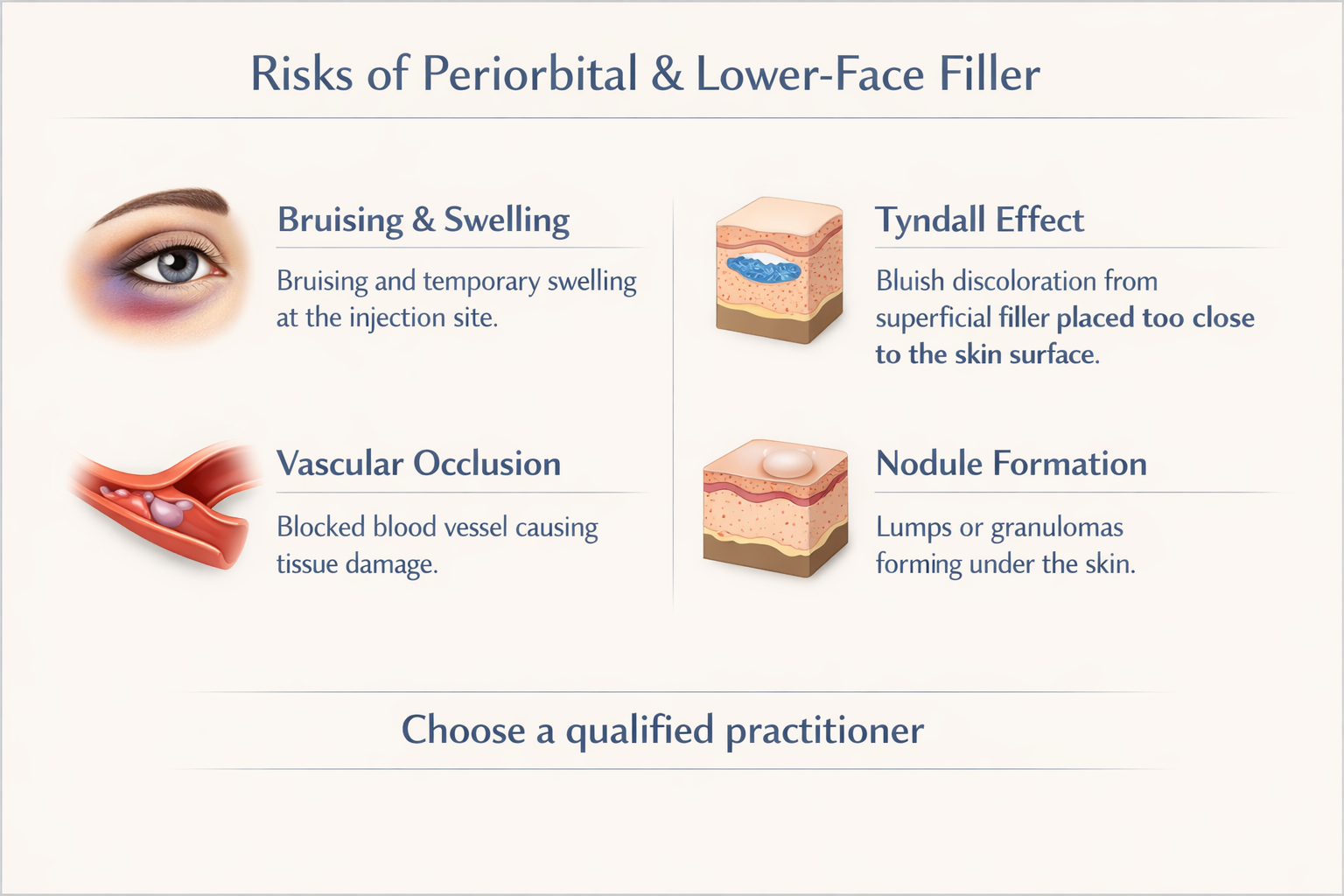
Common and generally temporary side effects of hyaluronic acid filler include bruising, swelling, and localised tenderness at the injection site. These typically resolve within one to two weeks.
The Tyndall effect is a specific complication associated with HA filler placed too superficially in thin-skinned areas such as the under-eye. It produces a bluish discolouration visible through the skin and is caused by light scattering off the filler particles. It can be corrected by dissolving the filler with hyaluronidase, which underlines the importance of choosing a reversible product and a qualified injector.
Vascular occlusion — where filler inadvertently enters or compresses a blood vessel, obstructing blood flow — is a rare but serious complication. In the periorbital region, this risk is particularly significant because the arterial supply to the eye can be affected. The use of the cannula technique, careful anatomical knowledge, and aspiration where appropriate all reduce but do not eliminate this risk. Hyaluronidase must be immediately available in any clinical setting where periorbital filler is performed.
Nodule formation, asymmetry, and an overfilled or unnatural appearance can result from inappropriate product selection or injection technique. For all these reasons, treatment of tear lines — and particularly tear troughs — should only be performed by a board-certified practitioner with specific training and experience in this anatomical area.
The Case for a Combination Treatment Approach
Facial aging is a three-dimensional process affecting skin, fat, muscle, and bone simultaneously across multiple zones. Treating a single isolated concern — such as the tear trough alone — without considering the surrounding anatomy often produces a result that looks localised rather than naturally rejuvenated.
A combination treatment approach that addresses the tear trough alongside the midface, or treats marionette lines in the context of the nasolabial folds and lower cheek, generally produces a more seamless and proportionate outcome. For example, restoring cheek volume reduces the step-off at the eyelid-cheek junction and creates a gradual transition that makes the tear trough treatment look more natural. Similarly, treating the marionette lines without considering the descent of the midface above them may leave the improvement looking incomplete.
This approach requires a practitioner who can assess the face holistically and discuss a treatment plan that balances the patient’s priorities with anatomical reality — rather than simply treating the area the patient has pointed to.
Prevention: Slowing the Progression of Tear Lines
While tear lines cannot be prevented entirely — particularly where genetics play a significant role — certain habits can delay or moderate their development. Daily broad-spectrum sunscreen use protects against UV-induced collagen degradation, which accelerates volume loss and skin laxity. Consistent moisturising and the use of topical retinoids supports collagen production and skin turnover. Adequate and regular sleep reduces periorbital congestion and puffiness. Avoiding smoking, managing seasonal allergies that cause eye rubbing, and maintaining a stable body weight all contribute to preserving facial soft tissue over time.
For patients in their twenties or early thirties who are beginning to notice early tear trough development, preventive skincare and low-dose cosmeceutical use may meaningfully slow progression. Earlier intervention with small volumes of filler, when the structural changes are mild, can also produce more conservative and natural-looking results than waiting until the deformity is well established.
Frequently Asked Questions
Am I a good candidate for tear trough filler?
Ideal candidates are those with a true hollow or volume deficit beneath the eye without significant fat prolapse (under-eye bags). Patients with prominent puffiness due to fat herniation may achieve a better result from lower blepharoplasty than from filler. A clinical assessment is required to determine which approach is most appropriate for your anatomy.
Does tear trough or marionette line filler hurt?
Most practitioners apply a topical anaesthetic cream before treatment, and many hyaluronic acid fillers contain lidocaine. Discomfort is usually mild to moderate and brief. The under-eye area can be more sensitive than the lower face, though the use of a cannula technique often reduces procedural discomfort compared with needle injection.
How long do results last?
Hyaluronic acid filler in the tear trough typically lasts nine to fourteen months, though some patients report longer duration. Marionette line filler may last twelve to twenty-four months depending on the product used and individual factors. Botulinum toxin for the depressor anguli oris generally lasts three to four months. Surgical results from lower blepharoplasty or fat grafting are longer-lasting, though not immune to continued aging.
What is the Tyndall effect and how is it avoided?
The Tyndall effect occurs when hyaluronic acid filler is placed too close to the skin surface in a thin-skinned area, causing a bluish or greyish discolouration as light scatters off the filler particles. It is avoided by using appropriate products at the correct depth and by choosing a practitioner with specific experience in periorbital injections. If it occurs, hyaluronidase dissolves the filler and resolves the discolouration.
Can I treat both tear troughs and marionette lines in the same appointment?
Yes, and this is often recommended as part of a planned approach to facial rejuvenation. Treating multiple areas in a single session allows the practitioner to assess overall facial balance and adjust volumes accordingly. The total amount of filler used across zones will vary by individual, and a qualified practitioner will guide appropriate volume selection.
Are there any topical treatments that genuinely help tear lines?
Topical treatments including retinol, caffeine eye creams, and hyaluronic acid serums can improve skin quality and mildly reduce puffiness, but they do not address the underlying volume deficit or structural changes that create tear troughs or marionette lines. They are best viewed as supportive and preventive measures rather than corrective solutions for established tear lines.
Making the Right Decision About Tear Line Treatment
Tear lines — whether tear troughs under the eyes or marionette lines at the mouth — are a natural part of facial aging driven by well-understood anatomical changes. The good news is that a range of effective treatment options exists across the non-surgical and surgical spectrum, and the right approach can meaningfully restore a rested, refreshed appearance without looking overdone.
The most important factor in achieving a good result is not the product used but the clinical judgment of the practitioner selecting and placing it. The periorbital region in particular demands specific expertise, careful product selection, and a clear understanding of the relevant vascular anatomy. A board-certified practitioner with experience in both tear trough and lower-face treatment is best placed to assess whether filler, botulinum toxin, a combination of treatments, or a surgical referral is the most appropriate pathway for your concerns.
If you are considering treatment for tear lines, a thorough consultation — covering your anatomy, medical history, realistic expectations, and the full range of options available — is the essential first step. Approached thoughtfully, treatment of tear troughs and marionette lines can produce some of the most impactful and natural-looking results in aesthetic medicine.
