

Key Takeaways
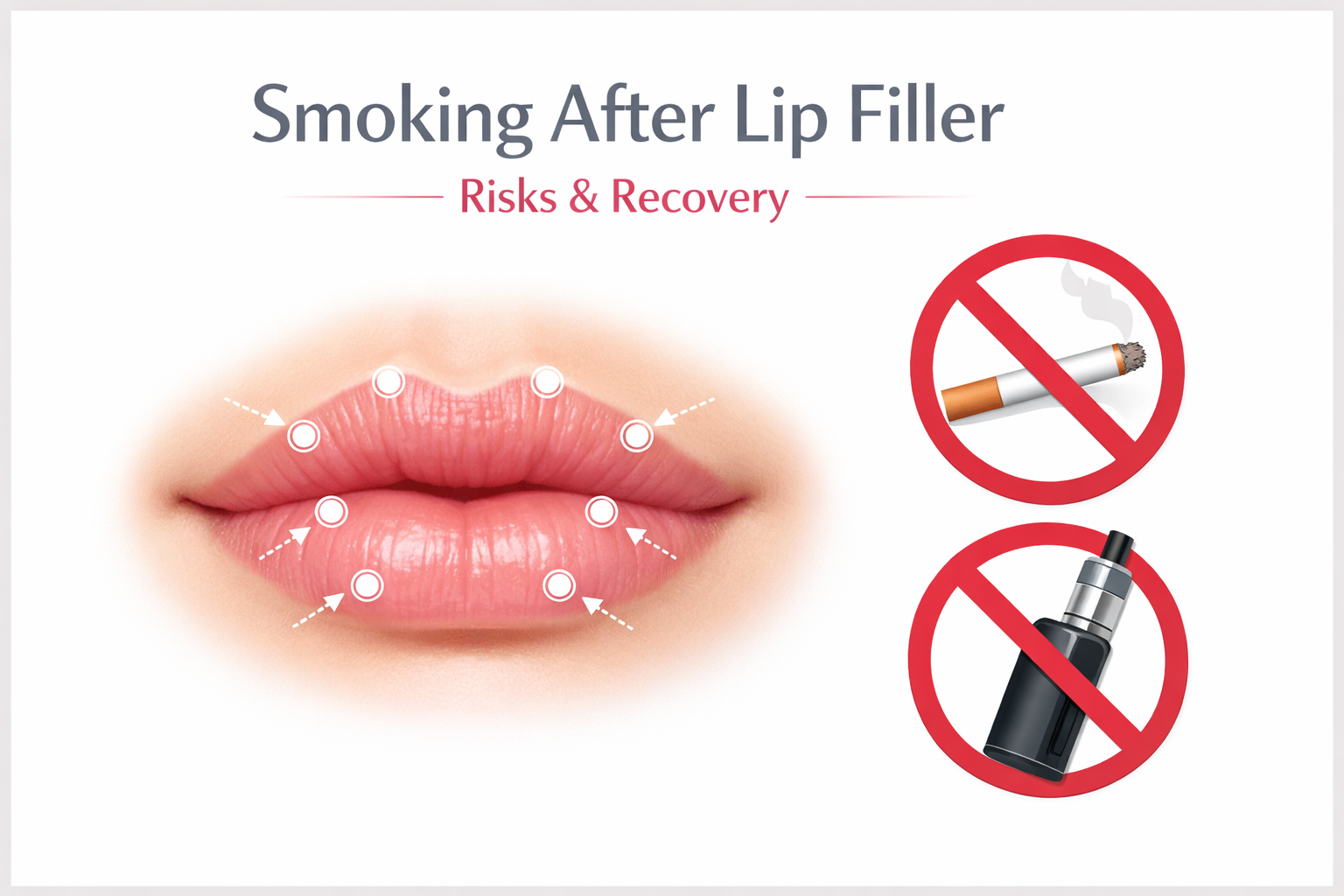
- Smoking is not recommended for at least 48–72 hours after lip filler, and ideally longer during the active healing phase.
- Nicotine restricts blood flow to the treated area, which can slow healing and increase the risk of complications at the injection sites.
- The pursing motion required to smoke or vape creates suction pressure that may cause filler migration or uneven results.
- Vaping carries similar risks to smoking after lip filler — the nicotine and the physical motion both remain problematic.
- Nicotine replacement options such as patches or gum may be practical alternatives during the recovery period, as they avoid both the suction motion and smoke exposure.
The Short Answer: Should You Smoke After Lip Filler?
No — smoking after lip filler is strongly discouraged, particularly in the first few days following treatment. This applies to cigarettes, cigars, pipes, and vaping devices. The reasons are both chemical and mechanical: nicotine affects blood circulation to the healing tissue, while the act of drawing on a cigarette or vape applies physical pressure to injection sites that are still vulnerable during the recovery period.
Most practitioners advise avoiding smoking for a minimum of 48–72 hours post-treatment, though a longer pause — ideally one to two weeks — gives the hyaluronic acid filler time to settle properly and reduces the overall risk of complications. If you are planning lip filler and you smoke regularly, discussing this with your practitioner in advance allows you to plan the most appropriate approach for your recovery.
Why Smoking Is Harmful After Lip Filler
Nicotine Restricts Blood Flow to the Healing Tissue
Nicotine is a vasoconstrictor, meaning it causes blood vessels to narrow. After lip filler treatment, the injection sites need an adequate supply of oxygen and nutrients delivered through the bloodstream to support normal tissue healing. When nicotine restricts blood flow, this delivery is compromised. Reduced oxygen levels in the tissue can slow the healing process, making the area more vulnerable to swelling, bruising, and in more serious cases, delayed wound healing or infection.
The lip area is highly vascularised, which is partly why it is sensitive during and after treatment. Impairing circulation — even temporarily — during the critical early healing window creates a less favourable environment for the filler to integrate with the surrounding tissue.
The Physical Motion: Pursing and Suction
The mechanical risk of smoking is often overlooked, but it is equally important. Drawing on a cigarette, cigar, or vaping device requires pursing your lips and creating a suction motion. In the hours and days after lip filler, the treated tissue is soft, slightly swollen, and the product has not yet fully settled into its intended position. Repeated pursing places pressure on the injection sites and can cause the filler to shift from where it was placed — a phenomenon known as filler migration.
Filler migration may result in uneven results, lumping, or a loss of the defined lip border your practitioner aimed to create. The same concern applies to drinking through a straw, which involves a similar suction motion, and is typically listed alongside smoking in standard lip filler aftercare guidance.
Chemical Irritants in Cigarette Smoke
Beyond nicotine, cigarette smoke contains hundreds of chemical irritants and toxins. Direct exposure of freshly treated lip tissue to these compounds may contribute to localised irritation and increased infection risk at the injection sites. The skin barrier around the lips is temporarily more vulnerable immediately after treatment, making this an especially poor time for chemical exposure.
How Long Should You Wait to Smoke After Lip Filler?
The minimum recommended waiting period most practitioners advise is 48–72 hours. However, this should be understood as the earliest point at which the most acute risks begin to reduce — not as a signal that smoking is fully safe at that stage. The healing process continues beyond the first few days.
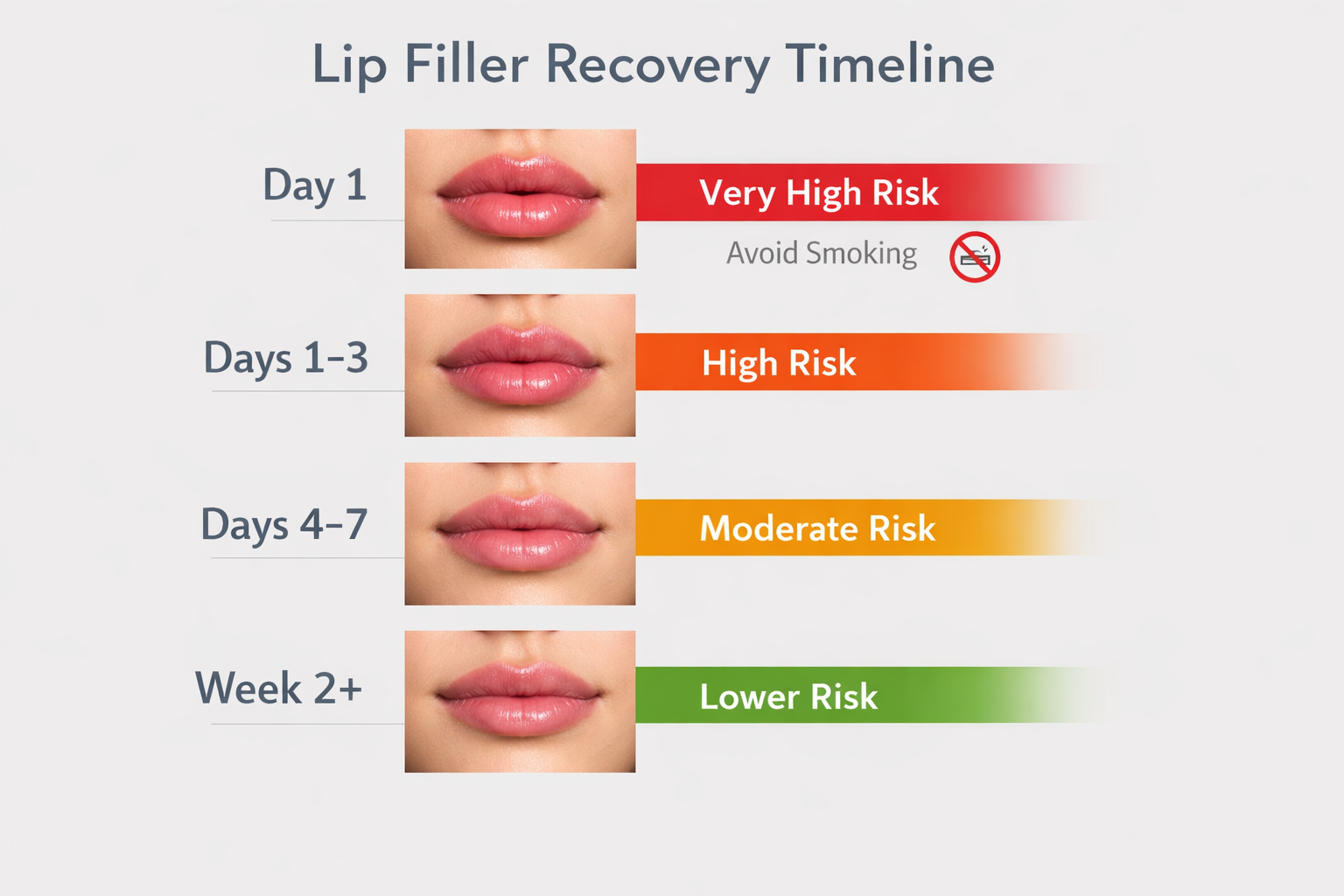
| Timeframe | What Is Happening | Smoking Risk Level |
|---|---|---|
| First 24 hours | Injection sites are open; swelling and bruising are at their peak; filler is not yet settled | Very high — avoid completely |
| 24–72 hours | Initial swelling begins to reduce; filler continues to integrate; tissue still vulnerable | High — continue to avoid |
| Days 4–7 | Visible swelling typically subsides; healing is progressing; filler is settling | Moderate — ideally still avoid |
| Week 2 onwards | Most healing is complete; filler has largely settled into position | Lower acute risk, but long-term effects on filler longevity remain |
Following your practitioner’s aftercare guidance specifically is always the most appropriate course of action. Individual healing timelines vary depending on the amount of filler placed, the products used, your skin condition, and your overall health. Some patients see bruising resolve within a few days; others take longer. When in doubt, waiting is always the safer choice.
Should You Stop Smoking Before Lip Filler Too?
This question is rarely addressed by standard aftercare advice, but it is worth raising with your practitioner. Smoking before a cosmetic procedure can affect baseline circulation and tissue oxygenation, potentially making the skin less resilient going into treatment. Patients who smoke may also experience more pronounced post-procedure swelling and bruising compared to non-smokers, partly because their vascular health and tissue condition may already be affected by ongoing nicotine exposure.
If you smoke regularly and are planning lip filler, reducing or pausing smoking in the days leading up to your appointment — as well as after it — may support a smoother recovery. This is worth discussing during your pre-treatment consultation, where your practitioner can give personalised guidance based on your health and treatment plan.
Can You Vape After Lip Filler?
Vaping after lip filler carries the same fundamental risks as smoking cigarettes. Although e-cigarettes do not produce the same range of combustion chemicals found in tobacco smoke, they still deliver nicotine — meaning the vasoconstriction effect on blood flow remains. The suction motion involved in vaping is identical to that of smoking, creating the same physical risk of filler migration at the injection sites through the pursing and puckering action.
Nicotine-free vaping devices reduce one concern but do not eliminate the mechanical risk. The repetitive lip movement and suction pressure still apply, and some e-liquid formulations contain chemical compounds that could irritate sensitive post-treatment tissue. The safest approach is to treat vaping with the same caution as cigarette smoking during the recovery period — meaning at least 48–72 hours of avoidance as an absolute minimum, and ideally longer.
| Product | Nicotine Risk | Suction Motion Risk | Chemical Irritant Risk | Overall Post-Filler Risk |
|---|---|---|---|---|
| Cigarettes | High | High | High | High |
| Vaping (nicotine) | High | High | Moderate | High |
| Vaping (nicotine-free) | None | High | Low–Moderate | Moderate |
| Nicotine patches | Low–Moderate | None | None | Low |
| Nicotine gum or lozenges | Low–Moderate | None | None | Low |
What About Smoking Cannabis After Lip Filler?
Smoking cannabis involves the same physical mechanics as tobacco — you are still pursing your lips, drawing with suction, and exposing freshly treated tissue to smoke. The risks related to filler migration from the pursing motion and chemical irritation from smoke inhalation therefore apply in the same way. Cannabis smoke also contains compounds that can affect circulation and tissue healing. If you use cannabis, the same guidance applies: avoid smoking it for at least 48–72 hours after lip filler, and consider non-smoked alternatives such as edibles during the healing window if needed.
Does Smoking Affect Lip Filler Results Long-Term?
Beyond the immediate healing period, smoking has implications for how long your lip filler results last and the overall quality of the outcome. Hyaluronic acid fillers are gradually broken down by the body over time — the typical duration ranges from six months to over a year, depending on the product used, the amount injected, the treatment area, and individual metabolism. Smoking can accelerate this breakdown process through several mechanisms.
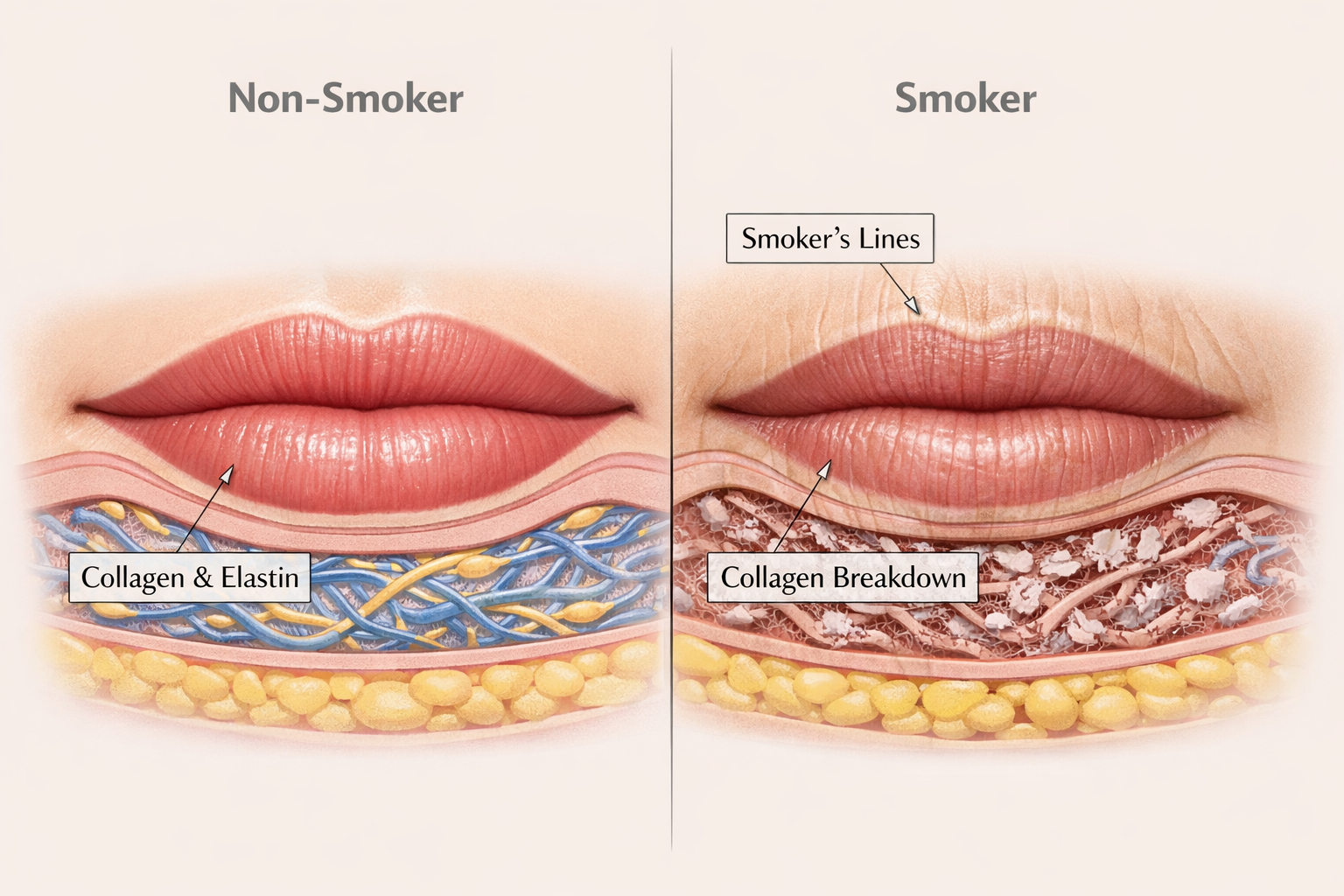
Nicotine-related vasoconstriction reduces the long-term oxygenation and hydration of lip tissue. Cigarette chemicals also contribute to the degradation of collagen and elastin — the structural proteins that support skin firmness and lip definition. Over time, this can result in the lip area losing definition more quickly, meaning filler results may appear to diminish faster in regular smokers than in non-smokers. This also has a practical cost implication: if filler breaks down more rapidly, more frequent top-up appointments may be required to maintain results.
Long-term smoking also contributes to the development of perioral wrinkles — often referred to as smoker’s lines — the fine vertical lines that form around the mouth from repeated pursing and puckering. These lines can make lip filler results appear less clean and defined, and they may themselves require treatment with additional dermal filler or other aesthetic procedures.
Practical Alternatives for Smokers During the Recovery Period
If stopping smoking entirely for the recommended period is challenging, nicotine replacement options represent the most practical harm-reduction approach. Nicotine patches, gum, or lozenges deliver nicotine without requiring the suction motion, and without exposing the lip tissue to smoke or vapour. While patches still deliver nicotine — which means the vasoconstriction effect has not been eliminated entirely — they remove both the physical mechanical risk and the chemical irritant exposure from smoke.
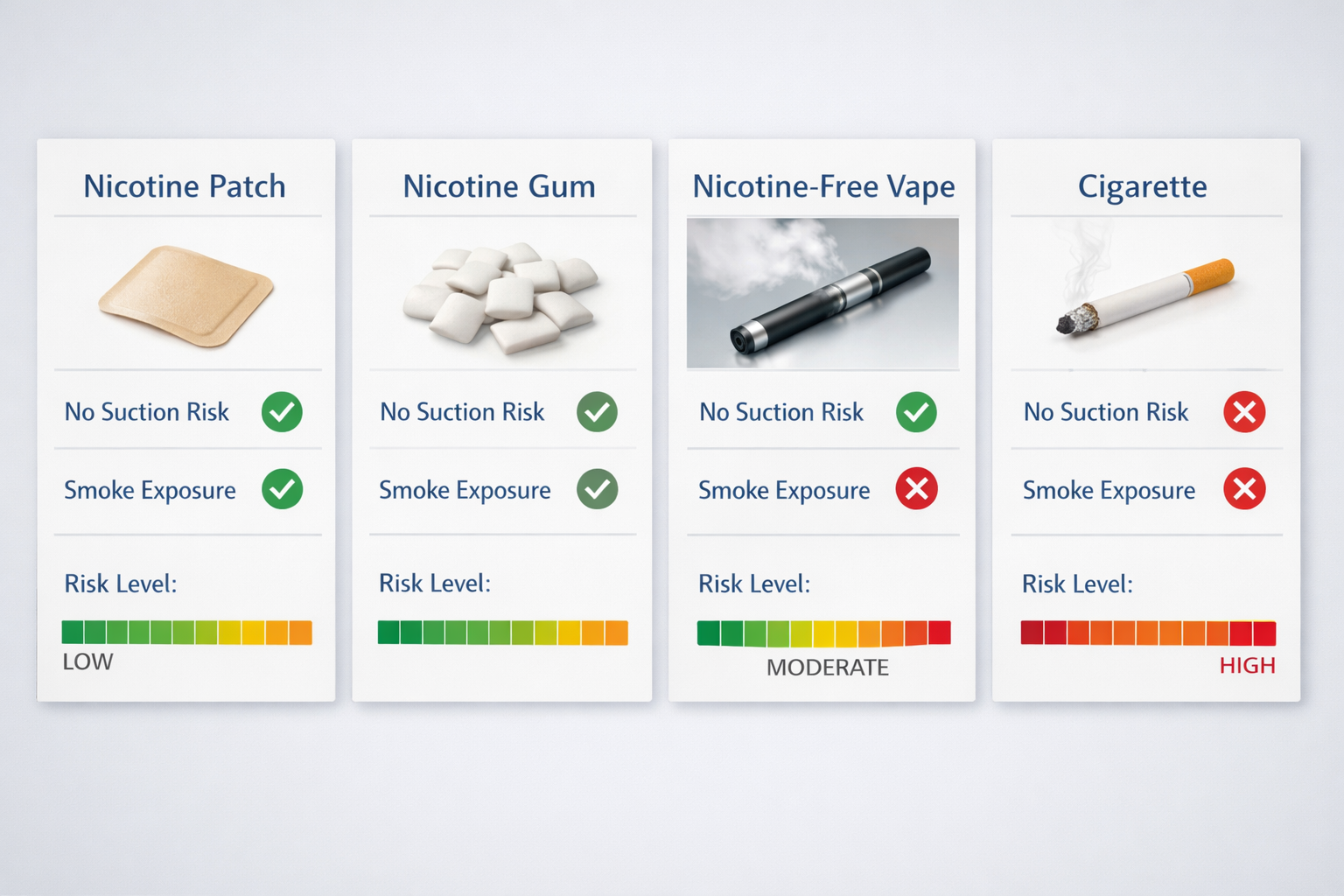
If you plan ahead before your lip filler appointment, transitioning to a patch or gum for the week of your treatment can significantly reduce the risks associated with smoking during the healing process. Discuss this with your practitioner as part of your pre-treatment planning.
Signs of Complications to Watch For
Whether or not you smoke after lip filler, it is important to know which post-treatment symptoms are a normal part of the healing process and which may indicate a complication that requires prompt attention. Mild swelling, tenderness, and some bruising at the injection sites are expected and typically resolve within a few days.
Contact your practitioner promptly if you notice any of the following:
- Redness that is spreading beyond the immediate injection area rather than fading
- Increasing pain or warmth in the lip area after the first 24–48 hours
- Pus, discharge, or open sores at or near the injection sites
- Fever or feeling generally unwell following the procedure
- White or pale patches on or around the lips, which can indicate a vascular concern
- Persistent or worsening lumps that do not resolve as swelling subsides
Smoking increases the infection risk at injection sites and can delay the appearance of normal healing, which may make it harder to distinguish expected post-treatment changes from early warning signs. This is another reason why avoiding smoking during the recovery period is medically advisable.
Broader Lip Filler Aftercare: What Else to Avoid
Smoking sits alongside several other activities and substances that practitioners routinely advise avoiding after lip filler. Understanding the full picture of post-treatment care helps you protect your results and support the healing process.
- Alcohol: Alcohol is a vasodilator that can worsen swelling and bruising; most practitioners advise avoiding it for 24–48 hours.
- Strenuous exercise: Increased heart rate and blood pressure can intensify swelling and bruising; typically avoid for 24–48 hours.
- Heat exposure: Saunas, steam rooms, and very hot showers can increase swelling; avoid for at least 48 hours.
- Drinking through a straw: The suction motion mirrors the risk associated with smoking; avoid for at least 48–72 hours.
- Applying makeup or lipstick: Cosmetics applied directly to the lips may introduce bacteria to injection sites; avoid for at least 24 hours or as directed.
- Dental work: Procedures that involve manipulation of the mouth area should be avoided for at least two weeks after lip filler where possible.
- Flying: Significant changes in air pressure may affect swelling; some practitioners advise waiting 24–48 hours before flying.
- Sleeping flat: Keeping the head slightly elevated for the first night can help minimise swelling.
Your practitioner’s aftercare guidance is the most reliable source for your specific situation. Following it carefully — including the advice on smoking — gives your lip filler the best opportunity to settle evenly and deliver the results you are expecting.
Frequently Asked Questions
How long after lip filler can I smoke?
Most practitioners recommend waiting a minimum of 48–72 hours before smoking after lip filler. Ideally, avoiding smoking for one to two weeks supports better healing and reduces the risk of filler migration and infection. Always follow your own practitioner’s aftercare guidance as the primary reference.
What happens if I smoke too soon after lip filler?
Smoking too soon can increase swelling and bruising, raise the risk of infection at the injection sites, and cause filler migration through the pursing and suction motion. In the longer term, it may contribute to uneven results or faster breakdown of the filler.
Is vaping safer than smoking after lip filler?
Vaping is not significantly safer than smoking in the context of lip filler recovery. Nicotine-containing vapes carry the same circulation-related risks as cigarettes, and the suction motion involved in vaping poses the same physical risk of filler displacement. Nicotine-free vaping removes the nicotine risk but retains the mechanical risk.
Can nicotine patches affect lip filler healing?
Nicotine patches still deliver nicotine to the bloodstream, which means vasoconstriction remains a consideration. However, patches eliminate the suction motion risk and the chemical irritant risk from smoke, making them a lower-risk option than smoking or vaping during the recovery period. They are a practical alternative worth discussing with your practitioner.
Does smoking make lip filler wear off faster?
Smoking may contribute to faster breakdown of hyaluronic acid filler over time. Nicotine reduces tissue oxygenation and contributes to the degradation of collagen and elastin, both of which affect how the lip area supports and retains filler. Smokers may find they need more frequent top-up treatments to maintain results compared to non-smokers.
Can secondhand smoke affect lip filler healing?
Passive exposure to cigarette smoke during the early healing period is worth minimising. Although the direct risks are lower than active smoking, secondhand smoke still contains chemical irritants that could affect the delicate tissue around freshly treated lips. Avoiding smoky environments in the first few days after treatment is a sensible precaution.
Protecting Your Lip Filler Results as a Smoker
Smoking does not automatically disqualify you from having lip filler, but it does require honest discussion with your practitioner and a commitment to adapting your habits during the healing window. The combination of nicotine’s effect on blood flow, the mechanical pressure of the pursing motion, and the chemical exposure from smoke creates a meaningful set of risks that are straightforward to reduce with some planning.
Pausing smoking — or switching to a nicotine replacement method that does not involve a suction motion — for at least one to two weeks around your treatment gives your filler the best conditions to settle evenly and produce the result you are hoping for. In the longer term, ongoing smoking may affect both the longevity of your filler and the overall quality of the skin around your lips, which is worth factoring into your aesthetic planning.
If you are considering lip filler and you smoke regularly, raise this at your consultation. A qualified practitioner can offer personalised guidance, tailor your aftercare plan, and help you understand what realistic results may look like given your individual circumstances.
