

Key Takeaways
- Acne scars fall into distinct types — ice pick, boxcar, rolling, hypertrophic, and pigmentation marks — and the most effective treatment depends on accurate scar type assessment.
- No single treatment resolves all scar types; most patients benefit from a personalised combination treatment plan developed by an experienced clinician.
- Treatments range from fractional CO2 laser and RF microneedling to TCA CROSS, subcision, and emerging options such as polynucleotide injections — each with different mechanisms, downtime, and suitability profiles.
- Acne scar treatment is not available on the NHS and is considered a cosmetic procedure; choosing a CQC-regulated clinic with appropriately qualified practitioners matters for both safety and results.
- Active acne should be controlled before beginning scar treatment, and realistic expectations around the number of sessions and degree of improvement are important to establish at consultation.
What Causes Acne Scarring?
Acne scarring develops when inflammation from a spot damages the deeper layers of the skin, disrupting the normal healing process. When the skin produces too little collagen during repair, a depressed or atrophic scar forms. When it produces too much, a raised hypertrophic or keloid scar results. The severity of scarring is influenced by factors including the depth of the original lesion, how long active acne was present before treatment, genetic tendency to scar, and whether spots were picked or squeezed — a habit that significantly worsens the inflammatory response and increases scarring risk.
It is also worth noting that not everything left behind after a breakout is a true scar. Red marks — known as post-inflammatory erythema — and flat brown or darker patches, referred to as post-inflammatory hyperpigmentation, are forms of discolouration rather than structural skin changes. They often fade over months with appropriate skincare and sun protection, though specific treatments can accelerate this. Distinguishing these from true scars is a clinically important step that shapes the treatment approach.
Types of Acne Scars: Understanding the Differences
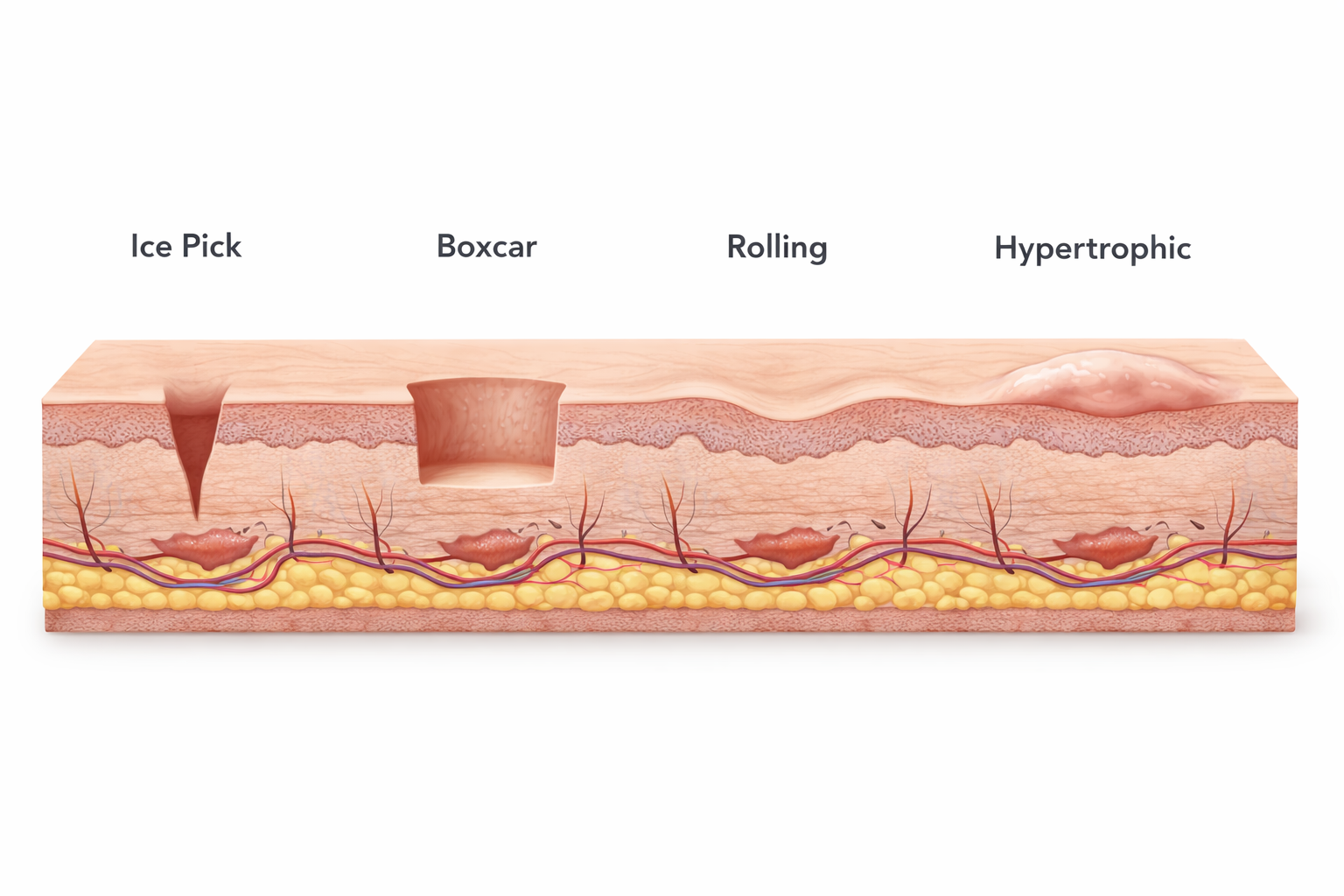
Accurate scar type identification is the foundation of any effective treatment plan. Most patients present with more than one type simultaneously, which is one reason why a scar type assessment by a qualified clinician is so valuable before committing to any procedure.
Ice Pick Scars
Ice pick scars are narrow, deep, and sharply defined — resembling small puncture marks in the skin surface. They extend into the deeper dermis or even subcutaneous tissue, making them among the most challenging type to treat. Their depth means that superficial resurfacing alone rarely produces satisfying results.
Boxcar Scars
Boxcar scars are wider than ice pick scars, with clearly defined, punched-out edges. They most commonly appear on the cheeks and temples. Their relatively flat base and defined walls make them more responsive to resurfacing treatments than ice pick scars, although deeper boxcar scars may require a combined approach.
Rolling Scars
Rolling scars create an undulating or wave-like appearance across the skin surface, caused by fibrous bands of scar tissue tethering the skin downward beneath the surface. They tend to appear on the lower cheeks and jaw. Because the underlying tethering is the structural problem, treatments targeting the surface alone are unlikely to produce lasting improvement.
Hypertrophic and Keloid Scars
Hypertrophic scars are raised, firm scars that remain within the boundary of the original wound. Keloid scars extend beyond the original wound margins and may continue to grow over time. Both result from an excess of collagen during healing and are more common on the chest, back, and jawline. They require a different treatment approach from atrophic scars.
Post-Inflammatory Pigmentation and Redness
Post-inflammatory hyperpigmentation presents as flat, darker patches where a spot healed. It is more common in medium to deeper skin tones and may persist for many months without intervention. Post-inflammatory erythema manifests as lingering redness or pink marks, more visible in lighter skin tones. Neither represents structural skin damage, and both are often addressed with targeted skincare, chemical peels, or vascular and pigment lasers rather than the same techniques used for atrophic scarring.
Acne Scar Treatments Available in London
The range of acne scar treatments available at specialist clinics in London is broad, reflecting the diversity of scar types and patient needs. The table below provides a practical overview of commonly used treatments, their primary indications, typical downtime, and the approximate number of sessions that may be needed. Individual results and requirements will vary.
| Treatment | Best Matched Scar Types | Typical Downtime | Approximate Sessions |
|---|---|---|---|
| Fractional CO2 laser | Boxcar, rolling, surface texture | 5–10 days | 1–3 |
| Erbium laser | Superficial to moderate atrophic scars | 3–7 days | 1–3 |
| RF microneedling | Boxcar, rolling, skin texture | 1–3 days | 3–6 |
| TCA CROSS | Ice pick scars, narrow boxcar | 5–10 days (focal) | 3–6 |
| Subcision | Rolling scars (tethered) | 3–7 days (bruising) | 2–4 |
| Punch excision | Ice pick, deep narrow scars | 1–2 weeks | 1–2 |
| Chemical peels | PIH, superficial texture, mild atrophic | 2–7 days | 4–6 |
| Dermal fillers | Deeper rolling or boxcar (temporary) | Minimal | Variable |
| Vascular laser | Post-inflammatory erythema (redness) | 1–3 days | 2–4 |
| Polynucleotide injections | Skin quality, early scar remodelling | Minimal | 3–4 |
Fractional CO2 Laser Resurfacing
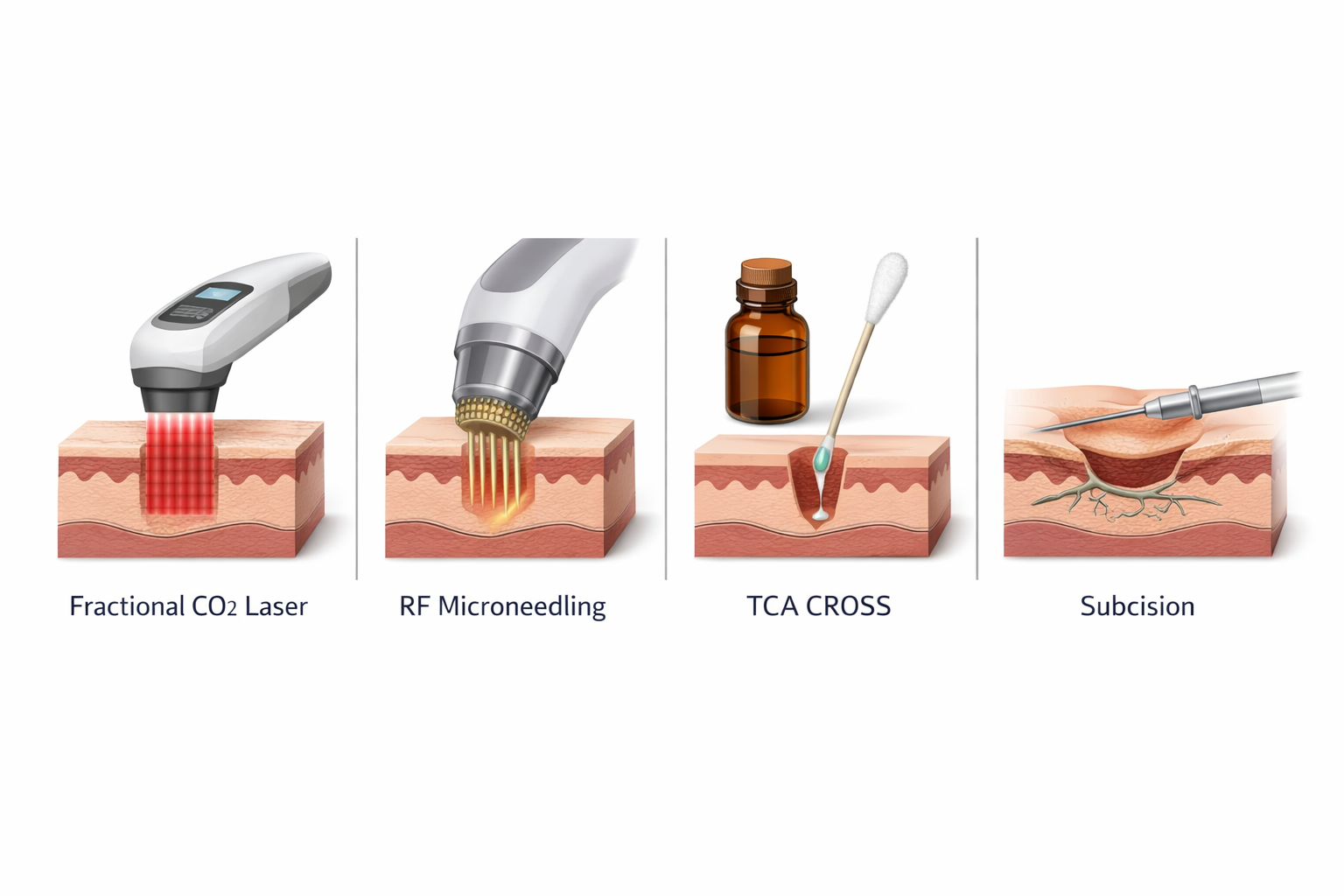
Fractional CO2 laser is one of the most established and widely studied treatments for moderate to severe acne scarring. The laser delivers thousands of microscopic columns of energy into the skin, creating controlled zones of thermal injury while leaving surrounding tissue intact. This triggers significant collagen remodelling and new skin formation. Results can be substantial for boxcar and rolling scars, and for overall uneven skin texture, though ice pick scars are often too narrow and deep to respond adequately to laser alone. Downtime is meaningful — typically five to ten days of redness, swelling, and peeling — and recovery requires careful aftercare. The risk of pigmentation changes is higher in darker skin tones, making settings and operator experience particularly important.
RF Microneedling
RF microneedling combines the collagen-stimulating effect of fine needles penetrating the skin with radiofrequency energy delivered at depth. Devices such as Morpheus8 allow the clinician to target different depths depending on scar type. The combined stimulus to collagen remodelling makes this treatment well suited to boxcar and rolling scars, and to improving overall skin texture. Compared with ablative laser, downtime is generally shorter — usually one to three days of redness and mild swelling — and the risk of post-inflammatory hyperpigmentation is lower, making RF microneedling a useful option for a broader range of skin tones. Multiple sessions are usually required.
TCA CROSS
TCA CROSS — chemical reconstruction of skin scars — involves the precise focal application of high-concentration trichloroacetic acid directly into the base of individual ice pick scars or narrow boxcar scars. The controlled chemical injury stimulates collagen production within the scar tract, gradually raising the base and reducing depth. It is one of the few treatments specifically effective for ice pick scars and is typically performed in a series of sessions spaced four to eight weeks apart. Each application results in focal crusting and redness that resolves over roughly one to two weeks. TCA CROSS is frequently combined with other modalities as part of a broader combination treatment plan.
Subcision
Subcision is a minor surgical technique designed specifically to address rolling scars caused by tethering beneath the skin surface. A fine needle or specialised cannula is inserted beneath the scar and moved to release the fibrous bands pulling the skin downward. This releases the tethering and allows the depressed area to rise. Some practitioners combine subcision with a filler or with PRP to support healing and maintain the lift. Bruising is common following subcision, and multiple sessions are often needed. Results for genuinely tethered rolling scars can be significant, but subcision alone does not address surface texture or other scar types.
Punch Excision
Punch excision is a minor surgical procedure in which individual ice pick or narrow, deep scars are removed using a small circular blade — a punch biopsy tool — sized to match the scar. The resulting small wound is either sutured closed or allowed to heal by secondary intention. The resulting fine linear scar or surface mark is typically far less visible than the original deep pitted scar and more amenable to subsequent laser resurfacing. Punch excision is usually reserved for isolated deep scars that have not responded adequately to other treatments.
Chemical Peels
Chemical peels using acids such as glycolic acid, salicylic acid, or trichloroacetic acid at lower concentrations can improve superficial skin texture, address post-inflammatory hyperpigmentation, and produce modest improvement in mild atrophic scarring. They are generally more affordable than laser or surgical techniques, carry shorter downtime, and are suitable across a wide range of skin concerns. They are unlikely to produce meaningful improvement in deeper structural scars when used alone, but form a useful component of staged or combination approaches, particularly for addressing pigmentation alongside other treatments.
Polynucleotide Injections and Emerging Treatments
Polynucleotide injections — sometimes abbreviated as PNCT — are a newer addition to acne scar treatment protocols in London. Derived from purified DNA fragments, polynucleotides are thought to support tissue regeneration and improve skin quality, hydration, and early scar remodelling. Clinical evidence specific to acne scarring is still developing, but polynucleotides are increasingly used alongside established treatments to support collagen stimulation and skin quality improvement between sessions. Other emerging treatments including PRX-T33 (a non-ablative bio-stimulating chemical peel) and exosomes are being incorporated at some clinics, though independent clinical evidence for these in acne scar treatment remains limited and should be discussed with realistic expectations.
Why Combination Treatment Is Usually Necessary
Most patients seeking acne scar treatment in London present with more than one scar type — for example, a combination of ice pick scars, rolling scars, and residual post-inflammatory hyperpigmentation on the same area of the face. No single treatment modality addresses every scar type effectively, which is why an experienced clinician will typically design a combination treatment plan that sequences different techniques to target different structural problems. A common approach might involve subcision to release tethered rolling scars, TCA CROSS sessions for ice pick scars, followed by fractional laser or RF microneedling to refine surface texture and stimulate broader collagen remodelling. The specific sequence, spacing, and number of treatments should be tailored to the individual based on scar types, skin tone, downtime tolerance, and treatment goals.
Acne Scar Treatment and Skin Tone
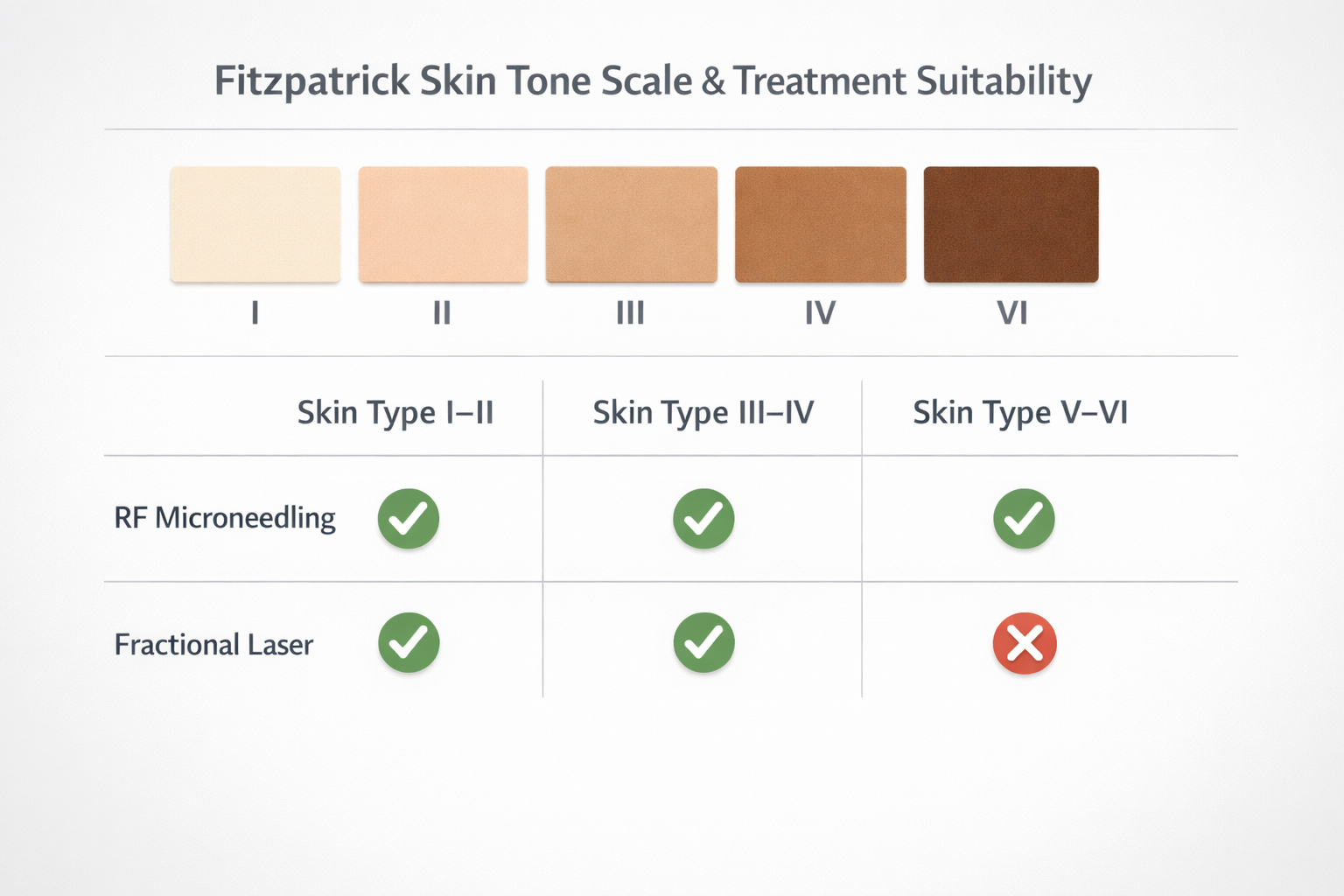
Skin tone is an important consideration when selecting treatments for acne scarring. Some procedures — particularly ablative laser resurfacing such as fractional CO2 laser — carry a higher risk of causing post-inflammatory hyperpigmentation or hypopigmentation in individuals with darker skin tones. This does not mean these treatments are unavailable for people with medium to deep skin tones, but it does mean that technique, laser settings, and operator experience become especially critical. A clinician experienced in treating diverse skin tones may take a more staged approach, use lower energy settings, and carry out a patch test before proceeding with full treatment. RF microneedling is generally considered safer across a wider range of skin tones due to its more targeted energy delivery below the skin surface. Discussing your skin tone explicitly at consultation — and choosing a clinic with demonstrable experience in treating patients with similar complexions — is an important part of the process.
Active Acne and Scar Treatment: Timing Matters
Starting scar treatment while active acne is still present is counterproductive and potentially harmful. Resurfacing or stimulating procedures applied to skin with active breakouts can worsen inflammation, spread bacteria, and create additional scarring. Most clinicians will require that active acne is well controlled — typically through medical treatment such as topical retinoids, antibiotics, azelaic acid, or oral therapies including isotretinoin — before beginning any scar treatment programme. The period between controlling active acne and starting scar treatment is also a good time to begin supportive skincare: consistent broad-spectrum SPF use, vitamin C, and gentle retinoids where appropriate can help prevent post-inflammatory hyperpigmentation from worsening and prepare the skin for treatment.
How to Choose an Acne Scar Clinic in London
The quality and safety of acne scar treatment in London varies considerably between providers. Given that some treatments involve lasers, minor surgery, or high-concentration chemical agents, choosing a clinic and practitioner carefully is essential.
Credentials and Regulation
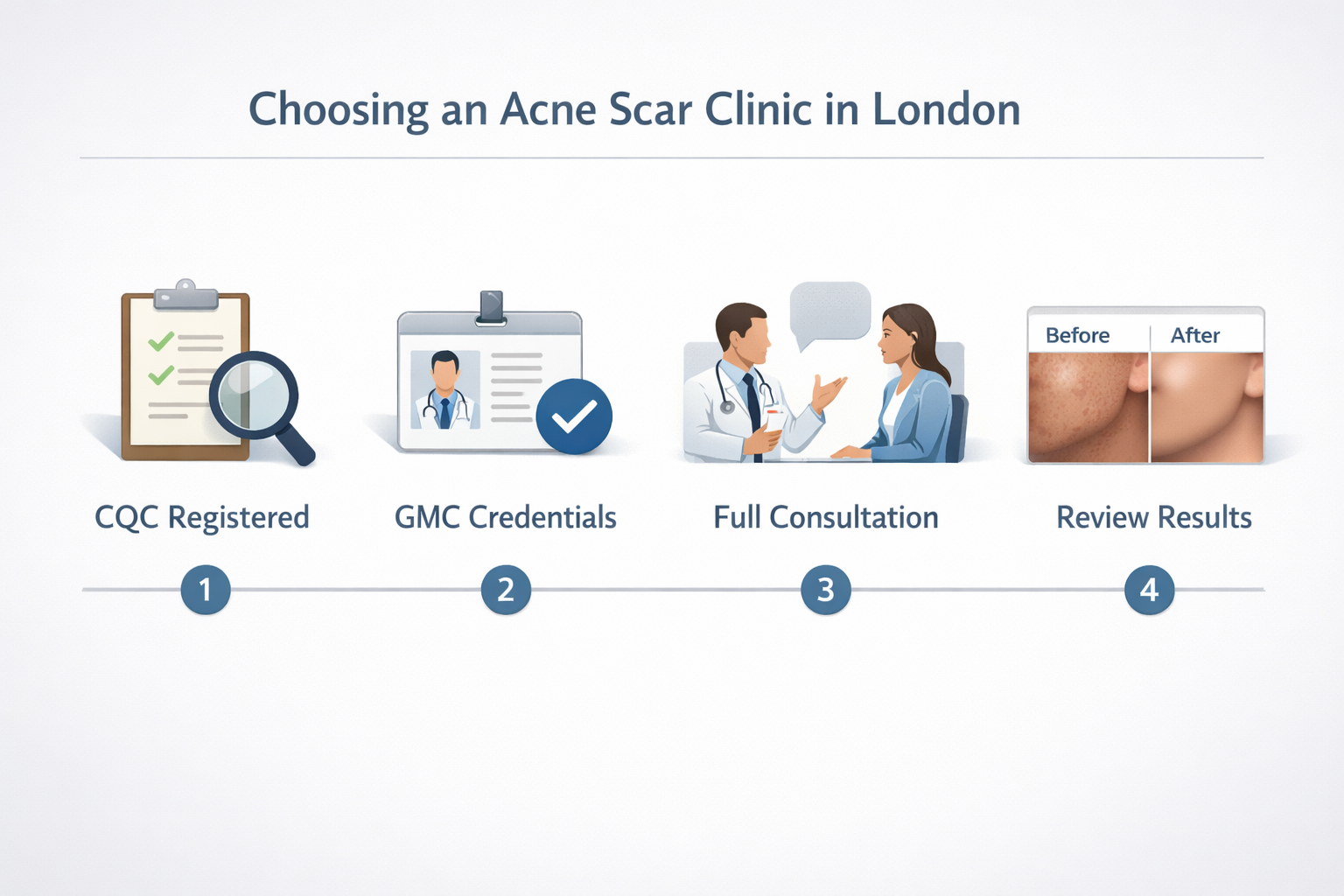
Look for clinics that are registered with the Care Quality Commission (CQC), which is the independent regulatory body for health and social care in England. CQC registration means the clinic has been assessed against set standards of safety and quality. For treatments delivered by or supervised by doctors, check that the practitioner is registered with the General Medical Council (GMC). For acne scarring specifically, a consultant dermatologist or a doctor with specialist training in dermatology and aesthetics is well placed to design an appropriate treatment plan. Membership of professional bodies such as the British Association of Dermatologists (BAD) or accreditation through the Joint Council for Cosmetic Practitioners (JCCP) provides additional quality indicators.
What to Ask at Consultation
A thorough initial consultation should include a careful scar type assessment, a discussion of your skin tone and history, an explanation of the recommended treatment sequence and rationale, realistic before and after results from the clinic’s own patients, a clear explanation of downtime and risks for each proposed treatment, and transparent pricing. Be cautious of clinics that recommend the same treatment for every patient without individual assessment, or that promise complete scar removal — improvement is the realistic goal, not perfection.
NHS vs Private
Acne scar treatment is considered a cosmetic procedure in the UK and is not available on the NHS. Costs vary significantly depending on the treatment type, number of sessions, and clinic location. As a general indication, microneedling and chemical peels tend to be more accessible price-wise, while fractional laser resurfacing and surgical techniques typically cost more due to the equipment, clinical skill, and recovery support involved. Transparent pricing at consultation is a reasonable expectation and a mark of a reputable clinic.
What Results Can You Realistically Expect?
Acne scar treatment can produce meaningful and in many cases lasting improvements in skin texture, scar depth, and overall skin quality. For most structural scars, results are long-lasting once achieved — the skin remodelling that occurs is a genuine physical change. However, complete scar elimination is rarely achievable, and the degree of improvement depends significantly on scar type, severity, skin tone, the treatments chosen, and the number of sessions completed. A realistic expectation is a meaningful percentage improvement — often noticeable to others as well as the patient — rather than a return to entirely unscarred skin. Reviewing before and after results from the treating clinic, rather than generic promotional imagery, gives a more honest benchmark. Multiple sessions are almost always required, and patience is an important part of the process: collagen remodelling continues for months after treatment, meaning final results often continue to improve beyond the last session.
Frequently Asked Questions
Is acne scar treatment available on the NHS?
Acne scar treatment is classified as a cosmetic procedure in the UK and is not available through the NHS. Treatment is accessed privately through specialist clinics or dermatology practices.
How many sessions will I need?
The number of sessions depends on scar type, severity, the treatments used, and how your skin responds. Some surgical techniques such as punch excision may need only one or two sessions, while RF microneedling or TCA CROSS typically requires three to six. Most patients undergoing a combination approach complete treatment over several months.
Can acne scars be treated on darker skin tones?
Yes, but treatment selection and technique are particularly important for individuals with darker skin tones due to the risk of pigmentation changes. Clinicians experienced in treating diverse skin tones may favour RF microneedling or staged approaches, and may carry out a test area before full treatment. Always discuss your skin tone explicitly at consultation.
Can I treat active acne and scars at the same time?
Active acne should be controlled before beginning scar treatment. Treating skin with active breakouts can worsen inflammation and increase the risk of further scarring. Your clinician can advise on getting acne under control as a first step.
Are acne scar treatment results permanent?
The structural improvements achieved through treatments such as fractional laser, subcision, or TCA CROSS are generally long-lasting, as they involve genuine collagen remodelling and physical changes to scar tissue. However, new acne lesions can create new scarring, which is why maintaining acne control after treatment is important. Some treatments, such as dermal fillers for scar depression, provide temporary results and may need repeating.
What is the difference between post-inflammatory hyperpigmentation and an acne scar?
Post-inflammatory hyperpigmentation is a flat area of increased pigment — a dark mark — left after a spot heals. It is not a structural scar and often fades with time and sun protection. True acne scars involve a physical change in skin texture or structure. The distinction matters because the treatments used for each differ considerably.
Starting Your Acne Scar Treatment Journey in London
If acne scarring is affecting your confidence or skin quality, the breadth of acne scar treatment options available in London means that a meaningful improvement is achievable for most scar types and skin tones. The key is beginning with an accurate assessment by a qualified clinician — ideally a consultant dermatologist or a doctor with specialist experience in scar treatment — who can identify your specific scar types, discuss realistic outcomes, and design a personalised treatment plan that sequences the right treatments in the right order.
Look for a CQC-regulated clinic, verify practitioner credentials, ask to see realistic before and after results, and ensure that downtime, costs, and the number of sessions required are clearly explained before you commit. Acne scarring is a specialist area, and the most effective results typically come from a considered, staged approach rather than a single off-the-shelf solution. With the right clinical guidance, many patients achieve significant and lasting improvements in skin texture, scar depth, and overall skin appearance.
