

Microneedling produces genuine improvements in skin texture, tone, and firmness, but the results are not permanent. Most patients see meaningful benefits for several months after a course of treatment, with longevity depending on factors such as the concern being treated, the number of sessions completed, and how well the skin is maintained afterwards. This article explains what to realistically expect, why results fade, and how to extend them as long as possible.
Key Takeaways
- Microneedling results typically last between three and six months for skin texture and tone improvements, though some patients maintain benefits for up to twelve months after a full course of sessions.
- Longevity depends on the number of treatments completed, the concern being addressed, individual skin biology, and ongoing skincare and sun protection habits.
- Collagen induction continues for several weeks after each session, meaning the full benefit of a course may not be visible until one to three months after the final treatment.
- Periodic maintenance sessions, usually once or twice a year, are commonly recommended to sustain results over time.
- Microneedling does not stop the natural ageing process, so results will gradually diminish without ongoing care or repeat treatment.
What Microneedling Does to the Skin
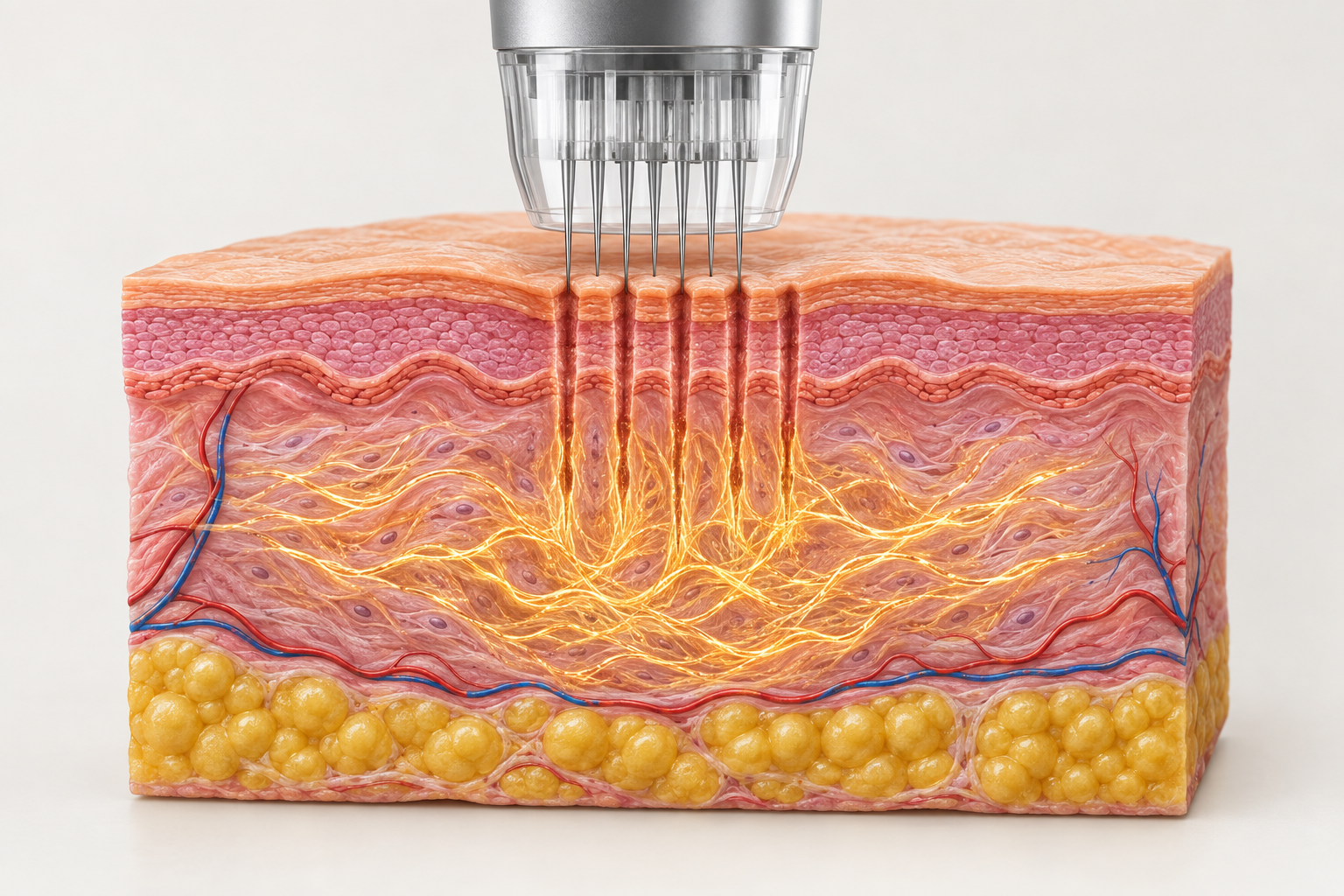
Microneedling, also called collagen induction therapy, uses a device fitted with fine sterile needles to create controlled micro-injuries across the skin surface. These micro-channels trigger the skin’s natural wound-healing response, stimulating the production of collagen and elastin — the structural proteins responsible for skin firmness, elasticity, and smoothness. The process also promotes the formation of new blood vessels and encourages cellular turnover in the treated area.
Because the mechanism relies on the body’s own healing biology, results develop gradually rather than appearing immediately. Collagen remodelling continues for weeks to months after each session, which is why the visible improvements from a course of microneedling often become most apparent one to three months after the final treatment. Understanding this timeline helps set realistic expectations about when to assess the outcome and how long the benefits may persist.
Microneedling is used to address a range of skin concerns, including fine lines and wrinkles, acne scarring, enlarged pores, uneven skin texture, mild skin laxity, and hyperpigmentation. The depth of needle penetration, the device used, and the number of passes performed are adjusted according to the concern and the area being treated. Radiofrequency microneedling, which combines the standard technique with radiofrequency energy delivered through the needles, may produce more pronounced skin tightening effects and is sometimes associated with longer-lasting results, though it also carries a higher cost and slightly more downtime.
How Long Do Microneedling Results Typically Last?
For most patients, the improvements achieved through a standard course of microneedling last approximately three to six months. Some individuals, particularly those who complete a full course of three to six sessions and maintain a consistent skincare routine, report benefits lasting closer to nine to twelve months. Results for acne scarring tend to be more durable than those for fine lines or general skin texture, because structural changes to scar tissue can be more lasting than the temporary boost in collagen density that addresses surface-level concerns.
It is important to understand that microneedling does not halt the ageing process. Collagen production naturally declines with age, and environmental factors such as sun exposure, pollution, and lifestyle habits continue to affect skin quality after treatment. This means that even well-maintained results will gradually diminish over time, and most practitioners recommend periodic maintenance sessions to preserve the improvements achieved during the initial course.
The longevity of microneedling results is also influenced by the specific concern being treated. Improvements in skin hydration and radiance may be noticeable relatively quickly but may also fade sooner. Reductions in acne scarring depth or improvements in skin laxity, which involve more substantial structural remodelling, tend to be more durable. Hyperpigmentation improvements can vary considerably depending on the underlying cause and the patient’s ongoing sun protection habits.
Factors That Affect How Long Results Last
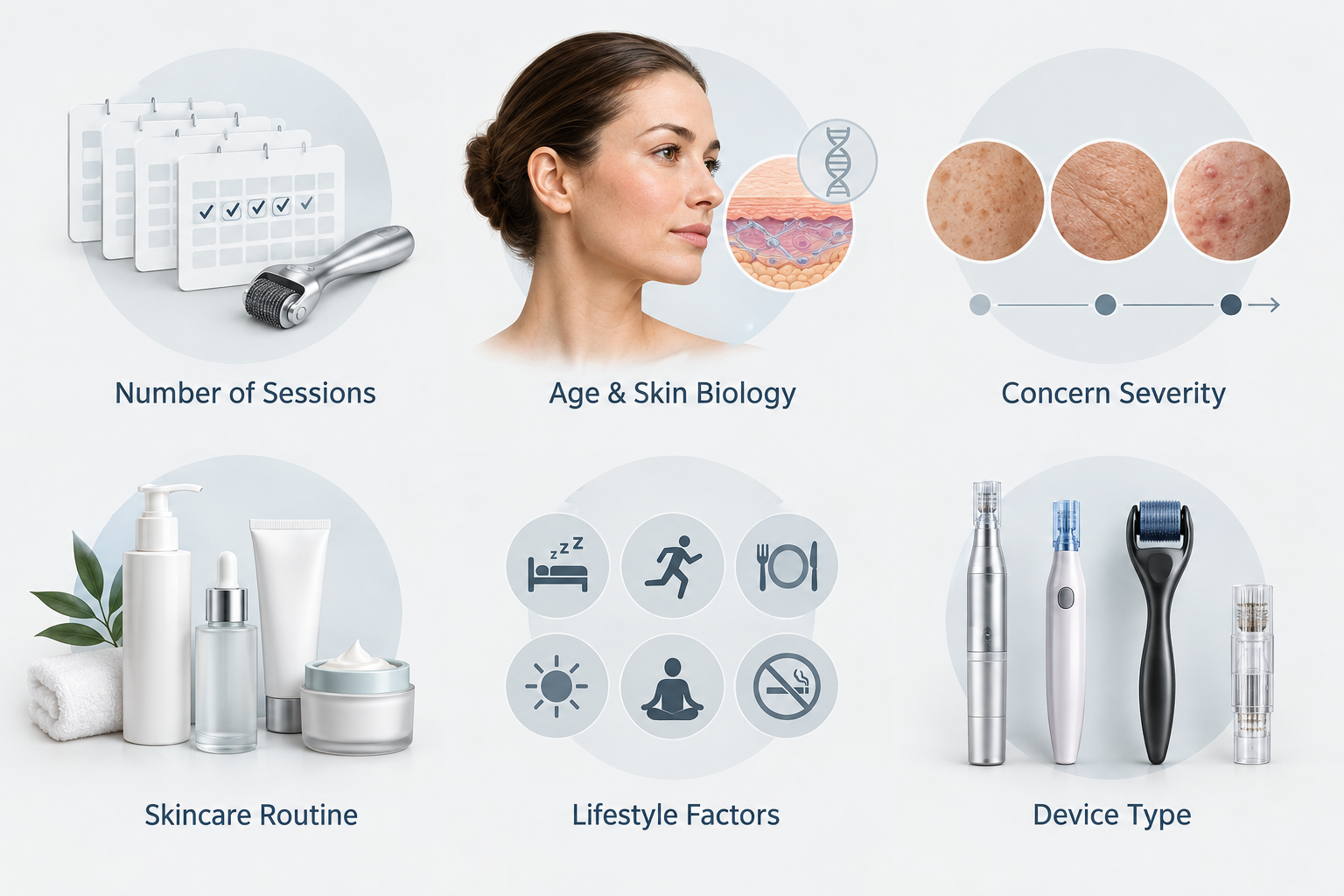
Several variables influence how long microneedling results remain visible, and understanding them helps patients make informed decisions about treatment planning and aftercare.
Number of Sessions Completed
A single microneedling session produces a limited degree of collagen stimulation. Most clinical protocols recommend a course of three to six sessions spaced approximately four to six weeks apart to achieve meaningful and more durable results. Patients who complete a full course typically experience greater cumulative collagen remodelling than those who undergo only one or two treatments, and their results tend to last longer as a result.
Age and Skin Biology
Younger patients generally have a more robust healing response and higher baseline collagen production, which can translate to more pronounced initial results. However, older patients often see meaningful improvements too, particularly in skin texture and fine lines. Individual variation in healing capacity, skin thickness, and collagen turnover rate means that two patients of similar age may experience noticeably different durations of benefit.
Severity of the Concern Being Treated
Mild skin texture irregularities or early fine lines may respond well to a shorter course and maintain improvement for a reasonable period. More significant concerns such as deep acne scars, pronounced skin laxity, or established wrinkles typically require more sessions and may show more gradual improvement, though structural changes to scar tissue can be among the more durable outcomes of microneedling treatment.
Skincare Routine and Sun Protection
Post-treatment skincare has a meaningful impact on how long results last. Consistent use of broad-spectrum sun protection is particularly important, as ultraviolet exposure accelerates collagen breakdown and can worsen pigmentation concerns. Incorporating evidence-supported topical ingredients such as retinoids, vitamin C, and peptides into a daily routine may help support collagen maintenance and extend the visible benefits of treatment. Practitioners often advise patients on appropriate post-treatment skincare as part of the overall treatment plan.
Lifestyle Factors
Smoking, high alcohol consumption, poor nutrition, chronic stress, and inadequate sleep are all associated with accelerated skin ageing and reduced collagen integrity. Patients who address these lifestyle factors alongside their microneedling course may find that their results are better maintained over time. Conversely, continued exposure to significant lifestyle stressors can shorten the duration of visible improvement.
Device Type and Treatment Parameters
The type of microneedling device used, the needle depth, and whether adjunct technologies such as radiofrequency energy or platelet-rich plasma (PRP) are incorporated can all influence both the degree of improvement and its longevity. Radiofrequency microneedling, for example, delivers thermal energy into the deeper dermis alongside the mechanical stimulus, which may produce more significant skin tightening and potentially longer-lasting results for laxity concerns. PRP, derived from the patient’s own blood, is sometimes applied during or after microneedling to enhance the healing response, though the evidence for additional benefit from this combination is still developing.
When Do Results Become Visible?
Patients sometimes expect immediate visible improvement after microneedling, but the timeline for results is more gradual. In the days immediately following treatment, the skin typically appears red and may feel sensitive, similar to mild sunburn. This initial reaction settles within one to three days for most patients, though deeper treatments may involve a slightly longer recovery period.
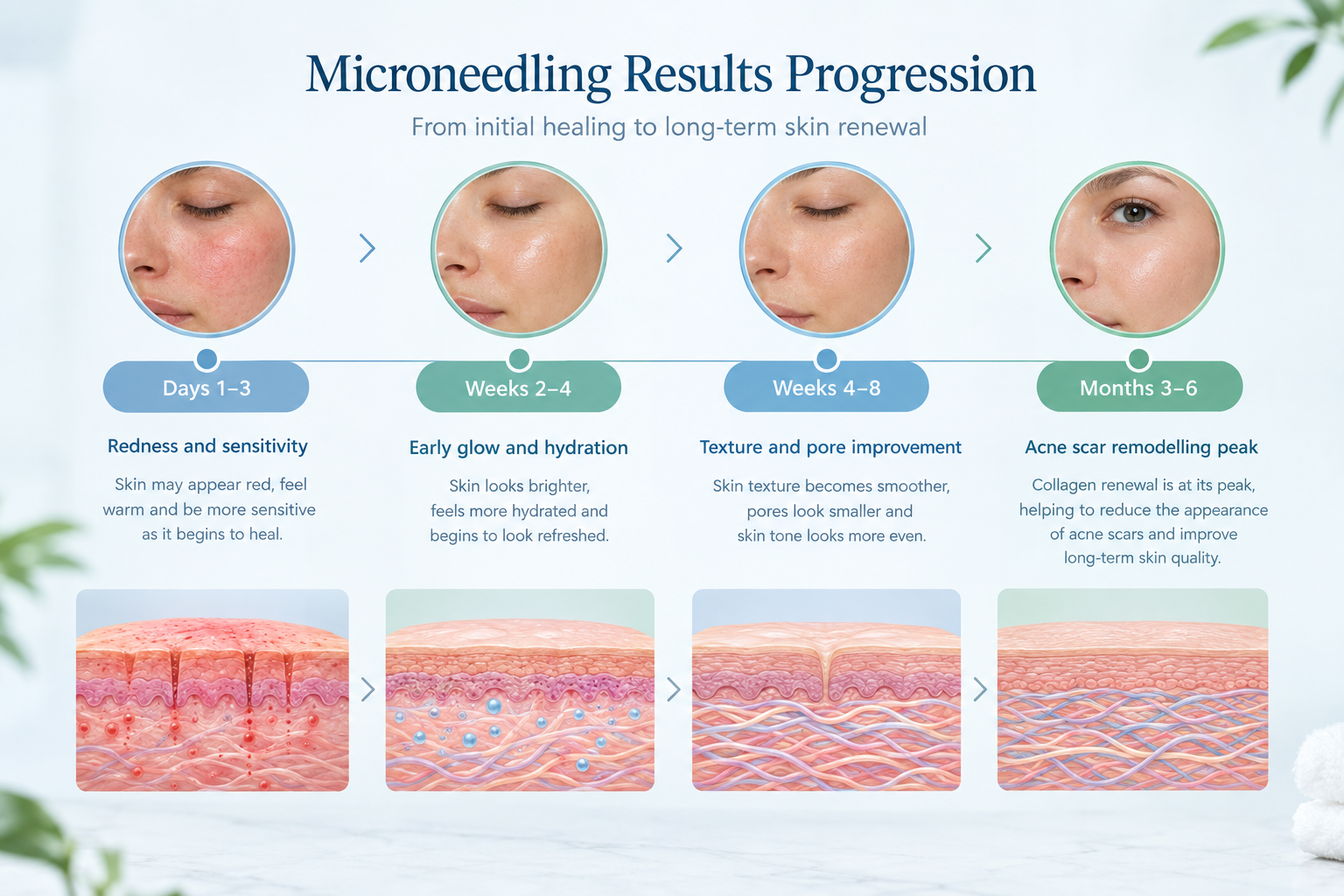
Early improvements in skin hydration and a subtle glow may be noticeable within the first two to four weeks as the skin’s surface renews. More significant changes in texture, pore appearance, and fine lines generally become apparent from four to eight weeks after a session, as new collagen fibres begin to mature and reorganise within the dermis. For acne scarring, the most meaningful improvements often take three to six months to fully manifest, particularly when multiple sessions are involved.
Because collagen remodelling is a slow biological process, patients are generally advised not to assess the final outcome of a course of microneedling until at least one to three months after the last session. Evaluating results too early may lead to underestimating the treatment’s effect.
How Many Sessions Are Typically Needed?
The number of microneedling sessions recommended depends on the concern being treated and the degree of improvement desired. For general skin texture improvement, radiance, and mild fine lines, a course of three sessions spaced four to six weeks apart is a common starting point. For more significant concerns such as moderate acne scarring, deeper wrinkles, or skin laxity, practitioners may recommend four to six sessions or more.
It is worth noting that microneedling is not a one-time permanent fix for most concerns. After completing an initial course, many patients benefit from maintenance sessions every six to twelve months to sustain the collagen stimulation achieved and counteract the ongoing effects of ageing and environmental exposure. The appropriate maintenance interval varies between individuals and is best determined through a follow-up assessment with a qualified practitioner.
Microneedling Maintenance: Keeping Results Going
Maintenance microneedling sessions are typically shorter and may involve fewer passes or a shallower needle depth than the initial course, as the goal shifts from active remodelling to sustaining the improvements already achieved. Many patients find that one or two maintenance sessions per year are sufficient to preserve their results, though this varies depending on individual skin ageing rate, lifestyle, and the original concern treated.
Between sessions, a well-structured skincare routine plays a supporting role. Broad-spectrum SPF use every day, even in overcast conditions, is one of the most evidence-supported ways to protect collagen and prevent the recurrence of pigmentation concerns. Topical retinoids, used under practitioner guidance, can support ongoing skin cell turnover and collagen synthesis. Antioxidant serums, particularly those containing vitamin C, may help neutralise free radical damage that contributes to collagen degradation.
Some patients combine periodic microneedling maintenance with complementary treatments such as chemical peels, laser resurfacing, or skin booster injections to address different aspects of skin quality simultaneously. A qualified practitioner can advise on whether a combined approach is appropriate based on individual skin concerns and treatment history.
Risks, Side Effects, and Downtime
Microneedling is generally considered a well-tolerated procedure when performed by a trained practitioner using appropriate sterile equipment, but it is not without risks. Common side effects include redness, mild swelling, skin sensitivity, and pinpoint bleeding immediately after treatment. These typically resolve within one to three days. Temporary dryness or flaking may occur in the days following treatment as the skin surface renews.
Less common but more significant risks include infection, post-inflammatory hyperpigmentation (particularly in patients with darker skin tones), prolonged redness, and, in rare cases, scarring. The risk of adverse outcomes is increased when treatment is performed with inadequate hygiene, inappropriate needle depth, or on skin that is not suitable for the procedure. Patients with active acne, rosacea, eczema, psoriasis, or other inflammatory skin conditions in the treatment area are generally not suitable candidates for microneedling until those conditions are well controlled.
Microneedling is not recommended during pregnancy or breastfeeding, and patients taking certain medications such as isotretinoin (a retinoid used for acne) are typically advised to wait a period of time after stopping the medication before undergoing treatment. A thorough consultation and medical history review before treatment is essential to identify any contraindications and ensure the procedure is appropriate for the individual patient.
Alternatives to Microneedling for Skin Rejuvenation
Patients considering microneedling for skin rejuvenation may also wish to discuss alternative or complementary treatments with their practitioner, depending on their specific concerns and goals.
- Chemical peels: Use acid solutions to exfoliate the skin surface and stimulate renewal. Superficial peels require minimal downtime and can improve texture and pigmentation, though they do not penetrate as deeply as microneedling into the dermis. Medium and deep peels carry more downtime and risk but may produce more significant resurfacing effects.
- Laser resurfacing: Ablative and non-ablative laser treatments can address skin texture, pigmentation, and laxity. Some laser treatments may produce longer-lasting results than standard microneedling for certain concerns, but they typically involve more downtime, higher cost, and a greater risk profile.
- Radiofrequency skin tightening: Non-invasive radiofrequency devices deliver heat energy to the deeper skin layers to stimulate collagen and improve laxity without needles. Results develop gradually and may last one to two years for some patients, though multiple sessions are usually required.
- Skin booster injections: Hyaluronic acid-based skin boosters are injected into the skin to improve hydration, elasticity, and radiance. They address different mechanisms than microneedling and may be used alongside it for complementary benefits.
- Topical retinoid therapy: Prescription-strength retinoids are among the most evidence-supported topical treatments for fine lines, skin texture, and pigmentation. They do not produce the same degree of structural remodelling as microneedling but can be used as a long-term maintenance strategy between treatment sessions.
The most appropriate treatment or combination of treatments depends on the individual’s skin concerns, skin type, tolerance for downtime, and budget. A qualified practitioner can help assess which options are most likely to be beneficial and safe for a given patient.
Frequently Asked Questions
Can microneedling results be permanent?
Microneedling results are not permanent. The collagen stimulated by treatment gradually diminishes over time as the natural ageing process continues. Improvements in acne scarring may be among the more durable outcomes, but even these can be affected by ongoing skin changes. Maintenance sessions and a consistent skincare routine help prolong the benefits.
Does one microneedling session produce lasting results?
A single session can produce a noticeable improvement in skin radiance and texture, but the results from one treatment alone are typically modest and shorter-lived than those achieved through a full course. Most practitioners recommend a series of sessions to build cumulative collagen remodelling and achieve more meaningful and longer-lasting improvements.
How soon after microneedling can I have another session?
Sessions within a course are typically spaced four to six weeks apart to allow the skin adequate time to heal and for collagen remodelling to progress between treatments. Spacing sessions too closely together does not accelerate results and may increase the risk of skin irritation or adverse effects.
Does radiofrequency microneedling last longer than standard microneedling?
Radiofrequency microneedling combines mechanical collagen stimulation with thermal energy delivered into the deeper dermis, which may produce more pronounced skin tightening and potentially longer-lasting results for laxity concerns compared to standard microneedling. However, it also involves a higher cost and may carry slightly more downtime. Whether the additional benefit justifies the difference depends on the individual’s concerns and goals.
Will microneedling results last longer if I use PRP at the same time?
Platelet-rich plasma (PRP) is sometimes applied during or after microneedling with the aim of enhancing the healing response and potentially improving outcomes. Some studies suggest a benefit from this combination, particularly for acne scarring, but the evidence is still developing and results vary. A practitioner can advise whether PRP is likely to be beneficial for a specific concern.
What can I do to make microneedling results last as long as possible?
Daily broad-spectrum sun protection is the single most important step for preserving microneedling results. Supporting this with a skincare routine that includes evidence-backed ingredients such as retinoids and antioxidants, avoiding smoking, maintaining adequate hydration, and attending recommended maintenance sessions all contribute to extending the duration of visible improvement.
Is microneedling suitable for all skin types?
Microneedling can be performed on a range of skin types, but patients with darker skin tones require careful assessment because of the increased risk of post-inflammatory hyperpigmentation. Active inflammatory skin conditions, open wounds, or certain medications may make treatment unsuitable at a given time. A thorough consultation with a qualified practitioner is essential to determine individual suitability.
Planning Microneedling Treatment Realistically
Microneedling is a well-established skin rejuvenation technique with a reasonable evidence base for improving skin texture, acne scarring, fine lines, and pore appearance. Results typically last three to six months after a course of treatment, with some patients maintaining improvements for up to twelve months when maintenance sessions and good skincare habits are incorporated. The treatment works gradually through collagen induction, so patience is required both during and after the course before the full benefit becomes visible.
Longevity is not fixed — it is shaped by the number of sessions completed, the concern being treated, individual skin biology, lifestyle factors, and the quality of post-treatment care. Patients who approach microneedling as part of a longer-term skin health strategy, rather than a single-event solution, are generally better positioned to achieve and sustain meaningful results.
If you are considering microneedling, a consultation with a qualified and experienced practitioner is the appropriate starting point. A thorough assessment of your skin concerns, medical history, and treatment goals will help determine whether microneedling is suitable for you, how many sessions may be beneficial, and what realistic outcomes you can expect based on your individual circumstances.
