

Quick Comparison
| Feature | IPL (Intense Pulsed Light) | BBL (BroadBand Light) |
|---|---|---|
| Technology | Broad-spectrum pulsed light with basic filters | Advanced broadband light therapy with precision wavelength filters |
| Device manufacturer | Multiple manufacturers | Sciton (proprietary platform) |
| Primary targets | Pigmentation, redness, hair removal | Sun damage, vascular lesions, photoaging, skin rejuvenation |
| Session duration | 15–60 minutes | ~30 minutes (BBL Hero under 5 minutes) |
| Sessions typically needed | 3–5 | 2–3 |
| Downtime | Minimal (1–3 days) | Minimal (1–3 days) |
| Skin tone suitability | Fitzpatrick types I–III (safest) | Fitzpatrick types I–IV (BBL Hero expanding range) |
| Approximate cost per session | $300–$500 | $400–$600+ |
| Results longevity | 6–12 months with maintenance | 6–12 months; longer with Forever Young BBL protocol |
| Hair removal use | Yes | Limited / not primary use |
What Is IPL and How Does It Work?
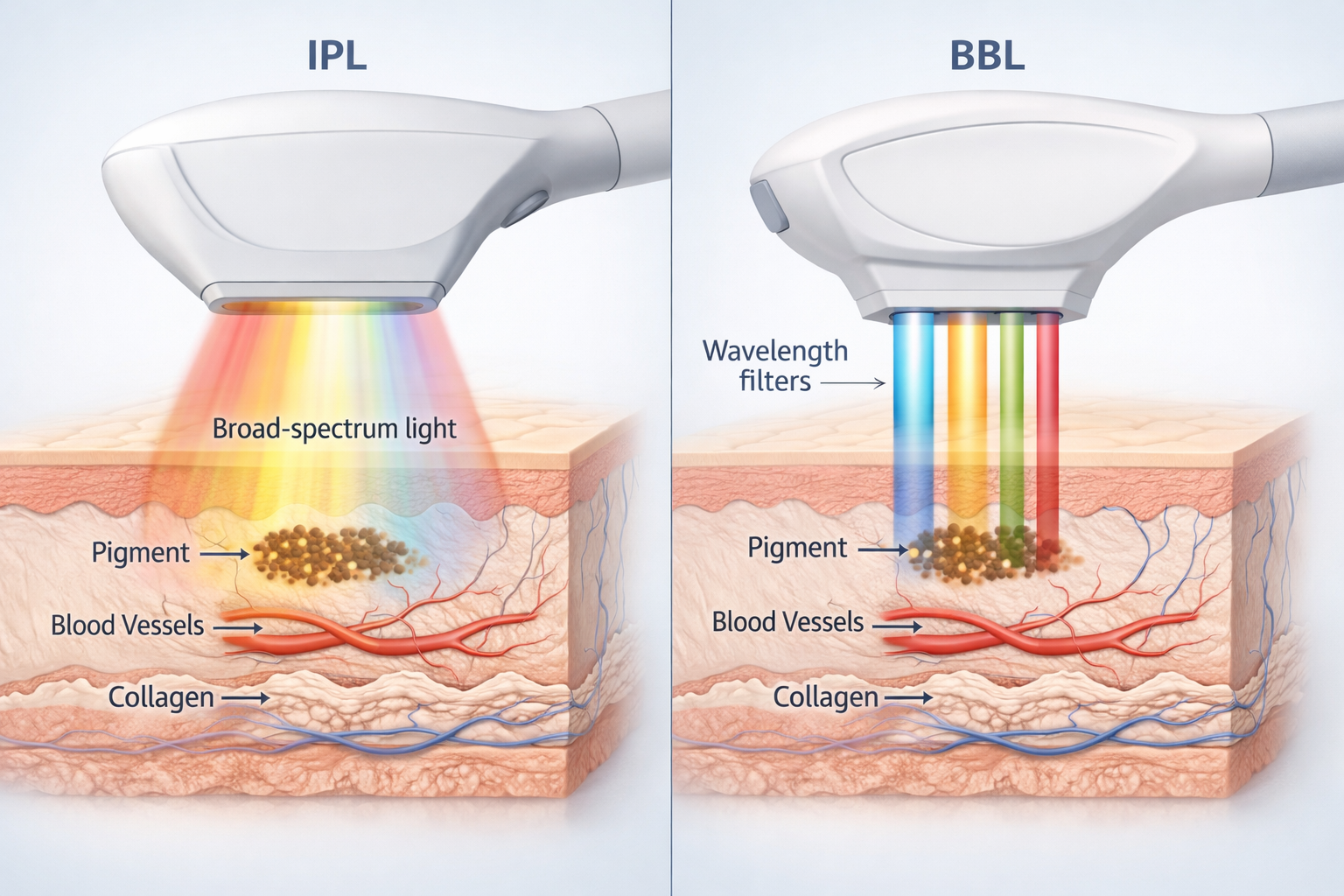
Intense pulsed light, commonly abbreviated as IPL, is a non-ablative treatment that delivers broad-spectrum light energy into the skin to target specific chromophores — the biological pigments that absorb light and convert it to heat. These chromophores include melanin, which gives colour to dark spots and hair, and haemoglobin, which is found in blood vessels close to the skin’s surface. When the light is absorbed, the resulting heat damages the unwanted target cells, prompting the body to clear them naturally while also stimulating collagen and elastin production in the surrounding dermal tissue.
IPL technology was pioneered approximately three decades ago and has since become one of the most widely available light-based skin rejuvenation platforms worldwide. Because multiple manufacturers produce IPL devices, the quality, wavelength range, and cooling systems vary considerably between machines. Most IPL devices deliver filtered light in the 500–1200 nm range, with interchangeable wavelength filters allowing practitioners to address different concerns — pigmentation, vascular lesions, or hair reduction — during the same appointment. A typical session lasts between 15 and 60 minutes depending on the treatment area.
One important practical note: IPL is also widely used for permanent hair reduction, which makes it a more versatile platform than BBL for patients seeking more than one type of treatment from a single device.
What Is BBL and How Does It Work?
BroadBand Light, or BBL, is a proprietary light-based therapy developed by Sciton. It uses a similar principle to intense pulsed light — delivering filtered pulses of broad-spectrum light to target chromophores in the skin — but the platform incorporates more advanced wavelength filters, higher energy delivery, and an integrated cooling system that allows greater precision and comfort during treatment. Because Sciton manufactures BBL exclusively, there is greater standardisation in device quality compared with the wider IPL market.
BBL is available in several clinical protocols. The standard BBL targets sun damage, age spots, rosacea, vascular lesions, and general photorejuvenation. The Forever Young BBL protocol uses a series of lower-fluence passes to address broader photoaging with a focus on long-term skin maintenance. The most recent platform, BBL Hero, delivers significantly higher peak power and faster pulse sequences, allowing a full-face treatment to be completed in under five minutes — considerably faster than a conventional IPL session. BBL Hero also offers greater customisation of pulse duration and energy, which may extend its safe use to a slightly wider range of skin tones than earlier BBL or standard IPL devices.
A notable area of clinical interest is BBL’s proposed effect on gene expression. A study published in the Journal of Investigative Dermatology found that regular BBL treatments may alter the expression of genes associated with skin aging, potentially encouraging skin cells to behave in a more youthful manner at a molecular level. While this research is promising, it represents an early and specific area of investigation, and broader independent replication is ongoing. Patients should view this as a developing area of evidence rather than a definitive proven benefit.
Conditions Treated: What Each Can Address
IPL is commonly used for:
- Sun damage and age spots (solar lentigines)
- Freckles and general uneven skin tone
- Rosacea and facial redness
- Telangiectasias and broken blood vessels (spider veins)
- Mild hyperpigmentation
- Early signs of photoaging and fine lines
- Hair removal across multiple body areas
- Acne and enlarged pores (with appropriate settings)
BBL is commonly used for:
- Sun damage, brown spots, and solar lentigines
- Rosacea, flushing, and diffuse facial redness
- Vascular lesions and telangiectasias
- Poikiloderma (a pattern of redness, pigmentation, and skin thinning often seen on the neck and chest)
- Uneven skin tone and texture from photoaging
- Fine lines and early skin laxity
- Maintenance of skin quality over time (Forever Young BBL protocol)
The overlap between these two lists is significant. Both treatments address the same core concerns — pigmentation, vascular lesions, redness, and general skin rejuvenation — because they rely on the same fundamental mechanism. The distinction lies in the degree of precision, energy control, and the depth of evidence supporting each specific application.
Technology: Where IPL and BBL Actually Differ
At a fundamental level, BBL is a more advanced iteration of the same technology that underpins IPL. Both use pulsed broad-spectrum light filtered to specific wavelengths, both target chromophores in the skin, and both deliver a photorejuvenation effect by stimulating collagen production alongside the direct clearance of pigmented or vascular lesions. The difference is one of engineering sophistication rather than a fundamentally different mechanism.
Sciton’s BBL platform uses more refined wavelength filters, higher peak power delivery, and a more consistent contact cooling system than most standard IPL devices. The pulse duration — the length of each individual light pulse — can be controlled more precisely on BBL, which is clinically relevant because different target chromophores respond best to different pulse durations. This precision makes BBL less likely to inadvertently heat surrounding tissue, which in turn reduces the risk of post-inflammatory hyperpigmentation, particularly in patients with slightly deeper skin tones.
BBL Hero extends this further with a high-energy, rapid-delivery format that completes treatments faster while maintaining therapeutic efficacy. For patients with busy schedules or sensitivity concerns, the significantly reduced treatment time is a practical advantage worth considering.
Skin Tone Suitability and the Fitzpatrick Scale
Skin tone suitability is one of the most clinically important factors when comparing these two treatments. Both IPL and BBL work most predictably on lighter skin tones — Fitzpatrick types I through III — where the contrast between the target chromophore (melanin in a dark spot or haemoglobin in a vessel) and the surrounding skin is greatest. This contrast allows the light energy to be selectively absorbed by the target without the surrounding skin melanin competing for the same energy.
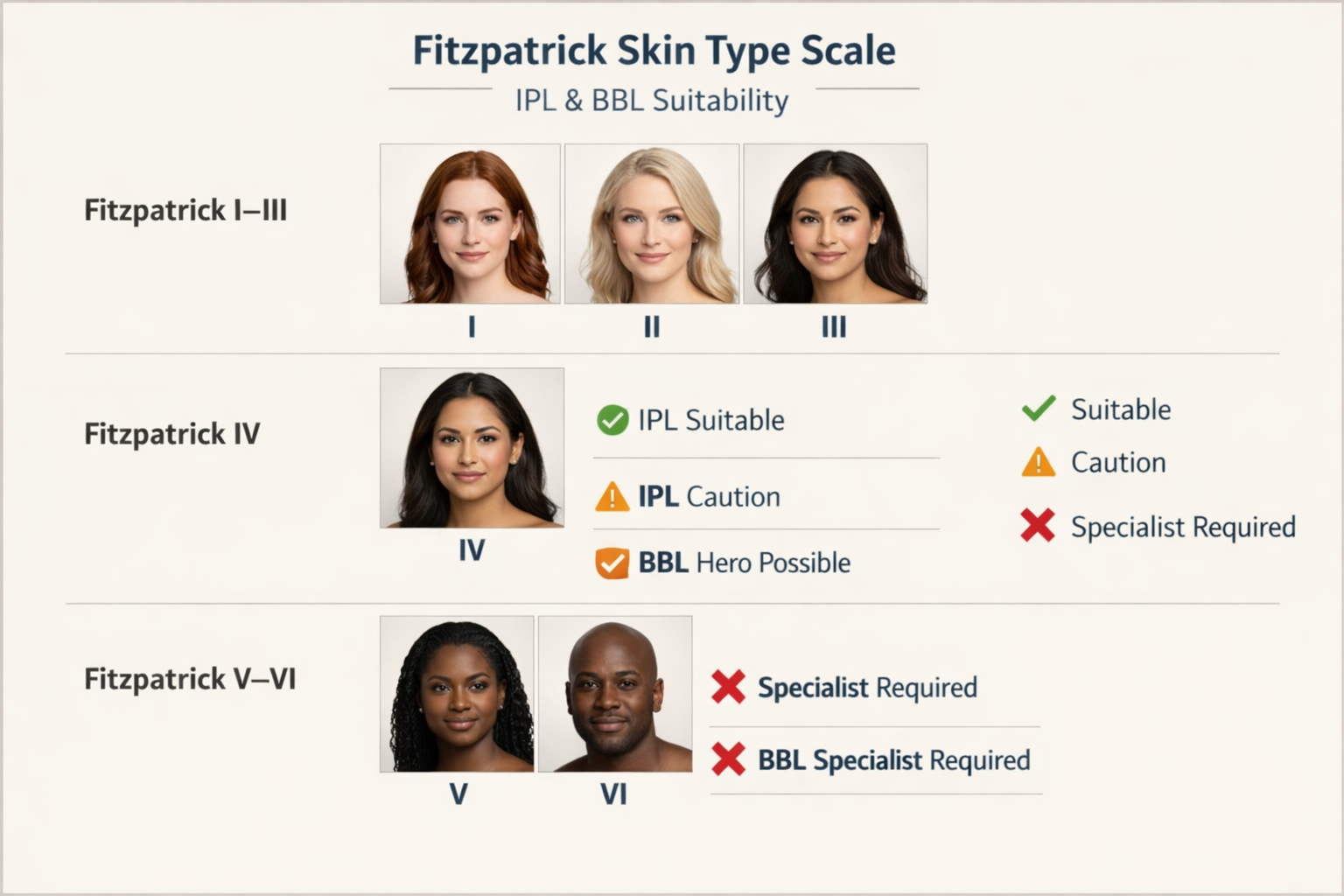
Standard IPL carries a higher risk of adverse pigment changes — either hyperpigmentation or hypopigmentation — in patients with Fitzpatrick type IV skin or darker. This does not mean IPL is never appropriate for medium or olive skin tones, but it does mean settings must be carefully adjusted and the treating clinician’s experience becomes critically important. Inexperienced use of IPL on darker skin tones increases the risk of burns, blistering, and lasting discolouration.
BBL, and particularly BBL Hero with its greater energy control and pulse customisation, may offer a somewhat safer profile for Fitzpatrick types IV and above in experienced hands. However, this does not eliminate the risk, and a thorough pre-treatment assessment remains essential regardless of device. Both IPL and BBL are generally contraindicated in very dark skin tones (Fitzpatrick types V–VI) without specialist evaluation.
One condition that represents a clear contraindication for both treatments is melasma. Melasma is a form of hyperpigmentation driven by hormonal and UV triggers, and the heat generated by both IPL and BBL can cause melasma to worsen rather than improve. Patients with melasma should discuss alternative treatments — such as topical brightening agents, chemical peels, or laser resurfacing — with a dermatologist before considering either option.
Treatment Experience: What Appointments Feel Like
Both IPL and BBL are outpatient, non-invasive procedures requiring no anaesthesia, though a topical numbing cream may be applied prior to treatment for patient comfort. During an IPL photofacial, a cool gel is typically applied to the skin and a handheld device delivers a series of light pulses across the treatment area. Most patients describe the sensation as similar to a rubber band snapping against the skin, accompanied by a warm pulse of heat. A full-face IPL session typically takes between 20 and 45 minutes.
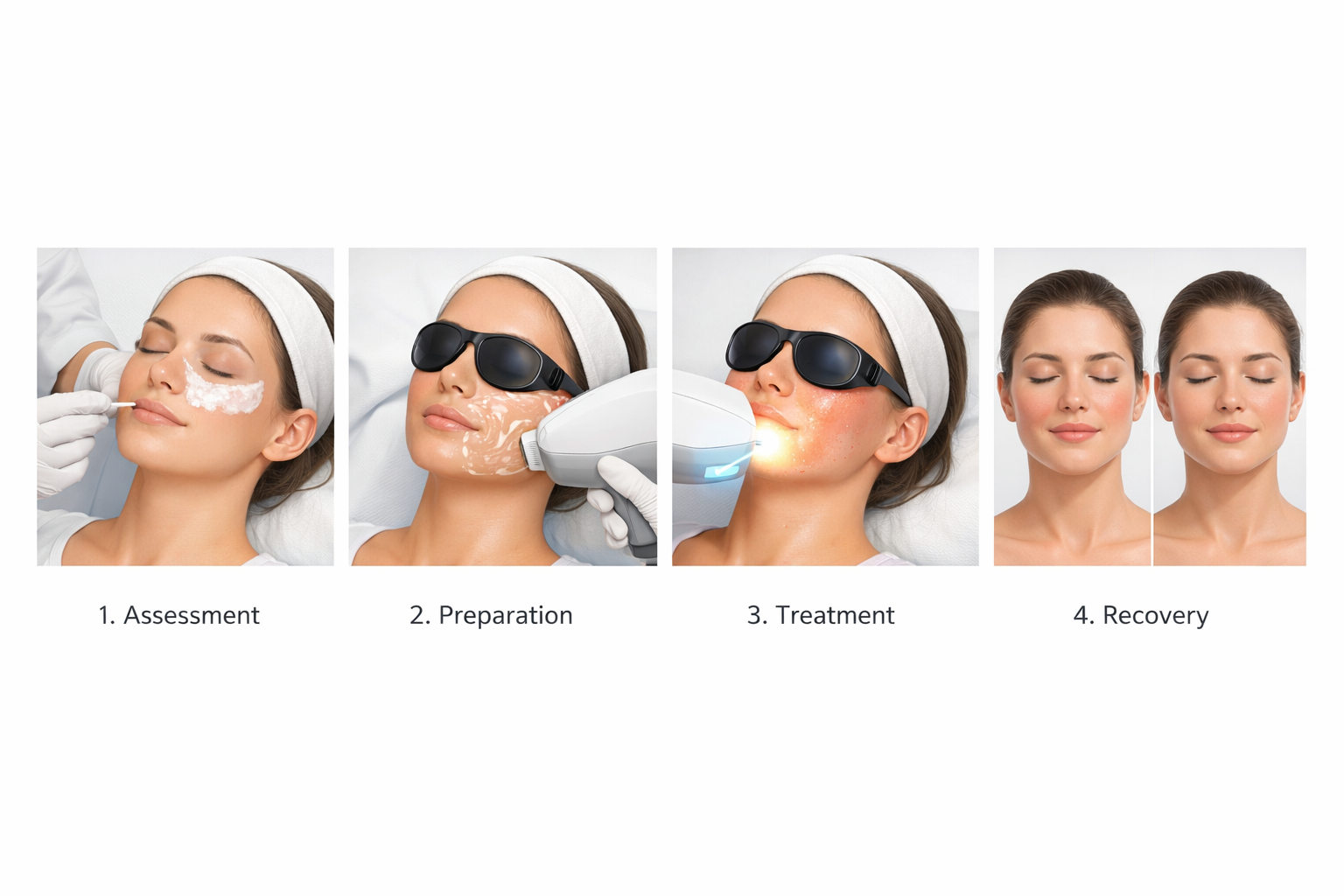
A standard BBL session follows a similar process and takes approximately 30 minutes for a full face. The integrated cooling system in the BBL handpiece tends to improve comfort compared with older IPL devices. BBL Hero sessions, by contrast, can treat the full face in under five minutes due to the rapid high-energy delivery — an advantage for patients who find treatment sensations uncomfortable or who have limited appointment time.
After either treatment, the skin may appear flushed and feel mildly sunburned for several hours. Pigmented spots often darken temporarily in the days following a session before flaking away as the skin renews — this is a normal part of the process and indicates the treatment is working. Most patients experience minimal downtime of one to three days and can return to work or normal activities quickly, though sun exposure should be avoided and SPF applied diligently during the recovery period.
How Many Sessions Are Needed and How Long Results Last
IPL typically requires a series of three to five sessions spaced approximately three to four weeks apart to achieve optimal results. The number depends on the severity of sun damage or other concerns being treated. Results from a completed course generally last six to twelve months, after which maintenance sessions — usually one to two per year — can help sustain the improvement.
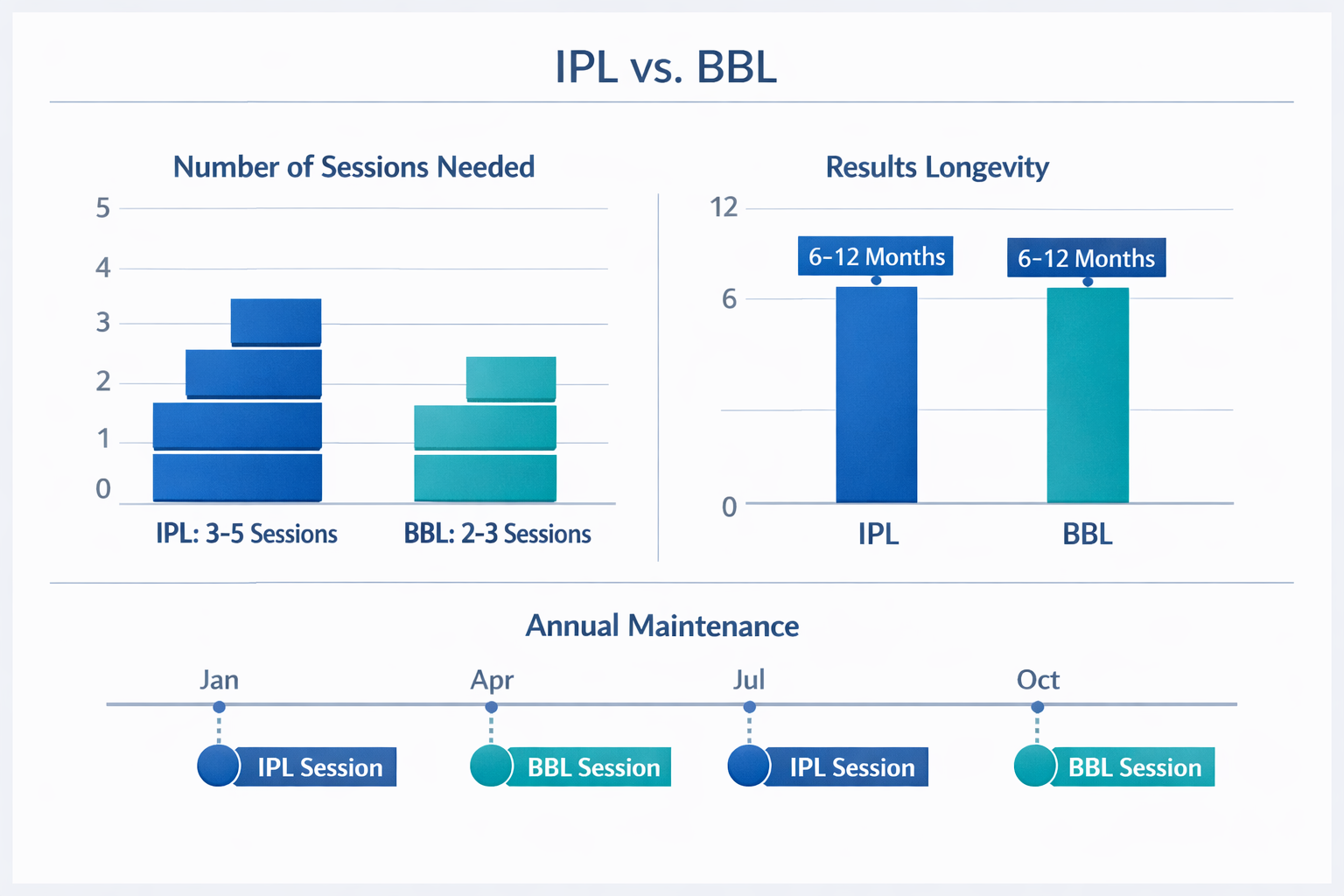
BBL tends to produce noticeable results in fewer sessions — often two to three — partly because of the higher energy precision achievable with the Sciton platform. The Forever Young BBL protocol is specifically designed as a long-term maintenance programme, with regular lower-intensity sessions intended to cumulatively improve skin quality and slow the visible signs of photoaging over time.
Neither treatment produces permanent results. Both require ongoing maintenance sessions to preserve the improvements in skin tone, texture, and clarity. Patients who commit to sun protection and regular follow-up appointments generally maintain results for longer than those who do not.
Cost Comparison
IPL is generally the more accessible option financially. A single IPL session typically costs between £200 and £400 in the UK, or approximately $300 to $500 in the US, though prices vary by geographic location, provider experience, and the size of the treatment area. Package pricing for a series of sessions is common and usually offers a modest discount compared with individual session rates.
BBL is positioned as a premium treatment and is priced accordingly. Standard BBL sessions often start at $400 to $600 per session or more in the US, with BBL Hero typically commanding a premium above standard BBL due to the newer device technology. For patients with straightforward pigmentation concerns and lighter skin tones, IPL can deliver comparable outcomes at a lower cost. BBL’s price premium is most justified when greater precision is needed, when fewer sessions are important, or when the advanced features of the Sciton platform offer a meaningful clinical advantage for the individual’s skin concern.
Risks, Side Effects and Limitations
Both treatments carry a similar spectrum of potential side effects. Common and expected effects include temporary redness, swelling, and skin sensitivity immediately after treatment. Pigmented spots may darken before they lift and flake away, which can look worse before it looks better. These effects typically resolve within a few days.
Less common but more significant risks include blistering, crusting, hyperpigmentation, and hypopigmentation — all of which are more likely when a device is used on an unsuitable skin type, with incorrect settings, or by an inexperienced operator. Both IPL and BBL should only be performed by trained practitioners on appropriately assessed patients. Neither treatment is suitable during pregnancy, shortly after significant sun exposure or tanning, or over areas of active infection or inflammation.
A shared limitation of both treatments is that neither addresses all skin aging concerns. Skin laxity, deep wrinkles, and volume loss are not meaningfully improved by light-based therapy alone. Patients seeking improvement in these areas may be better served by radiofrequency skin tightening, injectable treatments, or laser resurfacing, used alongside or instead of a photofacial approach.
Alternatives to IPL and BBL
For patients who are not suitable candidates for either treatment, or who want to explore other options, several alternatives address overlapping concerns:
- Fractional laser resurfacing — targets skin texture, fine lines, and pigmentation with more aggressive results and longer downtime than either IPL or BBL.
- Nd:YAG laser — safer for darker skin tones when treating vascular lesions; requires specialist training.
- Chemical peels — address uneven skin tone, mild pigmentation, and skin texture; can be tailored to different skin types and depths.
- Topical treatments — prescription-strength retinoids, azelaic acid, and hydroquinone can reduce pigmentation over time without any procedural risk, though results are slower.
- Radiofrequency treatments — better suited to skin laxity and collagen remodelling when tightening is the primary goal.
The right alternative depends on the individual’s specific concerns, skin type, budget, and tolerance for downtime. A consultation with a qualified clinician is the most reliable way to identify the most appropriate approach.
Frequently Asked Questions
Is BBL better than IPL?
BBL is a more technologically advanced platform, but that does not automatically make it the better choice for every patient. For straightforward pigmentation or redness concerns on lighter skin tones, IPL can produce comparable results at a lower cost. BBL’s advantages — greater energy precision, fewer sessions, and the BBL Hero speed — are most meaningful for patients who need that additional performance or whose skin concerns require more careful parameter control.
Is IPL painful?
Most patients describe IPL as mildly uncomfortable rather than painful, with a snapping or stinging sensation accompanying each light pulse. BBL with its integrated cooling system may feel slightly more comfortable. Topical numbing cream can be applied beforehand if sensitivity is a concern. Pain tolerance varies, and some treatment areas are more sensitive than others.
Can IPL or BBL be used on darker skin tones?
Both treatments carry increased risk of pigment changes on darker Fitzpatrick skin types. Standard IPL is generally safest on types I to III. BBL Hero offers somewhat greater flexibility in experienced hands. Neither should be used on very dark skin tones without specialist evaluation. A thorough consultation and, in some cases, a test patch are important before proceeding.
How many sessions will I need?
IPL typically requires three to five sessions; BBL often achieves similar results in two to three. The exact number depends on the severity of the concern being treated, the skin’s response, and whether the goal is correction or ongoing maintenance.
Can either treatment be used for melasma?
No. Melasma is a contraindication for both IPL and BBL. The heat generated by either treatment can trigger or worsen melasma. Patients with this condition should seek an alternative treatment approach, discussed with a dermatologist.
How long do results last?
Results from either treatment generally last six to twelve months. Maintenance sessions — typically once or twice a year — and consistent daily sun protection help preserve outcomes for longer. Neither treatment offers a permanent solution.
Is IPL suitable for hair removal as well?
Yes. IPL is widely used for long-term hair reduction across the body and face, making it a more versatile platform for patients seeking multiple treatment goals. BBL is not primarily designed or marketed for hair removal.
IPL or BBL: Choosing Based on Your Goals and Skin
IPL and BBL are more alike than their marketing often suggests. Both deliver light-based skin rejuvenation by targeting the same chromophores, both address sun damage and vascular lesions effectively, and both require minimal downtime. The meaningful differences come down to technology precision, treatment speed, skin tone suitability, and cost.
IPL may be the more practical choice for patients with lighter skin tones and straightforward pigmentation or redness concerns who are working within a budget, or who also want hair reduction from the same platform. BBL — and particularly BBL Hero or Forever Young BBL — may be more appropriate for patients who want fewer sessions, greater precision, a faster appointment, or a long-term photoaging maintenance programme. The higher cost of BBL is best justified when the clinical situation genuinely benefits from the additional technological capability of the Sciton platform.
Neither treatment is universally superior. The right choice depends on your specific skin concerns, Fitzpatrick skin type, treatment goals, and budget — and the decision is best made after an in-person consultation with a qualified aesthetic practitioner who can assess your skin directly, review your medical history, and recommend the approach most likely to achieve a safe and meaningful result for you.
