
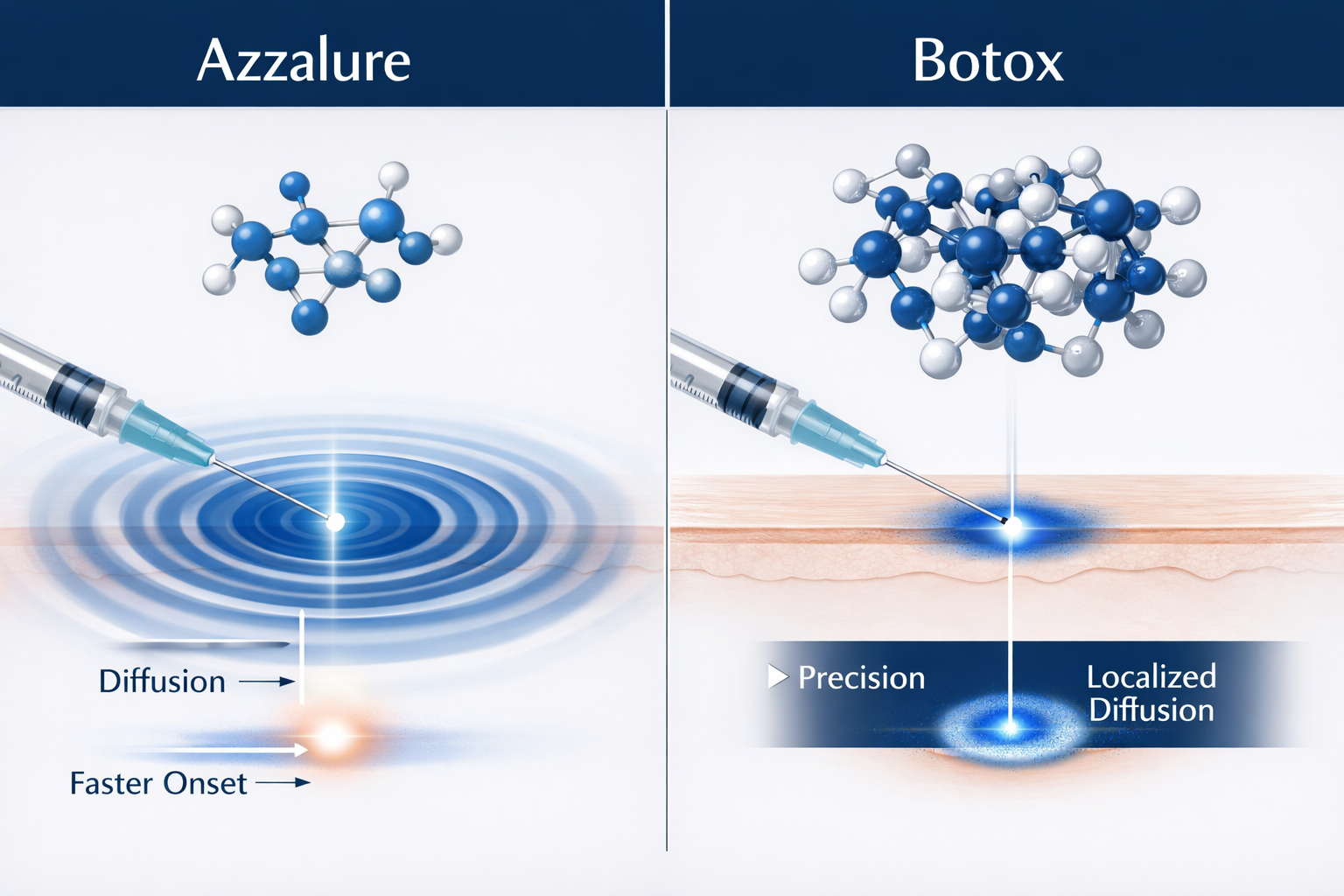

Quick Comparison
| Characteristic | Azzalure | Botox |
|---|---|---|
| Active ingredient | Botulinum toxin type A | Botulinum toxin type A |
| Manufacturer / marketer (UK) | Ipsen (manufactured) / Galderma (marketed) | Allergan (AbbVie) |
| International equivalent | Dysport | Botox (same brand globally) |
| UK regulatory status | MHRA-approved (cosmetic, 2009) | MHRA-approved (cosmetic and medical) |
| Molecule / protein size | Smaller clostridial protein complex | Larger protein complex |
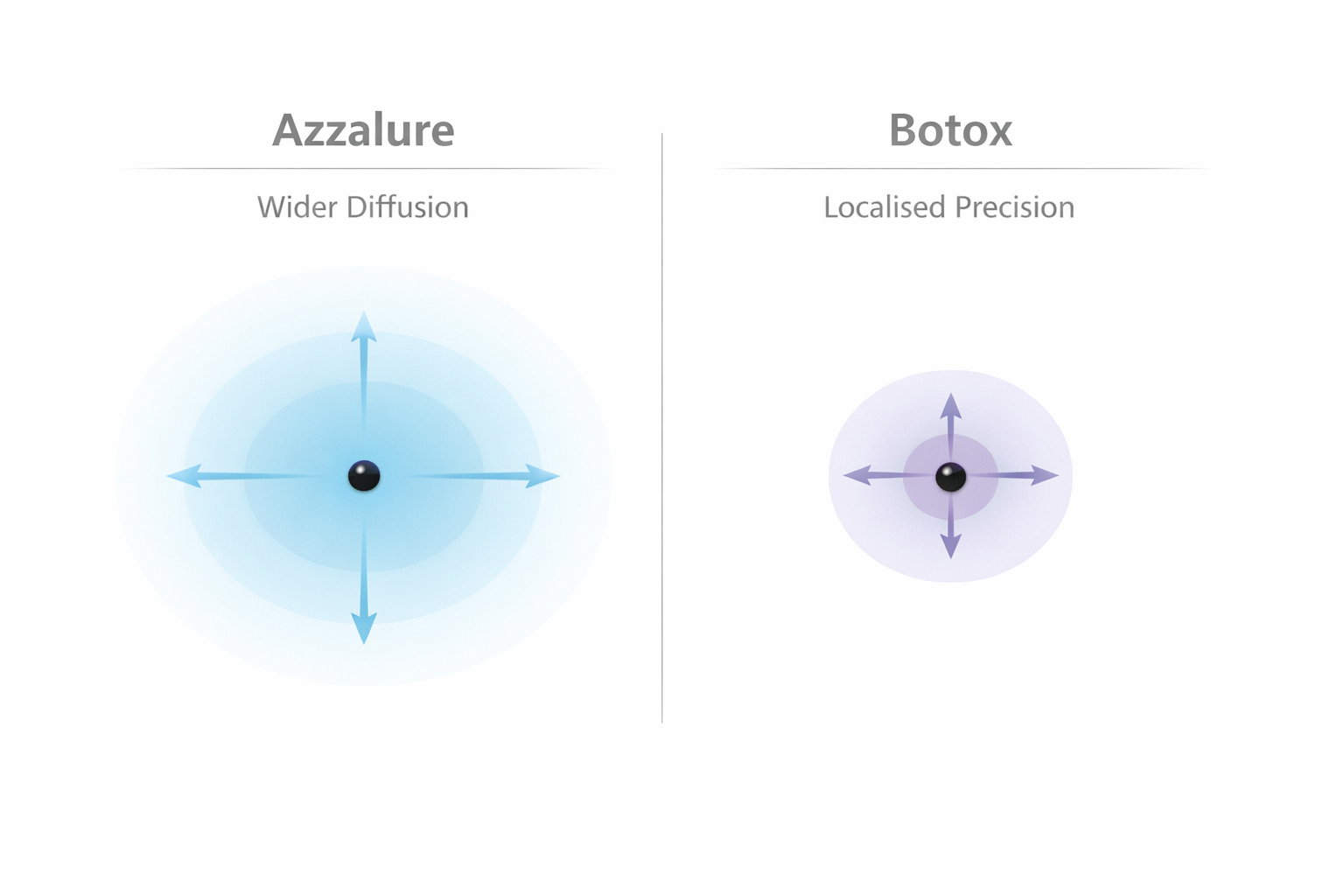
| Diffusion properties | Wider spread from injection point | More localised spread |
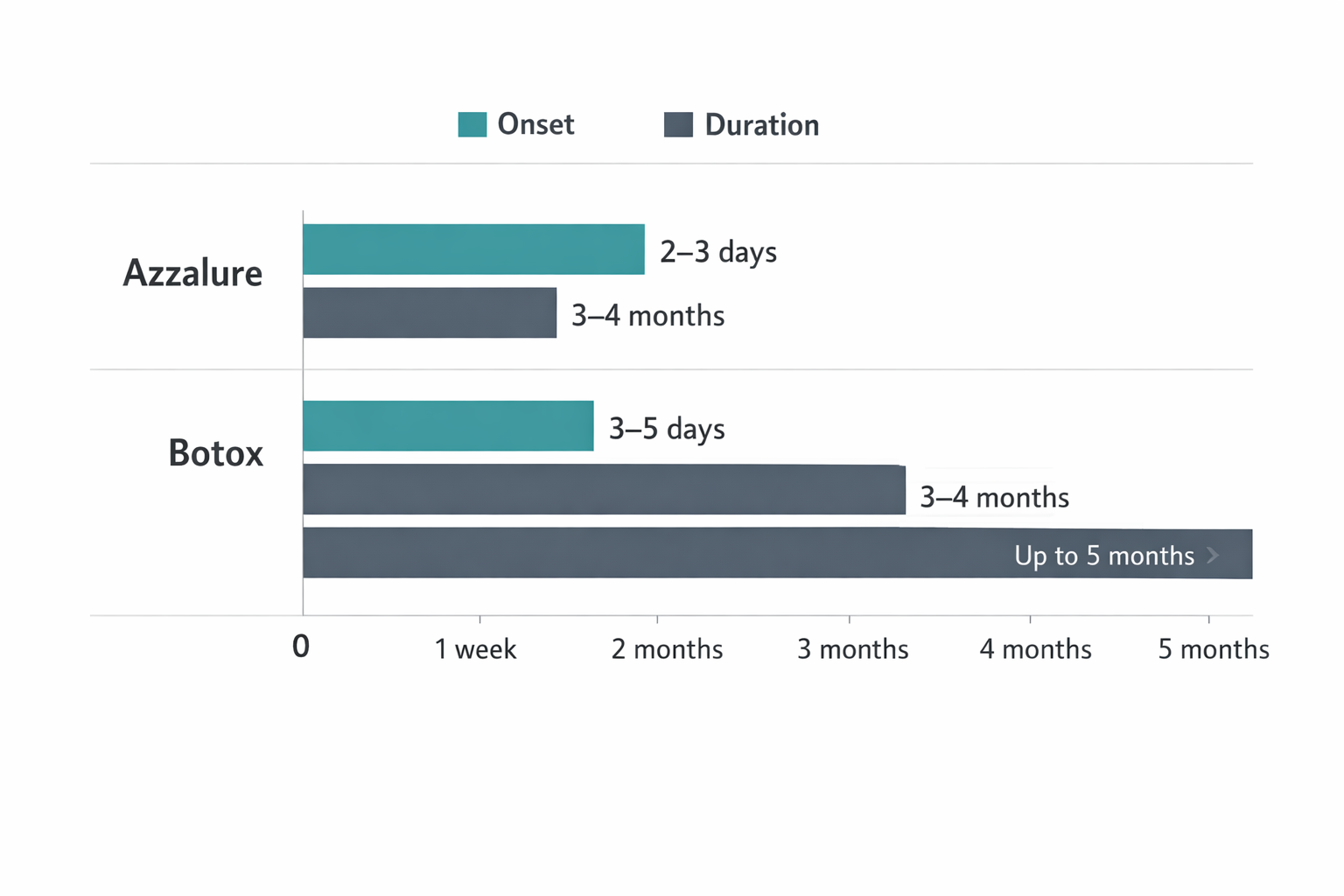
| Onset of action | Typically 2–3 days | Typically 3–5 days (full effect at 1–2 weeks) |
| Duration of results | Approximately 3–4 months | Approximately 3–5 months |
| Primary cosmetic treatment areas | Glabellar lines, crow’s feet, forehead lines | Glabellar lines, crow’s feet, forehead lines, and broader medical uses |
| Unit conversion ratio | More units needed per area vs Botox | Fewer units needed per area vs Azzalure |
| Medical (non-cosmetic) uses | Limited cosmetic licence in UK | Hyperhidrosis, chronic migraines, bruxism, muscle spasms |
| Typical cost per session | Often slightly lower per unit; total may equalise | Often slightly higher per unit; fewer units required |
Azzalure and Botox are both established anti-wrinkle injectables that use botulinum toxin type A to temporarily relax the muscles responsible for dynamic wrinkles. They share the same fundamental mechanism, a broadly similar safety profile, and overlapping treatment areas. Where they differ — in formulation, diffusion behaviour, onset speed, and licensed indications — can influence which product a qualified aesthetic practitioner selects for a particular patient and treatment goal. This guide explains those differences clearly, covers the questions most patients have, and highlights where clinical evidence is still developing.
What Are Azzalure and Botox?
Botox is manufactured by Allergan (now part of AbbVie) and has been used in cosmetic medicine since receiving FDA approval in 2002. It is one of the most extensively studied botulinum toxin products available, with a long track record across both cosmetic and therapeutic applications. In the UK it carries MHRA approval for cosmetic use and for several medical indications including hyperhidrosis (excessive sweating), chronic migraines, and bruxism-related masseter reduction.
Azzalure is manufactured by Ipsen and marketed in the UK by Galderma. It received MHRA approval for cosmetic use in 2009. Outside the UK, the same product is sold under the name Dysport, which is better known in international markets and in clinical literature. Patients who have had Dysport treatments abroad have essentially experienced Azzalure. Azzalure’s UK cosmetic licence covers glabellar lines (frown lines between the brows), and it is also used off-label by experienced practitioners for forehead lines, crow’s feet, and other areas — a practice that is lawful in the UK but means treatment is delivered outside the formally licensed indication.
How Do They Work?
Both products work by blocking the release of acetylcholine at the neuromuscular junction — the point where a nerve signal would normally instruct a muscle to contract. When acetylcholine release is inhibited, the muscle cannot contract with its usual force, and the overlying skin remains smoother. This is why the treatments are effective against dynamic wrinkles: lines that form as a direct result of repeated facial muscle movement, such as frowning, squinting, and raising the brows.
Neither product has a meaningful effect on static wrinkles — lines that are present even when the face is at rest — or on volume loss, skin laxity, or textural concerns. Understanding this distinction matters when setting realistic expectations. A cosmetic consultation should clarify whether dynamic or static factors are the dominant cause of a patient’s concerns before any injectable is recommended.
Formulation Differences: Molecule Size and Diffusion
One of the most clinically relevant differences between Azzalure and Botox lies in their formulations. Botox consists of botulinum toxin type A bound to a larger protein complex, while Azzalure contains a smaller clostridial protein complex. This difference in molecular structure influences how each product behaves after injection.
Azzalure has wider diffusion properties — meaning it tends to spread further from the injection point into the surrounding tissue. This can be an advantage when treating broader surface areas such as the forehead or the region around crow’s feet, where a more even distribution of effect across multiple muscle fibres may produce natural-looking results. However, in areas where precision is critical — such as the upper eyelid region or when treating very localised muscles — greater diffusion carries a higher risk of the product reaching unintended muscles, potentially causing temporary side effects such as eyelid drooping (ptosis).
Botox, with its more localised spread, offers greater precision at the injection site. Practitioners who need to target a very specific muscle while sparing adjacent structures may prefer this characteristic. The distinction between precision vs. diffusion is not simply a question of which is better in absolute terms — it is a consideration that depends on the treatment area, the patient’s facial anatomy, and the injector’s technique and experience.
Onset of Results
Azzalure generally has a faster onset of action, with many patients noticing initial muscle relaxation within two to three days of treatment. Botox typically takes three to five days before early effects are visible, with the full result becoming apparent over one to two weeks. For patients who have an event or deadline in mind, this difference may be worth discussing with their practitioner when booking.
It is worth noting that individual variation plays a significant role. Metabolism, the specific muscles treated, injection technique, and the volume used can all influence how quickly either product takes effect. Neither product should be assessed for its final result before at least two weeks have passed.
How Long Do Results Last?
Both Azzalure and Botox produce effects that last approximately three to four months in most patients, after which muscle activity gradually returns and repeat treatment is typically needed to maintain results. Some evidence and clinical experience suggest that Botox may, in certain patients and treatment areas, offer a slightly longer duration — sometimes extending to five months — though this is not a universal finding and depends heavily on individual factors.
Factors that influence how long either product lasts include the patient’s metabolism, the muscles treated, the dosage used, and whether the patient has had regular treatments over time. Patients who maintain a consistent treatment schedule often report that their results last longer over successive sessions, possibly because the relevant muscles weaken slightly with ongoing periods of reduced activity.
Treatment Areas: Where Each Product May Be Used
In practice, both Azzalure and Botox are used across similar facial treatment areas, though their licensed indications differ and practitioner preference plays a significant role.
- Glabellar lines (frown lines between the brows): Both products are well-established here. Azzalure’s UK cosmetic licence specifically covers this area.
- Forehead lines: Treated with both products, typically off-label for Azzalure, though this is common practice among experienced injectors.
- Crow’s feet (lateral canthal lines): Both products are used for periorbital lines. Azzalure’s wider diffusion may be advantageous in this region; however, proximity to the eye means practitioner experience is particularly important.
- Perioral lines (smoker’s lines): A more technically demanding area. Both products can be used by skilled practitioners, though very precise dosing is required to avoid affecting lip movement.
- Masseter / bruxism: Both products are used off-label to reduce masseter bulk and address teeth grinding, though clinical evidence is stronger for Botox in this context.
Botox also holds regulatory approval for several medical (non-cosmetic) applications that Azzalure does not. These include treatment of hyperhidrosis (excessive sweating in the underarms, hands, or feet), chronic migraines, and certain muscle spasm conditions. If a patient is seeking botulinum toxin treatment for a medical rather than purely cosmetic reason, Botox may be the only licensed option depending on the indication.
Understanding the Unit Conversion Ratio
A frequently misunderstood aspect of comparing Azzalure and Botox is that their units are not interchangeable. The unit conversion ratio between the two products is approximately 2.5 to 3 Azzalure units for every 1 Botox unit when treating equivalent areas. This does not mean Azzalure is a weaker product — it reflects the different ways in which each product’s potency is measured and standardised.
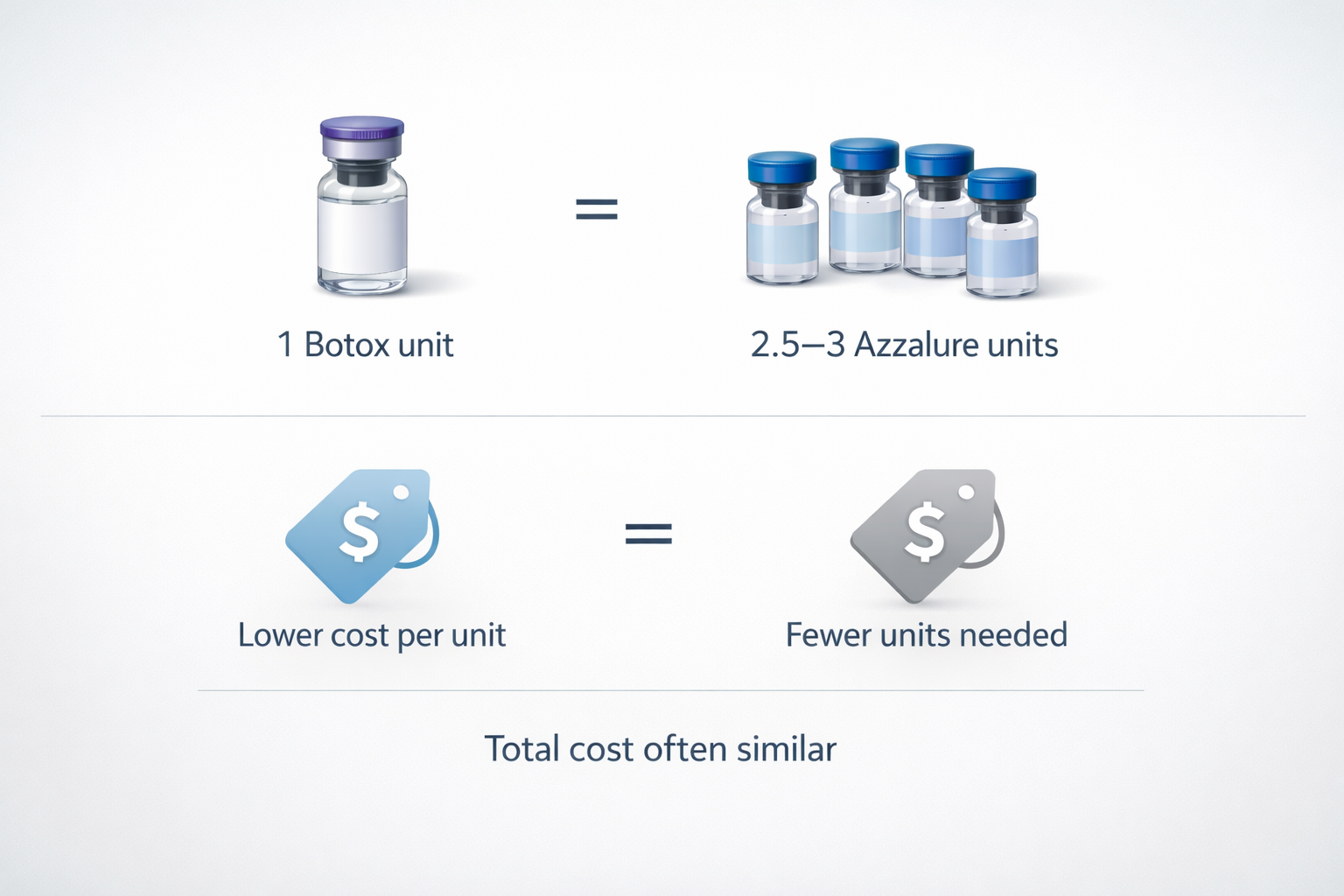
This conversion matters practically when patients try to compare prices based on cost per unit. Azzalure is often priced lower per unit than Botox, but because more units are required to achieve a comparable effect, the total cost of treatment is frequently similar. Reputable clinics price treatments by area rather than by raw unit count, which makes comparison more straightforward. Patients should be cautious of any pricing structure that seems unusually low without explanation of how units are being counted.
Safety, Side Effects, and the Risk of Antibody Formation
Both Azzalure and Botox carry a broadly comparable safety profile when administered by a qualified aesthetic practitioner with appropriate training and experience. Common side effects for both include temporary redness, mild bruising, or swelling at the injection site, which typically resolves within a few days. Headache is occasionally reported after forehead treatments.
More significant but less common risks include temporary eyelid drooping (ptosis), brow asymmetry, or unwanted spread of effect to adjacent muscles. These risks are closely linked to injection technique, the volumes used, and patient-specific facial anatomy. The diffusion characteristics of Azzalure mean that the risk of spread to unintended areas may be marginally higher if technique is not carefully calibrated, particularly around the eyes.
A less commonly discussed consideration is antibody formation. With repeated botulinum toxin treatments over time, a small number of patients develop neutralising antibodies against the toxin, which can reduce the effectiveness of subsequent treatments. Some evidence suggests that formulations with a higher clostridial protein load may carry a modestly higher risk of triggering this immune response. Botox has historically carried a higher protein load than Azzalure, though Allergan has reformulated Botox over the years to reduce this. The clinical relevance of antibody formation in cosmetic doses remains a subject of ongoing research, and for most patients undergoing standard cosmetic treatment intervals it is not a primary concern. Practitioners treating patients who have noticed diminishing results over time may consider this factor when reviewing options.
Neither product is appropriate during pregnancy or breastfeeding. Patients with certain neuromuscular conditions, those taking specific medications (including some antibiotics and muscle relaxants), or those with a history of allergic reactions to botulinum toxin products should discuss their medical history in full before treatment.
The Frozen Look: Myth and Reality
The frozen look — an over-treated appearance where natural facial expression is significantly reduced — is one of the most common patient concerns about botulinum toxin treatments. It is important to understand that this outcome is not inherent to either Azzalure or Botox as products. It is almost always the result of excessive dosing or poor technique rather than a property of the product itself.
Both products, when administered conservatively and skillfully, are capable of producing subtle, natural-looking results that soften dynamic wrinkles without eliminating expression. The goal of modern aesthetic botulinum toxin treatment is muscle relaxation that reduces visible lines while allowing natural movement to continue. Patients who are concerned about this outcome should discuss their preferences clearly during a consultation and may wish to start with a conservative dose, with the option to review results at a follow-up appointment.
A Note on Alluzience: An Emerging Third Option
Patients researching anti-wrinkle injectables in the UK may encounter a newer product called Alluzience. Unlike Azzalure and Botox, which are supplied as a dry powder that must be reconstituted with saline before injection, Alluzience is a ready-to-use liquid formulation of botulinum toxin type A. Early clinical data suggest a potentially faster onset, though it is a newer product with a shorter track record than either Azzalure or Botox. Not all clinics currently offer Alluzience, and it is worth asking your practitioner whether it may be appropriate for your goals if you are curious about it.
What to Expect at Your Appointment
Whichever product is used, the general treatment experience is similar. A consultation should take place before treatment to assess your facial anatomy, discuss your aesthetic goals, review your medical history, and confirm suitability. The injections themselves are usually completed within fifteen to thirty minutes depending on the number of areas treated. Most patients describe the discomfort as minimal — a brief stinging or pressure sensation at each injection point.
After treatment, patients are typically advised to avoid lying flat, strenuous exercise, or applying pressure to the treated area for several hours. Alcohol and blood-thinning medications or supplements (such as aspirin, ibuprofen, and high-dose fish oil) are generally best avoided in the days before treatment to minimise bruising risk. Full results can be assessed at two weeks, which is also when a review appointment may be offered to assess whether any adjustments are needed.
What Happens If You Switch Between Products?
Patients who have had one botulinum toxin brand and are considering switching to another — whether out of curiosity, availability, or cost — can generally do so safely. The products work through the same mechanism and target the same muscle groups. The main practical consideration is the unit conversion ratio: a practitioner switching a patient from Botox to Azzalure (or vice versa) will adjust the dose accordingly rather than using the same number of units. It is worth informing your new clinic or practitioner which product you have previously received and approximately how long ago, so they can plan the new treatment appropriately.
Frequently Asked Questions
Is Azzalure the same as Dysport?
Yes. Azzalure and Dysport are the same botulinum toxin product manufactured by Ipsen. Azzalure is the brand name used in the UK; Dysport is used in most other international markets. Clinical research conducted on Dysport is directly relevant to Azzalure.
Which lasts longer — Azzalure or Botox?
Both products typically last three to four months. Botox may last slightly longer in some patients and some treatment areas, but this is not consistent across all individuals. Individual metabolism, the muscles treated, and the dose used are all significant factors.
Is Azzalure cheaper than Botox?
Azzalure is often priced lower per unit, but the unit conversion ratio means that more Azzalure units are required to treat the same area as Botox. The overall cost per treatment area frequently works out similarly between the two products. Pricing also varies considerably between clinics and regions.
Which product is better for forehead lines?
Both can be effective for forehead lines. Some practitioners favour Azzalure for broader forehead areas because its wider diffusion properties may give a more even result across the forehead. Others prefer Botox for its precision, particularly if the concern is concentrated in a specific area. Practitioner technique and experience are at least as important as the product chosen.
Can either product give a frozen look?
A frozen look results from excessive dosing or suboptimal technique rather than from the product itself. Both Azzalure and Botox can produce natural-looking results when administered correctly. Choosing a qualified, experienced practitioner and discussing your preference for a subtle outcome during consultation significantly reduces this risk.
Can Azzalure be used for medical conditions like hyperhidrosis or migraines?
Azzalure’s UK licence is focused on cosmetic indications. Botox holds MHRA approval for several medical conditions including hyperhidrosis, chronic migraines, and certain muscle spasm disorders. If you are seeking treatment for a medical condition, you should discuss with your practitioner or GP which product and clinical pathway is appropriate.
Does switching between Botox and Azzalure cause any problems?
Switching between products is generally considered safe, provided the new treatment is planned with the correct dose for the product being used. Inform your practitioner about your previous treatment history so they can adjust accordingly.
Azzalure or Botox: Which May Suit Your Goals?
For most cosmetic patients seeking treatment of frown lines, forehead lines, or crow’s feet, both Azzalure and Botox are well-established options capable of delivering natural-looking results in experienced hands. The differences between them are real but, in clinical practice, often less decisive than the skill and judgment of the qualified aesthetic practitioner administering the treatment.
Azzalure’s faster onset and wider diffusion properties may make it a reasonable choice for patients treating broader facial areas or those who want to see early results. Botox’s longer clinical track record, greater precision, and broader range of licensed medical indications may make it preferable for patients with specific targeted concerns, those seeking treatment for a medical condition, or those whose practitioner has particular experience with the Allergan product.
The most practical step is to discuss your aesthetic goals, medical history, and any preferences with a qualified practitioner during a thorough consultation. A skilled injector will select the product most appropriate for your specific facial anatomy and desired outcome — and that selection is often more important than any single characteristic that distinguishes the two products from each other.
