
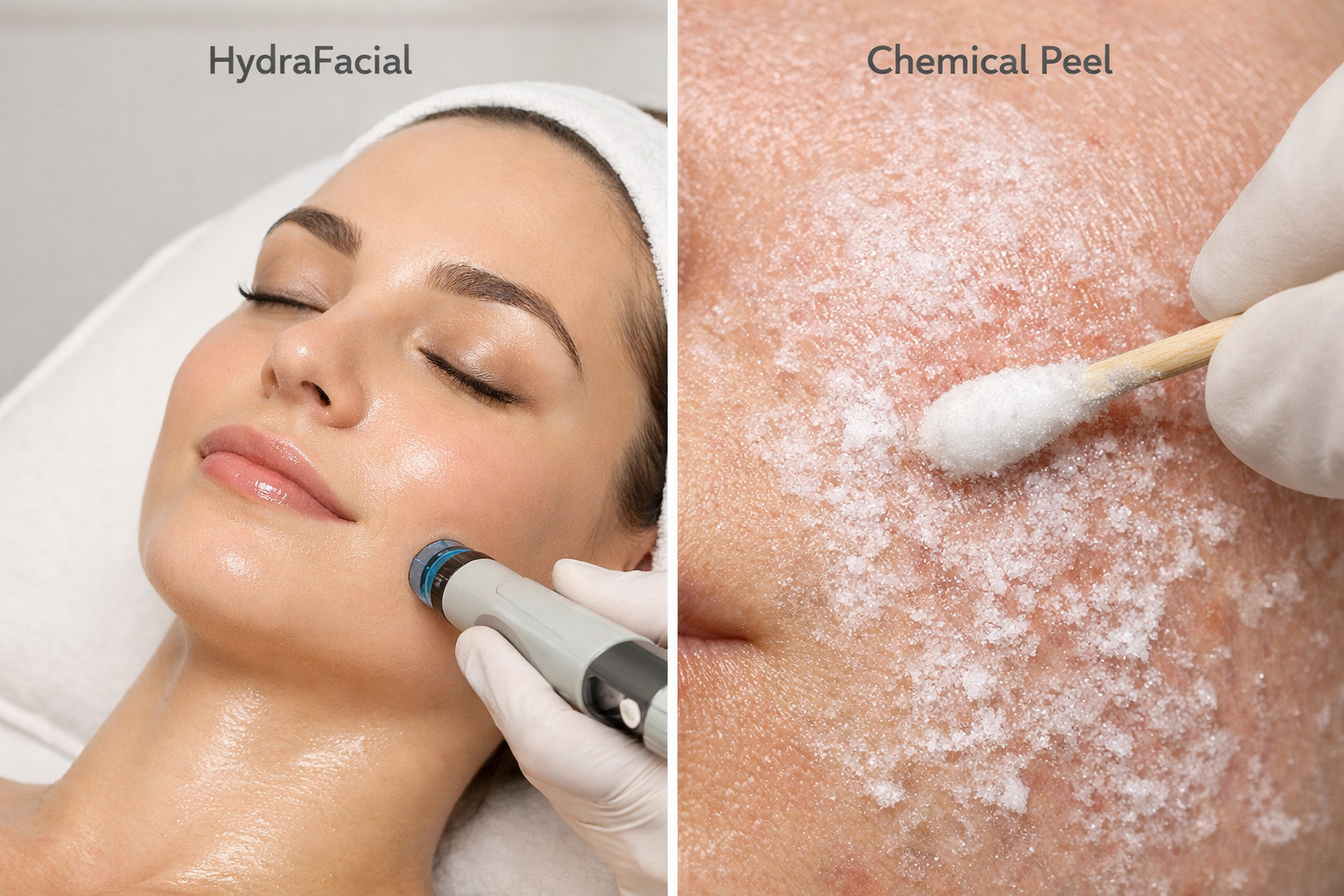

Quick Comparison
| Characteristic | HydraFacial | Chemical Peel |
|---|---|---|
| Treatment type | Hydradermabrasion with serum infusion | Acid-based skin resurfacing |
| Mechanism | Vortex-Fusion technology: cleanse, exfoliate, extract, infuse | Controlled exfoliation via acid-induced skin shedding |
| Peel depth | Superficial (with hydration benefit) | Superficial, medium, or deep depending on acid type |
| Downtime | None | Superficial: minimal; medium: 5–7 days; deep: 2–4 weeks |
| Results onset | Immediate glow | Gradual; visible after peeling phase (3–7 days) |
| Results duration | 4–6 weeks | Weeks to months depending on peel depth |
| Suitable skin types | All skin types including sensitive skin | Most types; caution required for darker skin tones |
| Pain level | Minimal; mild suction sensation | Superficial: mild tingling; deeper: significant discomfort |
| Customisable | Yes — via booster serums for specific concerns | Yes — via acid type and concentration |
| Collagen stimulation | Mild | Moderate to significant (medium and deep peels) |
| Session duration | 30–45 minutes | 15–30 minutes (plus recovery observation) |
| Maintenance frequency | Every 4–6 weeks | Varies by peel depth; superficial every 4–6 weeks |
Two Different Approaches to Skin Renewal
HydraFacial and chemical peels are both popular non-invasive treatments designed to improve skin texture and tone, but they achieve this through very different mechanisms. HydraFacial is a multi-step hydradermabrasion treatment that simultaneously cleanses, exfoliates, extracts, and infuses the skin with nourishing serums. A chemical peel, by contrast, uses an acid-based solution to induce controlled exfoliation, removing damaged outer skin layers and triggering the skin’s natural regeneration response.
Choosing between them depends on your skin type, specific concerns, tolerance for downtime, and how dramatic an improvement you are seeking. Neither treatment is universally superior — each has a distinct profile of benefits, limitations, and ideal candidates. Understanding how they work in practice makes it considerably easier to decide which is worth discussing with a qualified practitioner.
How HydraFacial Works
HydraFacial is a patented device-based treatment that uses Vortex-Fusion technology — a spiral-tipped handpiece that creates a vortex of fluid to simultaneously dislodge and remove impurities while delivering active ingredients into the skin. The treatment follows a consistent four-step sequence: deep pore cleansing, gentle exfoliation, painless extractions, and serum infusion. The whole process typically takes 30 to 45 minutes, making it a practical option for busy schedules — sometimes described as a lunch break facial.
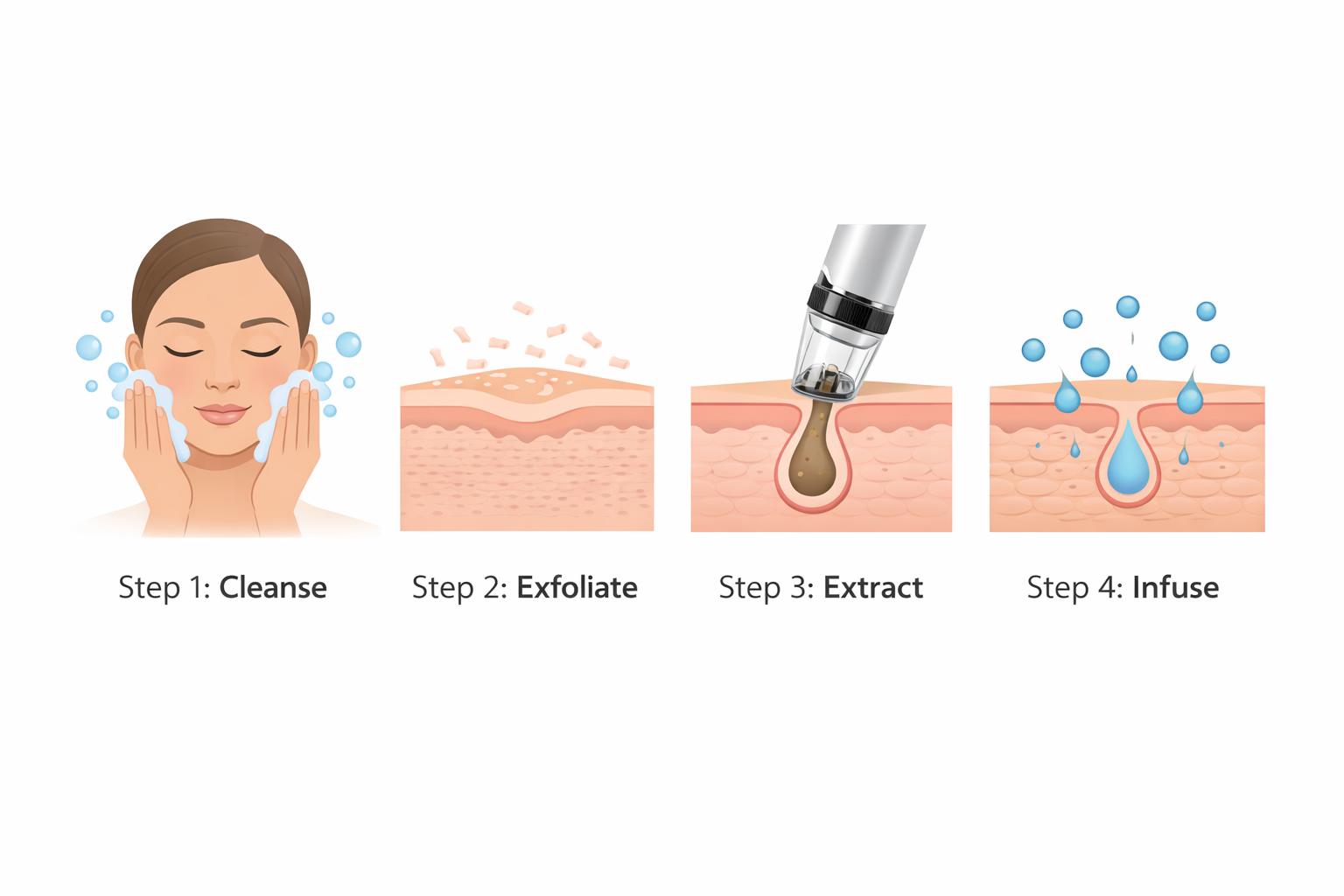
The serum infusion step is what distinguishes HydraFacial most clearly from traditional facials or basic exfoliation treatments. Medical-grade serums containing hyaluronic acid, peptides, and antioxidants are delivered directly into freshly cleansed pores immediately after extraction, maximising absorption at a time when the skin is most receptive. Because the treatment does not rely on acid-induced injury, it produces no meaningful downtime and leaves the skin hydrated rather than sensitised.
One meaningful advantage of HydraFacial is its customisable booster system. Targeted booster serums can be added to address specific concerns such as hyperpigmentation, acne, fine lines, or general brightening. This allows the treatment to be tailored beyond a standard protocol, which is particularly relevant for patients with multiple concurrent skin concerns. The treatment is designed to suit all skin types, including sensitive skin and rosacea-prone skin, provided the chosen boosters are appropriate for the individual’s skin profile.
How Chemical Peels Work
Chemical peels work by applying an acid solution to the skin surface, causing controlled damage to the outermost skin layers. This controlled exfoliation prompts the skin to shed damaged cells and accelerates cell turnover, stimulating the production of new skin cells and, depending on peel depth, collagen stimulation in the dermis. The depth of a chemical peel — and therefore its effect on the skin — depends on the type of acid used, its concentration, and the number of passes applied during the treatment.
Chemical peels are broadly categorised into three depth levels:
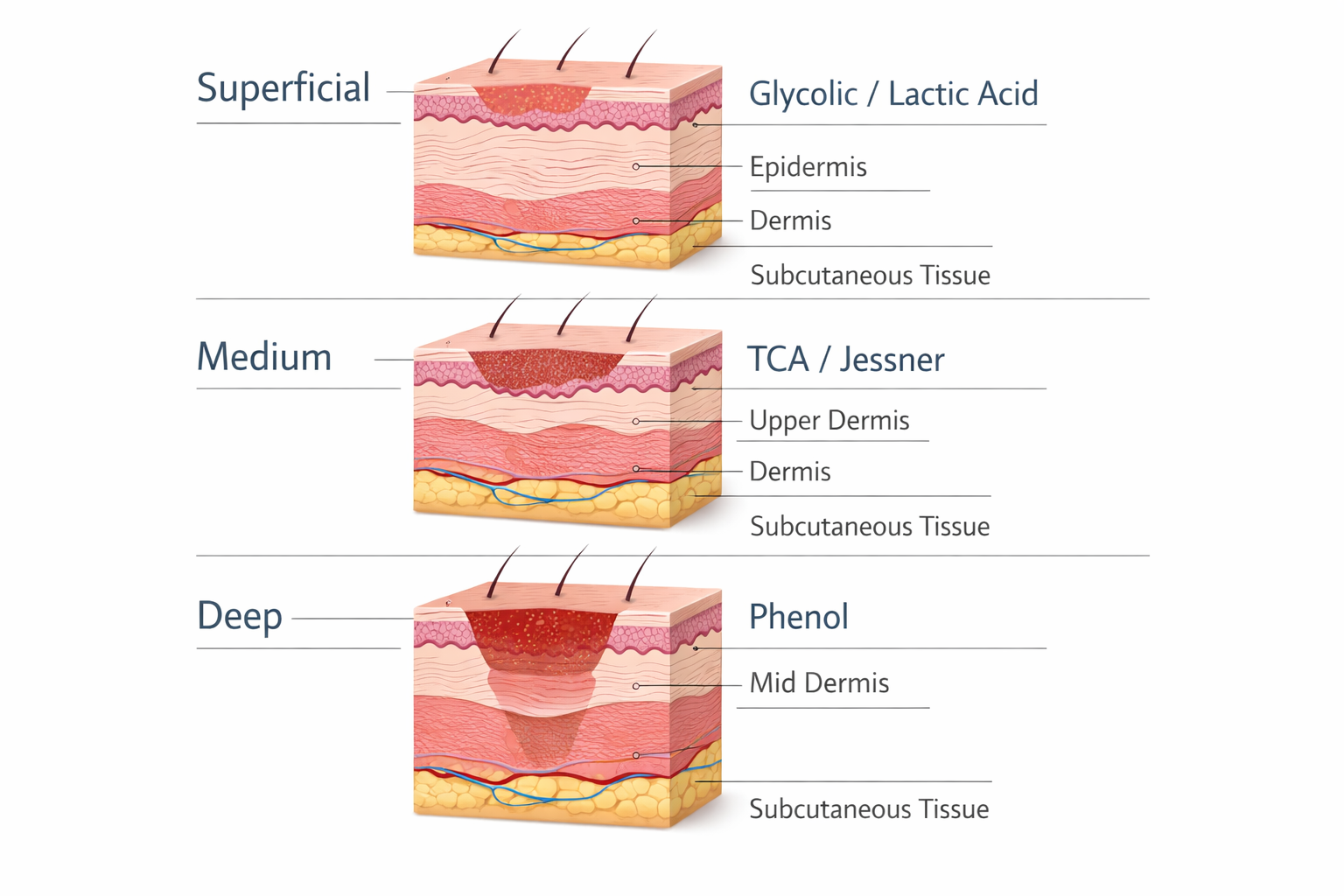
- Superficial peels target the outermost layer of the epidermis. Common acids include glycolic acid, lactic acid, mandelic acid, and low-concentration salicylic acid. These peels cause mild exfoliation, minimal redness, and little to no visible peeling. They suit regular maintenance and mild texture concerns.
- Medium-depth peels penetrate into the upper dermis. Trichloroacetic acid (TCA) and Jessner’s solution are frequently used. These peels produce more significant skin shedding over several days and carry greater potential for improving hyperpigmentation, fine lines, and acne scarring. Recovery typically involves 5 to 7 days of visible peeling and redness.
- Deep peels reach the mid-dermis and produce the most dramatic skin resurfacing results. Phenol-based peels fall into this category. They require significant pre-treatment preparation, carry a more involved recovery period of two to four weeks, and are typically performed by medical professionals in a clinical or surgical setting. They are not appropriate for darker skin tones due to the high risk of post-inflammatory hyperpigmentation and permanent pigmentation changes.
During a chemical peel appointment, the skin is cleansed, the acid solution is applied evenly, and after the appropriate contact time, it is neutralised or removed. Patients typically experience tingling, warmth, or a mild burning sensation during application, with intensity increasing with peel depth.
Skin Concerns: Which Treatment May Help More?
Acne and Acne-Prone Skin
Both treatments can be beneficial for acne-prone skin, but through different mechanisms. Salicylic acid peels are particularly well-suited to acne because salicylic acid is lipid-soluble, meaning it can penetrate the sebaceous follicle to reduce excess oil, clear congestion, and address post-inflammatory pigmentation. Medium-depth peels may also help improve acne scarring over a course of treatments. HydraFacial offers gentle extraction of congested pores and can be combined with acne-targeted booster serums, making it a useful option for patients with active breakouts who cannot tolerate the downtime or irritation of an acid peel.
Hyperpigmentation and Sun Damage
Chemical peels — particularly medium-depth TCA peels — tend to produce more noticeable results for hyperpigmentation, dark spots, and sun damage than a standard HydraFacial, because the depth of acid penetration disrupts the melanin-producing cells responsible for uneven pigmentation. However, chemical peels carry a real risk of worsening pigmentation if used incorrectly on darker skin tones (Fitzpatrick skin types IV to VI). Post-inflammatory hyperpigmentation is a well-recognised complication of medium and deep peels in patients with more melanin-rich skin, and careful practitioner selection is essential. HydraFacial with a brightening booster offers a safer, gentler approach to pigmentation for patients with darker skin tones, though results may be more gradual.
Fine Lines, Wrinkles, and Anti-Ageing
For visible fine lines and anti-ageing concerns, medium-depth chemical peels generally have a greater impact than HydraFacial, because the controlled damage they induce triggers a more substantial collagen stimulation response in the dermis. HydraFacial delivers peptides and antioxidants that support skin health and may improve the appearance of early fine lines, but it does not stimulate collagen production to the same degree. Patients seeking a meaningful anti-ageing result from a single treatment may find a medium-depth peel more effective, while those prioritising regular skin maintenance without downtime may prefer HydraFacial as part of an ongoing schedule.
Dull, Dehydrated, or Congested Skin
HydraFacial is particularly well-suited to dullness, dehydration, and general skin congestion. The simultaneous extraction and hyaluronic acid infusion delivers an immediate glow that many patients notice within hours of treatment. Superficial chemical peels with lactic acid can also address dullness and dehydration, as lactic acid has mild humectant properties alongside its exfoliating action. For a fast, visible improvement in luminous skin quality with no recovery time, HydraFacial tends to be the more practical choice.
Sensitive Skin and Rosacea
Patients with sensitive skin or rosacea-prone skin are generally better candidates for HydraFacial than for chemical peels. The Vortex-Fusion technology is designed to exfoliate gently without chemical sensitisation, and the hydrating serum infusion step actively soothes the skin post-extraction. Chemical peels — even superficial ones — can trigger significant flares in rosacea and may cause prolonged redness or irritation in very sensitive skin. If a chemical peel is being considered for sensitive skin, a very low-concentration lactic acid or mandelic acid superficial peel is typically the most cautious starting point, and only under experienced clinical supervision.
Downtime and Recovery: A Practical Comparison
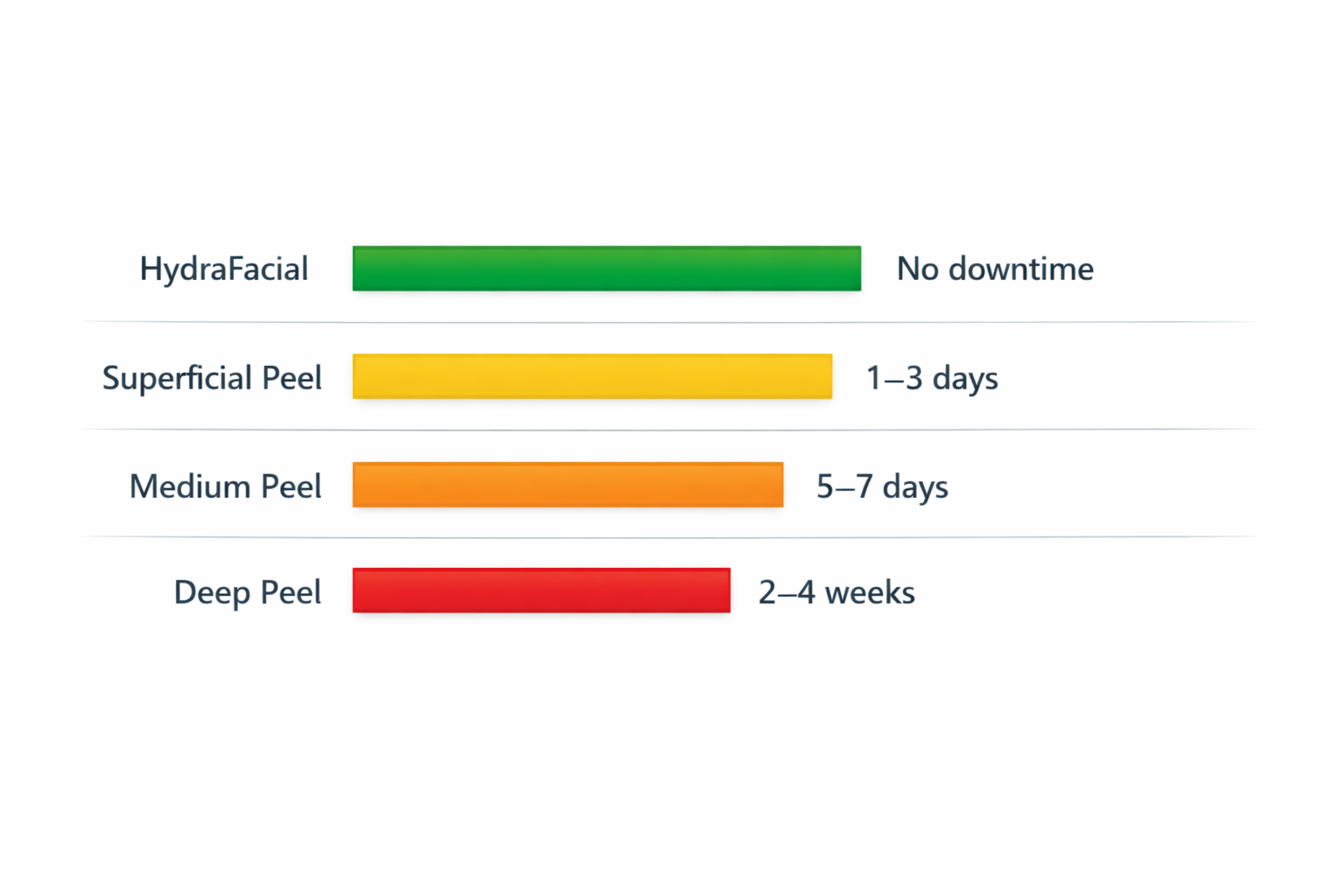
One of the most significant practical differences between the two treatments is recovery. HydraFacial produces no meaningful downtime. Most patients experience a mild, temporary flush immediately after the treatment, which usually resolves within a few hours. Skin may feel slightly more sensitive than usual for the rest of the day, and it is advisable to avoid heavy sun exposure and active skincare ingredients for 24 hours, but normal activities can resume immediately.
Chemical peel recovery varies considerably with peel depth. Superficial peels may cause mild redness and some flaking over two to three days. Medium-depth peels typically involve visible skin shedding, significant redness, and tightness for five to seven days. Deep peels require the most substantial recovery — significant swelling, raw-feeling skin, and a prolonged healing phase that may last several weeks. During recovery from medium and deep peels, the skin is highly vulnerable to sun damage and infection, making strict sun avoidance and careful aftercare essential.
Pre-Treatment Preparation
HydraFacial requires minimal preparation. Patients are generally advised to arrive with clean skin and to avoid using strong retinoids or acid-based products in the days before treatment, as these can increase skin sensitivity during the procedure.
Chemical peels — particularly medium and deep peels — require more structured pre-treatment preparation. Practitioners commonly advise patients to:
- Discontinue retinoids and prescription-strength vitamin A products for at least one week prior (longer for deep peels)
- Avoid AHA and BHA exfoliants in the days before treatment
- Avoid sun exposure and use a high-SPF sunscreen consistently in the weeks before treatment
- For patients with a history of cold sores (oral herpes simplex), antiviral prophylaxis may be recommended before medium or deep peels
- Some practitioners prime darker skin tones with a topical agent for several weeks before a peel to reduce the risk of post-inflammatory hyperpigmentation
Patients should always follow the specific pre-treatment guidance provided by their treating practitioner, as protocols may vary based on the peel type and individual skin history.
Aftercare: What to Do After Each Treatment
After a HydraFacial, aftercare is straightforward: use a gentle cleanser, apply a good moisturiser, and wear broad-spectrum SPF30 or higher if going outdoors. Avoid active ingredients such as retinoids, glycolic acid, and vitamin C serums for 24 to 48 hours. The skin is typically comfortable immediately after treatment.
After a chemical peel, aftercare becomes more demanding as peel depth increases. Key principles for chemical peel aftercare include:
- Keep the skin moisturised consistently to support the healing barrier
- Do not pick, peel, or forcibly remove any flaking skin — this significantly increases the risk of scarring and post-inflammatory hyperpigmentation
- Avoid active skincare ingredients until the skin has fully healed
- Apply a high-SPF broad-spectrum sunscreen daily, even indoors near windows, throughout the recovery period
- Avoid strenuous exercise, saunas, and steam rooms during recovery from medium or deep peels
- Contact your practitioner promptly if you experience signs of infection, unexpected blistering, or prolonged inflammation
Cost Considerations
HydraFacial sessions in the UK typically range from approximately £100 to £200 per session depending on the clinic and any additional booster serums included. Because results last around four to six weeks, regular maintenance requires ongoing investment — roughly six to twelve sessions per year for patients who make it part of their skin maintenance schedule.
Chemical peel costs vary more widely, primarily because of the significant difference between peel depths. Superficial peels are generally the most affordable, often ranging from £60 to £150 per session. Medium-depth peels typically cost between £150 and £400, while deep phenol peels — performed in a medical setting — may cost considerably more and require additional consultation and aftercare appointments. The total cost of achieving a specific result may be lower for a medium-depth peel than for a long-term HydraFacial maintenance programme, but this depends on the individual’s goals and the number of sessions required.
Can You Combine HydraFacial and Chemical Peels?
Combining treatments is an increasingly common approach in aesthetic practice, and the two treatments can complement each other well when timed appropriately. HydraFacial is sometimes used in the weeks following a chemical peel to support hydration and recovery once the skin has fully healed, as the serum infusion step can help restore moisture and barrier function after the peeling phase. Alternating between the two treatments — for example, using HydraFacial for regular monthly maintenance and scheduling a superficial or medium-depth peel once or twice a year for a more targeted resurfacing effect — can provide both consistent skin quality maintenance and periodic deeper renewal.
Performing both treatments on the same day is generally not recommended, as the skin is already exfoliated and sensitised after either procedure. A qualified practitioner can design a combined skin maintenance schedule that sequences the treatments safely based on your skin type, concerns, and response to previous treatments.
Who Should Avoid Each Treatment?
HydraFacial is generally well-tolerated, but it may not be appropriate for patients with active skin infections, open wounds, or very active inflammatory rosacea. Patients who are pregnant are typically advised to avoid certain booster serums containing active ingredients, and individual assessment is necessary. The treatment is generally not recommended directly over areas of active acne cysts or nodules.
Chemical peels carry a broader list of contraindications. They are generally not recommended for patients who are pregnant or breastfeeding, patients who are currently using isotretinoin (Roaccutane) or have used it within the past six to twelve months, patients with a history of keloid scarring, those with active cold sores or skin infections in the treatment area, and those with significantly compromised skin barrier function. As noted above, darker skin tones require special consideration for medium and deep peels due to the elevated risk of post-inflammatory hyperpigmentation and permanent pigmentation changes — thorough pre-treatment assessment by an experienced practitioner is essential.
Frequently Asked Questions
Is HydraFacial the same as a chemical peel?
No. HydraFacial is a hydradermabrasion treatment that uses mechanical suction and serum infusion rather than acid-based chemistry. While some HydraFacial tip solutions contain mild exfoliating agents such as glycolic acid or salicylic acid, the mechanism and depth of action are fundamentally different from a chemical peel. HydraFacial does not induce controlled skin damage in the way a chemical peel does.
Which treatment gives faster results?
HydraFacial produces an immediate glow that is visible the same day. Chemical peels — particularly medium-depth peels — produce their main visible improvement after the peeling phase, which typically takes three to seven days. For an event or occasion, HydraFacial is usually the more practical choice in the short term.
How often should I get a HydraFacial or a chemical peel?
HydraFacial can be performed as frequently as every four weeks as part of a regular skin maintenance schedule. Superficial chemical peels can also be spaced every four to six weeks. Medium-depth peels are typically performed no more than two to four times per year, with adequate recovery time between sessions. Deep peels are generally one-time or very infrequent treatments. Your practitioner will recommend a frequency based on your skin type and treatment goals.
Which is better for acne scars?
For acne scarring, chemical peels — particularly medium-depth TCA peels — tend to produce more significant improvement than HydraFacial, because the depth of skin resurfacing stimulates collagen remodelling in the dermis. HydraFacial can help with surface-level post-inflammatory pigmentation and skin texture, but it does not remodel scar tissue. For moderate to significant acne scarring, other treatments such as microneedling or laser resurfacing may also be worth discussing with a practitioner.
Is HydraFacial safe for darker skin tones?
HydraFacial is generally considered safe for all skin types, including darker skin tones, provided booster serums are chosen appropriately for the individual’s skin profile. Chemical peels carry a meaningful risk of post-inflammatory hyperpigmentation for patients with Fitzpatrick skin types IV to VI, particularly at medium and deep peel depths. Careful practitioner selection and pre-treatment assessment are essential for patients with darker skin considering a chemical peel.
Can a chemical peel damage your skin?
When performed by a qualified and experienced practitioner using appropriate acid types and concentrations for the patient’s skin type, chemical peels are considered a well-established treatment. However, risks include prolonged redness, uneven pigmentation, scarring, infection, and in the case of deeper peels, more serious complications. Pre-treatment preparation, careful practitioner selection, and thorough aftercare significantly reduce — but do not eliminate — these risks.
HydraFacial or Chemical Peel: Choosing the Right Treatment for Your Skin
The right choice between HydraFacial and a chemical peel depends primarily on what you want to achieve, how much downtime you can accommodate, and the specific characteristics of your skin. HydraFacial is a strong option for patients who want consistent skin maintenance, immediate results with no recovery time, a treatment that works well for all skin types including sensitive skin, and a customisable approach to general skin quality. It is particularly well-suited to patients who value regular, comfortable treatments as part of an ongoing skin health routine.
Chemical peels offer a different value proposition. They are more likely to produce meaningful improvements in significant hyperpigmentation, deeper fine lines, acne scarring, and sun-damaged skin — but at the cost of recovery time and a requirement for more careful pre- and post-treatment management. Superficial peels can also form part of a regular skin maintenance schedule and are accessible for most patients. Medium and deep peels are more selective treatments with greater potential results and correspondingly greater risks and recovery requirements.
For many patients, these two treatments are not mutually exclusive. An experienced practitioner can design a combined skin maintenance schedule that uses the strengths of each approach — regular HydraFacial sessions for ongoing skin quality management alongside periodic chemical peels for targeted resurfacing. A thorough consultation with a qualified aesthetic practitioner or dermatologist remains the most reliable way to determine which approach — or combination — is most appropriate for your individual skin type, concerns, and goals.
