


Key Takeaways
- Lumi Eyes is a polynucleotide skin booster injected into the periocular area to improve skin quality, hydration, and the appearance of dark circles — not to restore volume.
- Results are gradual and cumulative; most patients need a series of sessions spaced around four weeks apart before seeing the full benefit.
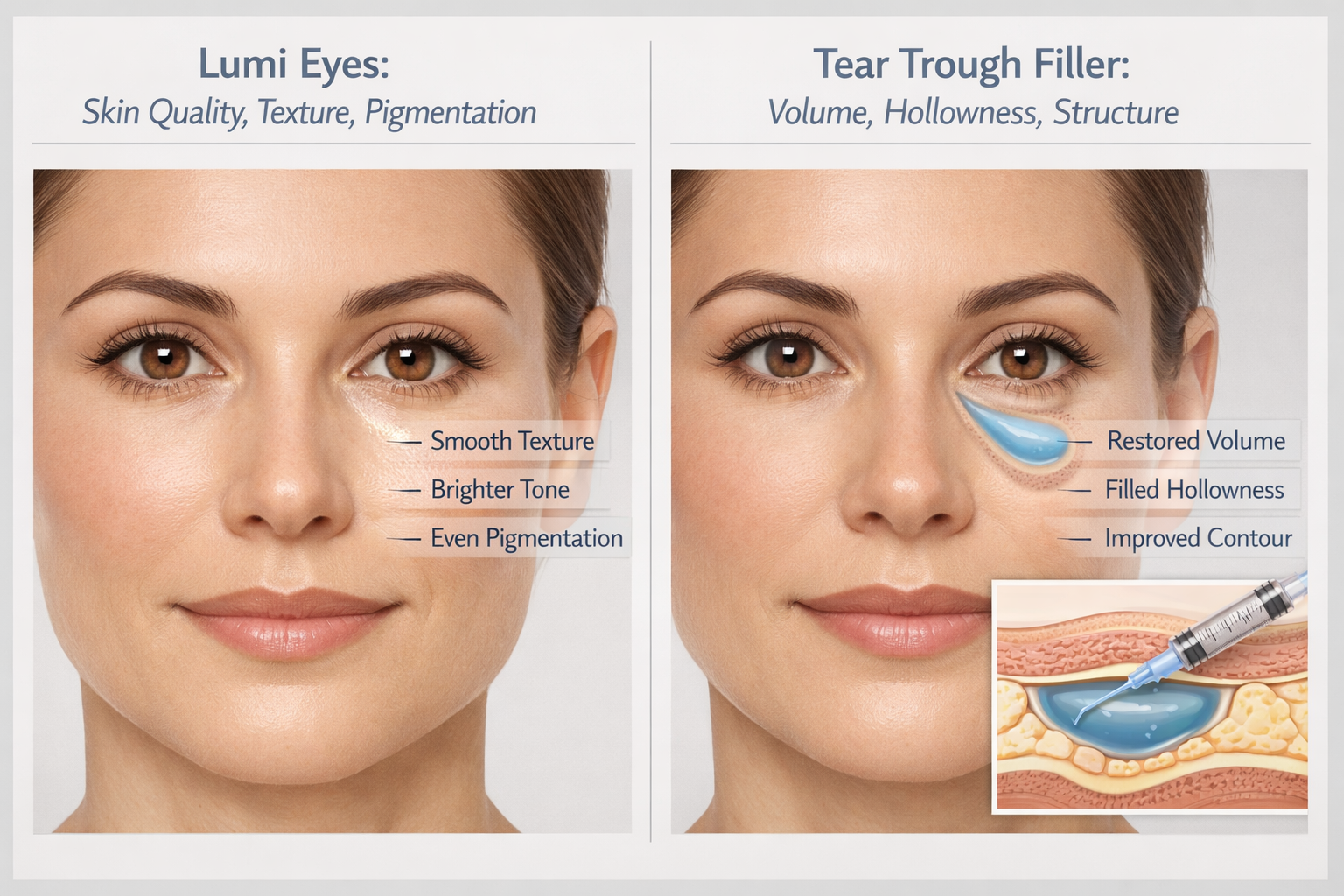
- It is not a direct substitute for tear trough filler, which addresses hollowness and volume loss rather than skin texture and pigmentation.
- Like any injectable, Lumi Eyes carries risks — including swelling, bruising, and rare complications — and suitability depends on individual health history.
- Whether it is worth the investment depends on your specific concern, realistic expectations, and whether a qualified aesthetic practitioner confirms you are a suitable candidate.
What Is Lumi Eyes?
Lumi Eyes is a registered injectable treatment based on polynucleotides — long chains of nucleotides derived from highly purified salmon DNA. Polynucleotide skin boosters have been used in aesthetic medicine for tissue regeneration and skin quality improvement for a number of years, and Lumi Eyes is formulated specifically for the delicate periocular area, meaning the skin around the eyes.
Unlike a dermal filler, Lumi Eyes does not add volume beneath the skin. Instead, the polynucleotide solution works at a cellular level, stimulating the skin’s own repair processes and supporting collagen production, elastin formation, and improved hydration. The result, when it works as intended, is a gradual improvement in skin quality rather than an immediate structural change. This distinction is important for anyone weighing up whether the treatment is appropriate for their specific concern.
The product is manufactured by Matex Lab and is one of several polynucleotide-based injectables on the aesthetic market. Its concentration of polynucleotides sits at approximately 2%, which is on the lower end compared to some competing brands. This does not make it ineffective, but it is a relevant consideration when comparing products or evaluating value.
How Does Lumi Eyes Work?
Polynucleotides act as biological signalling molecules once introduced into the dermis. In the context of Lumi Eyes treatment, the mechanism involves several overlapping processes. First, the polynucleotide chains stimulate fibroblast activity — fibroblasts are the skin cells responsible for producing collagen and elastin. Increased fibroblast activity gradually improves the structural integrity of the skin, helping to reduce the appearance of fine lines and crepey texture in the under-eye area.
Second, polynucleotides have hydrophilic properties, meaning they attract and retain water molecules within the tissue. This contributes to skin hydration and a plumper, more rested appearance over time. Third, there is evidence that polynucleotides support lymphatic drainage and strengthen capillary walls in the treated area. Improved circulation and reduced vascular fragility can help reduce the bluish discolouration associated with visible capillaries beneath thin under-eye skin — one of the contributing factors to the appearance of dark circles.
It is important to understand that these mechanisms do not act instantly. Tissue regeneration is a biological process that unfolds over weeks. The improvement seen with Lumi Eyes is gradual and becomes more pronounced with each session in a treatment course, which is why cumulative results after a full series of treatments look more significant than results after a single session.
What Can Lumi Eyes Treat — and What Can It Not?
Lumi Eyes is best suited to patients whose under-eye concerns relate primarily to skin quality, mild pigmentation, fine lines, or general dehydration and dullness in the periocular area. It may help reduce the appearance of dark circles caused by thin skin, visible capillaries, or surface pigmentation, and it can improve the texture of crepey or tired-looking skin around the eyes.
However, Lumi Eyes is not appropriate for all types of under-eye concerns. It does not address volume loss or structural hollowness — the kind of deep tear trough that creates a sunken or shadowed appearance due to fat pad displacement or facial ageing. For those concerns, tear trough filler using hyaluronic acid (HA) remains the more appropriate first-line non-surgical treatment. Lumi Eyes also has limited impact on significant swelling or eye bags caused by fat prolapse, and it will not correct dark circles arising purely from inherited pigmentation at a deeper skin layer.
Understanding what Lumi Eyes cannot do is just as important as knowing what it can achieve. A thorough consultation with a qualified aesthetic practitioner should identify the primary cause of your under-eye concern before any treatment is recommended.
Lumi Eyes vs Tear Trough Filler: Which Addresses Your Concern?
The most common question prospective patients ask is how Lumi Eyes compares to tear trough filler. These are fundamentally different treatments that address different problems, and choosing between them — or combining them — depends entirely on the cause of the concern being treated.
| Feature | Lumi Eyes (Polynucleotide) | Tear Trough Filler (HA) |
|---|---|---|
| Primary mechanism | Tissue regeneration, collagen stimulation, hydration | Volume replacement, structural support |
| Ideal concern | Skin quality, fine lines, mild pigmentation, crepey texture | Hollowness, volume loss, deep tear trough shadows |
| Onset of results | Gradual — 2 to 4 weeks, full results at 2 to 3 months | Immediate structural improvement |
| Sessions typically needed | 2 to 3 sessions, 4 weeks apart | Often 1 session, with possible top-up |
| Longevity | Approximately 6 to 12 months | Approximately 12 to 18 months |
| Reversible? | No (results gradually fade) | Yes — HA filler can be dissolved with hyaluronidase |
| Risk of swelling or oedema | Mild, typically short-lived | Higher risk; Tyndall effect possible if placed incorrectly |
| Suitable for thin, delicate skin | Yes — designed for the periocular area | Requires careful technique; less forgiving in very thin skin |
Some patients benefit most from a combination approach, where tear trough filler addresses underlying volume loss while Lumi Eyes simultaneously improves skin quality, texture, and brightness. This is particularly relevant for patients who have both hollowness and poor skin quality in the under-eye area. A qualified practitioner can assess whether a combination treatment is appropriate and safe for your anatomy.
What to Expect During a Lumi Eyes Treatment Session
A Lumi Eyes appointment typically begins with a consultation or pre-treatment assessment, during which the practitioner reviews your medical history, assesses the under-eye area, and confirms that you are a suitable candidate. A topical numbing cream is usually applied to the skin around the eyes for 20 to 30 minutes before the injections to improve comfort.
The polynucleotide solution is injected into the dermis of the under-eye area using a fine needle. Multiple small injections are made along the treatment zone. Most patients describe the sensation as mild to moderate discomfort — manageable, though the under-eye area is sensitive. The injection process itself typically takes 15 to 30 minutes. Immediately after treatment, there may be small raised bumps at the injection sites, along with some redness and localised swelling. These generally settle within 24 to 72 hours.
Sessions are usually spaced approximately four weeks apart to allow time for the skin’s biological response to progress before the next round of stimulation. Most practitioners recommend an initial course of two to three sessions to achieve the best cumulative results, with maintenance treatments every six to twelve months thereafter, depending on how the individual responds.
Results Timeline: What Lumi Eyes Before and After Looks Like
Managing expectations around timing is one of the most important aspects of understanding whether Lumi Eyes is worth it for you. Unlike dermal filler, which produces immediate visible change, the improvements from Lumi Eyes emerge gradually as the skin undergoes tissue regeneration and collagen production from within.

- Days 1 to 7: Initial swelling, redness, and small injection bumps may be visible. Skin may look temporarily puffy before settling. No meaningful cosmetic result is visible at this stage.
- Weeks 2 to 4: Swelling has resolved and the first signs of improvement may become noticeable — the skin may appear more hydrated and slightly brighter. Fine lines may look softer.
- After a full course (2 to 3 months): The most significant before and after difference becomes apparent. Cumulative results include improved skin quality, reduced appearance of dark circles and puffiness, softer fine lines, and a more rested overall appearance in the periocular area.
- Maintenance phase (6 to 12 months): Results gradually diminish over time. Annual or biannual maintenance treatment is typically recommended to sustain improvements.
Individual responses vary depending on skin type, age, lifestyle factors, and the underlying cause of the concern being treated. Some patients respond more noticeably than others, and no practitioner should guarantee a specific outcome.
Side Effects and Risks
Lumi Eyes is generally considered well-tolerated when administered by an experienced, qualified aesthetic practitioner, but it is not without risks. Understanding these clearly is part of making an informed decision.
Common, temporary side effects include swelling, redness, bruising, and tenderness at the injection sites. These typically resolve within a few days. Small, transient lumps at injection points are also common and usually disappear as the product integrates with the tissue.
Less common risks include infection, prolonged swelling, and asymmetry in the treated area. In rare cases, patients may experience an allergic or inflammatory reaction to the polynucleotide formulation. Although Lumi Eyes uses highly purified salmon DNA, patients with a known fish allergy should discuss this with their practitioner before proceeding, as individual assessment is required.
Complications linked to practitioner technique are among the most preventable risks. Reports of Lumi Eyes treatments going wrong — including excessive swelling, prolonged oedema, or uneven results — are most commonly associated with practitioners who lack adequate training or experience in periocular injections. The under-eye area has a complex vascular anatomy and very thin skin, making technique and product placement especially important.
Avoiding strenuous exercise, alcohol, and heat exposure for 24 to 48 hours after treatment is generally recommended to minimize swelling and bruising risk. Your practitioner should provide specific aftercare guidance at the time of treatment.
Who May Be Suitable for Lumi Eyes
Lumi Eyes may be worth discussing with a qualified practitioner if you have one or more of the following concerns and have been assessed as medically suitable:

- Dark circles caused by thin skin, visible capillaries, or mild surface pigmentation
- Fine lines and crepey texture in the periocular area
- General dullness or dehydration around the eyes
- Mild puffiness related to poor lymphatic drainage rather than significant fat prolapse
- A preference for gradual, natural-looking results over immediate volume-based change
- Those who are not suitable candidates for tear trough filler due to anatomy or other reasons
Who Should Not Have Lumi Eyes
Lumi Eyes is not suitable for everyone. Contraindications typically include pregnancy and breastfeeding, certain autoimmune conditions, active skin infections or inflammation in the treatment area, known allergies relevant to the product’s components, and certain medications that increase bleeding risk. Patients whose primary under-eye concern is significant volume loss or structural hollowness are unlikely to achieve the result they are looking for with Lumi Eyes alone — a different treatment or combination approach would be more appropriate.
Only a thorough pre-treatment consultation can confirm individual suitability. A responsible practitioner will decline to treat patients for whom the treatment is inappropriate and will recommend a more suitable alternative where needed.
Cost and Value: Is Lumi Eyes Worth the Investment?
The cost of Lumi Eyes treatment varies depending on the clinic, practitioner experience, and location. Single sessions in the UK typically range from approximately £150 to £300 per session, though pricing outside this range is not uncommon. Because a course of two to three sessions is generally needed to achieve optimal results, the cumulative cost of a full initial course may fall between £300 and £900 or more before considering maintenance sessions.
This is a meaningful financial commitment for a treatment whose results last approximately 6 to 12 months — shorter than the 12 to 18 months typically associated with hyaluronic acid tear trough filler. When evaluating cost per month of results, some patients find tear trough filler represents better value for money, particularly where hollowness rather than skin quality is the primary concern. However, where skin quality is the dominant issue, Lumi Eyes addresses a need that filler cannot meet, making the comparison less straightforward.
Value also depends on how well an individual responds to treatment. Patients with mild to moderate skin quality concerns in the periocular area who complete a full course with a skilled practitioner tend to see more satisfying before and after outcomes than those with severe concerns or structural issues that polynucleotides cannot resolve. Being honest about your concern and your starting point is central to assessing whether the treatment is genuinely worth it for you.
Lumi Eyes also sits at the more accessible end of the polynucleotide market in terms of price, partly due to its relatively lower polynucleotide concentration compared to some alternative brands such as PDRN or higher-concentration PN products. Patients seeking a more intensive polynucleotide treatment may find it worth discussing other formulations with their practitioner, though this involves a direct comparison of concentration, evidence, and cost that should be guided by clinical assessment.
How to Choose a Qualified Practitioner
The under-eye area is one of the most technically demanding injection zones in aesthetic medicine. Choosing a practitioner with the appropriate training and experience is not optional — it directly affects both your safety and your results. When assessing a provider, look for evidence of a medical background (such as a doctor, dentist, nurse prescriber, or pharmacist independent prescriber), specific training in periocular injections, and familiarity with the polynucleotide product being used.
Ask whether an in-person consultation is offered before treatment, whether your medical history will be reviewed, and whether the clinic has a clear protocol for managing complications if they arise. Avoid any provider who is unwilling to discuss risks, who offers unusually low prices without explanation, or who does not ask about your health history. A non-surgical treatment is still a medical procedure, and the credentials and experience of the person administering it matter significantly.
Frequently Asked Questions
How many Lumi Eyes sessions will I need?
Most practitioners recommend a course of two to three sessions spaced approximately four weeks apart for the initial treatment phase. The number of sessions that are right for you depends on your starting skin quality and how well you respond, which is assessed during and after the course.
Is Lumi Eyes painful?
Discomfort is typically mild to moderate. A topical numbing cream is applied before the injections to reduce sensitivity. The periocular area is delicate, so some patients find it more uncomfortable than other injection sites, but most tolerate the procedure well.
Can I have Lumi Eyes and tear trough filler at the same time?
A combination approach is used by some practitioners when a patient has both volume loss and poor skin quality in the under-eye area. Whether it is appropriate for you depends on your individual anatomy, concerns, and the practitioner’s assessment. Treatments may be administered in the same session or staged, depending on clinical judgement.
How long does Lumi Eyes last?
Results typically last between 6 and 12 months, though this varies between individuals. Factors including age, skin condition, lifestyle, and the number of sessions completed influence longevity. Annual or biannual maintenance treatment is usually recommended to sustain results.
Are there people who should not have Lumi Eyes?
Yes. Lumi Eyes is not suitable for those who are pregnant or breastfeeding, have certain autoimmune conditions, active skin infections or inflammation in the treatment area, relevant allergies, or certain medications. It is also not appropriate as a standalone solution for deep hollowness or significant structural volume loss. A consultation is required to assess individual suitability.
Is Lumi Eyes safe if I have a fish allergy?
Lumi Eyes is derived from highly purified salmon DNA. While the purification process is designed to remove allergenic proteins, patients with a known fish or seafood allergy should disclose this before treatment. Individual assessment by the practitioner is required, and the treatment may not be recommended in these cases.
Is Lumi Eyes Worth Considering for Your Under-Eye Concerns?
Lumi Eyes is a legitimate, evidence-supported polynucleotide skin booster that can genuinely improve skin quality, hydration, and the appearance of dark circles in the periocular area — but only when it is the right treatment for the right concern. For patients whose under-eye issues relate to thin, crepey skin, mild pigmentation, fine lines, or general dullness, a properly administered course of Lumi Eyes may deliver gradual, natural-looking results that make the treatment worthwhile.
Where it falls short is for patients seeking immediate volume restoration, correction of deep structural hollows, or resolution of dark circles with a primarily vascular or genetic cause. In those cases, tear trough filler or a combination approach may be more appropriate. The shorter longevity of Lumi Eyes compared to HA filler, combined with the need for a series of sessions, also means the cumulative cost and time commitment deserve honest consideration before booking.
The most reliable way to determine whether Lumi Eyes is worth the investment for your individual situation is to consult with a qualified aesthetic practitioner who can assess the specific cause of your concern, explain what the treatment can realistically achieve, and recommend whether Lumi Eyes, an alternative, or a combination approach best matches your goals. A well-chosen treatment delivered by an experienced provider is the foundation of a result you are likely to find genuinely satisfying.
