
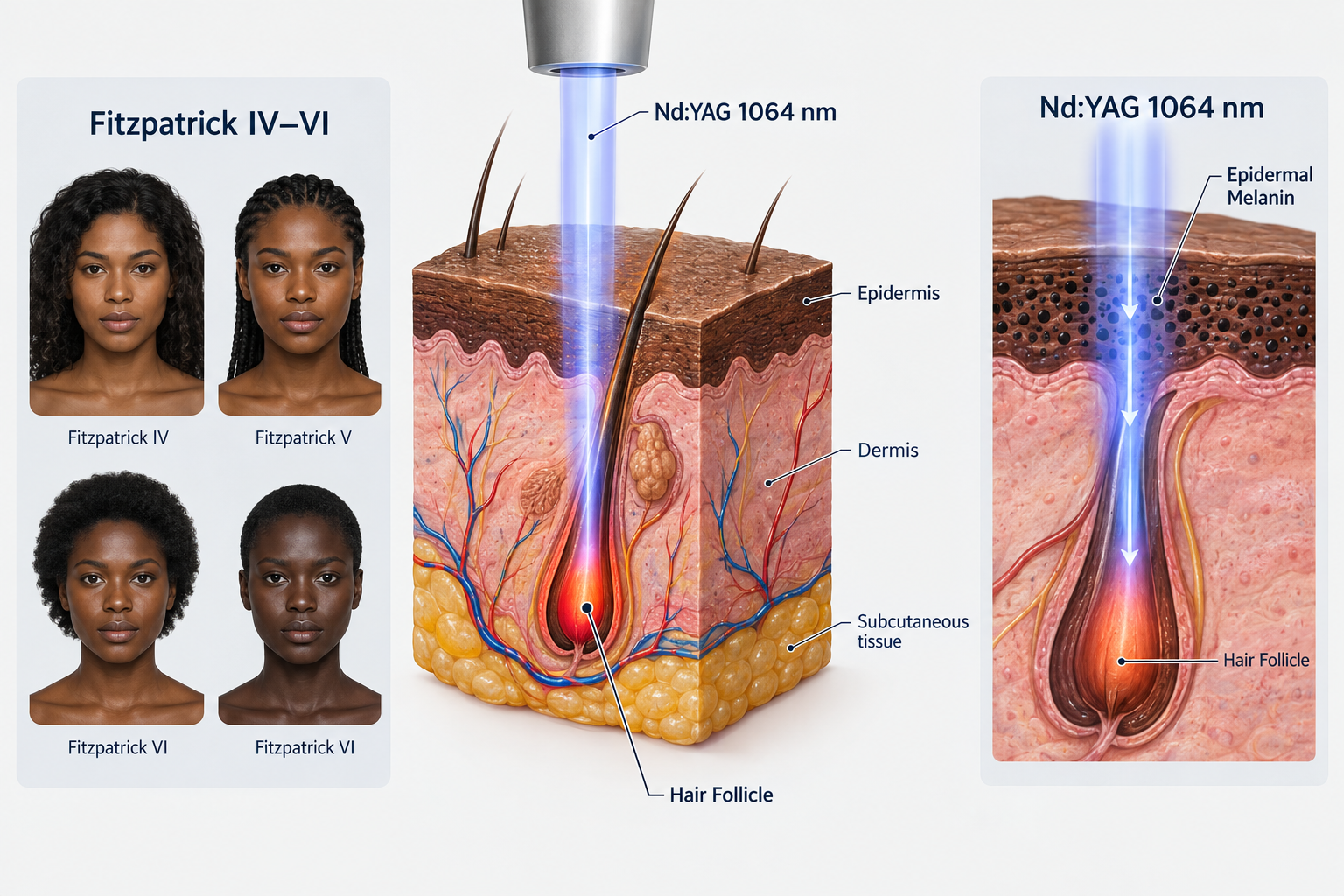

Laser hair removal is safe and effective for dark skin — but only when the right laser technology is used by an experienced provider. For decades, people with deeper skin tones were told that laser hair removal was not suitable for them, or they experienced burns and discoloration after treatment with the wrong device. That picture has changed significantly. Advances in laser technology, particularly the long-pulsed Nd:YAG 1064 nm laser, now allow people with Fitzpatrick skin types IV through VI to achieve meaningful, lasting hair reduction with an acceptable safety profile when treatment is properly planned and delivered.
Key Takeaways
- The long-pulsed Nd:YAG 1064 nm laser is widely considered the gold standard for laser hair removal on dark skin, as its longer wavelength bypasses surface melanin and targets the hair follicle more selectively.
- Alexandrite (755 nm) and IPL devices carry a significantly higher risk of burns, post-inflammatory hyperpigmentation (PIH), and hypopigmentation on Fitzpatrick skin types IV–VI and are generally not recommended.
- Choosing a board-certified dermatologist or highly experienced provider who performs a patch test and uses conservative treatment settings is the single most important safety factor.
- Most people require six to twelve sessions for substantial hair reduction; hormonal conditions such as PCOS can affect how many sessions are needed and how durable results are.
- At-home laser and IPL devices are generally unsafe for dark skin and should be avoided without specific guidance from a qualified clinician.
Why Dark Skin Requires a Different Approach
Laser hair removal works through a principle called selective photothermolysis: a laser emits a specific wavelength of light that is absorbed by a target chromophore — in this case, melanin — generating heat that damages the hair follicle without significantly harming surrounding tissue. The challenge with melanin-rich skin is that melanin is present not only inside the hair follicle but also throughout the epidermis, the skin's outer layer. When a laser wavelength is strongly absorbed by epidermal melanin, the skin surface itself absorbs heat alongside the follicle, raising the risk of thermal injury, burns, blistering, and lasting discoloration.
People with Fitzpatrick skin types IV through VI — which includes olive, medium brown, dark brown, and very deep skin tones common in South Asian, East Asian, Middle Eastern, Hispanic, African, and African American populations — have higher concentrations of eumelanin in their epidermis. This makes the choice of laser wavelength, energy settings, and cooling technology critically important. The same device and settings that work safely on a Fitzpatrick type I or II patient can cause serious harm on a Fitzpatrick type V or VI patient.
It is also worth noting that "dark skin" is not a single category. A Fitzpatrick IV patient with olive or medium-brown skin behaves quite differently from a Fitzpatrick VI patient with very deep skin. Providers who treat all darker skin tones identically are not applying the level of individualization that safe treatment requires.
Which Lasers Are Safe for Dark Skin?
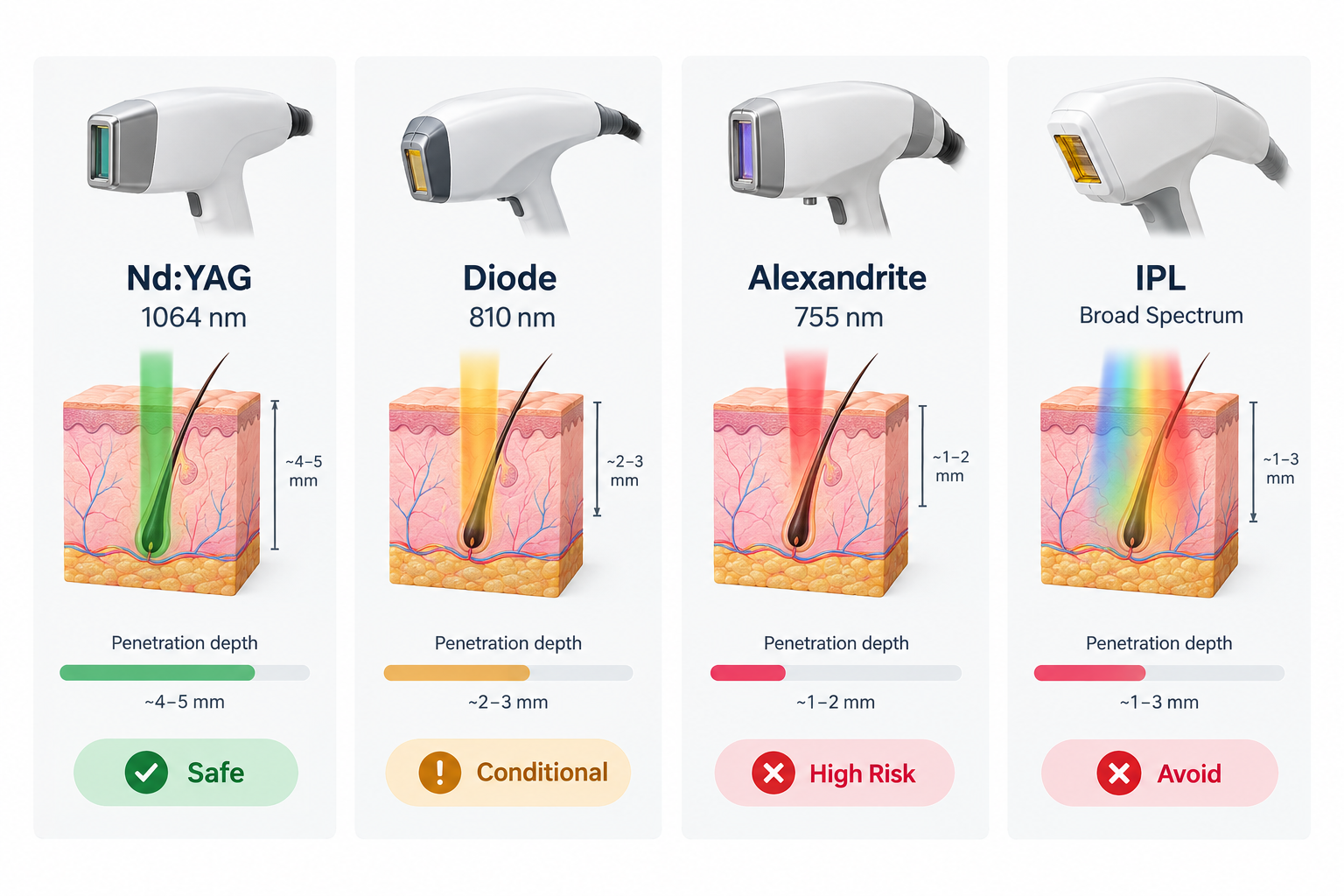
Not all laser systems are equally appropriate for melanin-rich skin. The key variable is wavelength: longer wavelengths penetrate more deeply into the dermis, are absorbed less aggressively by epidermal melanin, and can reach the hair follicle with less risk of surface thermal damage. The table below summarizes the main laser types used in hair removal and their suitability for darker skin tones.
| Laser Type | Wavelength | Safe for Dark Skin? | Risk Level | Notes |
|---|---|---|---|---|
| Nd:YAG | 1064 nm | Yes — preferred | Low (with correct settings) | Gold standard for Fitzpatrick IV–VI; bypasses epidermal melanin effectively |
| Diode | 808–810 nm | Conditionally | Moderate | Suitable for Fitzpatrick IV–V with expert calibration; requires careful fluence control |
| Alexandrite | 755 nm | Generally no | High | Strong epidermal melanin absorption; significant PIH and burn risk on dark skin |
| Ruby | 694 nm | No | Very high | Shortest wavelength; not appropriate for skin types beyond Fitzpatrick III |
| IPL | 515–1200 nm (broad) | No | Very high | Not a true laser; broad spectrum increases epidermal absorption risk substantially |
The Nd:YAG 1064 nm Laser: Why It Is the Gold Standard
The long-pulsed Nd:YAG laser operates at 1064 nm, the longest wavelength among the commonly used hair removal lasers. At this wavelength, the laser energy is absorbed relatively poorly by epidermal melanin and relatively well by the deeper melanin within the hair follicle and its surrounding structures. This selective absorption allows the device to deliver enough heat to achieve hair follicle destruction while sparing the overlying skin surface from significant thermal damage. Combined with integrated contact cooling or cooling gel applied to the skin during treatment, the Nd:YAG laser can be used across the full range of darker skin tones, including Fitzpatrick VI, with a substantially lower risk of burns, PIH, and hypopigmentation compared to shorter-wavelength devices.
Clinical evidence supports this approach. A 2025 study published in Lasers in Medical Science involving 55 patients with Fitzpatrick skin types IV through VI reported zero adverse events when a low-fluence 1064 nm Nd:YAG protocol was used, with meaningful hair reduction achieved across the cohort. Named devices built on Nd:YAG technology that appear in clinical and consumer literature include the GentleMax Pro, Lutronic Clarity II, and Cynosure Elite iQ, though the specific device matters less than the provider's expertise in calibrating it correctly for each patient's skin tone.
The Diode Laser: A Conditional Option
Diode lasers operating at 808–810 nm occupy a middle position. Their wavelength is longer than the alexandrite laser but shorter than the Nd:YAG, meaning they are absorbed more by epidermal melanin than the Nd:YAG but less than shorter-wavelength devices. In experienced hands, with conservative fluence settings and effective cooling technology, diode lasers such as the Diolaze XL can be used on Fitzpatrick IV and some Fitzpatrick V patients. However, they require more careful calibration and carry a higher margin for error than the Nd:YAG. For Fitzpatrick VI patients, the Nd:YAG remains the safer choice in most clinical contexts.
Lasers and Devices to Avoid on Dark Skin
The alexandrite laser at 755 nm is repeatedly identified in clinical literature as carrying an unacceptably high risk of post-inflammatory hyperpigmentation, burns, and blistering on skin types IV and above. Its shorter wavelength is strongly absorbed by epidermal melanin, making it difficult to deliver adequate follicular heat without simultaneously damaging the skin surface. IPL (Intense Pulsed Light) is not a laser at all — it emits a broad spectrum of light across multiple wavelengths, making precise targeting of the hair follicle while sparing the epidermis essentially impossible on melanin-rich skin. At-home laser and IPL devices marketed for personal use are generally calibrated for lighter skin tones and should not be used on dark skin without explicit guidance from a qualified clinician, as the risk of burns and permanent discoloration is real.
Understanding the Risks: What Can Go Wrong
Even with the correct laser, laser hair removal on dark skin carries risks that patients should understand before committing to treatment. Post-inflammatory hyperpigmentation (PIH) — a darkening of the treated skin — is the most common adverse effect. It occurs when thermal injury triggers an inflammatory response that stimulates excess melanin production. PIH is usually temporary and resolves over weeks to months with appropriate sun avoidance and, in some cases, topical treatments such as azelaic acid, kojic acid, or niacinamide. However, it can be persistent if the skin is repeatedly exposed to UV light during the healing period or if treatment settings were too aggressive.
Hypopigmentation — a lightening or loss of pigment in the treated area — is a less common but more concerning outcome, as it can be permanent. It is more likely when excessive fluence is used or when the skin is not adequately cooled during treatment. Burns and blistering represent acute thermal injury and are most often the result of using an inappropriate laser type or incorrect settings for the patient's skin tone. Paradoxical hair growth is a less well-known risk in which laser treatment appears to stimulate rather than reduce hair growth in the treated area, particularly on the face and neck. A 2025 clinical study specifically noted the absence of paradoxical hair growth in its Nd:YAG cohort, suggesting that appropriate laser selection may reduce this risk, though the mechanism is not fully understood. Scarring is rare but possible, particularly following burns or blistering.
Facial hair treatment on darker skin carries a higher PIH risk than body areas such as the legs or underarms, because facial skin is thinner and more reactive. Patients considering laser hair removal on the face — including the upper lip, chin, and jawline — should discuss this elevated risk explicitly with their provider and may benefit from a more conservative initial approach.
The Role of Hormonal Conditions in Treatment Outcomes
Laser hair removal targets hair follicles that are actively growing, specifically those in the anagen phase of the hair growth cycle. Because only a proportion of follicles are in the anagen phase at any given time, multiple sessions spaced several weeks apart are necessary to treat the full population of follicles in a given area. However, hormonal conditions such as polycystic ovary syndrome (PCOS) can continuously stimulate new hair growth, meaning that even after a full course of treatment, new follicles may become active and produce hair. Patients with PCOS or other androgen-related conditions should be counselled that they may require more sessions than average and that maintenance treatments are more likely to be needed on an ongoing basis. This does not mean laser hair removal is ineffective for these patients — it can still provide significant reduction — but expectations should be set accordingly.
Emerging Approaches: Multi-Wavelength Protocols
A 2025 study published on PubMed examined a rotational laser regimen combining Nd:YAG, diode, and alexandrite wavelengths in sequence across a treatment course, reporting approximately 75% hair reduction at six months. This approach — using different wavelengths at different sessions to target follicles at varying depths and melanin concentrations — is emerging in clinical practice but is not yet standard. For patients with Fitzpatrick IV skin, where some diode and carefully managed alexandrite exposure may be tolerable, a dual-wavelength platform that combines Nd:YAG with a shorter wavelength may offer improved efficacy. For Fitzpatrick V and VI patients, the evidence for multi-wavelength protocols is less established, and the Nd:YAG remains the primary recommended approach. Patients interested in this type of protocol should ask their provider specifically about the evidence base and how their individual skin tone would be managed within it.
How to Choose a Safe Provider
Provider selection is arguably the most important safety factor in laser hair removal for dark skin. The same Nd:YAG device in the hands of an inexperienced technician can cause the same harm as a less appropriate laser. A board-certified dermatologist or a practitioner with documented experience treating Fitzpatrick IV–VI skin should be the baseline standard. Before committing to a full course of treatment, patients should expect a thorough consultation that includes a formal skin tone assessment using the Fitzpatrick scale, a discussion of their medical history and any medications that may increase photosensitivity, and a patch test on a small area of skin to assess how their skin responds to the proposed settings before full treatment begins.
Red flags when evaluating a clinic include: no patch test offered before the first full session; a provider who cannot name the specific laser device being used or explain why it is appropriate for your skin tone; no cooling technology integrated into the treatment; pressure to begin treatment immediately without a consultation; and pricing that seems unusually low, which may reflect the use of older or less appropriate equipment. Asking directly whether the clinic has experience treating patients with your specific skin tone — and requesting to see evidence of this — is entirely reasonable.
Pre-Treatment Preparation
Preparing correctly before each session reduces the risk of adverse effects and improves treatment outcomes. The following steps are generally recommended, though your provider may give specific instructions tailored to your skin and the area being treated.
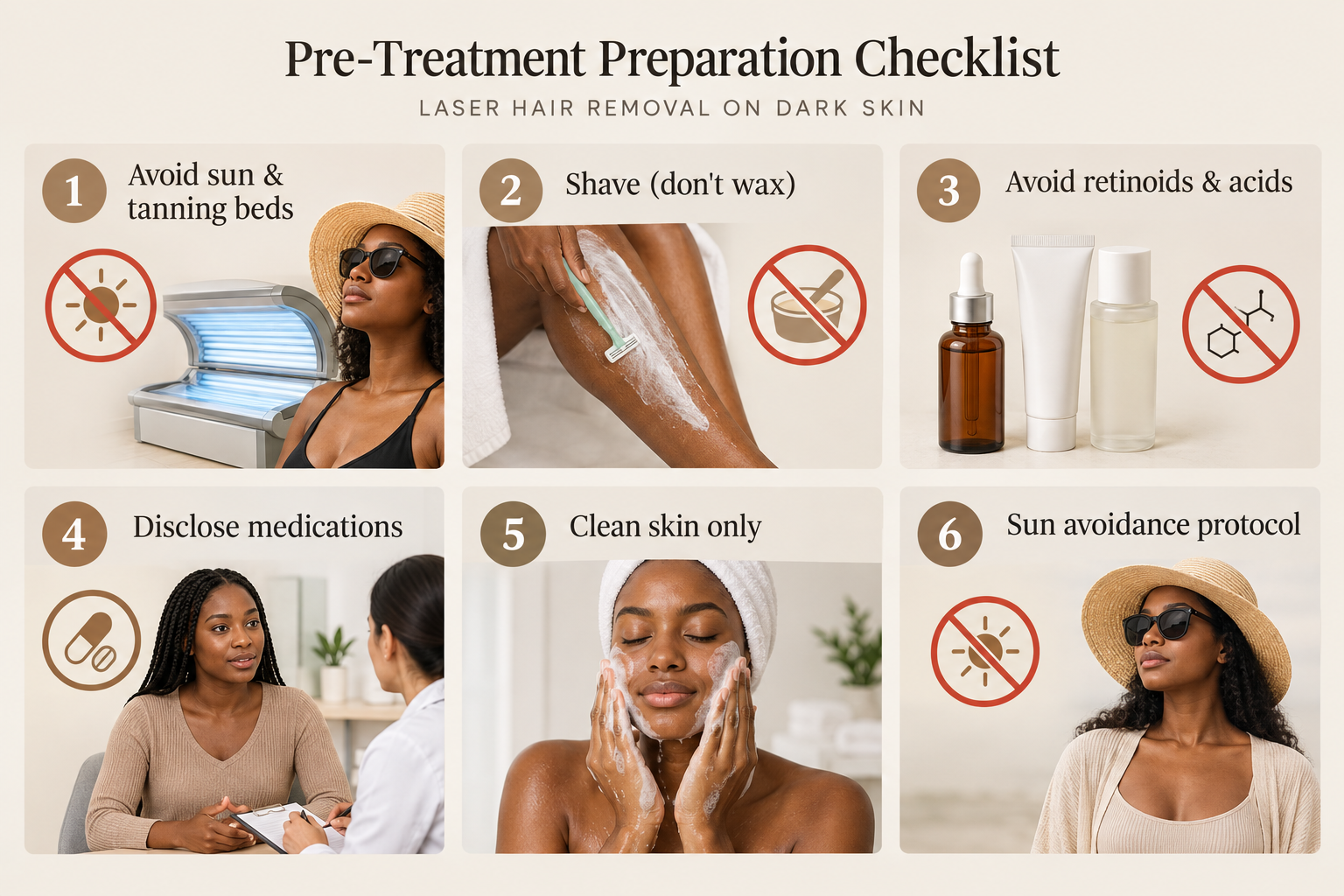
- Avoid sun exposure and tanning beds for at least two weeks before treatment. Tanned skin — even from self-tanner — increases epidermal melanin temporarily and raises the risk of burns and PIH.
- Shave the treatment area one to two days before your appointment. Do not wax, pluck, or use depilatory creams, as these remove the hair shaft that the laser needs to conduct heat to the follicle.
- Avoid retinoids, acids, and photosensitising skincare products for several days before treatment, as directed by your provider.
- Disclose all medications at your consultation, including antibiotics, hormonal treatments, and any supplements, as some increase photosensitivity.
- Arrive with clean skin — no makeup, deodorant, or lotions on the treatment area.
- Follow your provider's sun avoidance protocol consistently between sessions, not just immediately before appointments.
What to Expect During and After Treatment
During a session with a long-pulsed Nd:YAG laser, most patients describe a sensation of heat or a snapping feeling as each pulse is delivered. Contact cooling — either through a chilled sapphire tip on the handpiece or a cooling gel applied to the skin — reduces discomfort and protects the epidermis during treatment. Sessions vary in length depending on the area being treated, from a few minutes for the upper lip to an hour or more for the legs or back.
After treatment, mild redness and swelling around the treated follicles is normal and typically resolves within a few hours to a day. The following aftercare steps are generally recommended for dark skin patients specifically.
- Apply a cool compress to soothe the treated area if needed.
- Avoid heat sources — saunas, hot showers, and vigorous exercise — for 48 hours after treatment.
- Apply a broad-spectrum SPF 30 or higher sunscreen daily and avoid direct sun exposure throughout the treatment course.
- Moisturise gently and avoid harsh exfoliants or active skincare ingredients until the skin has fully settled.
- Do not pick or scratch treated skin, as this increases the risk of PIH.
- Contact your provider promptly if you notice blistering, significant darkening, or any unexpected skin changes.
If PIH does develop after a session, it is important not to ignore it. Consistent daily sunscreen use is the most important step in preventing it from deepening. Topical brightening agents — such as azelaic acid, niacinamide, or vitamin C — may help support resolution over time, and your provider may recommend a short course of a prescription topical if the discoloration is significant. PIH following laser treatment is generally a recoverable condition when managed promptly and consistently.
How Many Sessions Are Needed and What Results to Expect
Most patients with dark skin require between six and twelve sessions to achieve substantial hair reduction, with sessions typically spaced four to eight weeks apart depending on the body area and the individual hair growth cycle. Areas with coarser, denser hair — such as the underarms, bikini line, and legs — often respond well to Nd:YAG treatment. Finer hair, particularly on the face, may require more sessions and may not achieve the same degree of reduction as coarser hair, because finer hairs contain less melanin and are therefore a less efficient target for the laser.
Across clinical studies and clinical practice, hair reduction of 70–90% is commonly cited as an achievable outcome after a full course of treatment, though individual results vary depending on hair colour, hair coarseness, skin tone, hormonal status, and the consistency of the treatment course. Laser hair removal is not guaranteed to be permanent for all patients — some follicles may recover partial function over time, and maintenance sessions once or twice a year are common, particularly for hormonally sensitive areas such as the face and bikini line.
Laser Hair Removal vs. Other Hair Removal Methods for Dark Skin
For people with dark skin, many conventional hair removal methods carry their own risks. Shaving frequently causes ingrown hairs and razor bumps — a condition known as pseudofolliculitis barbae — which is particularly common in people with coarser, curlier hair. Repeated ingrown hairs can themselves cause PIH and scarring over time. Waxing and threading remove hair from the follicle temporarily but can also trigger PIH in melanin-rich skin, especially when performed on inflamed or recently treated skin. Depilatory creams may cause chemical irritation and are not a long-term solution. Electrolysis — which destroys individual follicles using an electrical current — is effective and suitable for all skin tones, but it is significantly more time-consuming and costly for large areas. For patients who are not suitable candidates for laser treatment, or who want to address very fine or light-coloured hairs that lasers cannot effectively target, electrolysis remains a valid alternative worth discussing with a qualified practitioner.
Frequently Asked Questions
Is laser hair removal safe for Black skin?
Yes, laser hair removal can be safe for Black skin — which typically falls within Fitzpatrick types V and VI — when performed with a long-pulsed Nd:YAG 1064 nm laser by an experienced provider using appropriate settings and cooling technology. The risk of adverse effects is real but manageable with the correct approach. Choosing a provider with documented experience treating very dark skin tones is essential.
Does laser hair removal hurt more on dark skin?
Discomfort during laser hair removal is related to the energy delivered to the skin and the cooling used, not directly to skin tone. Nd:YAG lasers are sometimes described as feeling more intense than alexandrite lasers because they require higher fluence to achieve follicular heating at their longer wavelength. Effective contact cooling significantly reduces discomfort for most patients.
Can I use an at-home laser device if I have dark skin?
At-home laser and IPL devices are generally not safe for dark skin. Most consumer devices are calibrated for lighter skin tones and include safety cut-offs that prevent them from firing on darker skin — but some devices do not, and using them incorrectly can cause burns and permanent discoloration. If you are considering at-home hair removal, discuss it with a qualified clinician before purchasing any device.
How long before I see results?
Hair shedding typically begins one to three weeks after the first session as treated follicles release the damaged hair shaft. Visible reduction in hair density usually becomes noticeable after three to four sessions. The full benefit of a treatment course is generally assessed after all sessions are complete and a recovery period has passed.
What happens if I develop dark patches after treatment?
Post-inflammatory hyperpigmentation after laser treatment is usually temporary. Consistent daily sunscreen use is the most important step. Topical brightening agents may help, and your provider may recommend prescription options if the discoloration is significant. Avoid further laser sessions on the affected area until the PIH has resolved, and inform your provider so that settings can be adjusted for future sessions.
Can laser hair removal be done on all body areas for dark skin?
Most body areas can be treated, including the legs, underarms, bikini line, back, chest, and face. Facial treatment — particularly the upper lip, chin, and cheeks — carries a higher PIH risk on dark skin due to thinner, more reactive skin in these areas. A conservative approach with lower initial fluence and a patch test is especially important for facial treatment.
Making an Informed Decision About Laser Hair Removal for Dark Skin
Laser hair removal for dark skin is no longer an experimental or high-risk proposition — but it does require more careful provider selection, more individualized treatment planning, and more consistent aftercare than treatment on lighter skin tones. The long-pulsed Nd:YAG 1064 nm laser, used with conservative treatment settings, integrated cooling, and a thorough patch test, offers a meaningful and evidence-supported path to significant hair reduction for people with Fitzpatrick skin types IV through VI. The key is not simply finding a clinic that offers laser hair removal, but finding one with genuine expertise in treating melanin-rich skin specifically.
If you are considering treatment, a consultation with a board-certified dermatologist or a practitioner with verifiable experience in darker skin tones is the appropriate first step. Bring questions about the specific device being used, the provider's experience with your skin type, what a patch test will involve, and what the plan is if PIH or other side effects occur. A provider who answers these questions clearly and without pressure is a good sign. One who cannot — or who dismisses your concerns — is not the right choice, regardless of price or convenience.
