
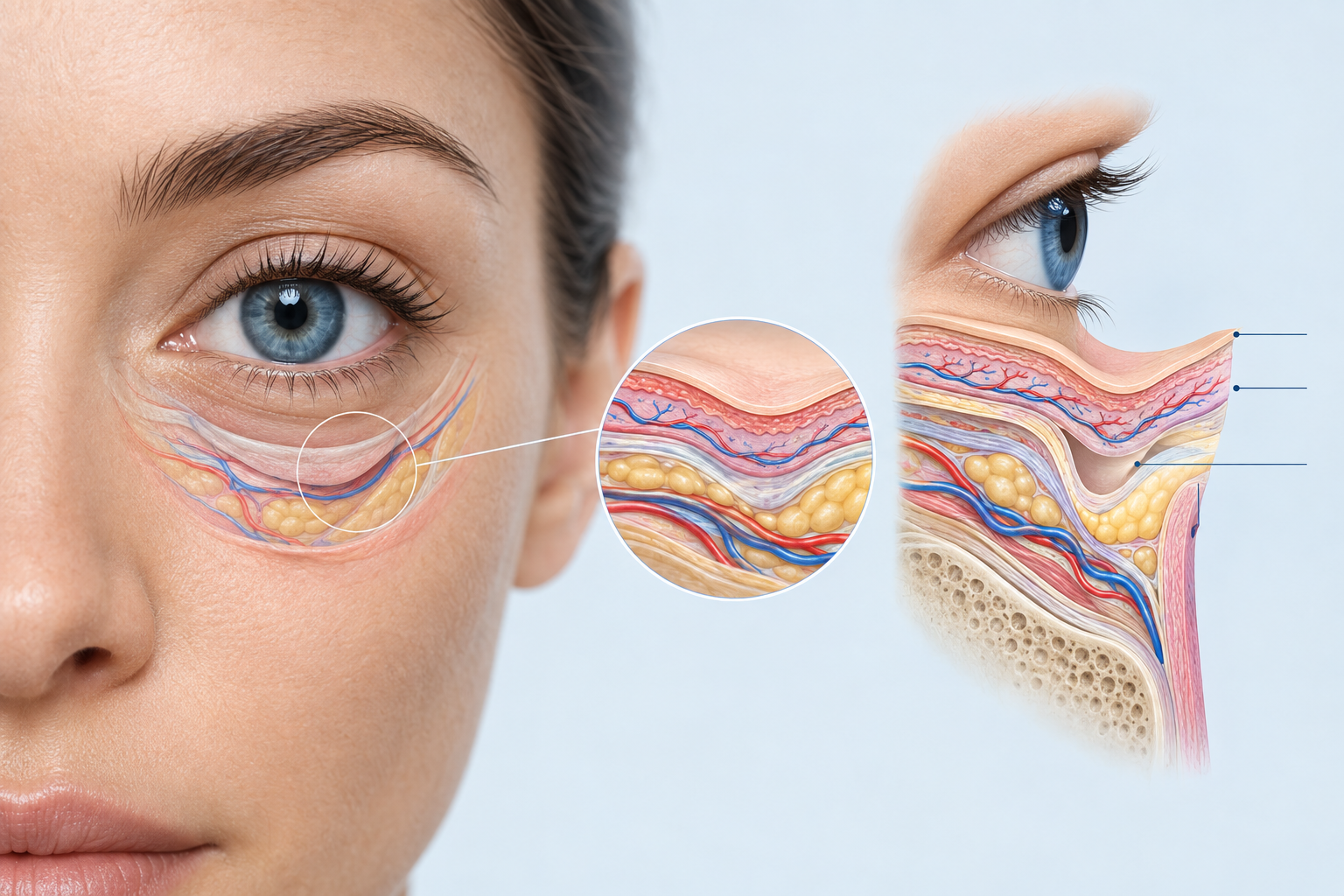

Platelet-rich plasma (PRP) injections for the under-eye area have gained significant attention as a minimally invasive option for improving skin quality, reducing the appearance of fine lines, and addressing certain types of dark circles. Because the treatment uses the patient's own blood, it avoids synthetic materials — but it also requires realistic expectations about what it can and cannot achieve. This guide explains the science, the procedure, the evidence, and the honest limitations so you can approach a consultation well-informed.
Key Takeaways
- PRP under-eye treatment uses growth factors derived from your own blood to stimulate collagen production and improve skin quality in the periorbital area.
- It works best for fine lines, crepey skin, and vascular dark circles; it is less effective for structural hollowness or pigmentation-related dark circles caused by melanin.
- Results develop gradually over two to six months; a treatment series of two to three sessions is typically recommended before assessing full outcomes.
- The procedure carries a low but real risk profile, including bruising, swelling, and — rarely — serious vascular complications; honest provider selection matters.
- PRP is not formally FDA-approved for under-eye use as a specific indication, though the devices used to prepare it are cleared; evidence is promising but still developing.
What Is PRP and How Does It Work in the Under-Eye Area?
Platelet-rich plasma is a concentration of platelets and plasma proteins derived from a small sample of the patient's own blood. When whole blood is placed in a centrifuge and spun at a controlled speed, it separates into layers: red blood cells settle at the bottom, a thin layer of white blood cells sits above them, and the platelet-rich plasma rises to the top. This concentrated plasma contains significantly higher platelet levels than normal circulating blood, along with a range of growth factors including epidermal growth factor (EGF), transforming growth factor (TGF), platelet-derived growth factor (PDGF), fibroblast growth factor (FGF), and insulin-like growth factor (IGF).
When PRP is injected into the periorbital area, these growth factors interact with local tissue cells, particularly dermal fibroblasts. The result is a cascade of collagen stimulation, elastin production, and improved microcirculation. Over weeks and months, this collagen remodeling process can thicken the skin, improve skin elasticity and firmness, and reduce the shadowing effect caused by thin, translucent skin. Because PRP is an autologous treatment — meaning it comes entirely from the patient — the risk of allergic reaction or rejection is very low.
It is worth understanding that PRP does not add volume in the way a hyaluronic acid filler does. Its primary mechanism is biological stimulation rather than physical filling. This distinction matters when setting expectations, particularly for patients with significant tear trough hollows or under-eye hollows caused by volume loss.
Which Under-Eye Concerns Can PRP Actually Address?
Under-eye concerns are not a single problem — they have different causes, and PRP is better suited to some than others. Understanding this distinction is one of the most important steps before deciding whether PRP is the right approach for you.
Vascular Dark Circles
Vascular dark circles appear as a bluish or purplish tint caused by blood vessels showing through thin under-eye skin. Because PRP promotes skin thickening and improved microcirculation, it may reduce the visibility of these vessels over time. This is the type of dark circle where PRP tends to show the most meaningful improvement.
Pigmentation-Related Dark Circles
Periorbital hyperpigmentation (POH) refers to excess melanin in the skin itself, producing a brownish discolouration. This is particularly common in individuals with Fitzpatrick skin types IV through VI. PRP has been investigated for periorbital hyperpigmentation in clinical trials, and some evidence suggests modest improvement, but results are less predictable than for vascular dark circles. Patients with significant melanin-driven pigmentation may find that PRP alone produces limited change and that additional treatments — such as topical depigmenting agents or laser — are needed.
Structural or Shadow Dark Circles
Structural dark circles result from volume loss and hollowness in the tear trough area, creating a shadow that reads as darkness. PRP's collagen-stimulating effect may provide some subtle improvement in skin thickness, but it does not replace lost volume. For pronounced under-eye hollows, a hyaluronic acid filler or autologous fat graft is generally more effective at addressing the structural cause.
Fine Lines, Crepey Skin, and Skin Laxity
The lower eyelid area is prone to fine lines, crepey skin texture, and skin laxity as collagen and elastin decline with age. PRP's ability to stimulate collagen remodeling makes it a reasonable option for improving skin quality in this zone. A published study in Cureus (2018) examined PRP for lower eyelid actinic elastosis — a form of sun-related skin thinning — and reported improvements in skin texture and turgor, though the study was small and further research is needed to confirm these findings at scale.
The Treatment Procedure: What to Expect Step by Step
A typical PRP under-eye appointment takes approximately 45 to 60 minutes from start to finish. The process follows a consistent sequence, though individual clinics may vary slightly in technique.
- Consultation and baseline assessment: A qualified practitioner reviews your medical history, examines the under-eye area, and takes baseline photographs. This step establishes whether PRP is appropriate for your specific concerns and rules out contraindications.
- Blood draw: A small volume of blood — usually 10 to 20 millilitres — is drawn from a vein in your arm, similar to a routine blood test.
- Centrifugation: The blood sample is placed in a centrifuge and spun to separate the platelet-rich plasma from the red blood cells and other components. This takes approximately 10 minutes.
- Skin preparation and numbing: A topical numbing cream or topical anesthetic is applied to the under-eye area and left for 20 to 30 minutes to minimise discomfort. Some practitioners also use ice for additional comfort.
- Injection: The prepared PRP is injected into the periorbital area using a fine needle or microcannula. A microcannula — a blunt-tipped flexible tube — is often preferred in this region because it reduces bruising risk and allows more precise placement in delicate tissue.
- Post-treatment care: Ice may be applied immediately after to reduce swelling. The practitioner will provide aftercare instructions before you leave.
Most patients describe the injections as mildly uncomfortable rather than painful, particularly after numbing. The lower eyelid area is sensitive, so some stinging or pressure during injection is normal.
PRP vs. Filler vs. PRF: How Do They Compare?
Three options are frequently discussed for under-eye rejuvenation: PRP, hyaluronic acid (HA) filler, and platelet-rich fibrin (PRF). Each works differently and suits different concerns. The table below summarises the key differences to help frame a conversation with your practitioner.
| Characteristic | PRP | HA Filler | PRF |
|---|---|---|---|
| Mechanism | Growth factor stimulation, collagen remodeling | Physical volume replacement | Slower growth factor release via fibrin matrix |
| Primary goal | Skin quality, fine lines, vascular dark circles | Volume restoration, tear trough hollows | Skin quality, collagen stimulation |
| Onset of results | 2–6 weeks (gradual) | Immediate | 4–8 weeks (gradual) |
| Duration | 6–18 months (series-dependent) | 6–18 months | Potentially longer than PRP (emerging evidence) |
| Sessions typically needed | 2–3 initial, maintenance every 6–12 months | 1 (top-ups as needed) | 2–3 initial |
| Reversible? | No | Yes (hyaluronidase) | No |
| Tyndall effect risk | No | Yes (bluish discolouration if placed too superficially) | No |
| Autologous? | Yes | No | Yes |
| Approximate cost per session | £400–£1,200 / $500–$1,500 | £300–£800 / $400–$1,000 | £400–£1,200 / $500–$1,500 |
| Best suited for | Skin quality, fine lines, mild vascular circles | Hollowness, volume loss, structural shadows | Skin quality; may suit those wanting slower release |
PRP and PRF are closely related but distinct. PRF uses a lower centrifugation speed, which preserves more white blood cells and produces a fibrin matrix that releases growth factors more slowly over time. Some practitioners prefer PRF for the under-eye area because the slower release may produce a more sustained biological effect, though head-to-head clinical evidence comparing PRP and PRF specifically for periorbital rejuvenation remains limited. Neither is universally superior; the choice depends on individual anatomy, skin quality, and the practitioner's assessment.
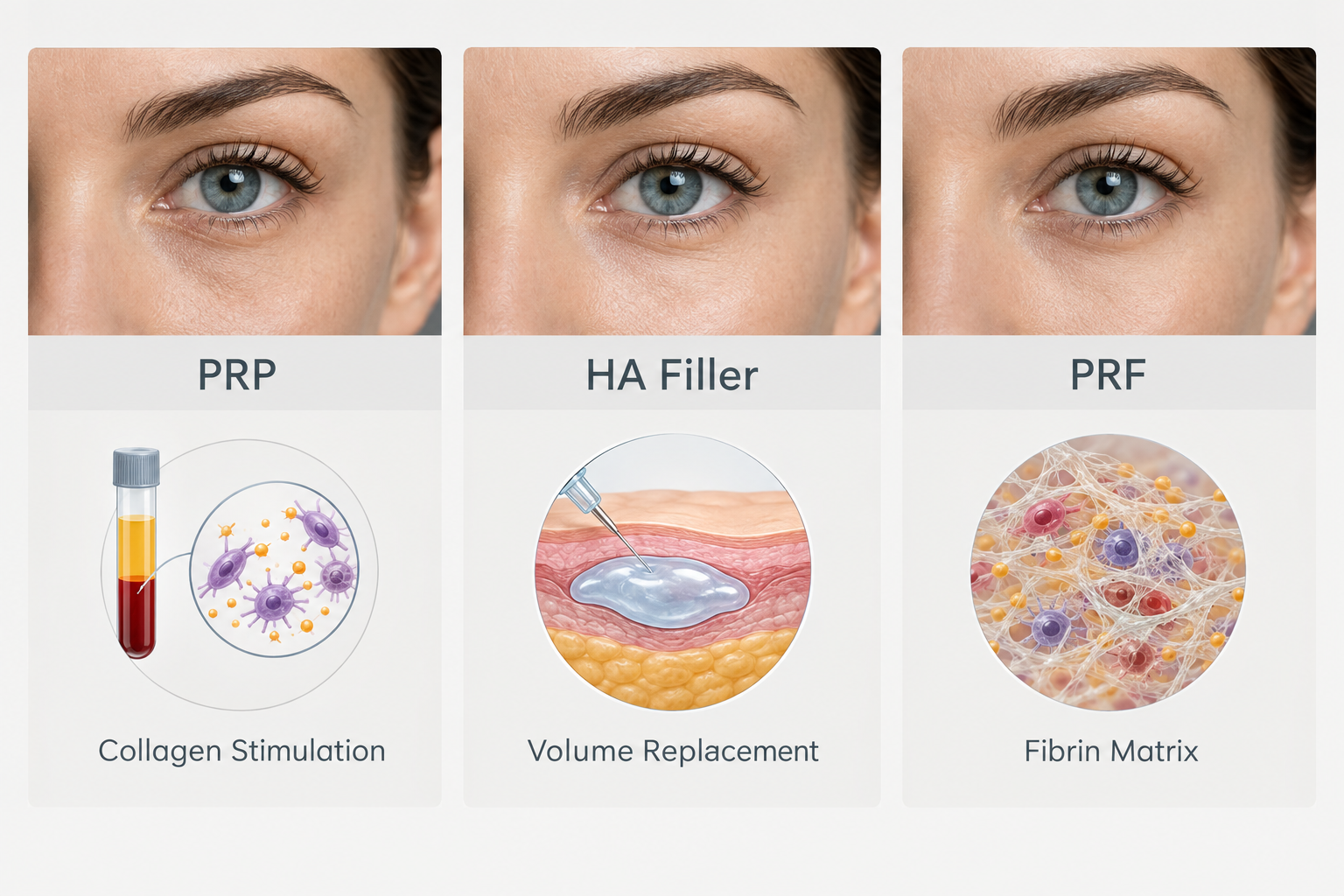
HA filler and PRP are often complementary rather than competing. A patient with both volume loss and poor skin quality may benefit from filler to restore structure and PRP to improve skin texture — a combination approach that some practitioners use in sequence.
Results Timeline: What to Expect and When
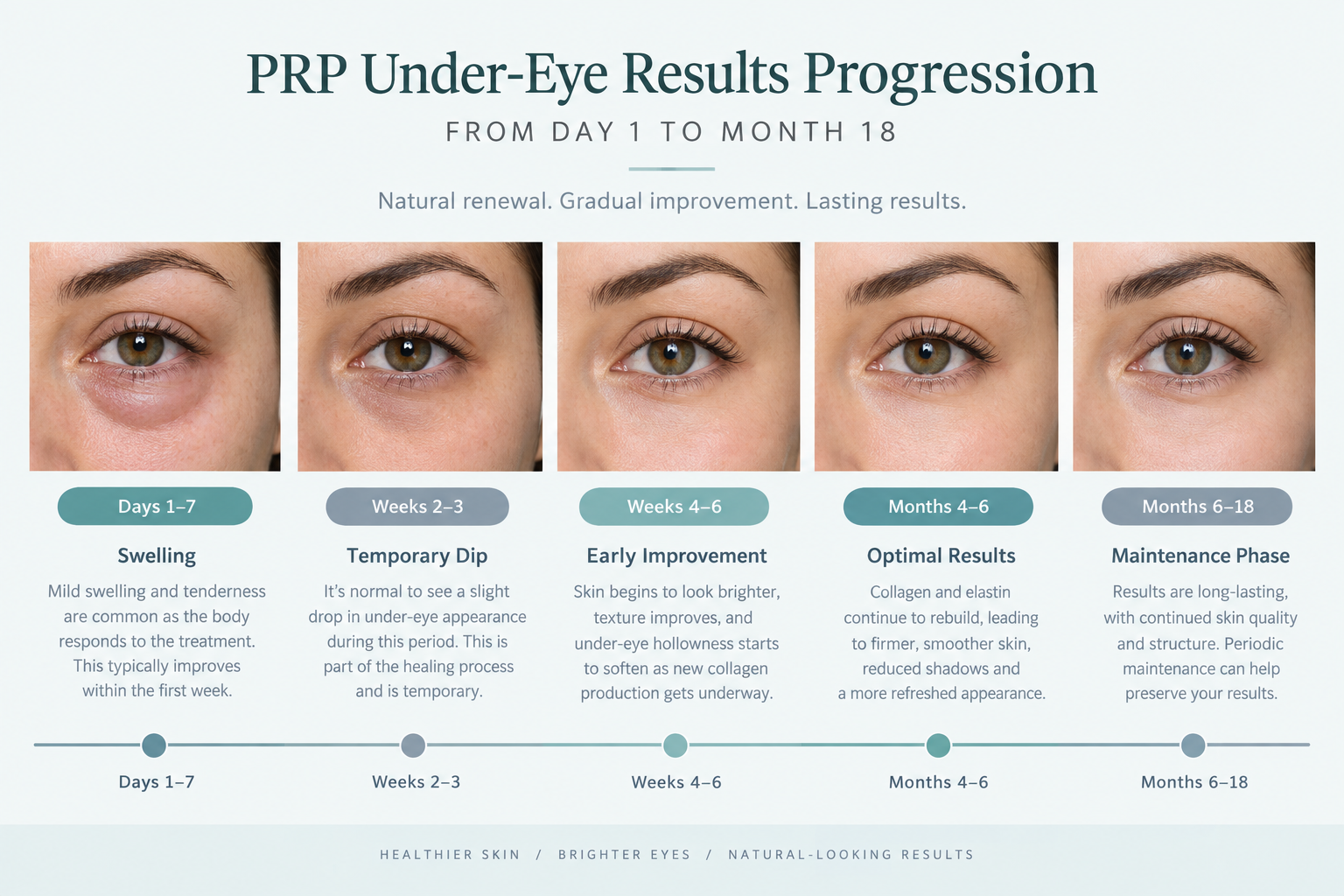
PRP results develop gradually because the mechanism relies on biological tissue remodeling rather than an immediate physical change. Understanding this timeline helps manage expectations and prevents premature disappointment.
| Timeframe | What Typically Happens |
|---|---|
| Days 1–7 | Swelling, redness, and possible bruising from the injections. Skin may look temporarily worse before it improves. |
| Weeks 2–3 | Initial swelling resolves. Some patients notice a temporary dip — the area may look similar to or slightly worse than before treatment as swelling subsides but new collagen has not yet formed. This is normal and expected. |
| Weeks 4–6 | Early collagen stimulation begins to produce visible improvement in skin texture and tone. Vascular dark circles may start to appear less prominent. |
| Months 2–4 | More noticeable improvement in skin quality, fine lines, and skin elasticity. Results continue to develop. |
| Months 4–6 | Optimal results from a full treatment series typically become apparent. Skin thickness, tone, and texture improvements are at their peak. |
| Months 6–18+ | Results gradually fade as the collagen remodeling effect diminishes. Maintenance sessions help sustain improvement. |
The temporary dip between weeks two and three — when swelling has resolved but new collagen has not yet formed — is a normal part of the process that is rarely mentioned but frequently causes unnecessary concern. Patients who are aware of this phase are better prepared to stay the course rather than concluding the treatment has not worked.
How Many Sessions Are Needed?
Most practitioners recommend an initial treatment series of two to three sessions spaced four to six weeks apart. A single session may produce some improvement, but the cumulative effect of a full series is generally more significant. After completing the initial series, maintenance sessions every six to twelve months are typically suggested to sustain results, though the optimal maintenance interval varies between individuals.
The total investment across a full series should be factored into the decision. Three sessions at £600–£1,000 each represents a meaningful financial commitment, and results are not guaranteed to be dramatic. Comparing this to the cost of regular HA filler top-ups over the same period — which may offer more immediate and predictable volume correction — is a useful exercise when deciding which approach better matches your goals and budget.
Side Effects, Risks, and Safety Considerations
Because PRP is an autologous treatment derived from the patient's own blood, the risk of allergic reaction is very low. However, the injection process itself carries risks that are important to understand before proceeding.
Common and Expected Side Effects
- Bruising: The under-eye area has a rich blood supply and thin skin, making bruising common. It typically resolves within seven to ten days.
- Swelling: Mild to moderate swelling is expected for the first few days and may temporarily make the area look puffy.
- Redness and tenderness: Normal injection-site reactions that usually resolve within 24 to 48 hours.
Less Common Risks
- Prolonged swelling or lumpiness: Occasionally, swelling or small lumps persist for longer than expected. These usually resolve without intervention but should be reviewed by the treating practitioner.
- Infection: Uncommon when performed in a clinical setting with appropriate sterile technique, but possible with any injection procedure.
Rare but Serious Risks
Vascular occlusion — where injected material enters or compresses a blood vessel — is a rare but serious complication associated with any periorbital injection, including PRP. In the most severe cases, vascular occlusion near the eye can lead to vision changes or, in extremely rare documented cases, permanent vision loss. This risk is not unique to PRP and applies to all injectable treatments in the periorbital area. It underscores why provider selection and technique matter significantly in this region. A practitioner experienced in periocular anatomy and trained in managing vascular complications is essential.
Who May Be a Suitable Candidate?
PRP under-eye treatment may be worth discussing with a qualified practitioner if you have one or more of the following concerns and are in generally good health:
- Fine lines and crepey skin texture in the lower eyelid area
- Vascular dark circles (bluish or purplish tint from visible blood vessels)
- Mild skin laxity or loss of skin elasticity in the periorbital area
- Mild hollowness where volume loss is not the primary driver
- A preference for an autologous, biologically based approach
- Realistic expectations about gradual, moderate improvement
Who May Not Be Suitable
PRP is not appropriate for everyone. A clinical assessment is required to identify contraindications, which typically include:
- Blood disorders or clotting abnormalities
- Active use of anticoagulant medications
- Pregnancy or breastfeeding
- Active skin infection or inflammation in the treatment area
- Autoimmune conditions in an active flare
- Active haematological cancers
- Thrombocytopaenia (low platelet count)
Patients with significant structural hollowness in the tear trough, pronounced volume loss, or predominantly pigmentation-driven dark circles may find that PRP alone does not adequately address their concerns and that alternative or combination treatments are more appropriate.
Preparing for Treatment and Aftercare
Before your appointment, your practitioner will typically advise you to avoid blood-thinning medications and supplements — such as aspirin, ibuprofen, fish oil, and vitamin E — for several days beforehand to reduce bruising risk. Alcohol should be avoided for 24 hours prior. Arrive well-hydrated, as this makes the blood draw easier.
After treatment, practical aftercare steps generally include:
- Avoid strenuous exercise, saunas, and steam rooms for 48 hours to minimise swelling and bruising.
- Do not apply makeup to the treated area for at least 24 hours.
- Avoid direct sun exposure and use SPF 30 or higher once the skin has settled.
- Sleep with your head slightly elevated for the first night to reduce swelling.
- Do not massage or press on the treated area.
- Contact your practitioner if you experience unusual pain, significant prolonged swelling, any changes to vision, or signs of infection.
The instruction to contact your provider about vision changes is not precautionary boilerplate — it reflects the genuine importance of prompt assessment if any visual disturbance occurs after periorbital injection.
Choosing a Provider: What to Look For
Provider selection for PRP under-eye treatment is more consequential than for many other aesthetic procedures, given the proximity to the eye and the complexity of periorbital anatomy. When evaluating a practitioner, consider the following:
- Relevant medical qualifications: Look for a board-certified dermatologist, oculoplastic surgeon, plastic surgeon, or a medically qualified aesthetic practitioner with documented training in periocular injections.
- Experience with the periorbital area specifically: General injectable experience does not automatically translate to safe under-eye technique. Ask how many under-eye PRP treatments the practitioner has performed.
- Emergency preparedness: The practitioner should be trained in managing vascular complications and have appropriate emergency protocols in place.
- Transparent consultation: A trustworthy provider will assess whether PRP is genuinely the right treatment for your concern — and will tell you honestly if it is not.
- Red flags to avoid: Unusually low prices, no formal consultation, pressure to book immediately, or practitioners who cannot explain the risks clearly.
The Evidence Base: What Research Currently Shows
PRP for under-eye rejuvenation is supported by a growing but still developing body of clinical evidence. A 2018 study published in Cureus examined PRP injections for lower eyelid actinic elastosis and reported improvements in skin texture and turgor, though the study was small. Registered clinical trials have investigated PRP for periorbital hyperpigmentation and dark circles, and PRF has been studied for tear trough rejuvenation, with generally positive preliminary findings. However, most studies to date are small, lack long-term follow-up, and vary in PRP preparation protocols, making it difficult to draw firm conclusions about optimal technique or predictable outcomes.
It is also important to note that while the centrifuge devices used to prepare PRP are cleared by regulatory bodies such as the FDA, PRP injection for under-eye rejuvenation does not have formal FDA approval as a specific indication. This does not mean the treatment is unsafe or ineffective, but it does mean that patients should approach it as a procedure where evidence is promising rather than definitive, and where individual results will vary.
Frequently Asked Questions
How long do PRP under-eye results last?
Results from a full treatment series typically last between six and eighteen months, with some patients reporting improvement for up to two years. Duration depends on the number of sessions completed, individual biology, skin quality, and lifestyle factors such as sun exposure and smoking. Maintenance sessions every six to twelve months are generally recommended to sustain results.
Does PRP under-eye treatment hurt?
Most patients describe the procedure as mildly uncomfortable rather than painful. Topical numbing cream is applied beforehand, and the use of a fine needle or microcannula helps minimise discomfort. The lower eyelid area is sensitive, so some stinging or pressure during injection is normal. Discomfort is usually brief.
Can PRP fix all types of dark circles?
No. PRP is most likely to improve vascular dark circles caused by visible blood vessels through thin skin. It has limited effectiveness for structural dark circles caused by hollowness and volume loss, and variable results for pigmentation-related dark circles driven by excess melanin. A proper assessment is needed to identify the cause of your dark circles before choosing a treatment.
Is PRP better than filler for under eyes?
They address different problems. HA filler is generally more effective for restoring volume in the tear trough and correcting structural hollowness, with immediate visible results. PRP is better suited to improving skin quality, fine lines, and vascular dark circles through gradual collagen stimulation. Some patients benefit from both in combination. Neither is universally superior — the right choice depends on your specific anatomy and concerns.
What is the difference between PRP and PRF for under eyes?
Both use the patient's own blood, but PRF is prepared at a lower centrifuge speed, producing a fibrin matrix that releases growth factors more slowly. Some practitioners prefer PRF for the under-eye area because this slower release may provide a more sustained effect. Clinical evidence directly comparing PRP and PRF for periorbital rejuvenation is still limited, and neither has been conclusively shown to be superior to the other.
Are there any people who should not have PRP under-eye treatment?
Yes. PRP is not suitable for people with blood disorders, low platelet counts, active infections in the treatment area, autoimmune conditions in a flare, haematological cancers, or those taking anticoagulant medications. It is also not recommended during pregnancy or breastfeeding. A thorough medical history review at consultation is essential to confirm suitability.
Is PRP Under-Eye Treatment Worth Considering for Your Concerns?
PRP under-eye treatment offers a biologically grounded, minimally invasive approach to improving skin quality in the periorbital area. For patients with fine lines, crepey skin texture, or vascular dark circles, it represents a reasonable option with a low allergic risk profile and a gradual but potentially meaningful improvement in skin quality over a treatment series. The autologous nature of the treatment is a genuine advantage for patients who prefer to avoid synthetic materials.
However, PRP is not a solution for every under-eye concern. Significant volume loss and structural hollowness are better addressed with HA filler or other volumising approaches. Melanin-driven periorbital hyperpigmentation may require additional treatments. Results develop slowly, require multiple sessions, and vary between individuals — and the evidence base, while promising, is still developing rather than definitive.
The decision is best made after a thorough consultation with a qualified practitioner who can assess the specific cause of your under-eye concerns, explain which treatment or combination of treatments is most likely to help, and give you an honest picture of realistic before and after results. If you are considering PRP for the under-eye area, prioritise a provider with genuine periocular injection experience and a transparent approach to both benefits and risks.
