

Skin tags are among the most common benign skin growths, yet they cause genuine concern for many people — whether due to discomfort, irritation from clothing, or simply the way they look. Understanding which removal methods are genuinely safe, what each procedure involves, and when professional assessment is necessary can help you make a well-informed decision before seeking treatment.
Key Takeaways
- Skin tags are harmless benign growths, but professional removal is recommended to minimise the risk of infection, scarring, and misdiagnosis.
- Several clinically used methods exist, including cryotherapy, electrocautery, surgical excision, and ligation — each with different suitability depending on tag size, location, and skin type.
- At-home removal attempts carry real risks, including bleeding, infection, and failure to identify a lesion that may require further investigation.
- Most professional skin tag removal procedures are straightforward, with minimal downtime, though individual healing varies.
- Any skin lesion that changes in colour, shape, or size, bleeds spontaneously, or looks unusual should be assessed by a qualified clinician before any removal is attempted.
What Are Skin Tags?
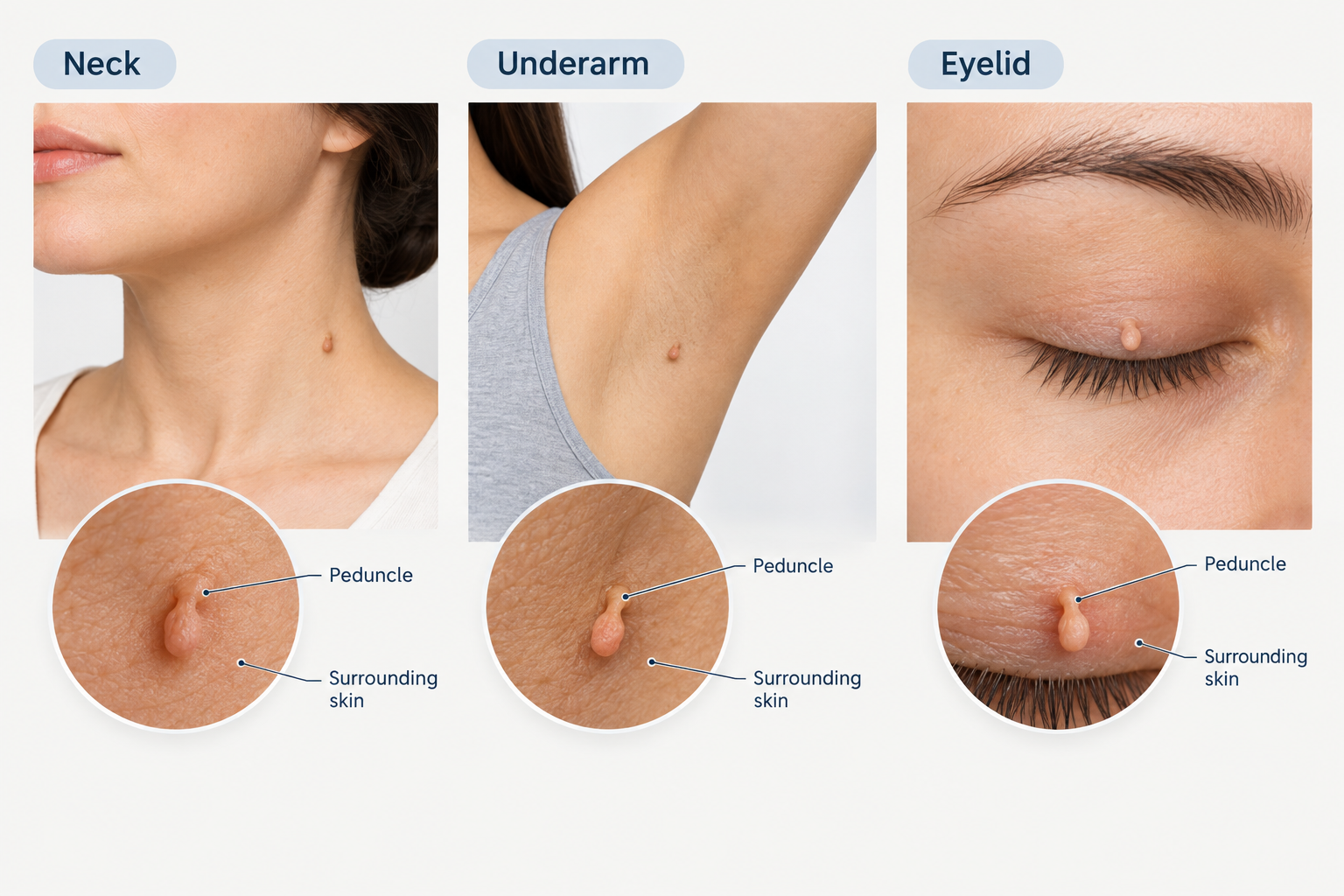
Skin tags, known medically as acrochordons, are small, soft growths that hang from the skin on a thin stalk called a peduncle. They are composed of loose collagen fibres and blood vessels surrounded by skin, and they are entirely benign — meaning they are not cancerous and do not become cancerous. Their colour typically matches the surrounding skin, though they can appear slightly darker, and they range in size from a few millimetres to around one centimetre, occasionally larger.
Skin tags tend to develop in areas where skin rubs against skin or clothing. Common locations include the neck, armpits, groin folds, under the breasts, and around the eyelids. They are particularly prevalent in adults over 40, in people with obesity or type 2 diabetes, during pregnancy, and in those with a family history of the condition. Friction and insulin resistance are both thought to contribute to their formation, though the precise mechanism is not fully established.
Because skin tags are benign, removal is generally considered elective rather than medically necessary. However, removal may be appropriate when a tag causes persistent irritation, catches on jewellery or clothing, bleeds repeatedly, or causes significant cosmetic concern. A clinician should always assess any skin lesion before removal to confirm the diagnosis and rule out other conditions that may look similar, such as warts, moles, or, in rare cases, lesions that warrant further investigation.
Professional Skin Tag Removal Methods
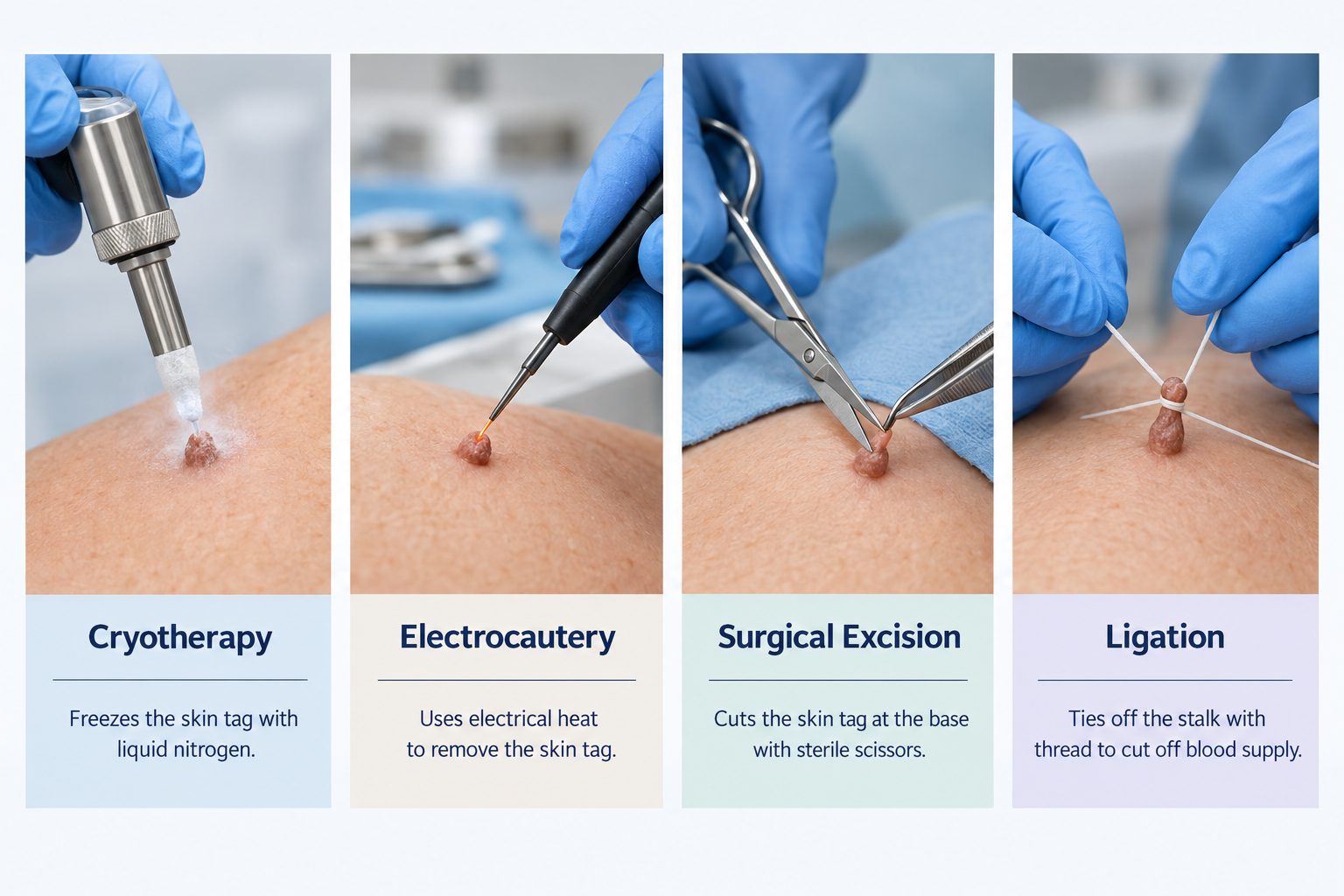
Several well-established clinical techniques are used for skin tag removal. The most appropriate method depends on the size and location of the tag, the number of tags being treated, the patient's skin type, and the practitioner's assessment. No single method is universally superior; each has practical advantages and limitations.
Cryotherapy
Cryotherapy involves applying liquid nitrogen or a similar freezing agent directly to the skin tag. The extreme cold destroys the tissue by forming ice crystals within the cells, causing the tag to die and fall off over the following one to two weeks. Cryotherapy is widely used in dermatology and general practice settings and is generally well tolerated, though it can cause a brief stinging or burning sensation during application. Temporary redness, blistering, and mild swelling are common after treatment. There is a small risk of hypopigmentation — lightening of the skin — particularly in people with darker skin tones, which is an important consideration when choosing this method for visible areas.
Electrocautery and Electrosurgery
Electrocautery uses a precisely controlled electrical current to burn and seal the skin tag tissue. The procedure is typically performed under local anaesthetic, making it comfortable for most patients. Electrosurgery can be particularly effective for larger tags or those with a broader base, and it allows the practitioner to control the depth of treatment with reasonable precision. After treatment, a small scab forms and heals over one to two weeks. Risks include minor scarring, temporary skin discolouration, and, rarely, infection if aftercare instructions are not followed.
Surgical Excision
Surgical excision involves cutting the skin tag away at its base using sterile scissors or a scalpel, usually after applying a local anaesthetic. This method provides immediate removal and allows the tissue to be sent for histological examination if there is any clinical uncertainty about the lesion's nature. Excision is particularly suitable for larger or pedunculated tags and for situations where a definitive diagnosis is needed. The treated area heals within one to two weeks in most cases. Minor bleeding is expected during the procedure and is controlled by the practitioner. Scarring is possible but is usually minimal when the procedure is performed carefully.
Ligation
Ligation involves tying a fine suture or sterile thread tightly around the base of the skin tag, cutting off its blood supply. Without circulation, the tissue gradually dies and the tag falls away, typically within seven to ten days. Ligation is a straightforward technique suitable for tags with a clearly defined stalk. Some patients experience mild discomfort or a sensation of tightness at the site during the process. Professional ligation differs meaningfully from at-home attempts using thread or dental floss, which carry a higher risk of infection and incomplete removal.
Radiofrequency Treatment
Radiofrequency devices use high-frequency electrical energy to precisely ablate skin tag tissue with minimal thermal spread to surrounding skin. This technique is valued for its accuracy and is often used for tags in sensitive locations such as around the eyelids or on the face. Healing is generally prompt, and the risk of scarring is considered low when the procedure is performed by an experienced practitioner using appropriate equipment. As with other methods, temporary redness and crusting are expected during the healing period.
At-Home Removal: Why Caution Is Warranted
A range of at-home skin tag removal products are commercially available, including freezing kits, ligation devices, and topical solutions. While some of these products are marketed as safe and effective, there are meaningful reasons why professional removal is generally preferable.
The most significant concern with self-removal is misdiagnosis. Not every small skin lesion is a skin tag. Sebaceous cysts, warts, dermatofibromas, and certain types of moles can resemble skin tags to an untrained eye. Attempting to remove a lesion without a proper clinical assessment means potentially treating the wrong condition — and, in rare cases, removing a lesion that should have been examined more carefully. A qualified clinician can visually assess the lesion and, where there is any doubt, arrange further investigation before proceeding.
At-home freezing kits typically do not reach the same temperatures as clinical liquid nitrogen, which may result in incomplete treatment and the need for repeated attempts. Improvised ligation using thread or dental floss risks introducing bacteria into the skin, causing infection, and may not fully interrupt the blood supply, leading to partial removal and prolonged healing. Cutting a skin tag at home without sterile equipment and appropriate technique risks bleeding that is difficult to control and a significantly higher infection risk.
For small, clearly identified skin tags in low-risk locations, some people do use at-home products without complication. However, professional assessment and removal remain the safer approach, particularly for tags near the eyes, on the face, in the groin, or when there is any uncertainty about the nature of the lesion.
What Happens During a Professional Skin Tag Removal Appointment
A professional skin tag removal appointment typically begins with a brief consultation in which the clinician examines the lesion or lesions to confirm the diagnosis and discuss the most appropriate removal method. The practitioner will ask about relevant medical history, current medications, and any known allergies — particularly to local anaesthetics if an injection is planned.
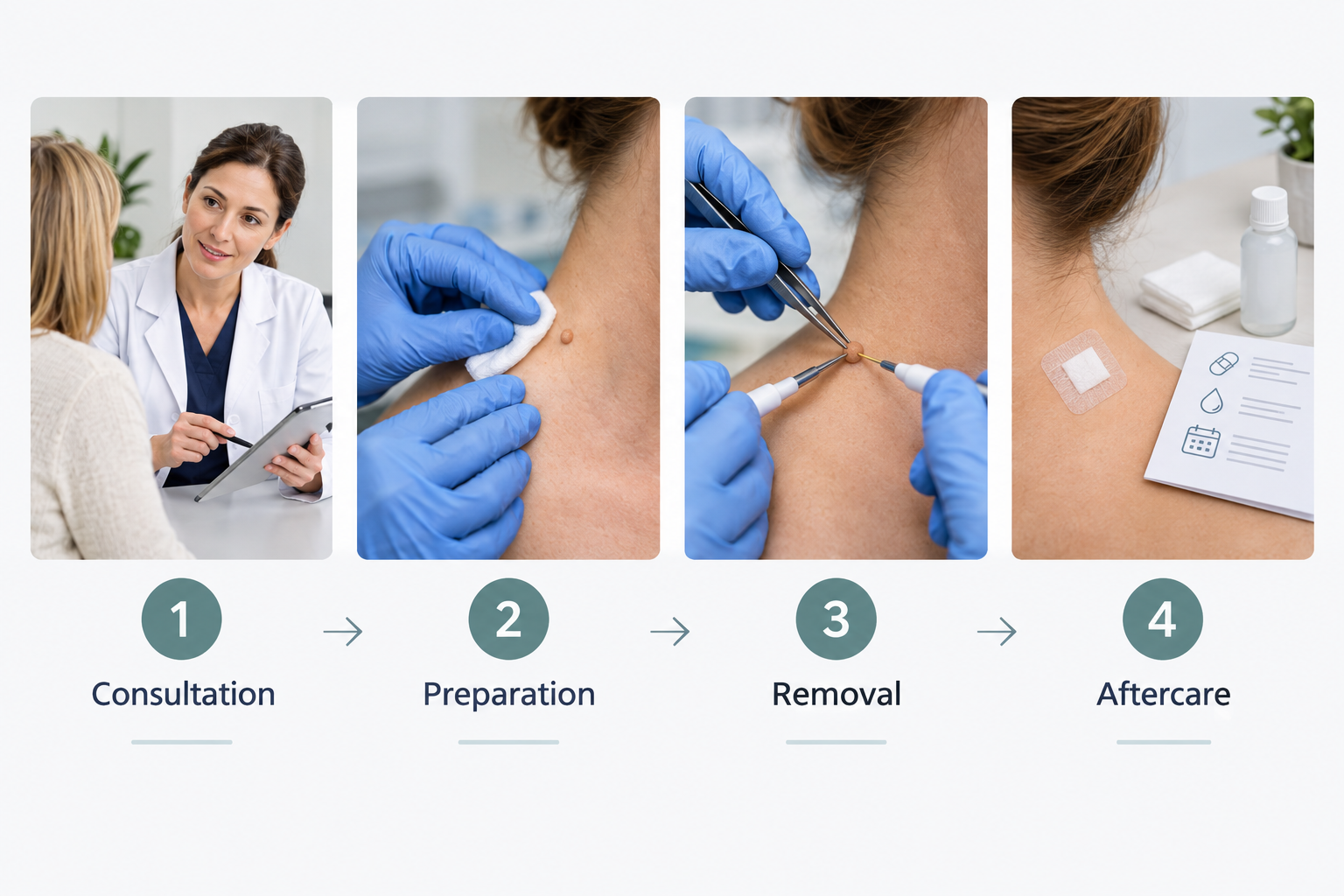
For most methods, the treatment area is cleaned and, where necessary, a small amount of local anaesthetic is applied either as a topical cream or a fine injection to minimise discomfort. The removal procedure itself is usually brief, often taking only a few minutes per tag. Patients may feel mild pressure, warmth, or a brief stinging sensation depending on the technique used, but significant pain during a properly anaesthetised procedure is uncommon.
After removal, the practitioner will apply a small dressing if needed and provide aftercare instructions. These typically include keeping the area clean and dry, avoiding picking at any scab that forms, protecting the area from sun exposure during healing, and monitoring for signs of infection such as increasing redness, swelling, warmth, or discharge. Most people can return to normal activities immediately or within a day of treatment.
Healing, Downtime, and Results
The healing timeline after skin tag removal varies depending on the method used, the size and location of the tag, and individual factors such as skin type and general health. For most techniques, the treated area heals within one to two weeks. A small scab or crust typically forms at the site and should be allowed to fall away naturally rather than being picked, as premature removal can increase the risk of scarring or infection.
Redness and mild swelling in the days immediately following treatment are normal and expected. These usually resolve within a few days. Temporary skin discolouration — either darkening or lightening — can occur, particularly after cryotherapy or electrocautery, and may take several weeks to fully settle. In most cases, once healing is complete, the skin returns to a smooth appearance with minimal or no visible mark, though this depends on the size of the tag, the method used, and individual healing characteristics.
Skin tags do not typically regrow at the same site once fully removed. However, new skin tags can develop elsewhere over time, particularly if the underlying contributing factors — such as friction, weight, or metabolic conditions — remain present. Removal of existing tags does not prevent new ones from forming in other locations.
Risks and Side Effects to Be Aware Of
Professional skin tag removal is generally considered a low-risk procedure when performed by a qualified clinician using appropriate technique and sterile equipment. However, as with any procedure that involves the skin, certain risks exist and should be understood before treatment.
- Infection: Any break in the skin carries a risk of infection. This risk is minimised by sterile technique during the procedure and proper aftercare, but signs of infection — increasing redness, warmth, swelling, or discharge — should be reported to the treating clinician promptly.
- Scarring: Minor scarring is possible with any removal method, particularly for larger tags or in individuals prone to keloid or hypertrophic scarring. The risk varies by technique and individual healing response.
- Skin discolouration: Temporary hyperpigmentation or hypopigmentation can occur, particularly after cryotherapy. People with darker skin tones may be at higher risk of pigmentation changes and should discuss this with their practitioner before choosing a method.
- Bleeding: Minor bleeding during or immediately after excision or ligation is expected and is managed by the practitioner. Persistent or excessive bleeding should be assessed promptly.
- Incomplete removal: Occasionally, a tag may not be fully removed in a single treatment, particularly with cryotherapy, and a repeat session may be needed.
- Allergic reaction: Reactions to local anaesthetic or topical preparations are uncommon but possible. Informing the practitioner of any known allergies before treatment is important.
Serious complications from professional skin tag removal are rare. The risk profile increases meaningfully with at-home attempts, where sterility, technique, and the ability to manage complications are not guaranteed.
Who May Be Suitable for Skin Tag Removal
Most adults with confirmed skin tags are suitable candidates for professional removal. Suitability may be influenced by several factors that a clinician will assess during consultation.
People with active skin infections, open wounds, or inflammatory skin conditions in the treatment area may need to wait until the skin has settled before removal is appropriate. Those taking blood-thinning medications should inform their practitioner, as this may affect bleeding during excision. Individuals with a history of keloid scarring should discuss the risk of abnormal scar formation before proceeding, particularly for tags in cosmetically sensitive areas.
Pregnancy is not an absolute contraindication to skin tag removal, but many practitioners prefer to defer elective procedures until after delivery unless the tag is causing significant discomfort. People with poorly controlled diabetes may have slower wound healing and a higher infection risk, which is relevant to the choice of method and aftercare planning.
Children can develop skin tags, though this is less common than in adults. Removal in children requires careful consideration of the child's ability to cooperate with the procedure and the appropriateness of any anaesthetic approach.
Alternatives to Skin Tag Removal
For people who prefer not to undergo removal, or for whom removal is not immediately appropriate, there are practical alternatives worth considering. The most straightforward option is simply to leave the skin tag in place. Because skin tags are benign and do not progress to more serious conditions, watchful waiting is a clinically reasonable choice when the tag is not causing symptoms or significant cosmetic concern.
Reducing friction in areas prone to skin tag development — for example, by wearing looser clothing, using anti-chafe products, or managing body weight where relevant — may help reduce the likelihood of new tags forming, though it will not cause existing tags to disappear. Maintaining a healthy weight and managing blood glucose levels in people with insulin resistance or diabetes may also be relevant, as these factors are associated with a higher prevalence of skin tags.
Some topical products claim to dissolve or shrink skin tags over time. The evidence supporting these products is generally limited, and their safety and efficacy have not been established through rigorous clinical trials. A clinician can help evaluate whether any such product is appropriate in a specific situation.
When to Seek Medical Assessment Before Removal
Certain features of a skin lesion should prompt a medical assessment before any removal is attempted, whether professionally or at home. A lesion that has changed in size, shape, or colour; that bleeds without being caught or irritated; that is painful without an obvious cause; or that has an irregular border or uneven pigmentation should be evaluated by a qualified clinician. These features do not necessarily indicate anything serious, but they warrant examination to confirm the diagnosis.
Similarly, any lesion in a location that makes self-examination difficult — such as the back, scalp, or perianal area — should be assessed professionally. Lesions near the eyes require particular care, as the proximity to delicate structures means that removal should only be performed by a practitioner with appropriate experience in that area.
Frequently Asked Questions
Does skin tag removal hurt?
Most professional skin tag removal procedures involve minimal discomfort. Local anaesthetic is used for excision and electrocautery, making the procedure itself largely painless. Cryotherapy causes a brief stinging or burning sensation during application. Some mild soreness or tenderness at the treated site is normal in the days following any removal method.
How many sessions are needed to remove a skin tag?
Most skin tags can be removed in a single session. Cryotherapy occasionally requires a repeat treatment if the tag does not fully respond to the first application. Multiple tags can often be treated in the same appointment, depending on their number and location.
Will skin tags grow back after removal?
A skin tag that has been fully removed at its base does not typically regrow at the same site. However, new skin tags can develop in other locations over time, particularly if contributing factors such as friction or metabolic conditions remain present.
Can skin tags be removed on the NHS or do I need to go private?
In the United Kingdom, skin tag removal is generally considered a cosmetic procedure and is not routinely funded by the NHS unless the tag is causing significant medical problems. Most people seeking removal for cosmetic or comfort reasons access treatment through private clinics or aesthetic practices. Costs vary depending on the number of tags, the method used, and the clinic.
Is it safe to remove a skin tag at home?
At-home removal carries risks including infection, bleeding, incomplete removal, and the possibility of treating a lesion that is not actually a skin tag. Professional removal by a qualified clinician is safer and allows for accurate diagnosis before any procedure is performed.
How do I know if a lesion is a skin tag or something else?
Skin tags are typically soft, flesh-coloured, and attached to the skin by a narrow stalk. However, several other lesions can look similar, including warts, moles, sebaceous cysts, and dermatofibromas. A clinician can examine the lesion and confirm the diagnosis. If there is any uncertainty, the lesion should be assessed before removal is attempted.
Are there any skin types or conditions that affect which removal method is best?
Yes. People with darker skin tones may be at higher risk of pigmentation changes with cryotherapy and may benefit from discussing alternative methods with their practitioner. Those with a history of keloid scarring should consider the scarring risk of each technique. Skin type, tag location, tag size, and individual medical history all influence which method a clinician is likely to recommend.
Making an Informed Decision About Skin Tag Removal
Skin tag removal is a straightforward and generally low-risk procedure when carried out by a qualified clinician using appropriate technique. The key decision factors are confirming that the lesion is genuinely a skin tag, choosing a removal method suited to its size, location, and your skin type, and understanding what to expect during healing. Professional assessment before any removal — whether clinical or at home — is the most important step in ensuring both safety and a satisfactory outcome.
If you are considering skin tag removal, a consultation with a qualified dermatologist, GP, or experienced aesthetic practitioner is a sensible starting point. A clinician can confirm the diagnosis, discuss the most appropriate method for your specific situation, explain the realistic risks and benefits, and ensure that any aftercare is properly managed. For most people, the procedure is brief, well tolerated, and results in a clean, healed skin surface within a couple of weeks.
