

Hyperpigmentation is one of the most common skin concerns seen in clinical practice, yet it is frequently misunderstood. The term describes any area of skin that appears darker than the surrounding tissue — ranging from small dark spots to larger dark patches that affect broad areas of the face or body. Understanding what drives this change in colour is the first step toward choosing the right approach, because the cause of hyperpigmentation directly shapes how it should be managed.
Key Takeaways
- Hyperpigmentation occurs when melanocytes — the pigment-producing cells in the skin — generate excess melanin, leading to dark spots or uneven skin tone.
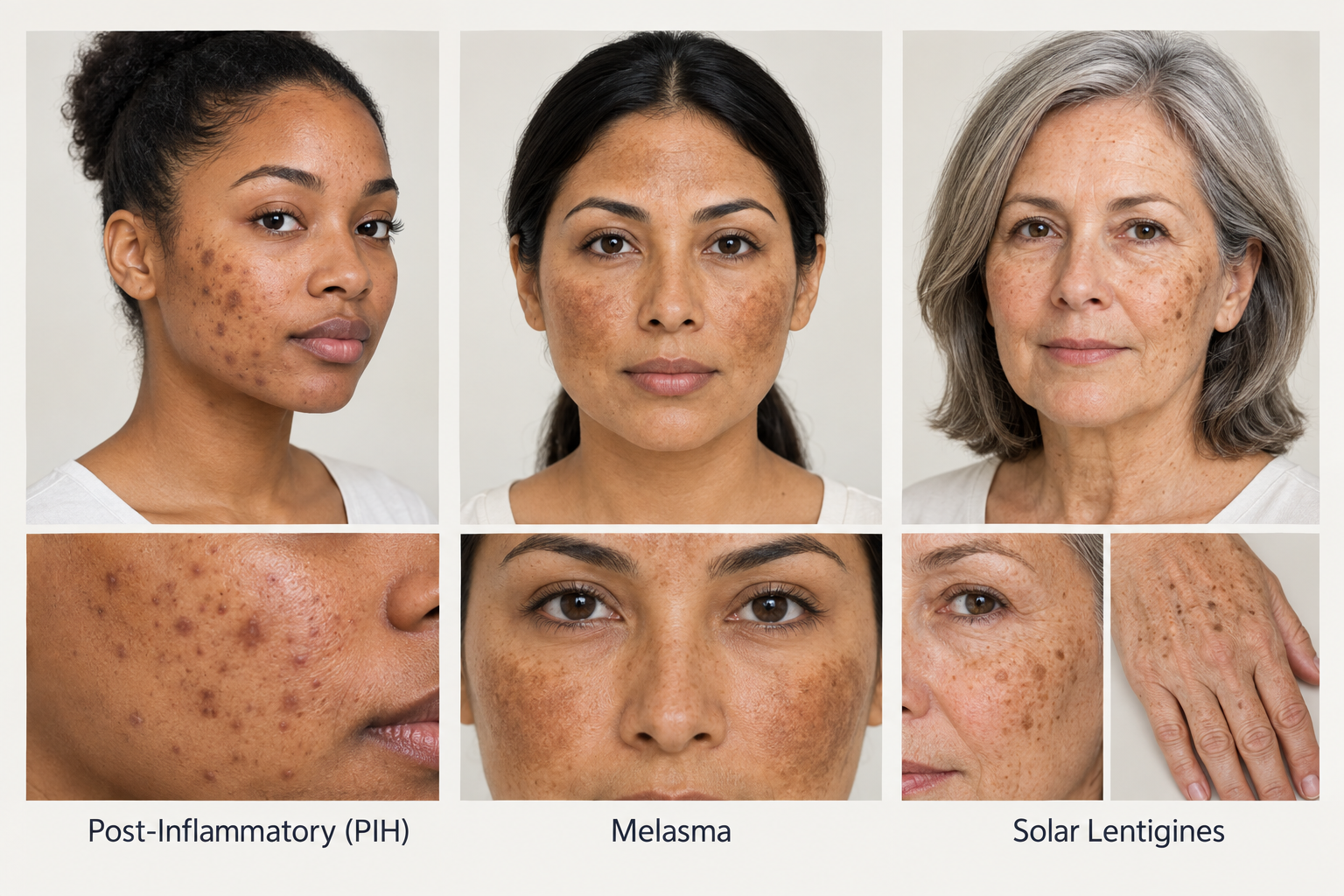
- The three most common types are post-inflammatory hyperpigmentation (PIH), melasma, and solar lentigines, each with distinct triggers and treatment considerations.
- Sun exposure, hormonal changes, skin inflammation, and certain medications are among the most frequent causes, but medical conditions and nutritional deficiencies can also play a role.
- People with darker skin tones and higher Fitzpatrick skin types are more prone to hyperpigmentation due to heightened melanocyte responsiveness.
- Most hyperpigmentation is harmless, but any rapidly changing, irregularly bordered, or bleeding lesion warrants prompt assessment by a dermatologist to rule out skin cancer.
How Hyperpigmentation Develops: The Biology of Melanin
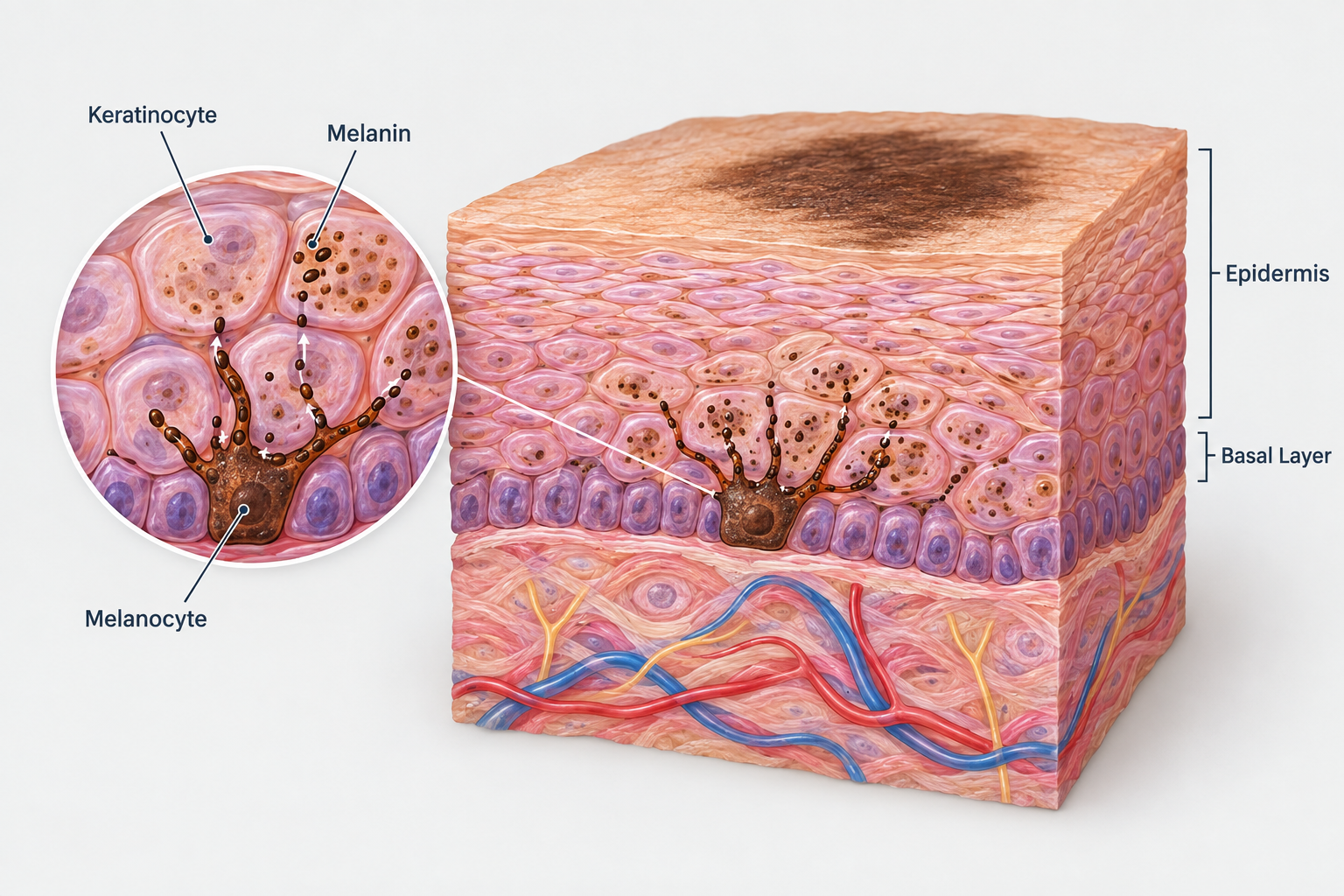
To understand hyperpigmentation, it helps to know how skin colour is produced in the first place. Melanin — the pigment responsible for skin, hair, and eye colour — is synthesised inside specialised cells called melanocytes, which sit in the basal layer of the epidermis. The process of melanin production is called melanogenesis, and it begins with a common amino acid called tyrosine. An enzyme known as tyrosinase converts tyrosine through a series of chemical steps into melanin, which is then packaged into structures called melanosomes and transferred to surrounding keratinocytes (the main skin cells). These keratinocytes carry the pigment toward the skin surface, where it becomes visible as skin colour.
When this system works normally, melanin production is tightly regulated and provides photoprotection against UV radiation. Hyperpigmentation occurs when something disrupts this regulation — causing melanocytes to overproduce melanin in localised or widespread areas. The result is dark patches or dark spots that contrast with the surrounding skin. Depending on where the excess pigment is deposited, dermatologists classify hyperpigmentation as epidermal (in the outer skin layers, appearing brown) or dermal (deeper in the skin, appearing grey or blue-grey). This distinction matters clinically because epidermal pigmentation generally responds better to topical treatments, while dermal pigmentation is harder to reach and may require laser therapy or other interventions.
The Main Types of Hyperpigmentation
Not all hyperpigmentation looks or behaves the same way. Clinicians broadly distinguish between localised hyperpigmentation — confined to specific areas — and diffuse hyperpigmentation, which spreads across larger regions and is more often linked to systemic medical conditions. Within these categories, several distinct types are recognised.
| Type | Primary Cause | Typical Location | Who It Commonly Affects |
|---|---|---|---|
| Post-inflammatory hyperpigmentation (PIH) | Skin inflammation or injury | Site of previous inflammation | All skin types; more pronounced in darker tones |
| Melasma / chloasma | Hormonal changes, UV exposure | Face (cheeks, forehead, upper lip) | Women of reproductive age; darker Fitzpatrick types |
| Solar lentigines (age spots / liver spots) | Cumulative UV radiation | Face, hands, décolletage | Adults over 40; fair skin types |
| Freckles (ephelides) | Genetics; UV exposure | Face, shoulders, arms | Fair-skinned individuals; children and young adults |
| Drug-induced hyperpigmentation | Medication side effects | Variable; may be diffuse | Anyone on relevant medications |
| Diffuse hyperpigmentation | Systemic medical conditions | Widespread; skin folds, mucous membranes | Those with underlying systemic disease |
Common Causes of Hyperpigmentation
Sun Exposure and UV Radiation
Chronic sun exposure is the single most prevalent cause of hyperpigmentation. When UV rays reach the skin, they trigger melanocytes to increase melanin production as a protective response — this is the mechanism behind a tan. Over time, repeated UV exposure causes cumulative DNA damage in melanocytes, leading to irregular and persistent overproduction of melanin. The result is solar lentigines — flat, well-defined dark spots that appear on sun-exposed areas such as the face, hands, and shoulders. UV radiation also worsens virtually every other type of hyperpigmentation, including melasma and PIH, making broad-spectrum sunscreen with SPF 30 or higher a cornerstone of both prevention and treatment.
Hormonal Changes and Melasma
Melasma is a form of hyperpigmentation driven primarily by hormonal changes, often in combination with UV exposure. Fluctuations in oestrogen and progesterone — whether from pregnancy, oral contraceptives, or hormone replacement therapy (HRT) — stimulate melanocyte activity, producing symmetrical dark patches typically across the cheeks, forehead, upper lip, and chin. When melasma occurs during pregnancy, it is sometimes called chloasma or the "mask of pregnancy." The condition is significantly more common in women of reproductive age and in those with darker Fitzpatrick skin types. Melasma can be particularly persistent because hormonal fluctuations may continue to drive melanin overproduction even when topical treatments are applied, making sun protection and hormonal management central to any treatment plan.
Post-Inflammatory Hyperpigmentation (PIH)
Post-inflammatory hyperpigmentation develops after the skin experiences inflammation or injury. When the skin is damaged — by acne, eczema, psoriasis, a burn, a cut, or even an aggressive cosmetic procedure — the inflammatory response triggers melanocytes to release excess melanin into the surrounding tissue. This leaves behind dark marks at the site of the original injury, even after the wound or breakout has healed. PIH is one of the most common concerns in people with skin of color, because melanocytes in darker skin tones tend to be more reactive to inflammatory signals. Acne scarring in the form of post-acne marks is among the most frequently encountered presentations of PIH in clinical practice.
Medications and Drug-Induced Hyperpigmentation
A range of medications can cause skin discoloration as a side effect, a phenomenon known as drug-induced hyperpigmentation. The mechanisms vary: some drugs directly stimulate melanin production, others deposit pigment-containing compounds in the skin, and some cause photosensitivity that amplifies UV-related damage. Commonly implicated drug classes include antimalarial drugs (such as hydroxychloroquine), tetracycline antibiotics (particularly minocycline), certain NSAIDs, tricyclic antidepressants, antiarrhythmic medications, and some chemotherapy agents. Drug-induced discoloration may be localised or diffuse and can affect the skin, nails, or mucous membranes. If a medication is suspected as the cause, a dermatologist or prescribing clinician should be consulted before making any changes to treatment.
Medical Conditions Linked to Hyperpigmentation
Diffuse hyperpigmentation — darkening that spreads across large areas of the body rather than appearing in isolated spots — can be a sign of an underlying systemic condition. Addison's disease, a disorder of the adrenal glands that leads to insufficient cortisol production, is a well-recognised cause. The resulting hormonal imbalance increases levels of a hormone called ACTH, which stimulates melanocyte activity and produces a characteristic darkening of the skin, particularly in skin creases, scars, and mucous membranes. Haemochromatosis (iron overload), thyroid disease, Cushing's disease, chronic renal failure, and Peutz-Jeghers syndrome are among other medical conditions that can manifest with changes in skin pigmentation. Because diffuse hyperpigmentation may indicate a serious underlying condition, it warrants medical investigation rather than cosmetic treatment alone.
Nutritional Deficiencies
Deficiencies in certain vitamins and minerals can disrupt normal melanogenesis and lead to hyperpigmentation. Vitamin B12 deficiency is one of the more commonly documented nutritional causes, producing diffuse darkening that may particularly affect the hands, feet, and skin folds. Folic acid deficiency has also been associated with pigmentation changes. These nutritional links are frequently mentioned in clinical literature but are rarely discussed in consumer-facing resources, meaning that patients with unexplained diffuse pigmentation changes may benefit from blood tests to assess nutritional status as part of a thorough investigation.
Blue Light and Emerging Environmental Triggers
Emerging research suggests that high-energy visible (HEV) light — commonly called blue light — emitted by digital screens and LED lighting may contribute to hyperpigmentation, particularly in people with darker skin tones. Unlike UV radiation, blue light is not blocked by most conventional sunscreens, and some studies indicate it can stimulate melanin production through pathways distinct from UV-induced melanogenesis. While the evidence in this area is still developing and the clinical significance of everyday screen exposure remains under investigation, it represents a growing area of interest in pigmentation research and is worth noting for patients who experience worsening pigmentation despite consistent UV protection.
Cosmetic and Fragrance Contact Dermatitis
Repeated exposure to certain cosmetic ingredients, fragrances, or preservatives can trigger a low-grade inflammatory reaction in the skin — a form of contact dermatitis — that subsequently leads to post-inflammatory hyperpigmentation. This cause is rarely discussed in general consumer articles, yet it is clinically relevant for patients who notice darkening in areas where they regularly apply perfume, certain skincare products, or hair dyes. Identifying and eliminating the offending ingredient is an important first step in managing this type of pigmentation.
Who Is Most at Risk of Hyperpigmentation?
Hyperpigmentation can affect anyone, but certain factors increase susceptibility. People with darker skin tones — classified as Fitzpatrick skin types III through VI — are disproportionately affected. This is not simply because darker skin contains more melanin; it is because melanocytes in skin of color are inherently more reactive and produce a stronger pigmentation response to the same inflammatory or UV stimulus that might cause only mild or temporary darkening in lighter skin types. This heightened melanocyte responsiveness means that PIH, melasma, and other forms of hyperpigmentation tend to be more intense, more persistent, and more challenging to treat in darker skin tones.
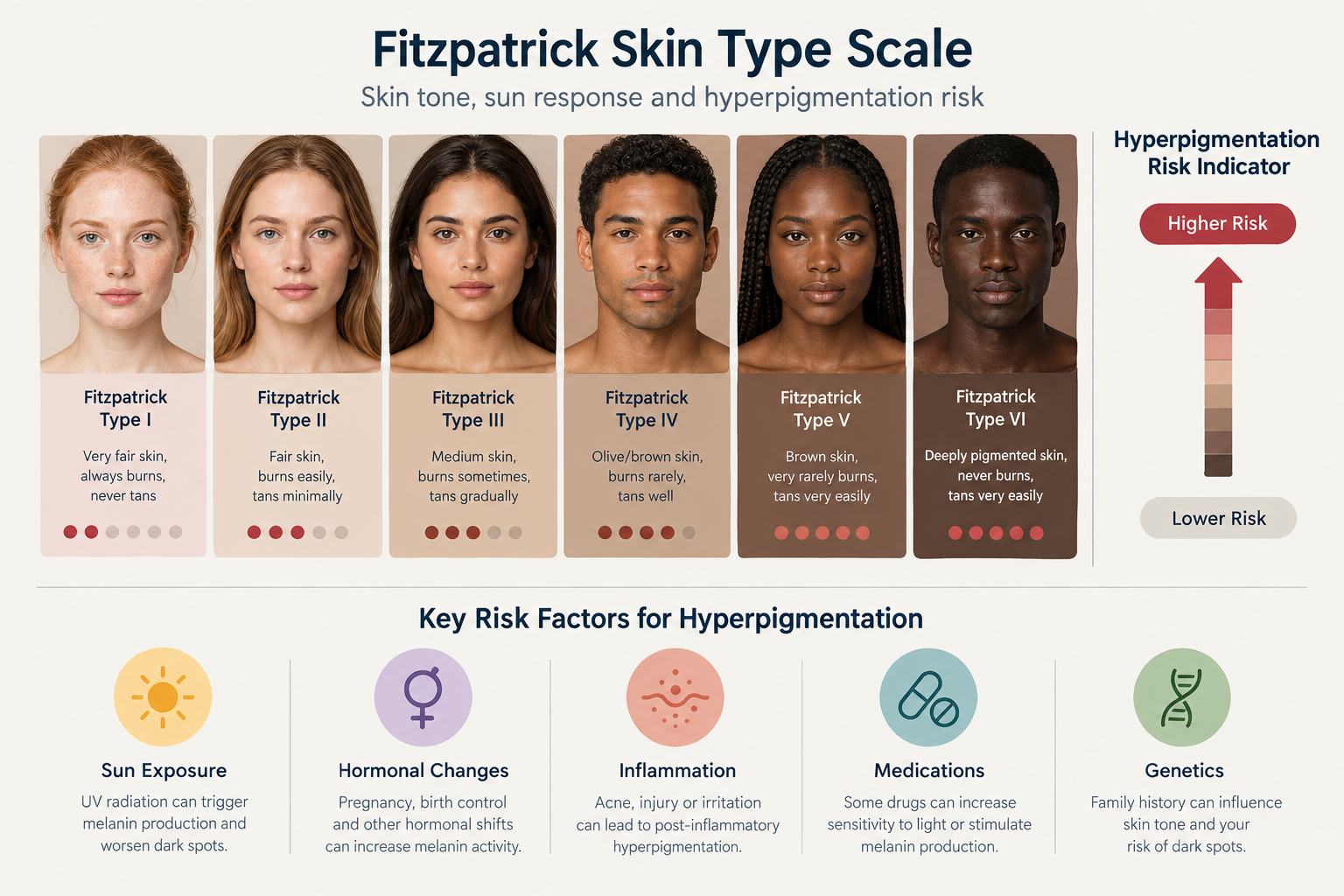
Additional risk factors include female sex (particularly during reproductive years), geographic location in sun-heavy climates, a personal or family history of melasma, and the use of medications known to cause photosensitivity or direct pigmentation changes. Genetics also play a role in conditions such as freckles, where the tendency to develop ephelides in response to sun exposure is largely inherited.
How Is Hyperpigmentation Diagnosed?
A dermatologist can usually identify the type and likely cause of hyperpigmentation through a clinical examination and a detailed history of sun exposure, medications, hormonal changes, and skin trauma. A Wood's lamp — a handheld ultraviolet light device — is sometimes used to distinguish epidermal from dermal pigmentation, as epidermal melanin fluoresces more clearly under this light. In cases where a systemic cause is suspected, blood tests may be ordered to assess hormone levels, iron stores, thyroid function, or nutritional status. A skin biopsy is rarely needed for straightforward hyperpigmentation but may be performed when the diagnosis is uncertain or when a lesion has features that raise concern for a more serious condition.
When Should You See a Doctor?
Most hyperpigmentation is benign and does not require urgent medical attention. However, certain features should prompt a prompt assessment by a dermatologist. Any dark spot or patch that is growing rapidly, has an irregular or poorly defined border, contains multiple colours (brown, black, red, white, or blue), bleeds without injury, or appears in a previously normal area of skin should be evaluated to rule out melanoma or other forms of skin cancer. Similarly, diffuse darkening of the skin that appears without an obvious cause — particularly if accompanied by fatigue, weight changes, or other systemic symptoms — warrants investigation for an underlying medical condition such as Addison's disease.
Treatment and Management Overview
Effective management of hyperpigmentation depends on accurately identifying the underlying cause. Treating the trigger — whether that means adjusting a medication, addressing a hormonal imbalance, or managing a skin condition such as acne or eczema — is as important as any topical or procedural intervention. Broad-spectrum sunscreen with SPF 30 or higher is universally recommended, as UV exposure worsens virtually all forms of hyperpigmentation and undermines the effectiveness of other treatments.
Topical treatments form the foundation of most hyperpigmentation management plans. Hydroquinone is one of the most studied skin-lightening agents and works by inhibiting tyrosinase, thereby reducing melanin synthesis. Retinoids accelerate skin cell turnover and help disperse existing pigment. Vitamin C (ascorbic acid) is an antioxidant that also inhibits tyrosinase and can help brighten uneven skin tone. Azelaic acid, kojic acid, and niacinamide are additional options with evidence supporting their use in reducing dark spots. Chemical peels and laser therapy — including intense pulsed light (IPL) and fractional laser treatments — may be considered for more resistant cases, though these procedures carry a higher risk of worsening pigmentation in darker skin tones and require careful patient selection and practitioner expertise. Microneedling is another option sometimes used in combination with topical agents.
The table below provides a simplified guide to matching the cause of hyperpigmentation with the most relevant management approach, though individual treatment plans should always be developed in consultation with a qualified clinician.
| Cause | Key Management Considerations |
|---|---|
| Sun exposure / solar lentigines | Strict broad-spectrum sunscreen; topical retinoids or vitamin C; IPL or laser for persistent lesions |
| Melasma (hormonal) | Sun protection; review of hormonal contraception; hydroquinone; azelaic acid; chemical peels with caution |
| Post-inflammatory hyperpigmentation | Treat underlying inflammation first; topical retinoids, niacinamide, or azelaic acid; avoid aggressive procedures that may worsen PIH |
| Drug-induced | Review medication with prescribing clinician; sun protection; pigmentation may resolve after drug cessation |
| Medical condition (e.g. Addison's disease) | Treat the underlying condition; cosmetic treatments are secondary and may not be effective until systemic cause is addressed |
| Nutritional deficiency | Correct the deficiency through diet or supplementation under medical guidance; pigmentation may improve with treatment |
The Emotional Impact of Hyperpigmentation
The psychological burden of hyperpigmentation is often underestimated in clinical discussions. Dark patches on visible areas such as the face can significantly affect self-confidence, social interactions, and quality of life — particularly when the pigmentation is extensive, persistent, or resistant to initial treatments. Research in dermatology has documented meaningful impacts on mental wellbeing in patients with melasma and PIH, and this dimension of the condition deserves acknowledgement alongside the clinical management plan. Patients who feel distressed by their pigmentation should feel comfortable raising this with their clinician, as it is a legitimate and important part of the overall picture.
Frequently Asked Questions
Can hyperpigmentation go away on its own?
Some forms of hyperpigmentation — particularly mild post-inflammatory hyperpigmentation following a single acne breakout — may fade gradually over several months without treatment, especially with consistent sun protection. However, deeper dermal pigmentation, melasma, and solar lentigines are unlikely to resolve without targeted intervention. The timeline and likelihood of natural fading depend on the type, depth, and cause of the pigmentation.
Is hyperpigmentation harmful?
In most cases, hyperpigmentation itself is not harmful — it is a cosmetic concern rather than a medical one. However, it can occasionally be a visible sign of an underlying condition that does require medical attention, such as Addison's disease or haemochromatosis. Any pigmentation change that is new, rapidly changing, or accompanied by other symptoms should be assessed by a doctor.
Which hormone causes hyperpigmentation?
Several hormones can influence melanin production. In melasma, fluctuations in oestrogen and progesterone are the primary hormonal drivers. In Addison's disease, elevated levels of adrenocorticotropic hormone (ACTH) stimulate melanocyte activity. Melanocyte-stimulating hormone (α-MSH) is also directly involved in regulating melanogenesis through the MC1R receptor on melanocytes.
Does hyperpigmentation affect darker skin tones more?
Yes. People with darker skin tones and higher Fitzpatrick skin types are more prone to developing hyperpigmentation and tend to experience more intense and longer-lasting pigmentation changes. This is because melanocytes in skin of color are more reactive to inflammatory and UV stimuli, producing a stronger and more sustained melanin response. Treatment also requires more careful selection of modalities to avoid triggering further PIH.
What is the difference between epidermal and dermal pigmentation?
Epidermal pigmentation sits in the outer layers of the skin and typically appears brown. It generally responds better to topical treatments and superficial procedures. Dermal pigmentation is deposited deeper in the skin and often appears grey or blue-grey. It is more resistant to treatment and may require laser therapy, though results are less predictable and the risk of complications is higher.
Can sunscreen prevent hyperpigmentation?
Broad-spectrum sunscreen is one of the most effective tools for both preventing and managing hyperpigmentation. UV radiation worsens virtually all types of dark spots and patches, and without consistent sun protection, other treatments are significantly less effective. SPF 30 or higher applied daily — even on cloudy days — is recommended by dermatologists as a baseline measure for anyone concerned about skin discoloration.
Understanding Your Hyperpigmentation Before Seeking Treatment
Hyperpigmentation is not a single condition but a visible outcome of many different underlying processes — from UV damage and hormonal shifts to skin inflammation, medications, and systemic disease. Identifying the specific cause is essential, because a treatment that works well for solar lentigines may be ineffective or even counterproductive for melasma or PIH. Before pursuing any cosmetic treatment, a thorough assessment by a qualified dermatologist or aesthetic clinician is the most important step. This assessment should consider your skin type, medical history, current medications, and the nature of the pigmentation itself. With the right diagnosis and a tailored plan that includes sun protection as a non-negotiable foundation, meaningful improvement in uneven skin tone is achievable for most patients — though realistic expectations and patience are equally important parts of the process.
