
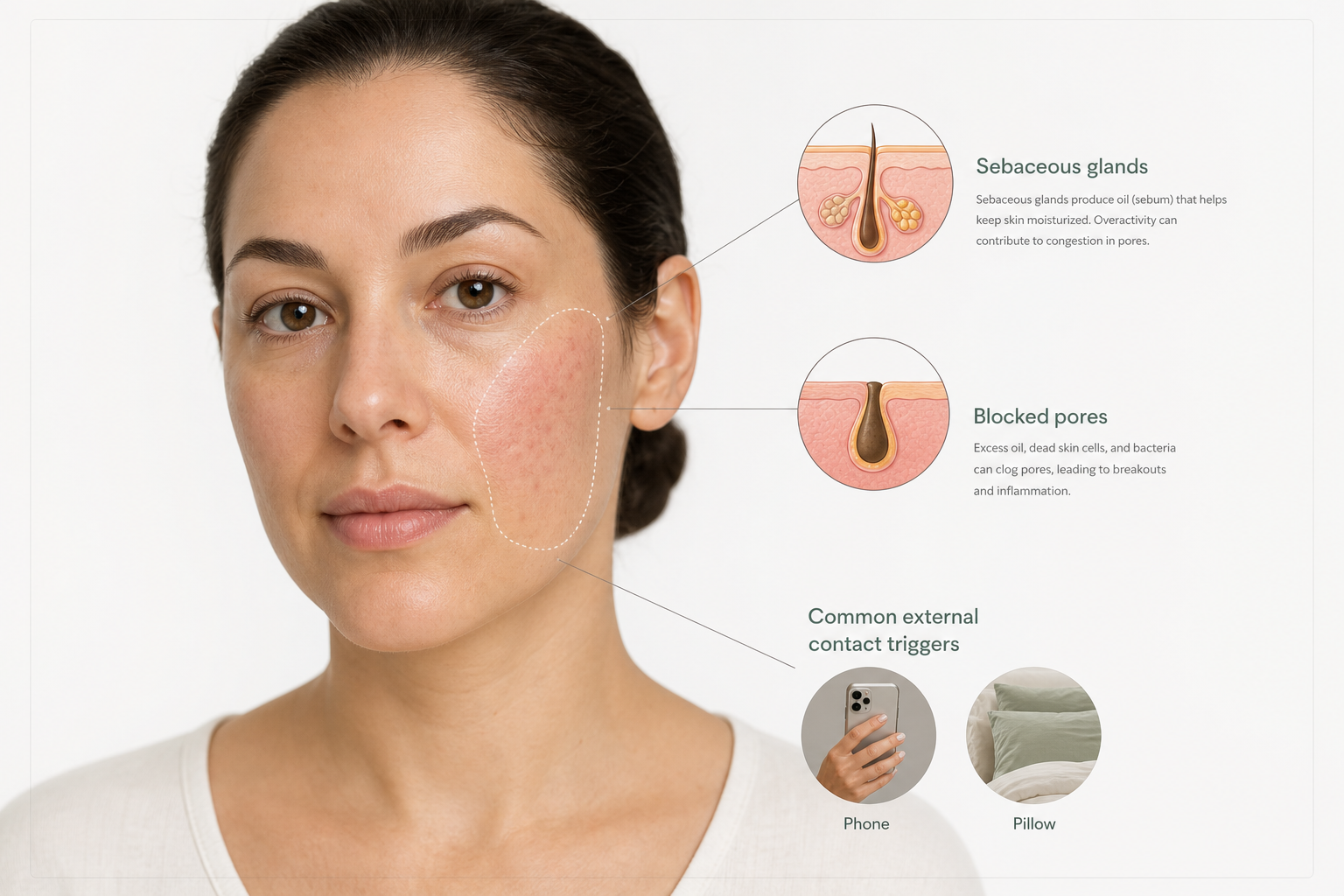

Spots on cheeks are one of the most common skin concerns seen in clinical practice, yet they are also among the most misunderstood. Many people treat each breakout as an isolated event, when in reality recurring cheek spots usually point to one or more persistent underlying triggers — whether hormonal, environmental, or related to daily habits. Understanding why spots keep returning to the same area is the first step toward breaking the cycle effectively.
Key Takeaways
- Recurring cheek spots are usually driven by a combination of internal factors such as hormonal fluctuations and external factors such as pillowcase bacteria, phone contact, or comedogenic products.
- Spots that return to the exact same location often indicate a persistently blocked or damaged follicle combined with an ongoing trigger that has not been identified or removed.
- One-sided cheek breakouts frequently relate to phone use or sleep position, making them easier to address once the pattern is recognised.
- Cheeks carry a higher scarring risk than many other facial zones, so early, appropriate treatment matters more than waiting for spots to resolve on their own.
- A dermatologist evaluation is advisable when breakouts are persistent, painful, cystic, or leaving post-inflammatory hyperpigmentation (PIH).
Why Do Spots Keep Appearing on the Cheeks?
The cheeks are densely populated with sebaceous glands — the oil-producing structures within the skin. When excess sebum production combines with dead skin cells, the result is a blocked pore. Add acne-causing bacteria such as Cutibacterium acnes to that environment and inflammation follows, producing the papules, pustules, whiteheads, or blackheads that most people recognise as spots. What makes cheek acne particularly frustrating is that the cheek zone is exposed to a wide range of external breakout triggers throughout the day, from phone screens to pillowcases, that other facial areas are not.
Recurring breakouts in the same area are not simply bad luck. When a follicle becomes inflamed repeatedly, the surrounding tissue can sustain minor structural damage that makes the pore more prone to future blockages. If the original trigger — whether a comedogenic moisturiser, a hormone imbalance, or a contaminated pillowcase — remains in place, the cycle continues. Identifying and removing that trigger is more effective than treating each spot individually.
Internal Causes: Hormones, Stress, and Systemic Factors
Hormonal fluctuations are among the most common internal drivers of cheek acne in adults. Androgens — a group of hormones that includes testosterone — stimulate the sebaceous glands to produce more oil. When androgen levels rise, whether due to the menstrual cycle, puberty, pregnancy, perimenopause, or conditions such as polycystic ovary syndrome (PCOS), excess sebum production increases and pores are more likely to become blocked. Cycle-linked breakouts that appear predictably in the week before menstruation are a recognisable hormonal acne pattern worth tracking: noting the timing of breakouts against the menstrual cycle over two to three months can help confirm whether hormones are the primary driver before seeking treatment.
Stress is another significant internal factor. Elevated cortisol — the body’s primary stress hormone — signals the sebaceous glands to produce more oil and promotes inflammatory responses in the skin. This is why periods of sustained stress often coincide with worsening cheek spots even when nothing else in a skincare routine has changed. Conditions such as PCOS, thyroid disorders, and other endocrine imbalances can also drive persistent cheek acne that does not respond well to standard topical treatments, which is one reason a dermatologist evaluation is recommended when breakouts are severe or treatment-resistant.
External Causes: Contact Acne and Environmental Triggers
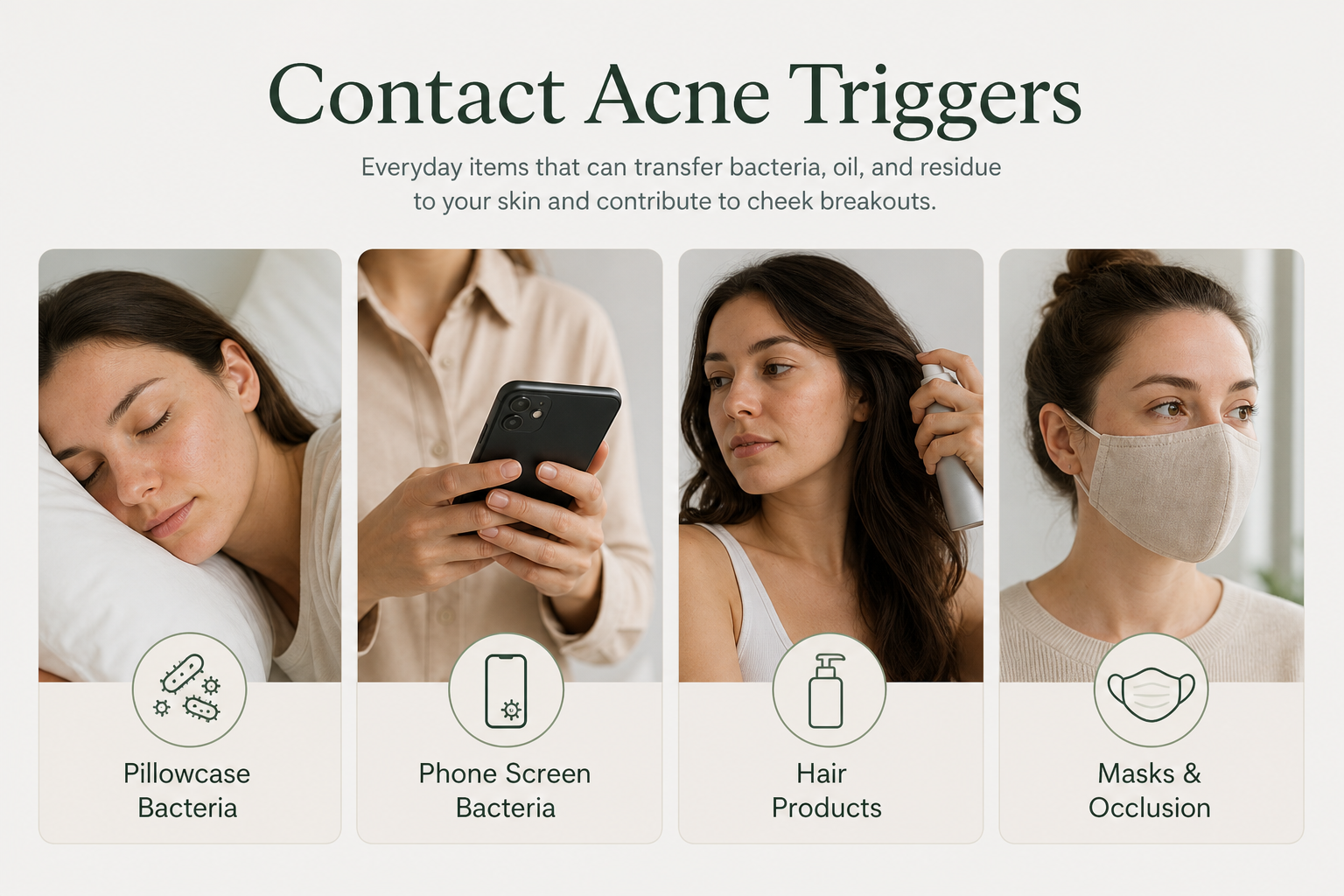
Contact acne — spots triggered by repeated physical contact between the skin and a contaminated or occlusive surface — is a particularly common and underappreciated cause of recurring cheek spots. The cheeks are in contact with several surfaces throughout a typical day, each capable of transferring bacteria, oil, or pore-blocking residue directly onto the skin.
Pillowcase Bacteria
A pillowcase accumulates sebum, dead skin cells, hair product residue, and bacteria with every night of use. Sleeping on the same pillowcase for more than two or three days means the skin is pressed against this environment for six to eight hours at a time. Dermatologists commonly recommend changing pillowcases every two to three days as a minimum hygiene measure for anyone experiencing recurring cheek spots. Silk or satin pillowcases are sometimes suggested because they create less friction and absorb less product than cotton, though the evidence for silk specifically reducing acne is observational rather than from controlled trials.
Phone Screen Bacteria
Mobile phone screens carry a significant bacterial load and are held directly against the cheek during calls. This is one of the most frequently cited causes of one-sided cheek breakouts: if spots consistently appear on the side of the face used for phone calls, contact acne from the phone screen is a logical explanation. Wiping the phone screen daily with an antibacterial wipe and using earphones or speakerphone for longer calls are practical steps that can reduce this trigger meaningfully.
Hair Products and Makeup Brushes
Hair products containing comedogenic ingredients — such as coconut oil, certain silicones, or heavy emollients — can transfer to the cheeks via the pillowcase or direct contact with the hair. This is a frequently overlooked breakout trigger, particularly for people who sleep with their hair loose. Similarly, makeup brushes used on the cheeks without regular cleaning accumulate bacteria and old product that can contribute to blocked pores. Washing brushes used on the face at least once a week is a straightforward preventive measure.
Masks and Occlusion
Wearing a face covering for extended periods creates a warm, humid microenvironment against the cheeks. The combination of friction, occlusion, and moisture disrupts the skin barrier and encourages bacterial overgrowth, producing what has been documented clinically as acne mechanica. This remains relevant for anyone who wears a mask regularly for work or health reasons.
Skincare and Lifestyle Triggers
The products applied to the skin can either support or undermine the skin barrier. Comedogenic ingredients in moisturisers, foundations, sunscreens, or serums can block pores directly. Checking that all products used on the face are labelled non-comedogenic is a basic but important step for anyone prone to cheek spots. Equally, using a harsh cleanser or over-exfoliating in an attempt to clear spots can cause skin barrier disruption, which paradoxically triggers more oil production and inflammation as the skin attempts to compensate.
Diet may also play a role for some individuals. Research suggests associations between high glycaemic index diets, excess dairy consumption, and acne severity, though the evidence is not strong enough to recommend universal dietary restrictions. For individuals who notice that breakouts worsen after periods of high sugar or dairy intake, a trial reduction may be worth exploring alongside other measures. Zinc and selenium-rich foods are sometimes discussed in the context of skin health, though dietary changes alone are unlikely to resolve established cheek acne without addressing other triggers simultaneously.
Why Do Spots Return to the Exact Same Spot?
One of the most common and frustrating experiences with cheek acne is a spot that clears, then reappears in precisely the same location weeks or months later. The mechanism behind this involves the follicle itself. When a pore becomes severely inflamed — particularly with cystic cheek acne — the follicle wall can sustain damage that alters its structure, making it more prone to future blockages. If the original trigger remains active, the same follicle is repeatedly challenged, and the cycle of blockage, inflammation, and partial healing continues.
Incomplete treatment is another factor. A spot that appears to have resolved at the surface may still have residual inflammation or a partial blockage deeper within the follicle. Without fully clearing the underlying issue, the spot is likely to recur. This is one reason professional extractions performed by a trained clinician — rather than squeezing at home — can be more effective for persistent spots: they address the blockage more completely and with less risk of further follicle damage.
One-Sided Cheek Breakouts: What They May Indicate
A one-sided cheek breakout — spots that appear consistently on one cheek but not the other — is a clinically useful pattern. When breakouts are clearly lateralised, external contact triggers are the most likely explanation. The most common causes include phone use on that side, a preferred sleep position that presses one cheek into the pillow, or a hair style that allows hair products to contact one cheek more than the other. Identifying which of these applies is usually straightforward once the pattern is noticed. Switching the phone to the other ear, changing sleep position, or tying hair back at night can produce a noticeable improvement within a few weeks if contact is the primary driver.
Acne Face Mapping: What Is Useful and What Is Not
Acne face mapping is the practice of linking breakout locations to internal organ health or systemic imbalances. It originates from Traditional Chinese Medicine and Ayurvedic traditions, where the cheeks are associated with the lungs, liver, or digestive system depending on the system used. Modern dermatology does not support face mapping as a diagnostic tool: there is no reliable clinical evidence that spots on the left cheek indicate liver dysfunction or that spots on the right cheek reflect lung health.
Where face mapping does have practical value is as a pattern-recognition exercise. Noticing that breakouts consistently appear in the same zone — the cheeks rather than the forehead, or the lower face rather than the nose — can help identify whether the cause is more likely to be hormonal, contact-related, or product-related. Cheek acne, for example, is more strongly associated with contact triggers and hormonal fluctuations than forehead acne, which is more often linked to hair products and scalp oil. Using zone patterns to narrow down likely triggers is a reasonable approach; using them to self-diagnose organ disease is not.
Cheek Acne vs. Rosacea: Key Differences
Not every red bump on the cheeks is acne. Rosacea is a chronic inflammatory skin condition that commonly affects the cheeks and nose, producing persistent redness, visible blood vessels, and papules or pustules that can closely resemble acne. Treating rosacea with standard acne products — particularly benzoyl peroxide or strong retinoids — can worsen the condition significantly. The following characteristics can help distinguish the two, though a clinical assessment is always recommended for an accurate diagnosis.
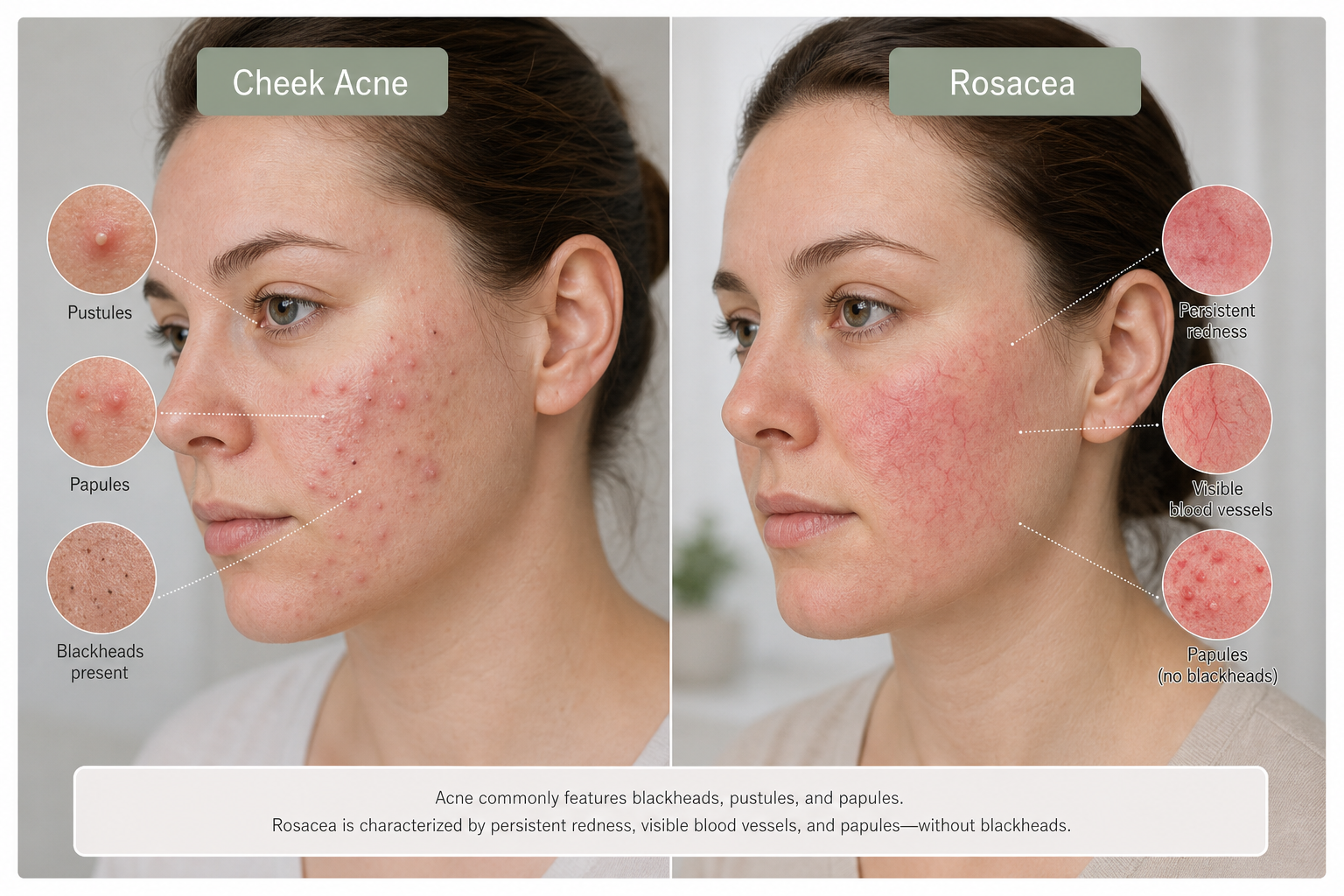
| Feature | Cheek Acne | Rosacea |
|---|---|---|
| Blackheads or whiteheads | Common | Absent |
| Persistent background redness | Uncommon | Characteristic |
| Triggered by heat, alcohol, spicy food | Uncommon | Common |
| Age of onset | Any age; peaks in teens and 20s | Usually 30s–50s |
| Visible blood vessels | Uncommon | Common |
| Responds to benzoyl peroxide | Often yes | May worsen |
| Cysts | Possible | Rare |
Other conditions that can mimic cheek acne include milia (small white cysts caused by trapped keratin, not bacterial infection), perioral dermatitis, seborrhoeic dermatitis, and tinea versicolor (a fungal condition producing pale or pink patches). Each requires a different treatment approach, which is why self-treating without a confirmed diagnosis carries a risk of making the underlying condition worse.
Cheek Acne Scarring Risk
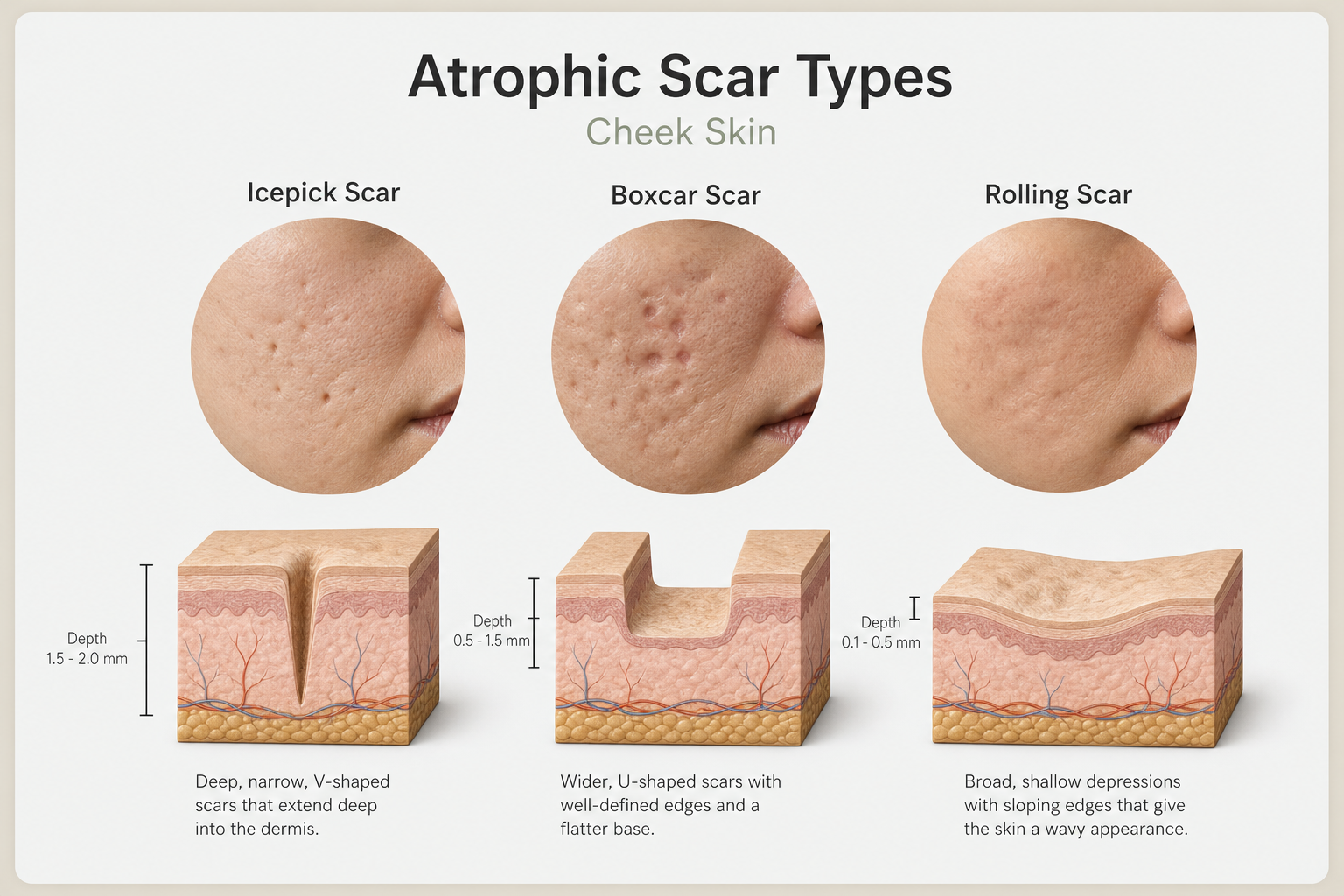
The cheeks are among the facial areas most prone to acne scarring. The skin on the cheeks is thicker than on the forehead or nose, and inflammatory lesions — particularly cystic cheek acne — can cause significant dermal damage if they are squeezed, picked, or left untreated for extended periods. Scarring on the cheeks tends to present as atrophic (depressed) scars, including icepick, boxcar, and rolling scar types, which are more difficult to treat than the original acne.
Post-inflammatory hyperpigmentation (PIH) — the dark marks left after a spot resolves — is a separate concern from true scarring but is equally distressing. PIH is more pronounced and longer-lasting in individuals with medium to deep skin tones, a consideration that is underrepresented in most consumer-facing acne content. Clinical research confirms that cheek acne in women of colour carries a higher PIH burden, making early and appropriate treatment particularly important in this group. Consistent sun protection is essential during and after treatment, as UV exposure significantly worsens PIH.
The most effective way to reduce cheek acne scarring risk is to avoid squeezing or picking spots, treat inflammatory lesions early, and seek professional assessment for cystic or nodular acne rather than waiting for it to resolve independently.
Treatment Options for Recurring Cheek Spots
Over-the-Counter Topical Treatments
Benzoyl peroxide is one of the most evidence-supported over-the-counter treatments for inflammatory cheek acne. It works by releasing oxygen into the follicle, which kills acne-causing bacteria, and it does not carry the antibiotic resistance risk associated with topical antibiotics. Concentrations of 2.5% to 5% are generally as effective as higher concentrations with less irritation. Salicylic acid is a beta-hydroxy acid that helps dissolve the material blocking pores and is particularly useful for non-inflammatory spots such as blackheads and whiteheads. Both ingredients can cause dryness and irritation, particularly when introduced too quickly or used alongside other active ingredients.
Topical Retinoids
Retinoids — including adapalene, which is available over the counter in some countries — work by accelerating skin cell turnover, preventing dead cells from accumulating within the follicle, and reducing inflammation. Adapalene 0.1% gel has a reasonable evidence base for mild to moderate acne and is generally well tolerated when introduced gradually. Retinoids also have a role in reducing post-inflammatory hyperpigmentation over time. They should not be used during pregnancy without medical guidance.
Prescription and Professional Treatments
When over-the-counter treatments are insufficient, a dermatologist may recommend prescription-strength topical retinoids, topical or oral antibiotics, or hormonal therapies such as the combined oral contraceptive pill or spironolactone for hormonally driven cheek acne. It is worth noting that antibiotic resistance from prolonged use of topical antibiotics is a genuine clinical concern: guidelines generally recommend limiting antibiotic use and combining it with benzoyl peroxide to reduce resistance risk.
Professional treatments such as LED light therapy, chemical peels, and clinical extractions can complement a home skincare routine for persistent cases. LED blue light therapy targets acne-causing bacteria and may reduce inflammation, though multiple sessions are typically required and results vary. For established cheek acne scarring, treatments such as microneedling, fractional laser resurfacing, or dermal fillers for atrophic scars may be discussed with a qualified practitioner after the active acne is controlled.
Building a Consistent Skincare Routine for Cheek-Prone Skin
A consistent skincare routine does not need to be complex to be effective. The core principle for cheek-prone skin is to cleanse without stripping, treat without over-irritating, and protect without blocking pores. A gentle, non-stripping cleanser used twice daily removes excess oil and surface debris without disrupting the skin barrier. Applying a targeted treatment — such as benzoyl peroxide or adapalene — to affected areas in the evening allows the active ingredient to work overnight. A lightweight, non-comedogenic moisturiser used morning and evening supports the skin barrier, which is particularly important when using drying active ingredients. Broad-spectrum SPF 30 or higher applied every morning is non-negotiable, both for general skin health and for preventing PIH from worsening.
Introducing new active ingredients gradually — one at a time, every two to three weeks — reduces the risk of skin barrier disruption and makes it easier to identify which product is causing a reaction if one occurs. Layering multiple actives simultaneously is a common mistake that can worsen cheek spots rather than improve them.
Prevention: Practical Steps to Reduce Recurring Breakouts
- Change pillowcases every two to three days to reduce pillowcase bacteria accumulation on the cheeks during sleep.
- Clean phone screens daily with an antibacterial wipe and use earphones or speakerphone to minimise cheek contact.
- Wash makeup brushes weekly to prevent bacteria and product buildup transferring to the skin.
- Check hair products for comedogenic ingredients and consider tying hair back at night to prevent transfer to the cheeks via the pillow.
- Avoid touching the face unnecessarily, as hands transfer bacteria and oil to the cheeks throughout the day.
- Use only non-comedogenic skincare and makeup products on the face, checking ingredient lists where possible.
- Track cycle-linked breakouts over two to three months to identify whether a hormonal acne pattern is present before pursuing treatment.
- Apply SPF daily to prevent UV exposure from worsening post-inflammatory hyperpigmentation after spots resolve.
Frequently Asked Questions
Is cheek acne always hormonal?
No. While hormonal fluctuations are a common driver of cheek acne — particularly in adult women — contact triggers such as pillowcase bacteria, phone screens, and comedogenic products are equally significant causes. Many cases involve a combination of both internal and external factors. Tracking the timing and pattern of breakouts can help identify which is more dominant in an individual case.
Why do I only get spots on one cheek?
A one-sided cheek breakout strongly suggests a contact trigger on that side. The most common causes are holding a phone against that cheek, sleeping predominantly on that side, or hair products contacting one cheek more than the other. Addressing the relevant contact habit often produces noticeable improvement within a few weeks.
Can my pillowcase really cause spots on my cheeks?
Yes. A pillowcase used for more than two to three days accumulates sebum, bacteria, and product residue that is then pressed against the cheeks for hours each night. Changing pillowcases frequently is one of the simplest and most consistently recommended steps for reducing recurring cheek spots.
How do I know if my cheek spots are acne or rosacea?
Key distinguishing features include the presence of blackheads or whiteheads (common in acne, absent in rosacea), persistent background redness (characteristic of rosacea), and triggers such as heat, alcohol, or spicy food (associated with rosacea rather than acne). A dermatologist evaluation is the most reliable way to confirm the diagnosis, particularly before starting treatment, as some acne treatments can worsen rosacea.
Do cheek spots scar more than spots elsewhere on the face?
The cheeks are among the higher-risk areas for acne scarring, particularly with cystic or nodular lesions. Avoiding squeezing or picking, treating inflammatory spots early, and seeking professional assessment for severe breakouts are the most effective ways to reduce cheek acne scarring risk.
When should I see a dermatologist about cheek spots?
A dermatologist evaluation is advisable when spots are painful, deep, or cystic; when over-the-counter treatments have not produced improvement after eight to twelve weeks of consistent use; when breakouts are leaving significant post-inflammatory hyperpigmentation or scarring; or when there is a suspicion of an underlying hormonal condition such as PCOS.
When to Seek Help and What to Expect from Treatment
Recurring cheek spots that respond to consistent skincare routine adjustments and trigger removal within eight to twelve weeks are generally manageable without professional intervention. When breakouts are persistent, worsening, cystic, or leaving marks that take months to fade, professional assessment adds meaningful value. A dermatologist can confirm the diagnosis, rule out conditions such as rosacea or hormonal disorders, and recommend prescription treatments that are not available over the counter. For individuals with skin of colour, early professional involvement is particularly worthwhile given the higher PIH risk associated with cheek acne in this group.
Realistic expectations matter. Most topical treatments require six to twelve weeks of consistent use before meaningful improvement becomes visible. Hormonal treatments, where appropriate, may take three to six months to show their full effect. There is no single treatment that works for every person, and a combination approach — addressing both internal triggers and external habits — tends to produce better outcomes than treating spots in isolation. If you are experiencing recurring cheek spots that are not responding to self-care measures, a consultation with a qualified dermatologist or aesthetic medicine practitioner is a practical and worthwhile next step.
