
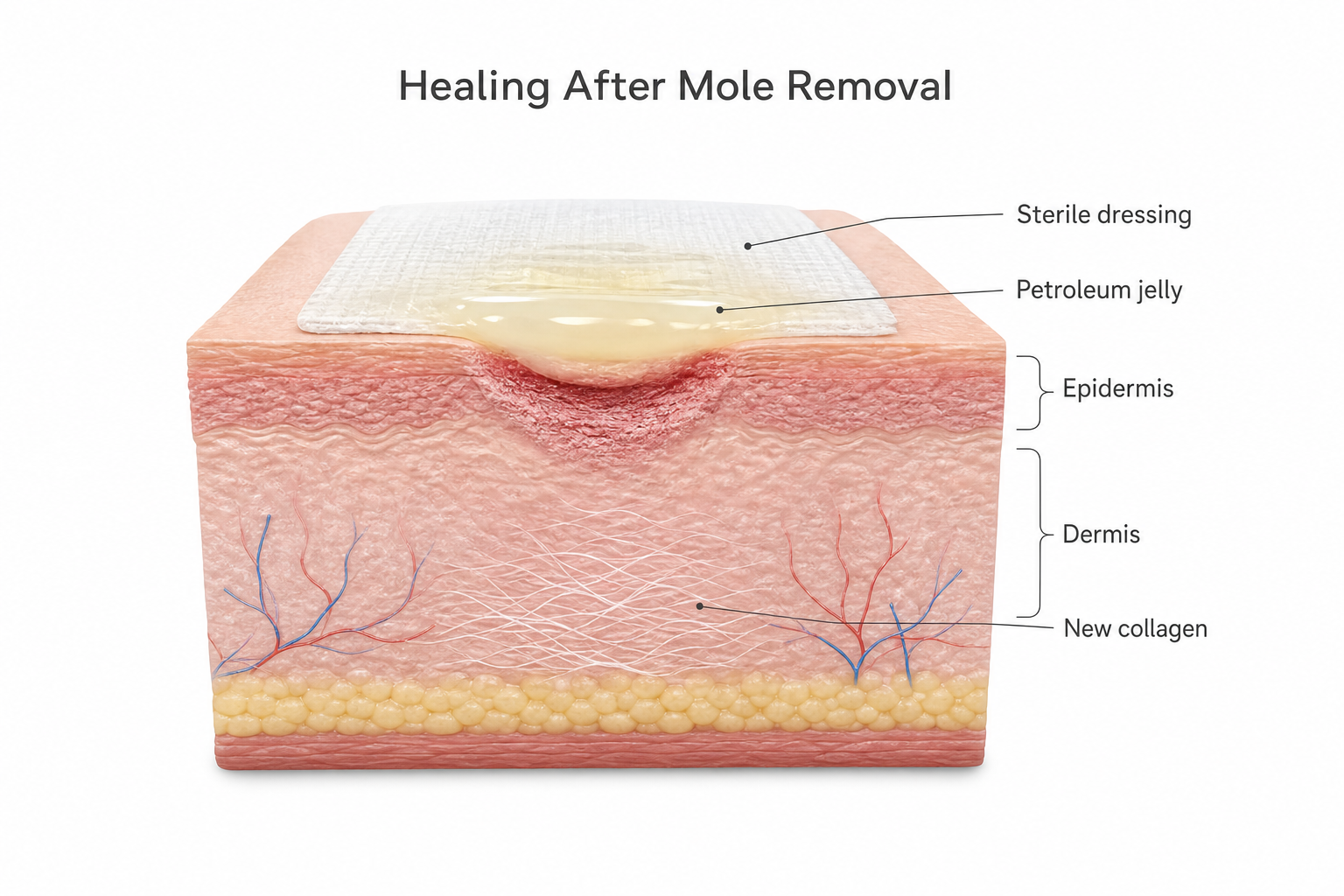

Mole removal aftercare plays a decisive role in how well your skin heals and how visible any resulting scar will be. Whether your mole was removed by shave excision, surgical excision, laser, or cryotherapy, the principles of good wound care remain broadly consistent: keep the site clean and moist, protect it from the sun, and resist the urge to interfere with the natural healing process. This guide covers everything from the first 48 hours through to long-term scar management, including what normal healing looks like, which products actually help, and the warning signs that warrant a call to your dermatologist.
Key Takeaways
- Moist wound healing — using petroleum jelly or a suitable ointment under a sterile dressing — consistently produces better outcomes than leaving a wound to dry out and scab over.
- Silicone gel or silicone sheets are the best-evidenced topical option for minimising scarring once the wound has fully closed; vitamin E oil has weak evidence and carries a risk of contact dermatitis.
- A healed wound is only approximately 50% of normal skin strength at three weeks, which is why activity restrictions matter more than most patients expect.
- Broad-spectrum sunscreen SPF 30 or higher should be applied to the healing mole site for a minimum of 12 months to prevent permanent pigmentation changes in the scar.
- Increasing redness, spreading warmth, cloudy discharge, or fever above 38°C (100.4°F) are signs of infection that require prompt medical attention.
What to Expect Immediately After Mole Removal
In the first few hours after mole removal, the treated area will typically feel tender, slightly numb as the local anaesthetic wears off, and may show minor redness and swelling around the wound edges. A small amount of bleeding or oozing is normal at this stage. Your practitioner will apply a sterile dressing before you leave, and in most cases this should remain in place and undisturbed for the first 24 hours. Avoid getting the area wet during this initial period unless you have been given specific instructions to the contrary.
The appearance of the wound depends on the removal method used. A shave excision leaves a shallow, roughly circular wound that heals without stitches. A surgical excision — also called an elliptical excision — removes the mole and a margin of surrounding tissue, leaving a linear wound that is closed with sutures. Laser removal and cryotherapy create superficial wounds that tend to weep slightly before forming a thin crust. Understanding which method was used helps set realistic expectations for the healing timeline ahead.
Mole Removal Healing Timeline
Wound healing follows a predictable biological sequence, though the pace varies depending on wound size, location, removal method, and individual factors such as age, nutrition, and whether you smoke. The following timeline reflects typical progression for a straightforward mole removal on the face or trunk.
Hours 0–48: Immediate Care Phase
Keep the dressing in place and the wound dry. Minor throbbing, tenderness, and localised swelling are expected as the anaesthetic wears off. Over-the-counter paracetamol is generally appropriate for mild discomfort; avoid ibuprofen in the first 24 hours if there is any bleeding, as it may impair clotting. Do not remove the dressing to inspect the wound during this period.
Days 1–7: Inflammatory and Early Repair Phase
This is the inflammatory stage of healing, during which the body sends increased blood flow and immune cells to the wound site. Redness, warmth, and mild swelling are normal and expected. A scab or thin crust will begin to form as the wound surface dries between dressing changes. Your daily wound care routine should begin from day one or two as directed by your practitioner: gently clean the area with mild soap and water, pat dry, apply a thin layer of petroleum jelly or prescribed antibiotic ointment, and cover with a fresh sterile bandage. Change the dressing daily, or more frequently if it becomes wet or soiled.
Itching during this phase is a sign that healing is progressing — nerve endings are regenerating and new tissue is forming. Do not pick the scab or scratch the wound. Disrupting the scab prematurely exposes the underlying tissue, increases infection risk, and significantly worsens scarring outcomes.
Days 7–14: Proliferative Phase
New collagen fibres are being laid down rapidly during this period. If you had non-dissolvable sutures, your practitioner will typically remove them between days 5 and 14 depending on the wound location — facial sutures are usually removed earlier (around day 5–7) to minimise stitch marks, while sutures on the back or legs may remain for up to 14 days. Dissolvable stitches do not require removal; they break down gradually over several weeks. The wound surface should be closing and the scab, if present, will begin to lift naturally at the edges. Continue daily dressing changes and moist wound healing until the wound is fully closed.
Weeks 2–6: Remodelling Begins
Once the wound has closed, active scar management can begin. The site will likely appear pink or red and may feel slightly raised or firm — this is normal collagen remodelling. An important and often overlooked fact is that even a wound that looks healed on the surface has only approximately 50% of normal skin tensile strength at three weeks. This is why avoiding strenuous exercise, heavy lifting, and activities that stretch the skin over the wound site remains important well beyond the point at which the wound appears closed.
Months 2–12+: Scar Maturation
Scar maturation is a slow process. The pink or red colour gradually fades as blood vessels within the scar reduce in number. Most scars reach their final appearance between 12 and 24 months after the procedure. Consistent sun protection and appropriate scar management products during this period have the greatest influence on the long-term cosmetic result.
Essential Wound Care Steps After Mole Removal
Good wound care after mole removal does not require complicated products or elaborate routines. The following steps reflect current evidence-based guidance for most straightforward mole removal wounds.
- Clean gently once daily. Use mild soap and water or a saline solution. Avoid scrubbing. Pat the area dry with a clean cloth or gauze.
- Apply a thin layer of petroleum jelly. Petroleum jelly (such as Vaseline) maintains a moist wound environment, which supports faster re-epithelialisation and reduces scab formation. Apply enough to keep the wound surface from drying out, but avoid thick layers that may trap bacteria.
- Cover with a sterile dressing. A non-adherent sterile bandage protects the wound from contamination and physical trauma. Change the dressing daily or whenever it becomes wet or dirty.
- Avoid harsh chemicals on the wound. Hydrogen peroxide and alcohol-based antiseptics are cytotoxic to the new cells forming at the wound surface and should not be applied to healing skin. They were once commonly used but are no longer recommended for routine wound care.
- Do not pick the scab. Allow any crust to separate naturally. Premature removal disrupts the healing tissue beneath and increases the risk of a more prominent scar.
- Protect from sun exposure. Even before the wound is fully closed, UV radiation can cause permanent pigmentation changes in healing skin. Cover the site with clothing or a dressing when outdoors.
Aftercare Differences by Removal Method
| Removal Method | Wound Type | Stitches? | Typical Healing Time | Key Aftercare Note |
|---|---|---|---|---|
| Shave excision | Shallow, circular | No | 1–3 weeks | Moist wound healing essential; scab forms and lifts naturally |
| Surgical (elliptical) excision | Linear, deeper | Yes (dissolvable or non-dissolvable) | 2–6 weeks surface; months for scar | Avoid stretching wound; suture care as directed; high-tension areas need longer restriction |
| Laser removal | Superficial | No | 1–2 weeks | Strict sun avoidance; may weep before crusting |
| Cryotherapy | Blister/crust | No | 1–3 weeks | Allow blister to resolve naturally; do not puncture |
Minimising Scarring After Mole Removal
Scar formation is an inevitable part of wound healing, but the extent and visibility of a scar can be meaningfully influenced by the choices made during recovery. The most important factors are maintaining a moist wound environment during healing, protecting the scar from UV radiation, and using evidence-based topical products once the wound has closed.
Silicone Gel and Silicone Sheets
Silicone gel and silicone sheets are the most robustly evidenced topical interventions for scar minimisation currently available. They work by hydrating the stratum corneum of the scar, which is thought to regulate fibroblast activity and reduce excess collagen production. Silicone sheets are applied directly over the closed wound for several hours per day — typically 12 hours or more — while silicone gel dries to form a thin, breathable film that can be used on areas where sheets are impractical, such as the face. Both formats should be used consistently for at least two to three months for meaningful benefit.
Petroleum Jelly vs Silicone Gel vs Vitamin E Oil
These three products are frequently compared in patient discussions, and the evidence behind each differs considerably. Petroleum jelly is the appropriate choice during the active wound healing phase — it maintains moisture, is non-sensitising, and is inexpensive. Once the wound has fully closed, silicone gel or silicone sheets become the preferred option for ongoing scar management, as they have the strongest clinical evidence for reducing scar thickness and improving colour. Vitamin E oil is widely promoted for scar care but the evidence supporting its use is weak, and it carries a meaningful risk of causing contact dermatitis in some individuals, which can worsen the appearance of a healing scar. On current evidence, vitamin E oil is not recommended as a first-line scar treatment.
Sun Protection for Healing Skin
Avoiding sun exposure on a healing mole site is one of the most important and most frequently neglected aspects of long-term scar care. UV radiation stimulates melanocytes in the scar tissue, which can cause permanent hyperpigmentation — a darkening of the scar that is far more difficult to treat than the scar itself. Broad-spectrum sunscreen SPF 30 or higher should be applied to the healed scar every day for a minimum of 12 months. SPF 50 is preferable for sun-exposed areas such as the face, neck, and forearms. Physical sunscreens containing zinc oxide or titanium dioxide are generally well tolerated on sensitive post-procedure skin.
Scar Massage
Gentle scar massage, typically beginning four to six weeks after the wound has fully closed, may help soften a firm or raised scar by breaking down dense collagen fibres and improving local circulation. Apply a small amount of fragrance-free moisturiser or silicone gel and use firm circular or linear pressure for one to two minutes, two to three times daily. Scar massage is most useful during the active remodelling phase and should be discontinued if it causes pain or reopens the skin.
When Scars Become Raised: Hypertrophic Scars and Keloids
Some individuals are prone to forming hypertrophic scars — raised, firm scars that remain within the original wound boundary — or keloid scars, which extend beyond the wound margins and can continue to grow over time. Keloid formation is more common in individuals with darker skin tones and in high-tension areas such as the chest, shoulders, and upper back. If a scar becomes progressively raised, itchy, or extends beyond the original wound site, discuss this with your dermatologist promptly. Established raised scars may be treated with intralesional steroid injections, silicone therapy, or other interventions depending on the scar type and severity.
Location-Specific Aftercare Considerations
The location of a mole removal site affects both the healing timeline and the specific precautions required. Facial mole removal wounds benefit from minimising facial movement where practical — particularly for wounds near the mouth or on the cheeks — and require especially diligent sun protection given constant UV exposure. Scalp wounds may be more difficult to keep dry and protected; your practitioner may advise specific shampooing instructions.
Mole removal on the back, legs, or other high-tension areas presents a different challenge. Skin in these locations is subject to constant stretching with everyday movement, which places mechanical stress on the healing wound and increases the risk of a wider or more prominent scar. Avoiding strenuous exercise, heavy lifting, and activities that stretch the skin over the wound is particularly important for wounds in these locations, and the restriction period may be longer than for facial wounds. Steri-strips or surgical tape applied across a healing linear scar can help reduce skin tension during the remodelling phase.
What Normal Healing Looks Like vs Signs of Infection
One of the most common sources of anxiety after mole removal is uncertainty about whether a wound is healing normally or developing a problem. The key distinction is between serous fluid — a clear or slightly yellow, watery discharge that is a normal part of wound healing — and purulent discharge, which is cloudy, thick, or greenish and indicates bacterial infection. Normal wounds may ooze small amounts of clear fluid in the first few days; this is not a cause for concern provided the surrounding skin is not becoming increasingly red or warm.
Signs of Infection After Mole Removal
- Increasing redness that spreads beyond the immediate wound edges
- Red streaks radiating outward from the wound
- Increasing warmth or swelling around the site
- Cloudy, thick, or foul-smelling discharge from the wound
- Fever above 38°C (100.4°F)
- Persistent or worsening pain beyond the first two to three days
- Wound edges separating or the wound reopening
- Swollen or tender lymph nodes near the wound site
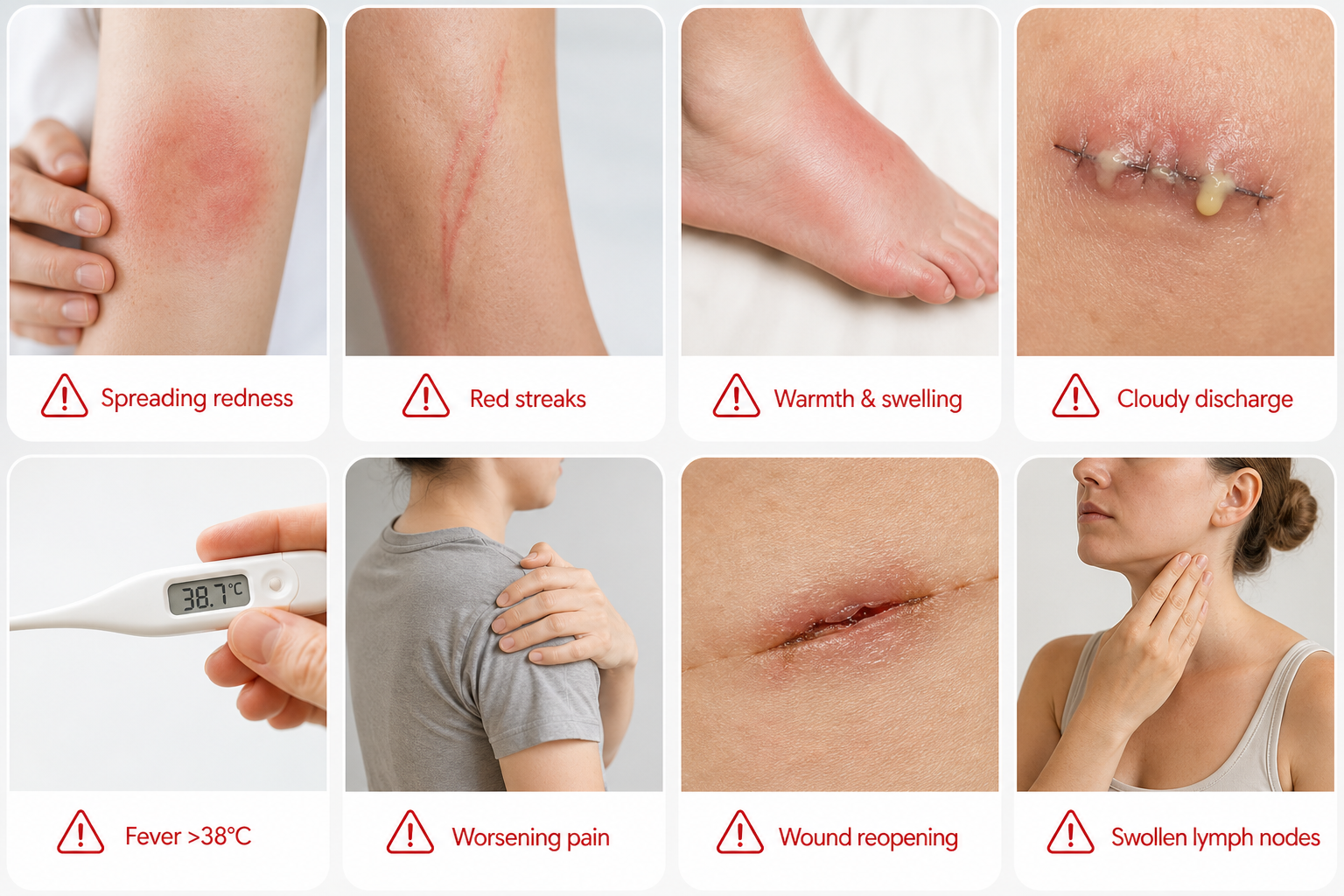
If you notice any of these signs, contact your dermatologist or healthcare provider promptly. Do not attempt to treat a suspected wound infection at home by applying more ointment or covering it more tightly. Early assessment and, where necessary, antibiotic treatment will produce a better outcome than delayed intervention.
What to Avoid After Mole Removal
Certain activities and products can significantly impair wound healing or worsen scarring. The following restrictions apply to most mole removal wounds, though your practitioner may give you specific guidance based on your individual situation.
- Strenuous exercise and heavy lifting: Avoid for at least two weeks, or longer for wounds in high-tension areas. Increased blood pressure and skin stretching can cause bleeding, wound dehiscence, and wider scars.
- Swimming and hot tubs: Avoid until the wound is fully closed and your practitioner has confirmed it is safe to do so. Pool chemicals and bacteria in water pose an infection risk to open wounds. Most practitioners advise waiting at least two weeks, and longer for surgical excision wounds.
- Showering: Brief showers are generally acceptable from day two onward, but keep the wound out of the direct water stream and pat dry immediately afterward. Avoid soaking the wound.
- Makeup over the wound: Do not apply foundation, concealer, or other cosmetics directly over an open or healing wound. Once the wound has fully closed — typically after two weeks for most shave excisions — a mineral or fragrance-free product may be cautiously reintroduced, but avoid active ingredients such as retinol, AHAs, or BHAs over the scar site for at least four to six weeks.
- Smoking: Smoking impairs wound healing by reducing tissue oxygenation and impairing immune function. If possible, avoid smoking for at least two weeks after mole removal.
- Alcohol: Alcohol can increase bleeding risk and may interact with any prescribed medications. Moderate restriction in the first few days is advisable.
- Tight clothing over the wound: Friction from clothing can irritate the wound and disrupt the dressing. Choose loose, breathable fabrics over the wound site.
Biopsy Results and Follow-Up Appointments
When a mole is removed, the tissue is routinely sent for histological analysis — a laboratory examination to determine whether the cells are benign, atypical, or malignant. Results typically take one to three weeks to return. It is important to attend your follow-up appointment regardless of how well the wound appears to be healing, as this is when your practitioner will review the pathology report, assess the wound, and remove any non-dissolvable sutures if present.
If the biopsy result indicates that the mole contained atypical or dysplastic cells, your dermatologist will advise on whether further treatment is needed and how frequently you should attend for skin checks going forward. A positive result does not automatically mean the mole was cancerous, but it does mean that ongoing monitoring is important. Annual skin cancer screening is generally recommended for anyone who has had a mole removed, particularly if there is a personal or family history of melanoma or atypical moles.
If you notice that a mole appears to be regrowing at the removal site — a small pigmented area returning within the scar — report this to your dermatologist rather than assuming it is harmless. Mole regrowth within a scar can occasionally be difficult to assess visually and warrants professional evaluation.
Nutrition, Hydration, and Wound Healing
The body’s ability to repair tissue depends on adequate nutritional support. Vitamin C plays a key role in collagen synthesis and immune function; zinc supports tissue repair and immune response; and protein provides the amino acid building blocks for new tissue. A balanced diet with adequate fruit, vegetables, lean protein, and hydration supports optimal wound healing. Severe nutritional deficiencies can meaningfully impair healing, though for most healthy adults eating a varied diet, specific supplementation is unlikely to be necessary unless advised by a healthcare provider.
Frequently Asked Questions
How long does a mole removal site take to heal?
Surface healing — where the wound closes and the scab falls away — typically takes one to three weeks for shave excisions and two to four weeks for surgical excisions. However, the underlying scar continues to remodel for 12 to 24 months. The final appearance of the scar is not visible until this maturation process is complete.
Should I keep the wound covered or let it breathe?
Moist wound healing under a sterile dressing consistently produces better outcomes than leaving a wound uncovered to dry out. Keeping the wound covered with a dressing and a thin layer of petroleum jelly until it is fully closed reduces scab formation, lowers infection risk, and supports faster healing. The idea that wounds need to “breathe” is not supported by current wound care evidence.
When can I start using silicone gel on the scar?
Silicone gel or silicone sheets should only be applied once the wound has fully closed — there should be no open areas, scabbing, or active oozing. For most shave excisions this is around two to three weeks; for surgical excisions it may be three to four weeks or longer. Begin with short application periods and increase gradually if the skin tolerates it well.
My scar is itchy — is that normal?
Itching is a very common and generally normal part of wound healing, particularly during the proliferative phase when new nerve fibres are regenerating within the healing tissue. Resist scratching or picking at the site. If itching is severe, persistent, or accompanied by a rash around the wound, contact your practitioner as this may indicate contact dermatitis from a topical product or, less commonly, an early sign of a hypertrophic scar forming.
Can I exercise after mole removal?
Light walking is generally acceptable from the day after the procedure. Strenuous exercise, heavy lifting, and activities that stretch the skin over the wound should be avoided for at least two weeks, and longer for wounds in high-tension areas such as the back or legs. Your practitioner will advise based on the specific wound location and size.
What if my stitches dissolve before the wound is fully healed?
Dissolvable stitches are designed to maintain wound support during the critical early healing phase and then break down as the wound gains strength. If a stitch appears to dissolve or fall out before the wound looks fully closed, contact your practitioner for assessment. Do not attempt to re-close the wound yourself.
Will the scar be permanent?
All mole removal methods leave some degree of scarring, though the visibility varies considerably depending on the removal method, wound size, location, individual healing response, and how well aftercare instructions are followed. Most scars become significantly less noticeable over 12 to 24 months. Consistent sun protection and appropriate scar management give the best chance of a minimal long-term result.
Getting the Best Result from Your Mole Removal Recovery
The quality of mole removal aftercare has a direct and meaningful impact on how the skin heals and how visible the resulting scar will be. The fundamentals — moist wound healing, daily dressing changes, avoiding picking, and consistent sun protection — are straightforward but require commitment over weeks and months rather than days. Transitioning from petroleum jelly during the wound healing phase to silicone gel once the wound has closed gives you the best evidence-based approach to scar minimisation. Protecting the healing mole site from UV radiation for at least 12 months is one of the single most effective steps you can take to prevent permanent pigmentation changes.
If you are uncertain about any aspect of your wound care, notice signs of infection, or have concerns about how your scar is developing, contact your dermatologist or healthcare provider rather than waiting. Early intervention for complications such as infection or hypertrophic scar formation consistently produces better outcomes than delayed treatment. Your follow-up appointment is also the right time to discuss biopsy results and establish a plan for ongoing skin monitoring — an important step for anyone who has had a mole removed.
