
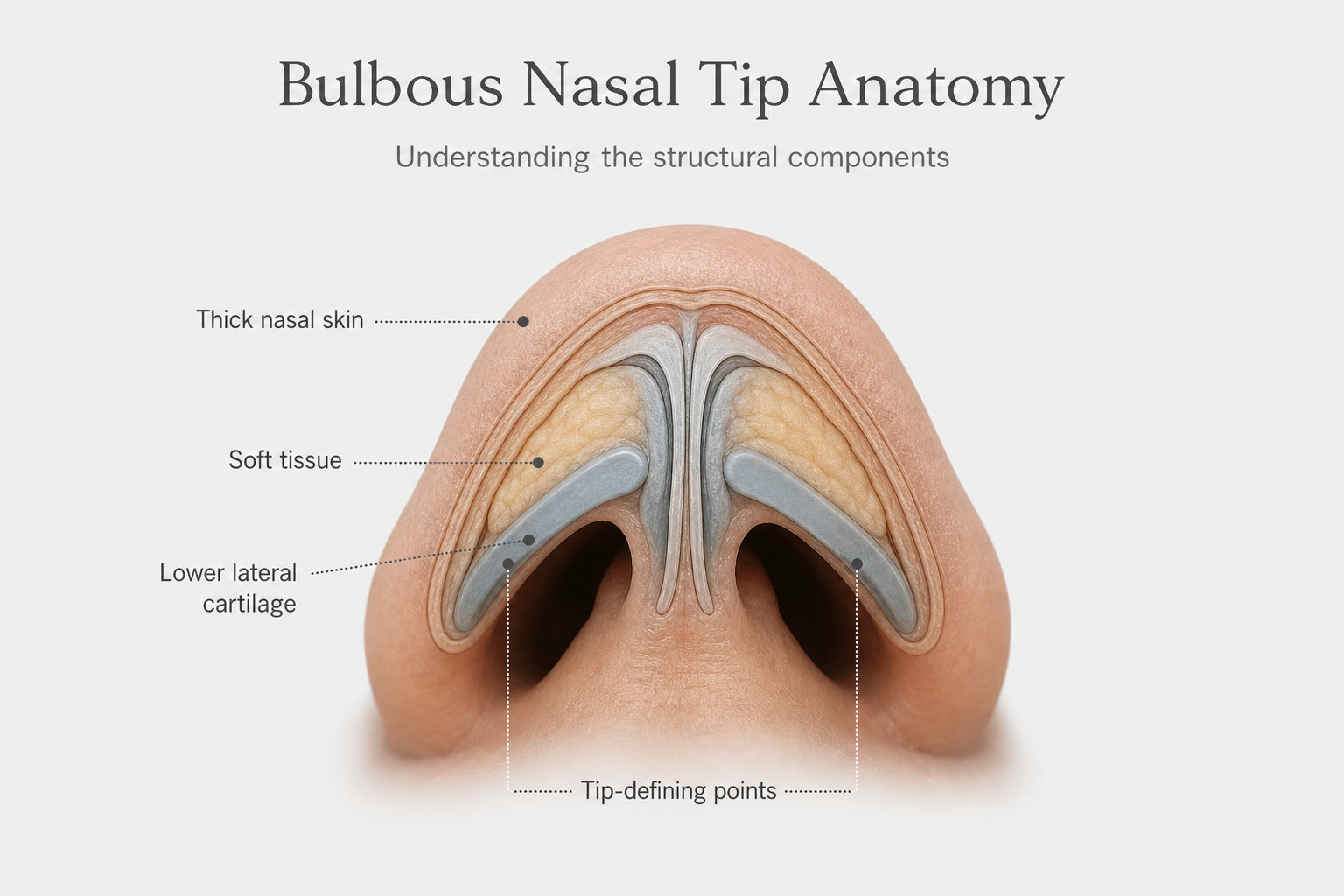

A bulbous nose — characterised by a rounded, wide, or poorly defined nasal tip — is one of the most common concerns that brings patients to a facial plastic surgeon. Whether the cause is structural (the shape of the cartilage beneath the skin), the thickness of the overlying skin, or a skin condition such as rhinophyma, the path to refinement depends entirely on an accurate diagnosis. This guide explains what creates a bulbous nasal tip, which treatment options exist, what each can and cannot achieve, and how to approach the decision with realistic expectations.
Key Takeaways
- A bulbous nasal tip can result from wide or rounded lower lateral cartilage, excess soft tissue between the cartilage domes, thick nasal skin, or a skin condition called rhinophyma — and each cause requires a different treatment approach.
- Surgical rhinoplasty, including tipplasty (tip-only surgery), is the only method that can permanently reshape the structural anatomy of the nasal tip; non-surgical options such as liquid rhinoplasty with dermal fillers can improve the appearance of surrounding areas but cannot reduce tip width or volume.
- Thick nasal skin is a genuine limiting factor in surgical outcomes; a board-certified facial plastic surgeon should discuss this honestly during consultation rather than promising a dramatic transformation.
- Recovery from nasal tip surgery typically involves a splint for the first week, most visible swelling resolving within four to six weeks, and final tip definition emerging gradually over six to twelve months.
- Rhinophyma — a progressive skin condition linked to rosacea — looks similar to a structural bulbous nose but requires entirely different treatment, usually involving skin resurfacing rather than cartilage surgery.
What Is a Bulbous Nose?
The term bulbous nose refers to a nasal tip that appears round, wide, or lacking in definition when viewed from the front or from the side. Rather than having two clearly visible tip-defining points — the small highlights that give a well-defined nose its refined appearance — a bulbous nasal tip presents as a single broad convexity. The tip may look disproportionate to the nasal bridge or to the rest of the face, disrupting what surgeons describe as facial harmony.
It is important to understand that a bulbous tip is not a single anatomical problem. The same outward appearance can result from several different underlying causes, which is why a thorough clinical assessment is essential before any treatment is planned. Identifying the cause determines whether surgery is appropriate, which surgical technique is most suitable, and what degree of improvement is realistic.
What Causes a Bulbous Nasal Tip?
Three main factors — often in combination — contribute to a bulbous nasal tip:
- Wide or rounded lower lateral cartilage: The lower lateral cartilages are the paired structures that form the framework of the nasal tip. When these cartilages are convex, widely spaced, or have domes that are too far apart, the tip appears round and undefined regardless of skin thickness.
- Excess soft tissue between the cartilage domes: Fatty or fibrous tissue sitting between and over the cartilage domes adds bulk to the tip. Even when the underlying cartilage is reasonably shaped, this interdomal soft tissue can obscure tip-defining points and create a rounded appearance.
- Thick nasal skin: Skin thickness varies considerably between individuals and is strongly influenced by genetics and ethnic background. Thick, sebaceous skin does not drape tightly over the cartilage framework the way thinner skin does, which means that even after precise cartilage reshaping, the skin envelope may not fully reveal the refined structure beneath.
Genetics and ethnic background play a significant role. Patients of African, Asian, Hispanic, Mediterranean, and Scandinavian descent are more likely to have a combination of wider lower lateral cartilages and thicker nasal skin — both of which influence surgical planning and realistic outcome expectations. A fourth cause — rhinophyma — is discussed separately below because it requires a completely different treatment pathway.
Rhinophyma vs. a Structural Bulbous Nose
Rhinophyma is a progressive skin condition associated with advanced rosacea. It causes the sebaceous glands of the nose to enlarge over time, leading to skin thickening, a bumpy or irregular surface texture, visible pores, and a bulbous, reddened appearance. It most commonly affects fair-skinned men between the ages of 50 and 70, though it can occur in women and younger patients.
The key distinction from a structural bulbous nose is that rhinophyma is a disease of the skin itself, not of the cartilage beneath it. The nasal framework may be entirely normal in shape. Patients with rhinophyma often notice that the skin feels oily, that the surface texture is uneven rather than smooth, and that the condition has worsened gradually over years. A 2025 peer-reviewed review confirms that rhinophyma management focuses on skin resurfacing techniques — including electrosurgery, laser ablation, and dermabrasion — rather than cartilage modification.
If you are uncertain whether your concern is structural or skin-related, a consultation with a facial plastic surgeon or dermatologist who can examine the skin texture, pore size, and underlying cartilage shape will clarify the diagnosis. Treating rhinophyma with cartilage surgery, or treating a structural bulbous nose with skin resurfacing alone, will not produce meaningful improvement.
Surgical Treatment: Bulbous Tip Rhinoplasty and Tipplasty
Surgical rhinoplasty — specifically nasal tip refinement surgery — is the only approach that can permanently alter the shape of the lower lateral cartilage and reduce the structural causes of a bulbous nasal tip. When the concern is limited to the tip rather than the nasal bridge or overall nasal length, a procedure called tipplasty (tip plasty) may be appropriate. Tipplasty focuses exclusively on the lower third of the nose, which can reduce operating time, recovery, and cost compared with a full rhinoplasty.
Open vs. Closed Rhinoplasty Approach
Surgeons performing bulbous tip rhinoplasty typically choose between two access approaches. In the open rhinoplasty approach, a small incision is made across the columella (the strip of tissue between the nostrils), allowing the skin to be lifted and the cartilage to be viewed and modified under direct visualisation. This approach gives the surgeon the clearest possible access to the tip structures and is generally preferred for complex bulbous tip cases, particularly when cartilage grafting or significant reshaping is required.
In the closed rhinoplasty approach, all incisions are made inside the nostrils, leaving no external scar. This approach suits less complex cases and experienced surgeons who are comfortable working with limited direct visualisation. The trade-off is reduced access, which can make precise tip suturing techniques more technically demanding. Most surgeons performing significant bulbous tip correction prefer the open approach for the control it provides.
Surgical Techniques for Nasal Tip Refinement
Several techniques are used in combination depending on the individual anatomy. Understanding what each does — in plain terms — helps patients ask informed questions during consultation.
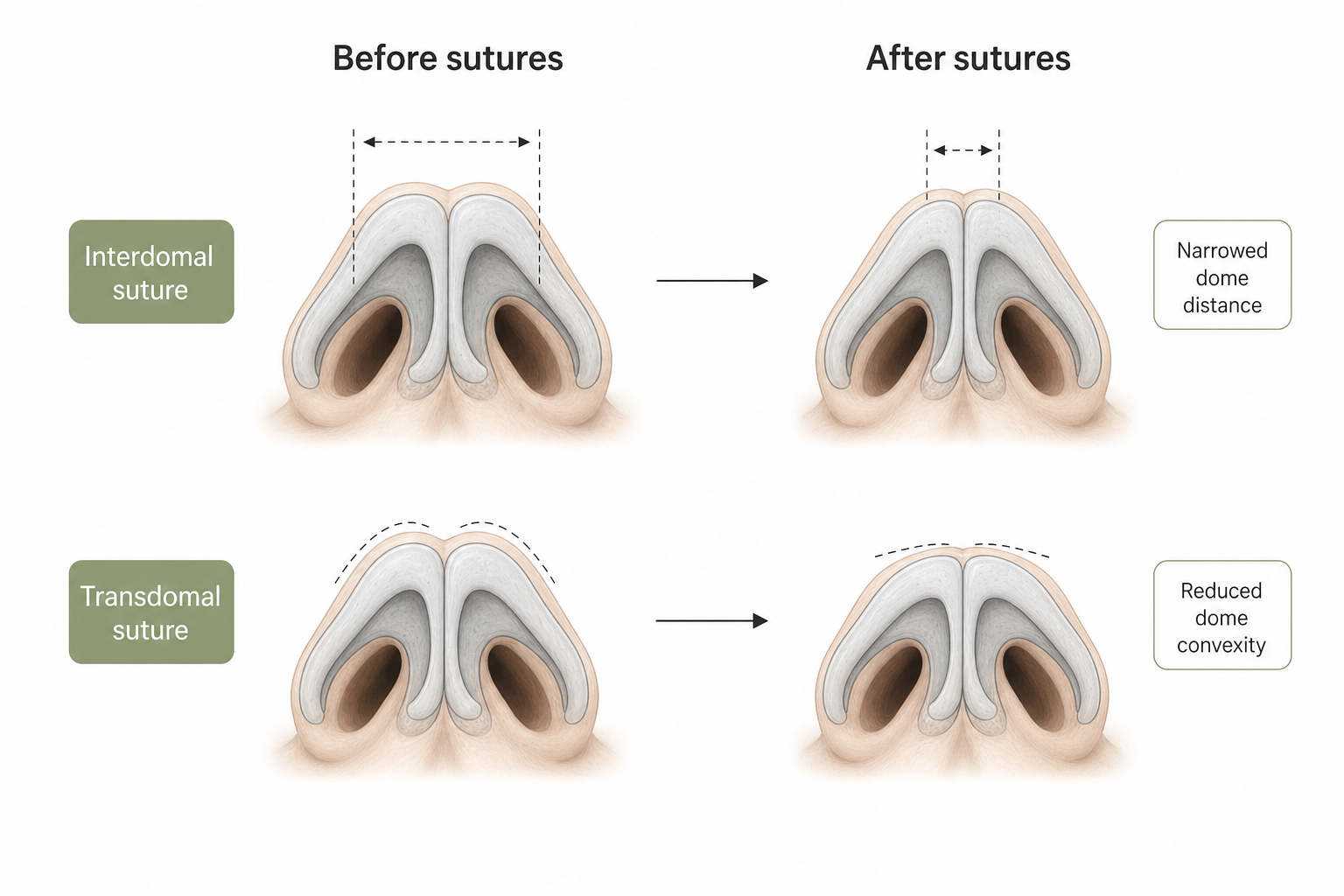
- Tip suturing techniques (interdomal and transdomal sutures): Interdomal sutures bring the two cartilage domes closer together, narrowing the distance between them and creating a more defined tip. Transdomal sutures reshape each individual dome, reducing convexity and improving tip projection. These suture techniques are the foundation of most bulbous tip corrections and, when used skillfully, can produce natural-looking results without removing cartilage.
- Lateral crural spanning sutures: These sutures are placed across the lower lateral cartilages to flatten their convexity and reduce the width of the tip. They are particularly useful when the cartilages themselves are wide or bowed.
- Cephalic trim: The cephalic (upper) portion of the lower lateral cartilage is carefully trimmed to reduce bulk and improve tip definition. Surgeons are conservative with this technique because removing too much cartilage can weaken the nasal valve — the internal airway structure — and cause breathing problems or a pinched appearance over time.
- Cartilage grafting: In some cases, adding structure improves definition more effectively than removing tissue. A columellar strut graft supports the tip and improves projection. A shield graft or onlay graft placed at the tip can create clearer tip-defining points. Cartilage grafting is particularly relevant in ethnic rhinoplasty cases where cartilage conservation is a priority and where the existing cartilage may be thinner or less supportive.
- Soft tissue defatting: Excess soft tissue between the cartilage domes can be carefully reduced to allow the refined cartilage framework to show through the skin envelope. This is especially relevant in patients with thick nasal skin.
The Thick Skin Limitation — An Honest Assessment
Thick nasal skin is one of the most important factors limiting surgical outcomes in bulbous tip rhinoplasty, and it deserves a frank discussion. When skin is thick and sebaceous, it does not contract tightly around a refined cartilage framework the way thinner skin does. A surgeon may perform technically excellent cartilage reshaping, yet the skin envelope may mask much of that refinement — particularly in the first year after surgery when swelling is still present within the skin itself.
Experienced surgeons manage this in several ways: by being conservative with cartilage removal to preserve structural support, by performing careful soft tissue defatting where appropriate, and by using post-operative intralesional steroid injections to reduce prolonged tip swelling and encourage skin contraction. Patients with thick nasal skin should expect a more modest degree of visible refinement than patients with thinner skin, and should discuss this honestly with their surgeon before proceeding. Realistic expectations are essential to satisfaction with the outcome.
Male vs. Female Refinement Goals
Aesthetic goals differ meaningfully between male and female patients, and a skilled surgeon will tailor the approach accordingly. Female patients typically seek a more refined, defined tip with improved tip-defining points while maintaining femininity. Male patients generally want structural improvement — a reduction in roundness and an increase in definition — without feminisation of the nose. This means preserving a slightly wider tip base, maintaining a straight or mildly convex nasal dorsum, and avoiding the upward rotation that can make a nose appear feminine. Surgeons experienced in male rhinoplasty will plan the degree of tip refinement and projection with these gender-specific aesthetic norms in mind.
Ethnic Rhinoplasty Considerations
Ethnic rhinoplasty refers to nasal surgery that respects and preserves a patient’s ethnic identity while addressing specific structural concerns. For patients of African, Asian, Hispanic, or Middle Eastern descent seeking bulbous nasal tip refinement, the surgical approach often differs from standard techniques used in patients with thinner skin and more defined cartilage.
In patients of African descent, the nasal tip is frequently associated with a wider nasal base, thicker skin, and more widely spaced lower lateral cartilages. Tip suturing techniques and careful soft tissue management are prioritised; aggressive cartilage removal is avoided to preserve structural integrity and ethnic character. In patients of Asian descent, the cartilage is often thinner and less supportive, meaning that cartilage grafting — including columellar strut grafts and tip grafts — may be needed to build definition rather than simply reduce bulk. In patients of Middle Eastern or Mediterranean descent, cartilage conservation combined with precise suture techniques tends to produce the most harmonious results.
The goal of ethnic rhinoplasty is not to impose a single aesthetic standard but to achieve facial harmony that is consistent with the patient’s own features and identity. Surgeons with specific experience in ethnic rhinoplasty are better placed to navigate these nuances.
Non-Surgical Options: What They Can and Cannot Do
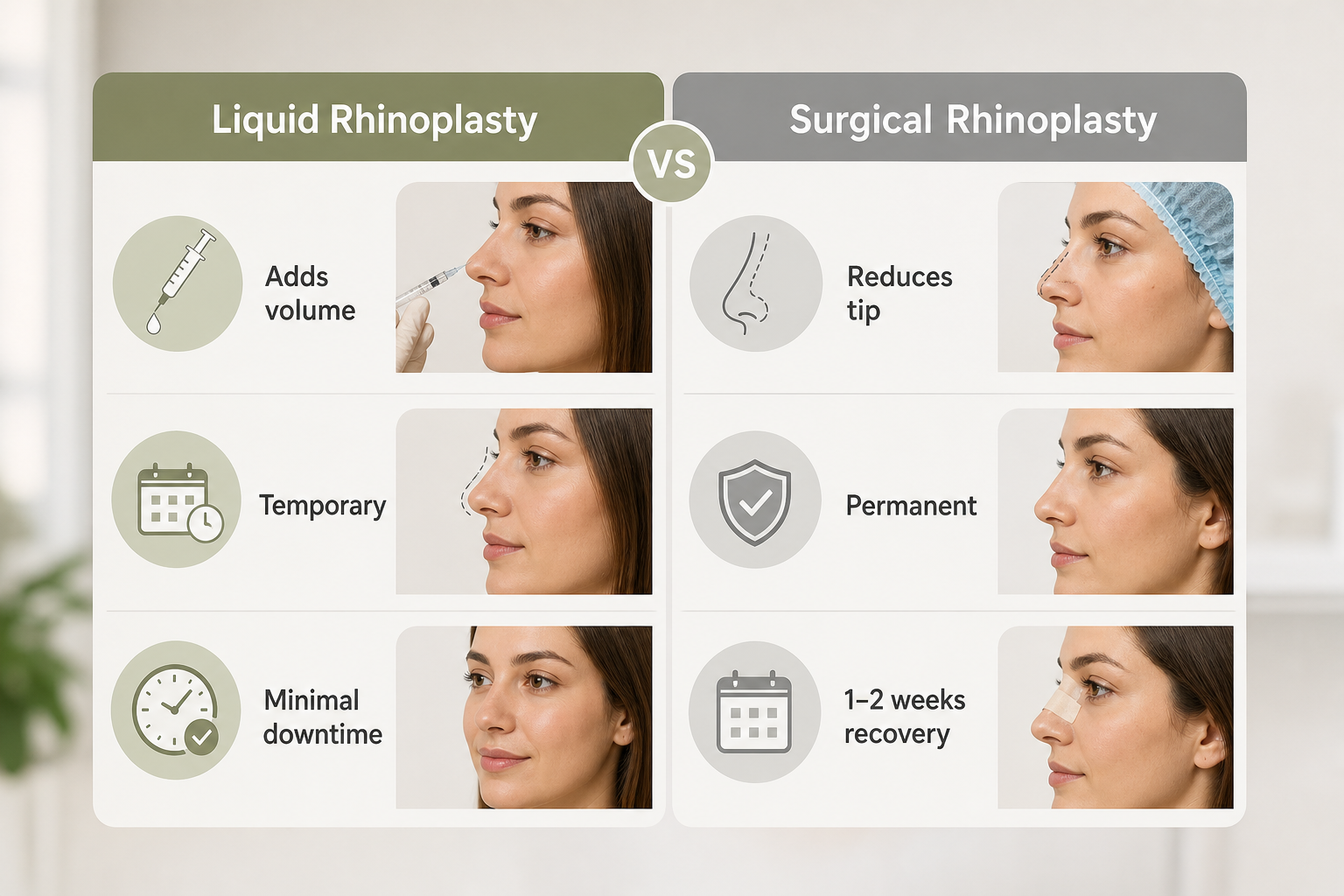
Non-surgical rhinoplasty — sometimes called liquid rhinoplasty — uses hyaluronic acid dermal fillers to alter the perceived shape of the nose without surgery. It is important to understand clearly what this approach can and cannot achieve for a bulbous nasal tip.
| Factor | Liquid Rhinoplasty (Fillers) | Surgical Tip Rhinoplasty |
|---|---|---|
| Can reduce tip width or volume | No — fillers add volume, they cannot reduce it | Yes — cartilage reshaping reduces tip bulk |
| Can improve nasal bridge definition | Yes — camouflage effect by raising the bridge | Yes — directly or as part of full rhinoplasty |
| Longevity | Approximately 9–18 months; requires repeat treatment | Permanent structural change |
| Downtime | Minimal — bruising and swelling possible for a few days | 1–2 weeks before returning to most activities |
| Anaesthesia | Topical numbing cream only | General anaesthesia or sedation |
| Reversibility | Hyaluronic acid fillers can be dissolved with hyaluronidase | Permanent; revision surgery possible but complex |
| Cost (approximate) | Lower upfront; ongoing maintenance costs accumulate | Higher upfront; one-time cost for permanent result |
| Suitable for bulbous tip reduction | No — may worsen appearance by adding volume to tip | Yes — directly addresses structural cause |
Liquid rhinoplasty can be useful for camouflaging a dorsal hump or creating the illusion of a straighter profile, which may indirectly make the tip appear slightly more proportionate. However, injecting filler into or around a bulbous nasal tip will typically make it appear larger, not smaller. Patients seeking genuine tip reduction should not expect non-surgical rhinoplasty to deliver that outcome. Botulinum toxin injections into the depressor septi muscle can subtly lift a drooping tip, but again, this does not address tip width or roundness.
Makeup contouring using bronzer and highlighter can create a visual illusion of a slimmer nose and is a useful non-permanent option for those not ready for or not suitable for surgery. It produces no structural change and requires daily application.
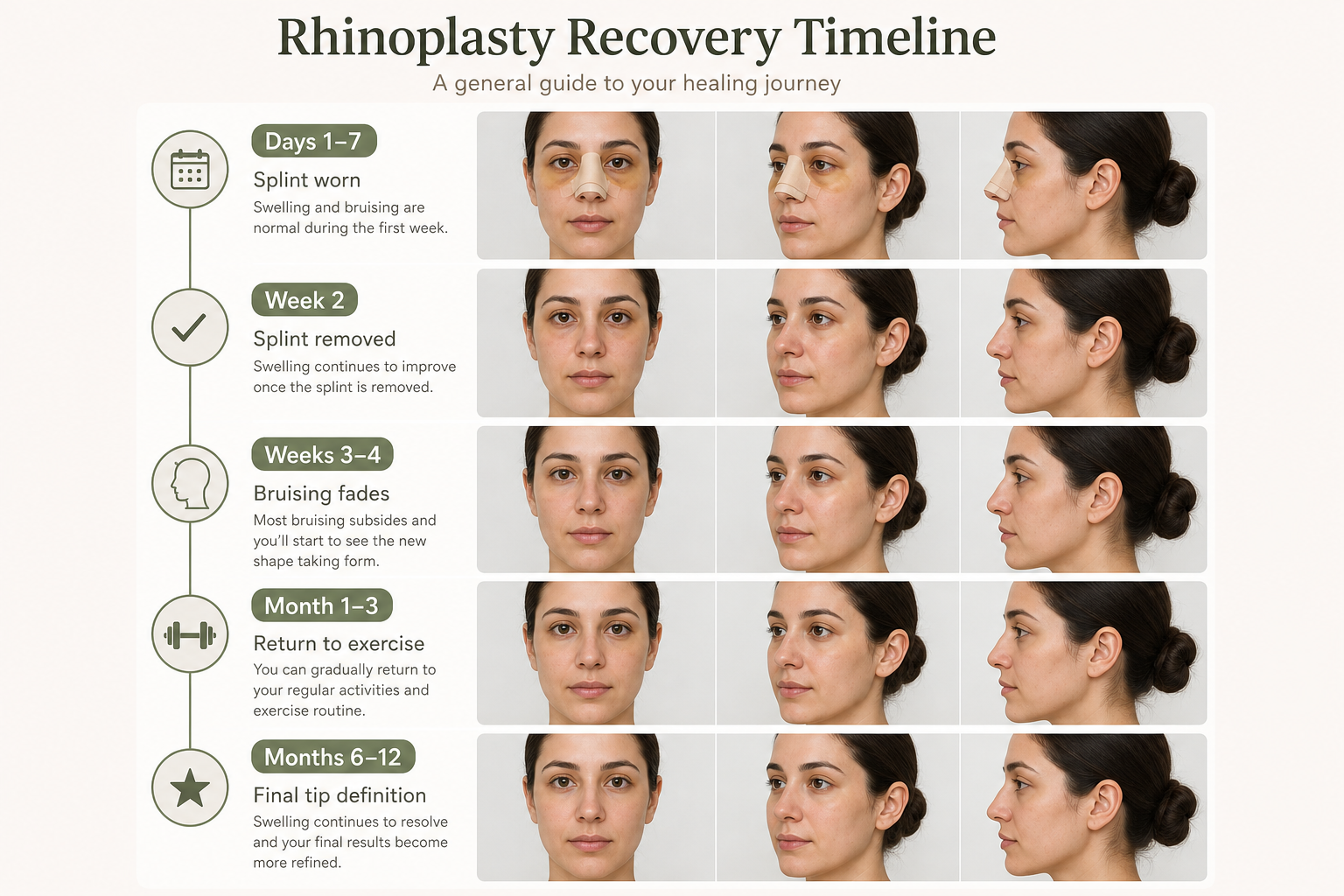
Recovery: A Week-by-Week Guide
Understanding the recovery timeline helps patients plan realistically and avoid unnecessary concern about normal post-operative changes.
- Days 1–7: A nasal splint or cast is worn externally to protect the reshaped cartilage and support healing. Bruising around the eyes and significant tip swelling are expected. Most patients rest at home during this period. Pain is generally manageable with prescribed or over-the-counter analgesia.
- Week 2: The splint is removed at the follow-up appointment. Bruising fades considerably. Most patients feel comfortable returning to desk-based work and light daily activities, though the nose will still appear swollen and the final shape will not yet be visible.
- Weeks 3–4: The majority of visible bruising has resolved. Swelling continues to reduce, and the nose begins to look more like the intended result, though tip swelling persists longer than swelling elsewhere on the nose.
- Month 1–3: Most social swelling has resolved. Patients can typically return to non-contact exercise after four to six weeks, subject to their surgeon’s guidance. Strenuous activity and contact sports should be avoided for at least six weeks.
- Months 6–12: The nasal tip is the last area to fully refine because the skin and soft tissue in this region take the longest to contract and settle. Final tip definition — particularly in patients with thick nasal skin — may not be fully apparent until twelve months after surgery. Patience during this period is important.
Who May Be a Suitable Candidate?
Bulbous tip rhinoplasty may be appropriate for patients who:
- Have completed facial growth (typically females aged 15–17 and males aged 17–18 or older);
- Are in good general physical and psychological health;
- Have realistic expectations about the degree of improvement possible given their skin thickness and anatomy;
- Are non-smokers or willing to stop smoking well in advance of surgery, as smoking impairs wound healing;
- Do not have uncontrolled medical conditions that increase anaesthetic or surgical risk;
- Are motivated by personal preference rather than external pressure.
Patients who have previously undergone rhinoplasty and are unhappy with the result — for example, if the tip remains bulbous or has become over-resected and pinched — may be candidates for revision rhinoplasty. Revision surgery is technically more complex than primary rhinoplasty because scar tissue alters the anatomy and cartilage may have been removed. Surgeons who specialise in revision rhinoplasty use cartilage grafting extensively to rebuild structure and correct previous over-correction.
How Much Does Bulbous Tip Rhinoplasty Cost?
Cost varies considerably depending on the surgeon’s experience and reputation, the geographic location of the practice, the complexity of the case, and whether the procedure is tip-only or involves the full nose. In the United States, the American Society of Plastic Surgeons reports an average surgeon fee of approximately $7,637 for rhinoplasty, though total costs including anaesthesia and facility fees typically range from around $5,000 to $20,000 or more for complex cases. Tip-only tipplasty procedures tend to fall toward the lower end of this range. Cosmetic rhinoplasty is not typically covered by health insurance unless a functional component — such as a deviated septum affecting the nasal valve and breathing — is also being corrected.
Choosing a Surgeon for Bulbous Tip Correction
The nasal tip is the most technically demanding area of rhinoplasty. Selecting a surgeon with specific experience in tip refinement — not just general rhinoplasty — significantly influences the quality and naturalness of the outcome. When researching surgeons, consider the following:
- Board certification: Look for certification from a recognised board in facial plastic surgery or plastic surgery. In the United States, the American Board of Facial Plastic and Reconstructive Surgery (ABFPRS) and the American Board of Plastic Surgery (ABPS) are the relevant bodies.
- Tip-specific portfolio: Ask to see before and after photos specifically of bulbous tip cases, ideally in patients with a similar skin type and ethnic background to your own.
- Honest discussion of limitations: A trustworthy surgeon will discuss the impact of your skin thickness on the likely outcome rather than promising a dramatic transformation.
- Nasal valve awareness: Ask whether the planned technique preserves nasal airway function. Aggressive cephalic trim or over-resection of the lower lateral cartilage can compromise the nasal valve and cause breathing difficulties.
- Revision rhinoplasty experience: If you have had previous nasal surgery, ensure the surgeon has specific experience managing scar tissue and cartilage grafting in revision cases.
Frequently Asked Questions
Can nose exercises or home devices fix a bulbous nose?
No. The shape of the nasal tip is determined by cartilage, soft tissue, and skin — none of which can be reshaped through exercise, massage, or external devices. Cartilage does not respond to mechanical pressure in the way muscle does. Claims made by nose-reshaping devices or exercises are not supported by clinical evidence. If you are concerned about the shape of your nose, a consultation with a qualified surgeon is the appropriate starting point.
Will rhinoplasty affect my ability to breathe?
When performed by an experienced surgeon, nasal tip refinement should not impair breathing and may improve it if a structural issue such as a deviated septum is also addressed. However, aggressive removal of lower lateral cartilage — particularly through excessive cephalic trim — can weaken the nasal valve and cause airflow restriction. This is one reason why conservative, structure-preserving techniques are preferred by experienced surgeons.
How long do the results of bulbous tip rhinoplasty last?
Surgical rhinoplasty produces permanent structural changes to the cartilage framework. The refined shape is lasting, though the nose continues to age naturally over decades as skin and soft tissue change with time. Non-surgical rhinoplasty with hyaluronic acid fillers is temporary, typically lasting nine to eighteen months before the filler is gradually absorbed.
I have thick skin — is surgery still worth considering?
Thick nasal skin does limit the degree of visible refinement achievable through surgery, but it does not make surgery futile. Many patients with thick skin achieve meaningful improvement in tip definition and facial balance. The key is having a detailed conversation with your surgeon about realistic expectations before proceeding. Post-operative steroid injections can help manage prolonged swelling in thick-skinned patients and encourage better skin contraction over the cartilage framework.
What is the difference between tipplasty and full rhinoplasty?
Tipplasty focuses exclusively on reshaping the lower third of the nose — the tip — without altering the nasal bridge, dorsum, or overall nasal length. It is suitable for patients whose concern is limited to tip roundness or definition. Full rhinoplasty addresses the entire nose, including the bridge, tip, and sometimes the nostrils. Tipplasty generally involves shorter operating time, a somewhat faster recovery, and lower cost, though the appropriate choice depends entirely on the individual’s anatomy and goals.
Can fillers make a bulbous nose look worse?
Yes, in some cases. Because dermal fillers add volume rather than remove it, injecting filler directly into or around a bulbous nasal tip can make the tip appear larger. Fillers are most useful for camouflaging a dorsal hump or improving bridge definition, which may create a more balanced profile — but they are not a substitute for surgical tip reduction and should not be used with that expectation.
Is Bulbous Nose Refinement the Right Decision for You?
Bulbous nasal tip refinement — whether through surgical rhinoplasty, tipplasty, or a non-surgical approach — is a meaningful decision that deserves careful consideration. Surgery offers the only permanent structural solution, and when performed by a board-certified facial plastic surgeon with specific tip refinement experience, it can produce natural-looking results that improve facial harmony without erasing individual character. The degree of improvement depends significantly on skin thickness, the underlying cartilage anatomy, and the techniques used — factors that a thorough pre-operative consultation should address honestly.
Non-surgical options such as liquid rhinoplasty have a role in profile camouflage but cannot reduce tip width or volume, and patients should approach these with clear expectations about what is and is not achievable. Rhinophyma requires a separate diagnostic and treatment pathway entirely distinct from structural rhinoplasty.
If you are considering nasal tip refinement, the most useful first step is a consultation with a surgeon who specialises in this area, who will examine your skin thickness, cartilage anatomy, and overall facial proportions, and who will give you an honest assessment of what surgery can realistically achieve for your specific anatomy. That conversation — rather than before-and-after photos alone — is the foundation of a well-informed decision.
