
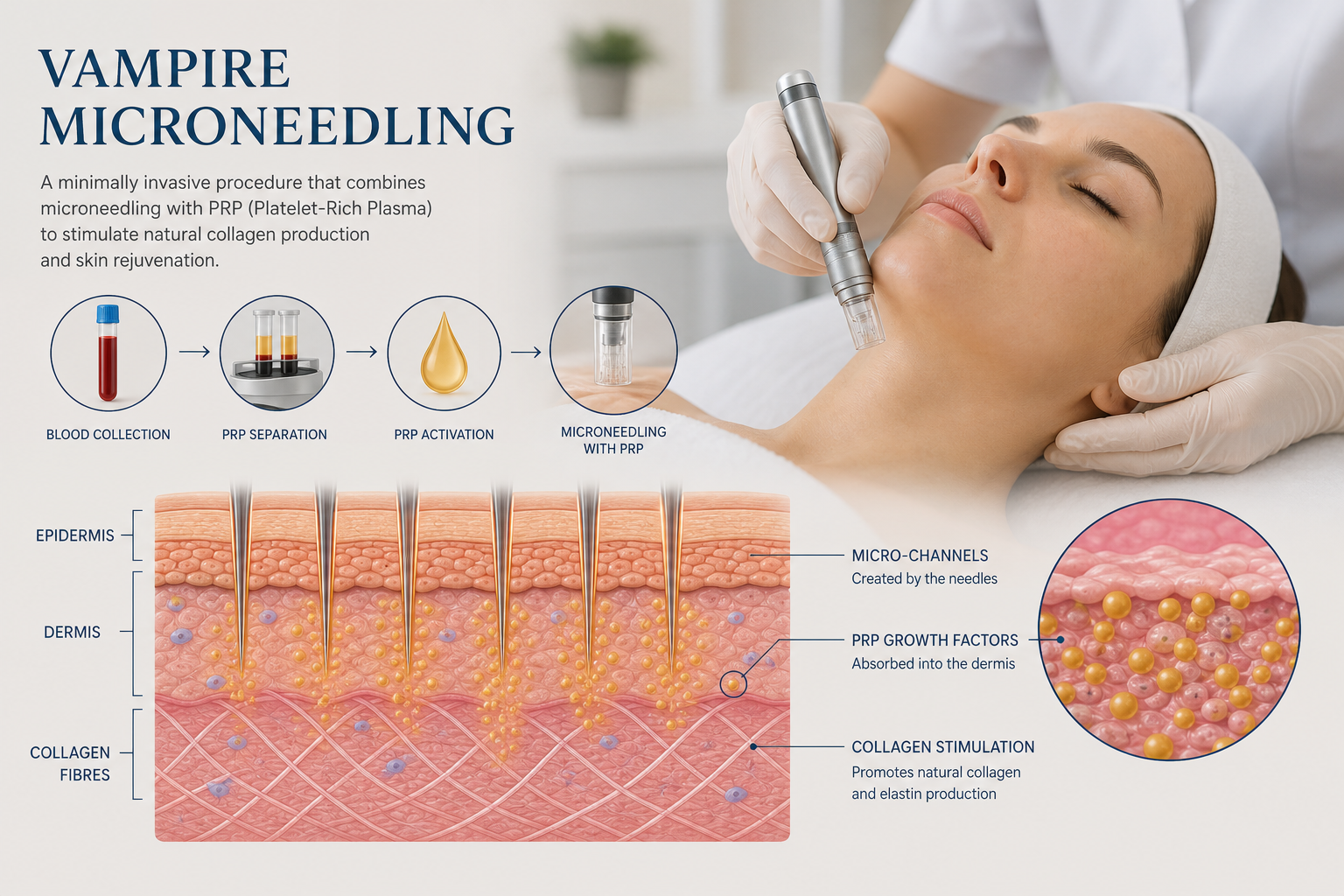

Vampire microneedling — more formally known as PRP microneedling — combines two established skin rejuvenation techniques into a single treatment. A small amount of your own blood is processed to concentrate its growth factors, and the resulting platelet-rich plasma is applied during and after a microneedling session to amplify the skin’s natural healing response. The approach has attracted significant interest for acne scarring, fine lines, and uneven skin texture, but the evidence behind it is more nuanced than most promotional content suggests. This article explains how the treatment works, what the research actually shows, who may benefit, and what to consider before booking a consultation.
Key Takeaways
- Vampire microneedling pairs collagen induction therapy with autologous platelet-rich plasma (PRP) to support skin remodelling through the body’s own growth factors.
- Clinical evidence is strongest for acne scarring; results for skin laxity and wrinkle reduction are more variable, and a 2024 randomised controlled trial found limited additional benefit over microneedling alone for those concerns.
- The treatment is generally considered suitable for all Fitzpatrick skin types, which makes it a useful option for patients who are not ideal candidates for ablative laser resurfacing.
- Typical costs range from £300 to £900 per session in the UK, with most providers recommending a course of three to four sessions.
- Choosing a licensed, medically trained provider who follows strict sterile technique is essential — not optional — for both safety and outcome quality.
What Is Vampire Microneedling?
The term “vampire facial” was popularised in the early 2010s and refers to the striking appearance of PRP — a golden-amber plasma — being spread across a freshly microneedled face. Clinically, the procedure is described as microneedling with PRP or PRP microneedling, and it builds on two independently validated concepts. Microneedling, also called collagen induction therapy, uses a device fitted with fine needles to create controlled micro-injuries in the skin’s surface. These micropunctures trigger a wound healing cascade that stimulates fibroblasts in the dermal layer to produce new collagen and elastin. PRP is prepared from the patient’s own blood, centrifuged to separate and concentrate the platelet fraction, which is rich in growth factors including platelet-derived growth factor (PDGF) and transforming growth factor-beta (TGF-β). When PRP is applied topically during microneedling, the micro-channels created by the needles allow the plasma to penetrate beyond the skin’s surface barrier, delivering those growth factors directly to the dermis where remodelling occurs.
The “vampire” label is colloquial and refers only to the use of blood-derived material. The procedure itself is minimally invasive, performed in a clinical setting, and uses autologous blood — meaning the plasma comes from the patient’s own body, eliminating the risk of allergic reaction to the PRP component. It is distinct from the vampire facelift, which involves injecting PRP subdermally alongside hyaluronic acid filler to restore facial volume; vampire microneedling addresses surface-level skin quality rather than structural volume loss.
How the Procedure Works: Step by Step
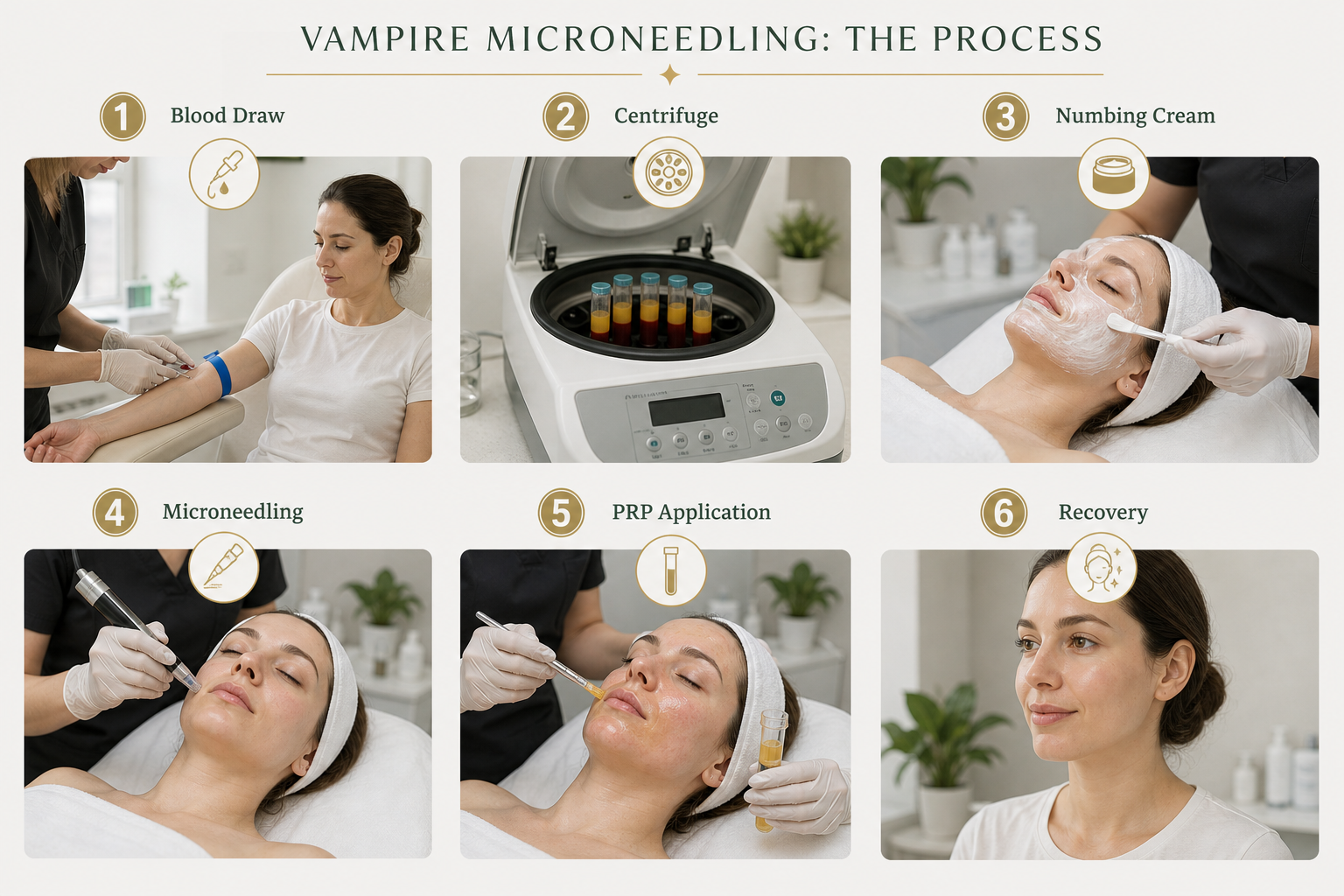
Understanding the sequence helps set realistic expectations about the appointment itself, which typically takes 60 to 90 minutes from start to finish.
- Blood draw: A small volume of blood — usually 10 to 30 ml — is drawn from the patient’s arm, similar to a routine blood test.
- Centrifugation: The blood sample is placed in a centrifuge, which spins at high speed to separate its components. Red blood cells settle at the bottom, platelet-poor plasma rises to the top, and the platelet-rich plasma layer sits between them. This concentrated fraction is extracted for use.
- Skin preparation: A topical anesthetic — numbing cream — is applied to the treatment area and left for approximately 30 to 45 minutes to minimise discomfort during needling.
- Microneedling: A medical-grade device such as a SkinPen or similar automated pen is passed across the skin in a systematic pattern. Needle depth is adjusted by the practitioner — typically between 0.5 mm and 2.5 mm depending on the treatment area and concern being addressed. Deeper settings are used for acne scarring; shallower settings suit general skin texture and tone refinement.
- PRP application: The prepared PRP is applied to the skin during the microneedling pass and again immediately after, allowing it to absorb through the open micro-channels while they remain patent.
- Post-treatment care: The skin is cleansed gently, and the practitioner will advise on immediate aftercare. Redness and mild swelling are expected and typically resolve within 24 to 72 hours.
The quality of the PRP preparation matters more than many patients realise. Platelet concentration, the centrifuge protocol used, and whether the PRP is activated before application can all influence the growth factor yield. Not all clinics use the same preparation systems, and this variability is one reason outcomes can differ between providers even when the stated procedure is identical.
What Vampire Microneedling Can Treat
PRP microneedling is used across a range of skin concerns, though the strength of evidence varies by indication.
- Acne scarring: This is the indication with the most consistent clinical support. Multiple split-face studies and a 2021 meta-analysis published in the Journal of Cosmetic Dermatology found that microneedling combined with PRP produced significantly greater improvement in rolling and boxcar acne scars compared with microneedling alone. The addition of PRP appeared to accelerate remodelling of the dermal layer.
- Fine lines and wrinkles: Results are more variable here. Some studies report modest improvement in superficial lines, particularly around the eyes and mouth. However, a 2024 randomised controlled trial found limited statistically significant benefit of adding PRP to microneedling for skin laxity and wrinkle depth compared with microneedling alone. This does not mean the combination is ineffective for all patients, but it does suggest that expectations for anti-ageing outcomes should be measured rather than ambitious.
- Skin texture and tone: Patients frequently report improvements in overall skin smoothness, pore size, and radiance. These outcomes are harder to quantify in clinical trials but are consistently noted in patient-reported outcome data.
- Hyperpigmentation and sun damage: The combination may help with mild pigmentation irregularities by promoting cellular turnover, though it is not a first-line treatment for significant melasma or post-inflammatory hyperpigmentation.
- Skin firmness and crepey texture: Collagen and elastin production stimulated by the treatment may improve mild skin laxity over a course of sessions, though it will not replicate the structural lift achievable with surgical or energy-based interventions.
- Hair restoration: Scalp PRP microneedling is a recognised application for androgenetic alopecia. A peer-reviewed study (PMC9670661) found that PRP combined with microneedling produced greater hair density improvements than PRP alone, suggesting the delivery method enhances uptake of growth factors into hair follicles.
It is worth being direct about what vampire microneedling will not do. It will not replace dermal fillers for volume loss, will not correct deep expression lines driven by repeated muscle movement, and will not produce the degree of skin tightening achievable with radiofrequency microneedling or surgical procedures. Patients seeking significant structural change are likely to need a different or complementary approach.
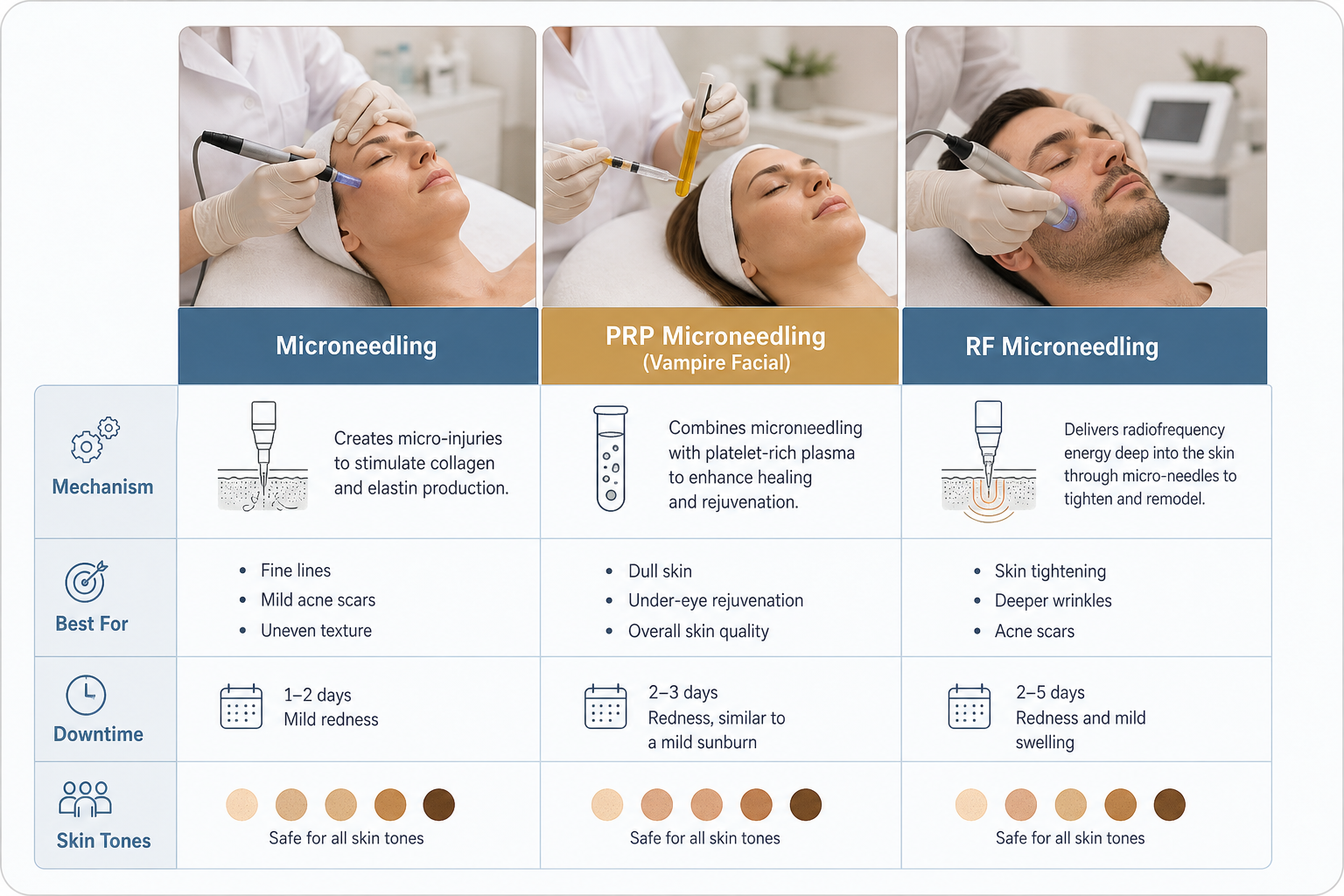
Vampire Microneedling vs. Microneedling Alone vs. RF Microneedling
| Feature | Microneedling Alone | Vampire Microneedling (PRP) | Radiofrequency Microneedling |
|---|---|---|---|
| Mechanism | Controlled micro-injuries stimulate collagen | Micro-injuries plus PRP growth factors | Micro-injuries plus thermal RF energy in dermis |
| Best evidence for | Texture, pores, mild scarring | Acne scarring, texture, hair loss | Skin laxity, deeper wrinkles, tightening |
| Downtime | 1–3 days redness | 1–3 days redness, possible pinpoint bruising | 3–5 days, more pronounced swelling |
| Suitable for darker skin tones | Generally yes | Generally yes | Depends on device settings and provider experience |
| Typical cost per session (UK) | £150–£400 | £300–£900 | £400–£1,200 |
| Sessions typically recommended | 3–6 | 3–4 | 2–4 |
| Allergic reaction risk from treatment material | Minimal | Minimal (autologous blood) | Minimal |
Radiofrequency microneedling devices such as Morpheus8 deliver thermal energy through insulated needles into the deeper dermis, which produces a more pronounced skin tightening effect than standard microneedling or PRP microneedling. Some clinics offer RF microneedling combined with PRP as a further enhancement, though evidence for this triple combination remains limited. For patients whose primary concern is skin laxity rather than scarring or texture, RF microneedling may be a more appropriate starting point for discussion with a practitioner.
Vampire Microneedling vs. the Vampire Facelift
These two procedures share the PRP component but differ fundamentally in what they address. Vampire microneedling is a surface-level skin quality treatment — it works on texture, tone, scarring, and mild lines by stimulating collagen remodelling in the dermis. The vampire facelift, by contrast, involves injecting PRP subdermally, often alongside hyaluronic acid filler, to restore facial volume and contour. It is a structural procedure aimed at hollowing, sagging, and volume loss rather than skin surface quality. A patient with good facial volume but poor skin texture may be well suited to vampire microneedling; a patient with significant volume loss and facial deflation would be better served by a consultation about the vampire facelift or conventional filler approaches. The two procedures can be used together in some cases, but they are not interchangeable.
Who May Be Suitable — and Who May Not
PRP microneedling is generally considered suitable for adults across all Fitzpatrick skin types, which is a meaningful advantage over ablative laser resurfacing. Ablative lasers carry a higher risk of post-inflammatory hyperpigmentation in patients with medium to dark skin tones (Fitzpatrick types IV–VI), whereas PRP microneedling does not rely on heat energy and carries a lower pigmentation risk when performed correctly. This makes it a particularly relevant option for patients of colour who want to address acne scarring or uneven skin texture without the risks associated with laser treatments.
Patients who may be suitable include those in good general health with realistic expectations, who are not pregnant or breastfeeding, and who have concerns such as acne scarring, uneven skin texture and tone, mild skin laxity, or dull complexion. Good overall health supports the wound healing response that underpins the treatment’s mechanism.
Contraindications and factors that may make the treatment unsuitable include:
- Active acne breakouts or active skin infection in the treatment area
- Blood clotting disorders or use of anticoagulant medications
- Active eczema, psoriasis, or rosacea in the treatment area
- Pregnancy or breastfeeding
- History of keloid scarring
- Active cold sores (herpes simplex) — treatment may trigger a flare-up; antiviral prophylaxis is sometimes prescribed for susceptible patients
- Certain autoimmune conditions or immunosuppressive medications that may impair healing
- Thrombocytopenia or other platelet disorders that would affect PRP quality
A thorough medical consultation before treatment is essential to identify any of these factors. A qualified practitioner will review your medical history, current medications, and skin condition before proceeding.
Risks, Side Effects, and Safety Considerations
Vampire microneedling is minimally invasive, but it is not without risk. Common and expected side effects include redness, mild swelling, tightness, and pinpoint bleeding immediately after treatment. These typically resolve within one to three days. Some patients experience temporary flaking or dryness during the healing phase, and a small number may notice a temporary acne flare-up as the skin adjusts.
Less common but possible adverse effects include bruising at the treatment site, milia (small keratin cysts), and post-inflammatory hyperpigmentation — particularly if the skin is exposed to UV radiation during the healing period. Infection is a risk with any procedure that breaches the skin barrier, which is why sterile technique is non-negotiable. The practitioner must use single-use sterile needle cartridges, maintain a sterile field, and follow appropriate infection control protocols throughout.
A serious safety concern worth addressing directly: a 2018 CDC investigation linked HIV transmission to vampire facial procedures performed at an unlicensed spa in New Mexico. The infections were attributed to the reuse of non-sterile equipment, not to the procedure itself. This case underscores why provider credentials and sterile protocol matter enormously. When vetting a provider, ask specifically about their qualifications, the sterile technique they use, whether needle cartridges are single-use, and how PRP is prepared and handled. A reputable clinic will answer these questions without hesitation. Avoid any provider who cannot clearly explain their infection control procedures or who operates outside a regulated clinical environment.
Because PRP is derived from the patient’s own autologous blood, there is no risk of allergic reaction to the PRP itself — a meaningful safety advantage over treatments that use synthetic or animal-derived materials.
Aftercare and Recovery
Post-treatment aftercare directly influences both the safety and the outcome of vampire microneedling. The micro-channels created during treatment remain open for several hours, making the skin temporarily more permeable and more vulnerable to irritation and infection.
- First 24 hours: Avoid applying makeup, active skincare ingredients, or anything other than a gentle, fragrance-free cleanser and a plain moisturiser. Do not touch the face unnecessarily.
- Sun protection: Apply a broad-spectrum SPF every morning without exception during the recovery period and beyond. UV exposure during healing significantly increases the risk of hyperpigmentation. This is not optional.
- Avoid heat and sweat: Saunas, steam rooms, hot tubs, and strenuous exercise should be avoided for at least 24 to 48 hours, and swimming pools for approximately one week, to reduce infection risk and prevent excessive inflammation.
- Skincare ingredients to pause: Retinoids, AHAs, BHAs, vitamin C serums, and other active exfoliants should be avoided for at least one week before and after treatment. These can cause irritation on compromised skin and may interfere with healing.
- NSAIDs and blood thinners: Ibuprofen and aspirin should ideally be avoided in the days before treatment as they can increase bruising. Discuss any regular medications with your practitioner at consultation.
- Hydration: Keeping the skin well hydrated supports the healing process. Use a gentle, non-comedogenic moisturiser as directed.
Results: What to Expect and When
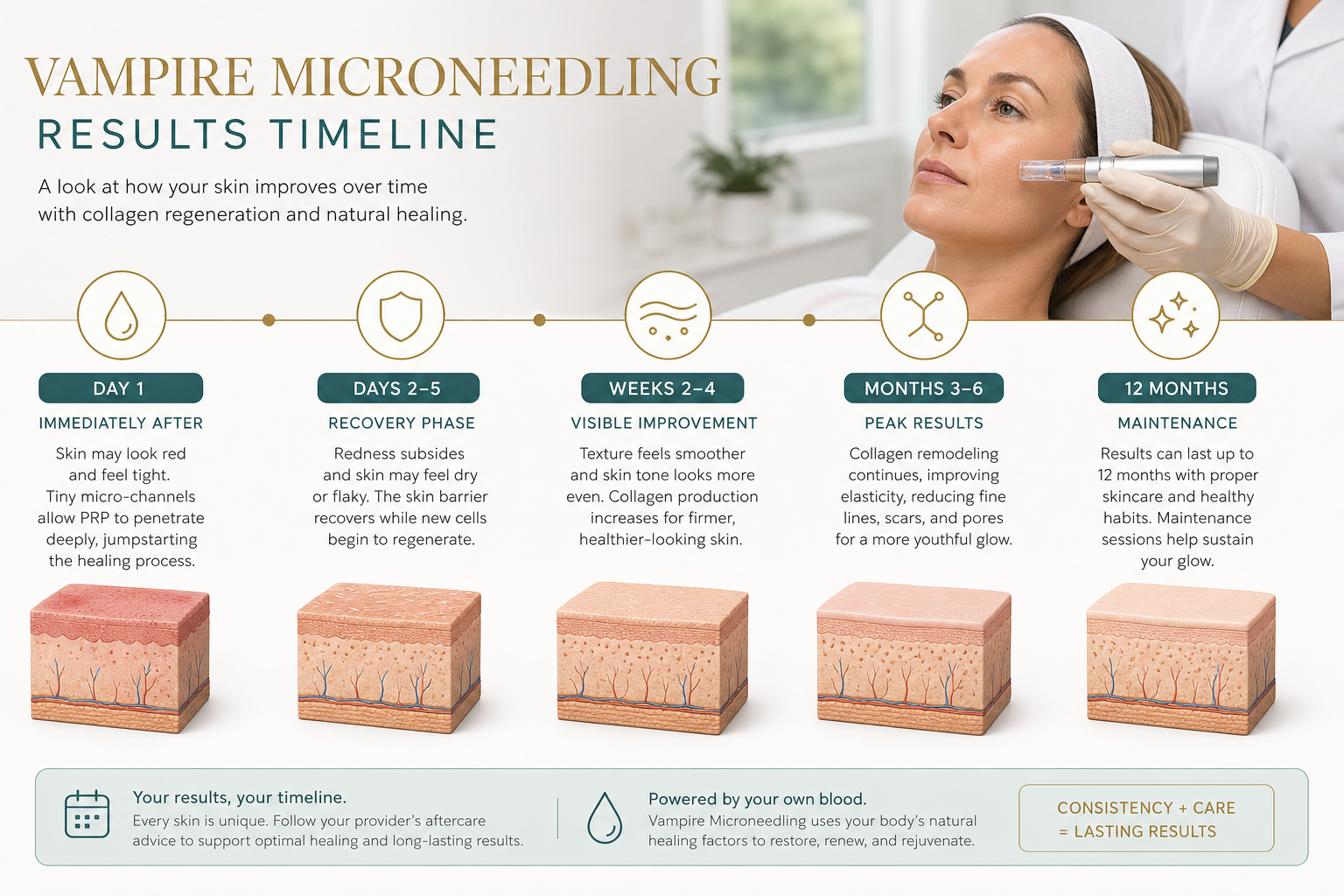
Results from vampire microneedling develop gradually because the mechanism relies on the body’s own collagen remodelling process, which takes time. A realistic timeline looks like this:
- Immediately after treatment: The skin may appear brighter due to increased blood flow, but redness and mild swelling are also present. This is not a reflection of final results.
- Days 2–5: Redness subsides; some patients notice mild flaking or tightness as the skin heals.
- Weeks 2–4: Early improvements in skin texture and tone may become visible as initial collagen synthesis begins.
- Months 3–6: Peak results are typically seen at this stage as neocollagenesis — the formation of new collagen — matures. Acne scar improvement and skin firmness changes are most apparent at this point.
- Longevity: Results from a full course of treatment can last 12 months or longer, depending on the individual’s skin, age, lifestyle, and sun exposure. Maintenance sessions every six to twelve months are commonly recommended to sustain improvements.
Most providers recommend a course of three to four sessions spaced four to six weeks apart for optimal results. A single session will produce some improvement, but the cumulative effect of multiple treatments is generally more significant, particularly for acne scarring.
PRF: An Emerging Alternative to PRP
Platelet-rich fibrin (PRF) is an evolution of PRP that is gaining traction in aesthetic medicine. Unlike PRP, PRF is prepared without anticoagulants, which allows the platelets to form a fibrin matrix — a natural scaffold that releases growth factors more slowly and over a longer period. Some practitioners argue that PRF achieves a higher concentration of growth factors and white blood cells than standard PRP, and that the sustained release may support more prolonged collagen stimulation. PRF is also prepared at a lower centrifuge speed, which is thought to preserve a greater proportion of the cellular components.
Clinical evidence comparing PRF and PRP in microneedling combinations is still developing, and it is too early to conclude that one is definitively superior to the other for all indications. If a clinic offers PRF microneedling, it is reasonable to ask the practitioner to explain the specific preparation method and what evidence they are drawing on for their recommendation.
Cost and Value Considerations
Vampire microneedling typically costs between £300 and £900 per session in the UK, compared with approximately £150 to £400 for standard microneedling without PRP. The additional cost reflects the blood draw, centrifuge processing, and consumables involved in PRP preparation. For a full course of three to four sessions, the total investment ranges from roughly £900 to £3,600 depending on the clinic, location, and device used.
This is not covered by health insurance as it is a cosmetic procedure. When evaluating cost, it is worth considering the specific concern being treated. For acne scarring, where the evidence for PRP addition is strongest, the premium over standard microneedling may be justified. For general anti-ageing concerns where the evidence is more mixed, the cost-benefit calculation is less straightforward, and a practitioner may reasonably suggest that standard microneedling or an alternative approach offers comparable value.
Package pricing is common and typically reduces the per-session cost. Be cautious of very low-cost providers, as the quality of PRP preparation, device maintenance, and sterile protocol are areas where corners can be cut in ways that are not visible to the patient.
Frequently Asked Questions
Is vampire microneedling painful?
Most patients find the procedure tolerable with numbing cream applied beforehand. Some areas — particularly around the nose and forehead — may feel more sensitive. The sensation is often described as a mild scratching or vibrating feeling. Discomfort varies with needle depth; deeper settings used for acne scarring may feel more intense than superficial passes for general skin texture.
How is vampire microneedling different from a vampire facelift?
Vampire microneedling treats skin surface quality — texture, tone, scarring, and fine lines — by delivering PRP through micro-channels created by needling. The vampire facelift involves injecting PRP (often with hyaluronic acid filler) beneath the skin to restore volume and facial contour. They address different concerns and are not interchangeable, though they can sometimes be used together.
Can vampire microneedling be used on all skin tones?
Yes, PRP microneedling is generally considered suitable for all Fitzpatrick skin types. Because it does not use heat energy, it carries a lower risk of post-inflammatory hyperpigmentation than ablative laser treatments, making it a relevant option for patients with medium to dark skin tones.
How many sessions will I need?
Most providers recommend three to four sessions spaced four to six weeks apart for a primary course of treatment. Maintenance sessions every six to twelve months may help sustain results. The exact number depends on the concern being treated, skin condition, and individual response.
Does the PRP come from my own blood?
Yes. PRP is prepared from a small sample of the patient’s own autologous blood drawn at the start of the appointment. Because it is derived from your own body, there is no risk of allergic reaction to the PRP itself.
What should I avoid before treatment?
Practitioners typically advise avoiding retinoids and active exfoliants for at least one week before treatment, stopping NSAIDs and aspirin a few days beforehand if medically safe to do so, and arriving without makeup. Disclose all medications and supplements at your consultation, as some may affect bleeding or healing.
Are the results permanent?
Results are not permanent. The collagen and elastin produced through the treatment will naturally break down over time as part of the ageing process. Most patients find that results from a full course last approximately 12 months, after which maintenance sessions can help sustain improvements.
Is Vampire Microneedling Worth Considering for Your Skin Concerns?
Vampire microneedling is a well-reasoned combination treatment with a sound biological rationale and a meaningful evidence base — particularly for acne scarring, where the addition of PRP to collagen induction therapy has shown consistent benefit in clinical studies. For broader anti-ageing goals such as skin laxity and wrinkle reduction, the evidence is more mixed, and patients should approach those expectations with appropriate realism rather than relying on marketing claims.
The treatment’s suitability across all skin types is a genuine clinical advantage, and its autologous nature removes the allergy risk associated with synthetic injectables. That said, outcomes depend heavily on provider skill, PRP preparation quality, and adherence to sterile technique — factors that vary considerably between clinics. Choosing a medically qualified, regulated practitioner who can explain their protocol clearly is as important as the treatment itself.
If you are considering vampire microneedling for acne scarring, skin texture, or early signs of ageing, a consultation with a qualified aesthetic practitioner is the appropriate next step. A thorough assessment of your skin, medical history, and goals will help determine whether this treatment, a course of standard microneedling, radiofrequency microneedling, or a different approach is most likely to deliver meaningful results for your specific concerns.
