
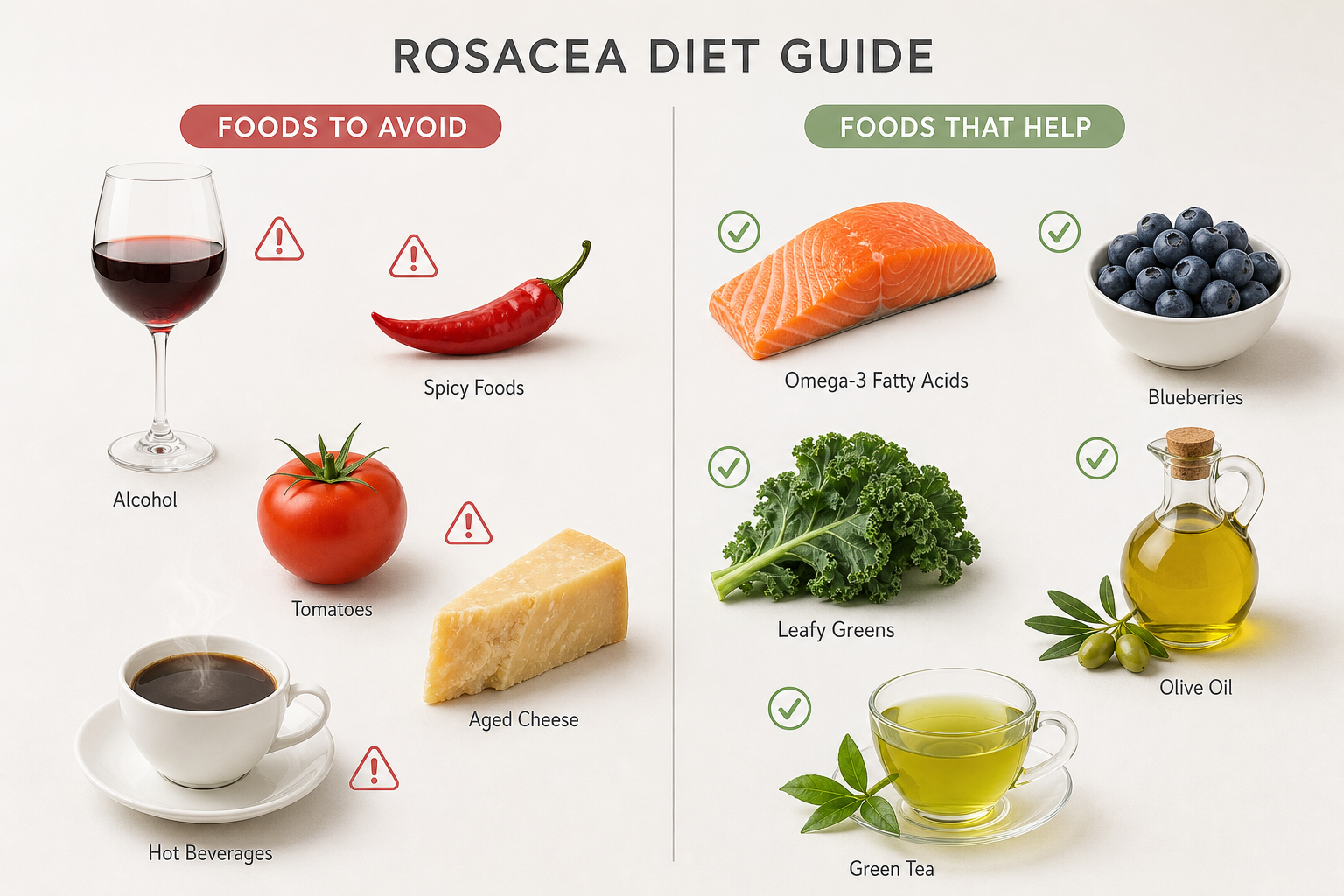

Diet does not cause rosacea, but for many people it plays a meaningful role in how often and how severely flare-ups occur. Research from the National Rosacea Society found that certain foods and beverages consistently provoke facial flushing and skin redness in a significant proportion of rosacea patients — yet the specific triggers vary considerably from person to person. This guide explains which foods are most commonly reported to worsen rosacea and why, which foods may support calmer skin, and how to identify your own personal pattern through a structured elimination diet approach.
Key Takeaways
- Alcohol, spicy foods, hot beverages, and high-histamine foods are among the most frequently reported dietary triggers for rosacea flare-ups.
- Different foods trigger flares through different mechanisms — vasodilation, TRPV1 receptor activation, histamine release, and gut dysbiosis each play distinct roles.
- An anti-inflammatory diet rich in omega-3 fatty acids, leafy greens, and probiotic-rich foods may help reduce baseline skin inflammation over time.
- Some foods appear on both the helpful and harmful lists depending on individual tolerance — fermented foods and dairy are notable examples requiring personal assessment.
- A structured food and symptom diary combined with an elimination diet is the most reliable way to identify your specific triggers before making permanent dietary changes.
Why Food Affects Rosacea: The Key Mechanisms
Rosacea is a chronic inflammatory skin condition characterized by persistent facial redness, visible blood vessels, and in some subtypes, papules and pustules. The skin of people with rosacea tends to have heightened neurovascular reactivity — meaning blood vessels near the skin surface dilate more readily in response to stimuli. Certain dietary compounds exploit this sensitivity through several distinct pathways, which is why understanding the mechanism behind each food category helps make sense of the trigger list.
Capsaicin, the active compound in chili peppers, binds to TRPV1 receptors on sensory neurons in the skin and gut, triggering vasodilation and the release of substance P — a neuropeptide that amplifies inflammation and flushing. A related compound, cinnamaldehyde, activates TRPA1 receptors through a parallel pathway and is found in foods such as tomatoes, citrus fruits, and chocolate. High-histamine foods stimulate mast cell activation and the release of inflammatory mediators including histamines, cytokines, and leukotrienes, all of which can worsen skin redness and inflammation. Alcohol causes direct vasodilation and also promotes histamine release, making it one of the most reliably reported triggers across rosacea subtypes.
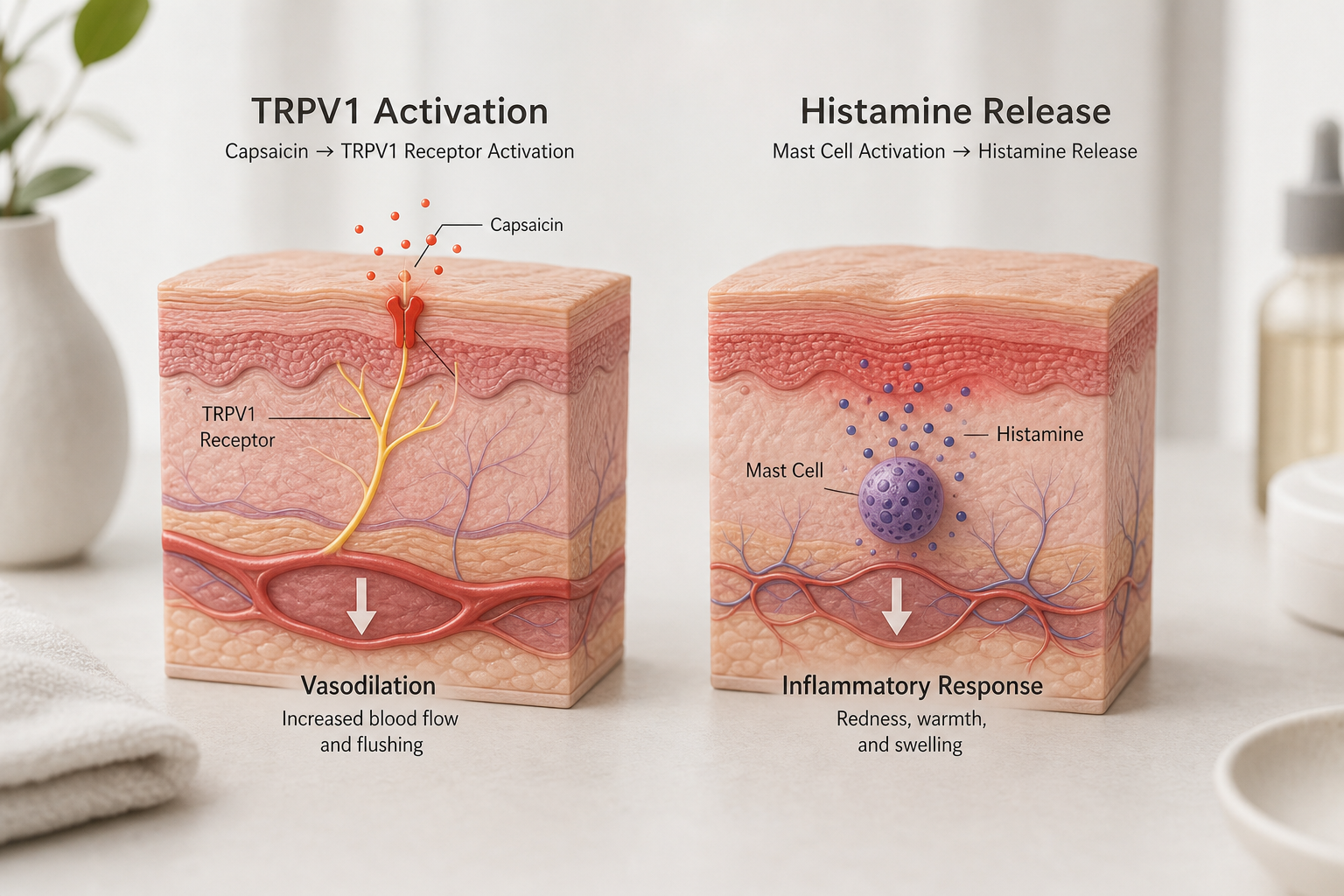
A growing body of evidence also points to the gut-skin axis as a relevant factor. Studies have found a higher prevalence of small intestinal bacterial overgrowth (SIBO) and gut dysbiosis among rosacea patients compared with the general population, suggesting that gut microbiome imbalances may contribute to systemic inflammation that manifests in the skin. This is one reason why dietary strategies that support gut health — including prebiotic fiber and probiotic-rich foods — are increasingly discussed alongside conventional rosacea management.
Foods That Commonly Trigger Rosacea Flare-Ups
The following categories represent the most frequently reported dietary triggers based on National Rosacea Society surveys and peer-reviewed research. Not every person with rosacea will react to every category, but these are the most useful starting points when beginning a food and symptom diary.
Alcohol
Alcohol is one of the most consistently reported rosacea triggers, with red wine cited most frequently in NRS patient surveys. Alcohol causes direct vasodilation of facial blood vessels and stimulates histamine release, producing the characteristic flushing response. Red wine contains both alcohol and additional histamine from the fermentation process, as well as tannins that may independently contribute to flushing. White wine, beer, bourbon, gin, vodka, and champagne are also reported triggers, though individual sensitivity varies. For people with rosacea who choose to drink, cold beverages in small quantities may be better tolerated than warm or room-temperature drinks, though complete avoidance is the most reliable way to prevent alcohol-related flares.
Spicy Foods and Capsaicin
Spicy foods are among the most widely recognized trigger foods for rosacea. Capsaicin — found in chili peppers, jalapeños, cayenne, paprika, hot sauce, and curry blends — activates TRPV1 receptors, which are overexpressed in the skin of rosacea patients. This activation triggers a cascade of vasodilation and neurogenic inflammation. Horseradish and vinegar-based condiments are also frequently reported. Importantly, the reaction is dose-dependent for many people, meaning small amounts of mild spice may be tolerated while larger quantities provoke a visible flare.
Cinnamaldehyde-Containing Foods
Cinnamaldehyde is a naturally occurring compound that activates TRPA1 sensory receptors and is found in a wider range of foods than most people expect. Tomatoes, citrus fruits (including oranges, lemons, limes, and grapefruit), chocolate, and cinnamon itself are the primary sources. These foods are often surprising to rosacea patients because they are otherwise considered healthy. The mechanism is distinct from capsaicin — TRPA1 activation tends to produce a slower, more diffuse flushing response — but the end result of increased skin redness and inflammation is similar.
High-Histamine Foods
A low-histamine diet is sometimes recommended for rosacea patients who notice that their flares correlate with fermented or aged foods. High-histamine foods include aged cheeses, sour cream, processed and cured meats, liver, fermented vegetables such as sauerkraut and kimchi, kombucha, spinach, avocado, eggplant, shellfish, dried fruits, red plums, raisins, figs, and bananas. Histamine triggers mast cell activation and the release of inflammatory mediators that dilate blood vessels and increase skin permeability. Some individuals also have reduced activity of the enzyme diamine oxidase (DAO), which normally breaks down dietary histamine, making them more susceptible to histamine-related flushing.
Hot Beverages
An important and frequently misunderstood point: it is the temperature of hot beverages, not caffeine, that most commonly triggers rosacea flares. The National Rosacea Society has specifically noted that caffeine itself may actually have a mild vasoconstrictive effect that could reduce flushing in some individuals. The heat from hot coffee, hot tea, hot cider, and hot chocolate raises core skin temperature and triggers thermoregulatory vasodilation. Switching to iced coffee or cold-brew tea allows many rosacea patients to continue enjoying these beverages without the same flushing response — a practical swap that is often overlooked.
Other Reported Dietary Triggers
Several additional foods appear in rosacea trigger surveys with moderate frequency. Niacin (vitamin B3) in high doses causes a well-documented flushing reaction through prostaglandin-mediated vasodilation; niacin-rich foods include poultry, tuna, and peanuts, though the amounts in a typical serving are unlikely to trigger flares in most people. Soy sauce, yeast extract, vanilla, and broad-leaf beans (including lima beans, navy beans, and peas) are also reported by some patients. Refined sugar and highly processed fatty foods may contribute to systemic inflammation over time, potentially lowering the threshold for flares even if they do not cause immediate flushing.
Foods That May Help Calm Rosacea
While no food can cure rosacea, an anti-inflammatory diet may help reduce the frequency and severity of flares by lowering baseline systemic inflammation, supporting the skin barrier, and promoting a healthier gut microbiome. The Mediterranean diet — which emphasizes oily fish, vegetables, legumes, whole grains, and olive oil — aligns closely with the dietary pattern most supported by evidence for reducing inflammatory skin conditions.
Omega-3 Fatty Acids
Omega-3 fatty acids have well-established anti-inflammatory properties and may help modulate the inflammatory pathways involved in rosacea. Oily fish such as salmon, mackerel, sardines, and lake trout are the richest dietary sources. Plant-based sources include flaxseeds, chia seeds, and walnuts. Regular consumption of omega-3-rich foods is associated with reduced production of pro-inflammatory cytokines and may support skin barrier function. Some clinicians also discuss omega-3 supplementation with rosacea patients, though the evidence for supplements specifically in rosacea remains limited and supplementation should be discussed with a healthcare provider.
Anti-Inflammatory Vegetables and Fruits
Leafy greens such as kale, Swiss chard, and arugula are rich in antioxidants and anti-inflammatory compounds without the cinnamaldehyde content of tomatoes or citrus. Berries — particularly blueberries and tart cherries — contain quercetin and other flavonoids that may help stabilize mast cells and reduce histamine release. Sweet potato, cucumber, bell pepper, carrots, peaches, and mango are generally well tolerated and provide useful antioxidant support. Cucumber and celery also contribute to skin hydration. These foods form the backbone of a rosacea-friendly produce selection.
Gut-Supportive Foods and the Gut-Skin Axis
Given the association between gut dysbiosis and rosacea, foods that support a healthy gut microbiome are a logical dietary priority. Prebiotic fiber — found in asparagus, onions, garlic, lentils, oats, and green peas — feeds beneficial gut bacteria and may help reduce gut-derived systemic inflammation. Probiotic-rich foods such as kefir and low-histamine yogurt (if dairy is tolerated) introduce beneficial bacterial strains that may help restore microbiome balance. Bone broth provides collagen and amino acids that support gut lining integrity. It is worth noting that some probiotic foods — particularly fermented vegetables and kombucha — are also high in histamine, creating a dual-role challenge discussed in the next section.
Anti-Inflammatory Spices and Beverages
Turmeric contains curcumin, a compound with well-documented anti-inflammatory properties that may help reduce inflammatory cytokine activity. Ginger has similar anti-inflammatory effects and is generally well tolerated by rosacea patients. Green tea contains EGCG (epigallocatechin gallate), a catechin with antioxidant and anti-inflammatory properties; consumed cold or at room temperature, green tea is a useful alternative to hot beverages. Extra-virgin olive oil provides oleocanthal, a natural compound with anti-inflammatory activity comparable in mechanism to ibuprofen at culinary doses. Whole grains such as brown rice and quinoa provide prebiotic fiber and have a lower glycaemic impact than refined carbohydrates.
The Dual-Role Foods: Where the Lists Overlap
Several foods appear on both the potentially helpful and potentially harmful lists, and most rosacea dietary guides fail to address this contradiction clearly. Understanding these nuances prevents unnecessary dietary restriction and helps patients make more informed choices.
Fermented foods such as kimchi, sauerkraut, and kombucha are rich in probiotic bacteria that may benefit the gut-skin axis, but they are also among the highest-histamine foods available. For rosacea patients with histamine sensitivity, these foods may worsen flushing despite their gut health benefits. Kefir and certain yogurts tend to be lower in histamine than vegetable ferments and may be better tolerated as probiotic sources.
Avocado is a nutrient-dense food with healthy monounsaturated fats and anti-inflammatory properties, but it is also moderately high in histamine and is reported as a trigger by some rosacea patients. Individual tolerance testing through a food diary is the most practical approach.
Dairy presents a similar complexity. Some dairy products — particularly aged cheeses and sour cream — are high-histamine triggers. Fresh dairy such as plain yogurt or kefir may be tolerated and can provide probiotic benefit. The reaction to dairy in rosacea is not universal and appears to depend more on the histamine content and fermentation level of the specific product than on dairy as a category.
Spinach is nutritious and anti-inflammatory in many respects but is also a moderate histamine source and is listed as a trigger food in some rosacea dietary frameworks. Substituting lower-histamine leafy greens such as kale, arugula, or Swiss chard provides similar nutritional value with less histamine exposure.
Rosacea Subtype Considerations
Most dietary guidance treats rosacea as a single condition, but the two most common subtypes — erythematotelangiectatic rosacea (ETR) and papulopustular rosacea (PPR) — may respond somewhat differently to dietary interventions. ETR is characterized primarily by persistent redness and flushing, making vasodilatory triggers such as alcohol, spicy foods, and hot beverages particularly relevant. PPR involves inflammatory papules and pustules in addition to redness, and the gut-skin axis, histamine pathways, and overall inflammatory load may be more central to management. Patients with PPR may benefit more from a comprehensive anti-inflammatory dietary approach, while those with ETR may see the most immediate improvement from identifying and avoiding specific vasodilatory triggers. A dermatologist can help clarify which subtype is present and tailor dietary recommendations accordingly.
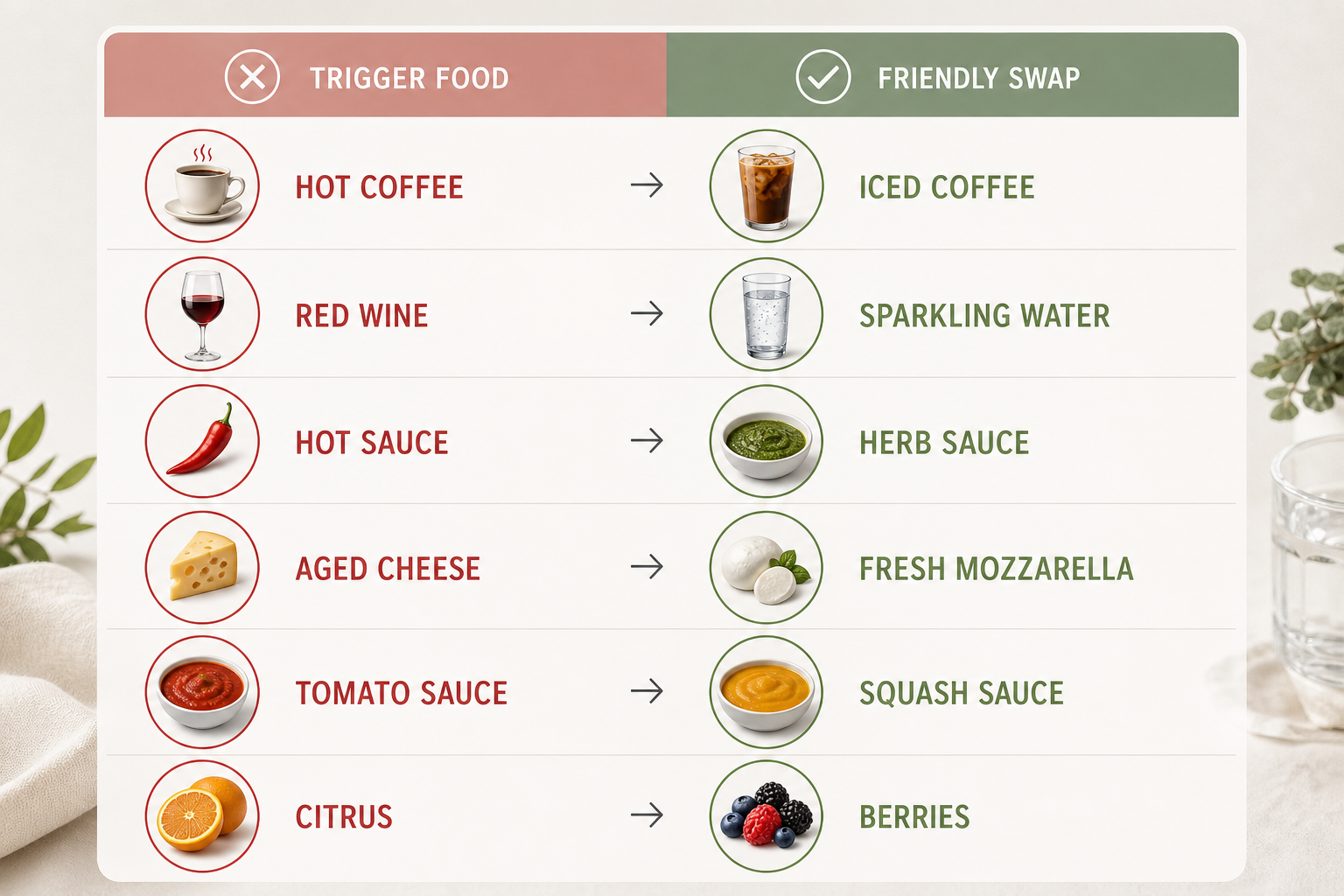
Quick Reference: Trigger Foods vs. Rosacea-Friendly Swaps
| Common Trigger Food | Rosacea-Friendly Alternative |
|---|---|
| Hot coffee or hot tea | Iced coffee, cold-brew tea, or room-temperature green tea |
| Red wine or alcohol | Cold sparkling water with cucumber or non-citrus fruit |
| Hot sauce or chili-based condiments | Mild herb-based sauces (basil, parsley, dill) |
| Aged cheese | Fresh mozzarella or ricotta (lower histamine) |
| Tomato-based sauces | Pumpkin or butternut squash-based pasta sauce |
| Citrus fruits | Blueberries, peaches, mango, or melon |
| Spinach | Kale, Swiss chard, or arugula |
| Fermented vegetables (kimchi, sauerkraut) | Kefir or fresh yogurt (if dairy tolerated) |
| Processed or cured meats | Fresh poultry or oily fish (salmon, mackerel) |
| Chocolate | Carob-based alternatives (lower cinnamaldehyde) |
How to Identify Your Personal Triggers: The Elimination Diet Approach
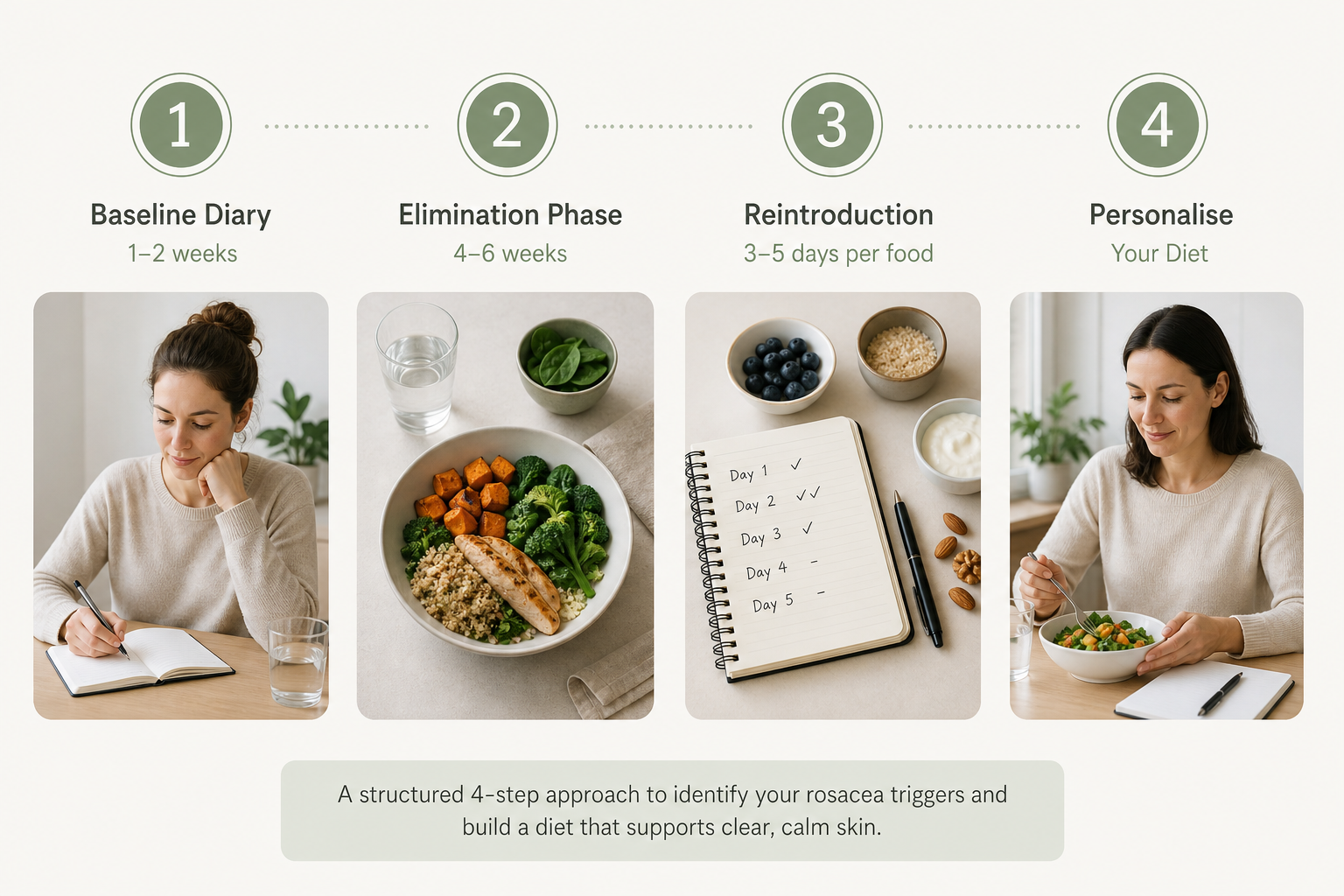
Because rosacea triggers are highly individual, a structured elimination diet combined with a food and symptom diary is the most reliable method for identifying which foods are genuinely problematic for you. The following protocol is based on approaches used in integrative dermatology practice; it is advisable to undertake this process with guidance from a dermatologist or registered dietitian, particularly if you have other dietary health conditions.
- Baseline diary (1–2 weeks): Before eliminating anything, record everything you eat and drink alongside any rosacea symptoms — redness, flushing, papules — noting time of onset, severity, and any other potential triggers such as stress, exercise, or temperature exposure. This establishes your baseline pattern.
- Elimination phase (4–6 weeks): Remove the most common trigger categories simultaneously: alcohol, spicy foods, cinnamaldehyde-containing foods (tomatoes, citrus, chocolate), high-histamine foods, and hot beverages. Continue recording symptoms throughout. Many patients notice a meaningful reduction in flare frequency within 2–4 weeks.
- Reintroduction protocol (3–5 days per food): Reintroduce one food category at a time, consuming a normal portion on day one and monitoring for 3–5 days before introducing the next category. This spacing allows enough time for delayed reactions to become apparent. Record any changes in skin redness, flushing, or papule activity.
- Identify and personalize: Foods that consistently provoke a reaction during reintroduction are your personal triggers. Foods that are reintroduced without reaction can be returned to your diet. The goal is the least restrictive diet that keeps your rosacea well controlled — not permanent avoidance of every possible trigger food.
It is important to note that combined triggers can amplify flares. Eating a moderately spicy meal while stressed, exercising in heat, or drinking alcohol in a warm environment may provoke a more severe reaction than any single trigger would alone. A food and symptom diary that also records non-dietary factors helps capture these interactions.
A Note on Supplements
Several nutritional supplements are discussed in the context of rosacea management, though the evidence base for most is still developing. Omega-3 fish oil supplements may help reduce inflammatory markers in patients who do not consume sufficient oily fish, but clinical evidence specifically in rosacea is limited. Zinc plays a role in skin barrier integrity and immune regulation; zinc deficiency has been associated with inflammatory skin conditions, and zinc supplementation has been studied in rosacea with modest results in some trials. Nicotinamide (a form of vitamin B3 that does not cause the flushing associated with niacin) has shown some benefit for skin barrier function and anti-inflammatory activity in topical form, and oral nicotinamide is being explored in broader dermatological contexts. Vitamin D deficiency is common and may influence immune regulation relevant to rosacea, though direct evidence remains limited. Any supplementation should be discussed with a healthcare provider to assess appropriateness, dosage, and potential interactions.
Frequently Asked Questions
Is coffee bad for rosacea?
Hot coffee is a commonly reported trigger, but the evidence suggests it is the heat of the beverage rather than caffeine itself that causes flushing. Caffeine may actually have mild vasoconstrictive properties. Switching to iced or cold-brew coffee allows many rosacea patients to continue drinking coffee without triggering a flare. Individual responses vary, so monitoring your own reaction is worthwhile.
Can chocolate trigger a rosacea flare-up?
Chocolate contains cinnamaldehyde, which activates TRPA1 sensory receptors and can provoke flushing in susceptible individuals. It is listed as a trigger food in National Rosacea Society surveys. Carob-based alternatives contain lower levels of cinnamaldehyde and may be better tolerated, though individual sensitivity varies.
Do I have to avoid all trigger foods permanently?
Not necessarily. The goal of dietary management is to identify your personal triggers through a structured elimination diet and reintroduction protocol, then maintain the least restrictive diet that keeps your rosacea well controlled. Many patients find they can tolerate small amounts of certain trigger foods or that their sensitivity changes over time with improved gut health and overall inflammation management.
Are fermented foods good or bad for rosacea?
Fermented foods present a genuine dilemma for rosacea patients. They contain beneficial probiotic bacteria that may support the gut-skin axis, but they are also among the highest-histamine foods available. Patients with histamine sensitivity may find that fermented vegetables worsen flushing. Kefir and fresh yogurt tend to be lower in histamine and may be better tolerated as probiotic sources. Individual testing through a food diary is the most practical approach.
Does the Mediterranean diet help rosacea?
The Mediterranean diet — emphasizing oily fish, vegetables, legumes, whole grains, and olive oil — aligns well with an anti-inflammatory dietary approach for rosacea. It provides omega-3 fatty acids, prebiotic fiber, antioxidants, and anti-inflammatory compounds while naturally limiting processed foods and refined sugars. While direct clinical trials of the Mediterranean diet specifically in rosacea are limited, its anti-inflammatory profile makes it a reasonable dietary framework to discuss with a dermatologist or dietitian.
Can improving gut health reduce rosacea symptoms?
There is growing evidence linking gut dysbiosis and conditions such as SIBO with rosacea. Some studies have found that treating SIBO in rosacea patients led to improvement in skin symptoms. Dietary strategies that support gut health — including prebiotic fiber and probiotic-rich foods — may help reduce the gut-derived systemic inflammation that contributes to rosacea flares. This is an active area of research and the evidence, while promising, is still developing.
Should I see a dermatologist before changing my diet for rosacea?
A dermatologist can confirm your rosacea subtype, assess severity, and help determine whether dietary changes are likely to be a meaningful part of your management plan. For significant dietary changes — particularly a full elimination diet — guidance from a registered dietitian helps ensure nutritional adequacy and a structured reintroduction protocol. Diet is best understood as a complementary strategy alongside appropriate medical treatment, not a replacement for it.
Building a Dietary Approach That Works for Your Rosacea
Diet is one of the most actionable aspects of rosacea self-management, but it requires a personalized rather than a one-size-fits-all approach. The foods most likely to trigger flares — alcohol, spicy foods, cinnamaldehyde-containing foods, high-histamine foods, and hot beverages — provide a useful starting framework, but your individual pattern may differ significantly. A structured food and symptom diary followed by a careful elimination diet and reintroduction protocol is the most evidence-informed way to identify what genuinely affects your skin.
At the same time, building your diet around anti-inflammatory foods — oily fish, leafy greens, berries, prebiotic fiber, olive oil, and anti-inflammatory spices such as turmeric and ginger — supports calmer skin from the inside out and aligns with the broader evidence on reducing systemic inflammation. The Mediterranean diet provides a practical and nutritionally complete framework for this approach.
Dietary management works best as part of a comprehensive rosacea plan that includes appropriate topical or medical treatment, sun protection, and trigger avoidance across all relevant categories — not just food. If you are unsure where to start, a consultation with a dermatologist who has experience in rosacea management, ideally alongside a registered dietitian, will help you build a plan that is both effective and sustainable for your lifestyle.
