
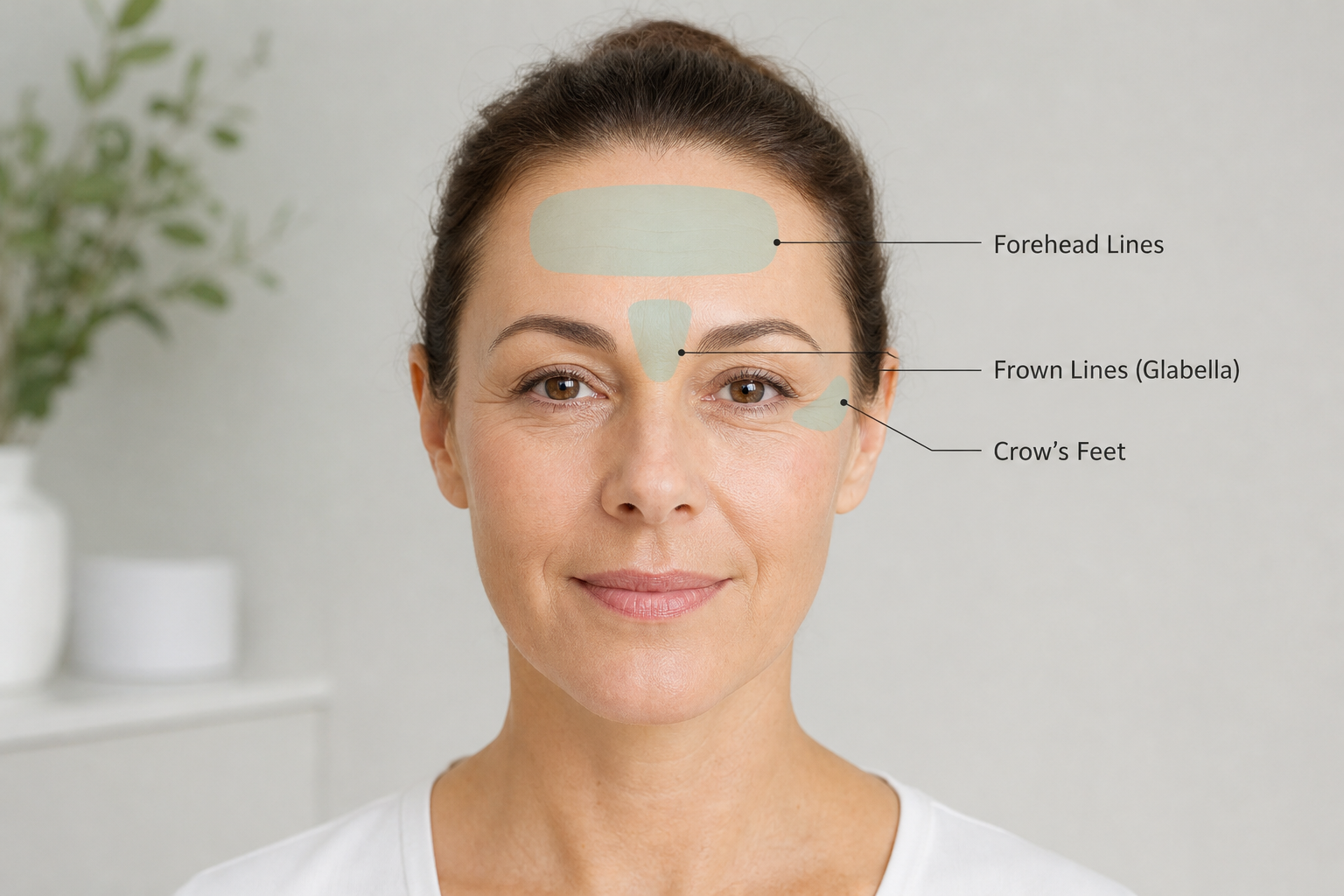

Anti-wrinkle injections targeting 3 areas represent the most widely requested treatment combination in aesthetic medicine. The three zones — forehead lines, frown lines, and crow’s feet — form a natural grouping that addresses the upper face comprehensively, and understanding why these specific areas are treated together, what the treatment involves, and what realistic results look like can help you approach a consultation with well-founded expectations.
Key Takeaways
- The standard 3-area anti-wrinkle treatment covers the forehead, glabella (frown lines), and crow’s feet — all dynamic wrinkles caused by repeated facial muscle movement.
- Botulinum toxin temporarily relaxes the targeted muscles; results typically appear within 3–5 days and reach their full effect at around 14 days.
- Effects generally last 3 to 4 months, though longevity varies by area, individual metabolism, and treatment history.
- Anti-wrinkle injections are a prescription-only medicine in the UK; a face-to-face consultation with a qualified prescriber is legally required before treatment.
- Treating all three areas together tends to produce a more balanced, refreshed appearance than treating a single zone in isolation.
What Are Anti-Wrinkle Injections and How Do They Work?
Anti-wrinkle injections use botulinum toxin — a purified protein derived from the bacterium Clostridium botulinum — to temporarily reduce muscle activity in targeted areas of the face. When injected in small, precise amounts, botulinum toxin blocks the release of acetylcholine at the neuromuscular junction, which is the point where a nerve communicates with a muscle. Without this chemical signal, the muscle cannot contract with its usual force, and the overlying skin becomes smoother.
The treatment specifically addresses dynamic wrinkles — lines that form as a direct result of repeated facial expressions such as squinting, frowning, or raising the eyebrows. This is an important distinction: botulinum toxin relaxes the muscles that create these expression lines, but it does not fill or resurface static lines, which are wrinkles visible even when the face is completely at rest. Static lines that have become deeply etched over time may require additional approaches, such as dermal fillers or skin-resurfacing treatments, to address fully. A qualified practitioner can assess which type of lines are present and advise accordingly.
Several MHRA-licensed botulinum toxin products are available in the UK, including Botox® (AbobotulinumtoxinA by Allergan/AbbVie), Azzalure® and Dysport® (AbobotulinumtoxinA by Galderma), and Bocouture® and Xeomin® (IncobotulinumtoxinA by Merz), among others. These products differ in their formulation and unit measurements, which are not interchangeable between brands. The choice of product is a clinical decision made by the prescribing practitioner.
The Three Standard Treatment Areas
The forehead, glabella, and crow’s feet are grouped together as the classic 3-area treatment because they collectively address the upper face — the region where dynamic wrinkles most commonly develop first and where expression lines tend to be most visible. Each zone involves distinct muscles and produces characteristic lines.
Area 1: Forehead Lines
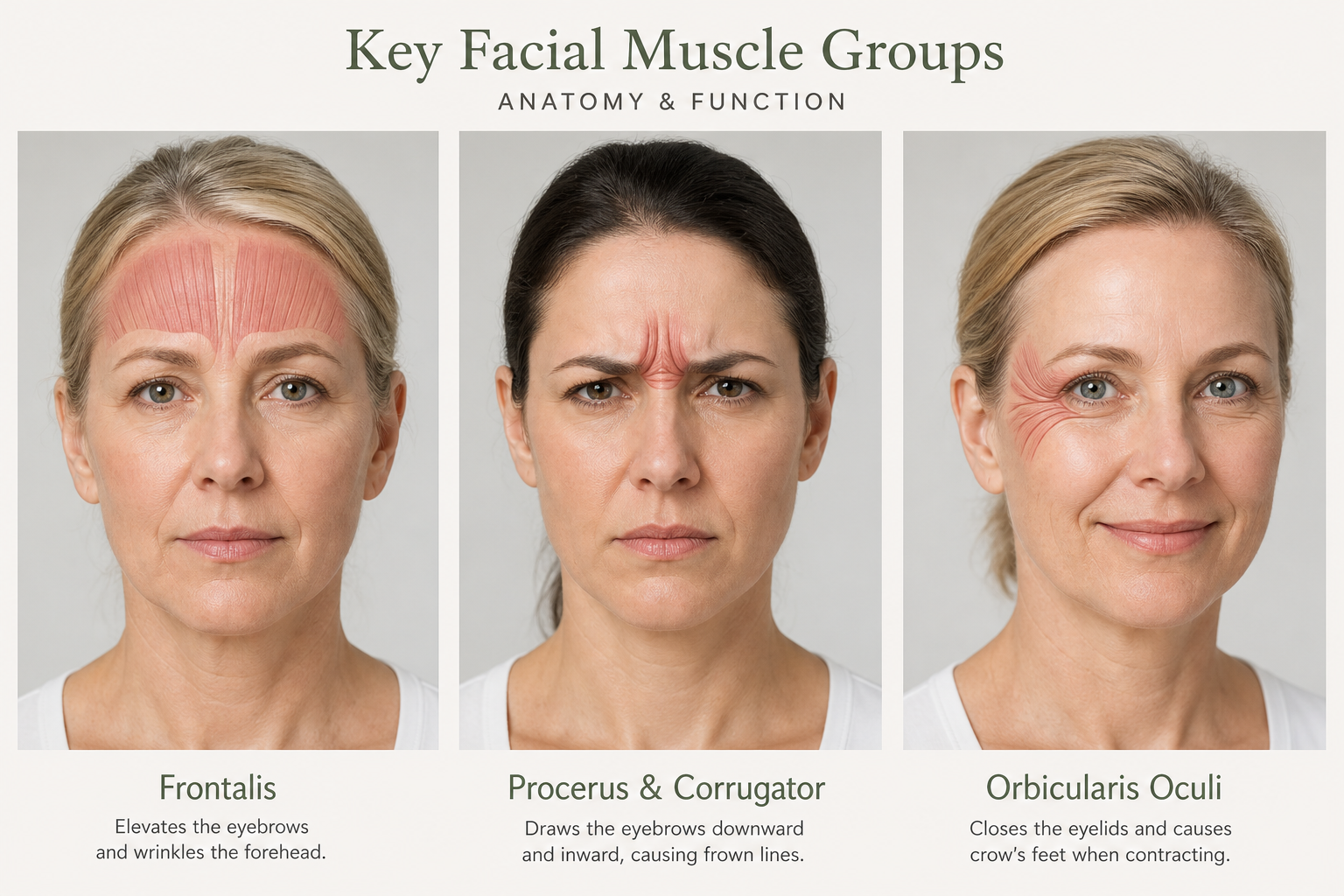
Horizontal lines across the forehead are caused by the frontalis muscle, a broad, flat muscle that runs vertically up the forehead and is responsible for raising the eyebrows. Every time the eyebrows are lifted — whether in surprise, concentration, or simply to open the eyes wider — the frontalis contracts and creates horizontal creases in the overlying skin. Over years of repeated movement, these creases can become visible even when the face is relaxed.
Injecting botulinum toxin into the frontalis reduces its ability to contract fully, softening the horizontal lines without eliminating all movement. Careful dosing is particularly important in this area: over-treating the frontalis can cause the brow to feel heavy or drop slightly, which is why experienced practitioners typically treat the forehead in combination with the glabella rather than in isolation. Treating the forehead alone without addressing the frown muscles can sometimes cause compensatory brow heaviness, as the frontalis is also responsible for holding the brow in a lifted position.
Area 2: Frown Lines (Glabella)
The vertical lines that appear between the eyebrows — commonly called the eleven lines or 11s — develop in the glabella region. These lines are produced primarily by two muscle groups: the procerus, which pulls the brow downward and inward, and the corrugator supercilii muscles, which draw the eyebrows together. Together, these muscles create the furrowed, concentrated expression associated with frowning or squinting.
Glabellar lines are among the most commonly treated areas because they can give the face a persistently tired, stern, or angry appearance even when the person feels entirely relaxed. Botulinum toxin injected into the procerus and corrugator muscles softens this area noticeably. Frown lines also tend to respond well to treatment and are often among the longest-lasting of the three zones, partly because the muscles involved are relatively small and the toxin dose required is proportionally lower relative to muscle mass.
Area 3: Crow’s Feet
Crow’s feet are the fine radiating lines that fan outward from the outer corners of the eyes, sometimes called lateral canthal lines or laughter lines. They are caused by the orbicularis oculi muscle — a circular muscle that surrounds the eye and is responsible for closing the eyelid, squinting, and the natural narrowing of the eyes that occurs when smiling. Because smiling and squinting are among the most frequent facial expressions, crow’s feet often appear earlier than other expression lines and can be among the first signs of skin ageing that patients notice.
Botulinum toxin injected carefully into the lateral portion of the orbicularis oculi softens these lines while preserving the natural movement of the eye. The skin in this area is thinner than on the forehead or glabella, which means it can show fine lines more readily but also tends to respond visibly to treatment. Crow’s feet are typically treated bilaterally — on both sides simultaneously — to maintain facial symmetry.
Why Treating All Three Areas Together Produces Better Results
Treating the forehead, glabella, and crow’s feet as a combined 3-area treatment is not simply a pricing convention — there is a sound clinical rationale for addressing all three zones in the same session. The muscles of the upper face do not work in isolation; they interact constantly. When one muscle group is relaxed and another is left untreated, the untreated muscles may compensate by working harder, potentially creating new tension or asymmetry.
A practical example: treating only the forehead without addressing the glabella can sometimes cause the brow to feel heavier, because the frontalis — now partially relaxed — is no longer counterbalancing the downward pull of the frown muscles. Conversely, treating only the frown lines while leaving the forehead untreated may cause patients to unconsciously raise their brows more to compensate, deepening forehead lines over time. Treating all three areas together allows the practitioner to balance muscle activity across the upper face, which tends to produce a more natural-looking result and a genuinely balanced, refreshed appearance rather than a selectively frozen look.
There is also a practical benefit: a single appointment, a single recovery period, and a single 14-day review covers all three zones simultaneously, making the treatment more efficient for patients with busy schedules.
Results: What to Expect and When
Botulinum toxin does not produce immediate visible results. After injection, the toxin must bind to the nerve endings at the neuromuscular junction, a process that takes a few days. Most patients begin to notice a softening of movement within 3 to 5 days of treatment. The full effect — where the muscles have reached their maximum degree of relaxation and the skin has had time to smooth — is typically visible at around 10 to 14 days post-treatment. This is why a review appointment is usually scheduled at the two-week mark, allowing the practitioner to assess the result and make any minor adjustments if needed.
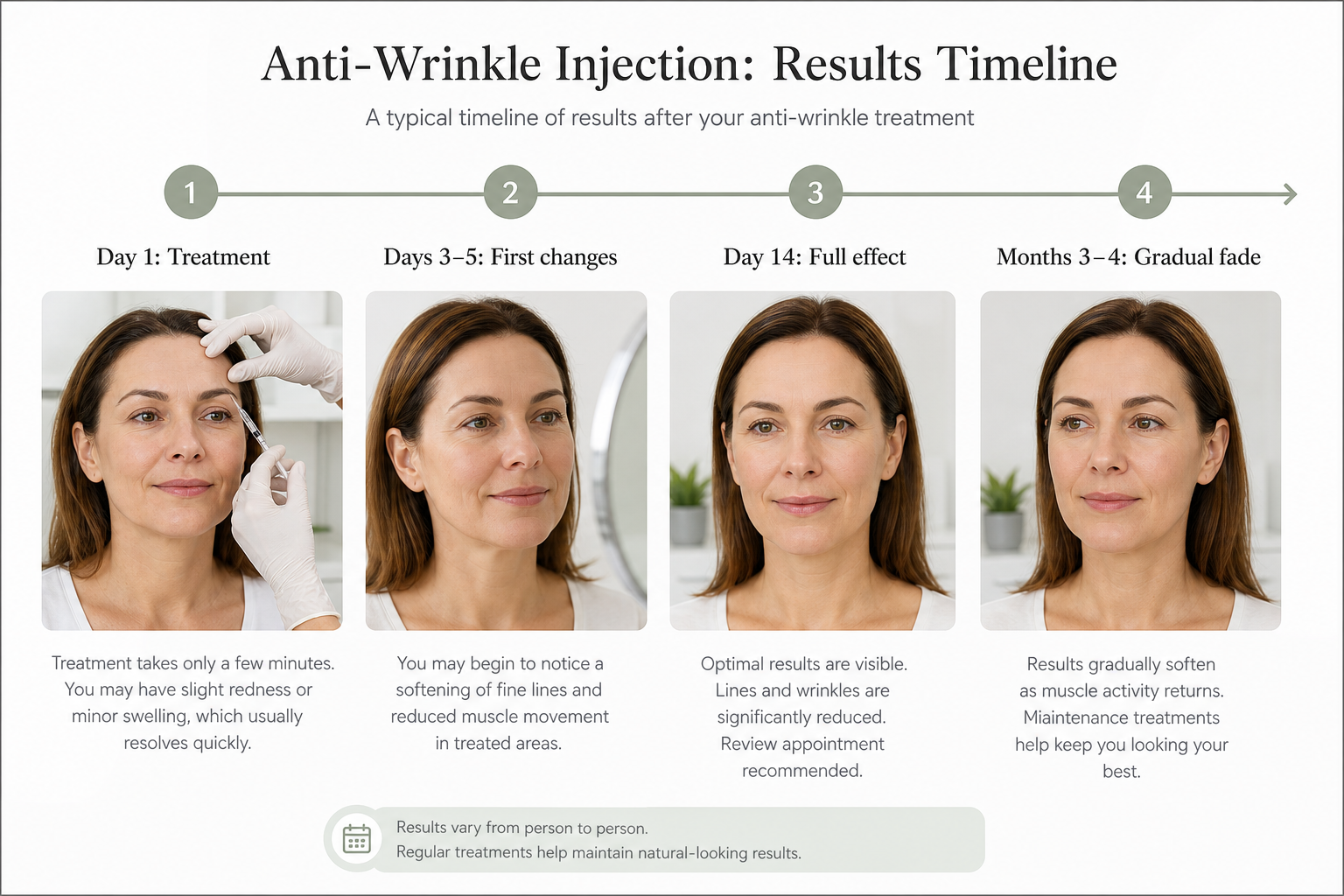
Results from anti-wrinkle injections 3 areas generally last 3 to 4 months before the effects begin to fade gradually. The toxin does not wear off suddenly; instead, nerve function slowly returns as the body metabolises the protein, and muscle movement gradually resumes. Several factors influence how long results last for an individual patient, including metabolic rate, the strength and size of the muscles treated, how expressive the face is naturally, the dose administered, and whether the patient has had previous treatments. People who exercise intensively or spend significant time in high heat may find results fade slightly faster.
There is also a meaningful difference in longevity between the three zones. Frown lines (glabella) often show the longest-lasting results, partly because the muscles involved are smaller and less dominant. Forehead lines may fade slightly sooner, particularly in patients with strong frontalis muscles. Crow’s feet tend to fall somewhere in between. With repeat treatments over time, many patients find that results gradually last longer, as the muscles become accustomed to reduced activity and may weaken slightly with consistent treatment.
The First-Timer vs. Maintenance Patient Experience
For patients having anti-wrinkle injections for the first time, it is worth knowing that the initial treatment may not last quite as long as subsequent ones. This is a commonly observed pattern: on a first treatment, results may last closer to 2.5 to 3 months rather than the typical 3 to 4 months, as the muscles have not yet been conditioned by previous treatments. Practitioners often recommend a conservative approach for first-time patients — using a slightly lower dose to assess individual response — with the option to adjust at the 14-day review.
For patients who have been having regular maintenance treatments over a year or more, the muscles in the treated areas may gradually become less dominant, and some find that the interval between treatments can extend slightly. This does not happen universally, and results always vary between individuals. The key point for first-timers is to approach the initial treatment as a starting point rather than expecting the maximum possible result immediately.
Anti-Wrinkle Injections for Men
Anti-wrinkle injections are increasingly popular among men — sometimes referred to colloquially as Brotox — and the treatment works on the same principles regardless of sex. However, male facial anatomy does differ in ways that are clinically relevant. Men typically have greater facial muscle mass and stronger muscle contraction than women, which means that achieving comparable muscle relaxation generally requires a higher dose of botulinum toxin. The injection technique may also differ slightly to account for differences in brow position and the aesthetic goals that male patients typically prefer, which often lean toward softening lines while maintaining a strong, defined brow rather than a lifted or arched appearance. Men should expect that the cost of treatment may be slightly higher per area to reflect the additional product required.
Beyond the Core Three: Additional Treatment Areas
While the forehead, glabella, and crow’s feet represent the most commonly requested combination, botulinum toxin can be used to address a range of other concerns across the face and body. These additional areas are typically treated separately or added to a 3-area treatment depending on individual goals:
- Bunny lines — horizontal lines across the bridge of the nose caused by the nasalis muscle
- Lip flip and perioral lines — softening of fine lines around the mouth, sometimes called smoker’s lines or lipstick lines
- Brow lift — a small amount of toxin placed to create a subtle lift at the tail of the brow
- Chin dimpling — smoothing of a pebbly or dimpled chin caused by the mentalis muscle
- Jawline slimming — masseter muscle reduction for a softer jaw profile
- Neck bands — treatment of the platysma muscle, sometimes called a Nefertiti lift
- Gummy smile — reducing the elevation of the upper lip on smiling
- Hyperhidrosis — treatment of excessive underarm sweating
- Downturned corners of the mouth — softening the depressor anguli oris muscle
These additional areas require individual assessment and are not automatically included in a standard 3-area treatment. A practitioner will advise on suitability and whether combining multiple areas in a single session is appropriate.
How Much Do Anti-Wrinkle Injections 3 Areas Cost?
Pricing for anti-wrinkle injections in the UK is most commonly structured by the number of areas treated, with clinics offering per-area pricing or bundled packages. Based on data from approximately 990 UK clinics, the national median for a 3-area treatment is around £270, though this varies considerably by region. Clinics in central London typically charge toward the higher end of the range, often £300 or above, while clinics in northern England and other regions outside the capital may charge closer to £230. Men may be charged slightly more per area due to the higher product volumes typically required.

It is also worth noting that anti-wrinkle injections are a prescription-only medicine, and a prescriber consultation fee — typically around £25 — is often charged separately, particularly for new patients. This fee reflects the legally required face-to-face assessment that must take place before a prescription can be issued. Be cautious of clinics that advertise very low prices without mentioning a consultation fee, or that do not require a consultation at all, as this may indicate that the legal prescribing requirements are not being followed correctly.
Who May Be Suitable for This Treatment?
Anti-wrinkle injections are generally suitable for adults aged 18 and over who have dynamic wrinkles in the upper face that they would like to soften. The treatment is appropriate for all Fitzpatrick skin types and is used by both men and women. Most patients begin considering treatment in their mid-to-late twenties or thirties, when expression lines start to become more noticeable, though there is no fixed age at which treatment is most appropriate — this depends on individual anatomy, skin quality, and personal goals.
Botulinum toxin treatment is not suitable for everyone. The following groups should not have this treatment:
- People who are pregnant or breastfeeding
- Those with a known allergy to botulinum toxin or any ingredient in the formulation
- People with certain neuromuscular disorders, such as myasthenia gravis or Lambert-Eaton syndrome
- Those taking certain medications that may interact with botulinum toxin, including some antibiotics and muscle relaxants
- People with an active skin infection or inflammation at the intended injection site
A thorough medical history review during the face-to-face consultation will identify any contraindications before treatment proceeds.
Risks and Side Effects
Anti-wrinkle injections have a well-established safety record developed over more than two decades of clinical use. However, like any medical procedure, they carry potential side effects that patients should understand before consenting to treatment.
Common and expected effects include mild redness, swelling, and tenderness at the injection sites, which typically resolve within 24 to 48 hours. Mild bruising is also possible, particularly around the eye area, and may take a few days to fade. Some patients experience a mild headache after forehead treatment, which usually resolves within a day.
Less common effects include temporary asymmetry if the toxin distributes unevenly between sides, or a feeling of heaviness in the brow if the forehead is treated with a dose that is slightly too high for that individual’s anatomy. These effects are self-limiting and resolve as the toxin wears off.
Rare but recognised risks include ptosis — drooping of the upper eyelid or brow — which can occur if the toxin migrates to the levator palpebrae muscle that holds the eyelid open. This is uncommon when treatment is performed by an experienced practitioner using appropriate technique and dosing, but it is a known risk that patients should be aware of. Eyelid ptosis typically resolves within a few weeks as the toxin effect diminishes.
Because all effects of botulinum toxin are temporary, any unwanted outcome will resolve naturally as the product wears off. This self-limiting nature is one of the treatment’s important safety characteristics.
Aftercare Following Treatment
Following anti-wrinkle injections, practitioners typically advise patients to:
- Avoid touching, rubbing, or massaging the treated areas for at least 4 to 6 hours after treatment
- Remain upright for approximately 4 hours post-injection — avoid lying flat
- Avoid strenuous exercise until the following day
- Avoid exposure to extreme heat, such as saunas or steam rooms, for 24 to 48 hours
- Attend the 14-day review appointment so the practitioner can assess the result
These aftercare instructions are designed to minimise the risk of the toxin migrating away from the intended injection site during the period when it is still binding to nerve endings. Specific aftercare advice may vary slightly between practitioners and products, so always follow the guidance provided by your own treating clinician.
What Happens If You Stop Having Treatments?
A common concern among patients considering anti-wrinkle injections for the first time is whether stopping treatment will cause the face to look worse than before. The straightforward answer is that stopping treatment does not cause the face to deteriorate beyond its natural ageing trajectory. When botulinum toxin wears off, the muscles gradually return to their normal level of activity, and the lines that were present before treatment will return to approximately the same degree as they would have been had treatment never taken place.
There is no rebound effect, and the face does not age faster as a result of having had treatment. Some patients who have had regular treatments over several years may find that their lines return more slowly after stopping, because the muscles have been less active during the treatment period. Equally, patients who stop treatment simply return to their pre-treatment baseline over the following months.
Choosing a Qualified Practitioner
In the UK, botulinum toxin is classified as a prescription-only medicine, which means it must be prescribed by a registered healthcare professional with prescribing authority — typically a doctor, dentist, nurse prescriber, or pharmacist prescriber. A face-to-face consultation is a legal requirement before a prescription can be issued; remote prescribing for cosmetic botulinum toxin is not permitted. When choosing a clinic, the following factors are worth verifying:
- The practitioner holds a recognised prescribing qualification and is registered with a relevant regulatory body (GMC, GDC, NMC, or GPhC)
- The clinic uses MHRA-licensed botulinum toxin products
- A face-to-face consultation is offered and required before treatment
- The clinic has a clear process for managing complications and follow-up
- The practitioner is accredited by a recognised quality scheme such as Save Face
Aesthetic medicine in England is not currently subject to mandatory CQC registration for all clinic types, which means the onus is on patients to verify practitioner credentials independently. Choosing a practitioner based on price alone carries meaningful risk; the skill and experience of the injector are among the most important factors in achieving safe, natural-looking results.
Combining Anti-Wrinkle Injections with Other Treatments
Anti-wrinkle injections address dynamic wrinkles effectively, but they do not treat every aspect of facial ageing. Patients who also have static lines — wrinkles visible at rest — volume loss, or changes in skin texture may benefit from combining a 3-area botulinum toxin treatment with complementary approaches. Dermal fillers can restore volume and soften deeper static lines in areas such as the nasolabial folds, lips, or cheeks. Skin boosters and polynucleotide treatments may improve overall skin quality and hydration. A practitioner experienced in combination treatments can advise on which approaches may work well together and in what sequence, based on an individual assessment of the face as a whole.
Frequently Asked Questions
How long does the appointment take?
The injection procedure itself for a 3-area treatment typically takes around 15 to 30 minutes. The initial consultation, which must take place before treatment, may add additional time, particularly for new patients. Some clinics offer the consultation and treatment in the same visit; others require a separate consultation appointment.
Does the treatment hurt?
Most patients describe the injections as a mild, brief stinging sensation. The needles used are very fine, and the volume injected at each point is small. Discomfort is generally well tolerated without anaesthetic, though some practitioners apply a topical numbing cream beforehand if requested, particularly around the eye area.
Can I have anti-wrinkle injections if I have had them elsewhere before?
Yes, in most cases. A new practitioner will want to know your treatment history, including which areas have been treated, approximately when, and with what product if known. This information helps them assess the current state of muscle activity and plan the treatment appropriately.
Will I still be able to make facial expressions?
When performed by an experienced practitioner at an appropriate dose, anti-wrinkle injections should soften expression lines without eliminating natural facial movement. The goal is a refreshed, rested appearance — not a frozen or expressionless one. Over-treatment is a risk associated with excessive dosing or inexperienced technique, which is another reason why practitioner selection matters.
How soon can I return to work after treatment?
Anti-wrinkle injections involve minimal downtime. Most patients return to normal daily activities, including work, immediately after treatment. Mild redness or swelling at injection sites usually resolves within a few hours. Strenuous exercise is typically avoided until the following day.
What if I am not happy with my results at 14 days?
The 14-day review appointment exists precisely to address this. If the result is uneven, insufficient in a particular area, or not quite what was expected, the practitioner can assess whether a small top-up is appropriate. Not all clinics include a top-up in the original price, so it is worth clarifying this before treatment.
Is a 3-Area Anti-Wrinkle Treatment Right for You?
Anti-wrinkle injections targeting the forehead, glabella, and crow’s feet offer a well-established, minimally invasive approach to softening dynamic expression lines across the upper face. The treatment has a strong safety record, requires no significant downtime, and produces results that — when performed by a qualified practitioner — can look natural and refreshed rather than altered. Results are temporary, lasting approximately 3 to 4 months on average, and maintenance treatments are needed to sustain the effect over time.
The treatment is most likely to meet expectations when the lines being addressed are primarily dynamic in nature, when the patient has realistic goals, and when the procedure is carried out by an experienced prescriber using MHRA-licensed products following a proper face-to-face consultation. It is not a solution for deeply static lines, volume loss, or skin texture concerns — these may require complementary treatments discussed separately with a practitioner.
If you are considering anti-wrinkle injections 3 areas for the first time, or reviewing your current treatment plan, a consultation with a qualified practitioner is the appropriate starting point. They can assess your individual anatomy, discuss your goals, and advise on whether this treatment — alone or in combination with other approaches — is likely to be suitable for you.
