
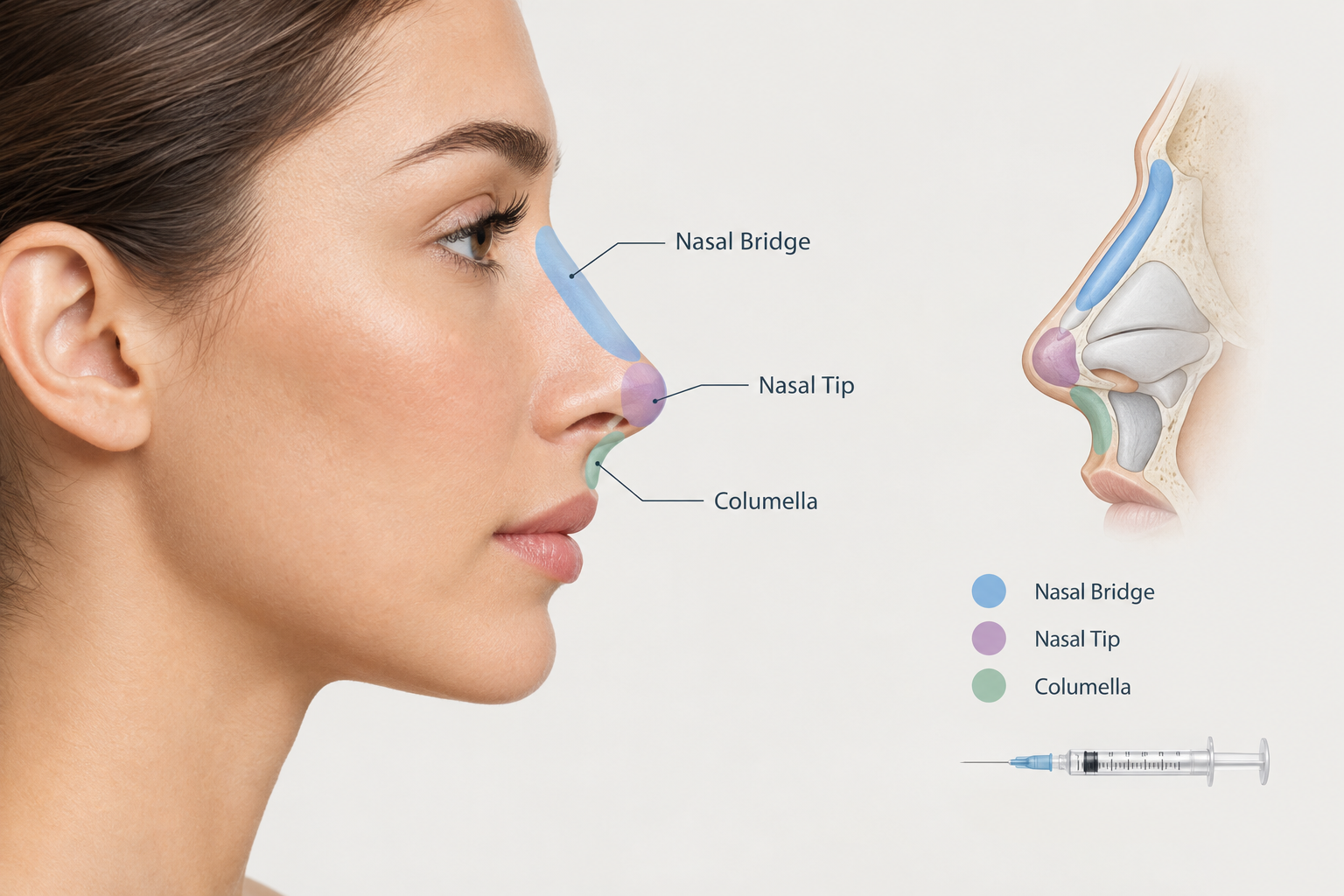

Non-surgical rhinoplasty using hyaluronic acid filler has become one of the more popular aesthetic procedures for patients who want to refine the appearance of their nose without surgery. A common and entirely reasonable question before booking is: how long does nose filler actually last? The honest answer is that duration varies between individuals, but most patients can expect results to remain visible for somewhere between 9 and 18 months, with some variation in either direction depending on several clinical and lifestyle factors. This article explains what influences longevity, what the treatment experience involves, what risks exist, and how nose filler compares to surgical alternatives — so you can approach a consultation with realistic expectations.
Key Takeaways
- Hyaluronic acid nose filler typically lasts between 9 and 18 months, though individual results vary considerably.
- Longevity depends on the specific filler product used, the volume injected, the area treated, your metabolism, and your lifestyle.
- The nose is a high-movement area with relatively thin skin, which can cause filler to break down faster than in some other facial regions.
- Hyaluronic acid filler is reversible with an enzyme called hyaluronidase, which is an important safety consideration for this treatment area.
- Non-surgical rhinoplasty cannot reduce the overall size of the nose and is not a substitute for surgical rhinoplasty when structural changes are the goal.
What Is Non-Surgical Rhinoplasty?
Non-surgical rhinoplasty — sometimes called a liquid nose job or nose reshaping with filler — involves injecting small amounts of dermal filler, most commonly a hyaluronic acid-based product, into precise areas of the nose to alter its visible shape. The procedure does not involve incisions, general anaesthesia, or the recovery period associated with surgical rhinoplasty. A qualified practitioner uses the filler to camouflage bumps on the nasal bridge, lift a drooping nasal tip, improve symmetry, or create the appearance of a straighter profile.
It is important to understand from the outset that nose filler works by adding volume strategically, not by removing tissue. This means it can create the optical illusion of a smaller or more refined nose in certain cases, but it cannot physically reduce the size of a nose that is perceived as too large. Patients seeking significant structural change or a permanent result are generally better served by a surgical consultation.
How Long Does Nose Filler Last on Average?
Most clinical experience and published literature on hyaluronic acid fillers suggests that nose filler results last approximately 9 to 18 months for the majority of patients. Some individuals notice that their results begin to soften noticeably around the 9-month mark, while others retain visible improvement for closer to 18 months before a top-up feels necessary. Results lasting beyond 18 months are possible but less common with standard hyaluronic acid products.
It is worth noting that filler does not disappear all at once. Hyaluronic acid is gradually broken down by the body's own enzymes in a process called enzymatic degradation. As this happens, the correction slowly softens rather than reversing abruptly. Many patients find that the nose returns to something close to its pre-treatment appearance over several months once the filler has fully metabolised, though repeated treatments over time may have a cumulative effect on the surrounding tissue.
Compared to other facial areas, the nose tends to show filler longevity that is broadly similar to the nasolabial folds and slightly shorter than areas with less movement, such as the temples. The relatively thin skin of the nose and the constant micro-movements involved in facial expression and breathing mean that filler in this area is subject to ongoing mechanical stress, which can accelerate breakdown.
Factors That Affect How Long Nose Filler Lasts
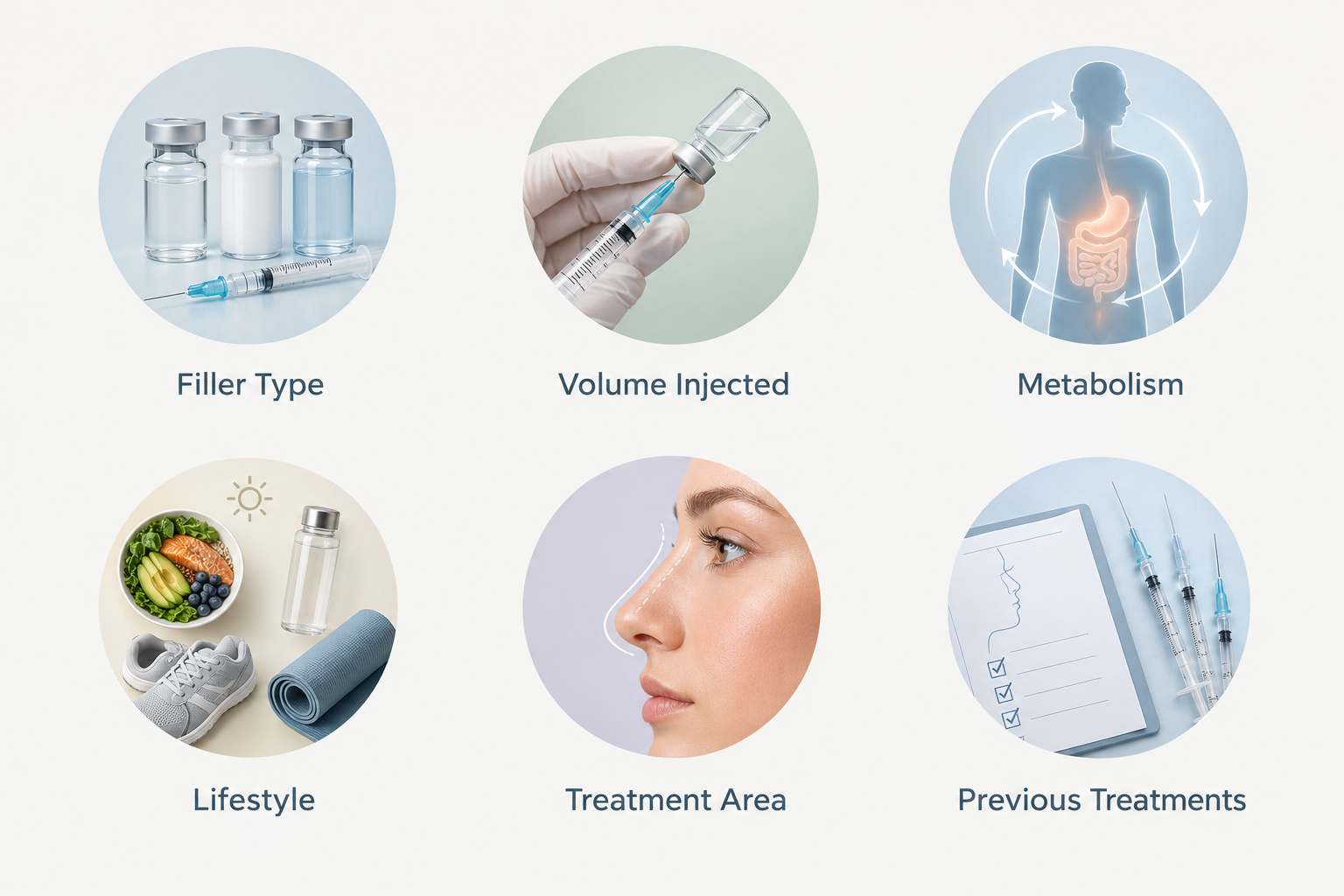
Several interconnected factors influence how quickly hyaluronic acid filler breaks down after a nose reshaping treatment. Understanding these helps set realistic expectations before your first appointment.
The Type and Formulation of Filler Used
Not all hyaluronic acid fillers are identical. Products vary in their degree of cross-linking — a manufacturing process that determines how tightly the hyaluronic acid molecules are bonded together. More densely cross-linked fillers tend to resist enzymatic breakdown for longer and are generally used in areas requiring structural support, such as the nasal bridge. Thinner, less cross-linked formulations may be used around the nasal tip but typically metabolise more quickly. Your practitioner's choice of product for your specific anatomy and goals will directly influence how long your results last.
Volume Injected
Larger volumes of filler generally take longer to fully metabolise than smaller amounts, simply because there is more material for the body to break down. However, the nose is an area where practitioners typically work with conservative volumes — often less than 1 ml in total — to avoid overfilling, which can distort the appearance of the nose and increase the risk of complications. This conservative approach is clinically appropriate but may mean that results in the nose do not last as long as higher-volume treatments in areas such as the cheeks.
Individual Metabolism
Metabolic rate varies between individuals and is influenced by age, genetics, hormonal factors, and general health. Patients with a faster metabolism tend to break down hyaluronic acid more quickly, which can shorten the duration of their results. This is one reason why two patients treated with the same product and volume may have noticeably different experiences of longevity. There is currently no reliable pre-treatment test to predict individual metabolic response to filler.
Lifestyle and Physical Activity
High levels of physical activity, particularly cardiovascular exercise, are associated with increased metabolic rate and may contribute to faster filler breakdown. Sun exposure and UV damage can also degrade hyaluronic acid in the skin over time. Smoking is associated with reduced skin quality and may affect how filler integrates with surrounding tissue. These factors do not mean that active or outdoors-oriented patients cannot benefit from nose filler, but they are worth discussing with your practitioner when estimating how long your results may last.
Treatment Area Within the Nose
The specific location of filler placement within the nose affects longevity. Filler placed along the nasal bridge to smooth a dorsal hump tends to be relatively stable because this area experiences less movement. Filler placed at the nasal tip or columella (the strip of tissue between the nostrils) is subject to more movement and may break down more quickly. Practitioners experienced in non-surgical rhinoplasty will account for these differences when planning treatment.
Previous Filler Treatments
Patients who have had repeated nose filler treatments over several years sometimes report that their results appear to last longer with subsequent sessions. One proposed explanation is that repeated hyaluronic acid injections may stimulate collagen production in the surrounding tissue, providing some additional structural support. However, this effect is not guaranteed and should not be relied upon as a primary reason to pursue repeated treatments. Cumulative filler in the nose also carries cumulative risk, which is discussed in the risks section below.
What Happens During a Nose Filler Appointment?
A nose filler appointment typically begins with a thorough consultation in which the practitioner assesses your nasal anatomy, discusses your goals, reviews your medical history, and explains what is and is not achievable with filler. Photographs are usually taken for reference. The practitioner should explain the specific product they intend to use, the approximate volume, the injection technique, and the relevant risks.
Before the injections, a topical anaesthetic cream may be applied to the skin to reduce discomfort, and some filler products contain lidocaine (a local anaesthetic) within the formulation itself. The injections are typically administered using a fine needle or a blunt-tipped cannula, depending on the area being treated and the practitioner's preferred technique. The procedure usually takes between 15 and 30 minutes. Most patients describe the discomfort as mild to moderate, though the nose can be a sensitive area.
Immediately after treatment, some swelling, redness, and minor bruising are common and expected. These effects typically resolve within a few days to a week. The final result may not be fully visible until swelling has settled, which can take up to two weeks in some cases. Patients are usually advised to avoid strenuous exercise, excessive heat, and pressure on the nose for at least 24 to 48 hours after treatment.
Risks and Safety Considerations
Non-surgical rhinoplasty carries a specific risk profile that patients should understand clearly before proceeding. The nose has a complex vascular anatomy, and the nasal area is supplied by branches of both the facial artery and the ophthalmic artery. Accidental injection of filler into a blood vessel — a complication known as vascular occlusion — can interrupt blood supply to the surrounding tissue and, in rare but serious cases, may affect vision if filler migrates toward the ophthalmic circulation. This is one of the most serious potential complications of any facial filler treatment and is considered a higher risk in the nose than in many other areas.
Vascular occlusion requires immediate recognition and treatment. Hyaluronic acid filler can be dissolved using hyaluronidase, an enzyme that breaks down hyaluronic acid rapidly. This reversibility is a significant safety advantage of hyaluronic acid over permanent or semi-permanent fillers, and it is one reason why most experienced practitioners strongly prefer hyaluronic acid products for non-surgical rhinoplasty. Patients should always confirm that their practitioner has hyaluronidase immediately available before proceeding with nose filler.
Other risks associated with nose filler include:
- Bruising and swelling, which are common and usually temporary
- Asymmetry or uneven results
- Tyndall effect (a bluish discolouration visible through thin skin if filler is placed too superficially)
- Nodule formation or irregularities under the skin
- Infection, which is uncommon but possible
- Skin necrosis (tissue death) in the event of an unresolved vascular occlusion
- Migration of filler over time, particularly with repeated treatments
The risk of serious complications is significantly reduced when treatment is performed by a qualified and experienced medical professional who understands nasal vascular anatomy and has appropriate emergency protocols in place. Patients should be cautious about seeking this treatment in non-medical settings or from practitioners without verifiable training in facial anatomy and filler complications management.
Who May Be Suitable for Nose Filler?
Non-surgical rhinoplasty may be worth discussing with a qualified practitioner if you are bothered by a specific nasal feature — such as a dorsal hump, a drooping tip, or mild asymmetry — and are looking for a temporary, non-surgical option to assess how a change might look before committing to surgery. It may also suit patients who have had surgical rhinoplasty and want to refine a minor residual irregularity.
Nose filler is generally not suitable for patients who:
- Want to reduce the overall size or width of the nose
- Have had previous permanent or semi-permanent filler in the nose
- Have a history of cold sores or active skin infection in the treatment area
- Are pregnant or breastfeeding
- Have certain autoimmune conditions or are taking medications that significantly affect bleeding or immune response
- Have unrealistic expectations about what filler can achieve
A thorough pre-treatment consultation with a qualified practitioner is essential to determine individual suitability. Medical history, current medications, previous procedures, and specific anatomical considerations all need to be assessed before treatment is recommended.
When to Consider a Top-Up Treatment
Most patients who are happy with their nose filler results choose to return for a maintenance treatment when they notice the correction beginning to soften — typically somewhere between 9 and 18 months after their initial treatment. There is no fixed schedule that applies to everyone, and the decision to top up should be based on your own assessment of whether the result still meets your goals, rather than on a predetermined calendar.
It is generally advisable to avoid topping up too frequently or adding excessive volume over multiple sessions. Repeated filler in the nose can lead to gradual tissue changes, including fibrosis (scar tissue formation) and filler migration, which may make the nose appear wider or distorted over time and can complicate future treatments or surgical correction. An experienced practitioner will advise on appropriate intervals and cumulative volume limits.
Alternatives to Nose Filler
Nose filler is one option within a broader range of approaches to nasal aesthetics. Understanding the alternatives helps patients make a genuinely informed decision.

Surgical Rhinoplasty
Surgical rhinoplasty remains the only option for patients seeking permanent structural changes to the nose, including reduction of nasal size, correction of a deviated septum, or significant reshaping of the nasal tip and bridge. Recovery from rhinoplasty typically involves several weeks of downtime, and final results may take up to a year to fully settle as swelling resolves. The permanence of surgical results is both an advantage and a consideration — changes cannot be easily reversed if the patient is unhappy with the outcome.
Botulinum Toxin for the Nose
Botulinum toxin injections can be used in specific areas around the nose for targeted concerns. For example, small doses injected into the depressor septi nasi muscle — the muscle that pulls the nasal tip downward during smiling — can provide a subtle lift to the tip. This is a different mechanism from filler and addresses a different concern. Botulinum toxin results in this area typically last 3 to 4 months and require regular maintenance.
Permanent Fillers
Some practitioners offer permanent or semi-permanent fillers for nasal reshaping. These products are not reversible with hyaluronidase, which means that complications, migration, or dissatisfaction with results cannot be corrected in the same way as with hyaluronic acid. Most experienced aesthetic practitioners and professional bodies advise against the use of permanent fillers in the nose due to the higher risk profile and the difficulty of managing complications. Patients should approach any offer of permanent nose filler with significant caution.
Accepting Natural Anatomy
It is worth acknowledging that not every nasal concern requires intervention. Many patients find that a thorough consultation — in which they can see digitally simulated results or discuss realistic outcomes — helps them decide that the benefit of treatment does not outweigh the cost, maintenance requirement, or risk for their specific situation. A good practitioner will support this decision without pressure.
Frequently Asked Questions
Can nose filler last longer than 18 months?
Some patients do report visible results beyond 18 months, particularly if a densely cross-linked filler product was used or if the individual has a slower metabolic rate. However, results lasting significantly beyond 18 months are not typical for standard hyaluronic acid nose filler, and any residual filler present after this period may not be providing the same degree of correction as it did initially.
Does nose filler dissolve completely on its own?
Yes. Hyaluronic acid is a substance that occurs naturally in the body, and the body's own enzymes will gradually break it down over time. In most cases, nose filler will fully metabolise without any intervention, and the nose will return to its pre-treatment appearance. If dissolution is needed sooner — for example, due to a complication or dissatisfaction with results — hyaluronidase can be used to accelerate this process.
Will my nose look worse after the filler wears off?
In the vast majority of cases, the nose returns to its natural pre-treatment appearance as the filler metabolises. There is no evidence that a single course of hyaluronic acid nose filler causes the nose to look worse than it did before treatment once the product has fully broken down. However, repeated treatments over many years may cause gradual tissue changes that could affect the appearance of the nose over the long term.
Is nose filler painful?
Most patients describe the procedure as mildly to moderately uncomfortable rather than significantly painful. Topical anaesthetic cream and filler products containing lidocaine help to reduce discomfort. The nose is a sensitive area, and some patients find certain injection points more uncomfortable than others. Discomfort during the procedure is generally brief.
How soon can I see the results of nose filler?
Some change in the appearance of the nose is visible immediately after treatment, but initial swelling means that the result seen on the day is not the final outcome. Most patients see a clearer picture of their result within one to two weeks, once swelling has settled. Minor asymmetry visible in the first few days often resolves as swelling reduces.
Can nose filler be used after surgical rhinoplasty?
Filler can sometimes be used to refine minor irregularities after surgical rhinoplasty, but this requires careful assessment by a practitioner experienced in post-surgical anatomy. The vascular supply to the nose may be altered after surgery, which can affect the risk profile of filler injections. This should always be discussed openly with both the original surgeon and the injecting practitioner.
Planning Your Nose Filler Treatment Realistically
Nose filler can be a useful, low-downtime option for patients with specific and achievable goals — smoothing a dorsal bump, refining a drooping tip, or improving the appearance of nasal symmetry — who understand that results are temporary and that the procedure carries meaningful risks in a vascularly complex area. For most patients using a standard hyaluronic acid product, results can reasonably be expected to last somewhere between 9 and 18 months, with individual variation influenced by metabolism, lifestyle, the product used, and the volume injected.
The most important steps before proceeding are choosing a qualified and experienced medical practitioner, having an honest conversation about your goals and anatomy, and ensuring that hyaluronidase is available for emergency use. If your goals involve significant structural change or a permanent result, a consultation with a surgical rhinoplasty specialist is likely to be more appropriate than filler. For patients whose goals are well-matched to what non-surgical rhinoplasty can realistically achieve, a thorough consultation with a qualified aesthetic practitioner is the right starting point.
