

Microneedling is one of the more versatile skin treatments available in aesthetic clinics, used to address concerns ranging from fine lines and uneven texture to acne scarring and enlarged pores. One of the most common questions patients ask before starting is how often microneedling should be done — and the honest answer is that it depends on what you are treating, the depth and device used, and how your skin responds. This article explains the clinical reasoning behind treatment intervals, how a typical course is structured, what affects the schedule, and how to think about maintenance once initial results are achieved.
Key Takeaways
- Most patients require a course of three to six microneedling sessions, typically spaced four to six weeks apart, to see meaningful improvement.
- Treatment frequency depends on the skin concern being addressed, the needle depth used, and individual skin recovery time.
- Deeper concerns such as acne scarring generally require longer intervals between sessions and more sessions overall than superficial texture issues.
- Maintenance sessions every three to six months may help sustain results after an initial course is complete.
- A qualified practitioner should assess your skin and goals before recommending a specific treatment plan.
What Is Microneedling and How Does It Work?
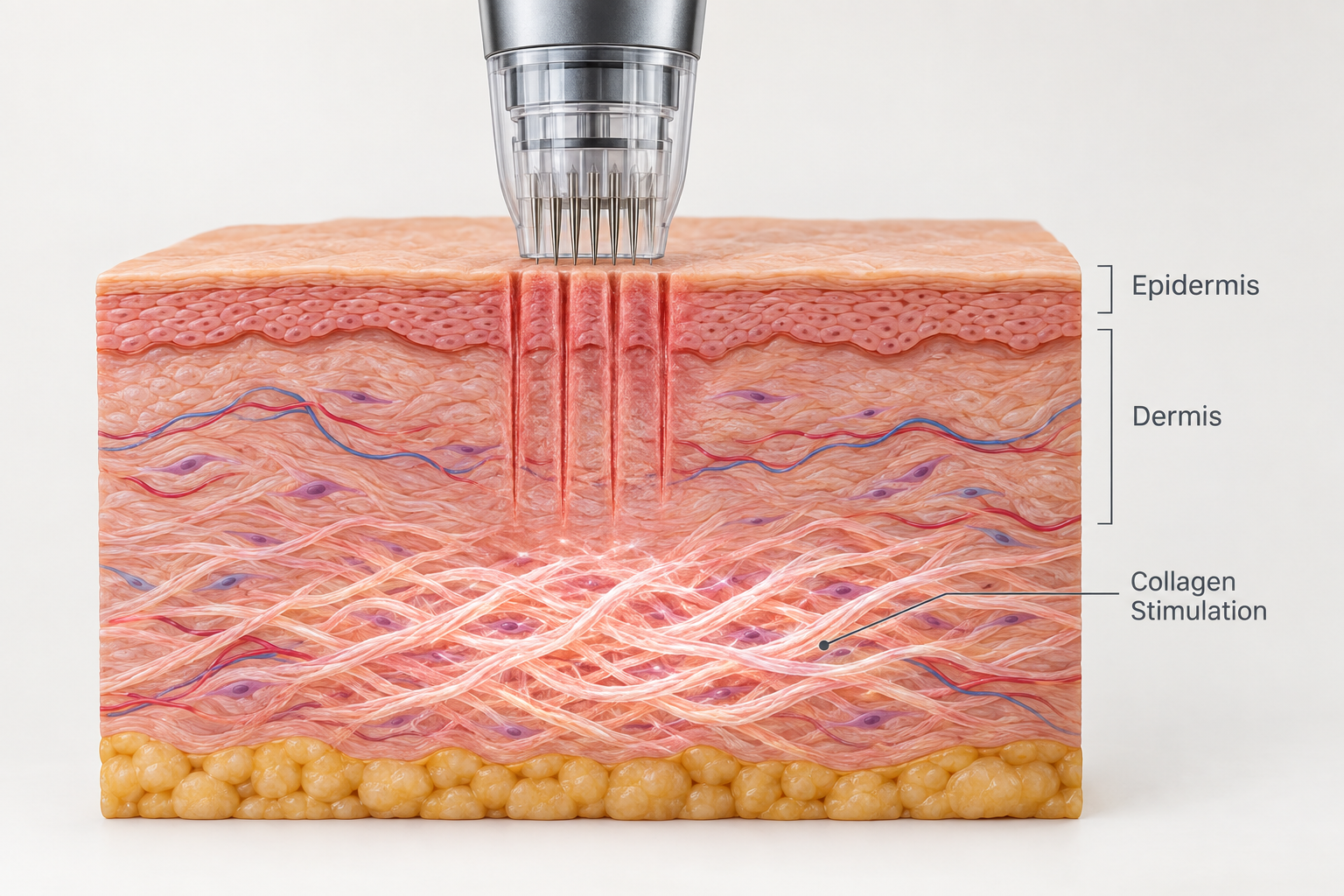
Microneedling — also called collagen induction therapy — uses a device fitted with fine needles to create controlled micro-injuries in the skin. These tiny punctures trigger the skin’s natural wound-healing response, stimulating the production of collagen and elastin. Over time, this process can improve skin texture, firmness, and the appearance of certain types of scarring. The treatment is performed using either a motorised pen-style device or, less commonly, a dermaroller, with needle depth adjusted according to the area being treated and the concern being addressed.
The key mechanism is the stimulation of fibroblasts — the cells responsible for producing collagen and elastin — in the dermis. Because this is a biological process that unfolds over weeks, the results from a single session continue to develop long after the appointment itself. This is also why spacing sessions appropriately matters: the skin needs adequate time to complete its repair cycle before being stimulated again.
How Often Should You Have Microneedling?
For most patients, microneedling sessions are spaced four to six weeks apart. This interval allows the skin to move through its full healing and remodelling cycle before the next treatment. Going too frequently does not accelerate results and may impair the skin’s ability to recover properly. Going too infrequently is not harmful, but it may slow overall progress during an initial course.

The standard recommendation for a first course of microneedling is three to six sessions, depending on the concern being treated. Patients addressing mild texture irregularities or early signs of ageing may see satisfactory improvement after three sessions. Those treating more established acne scarring, deeper lines, or significant skin laxity are more likely to need five or six sessions — sometimes more — before reaching their desired outcome. A practitioner will typically reassess progress after each session and adjust the plan accordingly.
It is worth noting that needle depth influences recovery time and therefore affects how closely sessions can be scheduled. Superficial treatments at lower depths may allow for a slightly shorter interval, while deeper treatments — particularly those targeting atrophic acne scars — generally require the full four to six weeks between appointments to allow adequate tissue remodelling.
Treatment Frequency by Skin Concern
Different skin concerns respond to microneedling at different rates, and this directly affects how a treatment course is structured.
Fine Lines and Skin Texture
For fine lines, mild skin laxity, and general skin quality improvement, a course of three to four sessions spaced four weeks apart is a common starting point. These concerns tend to respond relatively well to microneedling because they involve the more superficial layers of the dermis. Improvement in skin texture and radiance may become noticeable after the first or second session, though the full benefit of a course typically becomes apparent several weeks after the final treatment.
Acne Scarring
Acne scarring — particularly atrophic or depressed scars — is one of the more challenging concerns to treat and generally requires a longer course. Most clinical protocols for acne scar treatment recommend four to six sessions, with some patients requiring additional sessions beyond this. The intervals between treatments for acne scarring are usually kept at a minimum of four to six weeks, and some practitioners prefer six weeks to allow deeper remodelling to occur. Results from microneedling for acne scarring tend to be gradual, with the most significant changes visible three to six months after completing a course.
Hyperpigmentation and Uneven Skin Tone
Microneedling may help with certain types of hyperpigmentation by promoting skin cell turnover and, when combined with topical agents such as vitamin C or tranexamic acid, potentially enhancing their penetration. For pigmentation concerns, a course of three to four sessions is typical, though results vary considerably depending on the cause and depth of the pigmentation. Post-inflammatory hyperpigmentation may respond differently from melasma, and a practitioner should assess the type of pigmentation before recommending microneedling as part of a treatment plan.
Enlarged Pores and Oily Skin
Patients seeking improvement in pore appearance or skin congestion may benefit from a shorter initial course of two to three sessions, with maintenance sessions scheduled as needed. Pore size is influenced by genetics, sebum production, and skin elasticity, and while microneedling may improve the appearance of enlarged pores by stimulating collagen around the pore walls, it is unlikely to produce dramatic changes in isolation.
Stretch Marks
Stretch marks, particularly those that are more established and lighter in colour, are among the more difficult concerns to treat with microneedling. A longer course of six or more sessions is typically required, and results tend to be modest rather than transformative. Evidence for microneedling in stretch mark treatment is less robust than for acne scarring, and realistic expectations are important.
What Happens During a Microneedling Appointment?
A typical microneedling appointment begins with a consultation or review of the treatment plan, followed by cleansing of the skin. A topical numbing cream is usually applied and left in place for around twenty to thirty minutes before the procedure begins. The practitioner then passes the microneedling device across the treatment area in a systematic pattern, adjusting needle depth according to the zone being treated — for example, using a shallower depth around the eye area and a greater depth over thicker skin on the cheeks or forehead.
The treatment itself usually takes between thirty and sixty minutes depending on the size of the area being treated. Immediately afterwards, the skin typically appears red and may feel warm, similar to mild sunburn. A soothing serum or growth factor product is often applied at the end of the session. Most patients can return to normal activities within twenty-four to forty-eight hours, though redness may persist for slightly longer in some individuals, particularly after deeper treatments.
Recovery Time and Why It Matters for Scheduling
Understanding recovery time is essential to understanding why microneedling cannot simply be repeated every week. After a session, the skin enters a sequence of healing phases: an initial inflammatory phase lasting one to three days, a proliferative phase during which new collagen fibres begin to form, and a longer remodelling phase that can continue for several weeks to months. It is during the remodelling phase that the visible improvements in skin quality develop.
Scheduling sessions too closely together — for example, every one to two weeks — risks disrupting this process and may lead to prolonged inflammation rather than productive tissue repair. The four-to-six-week interval is designed to allow the skin to complete at least the early stages of remodelling before the next stimulus is applied. This is not simply a conservative guideline; it reflects the biology of collagen synthesis, which takes time regardless of how frequently the skin is stimulated.
Downtime after microneedling is generally mild compared to more ablative treatments. Most patients experience redness and mild sensitivity for one to three days. Peeling or flaking may occur in the days following treatment as the skin renews itself. Sun protection is particularly important during this period, as the skin is more vulnerable to UV damage while healing.
Maintenance Sessions: How Often After the Initial Course?
Once an initial course of microneedling is complete and the desired improvement has been achieved, the question shifts from how often to have sessions during treatment to how often maintenance is needed to sustain results. Collagen production naturally declines with age, and the improvements gained from a course of microneedling are not permanent — they require periodic reinforcement.
Most practitioners recommend maintenance microneedling sessions every three to six months, depending on the individual’s skin, age, lifestyle factors such as sun exposure, and the concern originally treated. Some patients with good skin quality and modest goals may find that one or two sessions per year is sufficient to maintain their results. Others, particularly those who have treated significant scarring or who are managing ongoing skin ageing, may benefit from more regular maintenance.
It is also worth considering that maintenance sessions are typically performed at a similar or slightly reduced depth compared to the initial course, and the skin’s response to maintenance treatments may differ from its response during the initial course. A practitioner should reassess the skin at each maintenance appointment rather than simply repeating the same protocol indefinitely.
Factors That Affect Your Microneedling Schedule
Several individual factors influence how a microneedling treatment plan is structured and how frequently sessions should occur.

- Skin concern and severity: More significant concerns such as deep acne scarring require more sessions and longer intervals than mild texture issues.
- Skin type and sensitivity: Patients with more reactive or sensitive skin may need longer recovery periods between sessions.
- Age: Collagen synthesis slows with age, which may mean that older patients require more sessions to achieve comparable results and may benefit from more frequent maintenance.
- Needle depth used: Deeper treatments require more recovery time and therefore longer intervals between sessions.
- Combination treatments: Microneedling is sometimes combined with radiofrequency energy (RF microneedling), platelet-rich plasma (PRP), or topical growth factors. These combinations may alter the recommended treatment interval.
- Lifestyle and sun exposure: Significant sun exposure between sessions can impair healing and reduce the effectiveness of treatment. Consistent use of broad-spectrum SPF is important throughout a course.
- Medical history and medications: Certain medications, including retinoids and blood thinners, may affect suitability or require adjustments to the treatment schedule. A full medical history should be taken before starting treatment.
Who May Not Be Suitable for Microneedling
Microneedling is not appropriate for everyone, and a clinical assessment is necessary before starting treatment. Patients with active acne, active skin infections, or open wounds in the treatment area should not undergo microneedling until these have resolved. Those with a history of keloid scarring may be at increased risk of an adverse scarring response and should discuss this carefully with a practitioner before proceeding.
Microneedling is generally avoided during pregnancy and breastfeeding, and patients taking certain medications — including oral isotretinoin — are usually advised to wait a period of time after stopping the medication before undergoing treatment. Patients with certain autoimmune conditions, blood clotting disorders, or active inflammatory skin conditions such as eczema or psoriasis in the treatment area may also not be suitable candidates. A thorough consultation is the appropriate way to determine individual suitability.
Alternatives to Microneedling
Microneedling is one of several treatments that stimulate collagen production and improve skin quality. Depending on the concern being addressed, a practitioner may discuss alternatives or complementary options.
- RF microneedling: Combines standard microneedling with radiofrequency energy delivered through the needles, which may produce greater skin tightening effects. Treatment intervals are similar but the device and energy settings differ significantly from standard microneedling.
- Chemical peels: Superficial and medium-depth peels can improve skin texture, pigmentation, and fine lines. They work through a different mechanism — controlled exfoliation of the outer skin layers — and may be used alongside or instead of microneedling depending on the concern.
- Laser resurfacing: Fractional laser treatments can address similar concerns to microneedling, often with greater precision for certain types of scarring or pigmentation. Downtime is typically longer, and the treatment may not be suitable for all skin tones.
- Polynucleotides and skin boosters: Injectable treatments that support skin hydration, elasticity, and quality from within. These may complement microneedling rather than replace it, depending on the patient’s goals.
- Topical retinoids: Prescription-strength retinoids stimulate collagen production and cell turnover over time. They are not a direct substitute for microneedling but may be used as part of a broader skin health plan.
Frequently Asked Questions
Can I have microneedling more than once a month?
Having microneedling more frequently than once every four weeks is generally not recommended during a standard course of treatment. The skin requires adequate time to complete its healing and collagen remodelling cycle between sessions. Treating too frequently may cause prolonged inflammation without producing additional benefit. Some very superficial treatments may allow for slightly shorter intervals, but this should be determined by a qualified practitioner based on your individual skin response.
How soon will I see results from microneedling?
Some patients notice an improvement in skin radiance and texture within a few days of their first session, once initial redness has settled. However, the collagen remodelling process that produces more significant changes — such as improvement in scarring or fine lines — takes several weeks to months to develop. The full results of a course of microneedling are typically most visible three to six months after the final session.
Is one microneedling session enough?
A single session may produce a temporary improvement in skin radiance and texture, but it is unlikely to produce lasting or significant changes for most concerns. A course of multiple sessions is generally required to stimulate sufficient collagen remodelling for meaningful, sustained results. The number of sessions needed depends on the concern being treated and individual skin response.
How long do microneedling results last?
Results from a completed course of microneedling are not permanent. The improvements in collagen density and skin quality gradually diminish over time as the natural ageing process continues. Most patients find that results last approximately six to twelve months before maintenance sessions become beneficial, though this varies considerably between individuals.
Can microneedling be combined with other treatments?
Yes, microneedling is frequently combined with other treatments. Common combinations include platelet-rich plasma (PRP), which is applied to the skin during or after the procedure, and topical growth factors or vitamin C serums. RF microneedling adds radiofrequency energy to the standard microneedling process. Combining treatments may alter the recommended interval between sessions, and a practitioner should advise on the appropriate schedule for any combination approach.
Does microneedling hurt?
Topical numbing cream is applied before treatment, which significantly reduces discomfort for most patients. The sensation during treatment is often described as a mild scratching or vibrating feeling. Some areas of the face — such as the forehead and around the nose — may be more sensitive than others. Deeper treatments may cause more noticeable discomfort even with numbing cream in place.
Can I have microneedling if I have darker skin?
Microneedling is generally considered suitable for a wider range of skin tones than some laser treatments, as it does not rely on light energy and therefore carries a lower risk of post-inflammatory hyperpigmentation in darker skin types. However, individual assessment is still important, and a practitioner experienced in treating diverse skin tones should be consulted to ensure the treatment is appropriate and performed safely.
Planning Your Microneedling Schedule: What to Consider
Deciding how often to have microneedling is not a one-size-fits-all calculation. The most useful starting point is a thorough consultation with a qualified practitioner who can assess your skin, understand your goals, and recommend a realistic treatment plan based on your specific concern and skin type. A plan that works well for one patient — for example, four sessions spaced five weeks apart for mild acne scarring — may not be the right approach for another patient with different skin characteristics or a different concern.
It is also worth approaching microneedling with realistic expectations about the pace of results. Because the treatment works through biological processes that unfold over weeks and months, patience is genuinely part of the process. Committing to a full course and allowing adequate time between sessions — rather than seeking to accelerate the schedule — is more likely to produce the kind of gradual, natural-looking improvement that microneedling is capable of delivering. If you are considering microneedling, a consultation with a qualified aesthetic practitioner is the appropriate next step to determine whether it is suitable for your skin and what a sensible treatment plan might look like for your goals.
