


The neck is one of the first areas to show visible signs of skin ageing, yet it is frequently overlooked in skincare routines and treatment planning. Microneedling on the neck has become an increasingly discussed option for patients seeking to improve skin texture, laxity, and the appearance of fine lines in this area without surgery. This article explains how neck skin needling works, what the evidence suggests, who may be suitable, and what realistic expectations look like before you consider a consultation.
Key Takeaways
- Microneedling on the neck uses fine needles to stimulate collagen production and may improve skin texture, fine lines, and mild laxity in this area.
- The neck requires a modified approach compared with the face because the skin is thinner, more sensitive, and has fewer sebaceous glands.
- Multiple sessions are typically needed, and results develop gradually over several weeks to months.
- Neck microneedling carries specific risks including prolonged redness, post-inflammatory hyperpigmentation, and scarring if performed incorrectly.
- A thorough clinical assessment is essential to determine suitability, appropriate needle depth, and whether alternative or combination treatments may be more appropriate.
What Is Microneedling and How Does It Work on the Neck?
Microneedling, also referred to as collagen induction therapy, is a minimally invasive procedure that uses a device fitted with fine sterile needles to create controlled micro-injuries in the skin. These micro-channels trigger the skin’s natural wound-healing response, stimulating the production of collagen and elastin — the structural proteins responsible for skin firmness and elasticity. On the face, this mechanism is well-documented in clinical literature. On the neck, the same biological principle applies, though the anatomical differences of neck skin require careful consideration.
Neck skin is structurally different from facial skin in several important ways. It is generally thinner, contains fewer sebaceous glands, and has a reduced capacity for regeneration compared with the face. These characteristics mean that the neck can be more vulnerable to adverse effects if microneedling is performed at inappropriate depths or with excessive pressure. A qualified practitioner will typically use shallower needle depths on the neck than on the face and will adjust the treatment protocol accordingly to reduce the risk of complications.
Devices used for microneedling include motorised dermapens and dermarollers, with dermapens generally considered more controllable for delicate areas such as the neck. Radiofrequency microneedling — which combines the needling stimulus with radiofrequency energy delivered directly into the dermis — is also used on the neck and may offer additional skin-tightening effects, though it represents a more advanced and typically more expensive treatment category.
What Neck Concerns May Microneedling Address?
Patients considering microneedling on the neck are usually concerned about one or more of the following: horizontal neck lines (sometimes called necklace lines), general skin laxity or crepiness, uneven skin texture, enlarged pores, and mild to moderate skin looseness. Microneedling may help improve the appearance of these concerns by encouraging dermal remodelling over time, though the degree of improvement varies considerably between individuals.
Horizontal neck lines are among the most commonly treated concerns. These lines can be caused by a combination of repeated movement, gravitational changes, and collagen loss associated with ageing. Microneedling may soften their appearance by stimulating new collagen in the surrounding dermis, but deeply etched lines are unlikely to resolve completely with needling alone. Patients with significant skin laxity or pronounced platysmal banding — the vertical muscle cords that can become visible in the neck with age — are generally not ideal candidates for microneedling as a standalone treatment, as these concerns typically require different interventions.
Crepey neck skin, characterised by a thin, finely wrinkled texture, is another area where microneedling may offer some benefit. The treatment may help thicken the dermis slightly over a course of sessions, improving the overall quality and resilience of the skin. However, patients should understand that results in this area tend to be modest and gradual rather than dramatic.
Is Microneedling Safe on the Neck?
When performed by a trained and experienced practitioner using appropriate equipment and technique, microneedling on the neck can be carried out safely. However, the neck is considered a more technically demanding treatment area than the face, and the margin for error is smaller. The thinner skin of the neck means that using needle depths appropriate for facial treatment can cause unnecessary trauma, increasing the risk of post-inflammatory hyperpigmentation, prolonged redness, or scarring.
Safety on the neck also depends on the type of device used, the practitioner’s familiarity with neck anatomy, and the individual patient’s skin type and medical history. Patients with darker skin tones face a higher risk of post-inflammatory hyperpigmentation following any needling procedure, and this risk may be more pronounced on the neck due to the skin’s reduced regenerative capacity. A thorough pre-treatment assessment should include a discussion of skin type, previous treatments, and any relevant medical history.
Certain anatomical structures in the neck — including superficial blood vessels and lymphatic channels — require awareness during treatment. A practitioner who is not familiar with neck anatomy may inadvertently cause bruising or vascular injury. This is one reason why neck microneedling should not be performed by individuals without appropriate training, and why at-home dermaroller use on the neck is generally not recommended by clinicians.
Who May Be Suitable for Neck Microneedling?
Patients who may be considered suitable for microneedling on the neck typically include those with mild to moderate skin laxity, fine horizontal lines, crepey skin texture, or general skin quality concerns in the neck area. Suitable candidates are usually in good general health, have realistic expectations about the degree of improvement achievable, and are willing to commit to a course of treatments rather than expecting results from a single session.
Skin type plays an important role in suitability. Patients with lighter skin tones and good skin elasticity tend to respond more predictably to microneedling. Those with very thin or fragile neck skin, or with a history of keloid scarring, may not be appropriate candidates. A Fitzpatrick skin type assessment — a clinical scale used to classify skin’s response to ultraviolet light and its tendency to pigment — is a useful tool for evaluating pigmentation risk before treatment.
Age is not a strict barrier to treatment, but the degree of benefit may differ. Younger patients with early signs of neck ageing may see more noticeable improvements in skin quality, while older patients with significant laxity may find that microneedling alone provides limited correction and that combination approaches are worth discussing with their practitioner.
Who May Not Be Suitable?
Microneedling on the neck is not appropriate for everyone. Contraindications relevant to this treatment include active skin infections, open wounds, or inflammatory skin conditions such as eczema or psoriasis in the treatment area. Patients with a personal or family history of keloid or hypertrophic scarring should approach needling procedures with caution and discuss this history with their practitioner before proceeding.
Pregnancy and breastfeeding are generally considered contraindications to microneedling, as the safety of the procedure and any topical agents applied during treatment has not been established in these groups. Patients taking blood-thinning medications may experience increased bruising and should inform their practitioner of all current medications. Those who have recently undergone radiotherapy to the neck area, or who have implanted devices such as a pacemaker in proximity to the treatment zone, should seek specific medical advice before considering any needling procedure.
Active acne or rosacea in the neck area, while less common than on the face, may also be a reason to delay or avoid treatment. Needling inflamed or infected skin risks spreading bacteria and worsening the condition. A qualified practitioner will assess the skin carefully before proceeding and may recommend that any active skin concerns are addressed first.
What Happens During a Neck Microneedling Appointment?
A typical neck microneedling appointment begins with a consultation or pre-treatment review to confirm suitability and discuss the patient’s goals. The neck area is cleansed thoroughly to remove any makeup, skincare products, or surface debris. A topical anaesthetic cream is usually applied to the neck and left in place for approximately 20 to 45 minutes before treatment begins, helping to minimise discomfort during the procedure.
Once the anaesthetic has taken effect, the practitioner uses a microneedling device — most commonly a motorised dermapen — to pass systematically over the neck skin. The needle depth is set according to the specific concern being treated and the characteristics of the patient’s skin. On the neck, depths are typically kept shallower than those used on the face, often in the range of 0.5 to 1.5 millimetres, though the appropriate depth is determined by the practitioner based on clinical assessment rather than a fixed protocol.
The treatment itself usually takes between 20 and 40 minutes for the neck area, depending on the size of the zone being treated and whether adjacent areas such as the décolletage are included. After needling, a soothing serum or growth factor preparation may be applied to the treated skin. The practitioner will provide specific aftercare instructions before the patient leaves the clinic.
Discomfort and Downtime
Most patients describe the sensation of microneedling on the neck as a mild to moderate prickling or scratching feeling, which is generally well-tolerated when topical anaesthetic has been applied. The neck can be more sensitive than the face in some individuals, and patients should communicate any significant discomfort to their practitioner during the procedure so that technique or pressure can be adjusted.
Immediately after treatment, the neck skin typically appears red and may feel warm, tight, or slightly swollen — a response similar to mild sunburn. This initial redness usually subsides within 24 to 72 hours in most patients, though the neck may take slightly longer to settle than the face due to its thinner skin. Some patients experience minor pinpoint bleeding during the procedure, which is normal and resolves quickly.
Downtime following neck microneedling is generally described as social downtime rather than medical downtime — most patients can return to daily activities within one to two days, though they may prefer to avoid social engagements while visible redness persists. Strenuous exercise, swimming, saunas, and direct sun exposure should be avoided for at least 48 to 72 hours after treatment. Makeup application to the neck is typically not recommended for the first 24 hours to allow the micro-channels to close and reduce the risk of introducing bacteria or irritants into the skin.
Aftercare for Neck Microneedling
Proper aftercare is important for both safety and results following neck microneedling. The treated skin should be kept clean and moisturised with gentle, fragrance-free products in the days following treatment. Harsh active ingredients such as retinoids, alpha hydroxy acids, and vitamin C serums should be avoided for approximately five to seven days post-treatment, as the compromised skin barrier may be more reactive than usual.
Sun protection is particularly important after microneedling on the neck. The neck is an area that is often neglected in daily sun protection routines, yet UV exposure following needling can increase the risk of post-inflammatory hyperpigmentation. Patients should apply a broad-spectrum sunscreen with an SPF of at least 30 to the neck daily and avoid prolonged sun exposure during the recovery period. Wearing clothing that covers the neck when outdoors can provide additional protection.
Patients should follow the specific aftercare guidance provided by their treating practitioner, as protocols may vary depending on the device used, the needle depth applied, and any topical agents used during the procedure. Any concerns about the healing process — such as persistent redness beyond five days, signs of infection, or unexpected skin changes — should be reported to the clinic promptly.
When Do Results Appear and How Long Do They Last?
Results from microneedling on the neck develop gradually rather than immediately. The collagen remodelling process stimulated by needling takes time, and most patients begin to notice improvements in skin texture and quality approximately four to six weeks after their first session. More significant changes in skin firmness and the appearance of fine lines typically become visible after a course of treatments, often assessed at three months or beyond.
A course of three to six sessions, spaced approximately four to six weeks apart, is commonly recommended for neck skin concerns, though the appropriate number of sessions depends on the individual’s skin condition, goals, and response to treatment. Maintenance sessions every six to twelve months may help sustain results, as the collagen produced through microneedling is subject to the same ongoing ageing processes as naturally occurring collagen.
The longevity of results varies between patients and is influenced by factors including age, skin quality, lifestyle habits, and sun exposure. Patients who maintain a consistent skincare routine, use daily sun protection, and attend maintenance sessions tend to preserve their results for longer. It is important to understand that microneedling does not halt the ageing process; it may improve the current condition of the skin, but ongoing maintenance is generally required to sustain visible benefits.
Risks and Side Effects of Neck Microneedling
Microneedling on the neck carries a range of potential side effects and risks that patients should understand before proceeding. Common and expected side effects include redness, mild swelling, skin sensitivity, and minor pinpoint bleeding during the procedure. These effects are generally temporary and resolve within a few days in most patients.
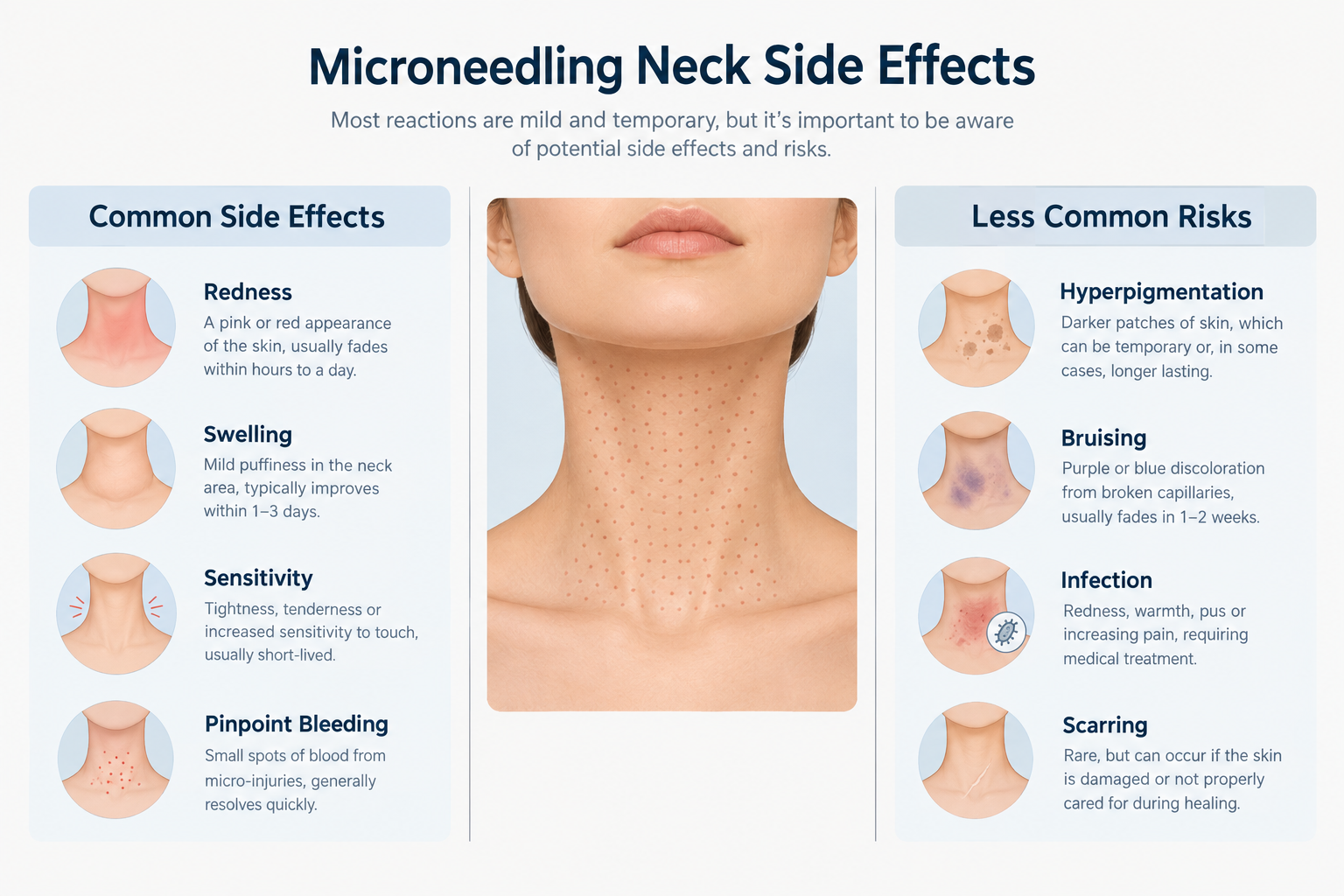
Less common but more significant risks include post-inflammatory hyperpigmentation, particularly in patients with darker skin tones or those who do not follow sun protection advice after treatment. Infection is a risk if the procedure is performed with non-sterile equipment or if aftercare instructions are not followed carefully. Scarring, while uncommon when the procedure is performed correctly, can occur if inappropriate needle depths are used or if the skin is treated while an active infection or inflammatory condition is present.
Bruising is more likely on the neck than on some facial areas due to the proximity of superficial blood vessels, and patients taking anticoagulant medications face a higher risk of this side effect. Allergic reactions to topical agents applied during or after treatment are possible, though uncommon. Patients should inform their practitioner of any known allergies before treatment begins.
The risk of adverse outcomes is meaningfully reduced when treatment is performed by a trained practitioner using sterile, medical-grade equipment in a clinical setting. Patients should be cautious about seeking microneedling in non-clinical environments or from practitioners without verifiable training and experience in skin needling procedures.
Alternatives to Microneedling on the Neck
Microneedling is one of several non-surgical options that may be considered for neck skin concerns, and it is not always the most appropriate choice for every patient. Understanding the alternatives helps patients have a more informed conversation with their practitioner about which approach may best match their goals.
Radiofrequency skin tightening — delivered through devices that use radiofrequency energy to heat the deeper layers of the skin — may be considered for patients with more pronounced neck laxity, as it can stimulate collagen contraction and remodelling without needling. High-intensity focused ultrasound (HIFU) is another energy-based option that targets deeper tissue layers and may be more appropriate for patients seeking lifting effects in the neck and lower face. Both of these technologies have their own risk profiles and suitability criteria.
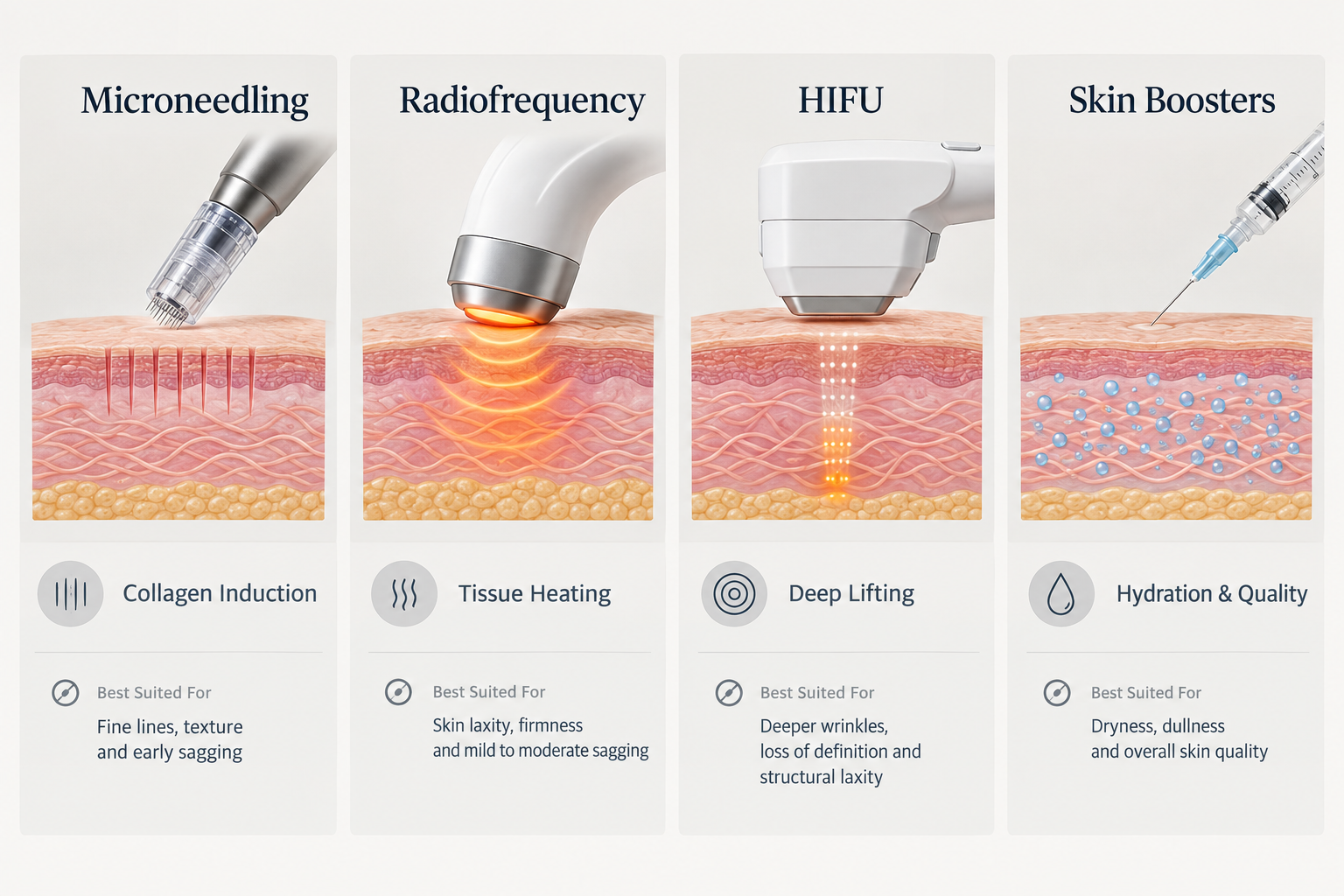
Injectable treatments such as skin booster injections — which deliver hyaluronic acid or polynucleotides into the superficial dermis — may complement or in some cases replace microneedling for patients primarily concerned with skin hydration and quality rather than laxity. Botulinum toxin injections into the platysma muscle can address platysmal banding and may also have a mild skin-smoothing effect on the neck, though this is a different mechanism from collagen induction therapy.
For patients with significant neck laxity or excess skin, surgical options such as a neck lift may provide more substantial and longer-lasting correction than any non-surgical approach. A qualified practitioner should be able to discuss the realistic scope of non-surgical treatments honestly and refer patients to appropriate specialists when surgical assessment may be more relevant to their goals.
Frequently Asked Questions
Can microneedling tighten loose neck skin?
Microneedling may improve mild to moderate skin laxity on the neck by stimulating collagen production, which can gradually firm and thicken the skin. However, it is unlikely to produce significant tightening in patients with pronounced skin looseness or excess skin. Patients with more advanced laxity may benefit from discussing energy-based treatments or surgical options with a qualified practitioner.
How many microneedling sessions are needed for the neck?
Most practitioners recommend a course of three to six sessions for neck skin concerns, spaced approximately four to six weeks apart. The exact number depends on the individual’s skin condition, the specific concerns being addressed, and how the skin responds to initial treatments. Maintenance sessions are typically recommended every six to twelve months to sustain results.
Is microneedling on the neck more painful than on the face?
The neck can be more sensitive than some facial areas, and some patients report that it feels slightly more uncomfortable. Topical anaesthetic cream is routinely applied before treatment to minimise discomfort, and most patients find the procedure tolerable. Patients should communicate any significant discomfort to their practitioner during the session.
Can I use a dermaroller on my neck at home?
Home dermaroller use on the neck is generally not recommended by clinicians. The neck’s thinner skin and proximity to important anatomical structures make it a higher-risk area for self-treatment. Incorrect needle depth, inadequate sterilisation, and lack of clinical assessment increase the risk of adverse effects including scarring and infection. Professional treatment in a clinical setting is the safer approach.
How soon after microneedling can I apply makeup to my neck?
Most practitioners advise avoiding makeup on the treated neck area for at least 24 hours after microneedling to allow the micro-channels to close and reduce the risk of irritation or infection. Specific guidance may vary depending on the treatment protocol used, so patients should follow the aftercare instructions provided by their clinic.
Can microneedling help with neck lines caused by looking at a phone?
Horizontal neck lines — sometimes informally called tech neck lines — are caused by a combination of repeated flexion, gravitational changes, and collagen loss. Microneedling may help soften the appearance of these lines over a course of treatments by stimulating collagen remodelling in the surrounding dermis. Deeply established lines are unlikely to resolve completely, and a combination approach may be discussed with a practitioner for more pronounced cases.
Is Microneedling the Right Choice for Your Neck Concerns?
Microneedling on the neck is a reasonable option to explore for patients with mild to moderate skin quality concerns, fine lines, or early laxity in this area, provided it is performed by a trained practitioner with experience in treating neck skin. The evidence supporting collagen induction therapy for skin rejuvenation is reasonably established, though most clinical research has focused on the face, and the neck-specific evidence base is less extensive. Patients should approach neck microneedling with realistic expectations: gradual, modest improvements in skin texture and quality are achievable for many patients, but dramatic tightening or complete line elimination is not a realistic outcome.
The neck’s anatomical characteristics — thinner skin, fewer sebaceous glands, and proximity to superficial vascular structures — make it a more technically demanding treatment area than the face. Choosing a practitioner with specific experience in neck skin needling, rather than assuming that any microneedling provider can safely treat this area, is an important part of reducing risk. A thorough consultation should include an honest discussion of what microneedling can and cannot achieve for your specific concerns, and whether alternative or combination treatments may be more appropriate for your goals and skin type.
If you are considering microneedling on the neck, a consultation with a qualified aesthetic practitioner or dermatologist is the appropriate starting point. A clinical assessment of your skin, medical history, and treatment goals will help determine whether neck microneedling is suitable for you and what a realistic treatment plan might look like.
