

Key Takeaways
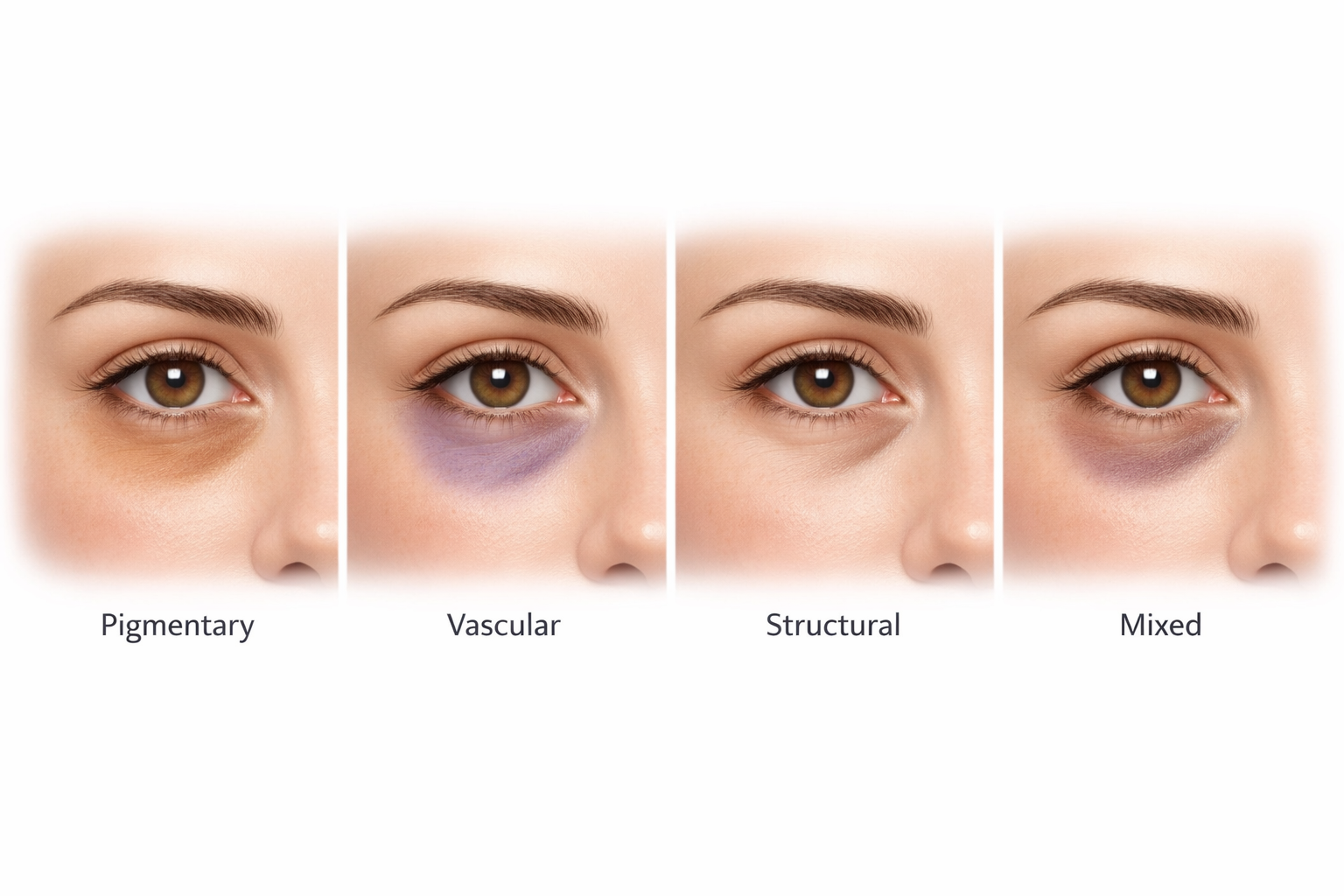
- Dark circles have four distinct types — pigmentary, vascular, structural, and mixed — and identifying the correct type is essential before selecting any treatment.
- No single treatment corrects every type of dark circle; a personalised treatment plan matched to the underlying cause consistently produces better outcomes than a one-size-fits-all approach.
- Tear trough filler, polynucleotides, PRP, and carboxytherapy are among the most widely used non-surgical options in London, each targeting different mechanisms.
- A doctor-led consultation with a GMC-registered practitioner is the recommended starting point, particularly given the anatomical complexity of the periorbital area.
- Results vary between individuals; realistic expectations and awareness of treatment longevity and maintenance requirements should form part of any pre-treatment discussion.
Why Dark Circles Are More Complex Than They Appear
Dark circles under the eyes are one of the most common aesthetic concerns brought to London clinics, yet they are also among the most frequently mismanaged. The difficulty is that dark circles look similar regardless of their underlying cause, but the cause determines which treatment — or combination of treatments — is likely to help. Applying a treatment designed for hollowing to a patient whose main issue is pigmentation, for example, is unlikely to produce a satisfying outcome.
Understanding the mechanism behind your dark circles is therefore the first and most important step. This guide explains the four recognised types, the treatments currently available from London aesthetic and medical clinics, realistic expectations for each, and what a well-structured consultation should involve.
The Four Types of Dark Circles: A Practical Classification
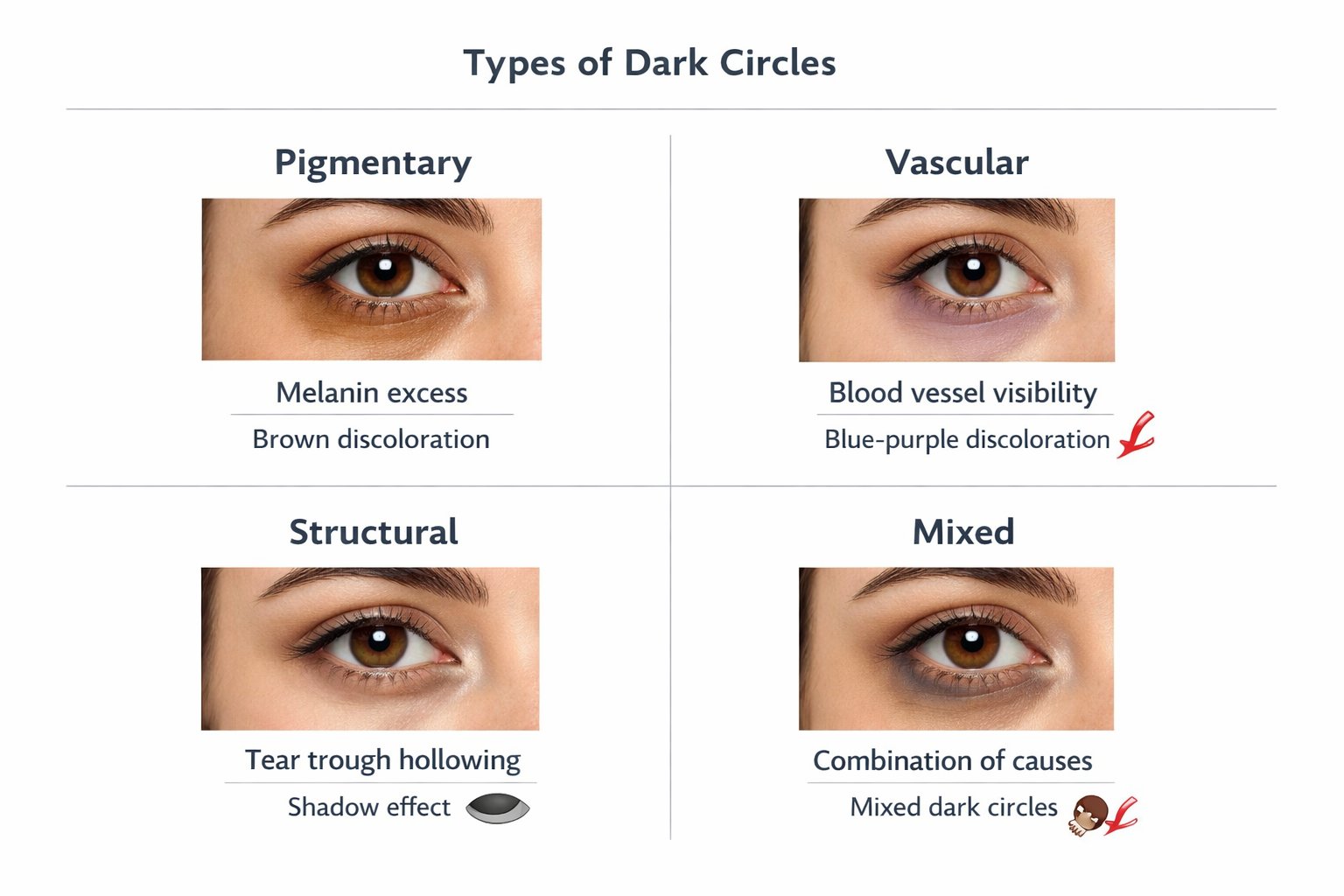
Most patients have a combination of contributing factors, but practitioners typically classify dark circles into four broad categories to guide treatment decisions.
Pigmentary Dark Circles
Periorbital hyperpigmentation refers to excess melanin deposited in the skin beneath and around the eyes. The resulting discolouration appears brown or grey and is often most visible in brighter light. This type is more common in patients with Fitzpatrick skin types III–VI and may have a genetic component. Sun exposure, hormonal changes, chronic rubbing (often associated with allergies), and post-inflammatory responses can all worsen pigmentary dark circles over time. Treatments targeting melanin production — such as topical brightening agents, chemical peels, and certain laser modalities — are most relevant here.
Vascular Dark Circles
Vascular dark circles arise when blood vessels close to the surface of the thin eyelid skin become visible. Because the skin beneath the eyes is among the thinnest on the body — often less than one millimetre — dilated capillaries or sluggish microcirculation can produce a blue, purple, or reddish hue. Fatigue, dehydration, alcohol consumption, and cold temperatures can all temporarily worsen vascular dark circles by affecting circulation. Treatments aimed at improving microcirculation or reducing vessel visibility, such as carboxytherapy or pulsed dye laser, are particularly relevant for this type.
Structural Dark Circles
Structural shadowing results from changes in the three-dimensional anatomy of the mid-face and under-eye area. As the face ages, the orbicularis oculi fat pad reduces and repositions, the bony orbit may widen slightly, and the skin loses collagen support. The result is tear trough hollowing — a concave transition between the lower eyelid and the cheek that casts a shadow under normal lighting. This shadow is often interpreted as a dark discolouration but is not caused by pigment or vascular visibility. Volume replacement with hyaluronic acid tear trough filler addresses this mechanism directly.
Mixed Dark Circles
Mixed dark circles — the most common presentation in clinical practice — involve two or more of the above mechanisms operating simultaneously. A patient may have structural hollowing that creates shadow, combined with underlying periorbital hyperpigmentation and some vascular component. Mixed dark circles require a combination treatment protocol rather than a single modality, and identifying the relative contribution of each mechanism is what a thorough clinical assessment is designed to achieve.
Common Contributing Causes
Beyond the four types, several factors can initiate or worsen dark circles regardless of category. Genetics play a significant role — some individuals inherit naturally thin or translucent periorbital skin, a tendency towards hyperpigmentation, or orbital anatomy that predisposes them to shadowing from an early age. Ageing accelerates structural changes through collagen depletion, fat pad loss, and skin thinning, making structural and vascular components progressively more prominent over time.
Lifestyle factors that commonly worsen dark circles include chronic sleep deprivation, dehydration, high alcohol intake, smoking, and prolonged sun exposure without adequate SPF protection. Allergic conditions such as hay fever or eczema contribute through chronic rubbing and inflammation, both of which can worsen periorbital hyperpigmentation. Stress and hormonal fluctuations are also frequently reported triggers, though the mechanisms are less well characterised.
Patients from certain ethnic backgrounds — particularly those of South Asian, East Asian, Middle Eastern, and African heritage — may be more predisposed to pigmentary dark circles due to higher baseline melanin levels and a hereditary tendency towards periorbital hyperpigmentation. Practitioners experienced in treating diverse skin tones will approach pigmentation treatment with appropriate caution to minimise the risk of post-inflammatory hyperpigmentation from aggressive interventions.
Non-Surgical Dark Circle Treatments Available in London
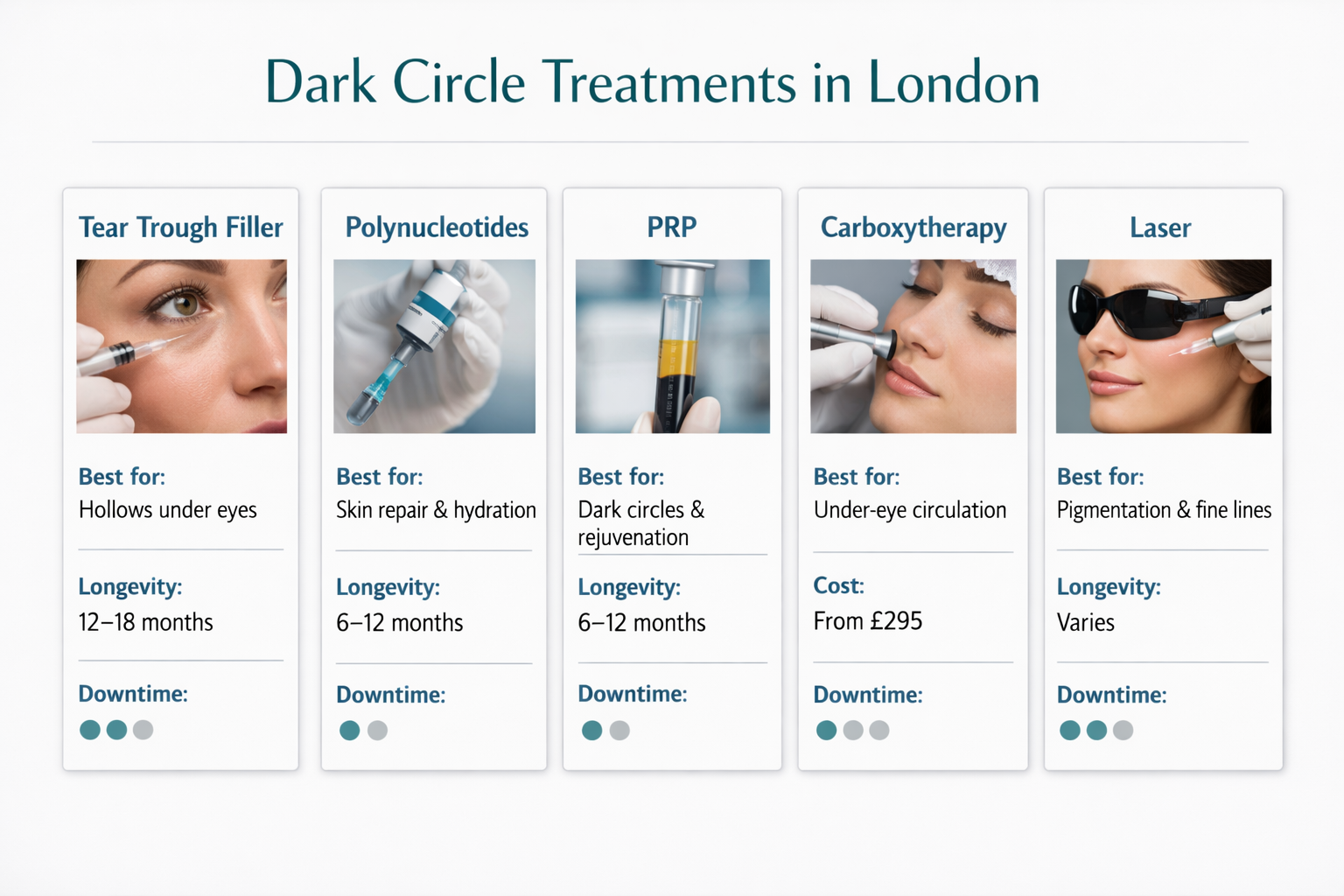
London aesthetic clinics now offer a broad range of non-surgical dark circle treatments, ranging from injectable procedures to energy-based devices and skin quality treatments. The options below represent the most clinically established and widely available approaches.
Hyaluronic Acid Tear Trough Filler
Hyaluronic acid tear trough filler remains one of the most commonly requested under-eye rejuvenation treatments in London. A small volume of a soft, cohesive hyaluronic acid gel is injected into the tear trough — the groove running from the inner corner of the eye towards the cheek — to restore volume, reduce the depth of the hollow, and eliminate or soften the shadow responsible for structural dark circles. Results are typically visible immediately, though some swelling in the first few days may temporarily affect the appearance.
Because the periorbital area contains important anatomical structures including blood vessels and lymphatic channels, tear trough filler carries specific risks when performed without adequate training. Complications including bruising, prolonged swelling, the Tyndall effect (a bluish discolouration caused by superficial placement), and in rare cases vascular occlusion, underline the importance of choosing a GMC-registered practitioner with demonstrable experience in this area. The hyaluronic acid used is reversible with hyaluronidase if necessary, which is considered a meaningful safety advantage.
Tear trough filler is most appropriate for structural dark circles caused by tear trough hollowing. It is generally not the correct primary treatment for pigmentary or purely vascular dark circles, and overfilling can worsen under-eye puffiness in patients who retain fluid in this area. Treatment longevity is typically 12–18 months, though this varies between individuals and depends on the specific product used and the volume injected.
Polynucleotides Under Eyes
Polynucleotides have become one of the most discussed under-eye treatments in London over recent years. Polynucleotide preparations — also referred to as PDRN or, in some formulations, as salmon DNA-derived bio-stimulators — consist of purified DNA fragments derived from salmon or trout sperm. When injected into the periorbital skin, polynucleotides work by stimulating fibroblast activity and collagen production, improving skin quality and thickness rather than adding volume. This makes them particularly relevant for patients whose dark circles are partly driven by skin translucency, thinning skin, or poor skin quality rather than primarily by structural volume loss.
Polynucleotide treatment for dark circles typically involves a course of two to three sessions spaced three to four weeks apart. Improvements in skin hydration, firmness, and overall texture are generally reported after the course, with results continuing to develop over several weeks as collagen stimulation progresses. Treatment longevity is typically in the range of six to twelve months, with maintenance sessions recommended thereafter.
Polynucleotide injections may be suitable as a standalone treatment for mild vascular or skin-quality-related dark circles, but they are most often used as part of a combination treatment protocol alongside tear trough filler or PRP for patients with mixed presentations. In London, a single polynucleotides under eyes session is typically priced between £300 and £595, with a course of two to three sessions commonly ranging from £1,200 to £1,595 depending on the clinic and practitioner level.
Platelet-Rich Plasma (PRP)
PRP treatment involves drawing a small sample of the patient’s own blood, processing it in a centrifuge to concentrate the growth factor-rich platelet fraction, and injecting this concentrated plasma into the under-eye area. Growth factors present in PRP are understood to support collagen stimulation, tissue repair, and improved skin quality and thickness. PRP may also have a modest effect on microcirculation, which can be relevant for vascular dark circles.
PRP is frequently incorporated into combination treatment protocols alongside polynucleotide injections, PRF (Platelet-Rich Fibrin) biofiller, or microneedling for synergistic periorbital rejuvenation. Because PRP uses the patient’s own biological material, the risk of allergic reaction is minimal. The treatment typically requires a course of sessions and results tend to develop gradually. PRP under-eye treatment is available in London from approximately £295 per session at specialist clinics.
Carboxytherapy for Dark Circles
Carboxytherapy involves the controlled injection of medical-grade carbon dioxide gas into the skin beneath the eyes. The introduction of CO₂ triggers a localised physiological response — the body interprets increased CO₂ as a signal of low oxygen and responds by dilating blood vessels and increasing circulation to the area. This improvement in microcirculation can reduce the blue or purple appearance associated with vascular dark circles, while the treatment is also understood to stimulate collagen formation over time, gradually improving skin quality and thickness.
Carboxytherapy for dark circles is typically delivered as a course of four to eight sessions, with gradual improvement across the course. It is generally well tolerated, though a brief sensation of pressure or warmth during injection is commonly reported. Carboxytherapy is particularly worth discussing for patients with primarily vascular dark circles where circulation is a central contributing factor.
Mesotherapy and Biorevitalisation
Mesotherapy and biorevitalisation refer to the microinjection of skin-nourishing compounds — which may include hyaluronic acid in a highly hydrophilic, non-cross-linked form, vitamins, amino acids, and antioxidants — into the superficial layers of the periorbital skin. These treatments aim to improve hydration, skin quality, and overall radiance rather than adding structural volume. Biorevitalisation with products such as skin boosters may be appropriate for patients with mild dark circles related to dehydration, poor skin quality, or early thinning.
Laser Treatments
Laser treatment for dark circles is most relevant for the pigmentary type, where excess melanin is the primary driver. Pulsed dye laser targets superficial blood vessels and can be useful for vascular dark circles in lighter skin tones. Nd:YAG and diode lasers may be considered for deeper pigmentation, and fractional laser resurfacing can address skin texture and quality alongside pigmentation. Laser treatments for the periorbital area require careful patient selection — particularly in patients with darker skin tones, where the risk of post-inflammatory hyperpigmentation is meaningful — and should be performed by practitioners with appropriate training and device expertise.
Microneedling and Radiofrequency Microneedling
Microneedling creates controlled micro-injuries to the skin, stimulating the body’s natural wound-healing response and collagen production. When applied to the periorbital area, microneedling may gradually improve skin quality, firmness, and thickness, which can reduce the visible impact of vascular dark circles over time. Radiofrequency microneedling devices such as Morpheus8 combine the collagen-stimulating effect of microneedling with radiofrequency energy to address skin laxity and quality more comprehensively. These treatments are typically well suited to patients with skin quality concerns rather than significant structural volume loss.
Treatment Comparison at a Glance
| Treatment | Best For | Typical Longevity | Downtime | Approx. London Cost |
|---|---|---|---|---|
| Hyaluronic acid tear trough filler | Structural / hollowing | 12–18 months | Minimal (bruising possible) | £400–£800 per session |
| Polynucleotides | Skin quality / vascular / mixed | 6–12 months | Minimal | £300–£595 per session |
| PRP | Skin quality / mixed / collagen | 6–12 months | Minimal (bruising possible) | From £295 per session |
| Carboxytherapy | Vascular / circulation | 3–6 months (course) | Minimal | £80–£200 per session |
| Laser (pulsed dye / Nd:YAG) | Pigmentary / vascular | Variable | Low to moderate | £150–£400 per session |
| Microneedling / Morpheus8 | Skin quality / laxity | 6–12 months | Low to moderate | £200–£800 per session |
| Mesotherapy / Biorevitalisation | Hydration / skin quality | 3–6 months | Minimal | £150–£350 per session |
Prices reflect typical London market ranges and will vary between clinics and practitioners. Costs for courses of treatment differ from single-session pricing.
What Happens at a Dark Circle Consultation
A well-structured consultation for dark circles should involve considerably more than a brief visual assessment followed by a product recommendation. The following steps outline what to expect from a thorough doctor-led consultation in a reputable London clinic.
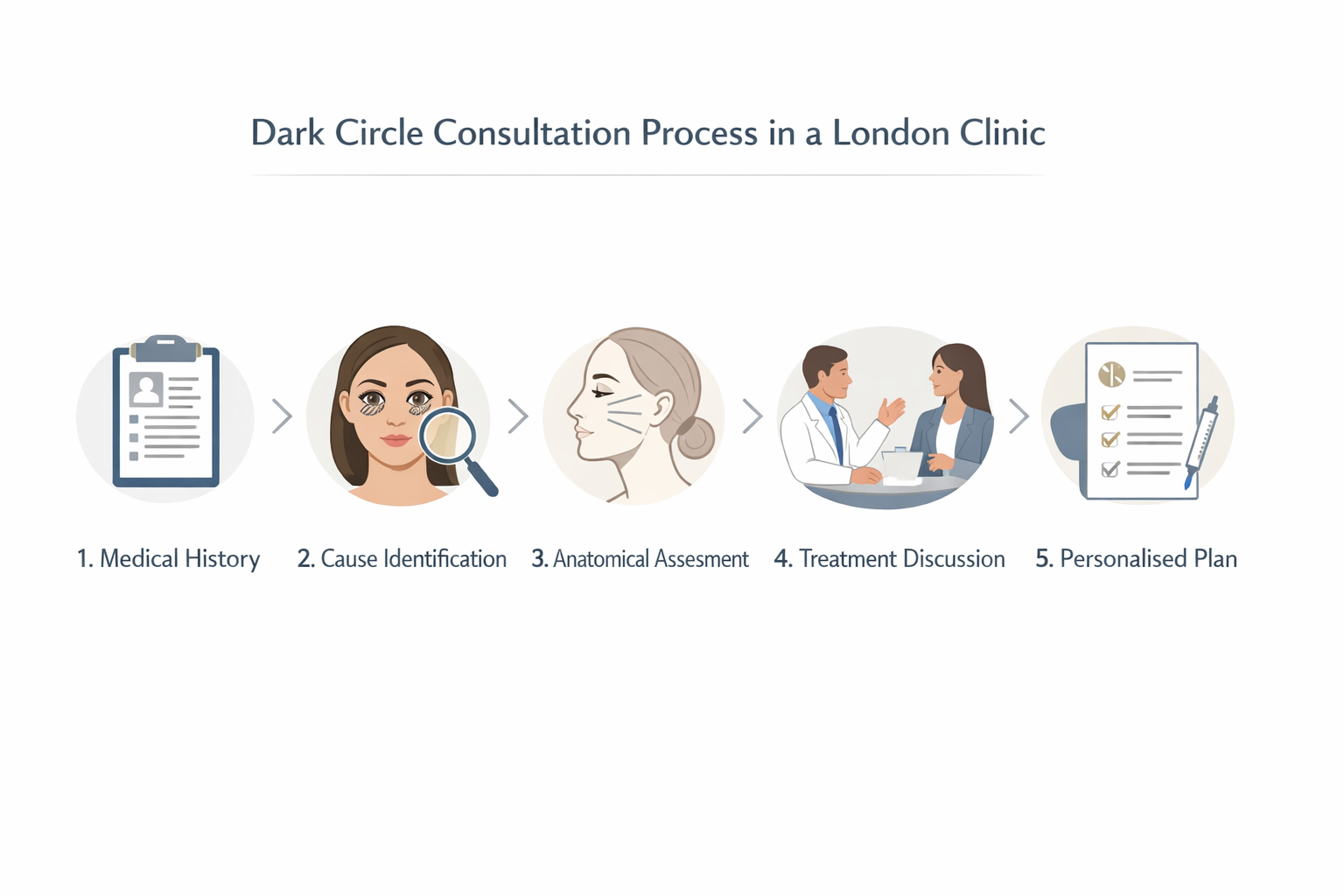
- Medical and lifestyle history: The practitioner will ask about your general health, medications, allergies, and relevant lifestyle factors such as sleep quality, hydration, and sun exposure habits.
- Cause identification: Using a combination of visual examination under varied lighting conditions, skin pinch tests, and facial analysis, the practitioner will determine which type or combination of types applies to your presentation — pigmentary, vascular, structural, or mixed.
- Anatomical assessment: The periorbital area is examined for signs of volume loss, fat pad position, skin thickness, and any evidence of fluid retention or puffiness that could affect treatment suitability.
- Treatment discussion: Based on the assessment, the practitioner will explain which treatments are most appropriate for your specific type of dark circles, what results are realistic, how many sessions may be required, and what the costs and risks involve.
- Personalised treatment plan: A written or documented personalised treatment plan should be provided, including recommended treatments, sequencing if a combination is proposed, and a realistic timeline for results.
Choosing a Clinic for Under-Eye Rejuvenation in London
The periorbital area is one of the most anatomically sensitive regions of the face. Structures including the supratrochlear and supraorbital arteries, and the complex lymphatic and venous drainage of the lower eyelid, make this an area where practitioner experience genuinely matters. When seeking under-eye rejuvenation London, prioritise clinics where injectable treatments are delivered or directly supervised by a GMC-registered practitioner — a medical doctor registered with the General Medical Council — or an equivalent regulated healthcare professional.
Beyond regulation, consider the clinic’s experience with the specific treatment you are considering, their ability to manage complications such as vascular occlusion with emergency hyaluronidase, their consultation process, and their approach to realistic expectations. Clinics in areas such as Harley Street, Marylebone, Mayfair, and Knightsbridge tend to attract experienced practitioners, though quality is not defined by postcode alone. Ask what training the practitioner has undertaken in periorbital anatomy specifically, and whether they offer a follow-up appointment as part of the treatment cost.
Managing Expectations: What Dark Circle Treatments Can and Cannot Do
Non-surgical dark circle treatments can produce meaningful improvements in the right candidate, but they are not permanent solutions and they do not eliminate dark circles in every case. Structural dark circles caused by tear trough hollowing respond most predictably to hyaluronic acid tear trough filler, with results that are often immediately visible and maintained for over a year with appropriate product and technique. Pigmentary dark circles — particularly deep or longstanding periorbital hyperpigmentation — are among the more challenging presentations to treat and may require a sustained combination approach over multiple sessions before noticeable improvement is achieved.
Treatment longevity varies meaningfully between individuals and depends on factors including the specific product or treatment used, individual metabolism, lifestyle habits, and the degree of ongoing sun exposure. Maintenance sessions are a realistic part of any long-term plan for most treatments discussed here. Patients should also be aware that dark circles with a strong genetic or structural basis may improve but are unlikely to be permanently eliminated without surgical intervention such as lower blepharoplasty, which is outside the scope of non-surgical treatment.
Frequently Asked Questions
What is the best treatment for dark circles in London?
There is no single best treatment because the most appropriate option depends entirely on the type and cause of your dark circles. Structural dark circles caused by hollowing respond well to hyaluronic acid tear trough filler. Vascular dark circles may benefit from carboxytherapy or pulsed dye laser. Pigmentary dark circles are often addressed with topical agents, peels, or laser. Skin quality concerns respond to polynucleotides, PRP, or biorevitalisation. A clinical assessment is needed to determine which approach — or combination — suits your presentation.
How long do dark circle treatments last?
Treatment longevity varies by modality. Tear trough filler typically lasts 12–18 months. Polynucleotides and PRP results generally last 6–12 months. Carboxytherapy effects from a course may last 3–6 months before maintenance is needed. These are approximate ranges; individual results vary based on metabolism, skin type, lifestyle, and the specific products used.
Are dark circle treatments painful?
Most treatments involve only mild discomfort. Injectable treatments such as tear trough filler, polynucleotides, and PRP are typically performed with a topical numbing cream applied beforehand, and many practitioners use fine cannulas or needles to minimise discomfort and bruising risk. Carboxytherapy involves a brief sensation of pressure. Energy-based treatments such as laser or Morpheus8 may involve more noticeable warmth or stinging, typically managed with topical anaesthesia.
Can dark circles be permanently removed?
Non-surgical treatments do not permanently remove dark circles. They can produce significant and sustained improvements, but maintenance sessions are generally required as results are temporary. Dark circles with a strong structural or genetic basis may improve meaningfully with treatment but are unlikely to be fully eliminated without surgical approaches such as lower blepharoplasty in suitable candidates.
How much does dark circle treatment cost in London?
Costs vary widely depending on the treatment type, clinic, and practitioner. Single-session costs typically range from approximately £80–£200 for carboxytherapy, £150–£400 for laser or mesotherapy, £295–£595 for PRP or polynucleotides, and £400–£800 or more for tear trough filler. Courses of multiple sessions for polynucleotides or PRP can total £1,200–£1,595 or more. A consultation fee, if charged, may or may not be deducted from treatment costs.
Is tear trough filler safe?
Tear trough filler carries specific risks given the anatomical complexity of the periorbital area, including bruising, prolonged swelling, the Tyndall effect, and — in rare cases — vascular complications. When performed by an experienced, GMC-registered practitioner using appropriate technique and reversible hyaluronic acid products, the risk profile is considered acceptable for suitable candidates. Suitability assessment, which includes ruling out significant under-eye fluid retention, is an essential part of the pre-treatment process.
Who is not suitable for under-eye injectable treatments?
Injectable treatments beneath the eyes may not be suitable for patients who are pregnant or breastfeeding, have active skin infections or inflammatory conditions in the treatment area, have significant under-eye puffiness primarily caused by fluid retention or fat herniation rather than volume loss, have certain bleeding disorders or are taking blood-thinning medications, or have unrealistic expectations about the degree of improvement achievable. A thorough clinical assessment will identify any contraindications relevant to a specific treatment.
Taking the Next Step Towards Treating Your Dark Circles
Dark circles are a genuinely complex aesthetic concern, and the range of treatments now available in London means that most patients — regardless of whether their dark circles are primarily structural, pigmentary, vascular, or a combination — can expect some degree of meaningful improvement with the right approach. The key is accurate diagnosis of the type before any treatment is selected.
If you are considering dark circle treatment, the most productive first step is a thorough doctor-led consultation with a GMC-registered practitioner who takes time to assess the cause, discuss realistic outcomes honestly, and design a personalised treatment plan rather than defaulting to a single product. With that foundation in place, non-surgical dark circle treatment in London offers a well-evidenced, minimally invasive route to a more rested and refreshed appearance — provided expectations remain grounded in what each treatment can realistically deliver.
