

Key Takeaways
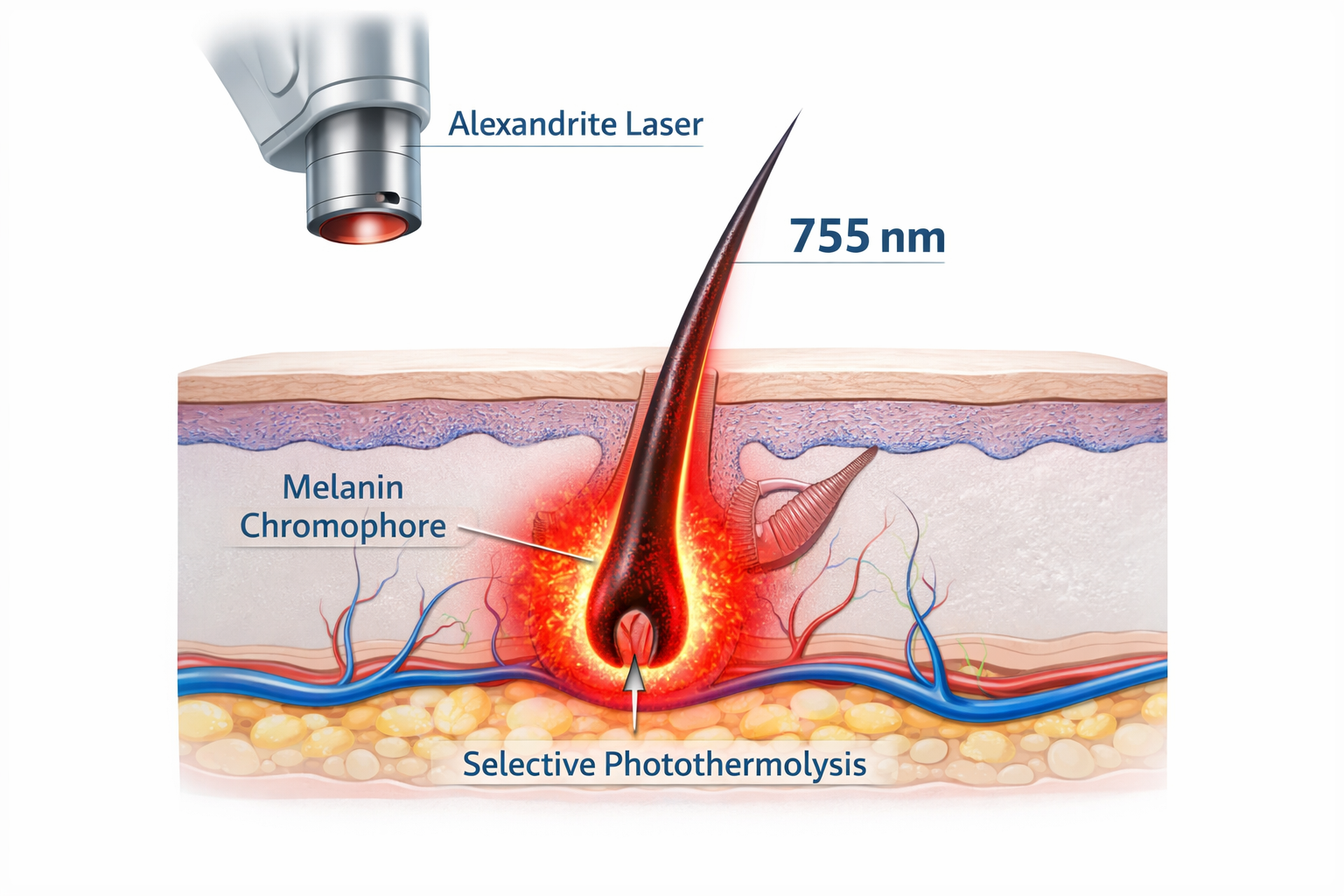
- The alexandrite laser operates at a 755 nm wavelength, placing it in the near-infrared spectrum and making it highly effective at targeting melanin in hair follicles and pigmented lesions.
- It is best suited to Fitzpatrick skin types I–III (fair to light olive skin) and is generally not recommended for darker skin tones due to the risk of epidermal melanin absorption causing pigmentation changes.
- Clinical evidence supports its use for laser hair reduction, solar lentigines, freckles, certain birthmarks, and tattoo removal; long-pulse and picosecond modes serve different treatment goals.
- Multiple sessions are required for hair removal — typically six to eight — with results varying by hair colour, thickness, and hormonal factors.
- A qualified practitioner should assess your skin phototype, medical history, and treatment goals before recommending this laser or any alternative.
What Is the Alexandrite Laser?
The alexandrite laser is a solid-state laser that uses a synthetic alexandrite crystal — composed of chromium-doped chrysoberyl (Cr³⁺:BeAl₂O₄) — as its gain medium. When energised, this crystal emits light at a 755 nm wavelength, which sits at the boundary between visible red and near-infrared light. This specific wavelength is strongly absorbed by melanin, the pigment responsible for the colour of skin, hair, and certain lesions, which makes the alexandrite laser particularly effective for melanin-targeting applications.
Alexandrite lasers are available in several operating modes. The long-pulse alexandrite laser is the most widely used configuration for hair removal and vascular or pigmented lesion treatments. Q-switched and picosecond alexandrite laser modes deliver energy in extremely short bursts and are used primarily for tattoo removal and certain stubborn pigmented lesions. Understanding which mode is appropriate for a given concern is part of the clinical assessment process.
FDA-cleared devices such as the Cynosure Apogee and the Candela GentleLase are among the most recognised alexandrite platforms in clinical use, though availability varies by country and clinic.
How the Alexandrite Laser Works
The alexandrite laser works on the principle of selective photothermolysis — a concept that describes the ability to deliver light energy selectively to a target structure (the chromophore) without causing meaningful damage to the surrounding tissue. In hair removal, the primary melanin chromophore is located in the hair shaft and hair bulb. The laser energy is absorbed by melanin, converted to heat, and that heat damages the hair follicle and the surrounding stem cells responsible for hair regrowth.
Precision depends on matching the pulse duration to the thermal relaxation time of the target — the time it takes for the heated structure to lose half its acquired heat to surrounding tissue. For a hair follicle, the thermal relaxation time is typically measured in milliseconds. The long-pulse alexandrite laser is calibrated to deliver energy within this window, heating the follicle sufficiently to cause hair follicle destruction while limiting heat spread to the surrounding dermis.
Treatment parameters — including fluence (J/cm²), spot size, and pulse duration — are adjusted based on hair colour, skin tone, and the specific device being used. Typical fluence settings range from approximately 10 to 40 J/cm², with spot sizes of 12–18 mm. A larger spot size allows faster treatment of broad areas such as the legs or back. Built-in contact cooling or cryogen cooling systems protect the skin surface during energy delivery, which is important for both patient comfort and safety.
What Can the Alexandrite Laser Treat?
The alexandrite laser has a broader clinical application than many patients realise. Its primary uses include:
- Laser hair reduction: The most common use. The 755 nm wavelength is highly absorbed by eumelanin (the dark pigment in hair), making it particularly effective on dark hair against lighter skin backgrounds. Published clinical data suggests meaningful hair reduction over a treatment course, though complete permanent removal is not typically claimed and results depend on hair colour, follicle depth, and hormonal influences.
- Pigmented lesion treatment: Solar lentigines (age spots), freckles, café-au-lait macules, and certain birthmarks such as naevus of Ota respond well to alexandrite laser energy, particularly in Q-switched or picosecond modes that fragment melanin deposits within the epidermis and superficial dermis.
- Tattoo removal: The Q-switched and picosecond alexandrite laser modes are effective at fragmenting tattoo ink particles — particularly black, blue, and green pigments — into smaller particles that the immune system can clear. Multiple sessions are typically required.
- Vascular lesions: The long-pulse alexandrite laser has demonstrated utility for treating superficial thread veins and spider veins, though dedicated vascular lasers (such as the 532 nm KTP or 595 nm pulsed dye laser) are often considered first-line for these concerns.
- Keratosis pilaris (KP): There is emerging evidence that long-pulse alexandrite laser treatment may reduce the follicular plugging and associated redness of keratosis pilaris, though clinical evidence in this area remains developing and results are variable.
Who Is a Good Candidate?
Patient selection is critical for alexandrite laser treatments. Because the 755 nm wavelength is strongly absorbed by epidermal melanin absorption, individuals with higher concentrations of melanin in their skin — that is, darker skin tones — face a higher risk of the laser heating the skin surface rather than the intended target. This can lead to blistering, hyperpigmentation, or hypopigmentation.
Using the Fitzpatrick skin types classification system as a guide, the alexandrite laser is generally considered most appropriate for skin types I through III (fair, light, and light-to-medium skin). Skin type IV (olive to moderate brown) requires careful assessment, conservative parameters, and experienced clinical judgement. Skin types V and VI are typically not suitable for alexandrite laser treatment; alternative lasers — particularly the Nd:YAG 1064 nm laser — are better options for these skin phototypes because the longer wavelength is less absorbed by surface melanin and penetrates more safely to the follicle.
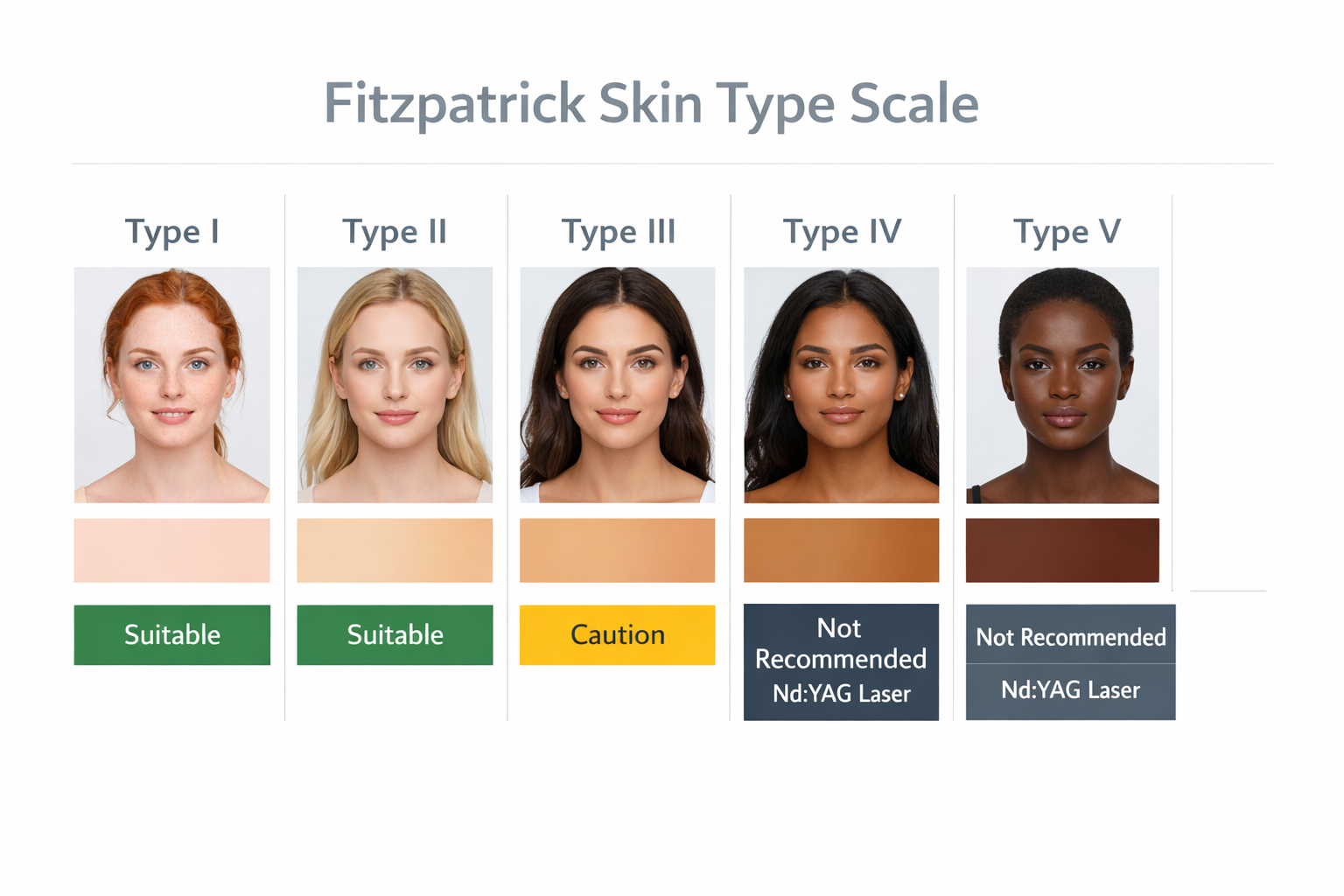
For hair removal specifically, the ideal candidate has dark, coarse hair on fair-to-light skin — the maximum contrast between hair melanin and skin melanin produces the most selective energy absorption. Grey, white, blonde, and light red hair contain little or no eumelanin and do not respond well to any melanin-targeting laser, including the alexandrite.
Additional factors that may affect suitability include recent sun exposure or tanning (which increases skin melanin and the risk of epidermal damage), pregnancy, certain photosensitising medications, active skin infections in the treatment area, and a history of keloid scarring. A thorough consultation and skin assessment are essential before treatment.
Alexandrite Laser vs. Nd:YAG, Diode, and IPL
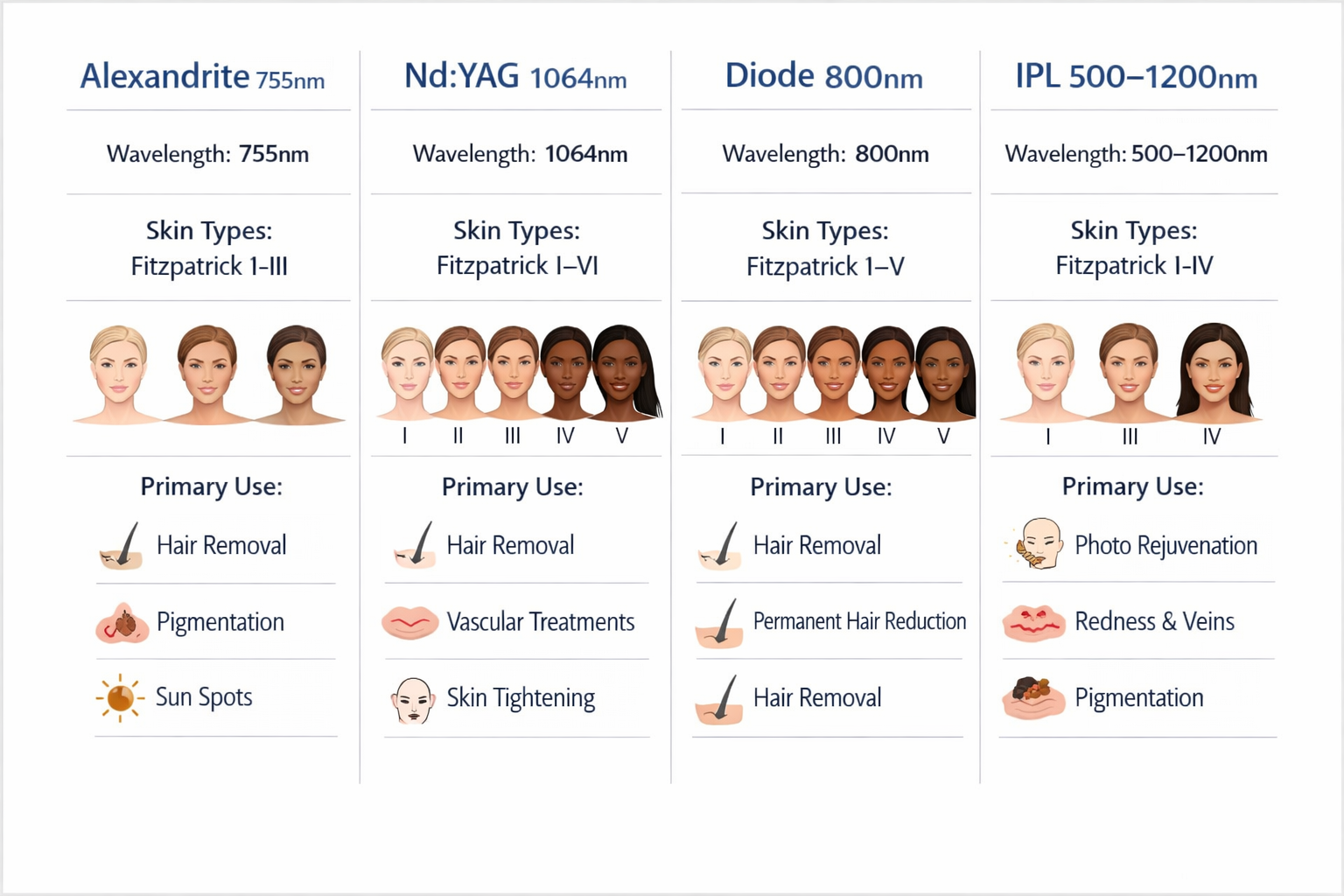
Choosing between laser and light-based hair removal or pigmentation treatments involves weighing wavelength, skin type compatibility, speed, and the specific concern being treated. The table below summarises the main options.
| Technology | Wavelength | Best Skin Types | Primary Uses | Speed | Melanin Selectivity |
|---|---|---|---|---|---|
| Alexandrite laser | 755 nm | Fitzpatrick I–III (IV with care) | Hair removal, pigmented lesions, tattoo removal | Fast (large spot size) | Very high |
| Nd:YAG laser | 1064 nm | Fitzpatrick I–VI | Hair removal, vascular lesions, darker skin tones | Moderate | Lower (safer for dark skin) |
| Diode laser | 800–810 nm | Fitzpatrick I–IV (some devices up to V) | Hair removal | Moderate to fast | High |
| IPL (intense pulsed light) | 500–1200 nm (broad) | Fitzpatrick I–III ideally | Hair removal, pigmentation, redness | Fast | Moderate (less precise) |
| Ruby laser | 694 nm | Fitzpatrick I–II | Hair removal, pigmented lesions | Slow | Very high (older technology) |
The Nd:YAG 1064 nm laser penetrates more deeply into tissue and is less absorbed by surface melanin, which makes it considerably safer for patients with darker skin tones. However, for fair to light skin, the alexandrite laser generally delivers faster treatment sessions with high efficacy due to its larger spot sizes and strong melanin absorption. A randomised controlled trial published in the dermatology literature found meaningful hair reduction with both alexandrite and Nd:YAG lasers at 18 months, with the alexandrite producing slightly greater reduction in lighter-skinned participants, while the Nd:YAG was safer and more appropriate for darker skin types.
Some clinics offer combined alexandrite and Nd:YAG treatments in the same session, marketing this as a way to treat all hair types simultaneously. The available evidence does not clearly support additional clinical benefit from this combination over an appropriately selected single wavelength, and combining modalities may increase the risk of side effects. Patients should ask their practitioner to explain the rationale for any combined approach.
The diode laser at 800–810 nm sits between the alexandrite and Nd:YAG in terms of melanin selectivity and skin type compatibility, offering a reasonable option for skin types up to IV on many devices. IPL uses a broad spectrum of wavelengths rather than a single coherent wavelength, which means it is less precise than a laser — useful for general photo-rejuvenation and mild pigmentation, but generally considered less effective for hair removal compared to a well-calibrated laser system.
Long-Pulse vs. Picosecond Alexandrite: Understanding the Difference
The terms long-pulse and picosecond describe the duration of each energy burst the laser delivers, and this distinction determines what the laser can effectively treat.
The long-pulse alexandrite laser delivers energy in pulses measured in milliseconds (thousandths of a second). This duration is matched to the thermal relaxation time of structures like hair follicles and blood vessels, allowing sufficient heat to build up and damage the target tissue. Long-pulse alexandrite is the standard configuration for laser hair reduction and is also used for certain vascular and pigmented lesion treatments.
The picosecond alexandrite laser delivers energy in pulses measured in picoseconds (trillionths of a second) — far shorter than the thermal relaxation time of most tissue structures. Rather than relying primarily on heat, picosecond pulses create a photomechanical or photoacoustic effect that physically shatters pigment particles — whether tattoo ink or melanin deposits in a pigmented lesion — into very small fragments that the body can eliminate. This approach may cause less collateral thermal damage to surrounding tissue compared to Q-switched nanosecond lasers, and there is growing evidence for its use in tattoo removal and benign pigmented lesions, though treatment courses are still required and results vary.
What to Expect During Treatment
Before treatment begins, the clinician will conduct a consultation to assess your skin phototype, hair or lesion characteristics, medical history, and any contraindications. A patch test may be recommended, particularly for patients with uncertain skin type responses. Topical anaesthetic cream is sometimes applied to more sensitive areas, though many patients tolerate alexandrite laser treatment without it, describing the sensation as similar to a rubber band snap followed by a brief heat sensation.
During the session, both the patient and practitioner wear appropriate eye protection. The laser handpiece is moved across the treatment area, with the cooling system (contact cooling or cryogen spray) activating to protect the skin surface with each pulse. Treatment time varies with the size of the area: small areas such as the upper lip may take only a few minutes, while the legs or back can take considerably longer.
After treatment, mild redness and a sensation similar to sunburn are common and typically resolve within a few hours to a day. For hair removal, treated hairs may appear to grow for one to three weeks before shedding — this is normal and reflects the laser-damaged follicle expelling the hair shaft rather than new growth. Genuine regrowth indicates the follicle was not adequately damaged and may require additional sessions.
How Many Sessions Are Needed and What Results to Expect
For laser hair reduction, most people require six to eight sessions spaced approximately six to eight weeks apart. This interval allows hair follicles that were in resting phases during previous treatments to enter the active growth phase (anagen), when they are most vulnerable to laser energy. Hormonal conditions such as polycystic ovary syndrome (PCOS) can stimulate ongoing hair growth, meaning some patients require maintenance sessions over time.
Results for hair removal are typically described as significant reduction in hair density and thickness rather than guaranteed permanent removal. Published data from clinical trials suggests reductions in the range of 75–85% may be achievable after a full treatment course in suitable candidates, though individual outcomes depend on hair and skin characteristics, treatment parameters, and adherence to the recommended session schedule.
For pigmented lesions such as solar lentigines and freckles, results are often visible after one to three sessions. Tattoo removal with picosecond or Q-switched alexandrite typically requires more sessions — often six to twelve or more — depending on ink colours, tattoo age, skin type, and depth of ink placement.
Aftercare and Sun Protection
Proper aftercare supports recovery and reduces the risk of complications. Following alexandrite laser treatment, patients are generally advised to:
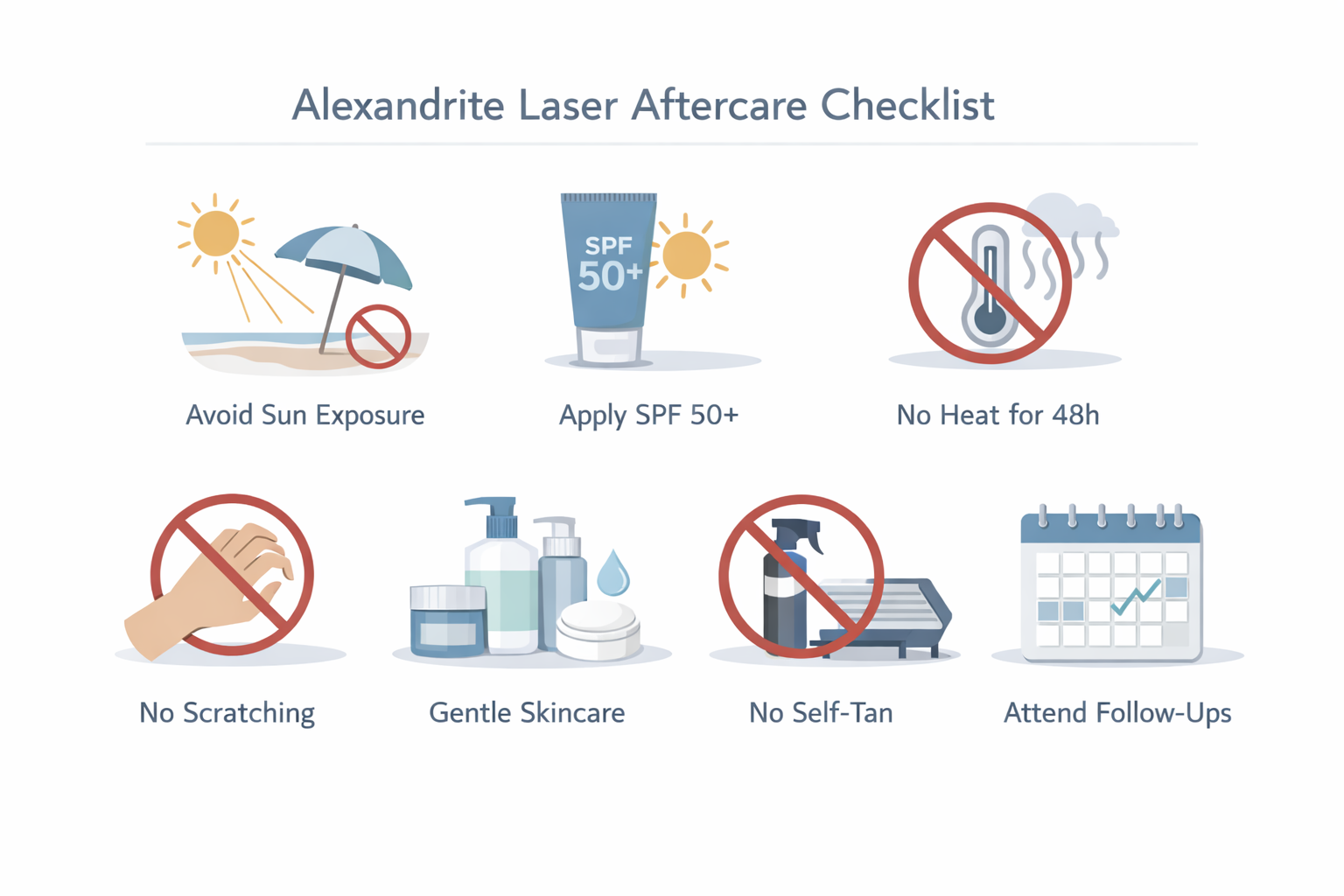
- Avoid sun exposure to treated areas for a minimum of two to four weeks, and apply a broad-spectrum SPF 30 or higher sunscreen daily.
- Avoid heat exposure — including saunas, steam rooms, and hot baths — for 24 to 48 hours after treatment.
- Not pick, scratch, or exfoliate treated skin while it is healing.
- Use gentle, fragrance-free products on the treated area during the recovery period.
- Avoid self-tanning products or sun beds before and during the treatment course, as tanned skin significantly increases the risk of adverse effects.
- Attend all scheduled follow-up sessions and report any unexpected reactions to the treating clinician promptly.
Risks and Side Effects
Alexandrite laser treatment is associated with a predictable range of side effects and, less commonly, more significant adverse events. Understanding these helps patients make an informed decision and recognise symptoms that warrant prompt clinical review.
Common and expected effects include temporary redness, mild swelling, and warmth in the treated area. These typically resolve within hours to a day. A sunburn-like sensation immediately after treatment is normal.
Less common side effects include blistering, crusting, or temporary darkening of the skin (post-inflammatory hyperpigmentation). These are more likely if treatment parameters are not appropriately adjusted for skin tone, or if the patient has unrecognised tan at the time of treatment.
Rare but more serious risks include hypopigmentation (permanent lightening of the skin), scarring, and burns. These risks are substantially higher when the alexandrite laser is used on skin types for which it is not appropriate, or when performed by inadequately trained practitioners using poorly maintained equipment.
Patients who are pregnant, taking photosensitising medications, or who have a history of photosensitivity disorders, active infections, or keloid scarring in the treatment area should discuss these factors carefully with their practitioner before proceeding.
Frequently Asked Questions
Is the alexandrite laser safe for dark skin?
The alexandrite laser is generally not recommended for Fitzpatrick skin types V and VI because its 755 nm wavelength is strongly absorbed by epidermal melanin, which increases the risk of surface heating, blistering, and pigmentation changes. For darker skin tones, the Nd:YAG 1064 nm laser is typically the safer and more appropriate choice. Skin type IV may be treatable with alexandrite under carefully adjusted parameters, but this requires an experienced clinician and conservative settings. Always discuss your skin phototype at consultation.
How is the picosecond alexandrite different from the long-pulse version?
The long-pulse alexandrite delivers energy over milliseconds and works primarily through heat to damage hair follicles or coagulate blood vessels. The picosecond alexandrite delivers energy in trillionths of a second, creating a mechanical shattering effect on pigment particles — making it more suited to tattoo removal and pigmented lesion treatment than to hair removal.
Does alexandrite laser hair removal hurt?
Most patients describe the sensation as a sharp snap or flick followed by brief heat, similar to a rubber band against the skin. Integrated cooling systems reduce discomfort considerably. Sensitivity varies between individuals and treatment areas — areas with thinner skin or denser hair may feel more intense. Topical anaesthetic cream can be applied beforehand if needed.
How many sessions are typically needed for hair removal?
Most patients undergo six to eight sessions spaced six to eight weeks apart for hair removal. Hormonal factors, hair characteristics, and treatment area can all influence how many sessions are required. Some individuals need occasional maintenance treatments thereafter, particularly if hormonal stimulation of hair growth is ongoing.
Can the alexandrite laser be used on the face?
Yes, the alexandrite laser can be used on facial areas including the upper lip, chin, cheeks, and sideburns for hair removal, and on areas of facial pigmentation such as age spots and freckles. Treatment parameters on the face may be adjusted to account for the thinner, more sensitive skin in these areas. Eye protection is always used during any treatment near the eyes.
Why does hair seem to grow after treatment?
After alexandrite laser treatment, it is normal for treated hairs to appear for one to three weeks before shedding. These are not growing hairs — they are laser-damaged follicles expelling the hair shaft. If hair returns with normal thickness after this shedding phase, the follicle may not have been adequately treated and further sessions are likely needed.
Is the Alexandrite Laser the Right Choice for Your Concern?
The alexandrite laser is a well-established, clinically supported option for patients with fair to light skin who want to address unwanted hair, certain pigmented lesions, or tattoo removal. Its 755 nm wavelength and large spot sizes make it efficient and precise for suitable candidates. However, it is not a universal solution — skin phototype is the most critical eligibility factor, and patients with darker skin tones have safer alternatives available.
The choice between alexandrite, Nd:YAG, diode, or IPL should be made by a trained practitioner who has assessed your skin type, treatment goals, medical history, and the specific concern being addressed. Neither the wavelength nor the brand name alone determines whether a treatment is appropriate for you as an individual. A thorough consultation, realistic expectations about the number of sessions required, and careful adherence to aftercare guidance all contribute significantly to the outcome.
If you are considering alexandrite laser treatment, seeking a consultation with a qualified medical or aesthetic professional who can assess your specific situation is the appropriate first step.
