

Key Takeaways
- Botox can lift the eyebrows by relaxing the depressor muscles that pull brows downward, allowing the frontalis muscle to elevate them more freely.
- A typical Botox brow lift may produce a subtle elevation of around 1–3 millimetres — a small measurement that can meaningfully open the eye area.
- Results generally last 3–4 months and are temporary; maintenance treatments are needed to sustain the effect.
- The treatment works best for mild to moderate brow drooping; significant tissue descent may require a surgical brow lift consultation.
- Precision placement by a qualified injector is essential — incorrect injection technique carries a small but real risk of temporary eyelid drooping.
Botox can lift the eyebrows — but not in the way the name might suggest. Botulinum toxin type A does not mechanically pull brows upward or strengthen any muscle. Instead, it works by selectively relaxing the muscles responsible for pulling the brows downward, which allows the muscles that naturally elevate the brow to act with less opposition. The result is a subtle, often surprisingly noticeable lift that can open the eye area and create a more refreshed appearance without surgery or significant downtime.
This article explains exactly how a Botox brow lift works, what results are realistic, who may benefit, what risks are involved, and how it compares to surgical and non-surgical alternatives. If you are considering this treatment, the information here should help you prepare for a more informed conversation with a qualified practitioner.
The Muscle Mechanics: Why Botox Can Produce a Lift
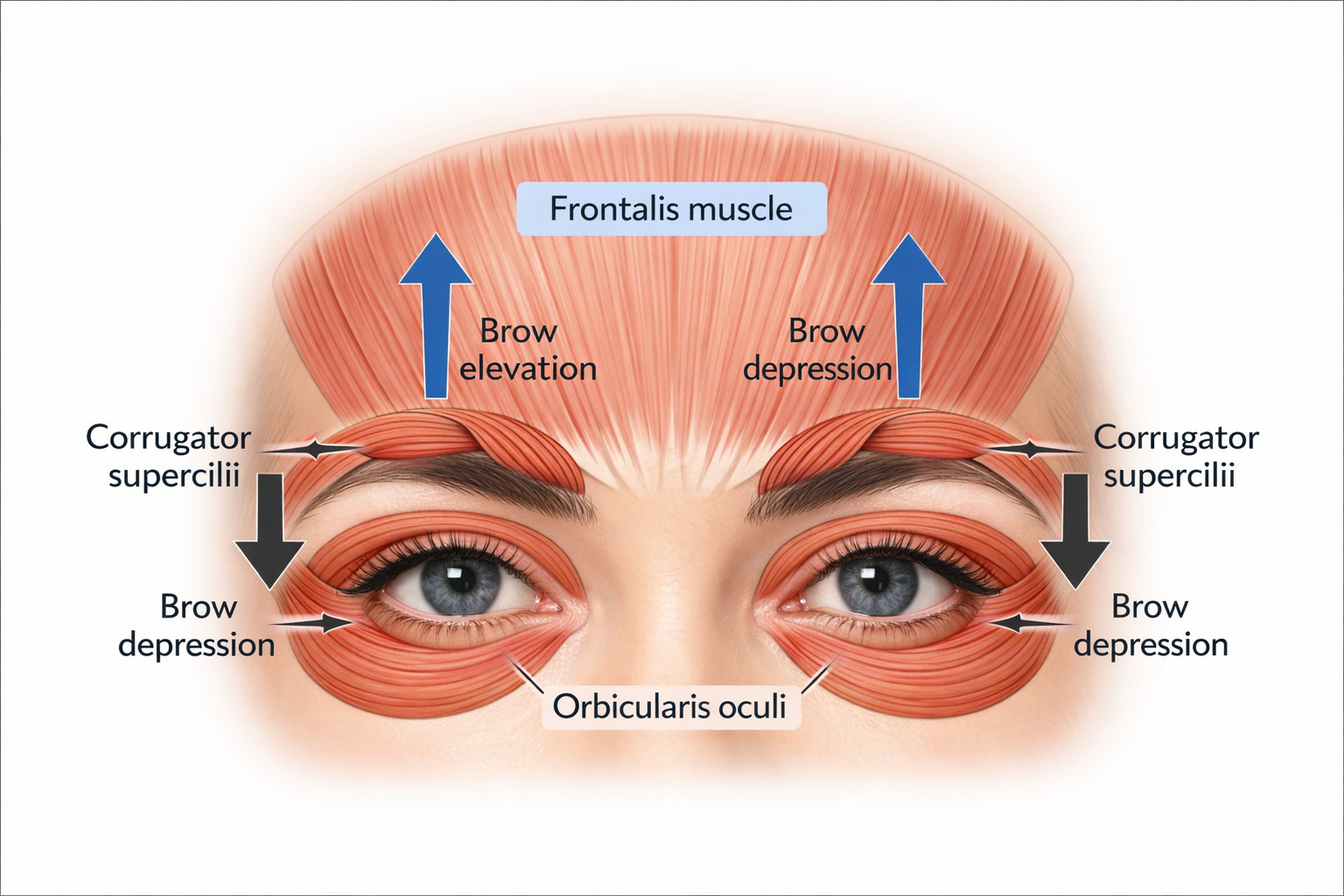
Understanding why a Botox brow lift works requires a brief look at the muscles involved in brow position. The brows are held in place by a balance between muscles that elevate them and muscles that depress them. The frontalis muscle — a broad, flat muscle running vertically across the forehead — is the primary elevator. When it contracts, it raises the brows. Working against it are several depressor muscles that pull the brows downward: the orbicularis oculi (which encircles the eye), the corrugator supercilii (which draws the brows inward and down), and the procerus (which depresses the central brow and nose bridge).
As the face ages, these depressor muscles often become stronger relative to the frontalis, contributing to brow drooping or brow ptosis. Botulinum toxin type A injected into targeted portions of the depressor muscles temporarily reduces their ability to contract. With less downward pull from the orbicularis oculi and corrugator supercilii, the frontalis muscle can elevate the brow more effectively — producing what clinicians and patients informally call a Botox brow lift, or sometimes browtox.
An important clarification: Botox does not make the frontalis muscle stronger. It cannot increase muscle force or create structural lift. The elevation occurs because the opposing forces are reduced. This distinction matters when setting realistic expectations — the lift is genuine, but it is a gentle repositioning rather than a dramatic structural change.
What Lift Can You Realistically Expect?
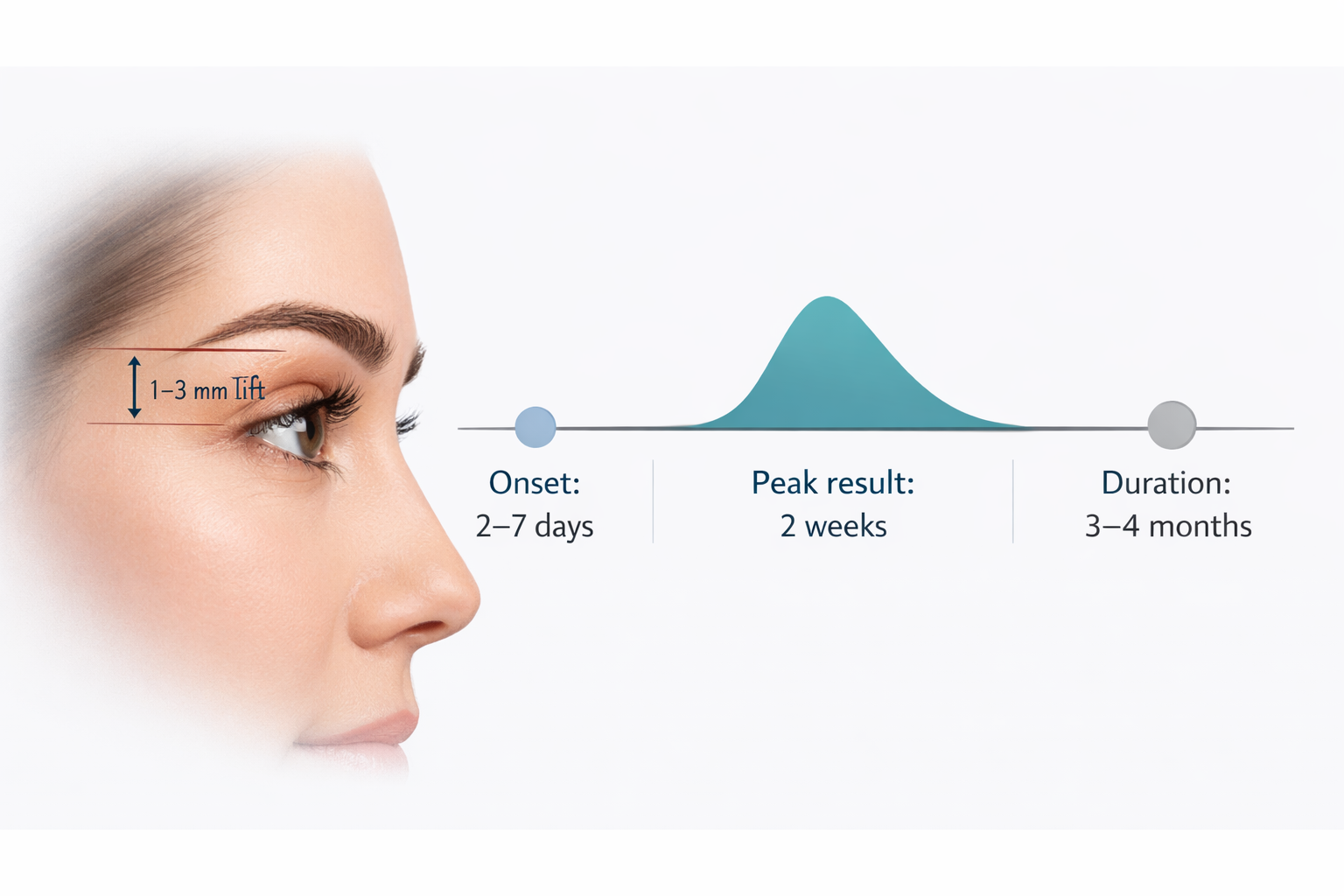
Studies and clinical observation suggest that a Botox brow lift typically produces a subtle elevation of approximately 1 to 3 millimetres in brow height. That may sound modest, but the brow sits close to the eye, and even a small upward shift can produce a visible change in how open the eye area appears. Many patients report that their eyes look less heavy or tired after treatment, and that their brow arch becomes more defined.
The degree of lift varies depending on several factors: the patient’s baseline brow position, the strength and distribution of their depressor muscles, the precise injection points used, and the dose administered. Patients who begin with mild brow drooping often see the most satisfying results. Those with more significant tissue descent may notice a less pronounced change, because the soft tissue itself has descended rather than simply being held down by overactive muscles.
Onset of the effect typically occurs within 2 to 7 days following injection, with the full result visible at around 2 weeks. Duration is generally 3 to 4 months, after which the muscles gradually regain their activity and the brow position returns toward its pre-treatment baseline. Maintenance treatments are needed to sustain the effect over time.
Who May Be a Suitable Candidate?
A Botox brow lift may be worth discussing with a practitioner if you:
- Notice that your brows have gradually descended and your eye area looks heavier or more tired than it used to
- Have mild to moderate brow descent rather than significant soft tissue sagging
- Are seeking an open, refreshed appearance without surgery or prolonged recovery
- Are in your late 20s to 50s and want to address early to moderate signs of brow ageing
- Are interested in preventing deeper forehead lines from developing over time
- Have hooded eyes partly caused by brow descent and want to reduce the heaviness above the lids
The treatment can also be combined with other areas of the upper face. Many patients address their forehead lines, glabellar lines (the vertical creases between the brows, often called “11 lines”), and brow position within the same appointment. When forehead lines and the glabellar complex are treated alongside the brow lift, the total unit count increases accordingly.
Botox brow lifting works across a range of skin types and tones. However, patients with very loose or heavily descended skin may not achieve their goals through neuromodulator treatment alone. For these individuals, a surgical consultation may be a more appropriate next step.
Gender Considerations and Brow Shape Goals
Aesthetic brow shape goals differ between patients. For most women, the preferred result is a gently arched brow with the peak situated toward the outer third. For many men, a flatter, more horizontal brow position is considered the natural aesthetic goal. A skilled, experienced injector will account for these differences in injection placement and dose to avoid an unintentionally feminised or arched appearance in male patients. Discussing your brow shape goals clearly before treatment helps ensure the outcome aligns with your expectations.
The Treatment Experience: What Happens During an Appointment
A Botox brow lift appointment is typically brief, often completed within 15 to 30 minutes, including a consultation and assessment of facial anatomy. The practitioner will assess your resting brow position, the dynamics of your facial movement, and the balance between your elevator and depressor muscles before determining the most appropriate injection points.
The injections themselves involve a fine needle and are generally described as a brief, mild sting. Topical anaesthetic cream is available in some clinics if preferred, though most patients find it unnecessary. A small number of injections are typically placed at precise locations along the lateral brow and lateral orbital rim to weaken the depressor muscles at those points. The principle of precision placement is central to a safe and effective result — the dose and location of each injection point are calculated to produce the desired lift without affecting nearby muscles unintentionally.
Most patients can return to their normal daily activities immediately. Mild redness or swelling at injection sites is common and usually resolves within a few hours. It is generally recommended to avoid vigorous exercise, saunas, facial massage, and lying flat for several hours following treatment, though specific aftercare guidance will be provided by your practitioner.
Risks and Possible Side Effects
A Botox brow lift is considered a low-risk procedure when performed by a qualified injector with a thorough understanding of facial anatomy. However, no injectable treatment is entirely without risk, and patients should be aware of the following:
- Temporary bruising, swelling, or redness at injection sites — common and usually short-lived
- Asymmetry — one brow may lift slightly more than the other; this is usually correctable with a small adjustment at a follow-up appointment
- Brow ptosis or heavy forehead — if too much botulinum toxin is placed in the frontalis muscle during combined treatment, the brow can feel heavy or drop lower than intended
- Eyelid ptosis (upper eyelid drooping) — a rare but recognised complication that can occur if the product migrates toward the levator palpebrae muscle that holds the upper eyelid open; this is temporary and resolves as the toxin wears off, typically within weeks
- Overcorrection — an excessively arched or startled-looking brow appearance if the lift is too aggressive or placement is not appropriately calibrated
- Headache — occasionally reported in the first 24 hours
The risk of serious complications is low when the practitioner has relevant training, uses appropriate dosing, and discusses your anatomy and medical history beforehand. Always disclose any medications, supplements, or medical conditions at your consultation, as certain factors — including blood-thinning medications or neuromuscular conditions — may affect suitability or timing.
Botox Brow Lift vs. Surgical Brow Lift: Key Differences
| Characteristic | Botox Brow Lift | Surgical Brow Lift (Browplasty) |
|---|---|---|
| Mechanism | Relaxes depressor muscles; allows frontalis to elevate brow | Removes or repositions tissue; physically raises brow structure |
| Invasiveness | Non-surgical; injections only | Surgical; incisions, sedation or anaesthesia required |
| Degree of lift | Subtle; approximately 1–3 mm | More significant repositioning possible |
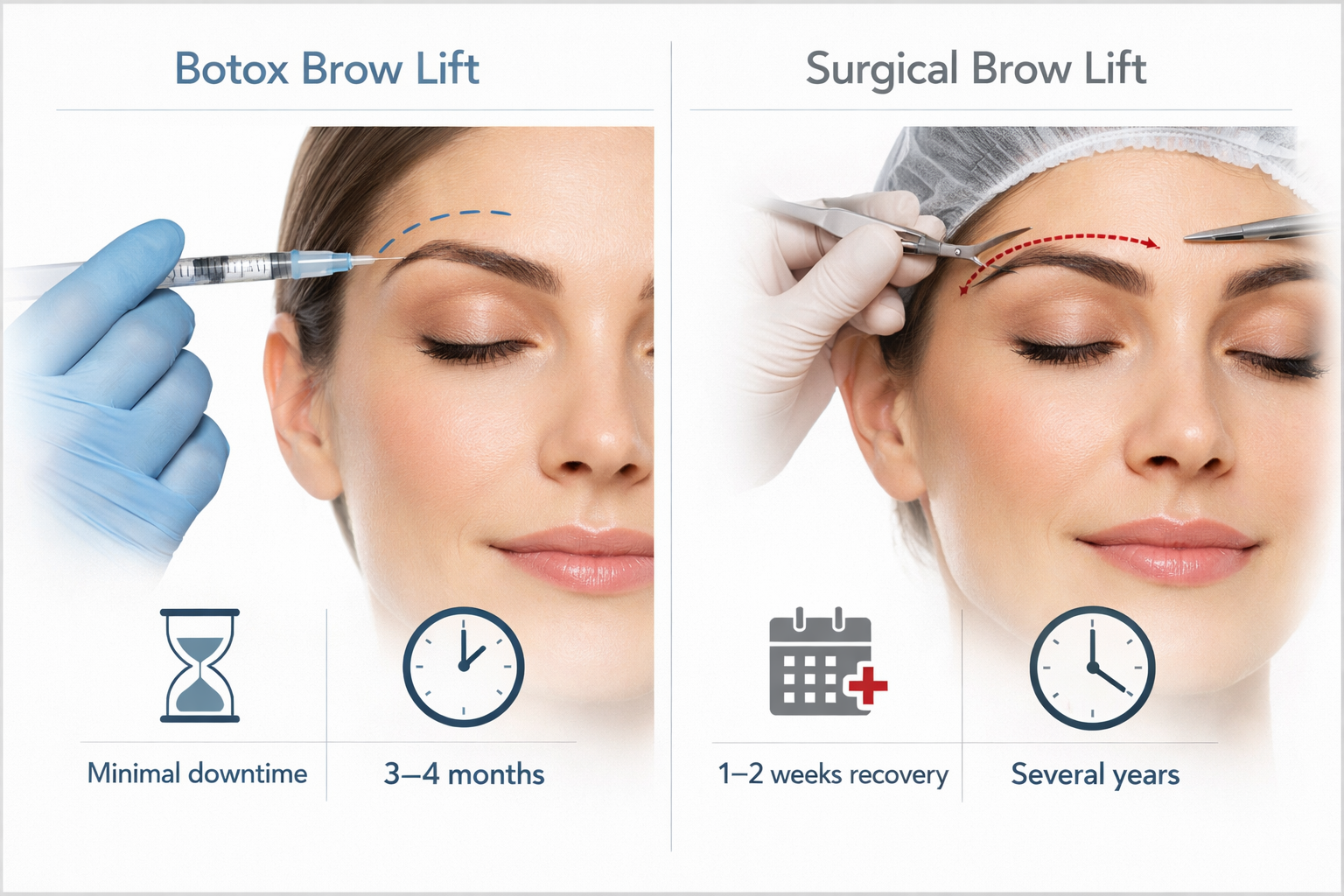
| Downtime | Minimal; typically same-day return to activities | 1–2 weeks recovery typical; swelling and bruising expected |
| Duration of results | Approximately 3–4 months; requires maintenance | Results may last several years; not permanent |
| Risks | Temporary bruising, asymmetry, rare eyelid drooping | Scarring, infection, anaesthesia risks, permanent changes |
| Best suited for | Mild to moderate brow descent; preventative use | Significant brow and tissue descent; functional concerns |
| Cost | Lower per session; recurring cost over time | Higher upfront cost; less frequent retreatment |
A nonsurgical eyebrow lift using botulinum toxin suits patients who want a visible improvement without the risks, cost, and recovery associated with surgery. It is particularly well suited for those in the earlier stages of brow descent. A surgical brow lift, sometimes called a browplasty or forehead lift, becomes the more appropriate option when there is significant soft tissue descent, deep static lines that are unresponsive to muscle relaxation, or functional concerns such as visual field obstruction caused by heavy brows and upper eyelid skin.
The two approaches are not mutually exclusive. Some patients choose Botox to manage their brow position in their 30s and 40s and consider surgery at a later stage if descent progresses significantly. Others combine Botox with surgical results to manage dynamic wrinkles and maintain muscle balance post-operatively.
Combination Approaches: Enhancing the Brow Lift Effect
A Botox brow lift can be combined with other treatments to address different aspects of brow ageing simultaneously. Botulinum toxin addresses muscle-driven brow depression, but it cannot replace lost volume or tighten stretched skin. The following combinations are sometimes used:
- Botox and dermal filler: Filler placed strategically along or above the brow can add volume and provide a subtle mechanical lift to the overlying skin. This combination may be particularly useful when both volume loss and muscle activity contribute to brow descent.
- Botox and thread lift: A thread lift places dissolvable sutures under the skin to mechanically reposition soft tissue. Combined with Botox to relax the depressors, this can produce a more immediate and pronounced lift than either treatment alone.
- Botox and energy-based devices: Treatments such as focused ultrasound (HIFU) or radiofrequency microneedling aim to tighten deeper tissue layers and stimulate collagen. These may complement Botox when skin laxity is a contributing factor to brow descent.
Which combination, if any, is appropriate depends on your specific anatomy, the degree and type of brow descent, and your overall treatment goals. A thorough assessment by an experienced practitioner is the starting point for any combination plan.
Alternative Neuromodulators
While Botox is the most widely recognised brand, it is one of several botulinum toxin type A products licensed for aesthetic use. Alternatives such as Dysport, Xeomin, and Jeuveau work through the same fundamental mechanism — blocking nerve signals to reduce muscle contraction — but have different formulations, diffusion characteristics, and unit equivalencies. Units between brands are not directly interchangeable, and a practitioner experienced with multiple neuromodulators will dose each product according to its individual profile. The choice between products may be influenced by practitioner preference, patient history, and product availability rather than one being universally superior to another.
Preventative Use and Long-Term Considerations
Younger patients in their late 20s or early 30s increasingly consider a Botox brow lift not only to address early brow descent but also as a preventative measure. By consistently reducing the force of the depressor muscles over time, regular maintenance treatments may help slow the formation of deeper, static brow and forehead creases that develop when strong repeated muscle contractions gradually etch lines into the overlying skin. Evidence for long-term preventative benefit remains developing, and individual outcomes vary, but this consideration is reasonable to discuss with a practitioner if you are noticing early signs of brow heaviness.
When Botox wears off, the return to baseline is gradual rather than abrupt. As the neuromodulator’s effect diminishes over weeks, muscle activity slowly recovers and the brow position gradually returns toward its pre-treatment level. Patients do not experience a sudden drop or reversal; the transition is a slow fade that typically prompts a follow-up treatment at around the 3–4 month mark.
Choosing the Right Injector
The outcome of a Botox brow lift depends heavily on the skill, training, and anatomical knowledge of the practitioner performing the treatment. The upper face — and particularly the brow and orbital region — is an area where precise, individualized injection placement matters enormously. A small difference in injection point or dose can shift the result from a natural, pleasing lift to an unintended arch, brow asymmetry, or, in rare cases, temporary eyelid drooping.

When selecting a provider, consider asking the following questions:
- What is your training and qualification in aesthetic medicine?
- How frequently do you perform Botox brow lift treatments specifically?
- Can you explain how you assess facial anatomy before injecting?
- What would you do if I experienced asymmetry or an unintended result?
- Is a follow-up review appointment included?
- What aftercare guidance do you provide?
A practitioner who takes time to assess your resting and dynamic facial anatomy, discusses your brow shape goals, and explains the risks candidly before treatment is a positive indicator of a careful, patient-centred approach.
Frequently Asked Questions
How many units of Botox are needed for a brow lift?
The number of units varies according to individual anatomy, the degree of brow descent, and whether the brow lift is performed in combination with treatment of the forehead or glabellar lines. A brow lift treated in isolation may require a relatively small number of units targeting the lateral depressor muscles. When combined with forehead and glabella treatment in the same session, the total unit count is higher. Your practitioner will assess your specific muscle activity before recommending a dose.
Can a Botox brow lift help with hooded eyes?
In some cases, yes. When the appearance of hooded eyelids is partly caused by brow descent pushing skin downward over the upper lid, lifting the brow position through a Botox brow lift can reduce the hooded effect and make the eye appear more open. However, if the hooding is primarily caused by excess upper eyelid skin rather than brow position, Botox is unlikely to produce a significant change and an eyelid surgery consultation may be more appropriate.
Does a Botox brow lift hurt?
Most patients describe the injections as a brief, mild sting. The needles used are very fine, and the treatment is generally well tolerated without anaesthesia. Topical numbing cream is available at many clinics for patients who prefer it.
How soon will I see the results?
Initial effects typically become visible within 2 to 7 days following injection, with the full extent of the lift apparent at around 2 weeks. A follow-up review at this stage allows the practitioner to assess the result and make any small adjustments if needed.
What happens when the Botox wears off?
As the botulinum toxin gradually metabolises over 3 to 4 months, muscle activity slowly returns and the brow position returns toward its pre-treatment baseline. The transition is gradual rather than sudden. Regular maintenance treatments can sustain the lifted appearance over time.
Can Botox make the brow look unnatural or over-arched?
In the hands of an experienced injector who assesses your anatomy carefully and uses an appropriate dose, the result should look natural. Over-arching can occur if the lateral brow is lifted more aggressively than the central brow, which can sometimes happen with certain injection patterns. This underscores the importance of choosing a practitioner with specific experience in brow treatment and upper-face anatomy.
Is a Botox Brow Lift Worth Considering for You?
A Botox brow lift is a clinically recognised, minimally invasive option for patients who want to address brow drooping and open the eye area without surgery. It works by reducing the downward pull of depressor muscles, allowing the frontalis to elevate the brow more freely — producing a subtle but genuinely meaningful lift in most suitable candidates. It is not a replacement for a surgical brow lift when significant tissue descent is present, and it does not provide the same degree or longevity of repositioning that a browplasty can achieve. But for patients with mild to moderate brow descent who want a refreshed, open appearance with minimal downtime, it represents a well-established and practical option.
The treatment is temporary, requires ongoing maintenance, and carries a small but real risk of complications when performed without sufficient expertise. Choosing a qualified, experienced injector who takes a careful, anatomy-led approach significantly reduces those risks and improves the likelihood of a result that matches your goals. If you are considering a Botox brow lift, a consultation with an appropriately trained aesthetic practitioner is the most useful first step — one who can assess your specific anatomy, discuss realistic outcomes, and advise on whether this treatment, a combination approach, or an alternative is most likely to address your concerns effectively.
