

Key Takeaways
- Botulinum toxin type A is FDA-approved for axillary hyperhidrosis (underarm sweating) and is widely used off-label for the hands, feet, and face with strong clinical evidence.
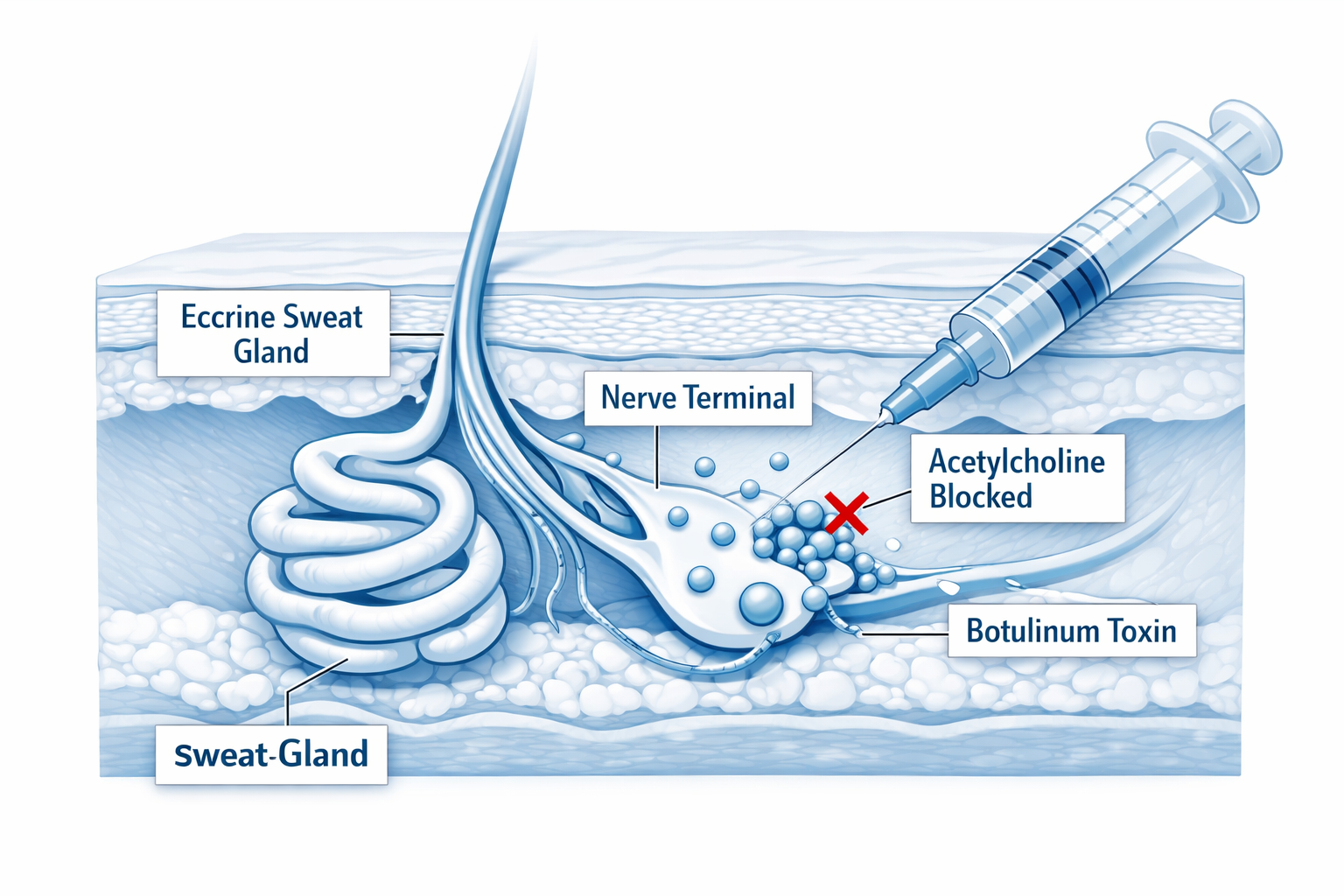
- Botox works by blocking acetylcholine, the chemical messenger that tells eccrine sweat glands to produce sweat, temporarily reducing sweating at the injection site.
- Clinical studies report sweat reduction of 82–87% in underarm sweating and up to 80–90% in palmar hyperhidrosis, with results typically lasting 4–12 months depending on the treatment area.
- The procedure involves a series of small intradermal injections and usually takes 15–30 minutes with no significant downtime.
- Botox for sweating is a maintenance treatment; repeat injections are typically needed every 4–6 months to sustain results.
What Is Hyperhidrosis and Why Does It Happen?
Hyperhidrosis is a condition in which the body produces sweat significantly in excess of what is needed to regulate temperature. For most people, sweating is a natural response to heat or physical exertion. For people with hyperhidrosis, the sweat response is disproportionate — occurring at rest, in cool environments, or triggered by minimal stress, often causing considerable social embarrassment and practical difficulties.
The most common form is primary focal hyperhidrosis, where sweating is localized to specific areas — most frequently the underarms, palms, soles of the feet, or face — without an identifiable underlying medical cause. It is thought to result from overactivity in the cholinergic sympathetic nerves that control eccrine sweat glands. Research suggests primary focal hyperhidrosis affects approximately 3–5% of the population, though it is likely underreported because many people assume nothing can be done about it.
A distinct category, secondary hyperhidrosis, occurs as a symptom of another condition — such as thyroid dysfunction, diabetes, menopause, or a side effect of certain medications. Secondary hyperhidrosis tends to be more generalized rather than focal. It is important to distinguish between the two before seeking treatment, because Botox addresses the local nerve-gland response rather than any systemic cause. If an underlying condition is driving the sweating, that should be investigated and managed first.
The impact of hyperhidrosis on quality of life is frequently underestimated. Research using validated tools such as the Hyperhidrosis Disease Severity Scale (HDSS) and the Dermatology Life Quality Index (DLQI) consistently shows that excessive sweating affects confidence, work performance, relationships, and clothing choices in ways that are genuinely disruptive. Botox treatment has been shown to produce clinically meaningful improvements in HDSS scores, often by two or more grade levels.
How Botox Stops Sweating: The Mechanism
Botox — the widely recognized brand name for botulinum toxin type A — works by temporarily interrupting the communication between nerve endings and sweat glands. The process is known clinically as chemodenervation.
Under normal circumstances, the sympathetic nervous system sends signals via cholinergic nerve fibers to the eccrine sweat glands in the skin. These nerve endings release a chemical messenger called acetylcholine, which binds to receptors on the sweat gland and triggers sweat production. When botulinum toxin type A is injected into the skin at the relevant site, it is taken up by the nerve endings and blocks the release of acetylcholine. Without this signal, the eccrine sweat glands remain inactive — they are present and structurally intact, but they cannot receive the instruction to sweat.
This effect is temporary because the nerve endings gradually undergo nerve regeneration. Over several months, the affected nerve terminals develop new sprouting connections that can once again release acetylcholine, which is why sweating returns and repeat treatment becomes necessary. This process is predictable and well-characterized in the literature, which makes Botox for sweating a planned maintenance treatment rather than a cure.
Crucially, blocking sweating in one localized area does not impair the body’s overall ability to thermoregulate. The eccrine sweat glands that are treated represent a small fraction of the millions distributed across the body’s surface, and the remaining glands continue to function normally.
Which Areas Can Be Treated?
Botulinum toxin type A can be used to reduce excessive sweating across several body areas. The FDA approval status and the available evidence differ by location, and this distinction is worth understanding before treatment.
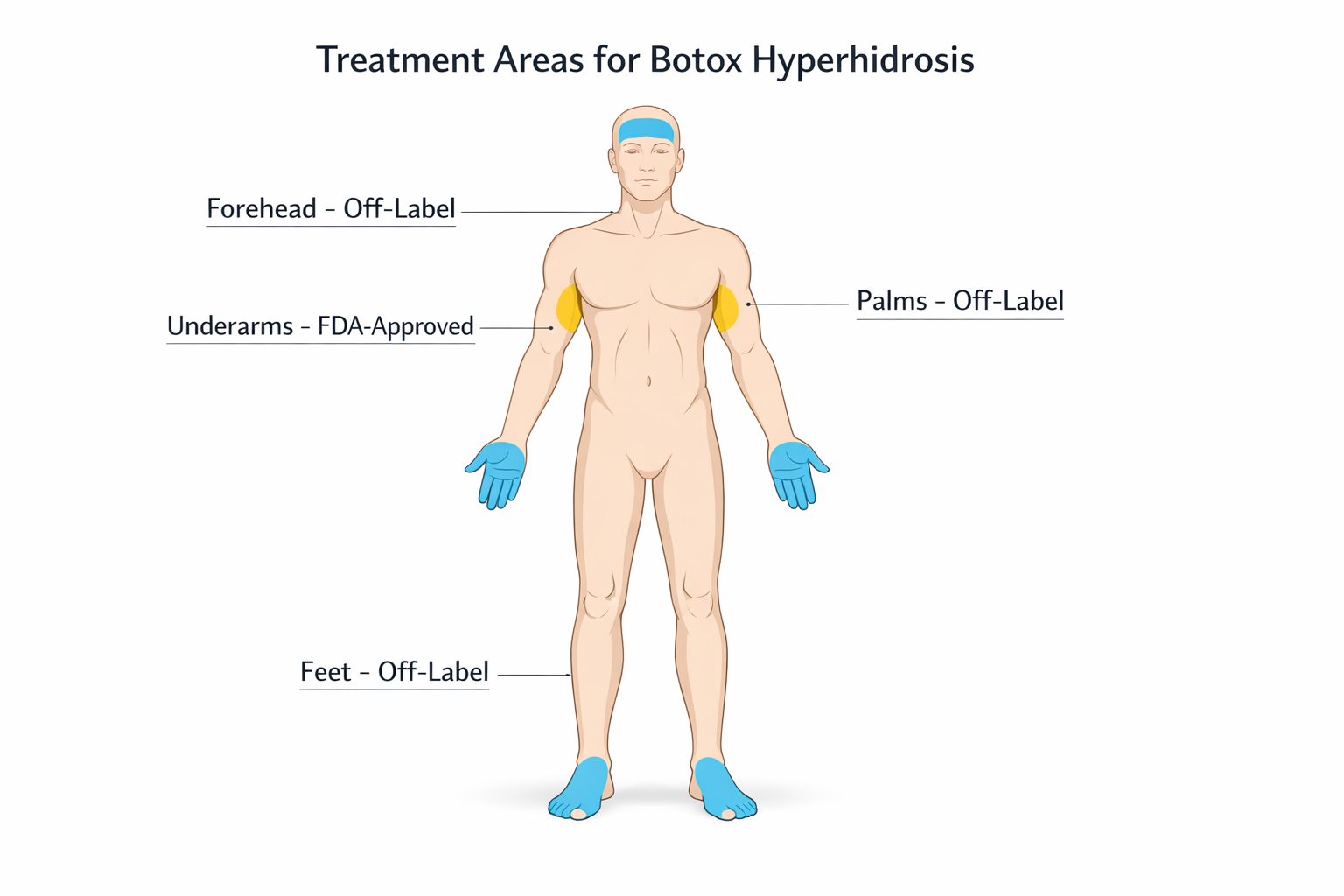
| Treatment Area | Clinical Term | FDA Status | Typical Sweat Reduction | Approximate Duration |
|---|---|---|---|---|
| Underarms | Axillary hyperhidrosis | FDA-approved | 82–87% | 6–12 months |
| Palms of hands | Palmar hyperhidrosis | Off-label | 80–90% | 3–6 months |
| Soles of feet | Plantar hyperhidrosis | Off-label | Variable | 3–6 months |
| Forehead / scalp / face | Craniofacial hyperhidrosis | Off-label | Variable | 3–6 months |
| Groin / under-breast | Intertriginous hyperhidrosis | Off-label | Variable | Variable |
Axillary hyperhidrosis is the only indication that is FDA-approved for underarm sweating using onabotulinumtoxinA. This means the approval was granted following specific clinical trials demonstrating safety and efficacy for this area. The remaining areas are considered off-label treatment — meaning the use falls outside the approved indication, but it is supported by a growing body of peer-reviewed evidence and is practiced by qualified clinicians with a sound rationale.
Palmar hyperhidrosis — sweating of the hands — is one of the most functionally disruptive forms of the condition, affecting handshakes, writing, and handling objects. Evidence supports a sweat reduction of 80–90% in some studies, though the duration tends to be shorter than axillary results, typically three to six months, and the injections may be more uncomfortable due to the density of nerve endings in the palms. Plantar treatment for foot sweating follows a similar profile. Craniofacial hyperhidrosis, affecting the forehead and scalp, can also respond well, though the injection technique requires careful planning to avoid affecting nearby muscles.
What Happens During the Procedure?
Botox treatment for sweating is an outpatient procedure performed by a trained medical practitioner. The following sequence describes what a typical appointment involves.
- Consultation and assessment: Before any treatment, the practitioner reviews your medical history, confirms a diagnosis of hyperhidrosis, assesses severity — often using the HDSS — and checks for any contraindications. This is also the appropriate moment to discuss which area is most troublesome and what realistic outcomes look like.
- Preparation of the treatment area: For underarm treatment, the area is cleaned and dried. A Minor’s starch iodine test may be used to map the exact zones of maximal sweating, although this is not always performed in clinical practice.
- Topical anaesthetic application (where used): Underarm injections are generally well tolerated without numbing. For palmar or plantar treatment, a numbing cream or nerve block may be applied beforehand, given the greater density of nerve endings in the hands and feet.
- Intradermal injections: The botulinum toxin is delivered via a series of small intradermal injections — meaning into the skin rather than deeper tissue — using a very fine needle. These are placed in a grid pattern across the affected area. For axillary hyperhidrosis, between 15 and 25 injection points are typical per underarm, though the precise number varies by individual anatomy and the practitioner’s approach.
- Aftercare guidance: The appointment usually concludes with written aftercare instructions. The procedure itself typically takes 15–30 minutes.
There is generally no significant downtime. Most people return to normal daily activities immediately. For the first 24 hours, it is advisable to avoid intense physical exercise, saunas, and heat exposure, as these could theoretically influence the distribution of the toxin. Underarm shaving is usually advised against for a day or two. Strenuous pressure on the hands should be avoided after palmar treatment for a similar period.
When Do Results Appear and How Long Do They Last?
Results from botulinum toxin treatment for sweating do not appear immediately. Most patients begin to notice a reduction in sweating within two to four days of treatment, with the full effect becoming apparent over approximately two weeks as the chemodenervation takes full effect at each injection site.
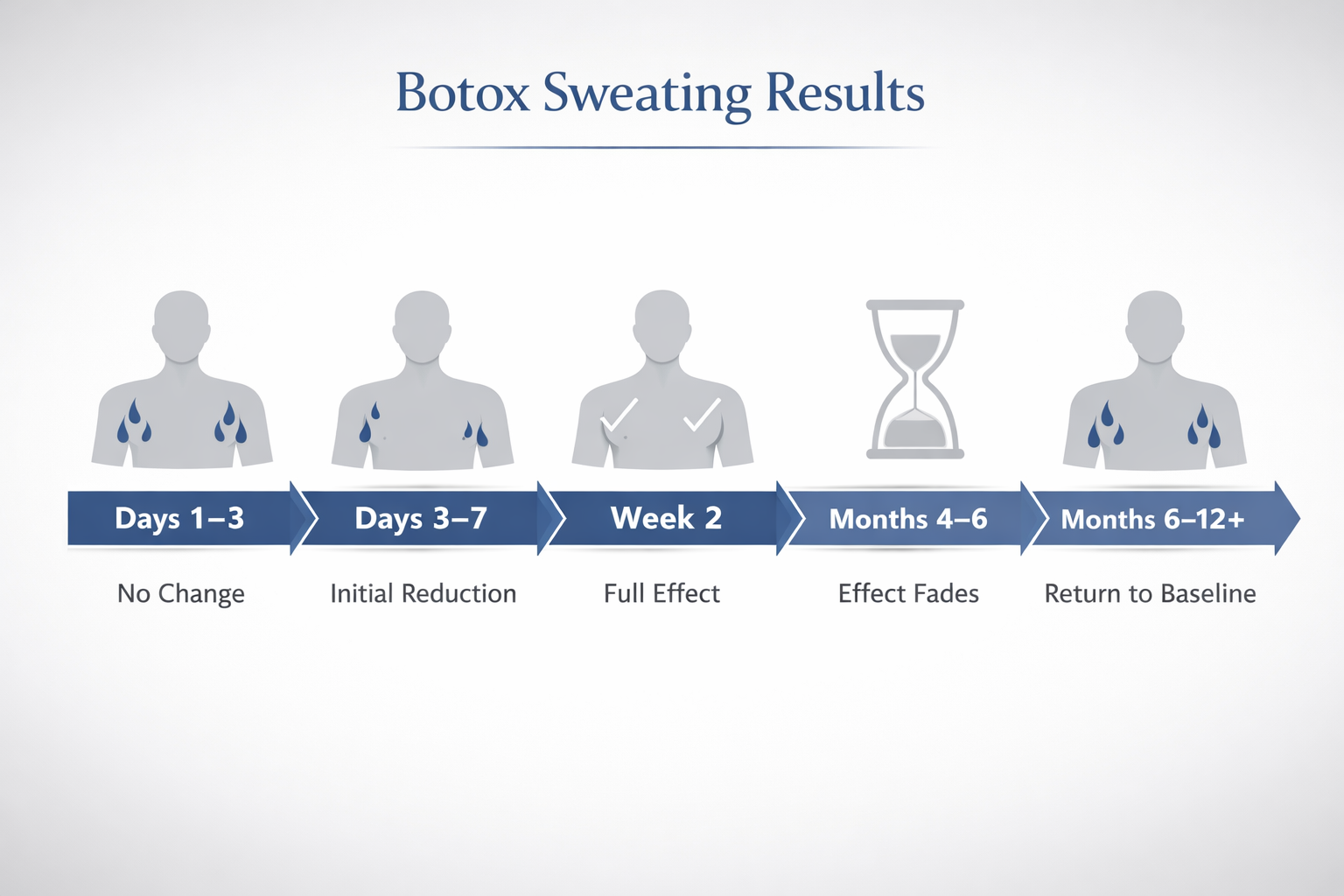
| Timeframe | What to Expect |
|---|---|
| Days 1–3 | No visible change; the toxin is being taken up by nerve endings |
| Days 3–7 | Initial reduction in sweating may become noticeable |
| Week 2 | Full effect usually established; sweat reduction at its maximum |
| Months 4–6 | Effect begins to diminish as nerve regeneration occurs |
| Months 6–12+ | Sweating returns toward baseline; maintenance injection appropriate |
For axillary hyperhidrosis, the results of a single treatment session typically last between six and twelve months, with some studies reporting duration of up to fourteen months. Palmar and plantar treatments tend to wear off more quickly — often within three to six months — likely because hands and feet are used more actively, which may influence local circulation and nerve recovery. Maintenance injections are usually scheduled every four to six months to sustain the benefit, and many patients find that with regular treatment they can plan their appointments around seasons or key life events.
What Evidence Supports Botox for Sweating?
Botulinum toxin type A for hyperhidrosis has accumulated a substantial evidence base over more than two decades. A 2025 systematic review and meta-analysis (PMC12500766) confirmed that intradermal botulinum toxin is effective and well-tolerated for primary focal hyperhidrosis across multiple body areas. The axillary evidence base is the most robust, given its FDA-approved status, and randomized controlled trials consistently report a sweat reduction of 82–87% compared to placebo, with clinically meaningful improvements on the HDSS and the DLQI.
Quality-of-life outcomes are a consistent finding across prospective studies. Research using tools such as the WHOQOL-BREF alongside the DLQI demonstrates that effective hyperhidrosis treatment produces significant improvements in emotional wellbeing, social functioning, and daily activities — often to a degree that patients describe as transformative after years of managing the condition with inadequate results from other methods.
Evidence for palmar and plantar use is somewhat less extensive in terms of large randomized trials, partly because FDA-approved studies were not conducted for these areas, but the available data and clinical experience support meaningful efficacy. A narrative review published in 2025 (PMC13474375) further describes current practice and evidence for off-label botulinum toxin use in hyperhidrosis treatment areas beyond the axillae.
Side Effects and Risks
Botox for sweating is generally well tolerated, but it carries potential side effects that any prospective patient should understand before proceeding.
- Injection site effects: Mild pain, redness, bruising, or temporary swelling at the injection points are the most common reactions and typically resolve within a few days.
- Temporary muscle weakness (palmar treatment): Intradermal injections in the palms carry a small risk of the toxin affecting nearby small muscles in the hand, leading to temporary weakness of grip or fine motor movements. This is usually mild and resolves as the toxin effect fades.
- Flu-like symptoms: A small number of patients report mild fatigue, headache, or a flu-like feeling in the days after treatment. These are usually short-lived.
- Compensatory sweating: When sweating is reduced in one area, some individuals experience a mild increase in sweating elsewhere on the body. This is more commonly associated with surgical sympathectomy than with Botox, but it can occasionally occur. It is generally less pronounced and less predictable than the compensatory sweating seen after surgery.
- Infection: As with any injection, there is a small risk of localised infection. This risk is minimized by proper aseptic technique.
- Incomplete response: Not all patients achieve the same degree of reduction. A small proportion may find the response unsatisfactory or shorter than expected.
Serious systemic effects from botulinum toxin used at the doses appropriate for hyperhidrosis treatment are rare. A thorough consultation with a qualified practitioner will help identify whether any individual risk factors are relevant to your circumstances.
Who May Be a Suitable Candidate?
Botox for sweating is most appropriate for adults who meet the following general criteria, though individual suitability always requires a clinical assessment:
- A diagnosis of primary focal hyperhidrosis — excessive sweating that is localized, frequent, and impairing daily life
- Inadequate response to or intolerance of a clinical-strength antiperspirant (typically containing aluminium chloride), which is usually recommended as a first-line approach
- No evidence of secondary hyperhidrosis requiring investigation of an underlying cause
- Not pregnant or breastfeeding
- No active infection or significant skin disease at the proposed treatment site
- No neuromuscular conditions such as myasthenia gravis or Lambert-Eaton syndrome, which increase the risk of adverse effects from botulinum toxin
- Not taking aminoglycoside antibiotics or other medications that may interact with botulinum toxin
Age is a practical consideration — the treatment is generally used in adults, and parental consent would be required for younger patients in the rare cases where it might be considered. People who have not yet tried a clinical-strength antiperspirant consistently are typically advised to do so before considering Botox, as a meaningful proportion of patients with mild to moderate hyperhidrosis respond to antiperspirant therapy alone.
How Does Botox Compare to Other Treatments for Hyperhidrosis?
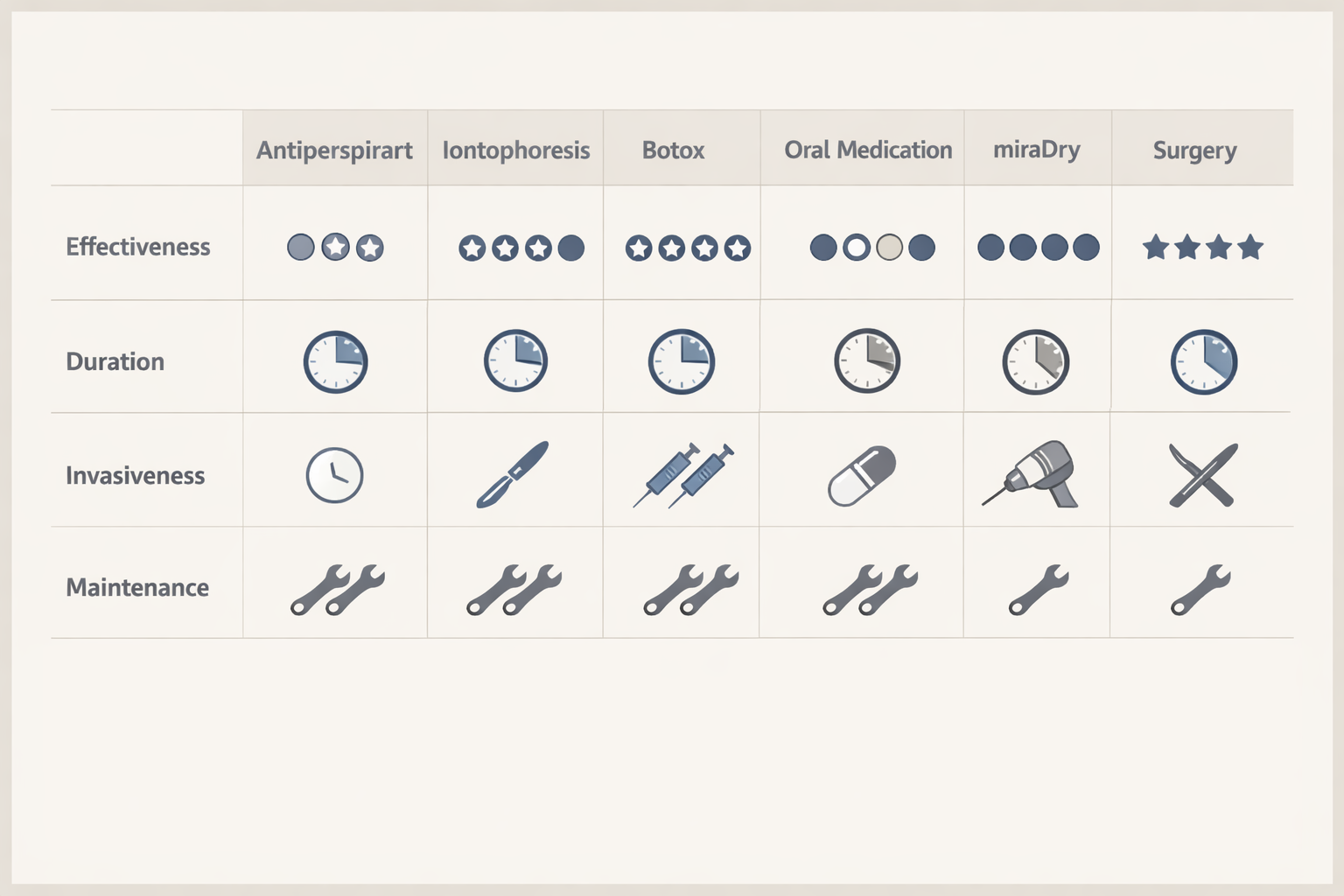
Botulinum toxin is one of several available options for managing excessive sweating. Choosing the right approach depends on the severity of the condition, the treatment area, prior treatment history, personal preferences, and cost considerations.
| Treatment | How It Works | Best For | Duration | Key Limitation |
|---|---|---|---|---|
| Clinical-strength antiperspirant | Aluminium chloride blocks sweat ducts | Mild–moderate axillary sweating | Daily use required | Skin irritation; may not control severe sweating |
| Iontophoresis | Mild electrical current disrupts sweat glands temporarily | Palmar and plantar hyperhidrosis | Sessions 2–3x/week ongoing | Time-intensive; requires equipment |
| Botulinum toxin (Botox) | Blocks acetylcholine at nerve–gland junction | Axillary, palmar, plantar, facial | 4–12 months per session | Repeat injections required; cost over time |
| Oral anticholinergics (e.g., glycopyrronium) | Systemically reduces cholinergic nerve activity | Generalized or refractory sweating | Taken daily | Systemic side effects (dry mouth, blurred vision) |
| miraDry | Microwave energy destroys sweat glands | Axillary hyperhidrosis | Permanent reduction | Axilla only; more invasive; higher upfront cost |
| Endoscopic thoracic sympathectomy (ETS) | Surgical interruption of sympathetic nerve pathways | Severe palmar hyperhidrosis | Permanent | Significant risk of compensatory sweating; surgical risks |
Botulinum toxin occupies a well-defined position in this landscape. It offers a meaningful, predictable reduction in sweating without the systemic side effects of oral medications and without the permanence or surgical risks of sympathectomy or miraDry. Its primary practical limitation is the need for ongoing maintenance injections, which represents both a financial commitment and a logistical one. For patients with moderate to severe primary focal hyperhidrosis who have not found adequate relief from antiperspirants, it is frequently the most practical next step before considering permanent interventions.
Frequently Asked Questions
Does Botox for sweating hurt?
Underarm injections are generally well tolerated and described by most patients as a mild stinging sensation. Palmar and plantar injections are typically more uncomfortable due to the density of sensory nerve endings in these areas. Topical anaesthetic cream or a nerve block can be applied before treatment in the hands and feet to improve comfort. Your practitioner should discuss pain management options during your consultation.
Will I sweat more elsewhere if I stop sweating in one area?
A mild increase in sweating in untreated areas — sometimes called compensatory sweating — can occasionally occur after Botox treatment, though this is far less common and less pronounced than the compensatory sweating associated with surgical sympathectomy. Most patients treated with botulinum toxin do not report significant changes in sweating elsewhere on the body.
How many sessions will I need?
Botox for sweating is a maintenance treatment rather than a permanent solution. Most patients receive repeat injections every four to six months to maintain results. Over time, some patients find they can extend intervals between sessions, though this is not universal.
Can I exercise after treatment?
Strenuous exercise, saunas, and exposure to significant heat are generally advised against for 24 hours following treatment. After that, normal physical activity can be resumed. Your practitioner will provide specific aftercare guidance tailored to the area treated.
Is Botox for sweating safe long-term?
There is a substantial body of evidence supporting the long-term use of botulinum toxin type A for hyperhidrosis, with no evidence of cumulative toxicity at doses used for this purpose. Regular repeat injections are well-established in clinical practice. Individual suitability should be reviewed at each appointment, particularly if there are any changes in health status or medications.
What if antiperspirants haven’t worked for me?
Inadequate response to a clinical-strength antiperspirant is one of the most common reasons patients are referred for or seek out Botox treatment for hyperhidrosis. A practitioner can review whether your prior antiperspirant use was optimized — including application technique and concentration — and help determine whether botulinum toxin is a reasonable next step for your specific pattern of sweating.
Is there a difference between Botox used for sweating and Botox used for wrinkles?
Both use botulinum toxin type A as the active ingredient, but the clinical application is different. For facial aesthetics, the toxin is injected into muscles to reduce movement. For hyperhidrosis, it is delivered via intradermal injections into the skin to reach the nerve endings supplying the eccrine sweat glands. The doses used, the injection technique, and the treatment area all differ significantly between the two applications.
Is Botox for Sweating Worth Considering?
For people living with moderate to severe primary focal hyperhidrosis — particularly where a clinical-strength antiperspirant has not provided adequate relief — botulinum toxin type A represents a well-evidenced, minimally invasive option with a meaningful track record. A sweat reduction of 82–87% in axillary hyperhidrosis, documented improvements in quality-of-life scores, and a safety profile established over decades of clinical use place it among the most reliably effective non-surgical options currently available.
The treatment’s main practical considerations are its temporary nature and the cost of ongoing maintenance injections. Results typically last between four and twelve months depending on the treatment area, and regular appointments are needed to maintain the benefit. For many patients, this is a manageable trade-off against the significant daily impact that uncontrolled sweating has on their confidence, clothing choices, and social and professional life. The off-label use for hands, feet, and facial sweating is also well-supported, though the duration of effect tends to be shorter in these areas.
Botox is not appropriate for everyone. Secondary hyperhidrosis requires investigation of the underlying cause before cosmetic or symptomatic interventions are pursued. People with neuromuscular conditions, certain medication interactions, or who are pregnant or breastfeeding should not receive this treatment. A thorough consultation with a qualified medical practitioner — ideally one with experience in hyperhidrosis management — is the appropriate starting point to assess your suitability, discuss realistic outcomes, and consider whether alternative or complementary approaches might also play a role in your management plan.
