

Key Takeaways
- Back acne laser treatment works by targeting sebaceous glands, killing acne-causing bacteria, and reducing inflammation — different laser types address these mechanisms in different ways.
- Multiple sessions are typically needed; most patients complete a course of three to six treatments spaced several weeks apart before assessing results.
- Laser can treat both active inflammatory lesions and residual acne scarring, but these goals often require different devices or approaches.
- Skin type — including Fitzpatrick skin type — is an important factor in determining which laser is safest and most effective for you.
- Laser is not a permanent cure for all patients; maintenance treatments and ongoing skincare are often part of a long-term management plan.
What Causes Back Acne?
Back acne — commonly called bacne — develops through the same fundamental process as facial acne, but the back presents particular challenges. The skin on the back is thicker, contains a high density of sebaceous glands, and is an area prone to friction from clothing, sweat, and difficulty reaching for thorough cleansing. When hair follicles become clogged with excess sebum and dead skin cells, the bacterium Cutibacterium acnes (formerly known as P. acnes) proliferates and triggers an inflammatory response. The result can range from surface-level papules and pustules to deeper nodules and cystic acne lesions.
Hormonal fluctuations, certain medications, dietary factors, and genetic predisposition can all influence how severely and persistently back acne develops. Because the back is a large surface area with fewer nerve endings than the face, patients sometimes discover significant breakouts only when they become painful, extensive, or begin leaving visible scarring. This delayed awareness often means that by the time treatment is sought, the acne has already caused post-inflammatory hyperpigmentation or textural scarring.
How Laser Treatment Works on Back Acne
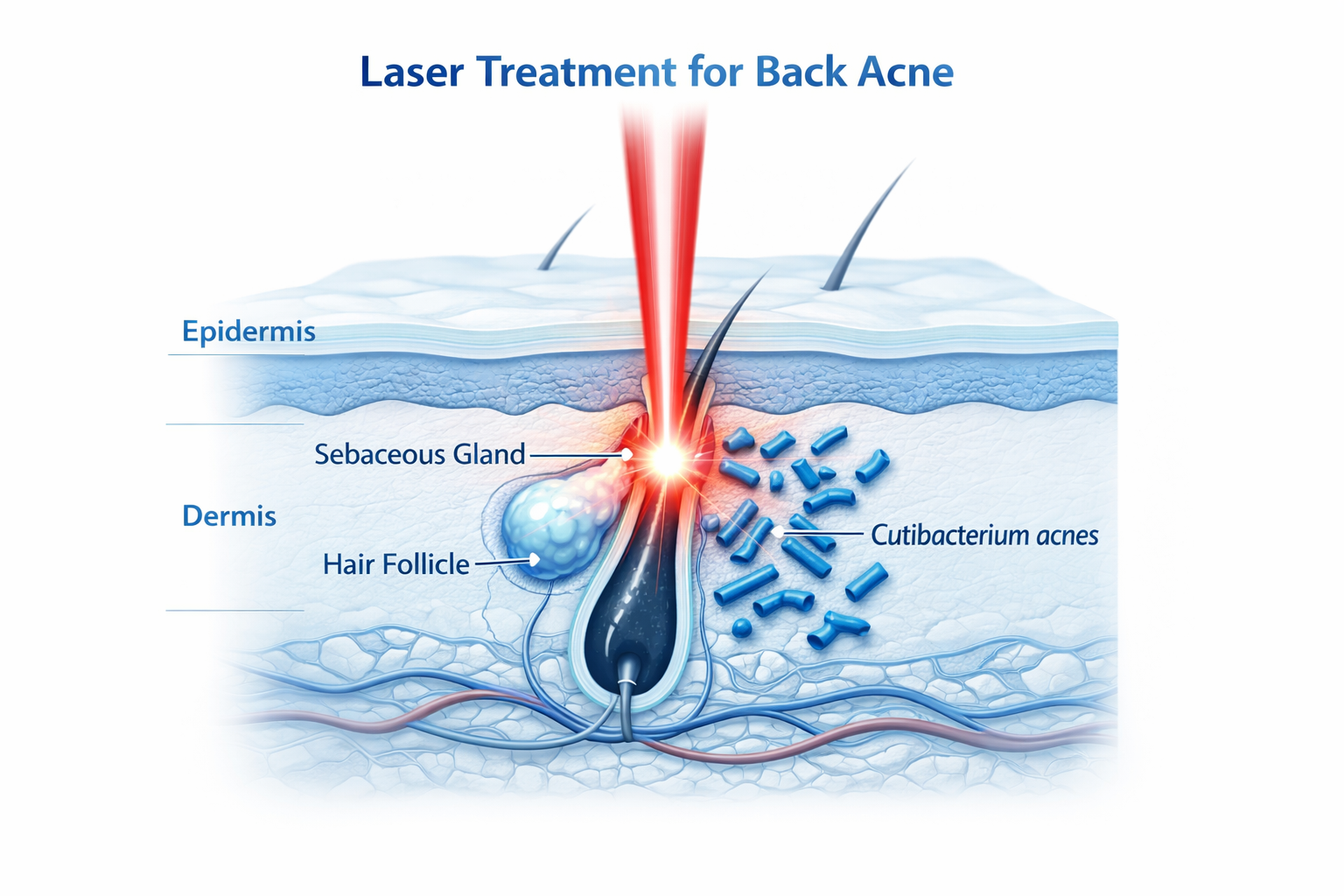
Laser and light-based devices address back acne through several complementary mechanisms depending on the wavelength and technology used. The main pathways include sebaceous gland suppression, bacterial destruction, and reduction of the inflammatory response within the skin.
Certain wavelengths — particularly those in the near-infrared range — are absorbed by the lipids within overactive sebaceous glands, generating controlled thermal injury that reduces oil production over subsequent weeks. Other wavelengths target oxyhemoglobin in the blood vessels feeding inflamed lesions, reducing the redness and swelling associated with active breakouts. Some devices emit wavelengths directly absorbed by Cutibacterium acnes or trigger the release of free radicals that destroy the bacteria. Beyond active acne, ablative and non-ablative fractional technologies promote collagen remodelling in the dermis, which gradually improves the texture and appearance of acne scars left behind after inflammatory lesions heal.
No single laser achieves all of these goals simultaneously, which is why a thorough clinical assessment is needed before deciding on an approach. The choice between ablative vs. non-ablative options, or between light-based and laser technologies, depends on the type of acne present, the depth of scarring, and the patient’s skin type.
Types of Laser and Light Treatments for Back Acne
Several distinct technologies are used in clinical practice, each with a different mechanism, suitability profile, and evidence base. The table below summarises the main options relevant to back acne management.
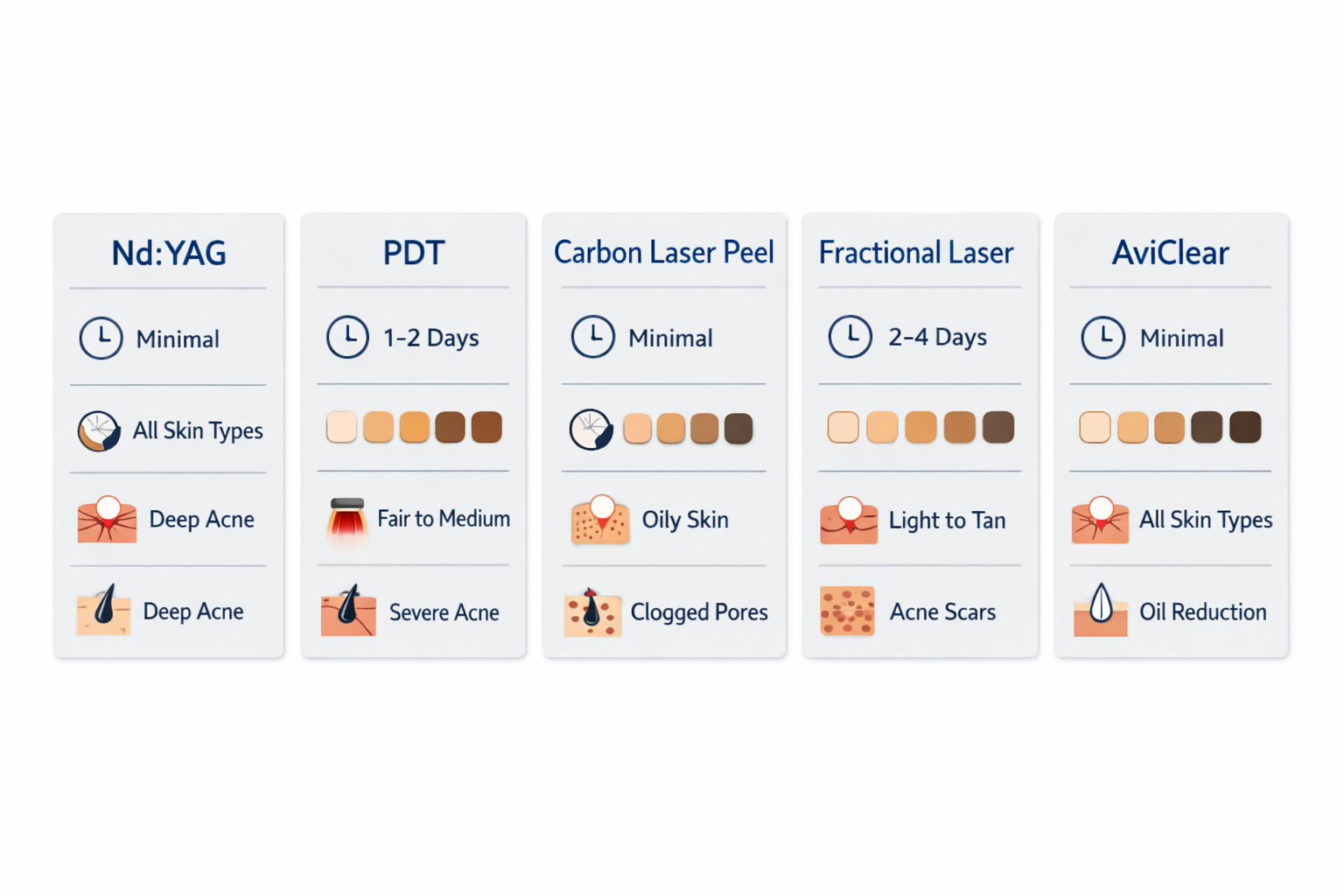
| Treatment | Primary Mechanism | Best For | Downtime | Skin Type Suitability |
|---|---|---|---|---|
| Nd:YAG laser (1064 nm) | Targets sebaceous glands and vascular supply; kills bacteria | Active inflammatory acne; darker skin tones | Minimal (1–3 days redness) | All Fitzpatrick types including IV–VI |
| Diode laser (810 nm / 577 nm) | Sebaceous gland heating; vascular targeting | Active inflammatory lesions; moderate bacne | Minimal to mild | Generally I–IV; assess carefully for darker skin |
| Photodynamic therapy (PDT) | ALA photosensitiser + light activation; destroys bacteria and sebaceous glands | Severe or persistent inflammatory acne | Moderate (3–7 days sensitivity and peeling) | I–IV; caution in darker skin types |
| Carbon laser peel (Q-switched 1064 nm) | Carbon absorbs laser energy; exfoliates, unclogs pores, reduces oil | Mild-to-moderate acne; oily skin; pore congestion | Very minimal (hours) | All skin types |
| Non-ablative fractional laser | Microscopic thermal columns; collagen remodelling without removing surface layer | Acne scars; post-inflammatory marks | Mild (2–5 days redness, swelling) | I–IV; caution for darker tones |
| CO2 / Erbium:YAG (ablative fractional) | Skin resurfacing; removes damaged skin layers; stimulates collagen | Established acne scars; textural improvement | Significant (7–14 days or more) | Primarily I–III; higher PIH risk in darker skin |
| AviClear | 1726 nm wavelength specifically targeting sebaceous glands | Active acne across all severities | Minimal | All skin types; FDA-cleared |
| IPL (Intense Pulsed Light) | Broad-spectrum light; vascular and pigment targeting | Mild inflammatory acne; post-inflammatory redness | Minimal to mild | I–III; not recommended for darker skin |
Nd:YAG Laser
The Nd:YAG laser at 1064 nm is one of the most clinically versatile options for back acne and is particularly important because its longer wavelength penetrates more deeply into the dermis while posing a lower risk of surface pigment disruption. This makes it a meaningful choice for patients with darker skin tones (Fitzpatrick types IV through VI) who face a greater risk of post-inflammatory hyperpigmentation with other devices. A 2025 randomised controlled trial comparing diode and Nd:YAG lasers for inflammatory acne found both to be effective in reducing lesion counts, with the Nd:YAG demonstrating a favourable safety profile across a broader range of skin tones.
Photodynamic Therapy (PDT)
Photodynamic therapy (PDT) involves applying a photosensitising agent — most commonly aminolevulinic acid (ALA) — to the skin before activating it with a specific wavelength of light. The agent is preferentially absorbed by sebaceous glands and by Cutibacterium acnes bacteria. Light activation then generates reactive oxygen species that destroy both the bacteria and the gland tissue responsible for excess sebum production. PDT is particularly relevant for severe or treatment-resistant back acne because of its dual action on both infection and oil production. However, the back presents a logistical consideration: the large surface area requires more photosensitiser and longer application times, and patients may experience several days of erythema, peeling, and heightened sun sensitivity after treatment. PDT is generally more suitable for lighter skin types.
Carbon Laser Peel
The carbon laser peel — delivered using a Q-switched Nd:YAG laser — involves applying a thin layer of liquid carbon to the skin, which settles into pores and adheres to sebum and debris. The laser energy is then absorbed by the carbon particles, producing a controlled exfoliation and thermal effect that unclogs follicles, reduces oil production, and destroys surface bacteria. Clinical data published in peer-reviewed literature supports its efficacy in reducing inflammatory lesion counts and improving skin texture with minimal downtime, making it a well-tolerated option across most skin types.
AviClear
AviClear is a dedicated acne laser cleared by the FDA that uses a 1726 nm wavelength specifically optimised to target sebaceous gland tissue. Unlike older devices that were adapted from other indications, AviClear was developed with acne as its primary purpose. Early clinical data suggests meaningful reductions in acne severity with a course of three treatments, and the device has been studied across multiple skin types. While it is a newer technology and long-term data are still accumulating, it represents a notable development in dedicated sebaceous gland suppression.
Active Acne vs. Acne Scars: An Important Distinction
One of the most important distinctions to understand before choosing a laser approach is whether the primary goal is clearing active breakouts or improving the appearance of existing scars. These two goals often require entirely different technologies.
For active inflammatory lesions, the priority is reducing bacterial load, sebum production, and inflammation. Devices such as the Nd:YAG, diode laser, PDT, carbon laser peel, and AviClear are more directly relevant here. For acne scarring — including atrophic (depressed) scars, textural irregularities, and post-inflammatory hyperpigmentation — fractional resurfacing technologies such as non-ablative fractional laser or ablative CO2 and erbium:YAG devices are more appropriate. These stimulate collagen remodelling in the dermis to gradually fill and smooth scarred areas.
Some patients have both concerns simultaneously, in which case a sequenced or combination approach may be recommended: first bringing active acne under control, then addressing residual scarring once breakouts are stable. A 2025 meta-analysis examining fractional laser and radiofrequency microneedling for acne scars found that combination approaches can produce meaningful improvements in scar severity scores, though individual results varied considerably depending on scar subtype and depth.
What to Expect: The Treatment Process
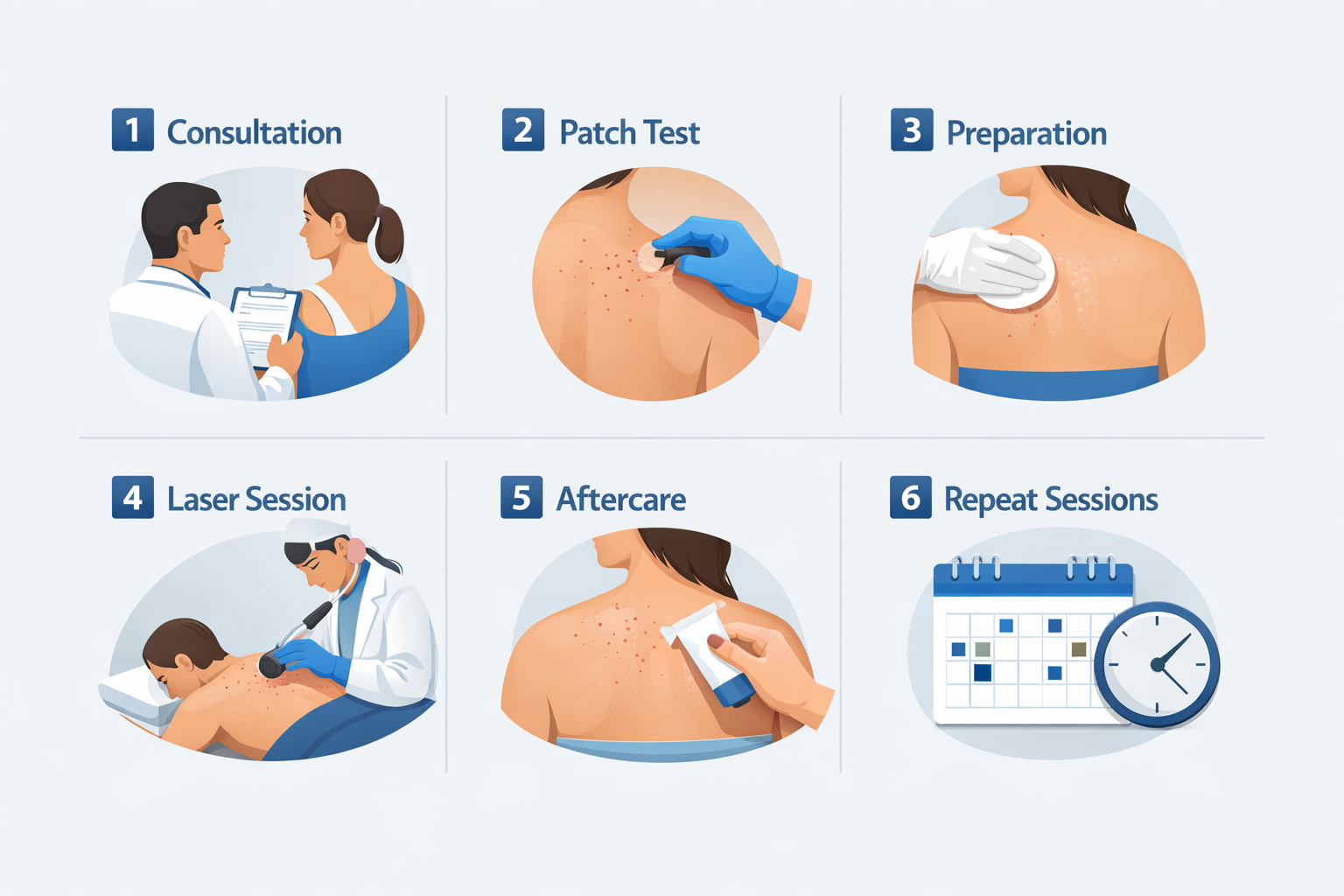
- Consultation and assessment: A qualified practitioner — ideally a board-certified dermatologist or an experienced aesthetic clinician — will assess your acne type, severity, skin type, and medical history. Contraindications such as active infection, use of isotretinoin, pregnancy, and certain medications will be reviewed. Photographs are typically taken to track progress.
- Patch test: For many laser and light treatments, a patch test on a small area of the back is carried out before the full treatment course begins, particularly for patients with darker skin tones or any history of pigmentation changes.
- Preparing the treatment area: The back is cleansed and, depending on the device, a topical anaesthetic cream may be applied 30–60 minutes before the session to improve comfort. For PDT, the photosensitiser is applied and left under occlusion for a specified incubation period before light activation begins.
- The session: A typical back acne laser session takes between 30 and 60 minutes depending on the surface area treated and the device used. Most patients describe the sensation as a warm snapping or tingling feeling. Cooling devices or cold air are often used alongside the laser to minimise discomfort and protect the skin surface.
- Immediate aftercare: Post-treatment redness and mild swelling are normal and usually settle within hours to a few days. A soothing moisturiser and broad-spectrum SPF are applied, and patients are advised to avoid sun exposure, hot showers, vigorous exercise, and tight clothing for a recommended period.
- Repeat sessions: Most treatment courses involve three to six sessions spaced two to six weeks apart. The exact number depends on acne severity, the device used, and how your skin responds.
Results: What You Can Realistically Expect
Most patients begin noticing a reduction in the number and severity of active breakouts after two or three sessions, though the full benefit of a treatment course typically becomes apparent four to eight weeks after the final session. For acne scarring, collagen remodelling is a gradual process and improvements may continue developing for three to six months following treatment.
Clinical studies generally report meaningful reductions in inflammatory lesion counts after a completed treatment course, with some trials showing reductions of 50–80% in active lesion numbers. However, results vary considerably between individuals depending on acne subtype, hormonal factors, adherence to aftercare, and skin type. It is important to approach before and after results with appropriate context — individual photographs represent individual outcomes and are not guarantees.
Laser treatment is not a permanent cure for acne. Because the underlying factors driving breakouts — hormonal activity, genetics, sebum production — are not fully eliminated by laser energy, some patients experience a return of breakouts over time and may benefit from maintenance sessions every three to six months, particularly during periods of hormonal change. Combining laser with ongoing topical treatments such as retinoids or benzoyl peroxide, or with medical management prescribed by a dermatologist, often produces better long-term outcomes than laser alone.
Skin of Colour and Laser Safety
Patients with darker Fitzpatrick skin types (IV through VI) require careful device selection because many laser wavelengths carry a higher risk of post-inflammatory hyperpigmentation or hypopigmentation when excess melanin in the skin absorbs unintended laser energy. The Nd:YAG laser at 1064 nm has the deepest penetration of the commonly used acne lasers and the lowest epidermal melanin absorption, making it the most widely recommended option for darker skin tones. The carbon laser peel is also generally well tolerated across a broad range of skin types.
Ablative lasers such as CO2 and erbium:YAG, and to a lesser extent non-ablative fractional devices, carry a higher risk of pigmentation changes in darker skin and should be approached with considerable caution. IPL is generally not recommended for patients with Fitzpatrick type IV skin or above. An honest discussion about pigmentation risk, the importance of a patch test, and realistic expectations is an essential part of the consultation for any patient with a medium-to-dark complexion.
Side Effects and Risks
All laser and light treatments carry potential side effects, and the risk profile differs depending on the technology used, the energy settings, the practitioner’s experience, and the patient’s skin type.
- Transient redness and swelling: Expected after most sessions; usually resolves within hours to a few days.
- Post-inflammatory hyperpigmentation (PIH): Darkening of the treated area, more common in patients with Fitzpatrick types III–VI. Usually temporary with appropriate aftercare, but may persist for several months.
- Hypopigmentation: Loss of skin colour; more associated with aggressive ablative treatments and generally less common than PIH.
- Increased sun sensitivity: Particularly relevant after PDT and ablative resurfacing. Diligent SPF use is essential for at least six to eight weeks after treatment.
- Scarring: Rare when treatment is performed correctly, but a risk with higher-energy ablative devices, particularly if aftercare instructions are not followed.
- Paradoxical acne flares: Some patients notice a temporary worsening of breakouts shortly after treatment before improvement occurs; this is more commonly reported after PDT.
- Pain and discomfort: Variable depending on device and individual sensitivity; typically manageable with topical anaesthetic.
Aftercare Tips Specific to the Back
The back presents practical aftercare challenges that are rarely discussed in general laser guidance. Applying broad-spectrum SPF and moisturiser to the back independently is difficult, and patients should plan to have assistance from a partner or family member, particularly during the first week after treatment. Clothing choices matter: loose, breathable fabrics such as cotton reduce friction over treated skin and help prevent irritation. Tight sportswear and backpacks should be avoided until redness and sensitivity have fully resolved.
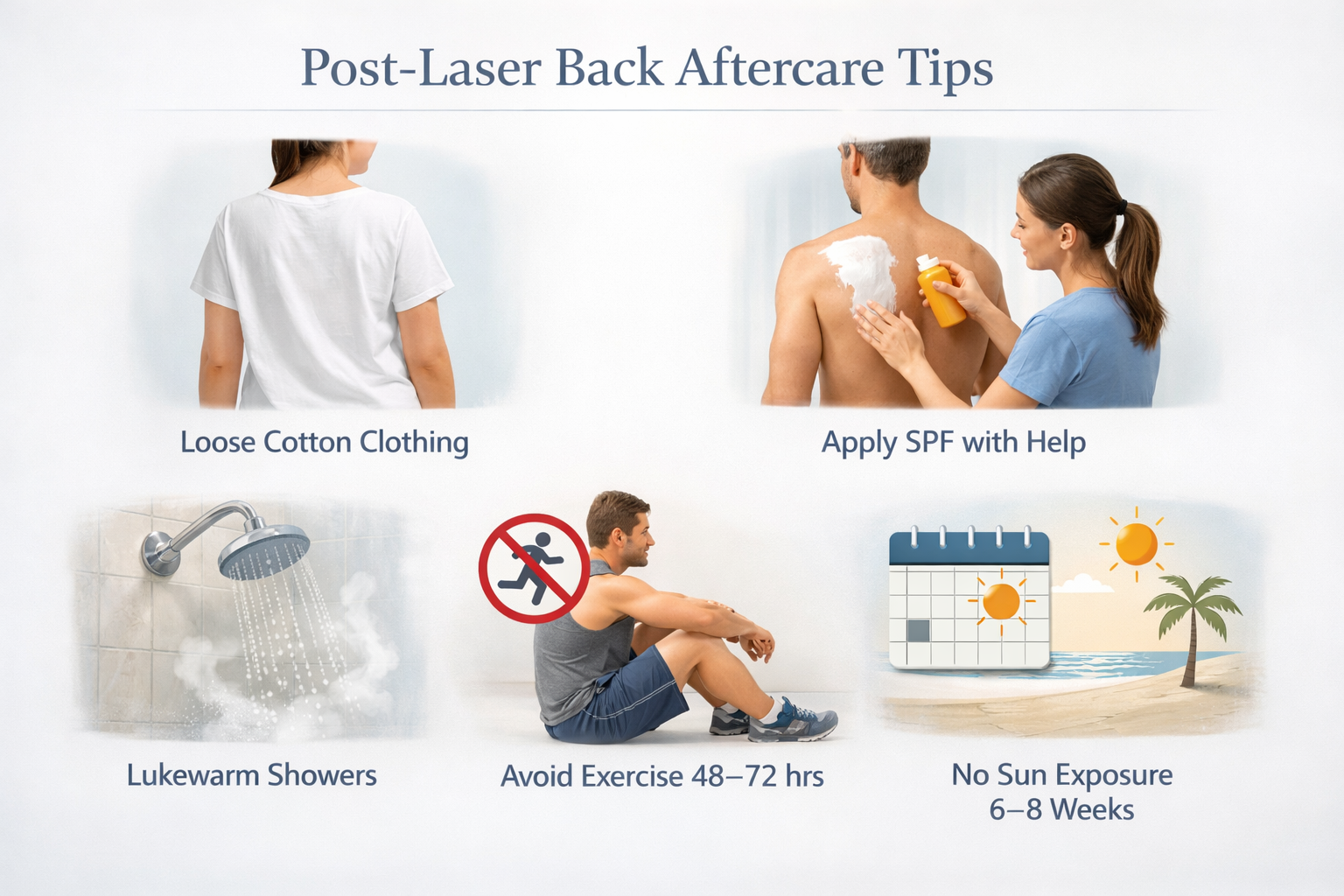
Hot showers and baths should be replaced with lukewarm water for several days, as heat increases post-treatment inflammation. Vigorous exercise that causes significant sweating should be postponed for at least 48–72 hours after most laser sessions, and longer after PDT or ablative treatments. Sun exposure to the back — including sunbathing, outdoor exercise in direct sun, and tanning beds — should be avoided throughout the treatment course and for a minimum of six to eight weeks after the final session.
Laser vs. Other Treatments for Back Acne
Laser is one option within a broader toolkit for managing back acne. Understanding where it sits relative to alternatives helps in making an informed decision.
- Topical treatments (benzoyl peroxide, retinoids, salicylic acid): First-line options for mild-to-moderate back acne. Effective but can be difficult to apply thoroughly across the back, and adherence over months can be challenging. Suitable as a complement to laser rather than a replacement in moderate-to-severe cases.
- Oral antibiotics: Reduce Cutibacterium acnes populations systemically. Effective in the short term but concerns about antibiotic resistance have led to guidance recommending time-limited use, typically no more than three to six months. Not a standalone long-term solution.
- Isotretinoin (Accutane): The most potent medical option for severe nodular or cystic acne. Can produce lasting remission in many patients. Requires careful medical supervision due to significant side effects and contraindications. Laser treatment is generally contraindicated during and for several months after isotretinoin use because of altered skin healing responses.
- Chemical peels: Salicylic acid and glycolic acid peels can help with mild-to-moderate back acne and pigmentation. Less suitable for deep scarring or severe inflammatory disease.
- Microneedling and radiofrequency microneedling: Useful for acne scars and skin texture improvement; less targeted for active acne lesion reduction. Can be combined with laser in a sequenced approach.
From a cost-effectiveness perspective, a full laser treatment course represents a meaningful upfront investment. However, when weighed against years of prescription antibiotic costs, repeated dermatology appointments, and the ongoing purchase of topical treatments that may provide only partial benefit, the total expenditure over two to three years may be comparable for patients with persistent moderate-to-severe acne. This calculation will depend on individual response and whether maintenance sessions are needed.
Who May Be a Suitable Candidate?
Back acne laser treatment tends to be most relevant for patients who have moderate-to-severe inflammatory or nodular acne on the back that has not responded adequately to topical treatments used consistently over several months. It may also be appropriate for patients in whom oral antibiotics are not recommended or preferred, or those who have completed other treatments and are managing residual acne scarring or post-inflammatory hyperpigmentation.
Patients with mild, occasional breakouts that respond to over-the-counter topicals are generally not the primary candidates for laser intervention. Those currently taking isotretinoin should wait until the course is complete and the recommended washout period has passed — typically six months or more — before undergoing laser treatment. Pregnancy, active skin infection over the treatment area, and certain photosensitising medications are also relevant contraindications. A thorough consultation is the appropriate setting to assess individual suitability.
Frequently Asked Questions
How many sessions will I need for back acne?
Most patients complete a treatment course of three to six sessions, spaced two to six weeks apart depending on the device and how the skin is responding. Active acne and acne scarring may require different session counts. Your practitioner will review your progress and adjust the plan accordingly.
Is laser treatment for back acne painful?
Most patients find the sensation manageable. It is commonly described as a warm snapping or stinging feeling. Topical anaesthetic cream applied before the session significantly reduces discomfort, and many devices include integrated cooling to protect the skin surface during treatment.
Can I have laser treatment if I am on antibiotics?
Some antibiotics are photosensitising and may increase the risk of adverse skin reactions with laser or light treatments. You should inform your practitioner of all medications — including antibiotics — before beginning any laser treatment course so they can assess whether any adjustments are needed.
Is laser treatment suitable for hormonal back acne?
Laser can reduce active breakouts regardless of their hormonal trigger, but it does not address the underlying hormonal imbalance. For patients whose bacne is driven primarily by hormonal fluctuations, laser may be most effective when used as part of a broader management plan that also includes appropriate medical or hormonal treatment where indicated.
Will laser treatment remove my acne scars as well as clear active spots?
This depends on the laser type. Devices used for active acne — such as the Nd:YAG, diode, and carbon laser peel — have limited direct effect on established atrophic scars. Fractional skin resurfacing devices such as non-ablative fractional laser or ablative CO2 laser are more appropriate for scar improvement. A combination approach, treating active acne first and then addressing scars, is often recommended.
How soon can I exercise after a back acne laser session?
Most practitioners recommend avoiding vigorous exercise that produces significant sweating for 48–72 hours after a standard session. After PDT or ablative treatments, a longer rest from intense activity is generally advised. Exercise increases skin temperature and perspiration, both of which can irritate freshly treated skin and increase the risk of adverse reactions.
Is laser treatment for back acne covered by health insurance?
In most countries, laser treatment for acne in an aesthetic or private clinic setting is not covered by standard health insurance or public healthcare systems, as it is generally classified as a cosmetic procedure. It is advisable to confirm coverage with your insurer before proceeding, particularly if your treatment is being managed in a medical dermatology context.
Is Laser Treatment the Right Approach for Your Back Acne?
Laser treatment for back acne is a clinically supported option for patients with moderate-to-severe inflammatory or persistent breakouts, particularly when topical treatments have delivered limited results. Different technologies address different aspects of the problem — some target active bacteria and oil production, others address the scarring that acne leaves behind — and matching the right device to your specific skin concerns and skin type is essential for both safety and effectiveness.
Realistic expectations matter. Laser is not a guaranteed cure, results vary between individuals, and maintenance treatment is often part of a sensible long-term plan. For patients with darker skin tones, choosing a practitioner experienced with the appropriate devices — particularly the Nd:YAG laser — and insisting on a proper patch test are important steps in reducing the risk of unwanted pigmentation changes.
If back acne has been affecting your confidence or comfort, and previous treatments have not produced adequate improvement, a consultation with a qualified dermatologist or an experienced aesthetic practitioner is the appropriate next step. A thorough assessment of your acne type, scarring, skin type, and treatment history will help determine whether laser — and which laser — is the most suitable option for you.
