

Key Takeaways
- Botox injections use a purified form of botulinum toxin type A to temporarily relax specific facial muscles, reducing the appearance of fine lines and wrinkles.
- Most appointments take 15–30 minutes with no significant downtime, though initial effects usually take 3–7 days to become visible and full results appear around two weeks.
- Results typically last 3–4 months, after which retreatment is needed to maintain the effect.
- Choosing a qualified medical practitioner with a thorough understanding of facial anatomy is the single most important factor in achieving safe, natural-looking results.
- Botox injections have both cosmetic and medical applications, including treatment for chronic migraine, hyperhidrosis, and bruxism.
What Are Botox Injections?
Botox is a brand name for a purified preparation of botulinum toxin type A, a neuromodulator derived from the bacterium Clostridium botulinum. In medical and aesthetic settings, highly diluted, precisely dosed formulations are injected into specific muscles or glands to produce a controlled, temporary effect. Botox injections remain one of the most frequently performed non-surgical cosmetic procedures worldwide, with a well-established safety record when administered by appropriately trained practitioners.
It is worth distinguishing between the brand name and the treatment category. Botox (manufactured by Allergan/AbbVie) is one of several botulinum toxin type A products; others include Dysport, Xeomin, and Jeuveau. All work through the same fundamental mechanism, though their formulations, unit dosing, and diffusion characteristics differ. A qualified practitioner will select the appropriate product based on the treatment area, the patient’s anatomy, and clinical preference.
How Do Botox Injections Work?
When a facial muscle contracts repeatedly — as it does during everyday expressions such as frowning, squinting, or smiling — it gradually creases the overlying skin, forming expression lines. Over time these lines can become visible even at rest. Botox injections interrupt this cycle by blocking the chemical signal that triggers muscle contraction.
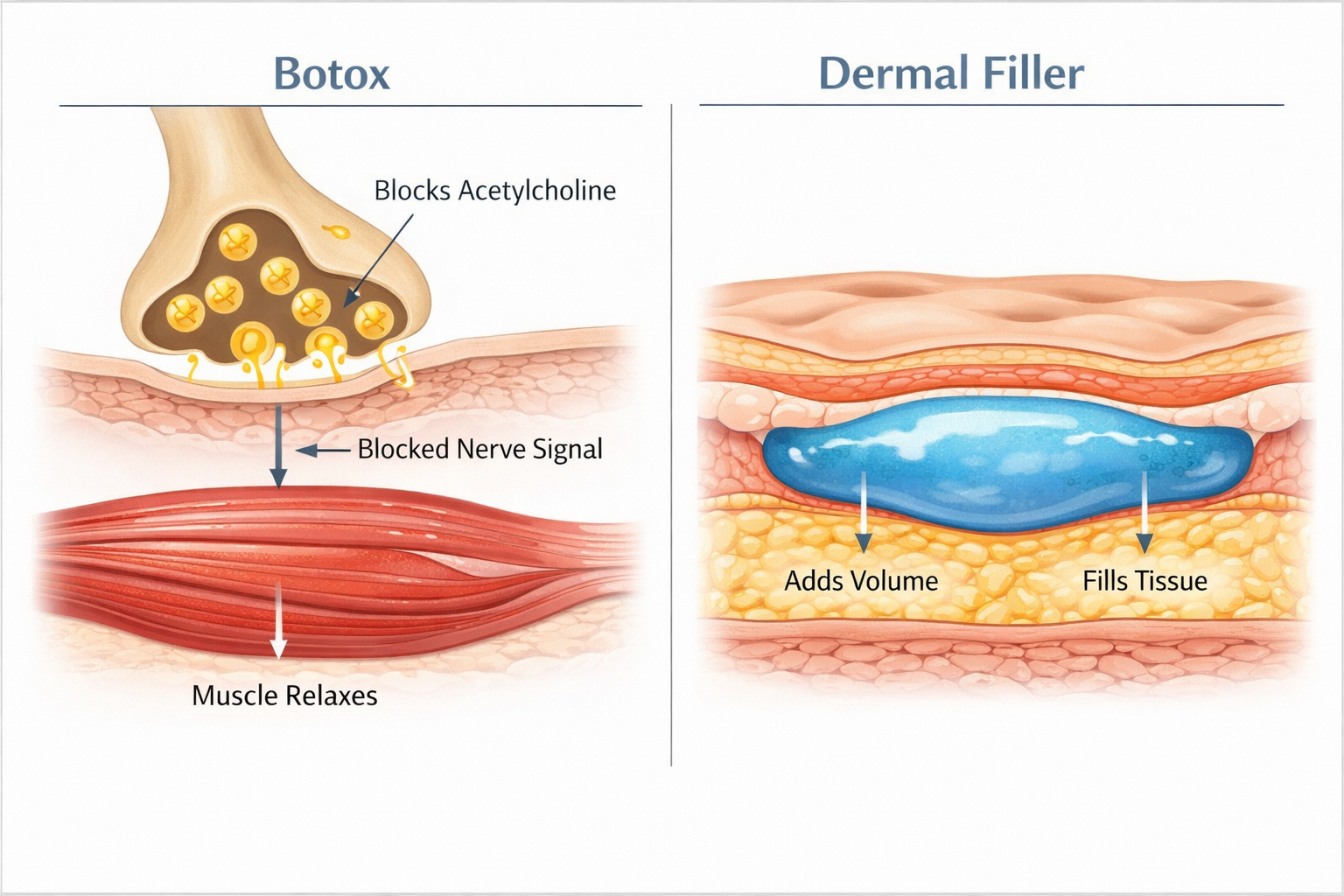
Specifically, botulinum toxin type A prevents the nerve endings at the neuromuscular junction from releasing acetylcholine, the neurotransmitter responsible for telling a muscle to contract. Without this signal, the targeted muscle relaxes. The overlying skin smooths out, and existing lines become less prominent. The effect is temporary because the body gradually forms new nerve terminals, restoring normal muscle function over the course of several months.
It is important to understand that Botox injections do not fill or add volume to the skin — that is the role of dermal fillers such as those containing hyaluronic acid. Botox works by reducing muscle activity, which makes it effective for dynamic wrinkles (lines caused by movement) rather than static volume loss or deep structural changes.
What Areas Can Botox Treat?
Botox injections are most commonly used on the upper face, but treatment areas have expanded considerably as techniques and evidence have developed.
Common Cosmetic Treatment Areas
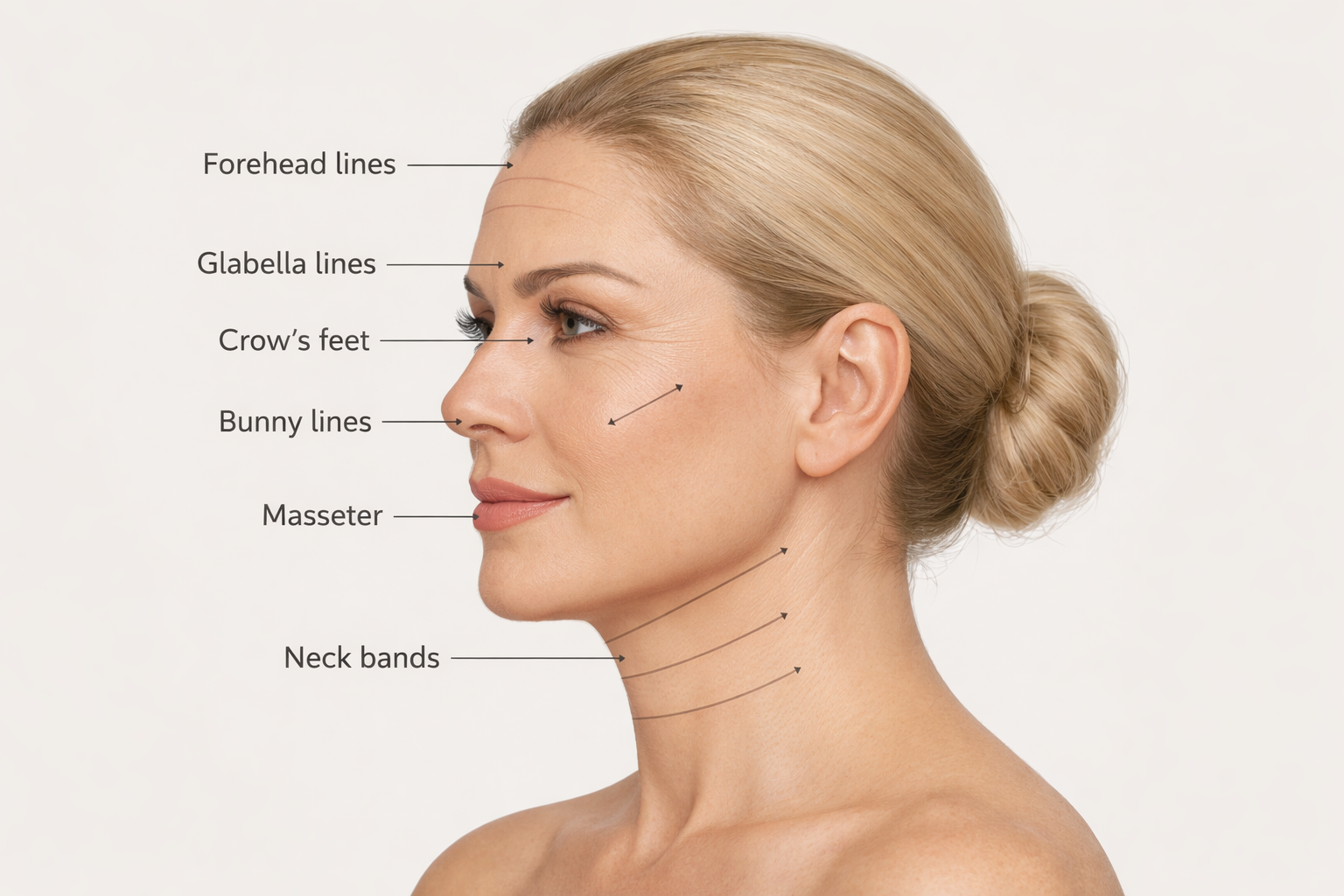
- Forehead lines: Horizontal creases that form when the frontalis muscle lifts the brow.
- Glabella lines (frown lines): The vertical lines between the eyebrows, sometimes called the “11s”, formed by the corrugator and procerus muscles. Glabella lines were among the first areas to receive FDA approval for botulinum toxin treatment.
- Crow’s feet: The fine lines radiating from the outer corners of the eyes, created by the orbicularis oculi muscle during squinting and smiling.
- Bunny lines: Diagonal lines across the bridge of the nose that appear when screwing up the face.
- Lip lines: Fine vertical lines around the mouth, sometimes called smoker’s lines, treated with small amounts of product around the orbicularis oris.
- Gummy smile: Injections into the upper lip elevator muscles reduce the amount of gum visible when smiling.
- Brow lift (chemical brow lift): Strategic placement can create a subtle lift of the brow arch without surgery.
- Downturned mouth corners: Relaxing the depressor anguli oris muscles can lift the corners of the mouth.
- Neck bands (platysma bands): The vertical cords of the platysma muscle in the neck, sometimes addressed with a technique called the Nefertiti lift when combined with jawline treatment.
- Masseter / jaw area: Injections into the masseter muscle can reduce jaw width for a slimmer facial appearance and also help with jaw tension associated with bruxism (teeth grinding).
Medical Uses
Beyond cosmetics, botulinum toxin type A has several well-established medical applications. It is FDA-approved for the preventive treatment of chronic migraine in adults, defined as headache on 15 or more days per month. It is also approved for primary axillary hyperhidrosis (excessive underarm sweating) when topical treatments have not been effective. Other medical uses include treatment of muscle spasticity, overactive bladder, and cervical dystonia. The use of Botox injections for bruxism and TMJ-related jaw tension is widely practised but not universally FDA-approved for this indication; discuss this specifically with your practitioner.
Units of Botox: Understanding Dosage
Botox is measured in units, and the number of units of Botox needed varies by treatment area, the strength of the muscle being treated, and the individual patient’s anatomy. As a general reference, FDA-approved dosing guidelines suggest approximately 20 units for glabella lines, around 20 units for forehead lines, and approximately 24 units for crow’s feet — though actual doses used in clinical practice vary and should be determined by an experienced practitioner following a thorough assessment.
It is also important to understand that units are not interchangeable between brands. Dysport, for example, requires a higher number of units to achieve a comparable effect to Botox, because the two products use different measurement standards. Comparing quotes between clinics based on unit price alone, without knowing which product is being used, can therefore be misleading.
How Are Botox Injections Administered? Step by Step
Understanding the procedure from start to finish can help reduce anxiety and set realistic expectations.
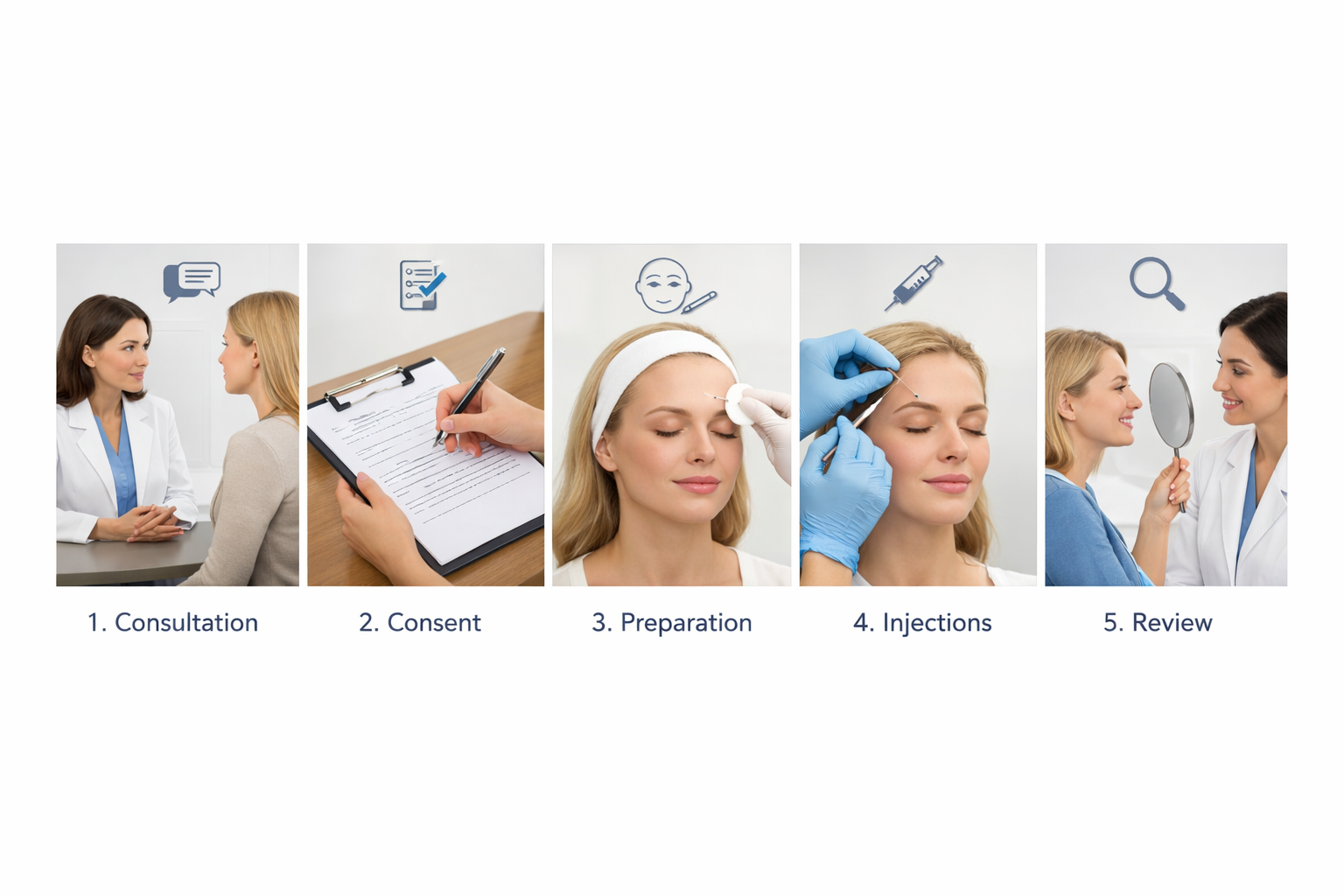
- Consultation and assessment: A thorough consultation should precede any treatment. Your practitioner will review your medical history, discuss your aesthetic goals, assess your facial anatomy and muscle activity at rest and during movement, and identify any contraindications. A good consultation includes reviewing before-and-after photographs and establishing a realistic treatment plan.
- Consent: You will be asked to read and sign an informed consent form covering the procedure, expected outcomes, and possible side effects. Never proceed without this step.
- Preparation: Most practitioners will cleanse the skin and may mark the intended injection sites based on your facial muscle activity. Topical numbing cream is not always required because the needles used are very fine, but it may be offered for sensitive areas or upon request.
- Injections: The injections themselves are administered using a very fine needle — typically 30 or 31 gauge. Depending on the treatment areas, multiple injections may be made at precisely mapped points. The sensation is generally described as a mild pinprick. A forehead and glabella treatment, for example, typically involves around 5–10 injection points in total. The intramuscular injection technique places the product directly into the muscle belly, while a subcutaneous injection approach, which deposits product just beneath the skin surface, may be used for certain more delicate areas. Your practitioner selects the appropriate depth and technique based on the area being treated.
- Post-injection assessment: The practitioner will review the treated areas and may gently press the injection sites. The entire appointment from preparation to completion typically takes 15–30 minutes.
Does It Hurt?
Most patients describe Botox injections as producing a brief pinprick or mild stinging sensation at each injection point. Discomfort is generally minimal and short-lived, lasting only seconds per injection. The forehead and crow’s feet areas tend to be well tolerated. Areas such as around the lips or near the nose may feel slightly more sensitive. Ice can be applied before or after to reduce discomfort and minimise swelling. Topical numbing cream is an option but is not routinely necessary for most patients.
Results Timeline: When Will You See a Difference?
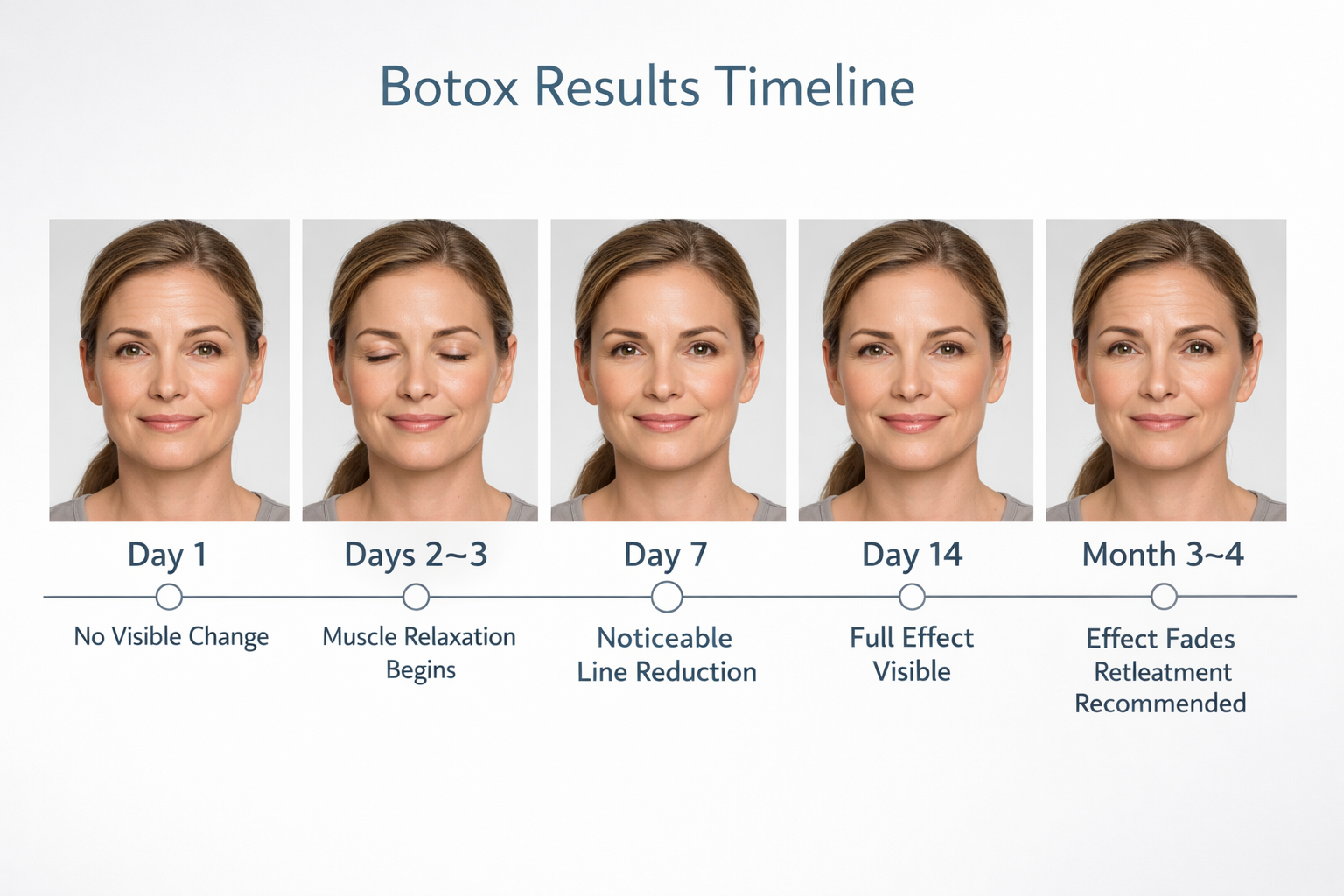
Botox injections do not produce immediate visible results. The neurotoxin requires time to bind to the nerve terminals and reduce acetylcholine release. Most patients begin to notice softening of movement in the treated muscles within 24–72 hours. Noticeable reduction in lines typically becomes visible within one week, with full results apparent at approximately two weeks post-treatment. If results appear uneven or asymmetrical at the two-week mark, a practitioner-led review and potential top-up are appropriate.
How Long Does Botox Last?
How long does Botox last is one of the most frequently asked patient questions. For most people, the effects of botulinum toxin type A injections last approximately 3–4 months. As the nerve endings gradually recover and muscle function returns, lines and wrinkles may reappear. With consistent retreatment over time, some patients find that results extend slightly longer, possibly because the muscle becomes conditioned to less activity — though individual variation is significant.
Several factors influence duration, including the dose used, the strength of the muscle treated, the patient’s metabolism, and their lifestyle. Very high levels of physical activity may reduce longevity. In a small number of patients, the body develops antibodies to botulinum toxin type A, which can cause injections to become progressively less effective over time. This is more commonly associated with higher doses used in medical applications than with typical cosmetic doses, but it is a recognised phenomenon worth being aware of.
Preventative Botox
Preventative Botox refers to the use of botulinum toxin injections in younger adults — typically those in their mid-20s to early 30s — before significant static lines have formed. The rationale is that by consistently reducing repetitive muscle movement, the skin is exposed to fewer creasing forces over time, potentially delaying the development of deeper lines. While this approach is widely practised and has intuitive biological plausibility, long-term controlled data comparing preventative versus corrective treatment outcomes remain limited. It is not a risk-free decision, and young patients considering this should discuss realistic expectations and frequency of treatment with a qualified practitioner rather than beginning treatment based on trend alone.
Botox Aftercare: What to Do After Treatment
Following a straightforward Botox aftercare routine helps to minimise the risk of complications and supports the best possible outcome.
- Remain upright: Avoid lying down for at least 4 hours after treatment to reduce the risk of the product migrating to unintended areas.
- Avoid touching or massaging the treated area for at least 24 hours, and avoid professional facial massage or manipulative treatments for at least one week.
- Avoid strenuous exercise for 24 hours, as increased blood flow may accelerate dispersal of the product.
- Avoid alcohol for 24 hours before and after treatment, as alcohol increases the risk of bruising.
- Avoid blood-thinning medications such as aspirin, ibuprofen, or fish oil supplements in the days before treatment unless medically necessary — discuss this with your practitioner in advance.
- Avoid excessive heat such as saunas, steam rooms, or hot baths for 24–48 hours.
- Do not rub or apply pressure to the treated areas if you notice any small bumps immediately after treatment; these generally resolve within an hour.
Attend any scheduled follow-up review at two weeks, especially for first-time treatments, so that your practitioner can assess the outcome and address any asymmetry.
Side Effects and Risks
Botox injections have a strong safety record when administered correctly, but like any medical procedure they carry a risk of side effects. Patients should receive clear information about these before giving consent.
Common, Mild Side Effects
- Redness, swelling, or bruising at injection sites — usually resolving within a few days
- Mild headache, particularly after forehead treatment — typically short-lived
- Tenderness at injection points
Less Common but More Significant Risks
- Drooping eyelid (ptosis): If botulinum toxin migrates to the levator palpebrae muscle above the eye, it can cause temporary drooping of the upper eyelid. This is rare when performed correctly but underscores the importance of correct injection placement and appropriate dosing.
- Brow heaviness or drooping: Excessive relaxation of the frontalis muscle can pull the brow downward, giving a heavy or tired appearance.
- Frozen appearance: A frozen appearance — where the face looks expressionless or unnatural — is a recognised concern, particularly when too many units are used or when injections are placed in several areas simultaneously without sufficient restraint. Skilled injectors balance relaxation with preservation of natural movement.
- Asymmetry: Unequal treatment of paired muscles can result in facial asymmetry. This is typically correctable with a top-up at the two-week review.
- Spread of toxin: In rare cases, botulinum toxin may spread beyond the injection site. Patients should contact their practitioner promptly if they experience unexpected muscle weakness, difficulty swallowing, or vision changes after treatment.
Risks Associated with Unregulated Settings
A safety concern that is often overlooked is the risk from counterfeit or substandard botulinum toxin products. Genuine licensed products are only legally available to qualified medical practitioners through regulated pharmaceutical channels. Treatment in unregulated settings — such as beauty salons where practitioners lack medical qualifications, or pop-up events using unlicensed products — carries significantly higher risks. Always verify your practitioner’s qualifications and ask specifically which licensed product will be used.
Who May Be Suitable — and Who May Not
Good candidates for Botox injections are generally adults with dynamic expression lines who have realistic expectations about the nature and duration of the results. A qualified practitioner will assess individual anatomy, skin quality, and medical history before recommending treatment.
Contraindications
Certain contraindications mean Botox injections may not be appropriate for everyone. These include:
- Pregnancy or breastfeeding
- Known allergy to botulinum toxin or any excipients in the formulation
- Active infection or inflammation at the proposed injection site
- Neuromuscular disorders such as myasthenia gravis, Lambert-Eaton syndrome, or amyotrophic lateral sclerosis
- Certain medications that interfere with neuromuscular transmission, including aminoglycoside antibiotics
- Blood clotting disorders or use of anticoagulant medications (which may increase bruising risk rather than being an absolute contraindication — discuss with your practitioner)
This list is not exhaustive. A comprehensive medical history taken during consultation is the appropriate way to identify individual suitability.
Botox Injections vs. Dermal Fillers
Botox and dermal fillers are often discussed together, but they work in fundamentally different ways and address different concerns. Botox injections relax muscles to reduce dynamic wrinkles caused by movement. Dermal fillers — most commonly based on hyaluronic acid — add volume or structure to areas that have lost fullness, such as the cheeks, lips, nasolabial folds, or under-eye hollows. They can also be used to fill in static lines that are visible at rest rather than only during expression.
| Feature | Botox Injections | Dermal Fillers |
|---|---|---|
| Mechanism | Relaxes muscle by blocking acetylcholine release | Adds volume by physically filling tissue |
| Primary use | Dynamic expression lines | Volume loss, static lines, lip and cheek enhancement |
| Common areas | Forehead, glabella, crow’s feet, jaw, neck | Lips, cheeks, nasolabial folds, under-eye area |
| Onset | 3–7 days (full effect ~2 weeks) | Immediate, with possible swelling for several days |
| Duration | 3–4 months typically | 6–18 months depending on product and area |
| Reversible? | Temporary; wears off naturally | Hyaluronic acid fillers can be dissolved with hyaluronidase |
Many patients benefit from both treatments used in combination, targeting different concerns simultaneously. However, each should be discussed and planned individually rather than treated as a single package decision.
How to Choose a Qualified Injector
The outcome of Botox injections depends heavily on practitioner skill. Safe, natural-looking results require detailed knowledge of facial muscular anatomy, an understanding of how the neuromodulator behaves at different depths and doses, and aesthetic judgment about what will look balanced for a given face. These are not skills that can be acquired through a weekend course.
When selecting a practitioner, consider the following:
- Verify that the practitioner is a licensed medical professional — this may include doctors, dentists, nurses prescribers, or other regulated healthcare professionals depending on your country’s laws.
- Ask about their specific training in aesthetic medicine and how long they have been performing Botox injections.
- Check whether the clinic is registered with the relevant regulatory body (for example, the Care Quality Commission in England).
- Ask which licensed botulinum toxin product will be used and confirm it is a genuine pharmaceutical product from a regulated supplier.
- Ensure a proper in-person or video consultation takes place before treatment — not just a brief conversation in a treatment room.
- Be cautious of unusually low prices, as these may indicate underdosing, unlicensed products, or unqualified practitioners.
Preparing for Your Appointment
A few practical steps before your appointment can help minimise the risk of bruising and support a smooth experience.
- Avoid alcohol for at least 24 hours before treatment.
- Avoid aspirin, ibuprofen, and other NSAIDs for several days beforehand unless medically necessary — always check with your prescribing doctor before stopping any medication.
- Avoid fish oil supplements, vitamin E, and high-dose omega-3 products for a similar period, as these can thin the blood.
- Arrive with a clean face, free from heavy makeup.
- Inform your practitioner of any new medications, health changes, or skin conditions since your last appointment.
- Raise any questions or concerns at the start of the appointment — not after the injections have begun.
Frequently Asked Questions
How many units of Botox will I need?
The number of units of Botox needed depends on the treatment area, the strength of the muscles involved, and your individual anatomy. As a general guide, FDA-approved dosing for glabella lines is around 20 units, and crow’s feet typically require approximately 24 units across both sides. Your practitioner will determine the appropriate dose during consultation — and should explain the dosing plan clearly before you consent to treatment.
Can Botox prevent wrinkles from forming?
Preventative Botox is based on the principle that reducing repetitive muscle movement may slow the development of permanent creases. There is biological plausibility to this approach, and it is widely used in clinical practice for patients in their 20s and 30s. However, robust long-term clinical evidence comparing preventative treatment with no treatment remains limited, so the decision should be made carefully with realistic expectations and after proper consultation.
Will I look frozen or unnatural?
A frozen appearance is associated with excessive dosing or inappropriate placement rather than being an inevitable outcome of Botox injections. An experienced practitioner will use the minimum dose necessary to achieve the desired effect while preserving meaningful facial movement. If you are concerned, discuss the look you want to achieve and ask your practitioner specifically about their approach to natural-looking results.
Can I have Botox if I have had fillers?
In most cases, yes — Botox and dermal fillers can be used together and are frequently combined in treatment plans. Your practitioner will assess the sequence and placement to ensure the treatments complement each other. Always disclose previous filler treatments during your consultation.
What if my results are uneven after treatment?
Some asymmetry can occur, particularly if underlying facial muscles are naturally unequal in strength. Most practitioners schedule a two-week review appointment after a first treatment so that any unevenness can be assessed and corrected with a small top-up if needed. Do not request additional treatment before the full two weeks have passed, as the product is still taking effect up to that point.
Are Botox injections safe long term?
Botulinum toxin type A has been used in medicine for several decades and has an extensive safety record at cosmetic doses. There is no established evidence that long-term cosmetic use causes permanent harm to facial muscles. However, as with any treatment administered repeatedly over years, ongoing individual assessment by a qualified medical practitioner is important to ensure the approach remains appropriate for your anatomy and goals.
Is Botox the Right Choice for Your Concerns?
Botox injections are one of the most evidence-supported and widely performed non-surgical cosmetic procedures available. For patients with dynamic expression lines — particularly forehead lines, glabella lines, and crow’s feet — the treatment has a well-established ability to soften the appearance of these creases, with a predictable results timeline and no significant downtime. The key limitations are that results are temporary, that retreatment is needed every 3–4 months to maintain the effect, and that outcomes are highly dependent on the skill and qualifications of the practitioner.
Botox injections are not the right solution for every facial concern. Volume loss, deep static lines, or structural changes may respond better to dermal fillers, skin resurfacing, or surgical options. A thorough consultation with a qualified medical practitioner is the appropriate starting point — not only to assess which treatments may be suitable, but to confirm that your goals are achievable through non-surgical means and that you have no relevant contraindications.
If you are considering Botox injections, prioritise the quality and credentials of the practitioner over cost or convenience. The treatment itself takes only minutes; the results reflect the clinical judgment and anatomical expertise of the person performing it.
