

Key Takeaways
- Knee fat is influenced by genetics, hormones, and overall body fat percentage — targeted spot reduction through exercise alone is not physiologically possible.
- Lifestyle changes including a sustained calorie deficit and resistance training can reduce fat around the knees over time, though results depend on individual fat distribution patterns.
- Non-surgical treatments such as cryolipolysis (fat freezing) and radiofrequency skin tightening may improve knee contour with minimal downtime, though multiple sessions are often needed.
- Knee liposuction can remove stubborn fat deposits more precisely, but involves recovery time and carries surgical risks that require careful consideration.
- Some cases of disproportionate lower-body fat may be related to a medical condition called lipedema, which requires a different approach entirely.
What Is Knee Fat and Why Does It Develop?
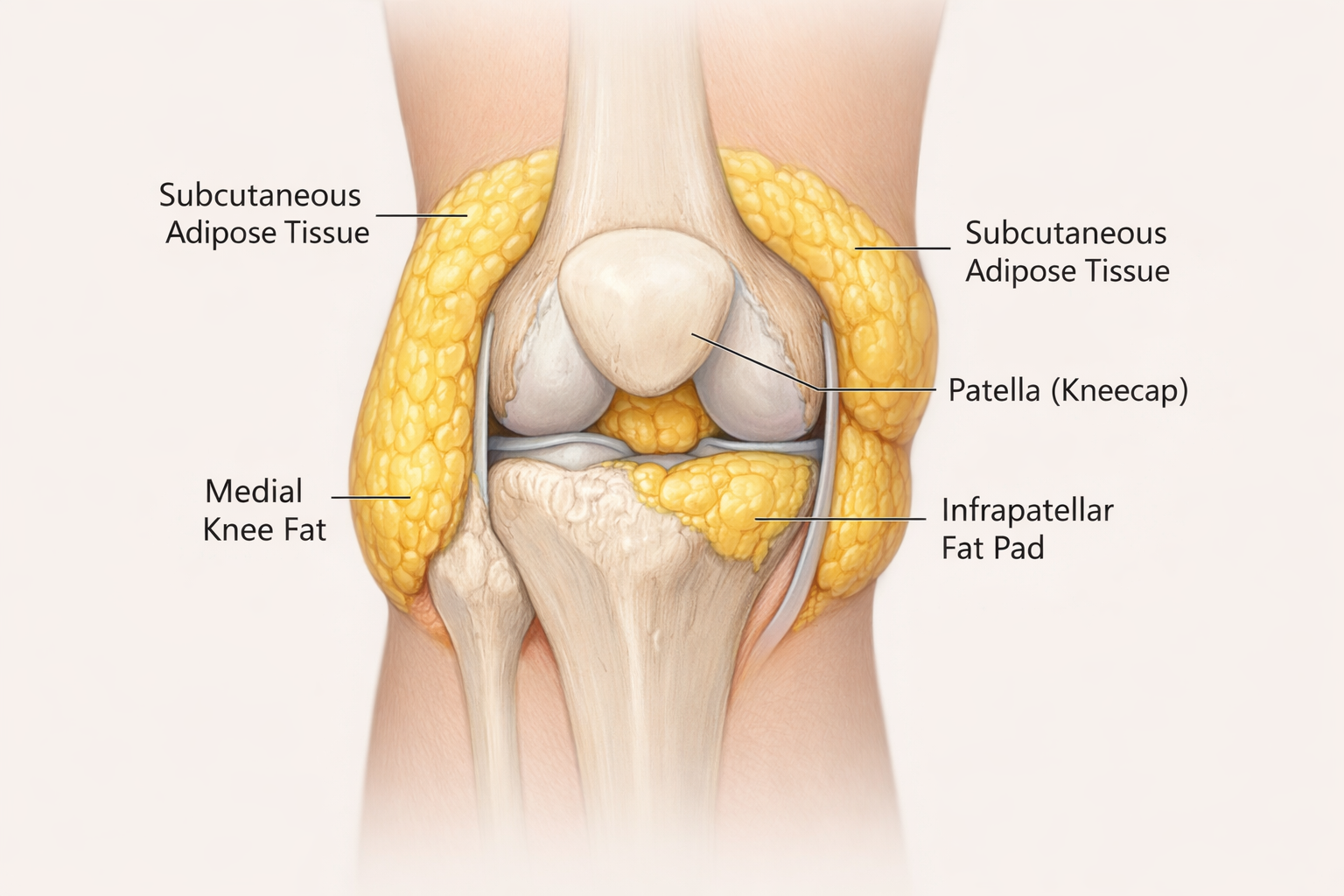
Knee fat refers to the accumulation of subcutaneous adipose tissue — fat stored just beneath the skin — around the knee joint. It most commonly appears on the inner aspect of the knee (the medial knee), directly above the kneecap, or occasionally on the outer side. Many people describe the appearance as chubby knees or knee flab, and find that the area remains resistant to change even after significant weight loss elsewhere on the body.
Fat distribution is largely determined by genetics and hormones. Oestrogen in particular promotes fat storage in the lower body — hips, thighs, and knees — which is why this pattern is especially common in women, and why it often becomes more pronounced during menopause, pregnancy, or hormonal shifts. As oestrogen levels fluctuate, the body may redistribute fat towards previously less-affected areas, including the knees. Ageing also reduces skin elasticity and alters how fat is distributed, which can make the knee area appear fuller even without significant weight gain.
A sedentary lifestyle, high-calorie diet, and gradual overall weight gain all contribute to increased fat deposits throughout the body, including around the knees. Water retention and inflammation from a poor diet can also make the knee area appear puffier than the underlying fat alone would suggest.
It is worth distinguishing between two structures that contribute to knee fullness. The subcutaneous fat sitting just under the skin is the primary target of cosmetic treatments. Separately, the infrapatellar fat pad (sometimes called Hoffa’s fat pad) sits deeper inside the knee joint beneath the patella. This fat pad serves a protective and biomechanical function, and inflammation or enlargement of it — a condition known as infrapatellar fat pad syndrome or Hoffa’s disease — can cause pain and swelling that has nothing to do with cosmetic fat accumulation. If you experience knee pain alongside visible fullness, a medical evaluation is appropriate before considering any cosmetic intervention.
Why Knee Fat Is So Difficult to Lose
One of the most persistent myths in fitness and body contouring is the idea of spot reduction — the belief that exercising a specific body part will burn fat from that area. Research consistently shows this does not occur. When the body burns fat for energy, it draws from fat stores throughout the body according to genetically programmed patterns, not from the muscles being worked. This means that performing hundreds of leg exercises will strengthen and tone the surrounding muscles but will not selectively reduce inner knee fat or fat above the kneecap.
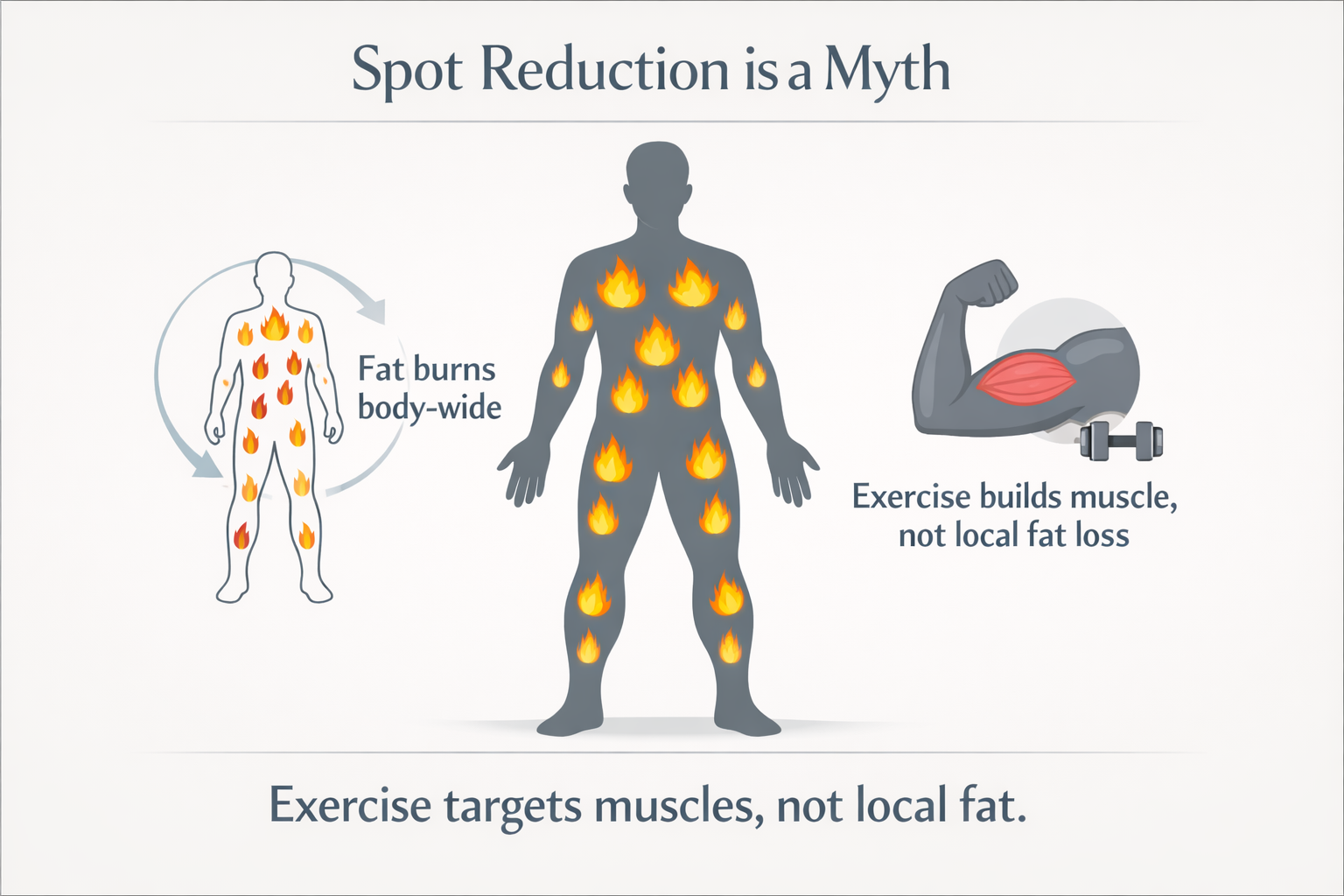
Overall body fat percentage is the determining factor. As someone loses fat through a calorie deficit over time, the body will eventually reduce fat in the knee area — but the rate and extent of this depends on individual genetics. For some people, the knees are one of the last areas to slim down regardless of how much weight they lose overall, making the fat in this region genuinely stubborn.
Skin laxity adds another layer of complexity. As fat reduces, the overlying skin may not retract fully, particularly in older patients or those who have lost a significant amount of weight. In these cases, the issue is less about remaining fat and more about loose, sagging skin — a distinction that matters considerably when choosing an appropriate treatment.
Could It Be Lipedema?
Lipedema is a chronic condition characterised by a symmetrical, disproportionate accumulation of fat in the legs — including the thighs, knees, and lower legs — that does not respond normally to diet or exercise. Unlike ordinary fat accumulation, lipedema fat is often painful to touch, tends to bruise easily, and is not reduced meaningfully by caloric restriction alone. The condition almost exclusively affects women and is thought to have hormonal and genetic underpinnings, though it remains underdiagnosed.
If your lower-body fat feels tender, appears symmetrically disproportionate to your upper body, and has not responded to sustained lifestyle efforts, lipedema may be worth discussing with a doctor or specialist. The condition requires a tailored approach — including manual lymphatic drainage, compression therapy, and in some cases specialist liposuction — rather than standard cosmetic fat reduction. Attempting standard body contouring without addressing lipedema first is unlikely to produce satisfactory results.
Lifestyle Approaches: What Can Diet and Exercise Realistically Achieve?
For most people, the starting point for addressing knee fat is a consistent, sustained approach to overall fat loss. A moderate calorie deficit — typically 300 to 500 calories below daily energy needs — combined with regular physical activity creates the conditions for gradual fat reduction across the body. Although this process cannot be directed specifically at the knees, it remains the foundation of any longer-term result, including maintaining the outcomes of cosmetic procedures.
Exercise Strategies
Resistance training that targets the quadriceps, hamstrings, and glutes improves the muscle tone surrounding the knee, which can make the area appear more defined as overall fat reduces. Exercises commonly recommended include squats, lunges, step-ups, and leg press movements. Swimming and cycling offer lower-impact alternatives that are gentler on the knee joint while still engaging the surrounding muscles effectively. LISS (low-intensity steady-state) cardio such as walking at an incline increases daily caloric expenditure without placing excessive stress on the knees, and is particularly useful for those with joint sensitivities.
Knee safety matters during any exercise programme. Avoid locking the knees at the top of movements, ensure correct alignment during squats and lunges, and build volume gradually to avoid overuse injury. If you have existing knee pain or joint issues, a physiotherapist or exercise professional should guide programme selection.
Dietary Considerations
A diet built around lean protein, vegetables, whole grains, and adequate hydration supports fat loss while preserving muscle mass. Reducing ultra-processed foods, excess sodium, and inflammatory dietary patterns can also help minimise water retention that contributes to a puffier appearance around the knee. No specific food eliminates knee fat, but reducing overall caloric intake and improving diet quality supports the broader fat-loss process.
Realistic timelines for lifestyle-based fat reduction at the knees should be measured in months rather than weeks, and results vary considerably between individuals. For those whose knee fat has a strong genetic or hormonal component, lifestyle changes may improve but not fully resolve the concern.
Non-Surgical Treatments for Knee Fat
For individuals who have made reasonable lifestyle efforts and still have localized stubborn fat deposits around the knees, non-invasive and minimally invasive treatments offer an alternative route. These approaches vary in their mechanism, evidence base, and suitability depending on the amount of fat present, the degree of skin laxity, and the patient’s goals.
Cryolipolysis (Fat Freezing)
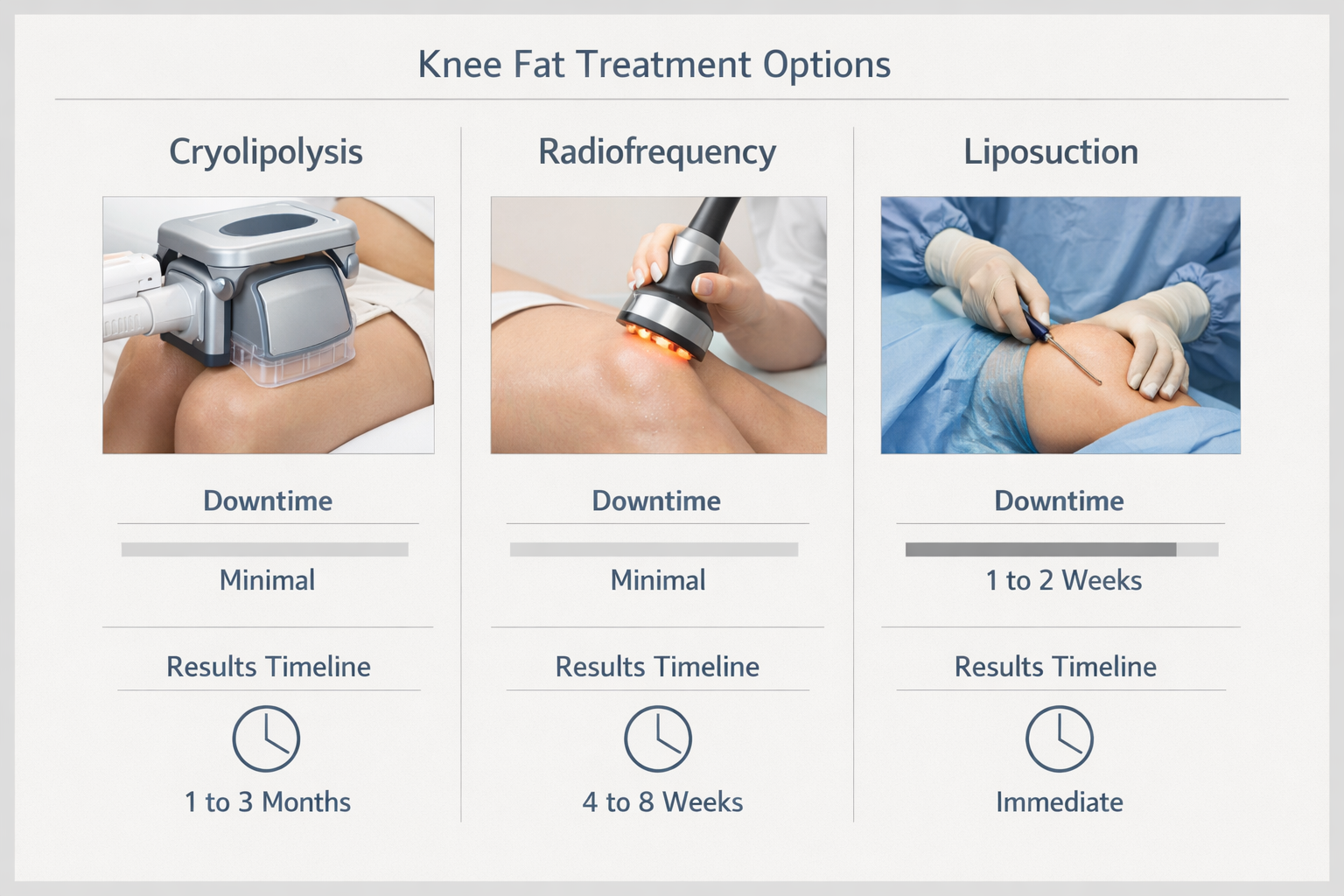
Cryolipolysis — commonly known by the brand name CoolSculpting — works by applying controlled cooling to subcutaneous fat, causing fat cells to undergo a process called apoptosis (programmed cell death) without damaging surrounding tissue. The treated fat cells are then cleared by the body’s lymphatic system over a period of weeks to months. Specialised smaller applicators have been developed for contoured areas like the inner knee, making cryolipolysis a feasible non-invasive fat removal option for this region.
Results from cryolipolysis typically become visible over eight to twelve weeks as the body processes the treated fat cells. Most patients require at least two sessions to achieve a meaningful reduction, and the treatment works best for discrete, pinchable fat deposits rather than diffuse or large-volume fat. The procedure involves no anaesthesia and no downtime beyond temporary redness, numbness, or bruising at the treatment site. A rare complication called paradoxical adipose hyperplasia — where the treated area enlarges rather than reduces — has been documented and should be discussed during consultation.
Radiofrequency Skin Tightening
Treatments such as Thermage use radiofrequency energy to heat the deeper layers of the skin, stimulating collagen production and improving skin elasticity. Radiofrequency does not reduce fat directly, but it can address the skin laxity that often accompanies or follows fat loss around the knee. It may be used alongside cryolipolysis or following liposuction to improve tissue tightening, particularly in patients with moderate skin laxity. Multiple sessions are usually recommended, and results develop gradually over several months.
Injectable Treatments
Kybella, an injectable form of deoxycholic acid, is approved for fat reduction in the submental area (under the chin) and has been used off-label in other small fat deposits. Its application around the knee is less well established than its chin use, and evidence specific to this area remains limited. Mesotherapy — a technique involving multiple small injections of compounds intended to break down fat — is also offered by some clinics, though clinical evidence for its effectiveness in knee contouring is not robust. Both options should be approached with realistic expectations and discussed thoroughly with a qualified practitioner.
Surgical Options: Knee Liposuction
Knee liposuction is a targeted surgical procedure that removes subcutaneous fat from around the knee using a thin tube called a cannula. It is performed as an outpatient procedure, typically under local anaesthesia with or without sedation, meaning most patients return home on the day of treatment. The procedure can address inner knee fat, fat above the kneecap, and the outer knee region with a degree of precision not achievable through non-surgical means.
Techniques Used
Tumescent liposuction remains the standard approach for knee fat removal. In this technique, a fluid solution containing local anaesthetic and adrenaline is injected into the target area before fat removal, which reduces bleeding, eases fat extraction, and improves patient comfort. VASER liposuction uses ultrasound energy to liquefy fat before removal, which some surgeons use in the knee area to allow more controlled extraction with a finer microcannula. The choice of technique depends on the volume of fat to be treated, the patient’s anatomy, and the surgeon’s assessment.
Results and Permanence
Liposuction removes fat cells from the treated area. Because the number of fat cells in the body is largely fixed in adulthood, the cells removed by liposuction do not regenerate in that location. In this sense, the fat reduction is considered permanent — however, remaining fat cells throughout the body can still enlarge with weight gain, which means maintaining a stable weight after the procedure is important for preserving results. Significant weight gain after knee liposuction can lead to fat redistribution to untreated areas.
Recovery and Aftercare
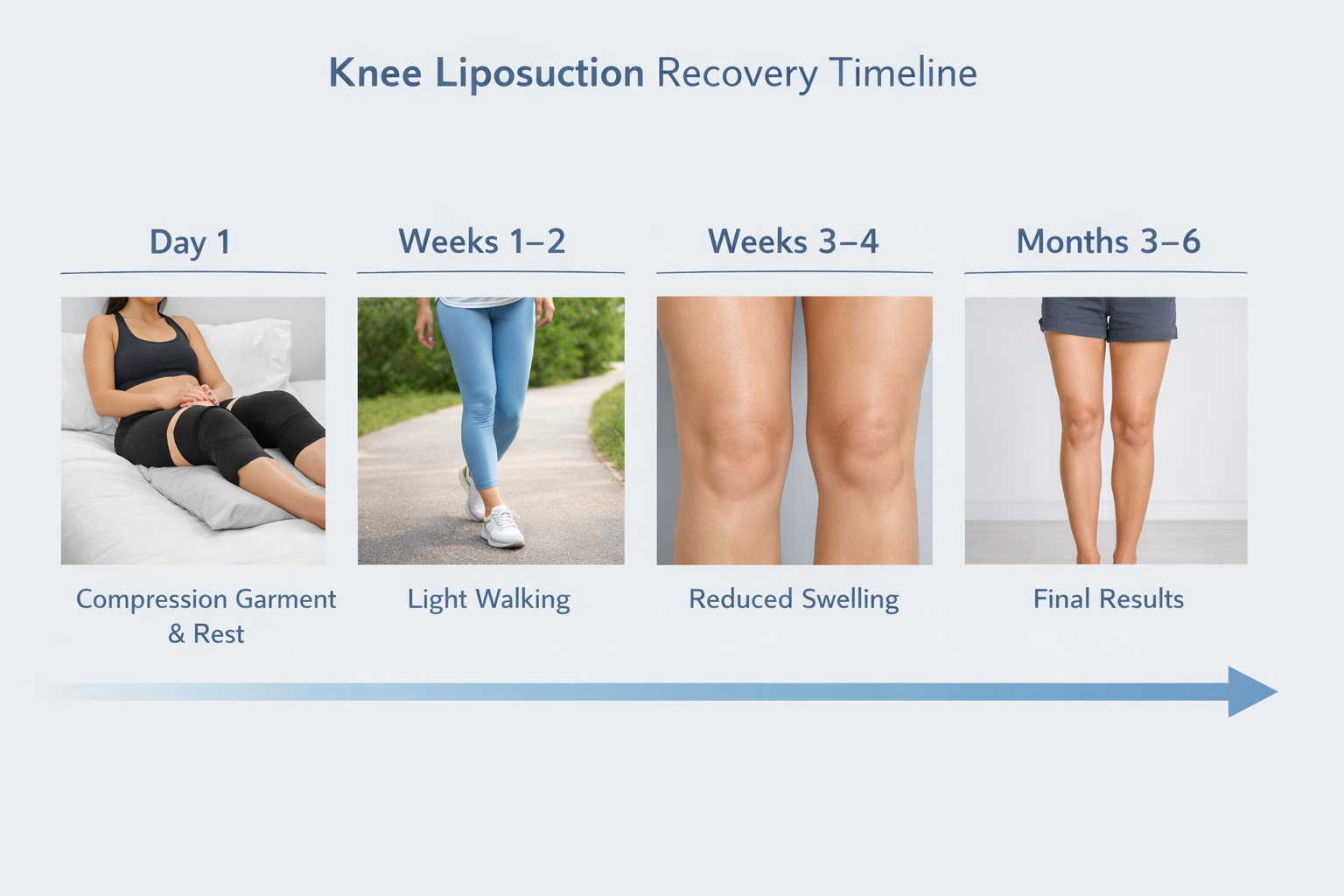
Recovery from knee liposuction typically involves swelling, bruising, and some tenderness for two to six weeks. Compression garments are worn over the knee area for several weeks to manage swelling and support the tissues as they heal. Most patients can walk comfortably within a few days but should avoid strenuous activity and prolonged standing for two to four weeks depending on the extent of the procedure. Final results become visible once swelling fully resolves, which may take three to six months. Scar tissue from incision points is minimal when a microcannula is used, and marks generally fade to be barely visible.
Risks and Limitations
As with any surgical procedure, knee liposuction carries risks including infection, asymmetry, contour irregularities, changes in skin sensation, and rare vascular or lymphatic complications. In the knee area specifically, the proximity of the joint and its supporting structures means that choosing a surgeon with specific experience in lower extremity body contouring is particularly important. Skin laxity is a limiting factor — patients with significantly reduced skin elasticity may see contour improvement but also notice looser skin after fat removal, which may require complementary skin-tightening treatment.
Treatment Comparison: Non-Surgical vs Surgical Options
| Feature | Cryolipolysis (Fat Freezing) | Radiofrequency Tightening | Knee Liposuction |
|---|---|---|---|
| Primary effect | Fat reduction | Skin tightening | Fat reduction |
| Invasiveness | Non-invasive | Non-invasive | Surgical |
| Anaesthesia | None | None | Local (with or without sedation) |
| Downtime | Minimal (hours) | Minimal | 2–6 weeks |
| Sessions typically needed | 2 or more | 2–4 | Usually one |
| Results visible | 8–16 weeks | 3–6 months | 3–6 months (post-swelling) |
| Fat cell removal | Partial (gradual) | No | Direct removal |
| Permanence of fat reduction | Long-lasting if weight stable | N/A (skin only) | Permanent fat cells removed |
| Best suited for | Small, pinchable fat deposits | Mild-to-moderate skin laxity | Moderate fat with good skin tone |
| Approximate cost range | £600–£1,500 per session | £400–£1,200 per session | £2,500–£5,000+ |
Cost ranges are indicative and vary by clinic, location, and treatment extent. A personalised consultation is necessary for accurate pricing.
The Role of GLP-1 Medications and Weight Loss
GLP-1 medications such as semaglutide (Ozempic, Wegovy) are being used increasingly for medical weight loss and have produced significant results for many patients. However, rapid or substantial weight loss — whether through GLP-1 medications, surgery, or intensive dietary intervention — can leave areas of stubborn localised fat that did not reduce proportionately, as well as loose skin caused by reduced tissue volume. The knees are a common area where patients notice remaining fat deposits or skin laxity even after achieving a lower overall body weight.
For patients in this situation, body contouring treatments — whether non-surgical or surgical — may be considered once weight has been stable for several months. Attempting knee fat treatment during active weight loss is generally not advisable, as continuing changes in body composition affect both the treatment plan and the durability of results. A practitioner experienced in post-weight-loss body contouring can help assess whether fat, skin laxity, or both are contributing to the concern.
Who May Be a Suitable Candidate?
Suitable candidates for non-surgical knee fat treatments are generally people who are close to their stable weight, have a discrete and pinchable area of fat around the knee, have reasonable skin elasticity, and have realistic expectations about the degree of improvement achievable without surgery. Those with very large volumes of fat or poor skin tone are less likely to achieve satisfying results from non-invasive approaches alone.
For knee liposuction, candidates are typically adults who are at a stable, healthy weight, have localised fat deposits that have not responded adequately to lifestyle changes, have sufficient skin elasticity to allow the skin to retract after fat removal, and do not have significant medical conditions that increase surgical risk. Skin elasticity is assessed during clinical consultation — older patients or those with extensive weight fluctuation history may need a combined approach incorporating skin tightening.
Anyone who suspects lipedema, has active knee joint problems, or has significant circulatory or lymphatic conditions should seek medical evaluation before pursuing cosmetic treatment for knee fat.
Frequently Asked Questions
Can you spot-reduce knee fat with exercise?
No. Spot reduction is not physiologically possible — exercise builds muscle in the targeted area but draws fat from throughout the body, not specifically from the knees. Overall fat loss through a sustained calorie deficit over time will gradually reduce fat around the knees, but the rate and extent depends on individual genetics and fat distribution patterns.
Does walking help reduce knee fat?
Walking contributes to overall caloric expenditure and supports a calorie deficit, which can lead to gradual fat loss throughout the body including the knees. It will not target the knee area specifically, but regular walking — particularly at incline — is a safe, low-impact activity that supports long-term fat reduction and cardiovascular health.
Is knee liposuction permanent?
Knee liposuction permanently removes fat cells from the treated area. However, remaining fat cells in the body can enlarge if significant weight is gained after the procedure, and fat may redistribute to other areas. Maintaining a stable weight after liposuction is important for preserving the results.
How much does CoolSculpting for knees cost?
CoolSculpting for the knee area typically costs between £600 and £1,500 per session in the UK, though pricing varies by clinic and the number of applicators or sessions required. Most patients need more than one session for a visible result. A consultation is necessary to confirm the treatment plan and total cost.
What is the difference between knee fat and loose knee skin?
Knee fat refers to subcutaneous adipose tissue beneath the skin, which can be reduced by fat removal treatments. Loose skin around the knee is a separate concern caused by reduced skin elasticity — it may appear after weight loss or with ageing and does not respond to fat removal. Skin laxity is better addressed with radiofrequency tightening or, in significant cases, surgical skin removal. Many patients have a combination of both, which a clinical assessment can differentiate.
Can knee fat indicate a medical condition?
In most cases, knee fat reflects normal subcutaneous fat distribution influenced by genetics and hormones. However, if fat accumulation in the lower body is symmetrical, disproportionate, painful to touch, or resistant to any dietary effort, lipedema may be a factor and warrants medical evaluation rather than cosmetic treatment alone.
Making an Informed Decision About Knee Fat Treatment
Addressing knee fat effectively begins with understanding what is actually contributing to the appearance — whether that is subcutaneous fat, skin laxity, water retention, a hormonal pattern, or an underlying condition such as lipedema. Each of these requires a different approach, and conflating them leads to treatments that do not resolve the concern.
For most people, a sustained period of lifestyle change — consistent calorie deficit, regular resistance training, and reduced inflammatory dietary patterns — should be the foundation before considering any cosmetic intervention. This not only supports overall health but also ensures that any subsequent treatment is addressing a stable, residual concern rather than a moving target.
Non-surgical options such as cryolipolysis are well suited to those with small, localised fat deposits and good skin tone who prefer to avoid surgery and downtime. They require patience, as results develop over months, and may require more than one session. Knee liposuction offers a more direct and precise result for those with a larger volume of stubborn fat and is the better surgical option when non-invasive methods have not achieved adequate improvement.
A qualified aesthetic physician or plastic surgeon can assess the relative contribution of fat versus skin laxity, confirm whether you are a suitable candidate for a given treatment, and help you choose an approach that aligns with your goals, anatomy, and health status. Seeking a consultation does not commit you to a procedure — it gives you the clinical information needed to make a genuinely informed choice.
