


Microneedling creates thousands of microscopic channels in the skin, temporarily disrupting the skin barrier and triggering a controlled wound-healing response. What you apply to your skin in the hours and days that follow can meaningfully influence how well your skin recovers and how effectively it responds to the treatment. Choosing the wrong products during this window can cause irritation, prolong redness, or introduce ingredients that the compromised barrier cannot tolerate. This guide explains which product types are most appropriate after microneedling, why they work, what to avoid, and how to structure your post-treatment skincare routine at each stage of recovery.
Key Takeaways
- The skin barrier is temporarily compromised after microneedling, making it more permeable and more reactive to both beneficial and irritating ingredients.
- Hydrating, barrier-supporting products such as hyaluronic acid serums, ceramide-rich moisturisers, and gentle peptide formulations are generally well tolerated in the immediate recovery period.
- Active ingredients including retinoids, vitamin C in acidic forms, AHAs, BHAs, and benzoyl peroxide should be avoided for at least several days post-treatment, as they can cause significant irritation through the open microchannels.
- Broad-spectrum SPF is essential once the skin has settled, typically from day two or three onwards, as post-microneedling skin is more vulnerable to UV-induced pigmentation.
- Product choices should be guided by your treating practitioner, as the appropriate timeline and formulations may vary depending on needle depth, treatment area, and your individual skin type.
Why Post-Microneedling Skincare Matters More Than Usual
Microneedling — also referred to as collagen induction therapy — uses fine needles to create controlled micro-injuries across the skin surface. These channels stimulate the production of collagen and elastin as part of the natural healing process, which is the mechanism behind improvements in skin texture, fine lines, acne scarring, and overall skin quality. However, those same channels also mean that the skin’s protective barrier is temporarily disrupted, and anything applied topically during this window is absorbed far more readily than it would be under normal conditions.
This increased permeability is a double-edged quality. On one hand, it creates an opportunity to deliver beneficial ingredients such as hyaluronic acid or growth factors more deeply into the skin. On the other hand, it means that irritating or sensitising ingredients can penetrate more aggressively than usual, potentially causing inflammation, prolonged redness, or in some cases, post-inflammatory hyperpigmentation. Understanding this mechanism is the foundation for making sensible product choices after treatment.
The degree of skin disruption depends on several factors: the needle depth used, the number of passes, the device type (dermaroller versus automated pen), and the individual’s skin sensitivity. Treatments performed at greater depths or over sensitive areas will generally require a more conservative approach to post-treatment skincare for a longer period.
The Immediate Recovery Phase: First 24 to 48 Hours
In the first 24 to 48 hours after microneedling, the skin is at its most vulnerable. Redness, mild swelling, and a sensation similar to mild sunburn are common and expected. During this phase, the priority is to support the skin’s natural healing process without introducing anything that could disrupt it.
Hyaluronic Acid Serums
Hyaluronic acid is widely considered one of the most appropriate ingredients to apply immediately after microneedling. As a humectant, hyaluronic acid draws moisture into the skin and helps maintain hydration during the healing process. It is a naturally occurring molecule in the body, which means it is generally well tolerated even by sensitised skin. Formulations containing low-molecular-weight hyaluronic acid may penetrate more readily through the microchannels, though the clinical significance of molecular weight differences in topical products is still an area of ongoing research. Look for serums that contain hyaluronic acid as a primary ingredient without added fragrances, alcohols, or active exfoliants.
Growth Factor Serums
Growth factor serums are frequently used in professional clinic settings immediately after microneedling, and some practitioners apply them during the procedure itself. Growth factors are signalling proteins that play a role in tissue repair and collagen synthesis. The evidence for topical growth factor products is still developing, and the ability of large protein molecules to penetrate intact skin is limited — which is precisely why the post-microneedling window, when channels are open, is considered a potentially useful application point. If your clinic uses a growth factor product during or after treatment, it is worth asking about the specific formulation and whether continuing it at home is appropriate.
Gentle Peptide Formulations
Peptides are short chains of amino acids that can signal the skin to support collagen production and barrier repair. Unlike retinoids, which stimulate collagen through a different pathway and carry significant irritation potential, peptides are generally well tolerated on sensitised skin. A fragrance-free, alcohol-free peptide serum or moisturiser can be a useful addition to the post-microneedling routine from the first day onwards, provided the formulation does not contain additional actives that could cause irritation.
Barrier-Repair Moisturisers
A simple, occlusive or semi-occlusive moisturiser helps protect the healing skin surface and reduces transepidermal water loss. Formulations containing ceramides, fatty acids, and cholesterol are particularly relevant here because these lipids are the primary structural components of the skin barrier. Products in this category — sometimes described as barrier-repair or skin-identical moisturisers — help restore the lipid matrix that microneedling temporarily disrupts. Avoid moisturisers that contain fragrance, essential oils, or active ingredients such as niacinamide at high concentrations during the first 24 to 48 hours, as even generally well-tolerated actives can be more irritating when the barrier is compromised.
Days Two to Seven: Supporting Healing as Redness Subsides
By the second or third day, visible redness typically begins to diminish, though some individuals experience mild peeling or dryness as the skin continues to heal. The skincare routine during this phase can remain simple and focused on hydration and barrier support, with a few careful additions.
Introducing Broad-Spectrum SPF
Sun protection is essential after microneedling. Post-treatment skin is more susceptible to UV-induced damage, and unprotected sun exposure during the healing phase can contribute to post-inflammatory hyperpigmentation — a particular concern for individuals with medium to deeper skin tones. A mineral sunscreen containing zinc oxide or titanium dioxide is generally preferred over chemical UV filters in the early recovery period, as mineral filters sit on the skin surface rather than being absorbed, reducing the risk of irritation. Aim for SPF 30 or higher, and reapply as directed throughout the day.
Niacinamide
Niacinamide, a form of vitamin B3, is an ingredient with a reasonable evidence base for improving skin barrier function, reducing redness, and supporting an even skin tone. It is generally well tolerated and non-irritating, which makes it a reasonable addition to the post-microneedling routine from around day two or three, once the most acute phase of recovery has passed. However, some practitioners recommend waiting until the skin feels fully settled before reintroducing any actives, even gentle ones. Follow your clinic’s specific guidance on timing.
Aloe Vera and Centella Asiatica
Products containing aloe vera or centella asiatica (also known as cica or gotu kola) are commonly recommended in the post-microneedling period for their soothing and anti-inflammatory properties. Centella asiatica contains compounds such as asiaticoside and madecassoside that have been studied for their role in wound healing and collagen synthesis, and formulations containing these extracts are widely used in post-procedure skincare. Pure aloe vera gel can provide a cooling, hydrating effect, though it is worth checking that the product does not contain added alcohols or fragrances that could counteract its soothing properties.
What to Avoid After Microneedling
Knowing what not to apply is just as important as knowing what to use. Several commonly used skincare ingredients can cause significant problems when applied to skin that is still recovering from microneedling.
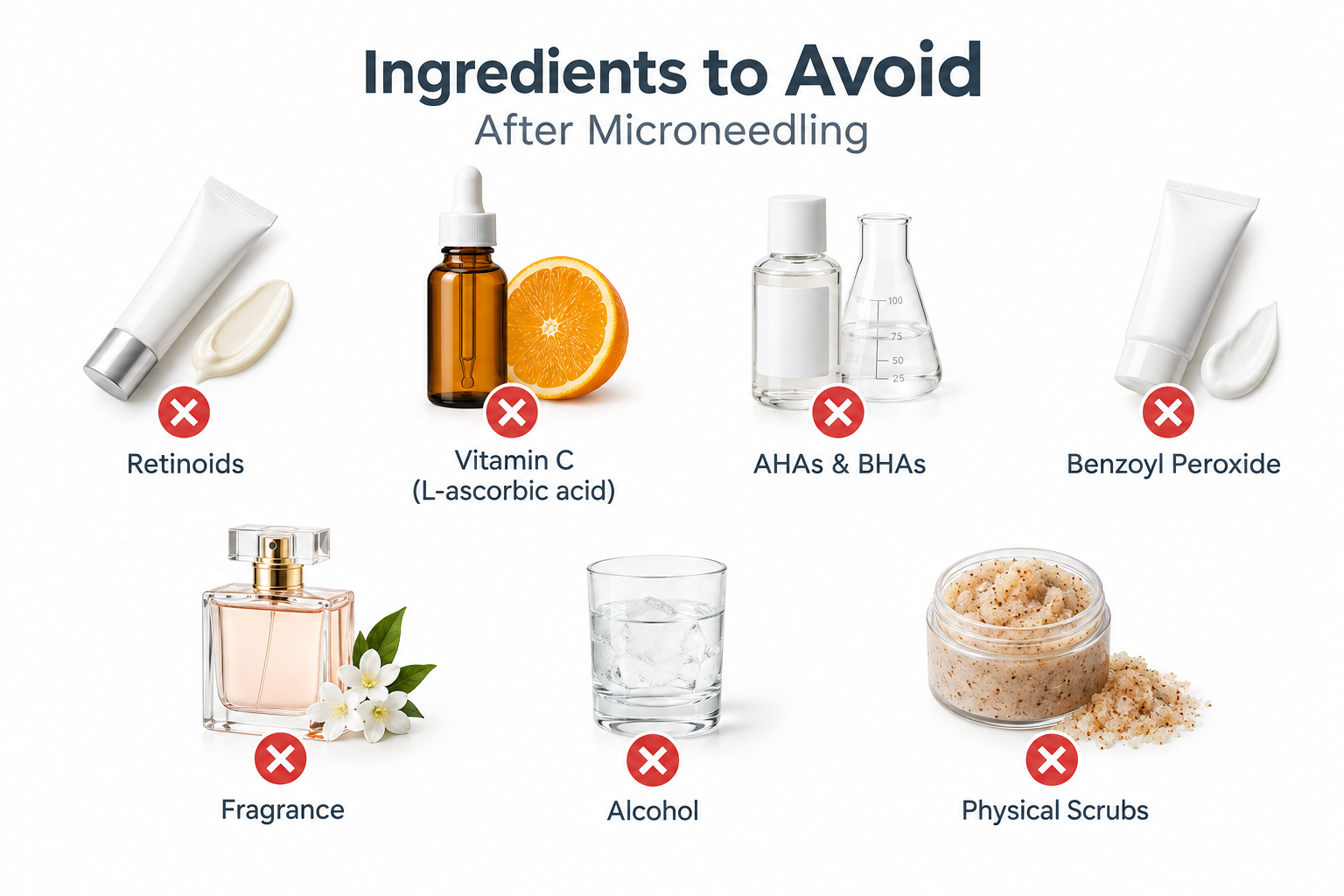
- Retinoids and retinol: Vitamin A derivatives are potent actives that stimulate cell turnover and collagen production, but they are also known irritants. Applying retinol or prescription retinoids to post-microneedling skin can cause intense irritation, prolonged redness, and peeling. Most practitioners recommend avoiding retinoids for at least five to seven days after treatment, and sometimes longer depending on needle depth.
- Vitamin C in acidic forms (L-ascorbic acid): While vitamin C is a valuable antioxidant in a stable skincare routine, L-ascorbic acid formulations are typically low pH and can cause stinging and irritation on compromised skin. Wait until the skin has fully settled before reintroducing vitamin C serums.
- AHAs and BHAs: Alpha hydroxy acids such as glycolic acid and lactic acid, and beta hydroxy acids such as salicylic acid, are chemical exfoliants that work by loosening the bonds between skin cells. Applying these to post-microneedling skin risks over-exfoliation, barrier damage, and significant irritation. Avoid for at least one week, or longer as advised by your practitioner.
- Benzoyl peroxide: A common acne treatment, benzoyl peroxide is oxidising and drying. It is not appropriate for use on healing post-microneedling skin.
- Fragrances and essential oils: These are among the most common causes of contact sensitisation in skincare. With the skin barrier temporarily disrupted, the risk of a sensitising reaction is elevated. Avoid all fragranced products during the recovery period.
- Alcohol-based toners and astringents: Denatured alcohol is drying and disruptive to the skin barrier. Products with alcohol high on the ingredient list should be avoided entirely during recovery.
- Physical exfoliants and scrubs: Mechanical exfoliation of any kind is inappropriate while the skin is healing. Avoid facial scrubs, cleansing brushes, and similar tools for at least one week.
- Makeup: Most practitioners advise avoiding makeup for at least 24 hours after microneedling, and sometimes longer. Applying makeup over open microchannels introduces bacteria and potential irritants directly into the skin.
Cleansing After Microneedling
Cleansing is an often-overlooked aspect of post-microneedling care. The skin should be cleansed gently with lukewarm water and a mild, fragrance-free cleanser. Avoid foaming cleansers with sulphates, which can strip the skin, and avoid hot water, which can exacerbate redness and inflammation. Pat the skin dry with a clean, soft cloth rather than rubbing. Some practitioners recommend using only water for the first cleanse after treatment and introducing a gentle cleanser from the following morning. Follow the specific aftercare instructions provided by your clinic, as these may vary based on the treatment performed.
Professional Products Versus Over-the-Counter Options
Many aesthetic clinics offer professional-grade post-microneedling products, and some practitioners apply specific serums or masks immediately after treatment as part of the procedure. These may include growth factor concentrates, platelet-rich plasma (PRP) if used in conjunction with microneedling, or medical-grade hyaluronic acid preparations. These products are formulated for use on compromised skin and are typically free from irritating additives.
Over-the-counter products can also be appropriate, provided they meet the criteria outlined above: fragrance-free, alcohol-free, free from active exfoliants, and focused on hydration and barrier support. The price of a product is not a reliable indicator of its suitability. A simple, well-formulated hyaluronic acid serum and a ceramide-rich moisturiser from a reputable skincare brand can be entirely appropriate choices. What matters most is the ingredient list, not the brand name or price point.
If your clinic recommends specific products for home use after treatment, it is worth understanding why those particular formulations have been chosen. A practitioner who can explain the rationale — ingredient by ingredient — is more likely to be giving advice grounded in clinical reasoning rather than retail incentive.
How Post-Treatment Products Interact With Microneedling Results
There is a reasonable body of evidence suggesting that combining microneedling with topical actives — particularly hyaluronic acid and growth factors — may enhance outcomes compared to microneedling alone. The transdermal delivery of beneficial ingredients through the microchannels created during treatment is one of the proposed mechanisms behind combination approaches such as microneedling with PRP or with topical vitamin C applied during the procedure by a trained practitioner.
However, it is important to distinguish between products applied by a trained practitioner during a controlled clinical procedure and products applied at home during recovery. The former involves careful selection of sterile, appropriate formulations in a controlled environment. The latter requires a conservative approach focused on not disrupting the healing process. The goal of home post-treatment skincare is primarily to support recovery, not to aggressively deliver actives — that role belongs to the treatment itself and any professionally applied adjuncts.
Returning to Your Normal Skincare Routine
Most people can return to their usual skincare routine within seven to ten days after a standard microneedling session, though this timeline varies depending on needle depth and individual skin response. Reintroduce actives gradually rather than all at once. A sensible approach might be to reintroduce niacinamide first, then vitamin C, then retinoids, spacing each reintroduction by a few days and monitoring for any signs of irritation.

If you were using a prescription retinoid before treatment, ask your practitioner when it is appropriate to resume. The same applies to any prescription topicals for acne or pigmentation. Do not assume that because your skin looks settled on the surface, the barrier has fully recovered — full barrier restoration can take longer than visible redness suggests.
Frequently Asked Questions
Can I apply hyaluronic acid immediately after microneedling?
Yes, hyaluronic acid is generally considered one of the safest and most appropriate ingredients to apply immediately after microneedling. It supports hydration and is well tolerated by sensitised skin. Choose a fragrance-free formulation without added actives or preservatives that could cause irritation.
When can I use retinol again after microneedling?
Most practitioners recommend waiting at least five to seven days before reintroducing retinol, and longer if a deeper treatment was performed or if your skin is still showing signs of sensitivity. Applying retinoids too soon can cause significant irritation through the open microchannels. Follow your clinic’s specific aftercare guidance.
Is vitamin C serum safe to use after microneedling?
It depends on the formulation. Vitamin C in the form of L-ascorbic acid is typically low pH and can be irritating on compromised skin. It is generally advisable to wait until the skin has fully settled — usually around seven to ten days — before reintroducing an L-ascorbic acid serum. Some practitioners use stabilised vitamin C derivatives during the procedure itself, which is different from applying an acidic home-use serum during recovery.
Can I wear makeup the day after microneedling?
Most practitioners advise avoiding makeup for at least 24 hours, and ideally 48 hours, after microneedling. Applying makeup over healing microchannels introduces potential irritants and bacteria. When you do return to makeup, choose mineral-based, fragrance-free formulations and ensure your brushes and tools are clean.
Do I need to buy expensive products after microneedling?
No. The suitability of a post-microneedling product is determined by its ingredient profile, not its price. A simple, fragrance-free hyaluronic acid serum and a ceramide-rich moisturiser are appropriate choices regardless of brand. Avoid products with long ingredient lists containing potential irritants, regardless of how premium the packaging appears.
How long should I avoid sun exposure after microneedling?
Direct sun exposure should be avoided for at least the first 24 to 48 hours after treatment. After that, broad-spectrum SPF 30 or higher should be applied daily and reapplied throughout the day. Post-microneedling skin is more vulnerable to UV-induced pigmentation changes, so consistent sun protection is important throughout the recovery period and beyond.
Can I use a sheet mask after microneedling?
Some sheet masks may be appropriate, but the ingredient list matters. A sheet mask containing hyaluronic acid, centella asiatica, or aloe vera without fragrances, alcohols, or active exfoliants may be soothing. However, many sheet masks contain preservatives, fragrances, or actives that could irritate healing skin. Check the full ingredient list carefully, or ask your practitioner for a specific recommendation.
Building a Post-Microneedling Routine That Works for Your Skin
The most effective post-microneedling skincare routine is one that is simple, consistent, and tailored to your skin’s current state rather than your usual skincare goals. In the days immediately following treatment, the objective is recovery — not anti-ageing, brightening, or exfoliation. Those goals are better served by the microneedling treatment itself and by your regular routine once the skin has healed.
A practical framework for most people involves a gentle fragrance-free cleanser, a hyaluronic acid serum, a ceramide-rich moisturiser, and — from day two or three — a mineral broad-spectrum SPF. This straightforward combination addresses the skin’s immediate needs without introducing unnecessary risk. As the skin settles over the following week, actives can be reintroduced gradually and thoughtfully.
Individual skin types, treatment depths, and practitioner preferences all influence what is most appropriate after a specific session. The aftercare guidance provided by your treating practitioner should always take precedence over general advice, including this article. If you are uncertain about a specific product or ingredient, contact your clinic before applying it. Getting post-treatment skincare right is a meaningful part of achieving the results that microneedling is intended to deliver.
