
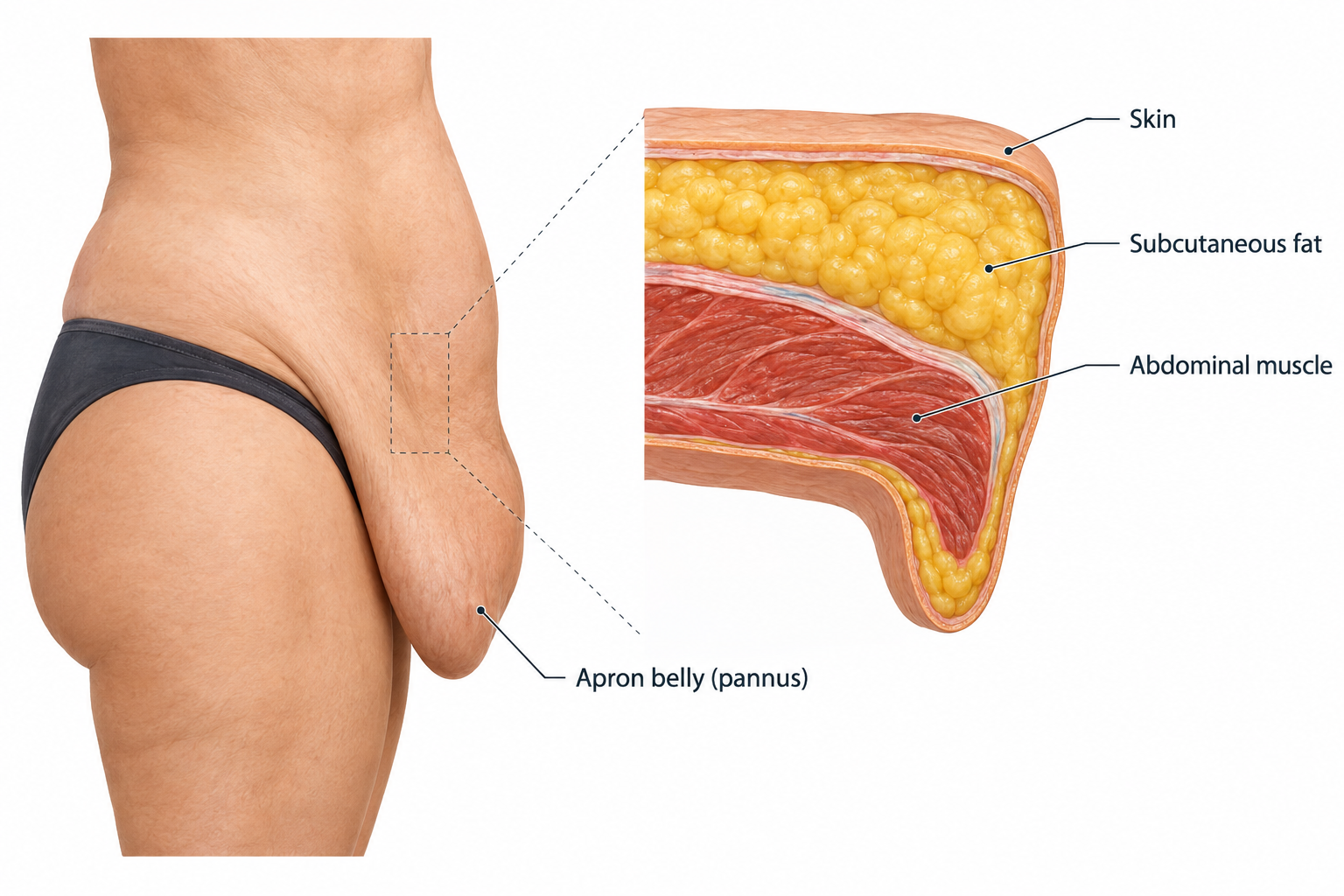

An apron belly — also called a pannus stomach or abdominal pannus — is a fold of excess skin and fat that hangs down from the lower abdomen, sometimes extending over the pubic area or upper thighs. It is a common concern that can develop for several reasons, and understanding its causes is an important first step before exploring any management options. This article explains what an apron belly is, why it forms, which factors increase the likelihood of developing one, and what approaches may be worth discussing with a qualified practitioner.
Key Takeaways
- An apron belly forms when excess skin and subcutaneous fat accumulate in the lower abdomen, creating a hanging fold of tissue.
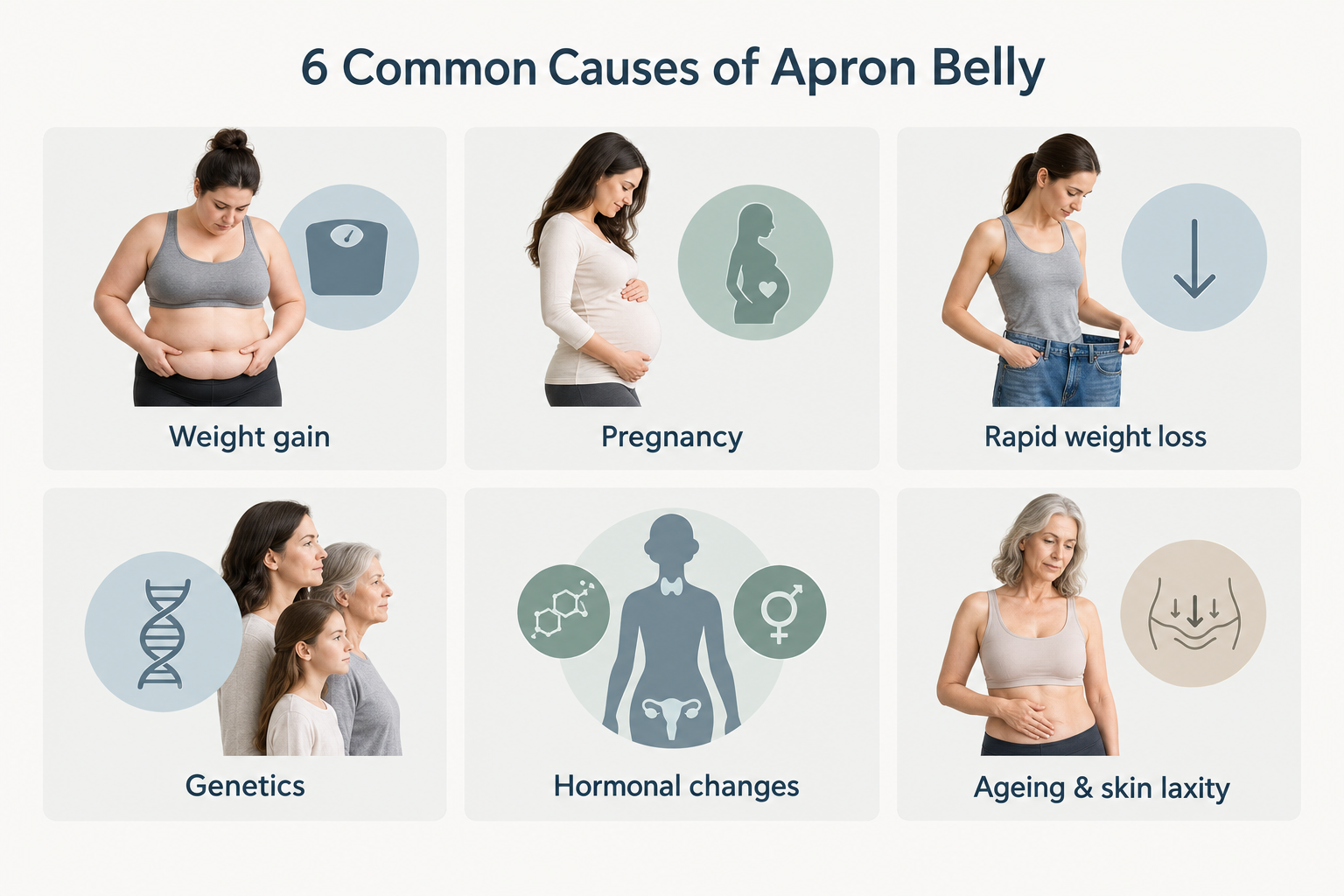
- The most common causes include significant weight gain, pregnancy, and major weight loss that leaves behind loose skin.
- Genetics, hormonal changes, and age-related skin laxity all contribute to how and where fat is stored and how well skin rebounds.
- Lifestyle changes such as improved nutrition and regular exercise can reduce overall body fat but cannot specifically target or remove the hanging skin fold.
- Surgical and non-surgical options exist, but suitability depends on individual anatomy, health status, and the degree of skin laxity involved.
What Is an Apron Belly?
An apron belly is a descriptive term for a pannus — a layer of excess adipose tissue (body fat) and skin that droops downward from the lower abdomen. The word pannus comes from the Latin for cloth or apron, which reflects the way the tissue hangs in front of the body. Clinically, the pannus is graded by how far it extends: a mild pannus may cover only the pubic hairline, while a more pronounced one can reach the mid-thigh or even the knees in severe cases.
The tissue making up an apron belly is not simply fat. It typically consists of subcutaneous fat — the fat stored directly beneath the skin — combined with stretched or loosened skin that has lost some of its elasticity. In some cases, the underlying abdominal muscles may also be separated, a condition known as diastasis recti, which can make the lower abdomen protrude further and contribute to the overall appearance. Understanding this distinction matters because fat reduction treatments and skin tightening procedures address different components of the tissue.
An apron belly is not a medical diagnosis in itself, but it can be associated with practical difficulties including skin irritation, chafing, rashes, and hygiene challenges in the skin folds. These functional concerns are separate from the cosmetic ones, and both are valid reasons to seek professional advice.
The Main Causes of an Apron Belly
Several distinct processes can lead to the development of an apron belly. In many people, more than one cause is present at the same time, which is why the condition can vary considerably in appearance and severity from person to person.
Significant Weight Gain
Excess body weight is one of the most common contributing factors. When the body stores large amounts of subcutaneous fat in the abdominal region, the skin stretches to accommodate the increased volume. The lower abdomen is a particularly common site for fat accumulation, especially in people with an android (apple-shaped) fat distribution pattern. Over time, the sheer weight and volume of the accumulated fat causes the tissue to sag downward under gravity, forming the characteristic hanging fold. The longer excess weight is carried, the more the skin and connective tissue are stretched, which reduces the likelihood that the skin will fully retract if weight is later lost.
Pregnancy and Postpartum Changes
Pregnancy is a major cause of apron belly development, particularly after multiple pregnancies or after carrying a large baby. During pregnancy, the abdominal skin and underlying fascia stretch considerably to accommodate the growing uterus. Hormonal changes during pregnancy also affect the structural proteins in skin — collagen and elastin — making the tissue more pliable but also more prone to permanent stretching. After delivery, the skin does not always retract fully, and residual fat deposits combined with loose skin can create a lower abdominal fold. Caesarean section delivery can also contribute, as scar tissue along the lower abdomen may tether the skin and cause the tissue above the scar to fold over it more prominently.
Rapid or Significant Weight Loss
Paradoxically, losing a large amount of weight — whether through dietary changes, bariatric surgery, or intensive exercise — can make an apron belly more visible rather than less. When fat is lost rapidly or in large quantities, the skin that previously stretched to contain it does not always shrink back at the same rate. Skin elasticity depends on collagen and elastin fibres, and these can be permanently damaged by prolonged stretching. The result is a deflated, loose skin fold that may hang more noticeably once the underlying fat volume has reduced. This is a particularly common concern for people who have undergone bariatric procedures such as gastric bypass or sleeve gastrectomy, where weight loss can be substantial and relatively rapid.
Genetics and Body Fat Distribution
Genetic factors play a meaningful role in determining where the body preferentially stores fat and how resilient the skin is to stretching. Some individuals are genetically predisposed to store excess fat in the lower abdomen rather than distributing it more evenly across the body. Similarly, inherited differences in collagen structure and skin thickness influence how well the skin rebounds after being stretched. A family history of loose abdominal skin or prominent lower abdominal fat deposits can increase an individual’s likelihood of developing a pannus, even at a moderate body weight.
Hormonal Changes
Hormonal shifts at various life stages can influence both fat distribution and skin quality. During the menopause transition, declining oestrogen levels are associated with a shift in fat storage from the hips and thighs toward the abdominal region. This redistribution can increase lower abdominal fat volume even without a significant change in overall body weight. Hormonal changes associated with conditions such as polycystic ovary syndrome (PCOS), hypothyroidism, and Cushing’s syndrome can also promote abdominal fat accumulation. Additionally, elevated cortisol — the body’s primary stress hormone — is linked to increased visceral and subcutaneous fat storage in the abdominal area.
Ageing and Skin Laxity
As the body ages, the skin naturally produces less collagen and elastin, the structural proteins responsible for firmness and elasticity. This gradual decline in skin quality means that older skin is less able to retract after being stretched and is more susceptible to sagging under the influence of gravity. Even without significant weight gain or pregnancy, age-related skin laxity can contribute to a mild lower abdominal fold, particularly in people who have experienced any degree of weight fluctuation over their lifetime. Sun damage, smoking, and poor nutrition can accelerate the breakdown of collagen and compound the effects of natural ageing on skin quality.
Sedentary Lifestyle and Muscle Tone
Reduced physical activity contributes to apron belly development in two ways. First, a sedentary lifestyle is associated with greater overall body fat accumulation, including in the lower abdomen. Second, weak abdominal muscles provide less structural support for the overlying tissue, allowing fat and skin to sag more readily. While exercise cannot remove excess skin, maintaining good core muscle tone and a healthy body composition may help reduce the degree of lower abdominal protrusion and support overall abdominal contour.
Risk Factors That Increase the Likelihood of an Apron Belly
Certain characteristics and life circumstances make an individual more likely to develop an apron belly. Recognising these risk factors can help with early awareness and, where possible, preventive measures.
- Obesity or a high body mass index (BMI): Higher overall body fat levels increase the volume of subcutaneous fat in the lower abdomen and place greater mechanical stress on the overlying skin.
- Multiple pregnancies: Each pregnancy adds cumulative stretching to the abdominal skin and fascia, reducing the likelihood of full retraction over time.
- History of bariatric surgery or major weight loss: Rapid, large-scale fat loss frequently leaves behind excess skin that cannot retract independently.
- Female sex: Women are more likely to develop a lower abdominal pannus due to hormonal fat distribution patterns, the effects of pregnancy, and differences in connective tissue structure.
- Advancing age: Declining collagen production and reduced skin elasticity make sagging more likely with age.
- Smoking: Smoking impairs collagen synthesis and reduces skin elasticity, accelerating the structural changes that contribute to skin laxity.
- Nutritional deficiencies: Inadequate intake of nutrients important for collagen production — including vitamin C, zinc, and protein — may compromise skin structural integrity over time.
- Certain medical conditions: Conditions that affect fat metabolism, hormone levels, or connective tissue quality can increase susceptibility.
Why an Apron Belly Is Difficult to Address Without Professional Input
A common misconception is that targeted abdominal exercise or a specific diet can eliminate an apron belly. While improving overall body composition through nutrition and physical activity is genuinely beneficial and may reduce the fat component of the pannus, neither approach can remove excess skin. Once skin has been permanently stretched beyond its elastic capacity, it cannot be retracted through exercise or dietary change alone. This is an important distinction because it affects which management strategies are realistic and which are not.
The relative contribution of excess fat versus excess skin varies between individuals. In some people, the pannus is primarily composed of fat with relatively good skin quality, meaning that fat reduction approaches may produce a meaningful improvement in contour. In others — particularly those who have lost a large amount of weight — the pannus may consist predominantly of loose skin with relatively little remaining fat, in which case fat reduction treatments are unlikely to produce a significant visible change. A clinical assessment by a qualified practitioner is necessary to determine the composition of the tissue and identify which options may be appropriate.
Non-Surgical Options That May Help
For individuals whose apron belly has a significant fat component and reasonable skin quality, certain non-surgical body contouring treatments may be worth discussing with a practitioner. It is important to understand that these treatments are designed for body contouring rather than weight loss, and they are not suitable as a primary treatment for obesity.
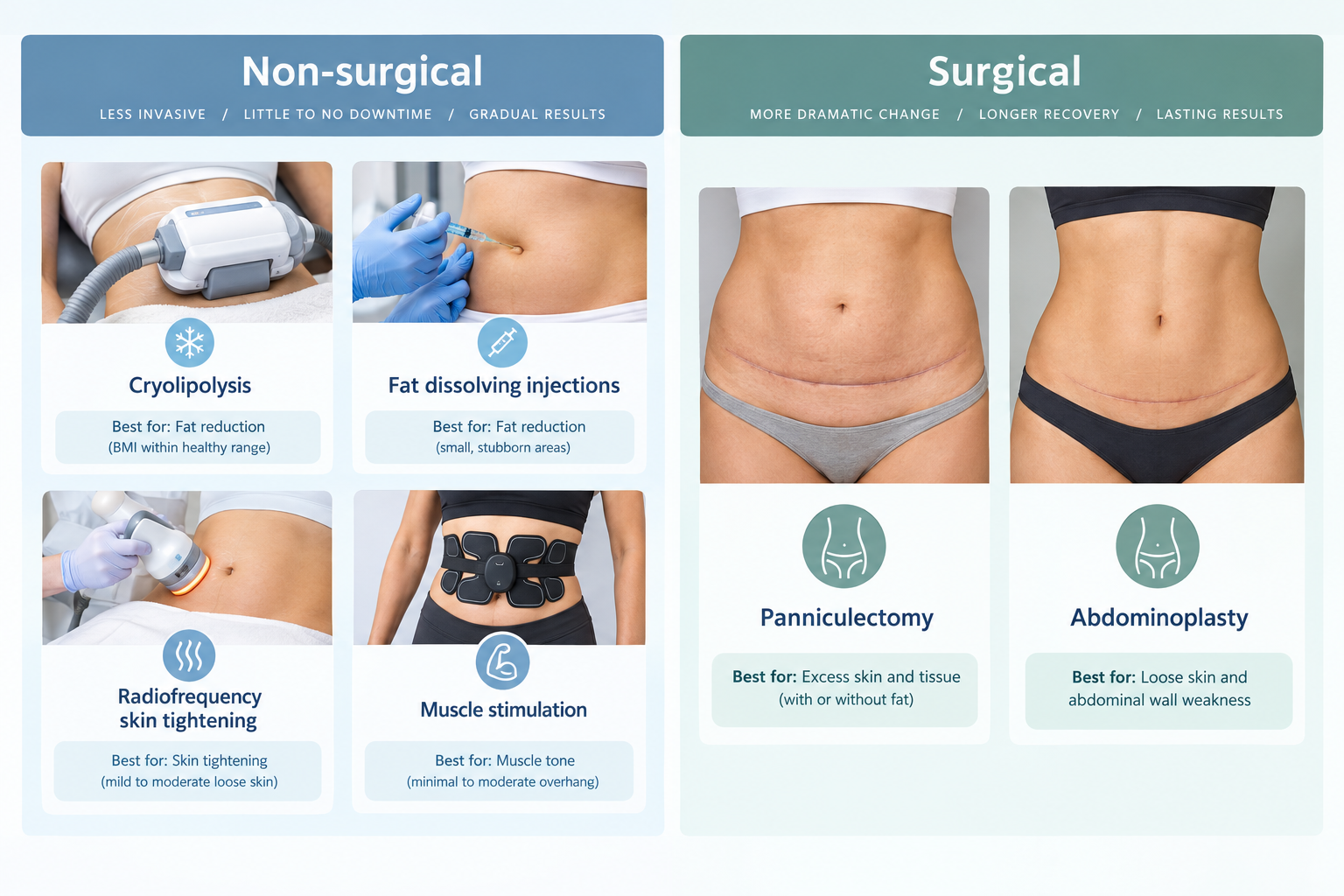
Cryolipolysis (commonly known by the brand name CoolSculpting) uses controlled cooling to reduce subcutaneous fat cells in targeted areas. Fat dissolving injections — such as those using deoxycholic acid-based formulations — can reduce localised fat deposits in some areas. Energy-based skin tightening devices using radiofrequency, ultrasound, or laser technology may help improve mild to moderate skin laxity, though results for significantly loose skin are generally limited. Muscle stimulation treatments such as Emsculpt Neo combine radiofrequency energy with high-intensity electromagnetic stimulation to address both fat and muscle tone simultaneously, though their effect on a pronounced hanging skin fold is limited. None of these non-surgical options can replicate the results of surgery for a significant pannus, and realistic expectations are essential.
Surgical Options for Apron Belly
When excess skin is the primary concern — particularly after major weight loss or multiple pregnancies — surgical intervention is often the most effective option. A panniculectomy is a surgical procedure specifically designed to remove the hanging pannus of skin and fat. It differs from a full abdominoplasty (tummy tuck) in that it focuses on removing the overhanging tissue rather than tightening the underlying abdominal muscles. An abdominoplasty addresses both excess skin and muscle separation (diastasis recti) and may be more appropriate for individuals whose concerns extend beyond the pannus alone.
Both procedures carry surgical risks including infection, scarring, wound healing complications, seroma (fluid accumulation), and the general risks associated with anaesthesia. Recovery typically involves several weeks of restricted activity. Suitability for surgery depends on overall health, BMI, smoking status, and other individual factors. A consultation with a plastic or reconstructive surgeon is necessary to determine whether surgery is appropriate and which procedure best matches the individual’s anatomy and goals.
Lifestyle Measures and Their Realistic Role
Lifestyle changes remain a valuable foundation for managing an apron belly, even when they cannot address the skin component directly. Achieving and maintaining a healthy body weight through a balanced diet reduces the fat volume within the pannus and lowers the risk of associated health complications. Regular cardiovascular exercise supports fat loss and cardiovascular health, while core-strengthening exercises improve abdominal muscle tone and posture, which can influence how the lower abdomen appears. Quitting smoking supports skin health by improving collagen synthesis and circulation. These measures are beneficial regardless of whether any additional treatment is pursued, and they may improve outcomes if a surgical or non-surgical procedure is later considered.
Frequently Asked Questions
Can you get rid of an apron belly without surgery?
It depends on the composition of the tissue. If the pannus consists mainly of fat with good skin quality, non-surgical fat reduction and skin tightening treatments may produce a meaningful improvement. If excess skin is the dominant component — as is common after major weight loss — non-surgical options are unlikely to produce significant visible change, and surgery may be the most effective route. A clinical assessment is needed to determine which approach is realistic for a given individual.
Is an apron belly the same as visceral fat?
No. An apron belly consists of subcutaneous fat — fat stored beneath the skin — combined with loose skin. Visceral fat is stored deeper within the abdominal cavity, surrounding the internal organs. Visceral fat is not visible as a hanging fold and cannot be addressed by body contouring treatments. It is associated with metabolic health risks and is primarily reduced through sustained dietary change and physical activity.
Does exercise reduce an apron belly?
Exercise can reduce overall body fat, including subcutaneous fat in the lower abdomen, which may reduce the volume of the pannus. However, exercise cannot remove excess skin. Targeted abdominal exercises do not specifically reduce fat in the lower abdomen — spot reduction of fat through exercise is not supported by evidence. Core exercises can improve muscle tone and posture, which may influence how the abdomen looks, but they will not eliminate a significant skin fold.
What is diastasis recti and how does it relate to an apron belly?
Diastasis recti is a separation of the two vertical bands of abdominal muscle (the rectus abdominis) along the midline. It commonly occurs during pregnancy due to the pressure of the growing uterus. When the muscles are separated, the abdominal wall provides less support, which can cause the lower abdomen to protrude and may contribute to the appearance of an apron belly. Diastasis recti can be assessed by a physiotherapist or surgeon, and specific rehabilitation exercises or surgical repair may be recommended depending on severity.
At what point should I see a doctor about an apron belly?
It is worth seeking professional advice if the pannus is causing physical symptoms such as persistent skin irritation, rashes, infections in the skin folds, or difficulty with hygiene and mobility. A GP can assess whether any underlying medical conditions are contributing and can refer to appropriate specialists. If the concern is primarily cosmetic, a consultation with a qualified aesthetic practitioner or plastic surgeon can help clarify which options may be suitable.
Can an apron belly develop even at a normal weight?
Yes. While excess body weight is a common cause, an apron belly can develop in people at a normal or near-normal weight, particularly following pregnancy, significant weight fluctuation, or as a result of age-related skin laxity and genetic predisposition. In these cases, the pannus may consist mainly of loose skin with relatively little fat content.
Understanding Your Options Before Seeking a Consultation
An apron belly develops through a combination of factors — excess fat accumulation, skin stretching, reduced skin elasticity, hormonal influences, and genetic predisposition — and the relative contribution of each varies between individuals. This variability is why there is no single universal solution. Lifestyle measures are a valuable foundation and can reduce the fat component of the pannus, but they cannot address excess skin. Non-surgical body contouring treatments may be appropriate for selected individuals with a predominantly fat-based pannus and reasonable skin quality, while surgical options such as panniculectomy or abdominoplasty are generally more effective when excess skin is the primary concern.
Before pursuing any treatment, a thorough clinical assessment is essential. A qualified practitioner can evaluate the composition of the tissue, identify any contributing factors such as diastasis recti or underlying health conditions, and discuss which options are realistic given your individual anatomy and goals. Approaching this with clear and honest expectations — understanding both what is achievable and what is not — is the most useful starting point for any conversation with a medical professional.
