


Submental fat — the layer of fat beneath the chin commonly referred to as a double chin — is one of the most frequently requested areas for non-surgical fat reduction. Fat dissolving injections offer a way to reduce this localised deposit without surgery, using a solution injected directly into the tissue to break down fat cells. This article explains how the treatment works, what results are realistic, how many sessions may be needed, what the recovery involves, and how it compares to alternative approaches, so you can approach a consultation with a clearer understanding of what to expect.
Key Takeaways
- Fat dissolving injections for the chin target submental fat by breaking down fat cell membranes, allowing the body to clear the released fat over several weeks.
- Most people require between two and four treatment sessions to achieve a noticeable reduction, with results typically becoming visible after the first or second session.
- Swelling, tenderness, and bruising in the treated area are common and expected after each session; significant downtime is unusual but temporary discomfort is normal.
- The treatment reduces localised fat rather than producing weight loss, and is not a substitute for a healthy lifestyle or a treatment for obesity.
- Suitability depends on individual anatomy, skin laxity, and medical history; a thorough consultation with a qualified practitioner is essential before proceeding.
What Is Submental Fat and Why Is It Difficult to Shift?
Submental fat is a localised deposit of adipose tissue situated beneath the chin and above the neck. It is anatomically distinct from the surrounding structures and is enclosed within its own compartment, which is why it can persist even when a person maintains a healthy weight and follows a balanced diet. Genetics play a significant role in determining how much submental fat a person carries and how readily the body mobilises it. For many people, this area remains resistant to exercise and caloric restriction regardless of overall body composition.
The presence of submental fat can alter the appearance of the jawline, reduce the definition between the chin and neck, and affect facial profile. These concerns are among the most common reasons people seek non-surgical aesthetic treatments. Because the area is anatomically contained and relatively accessible, it is considered one of the more suitable sites for injectable fat reduction treatments.
How Do Fat Dissolving Injections Work?
Fat dissolving injections for the chin typically contain deoxycholic acid, a bile acid that occurs naturally in the body and plays a role in the digestion and absorption of dietary fat. When injected into submental fat, deoxycholic acid disrupts the cell membrane of fat cells, causing them to break down. The cellular contents are then processed and cleared by the body’s lymphatic and metabolic systems over the following weeks. Because the fat cells themselves are destroyed rather than simply reduced in size, the results are considered long-lasting provided the patient does not gain significant weight.
Some injectable formulations used in clinical practice contain phosphatidylcholine, a compound derived from soya lecithin, either alone or in combination with deoxycholic acid. The mechanism is broadly similar — disruption of fat cell integrity — though the specific formulations, concentrations, and regulatory approval status vary between products and between countries. Practitioners should be able to explain which product they are using, its regulatory status in your country, and the evidence supporting its use in the submental area.
One branded deoxycholic acid product, Kybella in the United States and Belkyra in some other markets, has received regulatory approval specifically for the treatment of moderate to severe submental fat in adults. Other products used for fat dissolving in the chin area may be used off-label or may hold different regulatory designations depending on the jurisdiction. This distinction matters when evaluating the strength of evidence behind a specific product.
What Results Are Realistic for the Chin Area?
Fat dissolving injections for the chin can produce a meaningful reduction in submental fullness, improving the definition of the jawline and the transition between the chin and neck. Clinical studies on deoxycholic acid have demonstrated statistically significant reductions in submental fat and improvements in patient-reported satisfaction with chin appearance. However, results vary considerably between individuals depending on the volume of fat present, skin quality, the number of sessions completed, and individual response to the treatment.
The treatment is most effective for people with a moderate, well-defined pocket of submental fat and reasonably good skin elasticity. In these candidates, the reduction in fat volume can produce a noticeably more contoured profile. In people with a larger volume of submental fat, the treatment may still be effective but may require more sessions and may produce a less dramatic change per session. In people with significant skin laxity in the neck and chin area, reducing the fat volume without addressing the skin may result in looser-appearing skin, which is an important consideration during the consultation.
It is important to understand that fat dissolving injections reduce localised fat rather than producing weight loss. The number on the scale is unlikely to change as a result of treatment. The goal is contouring and definition in a specific anatomical area, not a reduction in overall body fat or body weight.
How Many Sessions Are Typically Needed?
Most people require between two and four treatment sessions to achieve their desired outcome in the submental area, though some individuals may need up to six sessions depending on the volume of fat and their individual response. Sessions are typically spaced four to six weeks apart to allow the body time to clear the broken-down fat cells and for the treated area to settle before the next treatment is administered.
A visible change may begin to appear after the first session, but the most meaningful improvement usually becomes apparent after the second or third session. The cumulative effect of multiple treatments is an important part of how the treatment works, and patients should not expect the full result from a single appointment. A qualified practitioner will assess progress between sessions and advise on whether further treatment is likely to be beneficial.
Once the desired result has been achieved and the patient’s weight remains stable, the reduction in submental fat is generally long-lasting. Fat cells that have been destroyed do not regenerate. However, significant weight gain after treatment can cause remaining fat cells in the area to enlarge, which may partially diminish the result.
What Happens During a Treatment Appointment?
Before the injections are administered, the practitioner will typically mark the treatment area on the skin to guide the injection pattern. A topical anaesthetic cream may be applied to the chin and neck area to reduce discomfort, and some practitioners use ice to numb the skin immediately before injecting. The injections themselves are delivered using a fine needle at multiple points across the submental area. The number of injection points varies depending on the size of the area being treated and the product being used.
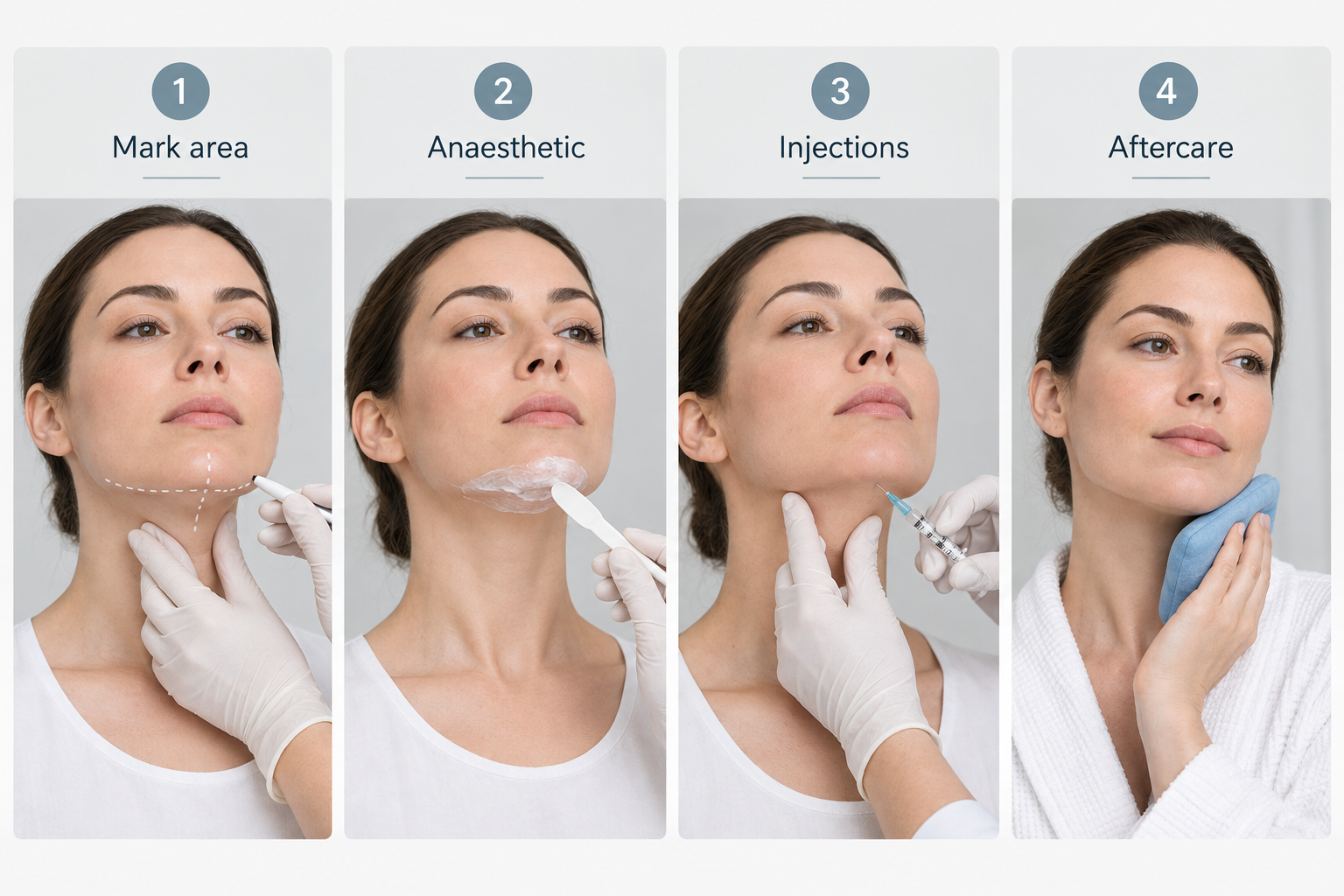
The appointment itself is usually completed within thirty to forty-five minutes, including preparation time. Most patients describe the injections as producing a stinging or burning sensation during administration, which typically subsides within a few minutes. Some practitioners offer a local anaesthetic injection to the area before treatment to improve comfort, particularly for patients who are more sensitive to discomfort.
After the injections are complete, the practitioner will usually provide aftercare instructions and discuss what to expect in the days following treatment. Patients are generally able to leave the clinic and return to most normal activities on the same day, though strenuous exercise and significant heat exposure are typically advised against for a short period after treatment.
Recovery and Downtime After Chin Fat Dissolving Injections
Swelling in the submental area is the most consistently reported side effect after fat dissolving injections for the chin, and it is a normal and expected part of the treatment process rather than a sign that something has gone wrong. The swelling can be pronounced — sometimes described as a temporary worsening of the double chin appearance — and typically peaks within the first two to three days before gradually subsiding over one to two weeks. Some patients experience swelling that persists for longer, particularly after the first session.
Bruising, redness, tenderness, and numbness in the treated area are also common and generally resolve within one to two weeks. Hardness or firmness beneath the skin can occur as the tissue responds to the treatment and usually softens over several weeks. These effects are temporary and are part of the normal healing process.
Most people are able to return to desk-based work and light daily activities within a day or two of treatment, though the visible swelling may make some patients prefer to allow a few days before attending social or professional commitments. Planning treatment sessions around important events is advisable. Significant downtime requiring time off work is not typical, but the temporary cosmetic appearance of the treated area should be factored into scheduling decisions.
Risks and Side Effects
Fat dissolving injections for the chin carry a range of potential side effects and risks that should be discussed in detail during a consultation. The most common effects — swelling, bruising, tenderness, redness, and temporary numbness — are expected and generally resolve without intervention. Less common but more significant risks include the following.
- Nerve injury: The marginal mandibular nerve, which controls movement of the lower lip, runs in proximity to the submental treatment area. Injury to this nerve can cause temporary weakness or asymmetry of the lower lip. This complication is uncommon when the treatment is performed by an experienced practitioner with a thorough understanding of facial anatomy, but it is a recognised risk that patients should be aware of. In most reported cases, the effect is temporary and resolves over weeks to months.
- Skin irregularity: Uneven fat reduction or changes in the overlying skin can occasionally result in surface irregularities. This risk is higher when the injections are placed too superficially.
- Dysphagia: Difficulty swallowing has been reported as a temporary side effect, particularly when larger volumes are used or when the injections are placed close to the throat structures.
- Alopecia: Hair loss at the injection site has been reported in some cases, which is relevant for patients with hair-bearing skin in the treatment area.
- Infection: As with any injectable treatment, there is a small risk of infection at the injection sites.
- Unsatisfactory result: The treatment may not produce the degree of change a patient hopes for, particularly if the submental fullness is partly due to skin laxity, muscle bulk, or anatomical factors rather than fat alone.
Choosing a practitioner with appropriate training in facial anatomy and injectable treatments significantly reduces the risk of serious complications. Patients should ask about the practitioner’s experience with this specific treatment and the product being used before proceeding.
Who May Be Suitable for This Treatment?
Fat dissolving injections for the chin may be suitable for adults who have a moderate, localised deposit of submental fat that has not responded adequately to diet and exercise, who have reasonable skin elasticity in the chin and neck area, and who have realistic expectations about the degree of improvement the treatment can achieve. The treatment is generally considered more appropriate for contouring than for large-volume fat reduction.
A thorough consultation should assess the cause of the submental fullness, since not all double chins are primarily caused by fat. Submental fullness can also result from skin laxity, the position and size of the platysma muscle, the position of the hyoid bone, or a combination of factors. Injecting fat dissolving solution into an area where fat is not the primary concern is unlikely to produce a satisfactory result and may increase the risk of complications.
Who May Not Be Suitable?
Fat dissolving injections for the chin are not appropriate for everyone. People who may not be suitable candidates include those who are pregnant or breastfeeding, those with an active infection or skin condition in the treatment area, those with a history of difficulty swallowing, those with certain bleeding disorders or who are taking anticoagulant medications, and those with significant skin laxity in the neck and chin area where reducing fat volume without addressing the skin may produce an unsatisfactory outcome.
People with a known allergy to any component of the injectable solution should not receive the treatment. Those with implanted devices in or near the treatment area, or with a history of previous surgery to the chin or neck that may have altered the anatomy, should discuss this with the practitioner before treatment is considered. A full medical history review is an essential part of the pre-treatment assessment.
Alternatives to Fat Dissolving Injections for the Chin
Several alternative approaches exist for addressing submental fat and improving chin and jawline definition, each with different mechanisms, evidence bases, and suitability profiles.
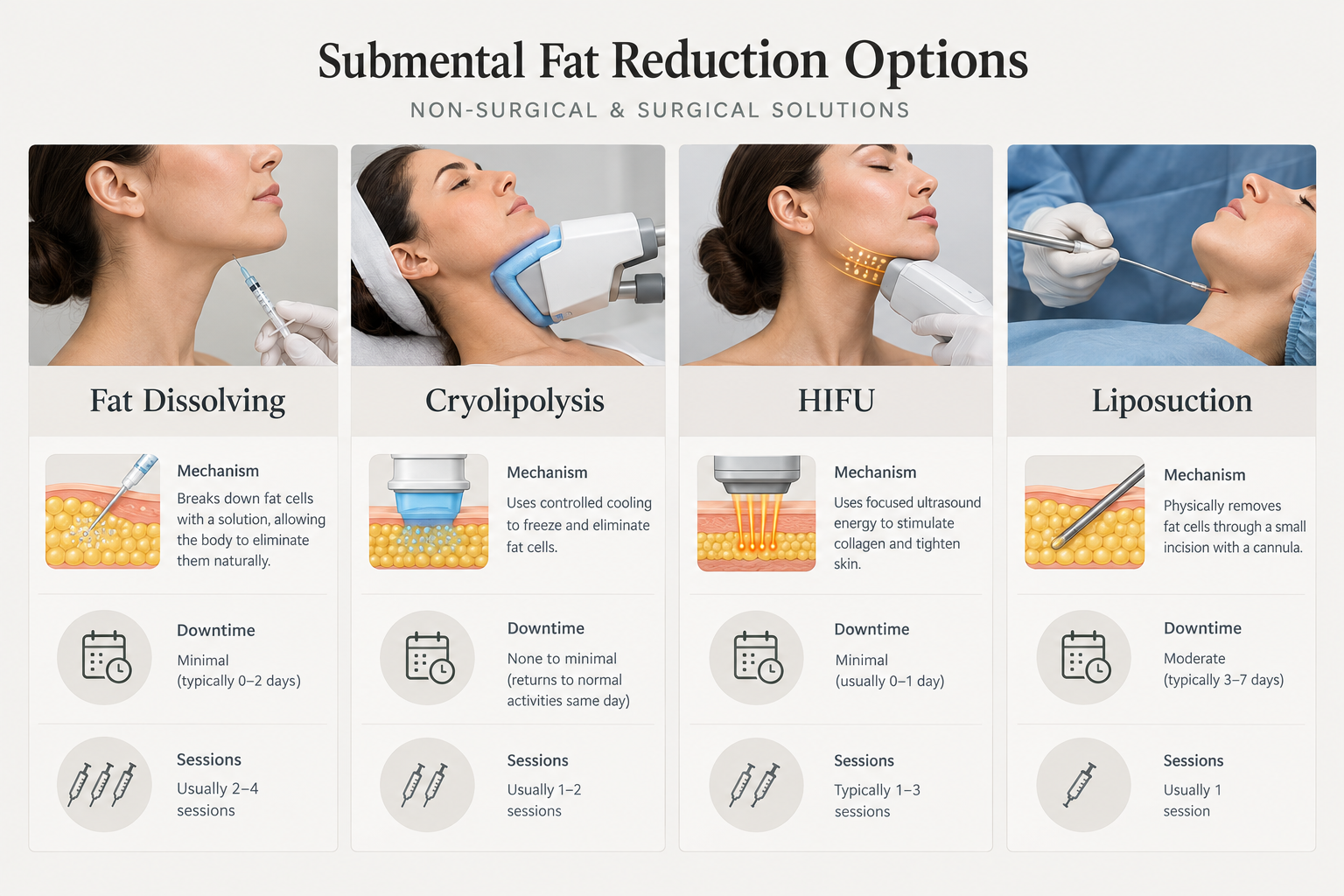
Cryolipolysis (CoolSculpting): This non-surgical body contouring treatment uses controlled cooling to reduce fat cells in targeted areas. Applicators designed for the submental area are available, and the treatment has a reasonable evidence base for localised fat reduction. Downtime is generally minimal, though temporary numbness, redness, and swelling are common. Multiple sessions may also be required.
High-intensity focused ultrasound (HIFU): HIFU devices can target fat and deeper tissue layers in the submental area. Some devices are used primarily for skin tightening rather than fat reduction, which may make them more appropriate for patients whose submental fullness is partly related to skin laxity. The evidence for HIFU in submental fat reduction specifically is more limited than for deoxycholic acid injections.
Radiofrequency treatments: Radiofrequency energy can be used to tighten skin and may have some effect on the underlying fat layer. These treatments are often considered when skin laxity is a significant component of the concern, and they may be used in combination with fat reduction treatments.
Liposuction: Surgical liposuction of the submental area remains an effective option for fat removal and can address larger volumes of fat than injectable treatments. It is a surgical procedure requiring anaesthesia and carries the associated risks and recovery time, but it may produce more predictable results in a single session for appropriate candidates.
Lifestyle modification: For people whose submental fat is related to overall body weight, dietary changes and increased physical activity may reduce submental fullness as part of broader fat loss, though the area may remain resistant even with significant overall weight reduction in some individuals.
The most appropriate option depends on the individual’s anatomy, the primary cause of their submental fullness, their tolerance for downtime, and their treatment goals. A practitioner experienced in multiple modalities is better placed to recommend the most suitable approach than one who offers only a single treatment.
Frequently Asked Questions
How long do the results of chin fat dissolving injections last?
Because fat dissolving injections destroy fat cells rather than simply reducing their size, the results are generally considered long-lasting. Fat cells that have been broken down do not regenerate. However, if a patient gains significant weight after treatment, the remaining fat cells in the area can enlarge, which may partially reduce the improvement. Maintaining a stable weight after treatment helps preserve the result.
Is the treatment painful?
Most patients describe a stinging or burning sensation during the injections, which typically subsides within a few minutes. The submental area can be sensitive, and the number of injection points used means the discomfort is spread across the session rather than concentrated in one moment. Topical anaesthetic cream, ice, or local anaesthetic injections can be used to improve comfort, and patients should discuss pain management options with their practitioner before the appointment.
Can fat dissolving injections tighten loose skin under the chin?
Fat dissolving injections reduce the volume of fat in the treated area but do not directly tighten skin. In patients with good skin elasticity, the skin may adapt reasonably well to the reduced volume. In patients with significant skin laxity, reducing the fat without addressing the skin may result in a looser appearance. This is an important consideration that should be discussed during the consultation, and alternative or complementary treatments may be more appropriate in these cases.
How soon will I see results?
Some patients notice a change after their first session, but the most meaningful improvement typically becomes visible after the second or third treatment. The body takes several weeks to clear the broken-down fat cells after each session, so the full effect of each treatment continues to develop over four to six weeks. The final result is usually assessed after the full course of sessions has been completed and sufficient time has passed for the tissue to settle.
Can the treatment be used on other areas of the face or body?
Fat dissolving injections are used in various areas beyond the chin, including the jowls, bra fat, inner thighs, and abdomen, though the evidence base and regulatory approval status vary by area and by product. The submental area has the strongest clinical evidence for deoxycholic acid specifically. Use in other areas may be considered off-label depending on the product and jurisdiction, and patients should ask their practitioner about the evidence and approval status for any area they are considering.
What should I look for in a practitioner?
For fat dissolving injections in the chin area, it is important to choose a practitioner with a thorough understanding of facial anatomy, particularly the course of the marginal mandibular nerve, and with specific experience performing this treatment. Asking about the practitioner’s training, the product they use, its regulatory status, and how they manage complications is reasonable and appropriate. A practitioner who conducts a thorough consultation, assesses your anatomy carefully, and discusses realistic outcomes and risks is more likely to deliver a safe and satisfactory result.
Is Fat Dissolving the Right Approach for Your Chin Concerns?
Fat dissolving injections for the chin can be an effective non-surgical option for reducing a localised submental fat deposit and improving jawline definition, particularly for people with moderate submental fullness, good skin elasticity, and realistic expectations. The treatment has a meaningful evidence base in the submental area, and for suitable candidates, the results can be long-lasting once a full course of sessions has been completed.
The treatment is not appropriate for everyone. People with significant skin laxity, those whose submental fullness is not primarily caused by fat, and those with relevant medical history factors may find that a different approach — or a combination of approaches — better addresses their concerns. The temporary swelling and discomfort associated with each session are manageable for most patients but should be factored into planning, particularly around important events.
A consultation with a qualified and experienced practitioner is the most important step before deciding whether fat dissolving injections are appropriate for your individual anatomy and goals. A thorough assessment should include an honest discussion of what the treatment can and cannot achieve, the number of sessions likely to be needed, the risks involved, and whether alternative treatments might be more suitable. This information will allow you to make a genuinely informed decision rather than one based on general expectations alone.
