
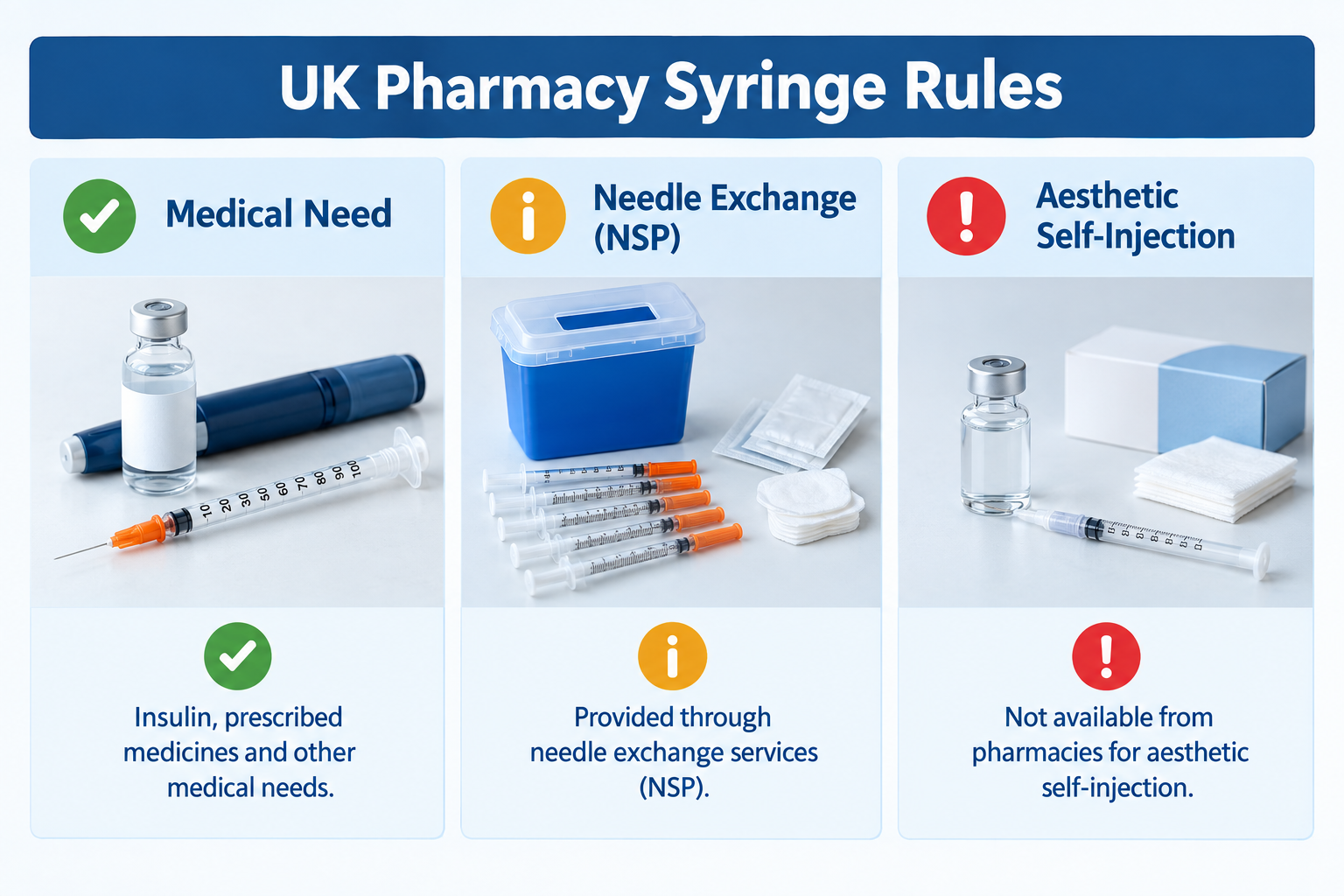

Buying syringes at a pharmacy in the UK is possible in many circumstances, but the rules are more nuanced than a simple yes or no. Whether you need syringes for a legitimate medical reason, insulin administration, or another purpose, UK pharmacies operate under a framework of professional guidelines, legal obligations, and public health considerations that shape what they can sell, to whom, and under what conditions. This article explains the current rules clearly, covers the situations where a prescription may or may not be required, and outlines the safeguards that exist to protect both patients and the public.
Key Takeaways
- Syringes and needles are not classified as prescription-only medicines in the UK, meaning pharmacies can legally sell them without a prescription in many situations, though individual pharmacy policies vary.
- People who inject insulin or other prescribed medicines can usually obtain syringes from their pharmacy, and many will supply them free of charge or at low cost as part of NHS arrangements.
- Needle and syringe programmes (NSPs), also known as needle exchange schemes, operate across the UK to provide sterile equipment to people who inject drugs, reducing the risk of blood-borne infections.
- Pharmacists retain professional discretion and may decline to supply syringes if they have reasonable concerns about how they will be used.
- Attempting to use syringes to self-administer prescription medicines or aesthetic injectables without appropriate clinical training carries serious health and legal risks.
Are Syringes a Prescription-Only Item in the UK?
Syringes and hypodermic needles are classified as medical devices rather than medicines under UK law. This distinction is important: because they are not medicines, they are not subject to the Prescription Only Medicines (Human Use) Order in the same way that drugs such as insulin, adrenaline, or botulinum toxin are. In practical terms, this means a pharmacist can sell syringes to a member of the public without requiring a prescription for the syringe itself.
However, the absence of a legal prescription requirement does not mean pharmacies are obliged to sell syringes to everyone who asks. Pharmacists are regulated healthcare professionals with a duty of care, and the General Pharmaceutical Council (GPhC) expects them to exercise professional judgement. If a pharmacist has reasonable grounds to believe that syringes are being sought for purposes that could cause harm — to the buyer or to others — they are entitled to decline the sale. This professional discretion is an important safeguard within the system.
It is also worth noting that the medicine intended to be injected may itself be prescription-only. Insulin, for example, requires a prescription in the UK. Botulinum toxin products used in aesthetic medicine are prescription-only medicines (POMs) under UK law. Buying a syringe over the counter does not grant any legal right to obtain or use a prescription-only medicine without appropriate authorisation.
Who Can Buy Syringes at a UK Pharmacy?
In practice, most UK pharmacies will supply syringes to people with a clear and legitimate medical need. The most common situations include:
- People with diabetes who inject insulin or other injectable diabetes medications such as GLP-1 receptor agonists. Many of these patients use pre-filled pens rather than traditional syringes, but those who use vials and syringes can usually obtain supplies through their pharmacy, often on an NHS prescription for the medicine itself.
- People prescribed injectable medicines for conditions such as rheumatoid arthritis, multiple sclerosis, fertility treatment, or anticoagulation therapy. In these cases, the medicine is prescribed, and the pharmacy typically supplies appropriate syringes and needles alongside it.
- Carers and family members who administer injections on behalf of a patient with a documented medical need.
- Veterinary use, where syringes may be needed for animal care, though veterinary medicines have their own regulatory framework.
- People who inject drugs, who can access sterile syringes through needle and syringe programmes without a prescription and without needing to disclose their identity in many cases.
For people who do not fall into a clearly recognised category, the pharmacist’s professional judgement becomes the deciding factor. Some pharmacies will sell small quantities of syringes to members of the public who provide a plausible explanation; others may decline if the intended use is unclear or raises concern.
Needle and Syringe Programmes in the UK
Needle and syringe programmes, sometimes called needle exchange schemes or NSPs, are a well-established component of UK public health policy. These programmes provide free sterile injecting equipment — including syringes, needles, swabs, and sharps disposal containers — to people who inject drugs. The primary aim is harm reduction: by ensuring access to clean equipment, NSPs help prevent the transmission of blood-borne viruses such as HIV and hepatitis C.
NSPs operate through a range of settings, including community pharmacies, drug treatment services, sexual health clinics, and outreach services. Many community pharmacies across England, Scotland, Wales, and Northern Ireland participate in commissioned NSP schemes, meaning they receive funding from local authorities or health boards to provide this service. Participation varies by area, so not every pharmacy will offer an NSP, but the network is extensive.
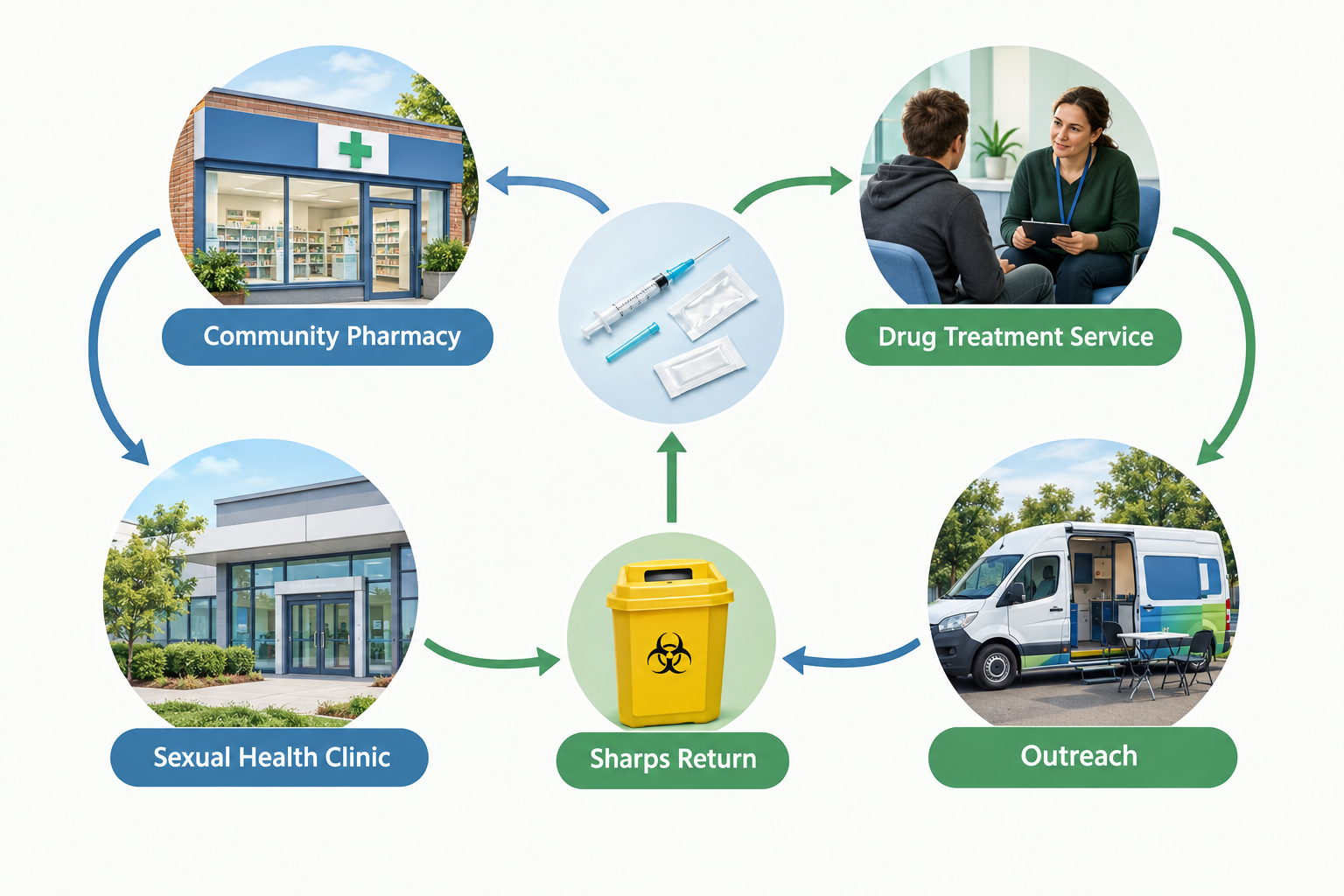
People accessing an NSP do not typically need to provide identification or a prescription. The service is designed to be accessible and non-judgmental, recognising that reducing barriers to sterile equipment saves lives. Used needles and syringes can usually be returned to the same pharmacy or service in a sharps container for safe disposal.
If you are unsure whether your local pharmacy participates in an NSP, you can contact your local council, NHS trust, or drug treatment service for information about the nearest available scheme.
Buying Syringes for Insulin and Other Prescribed Medicines
People who use insulin to manage type 1 or type 2 diabetes are among the most frequent users of syringes in the community setting. In the UK, insulin is a prescription-only medicine, and most people obtain it through their GP or diabetes specialist. Syringes and needles used with insulin are typically supplied alongside the prescription, either free of charge for those who are exempt from NHS prescription charges or at the standard prescription charge for those who are not.
The move towards insulin pens and pre-filled cartridges means that traditional syringes are less commonly used for insulin than they once were, but they remain in use for certain insulin types and patient preferences. Pen needles, which attach to insulin pens, are also available through pharmacies and are supplied in a similar way.
For other injectable medicines — such as methotrexate for rheumatoid arthritis, interferon beta for multiple sclerosis, or low-molecular-weight heparin for anticoagulation — the prescribing clinician will usually specify the appropriate syringe type and gauge as part of the prescription or patient training. Pharmacies supplying these medicines will generally provide compatible syringes and needles as part of the dispensing process.
Syringes and Aesthetic Injectables: An Important Distinction
A growing number of people search for information about buying syringes in the context of aesthetic treatments — particularly in relation to dermal fillers, botulinum toxin, or other injectable cosmetic procedures. It is important to address this directly and clearly.
In the UK, botulinum toxin products (such as those used for wrinkle relaxing treatments) are prescription-only medicines. This means they cannot legally be obtained without a valid prescription issued by a qualified prescriber following an appropriate consultation. The same applies to many other injectable aesthetic medicines. Purchasing a syringe over the counter does not provide any legal route to obtaining these medicines, and attempting to self-administer them or to have them administered by an unqualified person carries serious risks.
The UK government introduced regulations in 2021 and subsequently strengthened them, requiring that certain aesthetic procedures involving prescription-only medicines — including botulinum toxin injections — be performed only by or under the supervision of a registered healthcare professional who can legally prescribe. These regulations exist because injectable aesthetic treatments, while often perceived as routine, carry genuine risks including infection, vascular occlusion, tissue necrosis, and permanent scarring when performed incorrectly.
Dermal fillers, which are not currently classified as prescription-only medicines in the same way, have been the subject of ongoing regulatory review in the UK. The government has moved to restrict their administration to healthcare professionals in England, reflecting concerns about the risks of unregulated filler injections. Regardless of the regulatory status of the filler product itself, the risks of self-injection or treatment by an unqualified practitioner are significant and well-documented.
If you are considering an aesthetic injectable treatment, the appropriate route is to consult a qualified, registered healthcare professional — such as a doctor, dentist, nurse prescriber, or pharmacist prescriber — who can assess your suitability, obtain informed consent, prescribe where necessary, and administer the treatment safely in a clinical environment.
Safe Disposal of Syringes and Sharps
Disposing of used syringes and needles safely is a legal and public health obligation in the UK. Used sharps must not be placed in ordinary household waste or recycling bins, as they pose a risk of needlestick injury to waste handlers and the public. The correct approach is to use an approved sharps disposal container — commonly called a sharps bin — which is puncture-resistant and sealable.
For people who use syringes for medical purposes at home, sharps bins are available on prescription through GPs and can also be purchased from pharmacies. Once full, sharps bins can be collected by local council waste services in most areas; arrangements vary by local authority, so it is worth checking with your council for the specific collection process in your area.
People accessing needle exchange programmes can return used sharps to the participating pharmacy or service as part of the scheme. This return element is an important part of the NSP model, helping to keep used needles out of public spaces.
What to Expect When Asking a Pharmacy for Syringes
If you approach a UK pharmacy to buy syringes, the experience will depend on the pharmacy’s policies, the reason you give, and the pharmacist’s professional assessment. In straightforward cases — for example, if you are a known patient collecting supplies alongside a prescription — the process is usually simple and quick.
If the purpose is less immediately clear, the pharmacist may ask questions about the intended use. This is not an accusation; it is part of their professional duty of care. Providing a clear and honest explanation of why you need syringes will generally help the pharmacist make an appropriate decision. If you are refused, you may wish to try another pharmacy, contact your GP for guidance, or access an NSP if that is relevant to your situation.
Syringes are available in a range of sizes, needle gauges, and configurations. The appropriate type depends on the medicine being injected, the injection site, and the patient’s individual circumstances. If you are unsure which type is correct for your needs, your GP, diabetes nurse, or other prescribing clinician can advise. Using an incorrect needle gauge or syringe size can affect the accuracy of dosing and increase the risk of complications.
Risks of Obtaining or Using Syringes Without Appropriate Guidance
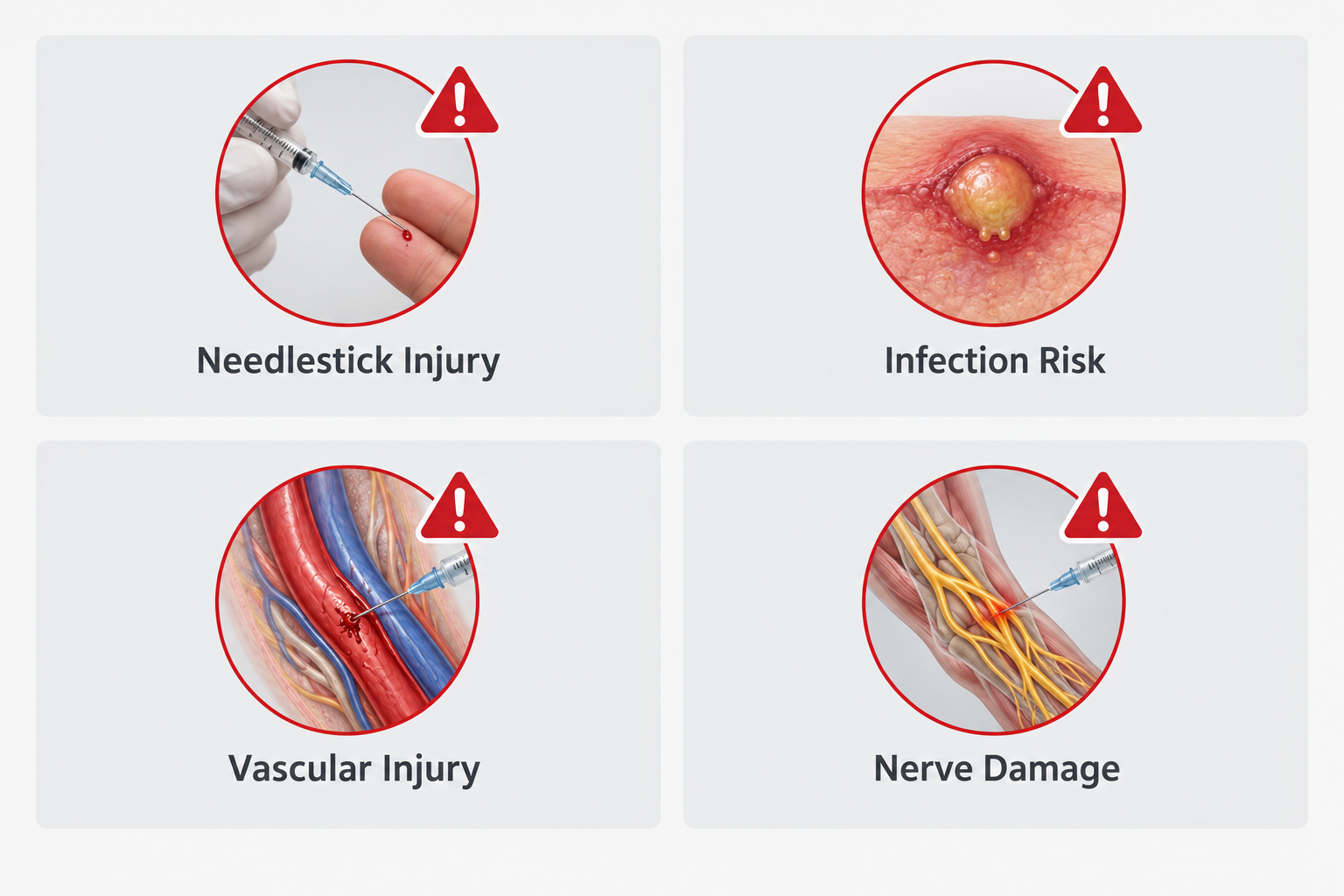
While syringes themselves are not inherently dangerous medical devices, their misuse carries real risks. Needlestick injuries can transmit blood-borne infections including HIV, hepatitis B, and hepatitis C. Reusing syringes — even on the same person — increases the risk of infection and can blunt the needle, making injections more painful and less accurate. Sharing syringes between individuals is a well-recognised route of transmission for serious infections and should never occur.
Injecting any substance without appropriate training, sterile technique, and knowledge of anatomy carries risks of local infection, abscess formation, nerve damage, and vascular injury. These risks apply regardless of whether the substance being injected is a prescribed medicine, an aesthetic product, or any other material. The clinical training that healthcare professionals receive before administering injections covers not only technique but also the recognition and management of complications — knowledge that cannot be replicated by watching online tutorials.
If you experience any adverse effects after an injection — including unusual pain, swelling, redness, skin colour changes, or signs of infection — seek medical attention promptly. Do not attempt to manage injection-related complications at home without professional assessment.
Frequently Asked Questions
Do I need a prescription to buy syringes at a UK pharmacy?
Syringes are medical devices rather than prescription-only medicines, so a prescription for the syringe itself is not legally required in the UK. However, pharmacists can use their professional judgement and may decline to sell syringes if they have concerns about the intended use. The medicine you plan to inject may itself require a prescription.
Can I get free syringes from a pharmacy in the UK?
Free syringes are available through needle and syringe programmes (NSPs) at participating pharmacies for people who inject drugs. People who inject prescribed medicines such as insulin may also receive syringes free of charge as part of their NHS prescription, depending on their exemption status. Contact your local pharmacy or GP surgery to find out what applies to your situation.
Can I buy syringes to use for aesthetic treatments at home?
Buying a syringe does not provide legal access to prescription-only aesthetic medicines such as botulinum toxin. Self-administering injectable aesthetic treatments or having them administered by an unqualified person carries significant health risks and may be unlawful. Aesthetic injectable treatments should only be carried out by qualified, registered healthcare professionals in an appropriate clinical setting.
What size syringe should I use for insulin?
The appropriate syringe size and needle gauge for insulin depends on the insulin concentration, the dose, and individual factors such as body composition and injection site. Your GP, diabetes nurse, or pharmacist can advise on the correct equipment for your specific situation. Do not change syringe type without guidance from your healthcare team.
How do I dispose of used syringes safely in the UK?
Used syringes and needles must be placed in an approved sharps disposal container, not in household waste or recycling. Sharps bins are available on prescription and from pharmacies. Full sharps bins can be collected by local council waste services in most areas, or returned to a needle exchange scheme if you accessed syringes through one.
Can a pharmacist refuse to sell me syringes?
Yes. Pharmacists are regulated healthcare professionals and can exercise professional discretion. If a pharmacist has reasonable concerns about the intended use of syringes, they are entitled to decline the sale. This is a professional safeguard, not an arbitrary restriction. If you have a legitimate medical need, explaining your situation clearly or obtaining a letter from your GP may help.
Are needle exchange services confidential?
Needle and syringe programmes in the UK are generally designed to be confidential and non-judgmental. Many services do not require identification. The aim is to reduce barriers to accessing sterile equipment and to protect public health. If confidentiality is a concern, you can ask the pharmacy or service about their specific policies before accessing the scheme.
Understanding the Rules Before You Visit a Pharmacy
The rules around buying syringes at a UK pharmacy reflect a balance between accessibility for people with genuine medical needs and appropriate safeguards to protect public health. For most people with a legitimate reason — whether managing a medical condition, caring for someone who needs injections, or accessing harm reduction services — obtaining syringes through a pharmacy is straightforward. The system is designed to be practical and non-stigmatising for those who need it.
Where the rules become more restrictive is in situations where syringes might be sought to self-administer prescription-only medicines without appropriate clinical oversight. This applies particularly in the context of aesthetic injectables, where the combination of prescription-only medicines, complex anatomy, and the need for trained complication management makes professional administration not just a regulatory requirement but a genuine patient safety issue. If you are considering any injectable treatment — medical or aesthetic — the right starting point is a consultation with a qualified healthcare professional who can assess your needs, explain your options, and ensure that any treatment is carried out safely.
If you are unsure about your specific situation, your GP, local pharmacist, or NHS 111 can provide guidance tailored to your circumstances.
