

Many people search for ways to reduce nose size naturally at home, hoping to reshape or slim the appearance of their nose without surgery. While some approaches can create a visual effect, it is important to understand what is anatomically possible without medical intervention, what the evidence actually supports, and when a professional assessment might be worth considering. This article covers the most commonly discussed natural methods, their realistic limitations, and the non-surgical and surgical alternatives available for those who want more meaningful change.
Key Takeaways
- No home remedy, exercise, or topical product can permanently reduce the physical size or bone structure of the nose.
- Makeup contouring can create a convincing visual illusion of a slimmer or more defined nose without any physical change.
- Facial exercises may have a modest effect on the soft tissue around the nose but cannot alter cartilage or bone.
- Non-surgical rhinoplasty using dermal filler can improve the appearance of the nose without surgery, though it does not reduce physical size and carries its own risks.
- Surgical rhinoplasty remains the only method that can permanently alter the size or structure of the nose.
Why the Nose Cannot Be Physically Reduced at Home
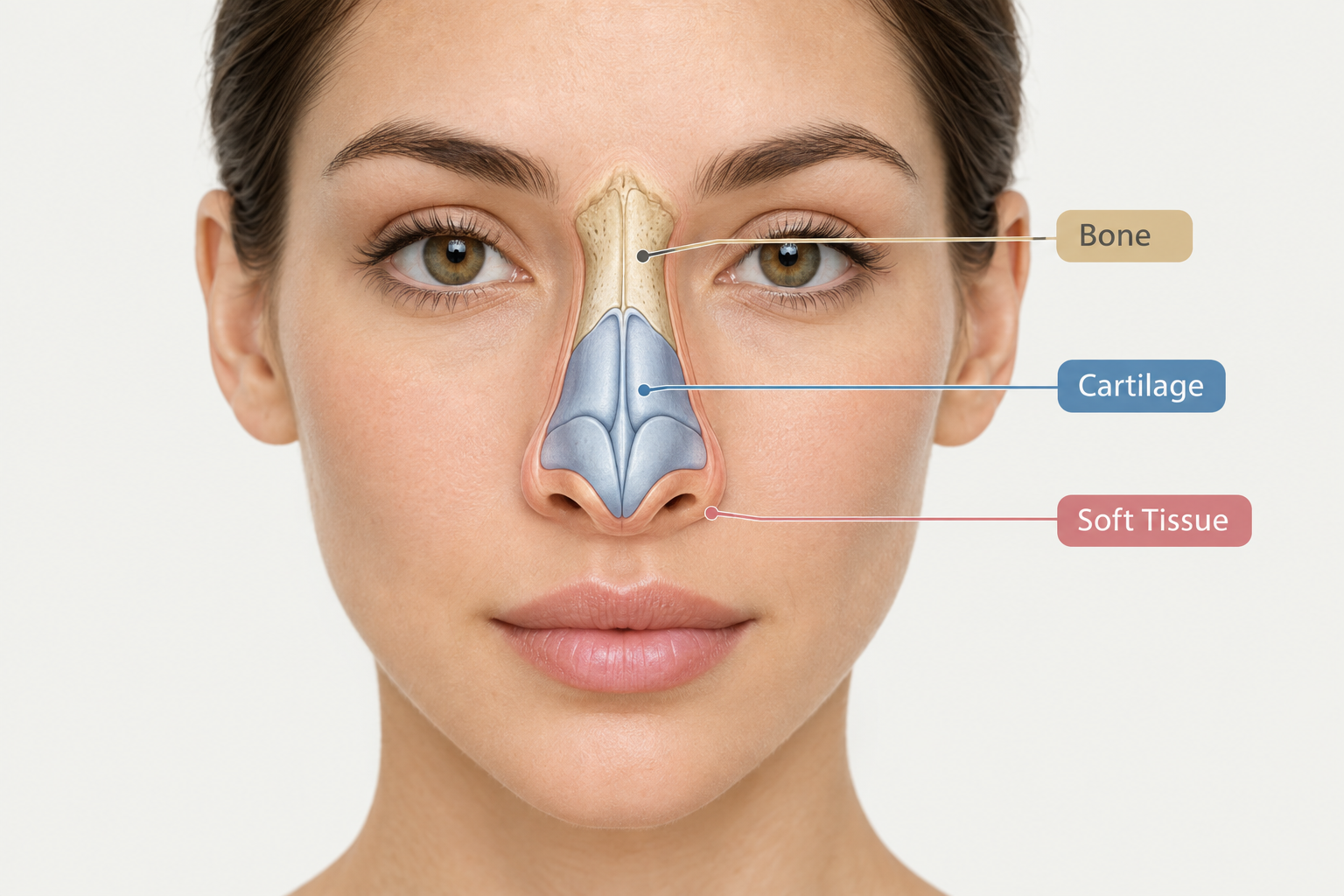
The nose is composed of bone in its upper third, cartilage in its middle and lower thirds, and a covering of skin and soft tissue. None of these structures respond to topical creams, facial massage, or exercises in a way that would meaningfully reduce their size. Bone cannot be reshaped without surgical intervention, and cartilage, while slightly more flexible than bone, does not remodel in response to external pressure applied at home. Claims that certain exercises or tools can permanently shrink the nose are not supported by clinical evidence. Understanding this anatomical reality is the starting point for making an informed decision about what is genuinely achievable.
Swelling from allergies, sinus congestion, or minor trauma can temporarily make the nose appear larger. Addressing these underlying causes, for example through appropriate allergy management, may restore the nose to its baseline appearance. However, this is not the same as reducing the nose’s actual structure.
Makeup Contouring: The Most Effective Non-Invasive Option
Makeup contouring is the most reliably effective way to alter the perceived shape and size of the nose without any physical intervention. By applying a matte shade slightly darker than the skin tone along the sides of the nose and a lighter highlight down the bridge, it is possible to create the visual impression of a narrower, more defined nose. The effect is entirely optical and disappears when makeup is removed, but for many people this is a practical and satisfying solution for everyday use or specific occasions.
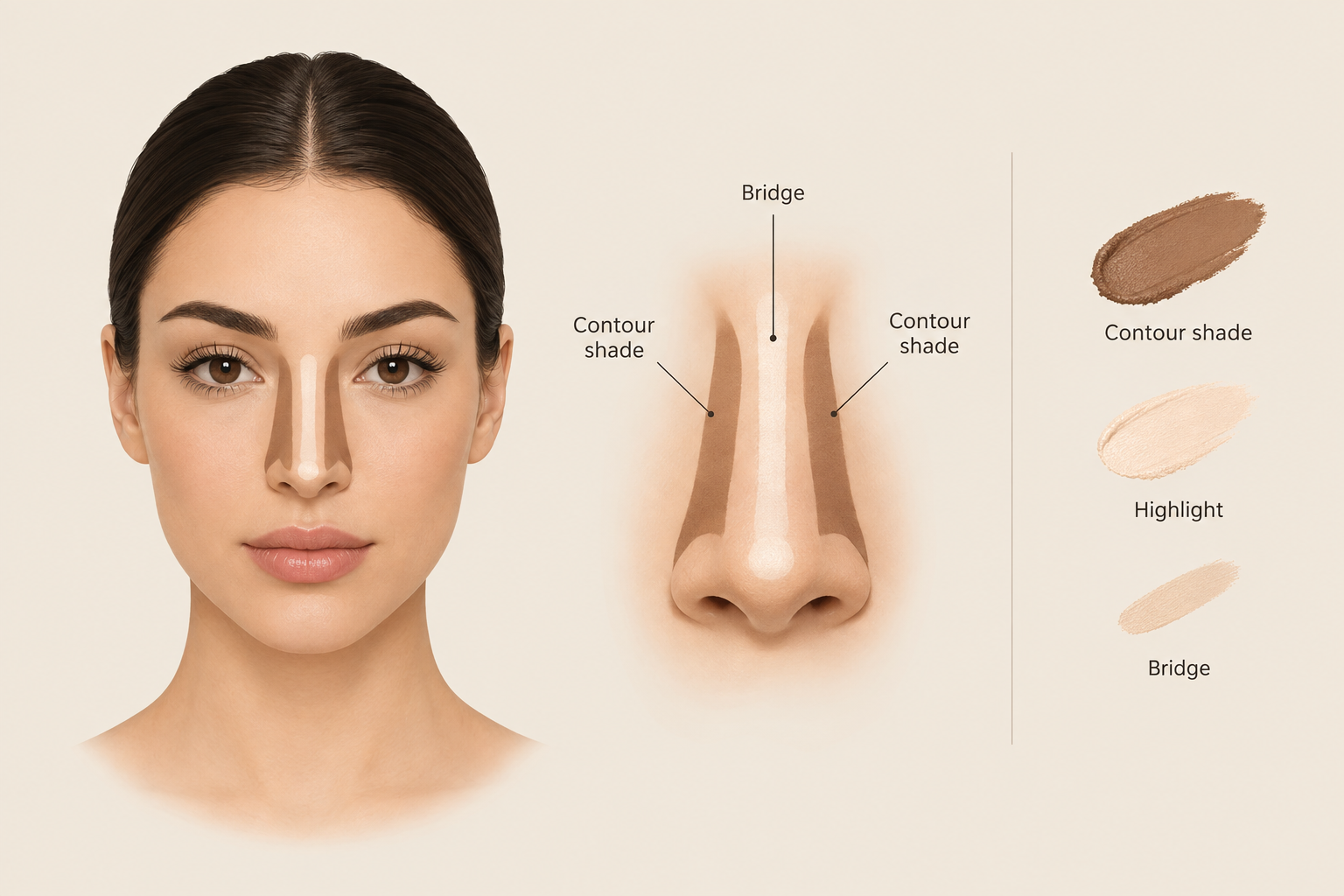
The technique requires some practice to look natural in different lighting conditions, and results depend on individual skin tone, nose shape, and the products used. Numerous tutorials exist for different nose shapes, including wide noses, bulbous tips, and asymmetric bridges. While contouring does not change the nose physically, it is the only home-based approach that consistently produces a visible result.
Facial Exercises: Limited Evidence and Realistic Expectations
Facial exercises are frequently promoted online as a way to slim or reshape the nose. The muscles directly associated with the nose, known collectively as the nasal muscles, are small and have limited influence over the overall shape or size of the nasal structure. Exercises that involve pressing, pinching, or moving the nose are unlikely to produce measurable changes in nasal width or projection because the underlying cartilage and bone are not affected by muscular activity in this region.
Some proponents suggest that strengthening the muscles around the nose may improve the appearance of the surrounding facial area, which could indirectly influence how the nose looks in relation to the rest of the face. However, clinical evidence specifically supporting nasal exercises as a method of nose size reduction is absent. General facial exercise research is limited and methodologically inconsistent, making it difficult to draw firm conclusions. Anyone choosing to try facial exercises should do so with realistic expectations and should not expect structural change.
Nose Slimming Tools and Devices: What the Evidence Shows
A range of nose slimming clips, shapers, and massage tools are marketed with claims that regular use will reshape the nose over time. These devices typically apply gentle compression to the nose tip or bridge. There is no credible clinical evidence that sustained external compression from these devices produces lasting changes to nasal cartilage or bone in adults. Cartilage in children and adolescents is more pliable, but even in younger individuals, the evidence for non-surgical reshaping through compression devices is not established in peer-reviewed literature.
Some users report a temporary change in appearance immediately after using a compression device, likely due to mild, short-lived tissue displacement rather than any structural change. This effect resolves quickly. The use of poorly designed or excessively tight devices also carries a small risk of skin irritation or discomfort. These products should not be confused with medically supervised nasal splints used after rhinoplasty surgery, which serve a different and clinically defined purpose.
Skincare, Diet, and Lifestyle: Indirect Influences
Certain lifestyle factors can influence how the nose appears, even if they cannot alter its underlying structure. Facial puffiness caused by high sodium intake, alcohol consumption, poor sleep, or fluid retention can make the nose and surrounding areas look temporarily larger. Reducing these factors may help the face appear less swollen overall, which can make the nose look more proportionate. This is not nose reduction in any structural sense, but it is a genuine and achievable improvement for some people.
Skin quality also plays a role in nasal appearance. Enlarged pores, excess sebum production, and skin texture irregularities on the nose can draw attention to its size. A consistent skincare routine that addresses oiliness and pore appearance, using ingredients such as niacinamide or salicylic acid where appropriate, may improve the overall look of the nose without altering its shape. Again, these are surface-level improvements rather than structural changes.
Body weight has a limited effect on nasal size. The nose contains very little adipose tissue, so weight loss does not typically produce a meaningful reduction in nasal size, although changes in overall facial volume can sometimes alter how the nose appears in proportion to the rest of the face.
Hairstyling and Facial Framing
The perceived size and shape of the nose are influenced by the surrounding facial features and framing. Hairstyles, eyebrow shape, and even eyewear can shift attention and alter the visual balance of the face. For example, hairstyles that add volume at the sides of the face can make a prominent nose appear more proportionate. Bold or well-defined eyebrows can draw the eye upward and reduce focus on the nose. These are not medical interventions, but they are practical tools that can meaningfully influence how the nose is perceived in everyday life.
Non-Surgical Rhinoplasty: A Professional Alternative Worth Understanding
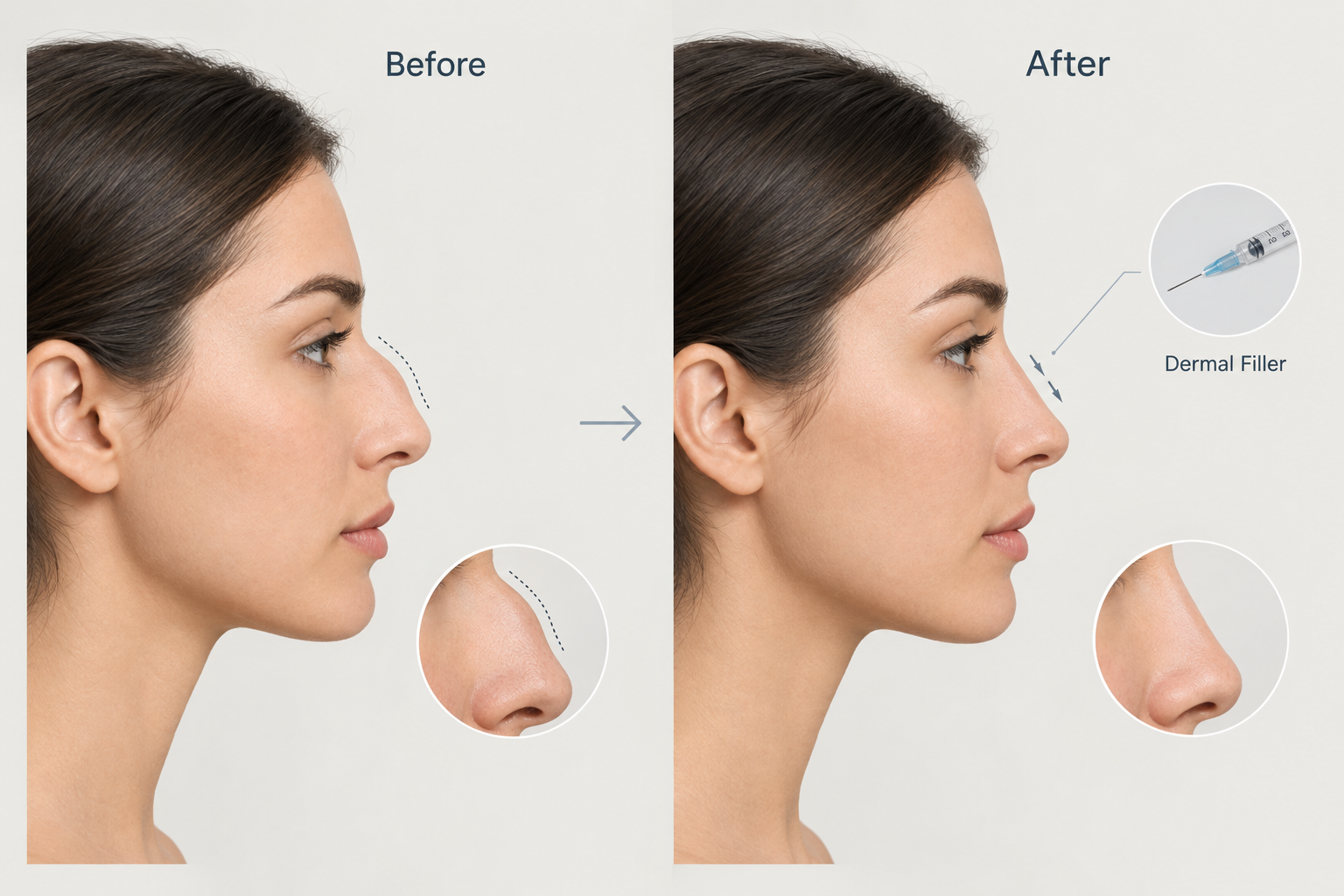
Non-surgical rhinoplasty, sometimes called a liquid nose job or non-surgical nose job, involves the precise injection of dermal filler, most commonly hyaluronic acid, into specific areas of the nose to alter its appearance. A trained aesthetic practitioner can use filler to smooth a dorsal hump, lift a drooping tip, improve symmetry, or create the illusion of a straighter bridge. The result can make the nose appear more refined and proportionate without surgery.
It is important to understand that non-surgical rhinoplasty does not reduce the physical size of the nose. In fact, because filler adds volume, the nose may be very slightly larger in absolute terms after treatment, even though it may appear smaller or more defined due to improved shape and symmetry. The visual improvement can be significant for carefully selected patients, but the treatment is not appropriate for everyone. People seeking a genuinely smaller nose in physical terms, or those with significant structural concerns such as a severely deviated septum, are unlikely to achieve their goals through filler alone.
Hyaluronic acid filler used in non-surgical rhinoplasty is temporary, typically lasting between nine and eighteen months depending on the product used, the individual’s metabolism, and the area treated. Results vary between patients, and repeat treatments are required to maintain the effect. The procedure carries risks that are more serious than those associated with filler in other facial areas. The nose has a complex vascular anatomy, and inadvertent injection into or compression of a blood vessel can cause tissue damage or, in rare cases, vision changes or blindness. This risk makes it essential that non-surgical rhinoplasty is performed only by a highly experienced practitioner with appropriate training and access to hyaluronidase, the enzyme used to dissolve hyaluronic acid filler in an emergency.
Botulinum Toxin for Nasal Appearance
Botulinum toxin injections are occasionally used as an adjunct to improve specific aspects of nasal appearance. Small amounts injected into the depressor septi nasi muscle, which pulls the nasal tip downward, can produce a subtle lift of the tip. This is sometimes referred to as a nasal tip lift. The effect is modest and temporary, lasting approximately three to four months, and it does not alter the size or width of the nose. It may be suitable for people whose nasal tip droops noticeably when they smile or speak, but it is not a general solution for nose size concerns.
Botulinum toxin treatment for nasal concerns should only be performed by a qualified medical professional with a thorough understanding of nasal anatomy. As with all botulinum toxin treatments, results vary between individuals, and the procedure carries risks including bruising, asymmetry, and unintended effects on nearby muscles.
Surgical Rhinoplasty: The Only Permanent Structural Option
Surgical rhinoplasty is the only intervention that can permanently reduce the physical size of the nose, narrow the bridge, refine the tip, or alter the nasal bones and cartilage in a lasting way. Rhinoplasty is a complex surgical procedure performed under general or local anaesthesia with sedation, and it requires a significant recovery period. Swelling after rhinoplasty can persist for many months, and the final result may not be fully visible for up to a year or more after surgery.
Rhinoplasty carries the risks associated with any surgical procedure, including anaesthetic complications, infection, bleeding, scarring, and the possibility of an unsatisfactory aesthetic outcome requiring revision surgery. Choosing a board-certified surgeon with specific experience in rhinoplasty and reviewing before-and-after photographs of their previous patients is an important part of the decision-making process. Rhinoplasty is not appropriate for patients whose facial growth is not yet complete, which generally means it is not recommended before the mid-to-late teenage years.
Septorhinoplasty is a related procedure that combines cosmetic reshaping with correction of a deviated septum, which can improve both appearance and nasal breathing. For patients with functional breathing concerns alongside cosmetic goals, this combined approach may be worth discussing with a specialist.
Risks and Limitations of Home Methods
The primary risk of home-based nose reduction methods is not physical harm but rather wasted time, money, and unrealistic expectations. Pursuing ineffective methods for an extended period can delay a person from exploring options that may genuinely help. Some nose-shaping devices, if used with excessive pressure, could cause skin irritation or discomfort, though serious injury from these products is uncommon.
A more significant concern is the psychological impact of fixating on a perceived flaw. If dissatisfaction with nasal appearance is causing significant distress or affecting daily life, it is worth speaking with a healthcare professional. In some cases, concerns about facial appearance may be related to body dysmorphic disorder, a condition in which a person becomes preoccupied with a perceived defect that others may not notice. Cosmetic procedures, whether surgical or non-surgical, are generally not recommended as a primary treatment for body dysmorphic disorder, and a mental health assessment may be more appropriate in such circumstances.
Who May Be Suitable for Professional Nose Treatments
Non-surgical rhinoplasty with dermal filler may be worth discussing with a qualified practitioner for adults who want to improve the appearance of a dorsal hump, asymmetry, or a drooping tip without committing to surgery. It is generally not suitable for people who want to reduce the overall size of the nose, those with very thin nasal skin, or those with a history of previous rhinoplasty surgery without specialist assessment. A thorough consultation is essential to establish whether the treatment is appropriate and what realistic outcomes might look like.
Surgical rhinoplasty may be appropriate for adults whose facial growth is complete and who have a clear, realistic understanding of what surgery can and cannot achieve. A consultation with a specialist surgeon, ideally including a discussion of motivations and expectations, is an important first step. Patients should be in good general health and should not smoke, as smoking impairs healing after surgery.
Frequently Asked Questions
Can ice or cold compresses reduce nose size?
Applying ice or cold compresses to the nose will not reduce its structural size. Cold can temporarily reduce swelling if the nose is inflamed due to injury or irritation, which may restore it to its normal appearance. This is not the same as making a healthy nose smaller.
Do nose exercises actually work?
There is no clinical evidence that nasal exercises can alter the size or shape of the nose’s bone or cartilage. Small muscles around the nose can be exercised, but they do not have the capacity to reshape the underlying nasal structure.
How long does non-surgical rhinoplasty last?
Results from hyaluronic acid filler used in non-surgical rhinoplasty typically last between nine and eighteen months, though this varies depending on the filler product, the amount used, and individual factors such as metabolism. Maintenance treatments are required to sustain the effect.
Is non-surgical rhinoplasty safe?
Non-surgical rhinoplasty carries a higher risk profile than filler treatments in many other facial areas due to the complex blood supply of the nose. Serious complications, including vascular occlusion, are rare but possible. The procedure should only be performed by a highly experienced practitioner with appropriate emergency protocols in place.
Can losing weight make my nose smaller?
The nose contains very little fat, so weight loss is unlikely to produce a noticeable reduction in nasal size. Changes in overall facial volume from weight loss may alter how the nose appears in proportion to the rest of the face, but this effect is generally modest.
At what age can someone have rhinoplasty?
Surgical rhinoplasty is generally not recommended until facial growth is complete. This is typically around sixteen to seventeen years of age for girls and seventeen to eighteen for boys, though individual development varies. A specialist surgeon can advise on appropriate timing.
What is the difference between non-surgical rhinoplasty and surgical rhinoplasty?
Non-surgical rhinoplasty uses injectable filler to alter the appearance of the nose temporarily without surgery, downtime, or permanent change. Surgical rhinoplasty physically reshapes the bone and cartilage of the nose under anaesthesia and produces permanent structural changes, with a recovery period of several weeks to months.
Making an Informed Decision About Nose Appearance
If you are looking for ways to reduce nose size naturally at home, it is worth being clear about what is genuinely achievable. Makeup contouring remains the most effective non-invasive option for creating a visual change, and lifestyle factors such as reducing salt intake and improving sleep may help minimise facial puffiness. Beyond these approaches, no home remedy or device has credible clinical evidence to support structural nose reduction.
For those who want a more meaningful change, non-surgical rhinoplasty with dermal filler can improve the appearance of the nose without surgery, though it does not reduce physical size and carries real risks that require an experienced practitioner. Surgical rhinoplasty is the only option that can permanently alter nasal structure, and it requires careful consideration of the risks, recovery, and realistic outcomes involved.
The most useful next step for anyone seriously considering a change to their nasal appearance is a consultation with a qualified aesthetic practitioner or specialist surgeon. A professional assessment can clarify which options are appropriate for your specific anatomy and goals, and help you form realistic expectations before committing to any treatment.
