
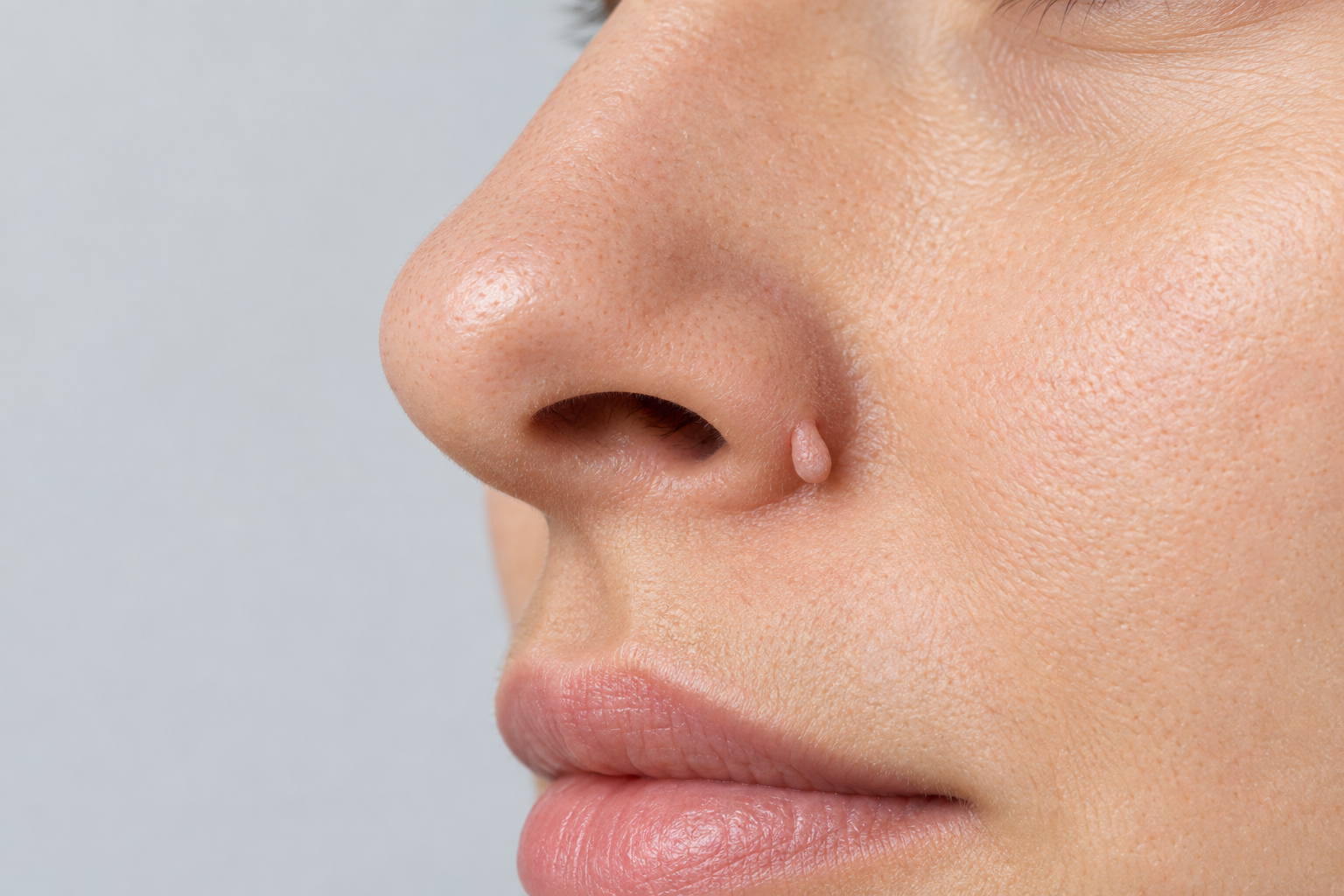

A skin tag on the nose can be a minor but persistent cosmetic concern, particularly when it sits in a visible location such as the side of the nose, the nostril rim, or the bridge. While skin tags are almost always benign, their position on the face makes them more noticeable than those found elsewhere on the body, and many people seek professional removal for aesthetic or practical reasons. This article explains what a nasal skin tag is, how it differs from other skin lesions, which removal methods are commonly used, what the procedure involves, and what realistic outcomes look like.
Key Takeaways
- Skin tags on the nose are benign, soft growths of excess skin that are generally harmless but can be removed for cosmetic or comfort reasons.
- Professional removal is strongly recommended for facial skin tags due to the sensitivity of the area and the risk of scarring with at-home methods.
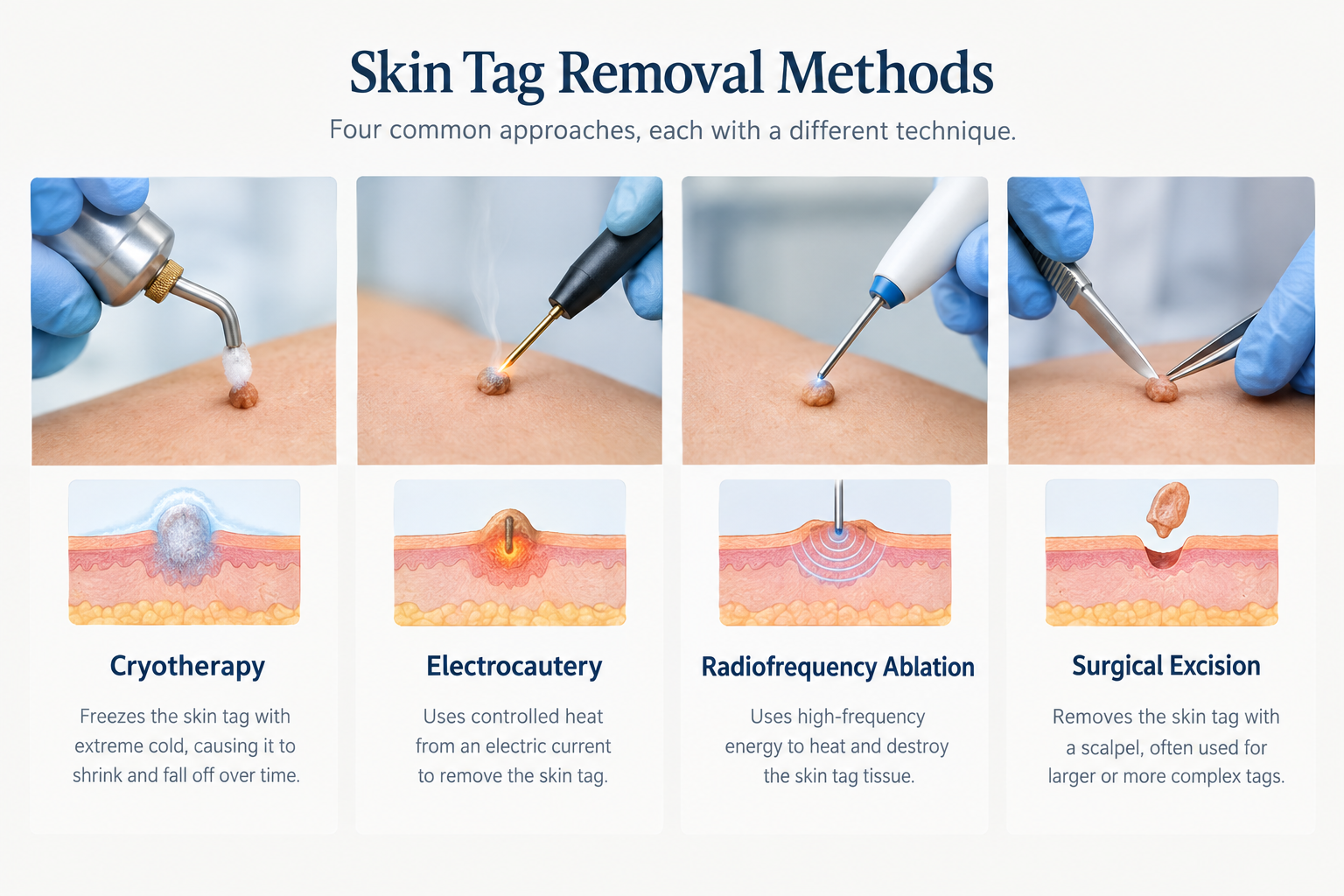
- Several clinical techniques are available, including cryotherapy, electrocautery, radiofrequency ablation, and surgical excision, each with different suitability profiles.
- Recovery is typically straightforward, but the nose is a delicate area and individual healing varies depending on the method used and the patient’s skin type.
- A clinical assessment is necessary to confirm the lesion is a skin tag and not another type of growth before any removal is carried out.
What Is a Skin Tag on the Nose?
A skin tag, known medically as an acrochordon, is a small, soft, flesh-coloured or slightly darker growth that hangs from the skin surface on a narrow stalk called a peduncle. On the nose, these growths most commonly appear on the sides of the nostrils, the nasal folds, or occasionally on the bridge. They are composed of loose collagen fibres and blood vessels surrounded by a thin layer of skin, and they are not cancerous or pre-cancerous.
Skin tags on the nose tend to develop in areas where skin experiences friction or folds against itself. They are more common in adults over the age of 40, in people with a higher body mass index, and in those with a family history of similar growths. Hormonal changes, including those associated with pregnancy, may also contribute to their development. The exact cause is not fully understood, but friction and insulin resistance have been identified as contributing factors in some research.
It is important to distinguish a skin tag from other facial lesions that may look similar, including sebaceous hyperplasia, milia, warts, seborrheic keratoses, or, in rare cases, basal cell carcinoma. A qualified practitioner should assess any new or changing lesion before treatment is considered. Self-diagnosis is not reliable, and attempting to remove an undiagnosed lesion at home carries meaningful risks.
Why People Seek Nose Skin Tag Removal
The most common reason people seek removal of a skin tag on the nose is cosmetic. The nose is a central and prominent facial feature, and even a small growth in this area can feel conspicuous, particularly in photographs or close-up interactions. Some individuals also report that nasal skin tags catch on glasses frames, cause mild irritation when blowing the nose, or become inflamed if repeatedly touched or rubbed.
Skin tags do not resolve on their own. Once formed, they tend to remain stable in size, though some may gradually enlarge over time. They do not require treatment from a medical standpoint unless they become repeatedly irritated, bleed, or change in appearance, in which case a clinical review is warranted. For most people, the decision to pursue removal is personal and driven by how the growth affects their confidence or daily comfort.
Confirming the Diagnosis Before Treatment
Before any removal procedure, a practitioner should examine the lesion to confirm it is a skin tag and not another type of growth. This assessment typically involves a visual inspection and, in some cases, dermoscopy, which uses a handheld magnifying device with polarised light to examine the skin structure more closely. If there is any uncertainty about the nature of the lesion, a referral for dermatological assessment or a biopsy may be recommended.
Characteristics that may prompt further investigation include a lesion that has changed in colour, shape, or size rapidly, one that bleeds without trauma, or one that has an irregular border or multiple colours. These features are not typical of a benign skin tag and warrant professional evaluation before any cosmetic procedure is undertaken.
Professional Removal Methods for Nasal Skin Tags
Several clinical techniques are used to remove skin tags on the nose. The most appropriate method depends on the size and location of the tag, the patient’s skin type, their medical history, and the practitioner’s assessment. No single method is universally superior, and each carries its own profile of benefits and limitations.
Cryotherapy
Cryotherapy involves applying liquid nitrogen or another freezing agent directly to the skin tag, causing the tissue to freeze and subsequently die. The treated tag typically darkens, forms a small blister or crust, and falls away within one to two weeks. Cryotherapy is a well-established technique for benign skin lesions and is commonly used in dermatology clinics. On the nose, precision is important because the surrounding skin is sensitive and the freezing agent must be applied carefully to avoid affecting healthy tissue. Temporary redness, swelling, and mild discomfort are expected after treatment. There is a small risk of post-inflammatory hyperpigmentation, particularly in people with darker skin tones, and in rare cases, a small area of hypopigmentation may result.
Electrocautery and Electrosurgery
Electrocautery uses a small electrical current to generate heat that destroys the skin tag tissue. The stalk of the tag is targeted directly, and the growth is removed or caused to fall away. Electrosurgery, including techniques such as hyfrecation, works on a similar principle and is widely used for small facial lesions. These methods offer good precision and are suitable for small to medium-sized skin tags. A local anaesthetic is usually applied beforehand to minimise discomfort. After treatment, a small scab forms and heals over one to two weeks. The risk of scarring is low when the procedure is performed by an experienced practitioner, but it is not zero, particularly on the nose where the skin is thin.
Radiofrequency Ablation
Radiofrequency ablation uses high-frequency radio waves to precisely remove or ablate skin tissue with minimal thermal spread to surrounding areas. This technique is increasingly used for facial skin lesions because it offers a high degree of control and tends to produce clean results with a reduced risk of scarring compared to some older methods. The skin tag is targeted with a fine probe, and the tissue is removed or destroyed with minimal bleeding. A topical or local anaesthetic is applied before the procedure. Healing typically takes one to two weeks, and the treated area may appear pink or slightly raised before settling. Radiofrequency ablation may be particularly suitable for skin tags in precise or delicate locations such as the nose.
Surgical Excision
Surgical excision involves cutting the skin tag away at its base using sterile scissors or a scalpel. This is a straightforward and effective method for skin tags with a clearly defined stalk. On the nose, the procedure is usually performed under local anaesthetic and takes only a few minutes. The wound may be left to heal naturally or closed with a small suture depending on the size of the tag and the depth of the excision. Surgical removal provides a tissue sample that can be sent for histological analysis if there is any diagnostic uncertainty. The main limitation is the small risk of a visible scar, which is more relevant on the face than on other body areas.
Ligation
Ligation involves tying a fine thread or suture tightly around the base of the skin tag stalk, cutting off its blood supply. The tag gradually shrinks and falls away over several days to a couple of weeks. This technique is more commonly used for skin tags on the body than on the face, and it is generally less suitable for nasal skin tags due to the precision required and the difficulty of applying the technique in a small, curved area. It is not recommended as a home remedy, as improper application can cause infection, scarring, or incomplete removal.
At-Home Removal: Why It Is Not Recommended for Facial Skin Tags
A range of over-the-counter products and home remedies are marketed for skin tag removal, including freezing kits, tea tree oil applications, and thread ligation. While some of these approaches may be used with caution on skin tags located on the body, they are not recommended for skin tags on the nose or face. The skin on the nose is thin, sensitive, and highly visible, making the consequences of an adverse outcome, such as scarring, infection, or incomplete removal, more significant than on less exposed areas.
Home freezing kits are generally less precise and less powerful than clinical cryotherapy equipment, which increases the risk of inadequate treatment or unintended damage to surrounding skin. Cutting or tying off a skin tag at home without sterile equipment and proper technique carries a meaningful risk of infection and bleeding. Additionally, attempting to remove a lesion that has not been professionally assessed risks treating a growth that is not a skin tag, potentially delaying diagnosis of a more significant condition.
What to Expect During and After Treatment
Most professional skin tag removal procedures on the nose are brief, typically lasting between five and twenty minutes depending on the method used. A topical anaesthetic cream may be applied in advance to reduce discomfort, or a small injection of local anaesthetic may be used. The procedure itself is usually well tolerated, though patients may notice a mild stinging, burning, or pressure sensation depending on the technique.
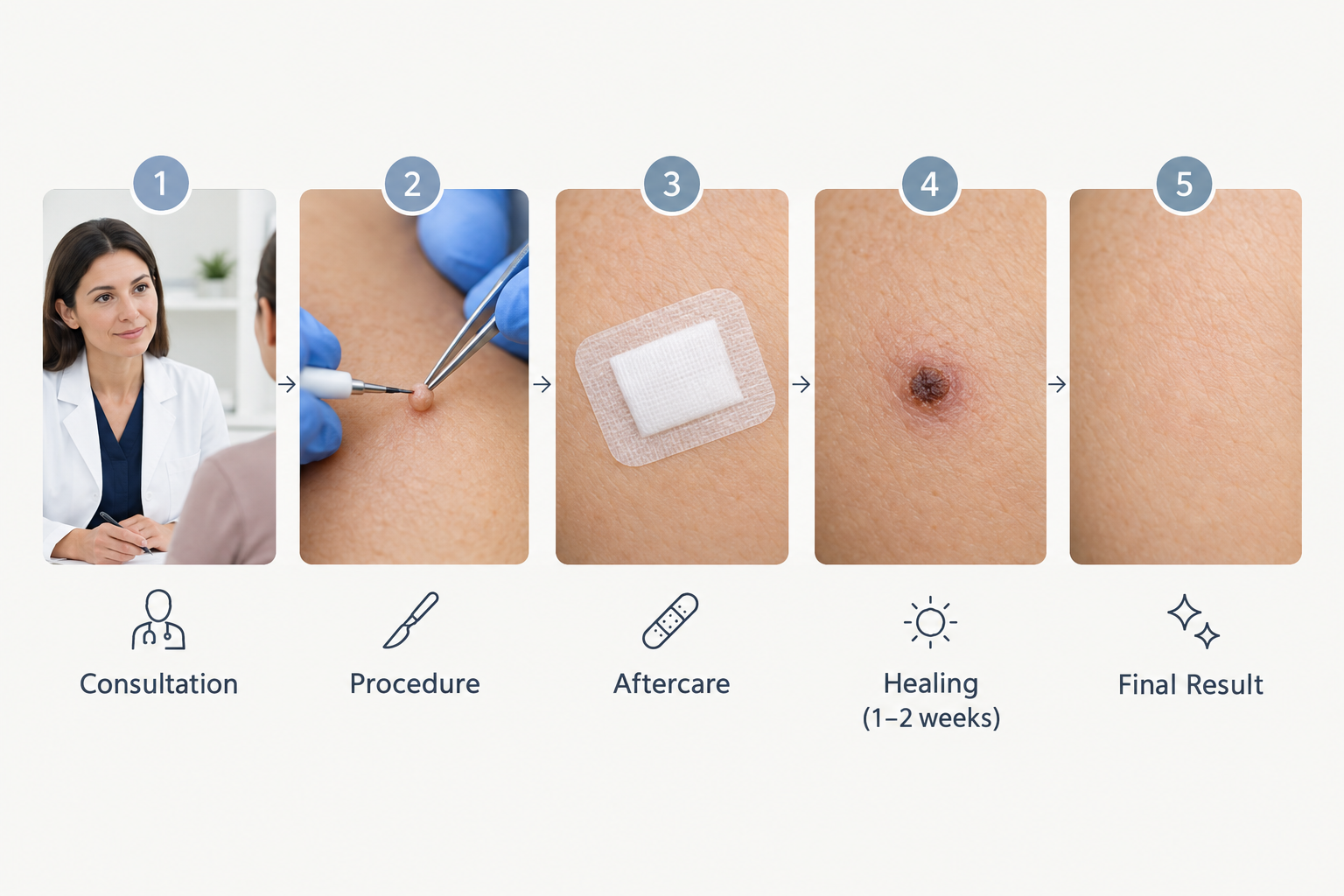
After treatment, the area is likely to appear red, slightly swollen, or crusted. A small scab usually forms and should be left to heal naturally without picking or scratching, as interference can increase the risk of scarring or infection. Most people can return to normal activities immediately or within a day, though strenuous exercise and activities that cause significant sweating are often advised against for a short period. Sun protection over the treated area is important during healing, as the new skin is more vulnerable to UV-related pigmentation changes.
The treated area typically heals within one to two weeks for most methods. The final appearance of the skin, including whether any trace of the treatment is visible, depends on the method used, the size of the original tag, the patient’s skin type, and how well aftercare instructions are followed. In most cases, the outcome is a smooth, clear area of skin, though a faint mark or slight colour difference may persist for several weeks before fully settling.
Risks and Potential Side Effects
Skin tag removal on the nose is generally considered a low-risk procedure when performed by a qualified practitioner, but it is not without potential complications. Understanding these risks helps patients make an informed decision and set realistic expectations.
- Scarring: Any procedure that removes tissue carries a risk of scarring. On the nose, where the skin is thin and visible, even a small scar may be noticeable. The risk is generally low with experienced practitioners using appropriate techniques, but it cannot be entirely eliminated.
- Infection: Any break in the skin creates a potential entry point for bacteria. Following aftercare instructions, keeping the area clean, and avoiding touching the treated site reduces this risk significantly.
- Pigmentation changes: Post-inflammatory hyperpigmentation, where the treated area becomes darker than the surrounding skin, is more common in people with medium to darker skin tones. Hypopigmentation, or lightening of the skin, is less common but can occur with cryotherapy.
- Incomplete removal: In some cases, a small portion of the skin tag may remain, requiring a second treatment. This is more likely with cryotherapy or ligation than with excision or radiofrequency ablation.
- Recurrence: Removing a skin tag does not prevent new ones from forming in the same or nearby areas, particularly if the underlying contributing factors remain present.
- Bleeding: Minor bleeding during or immediately after the procedure is possible, particularly with surgical excision. This is usually brief and easily managed.
Who May Be Suitable for Nose Skin Tag Removal
Most adults with a confirmed benign skin tag on the nose may be suitable for professional removal. A clinical assessment will consider the individual’s overall health, skin type, any medications they are taking, and their expectations for the outcome. People taking blood-thinning medications may need to discuss this with their practitioner, as these can affect bleeding during and after the procedure. Those with a history of keloid scarring should be aware that any skin procedure carries a higher risk of abnormal scar formation for them.
Pregnancy is a factor worth discussing with a practitioner, as skin tags are more common during pregnancy due to hormonal changes, and some removal methods may not be recommended during this time. People with active skin infections, inflammatory skin conditions such as rosacea affecting the treatment area, or compromised immune function should discuss these factors before proceeding.
Alternatives to Removal
For individuals who are not ready to pursue removal, or who are not suitable candidates for a particular method, the main alternative is observation. Benign skin tags do not require treatment, and monitoring a stable, unchanged lesion is a reasonable approach. If the tag is causing irritation due to friction from glasses or clothing, adjusting these factors may reduce discomfort without the need for a procedure.
Camouflage makeup can temporarily reduce the visibility of a small nasal skin tag, though this is a cosmetic measure rather than a treatment. Some people find that a consultation with a practitioner helps them decide whether removal is the right choice for them, even if they do not proceed immediately.
Frequently Asked Questions
Does removing a skin tag on the nose hurt?
Most professional removal procedures involve the use of a topical or local anaesthetic, which significantly reduces discomfort during the procedure. Patients may feel mild pressure, warmth, or a brief stinging sensation depending on the method used. After the anaesthetic wears off, the area may feel tender or sore for a day or two, which is usually manageable with over-the-counter pain relief if needed.
Will there be a scar after nose skin tag removal?
The risk of scarring depends on the removal method, the size of the skin tag, the patient’s skin type, and how well the area heals. In most cases, professional removal by an experienced practitioner results in minimal or no visible scarring. However, the nose is a sensitive and visible area, and a small mark or colour change may be present for several weeks during healing. People with a history of keloid or hypertrophic scarring should discuss this risk specifically with their practitioner.
How long does it take for the nose to heal after skin tag removal?
Most methods result in a small scab or crust that heals within one to two weeks. The skin may remain slightly pink or discoloured for a few weeks beyond that before fully settling. Following aftercare instructions, including keeping the area clean, avoiding picking, and applying sun protection, supports optimal healing.
Can a skin tag on the nose come back after removal?
Removing a skin tag eliminates that specific growth, but it does not prevent new skin tags from forming in the same area or elsewhere on the nose. Recurrence at the exact same site is uncommon if the tag was fully removed, but new tags can develop over time, particularly if contributing factors such as friction or hormonal influences remain present.
Is it safe to remove a nose skin tag at home?
Home removal of a skin tag on the nose is not recommended. The nose is a sensitive, visible area where the consequences of scarring, infection, or incomplete removal are more significant than on other body areas. Additionally, a lesion on the nose should be assessed by a qualified practitioner before any removal attempt to confirm it is a benign skin tag and not another type of growth.
How much does nose skin tag removal cost?
The cost of skin tag removal varies depending on the clinic, the method used, the size and number of tags, and the geographic location. A consultation fee may apply separately. It is worth asking the clinic whether the consultation, procedure, and any follow-up appointments are included in the quoted price. Skin tag removal is generally considered a cosmetic procedure and is not typically covered by standard health insurance.
Is Nose Skin Tag Removal the Right Choice for You?
A skin tag on the nose is a benign and common skin growth, but its position on a prominent facial feature means that many people find it affects their confidence or daily comfort. Professional removal is a well-established option with a generally straightforward recovery and a low risk of complications when carried out by a qualified and experienced practitioner using an appropriate technique.
The decision to pursue removal is personal. It is worth considering the realistic outcome for your skin type, the method that may be most suitable for the size and location of your skin tag, and the importance of having the lesion assessed before any treatment is undertaken. A consultation with a qualified aesthetic practitioner or dermatologist allows you to ask questions, understand the options available to you, and make an informed decision based on your individual circumstances. If you are uncertain whether removal is right for you, a professional assessment is a sensible first step without any obligation to proceed.
