
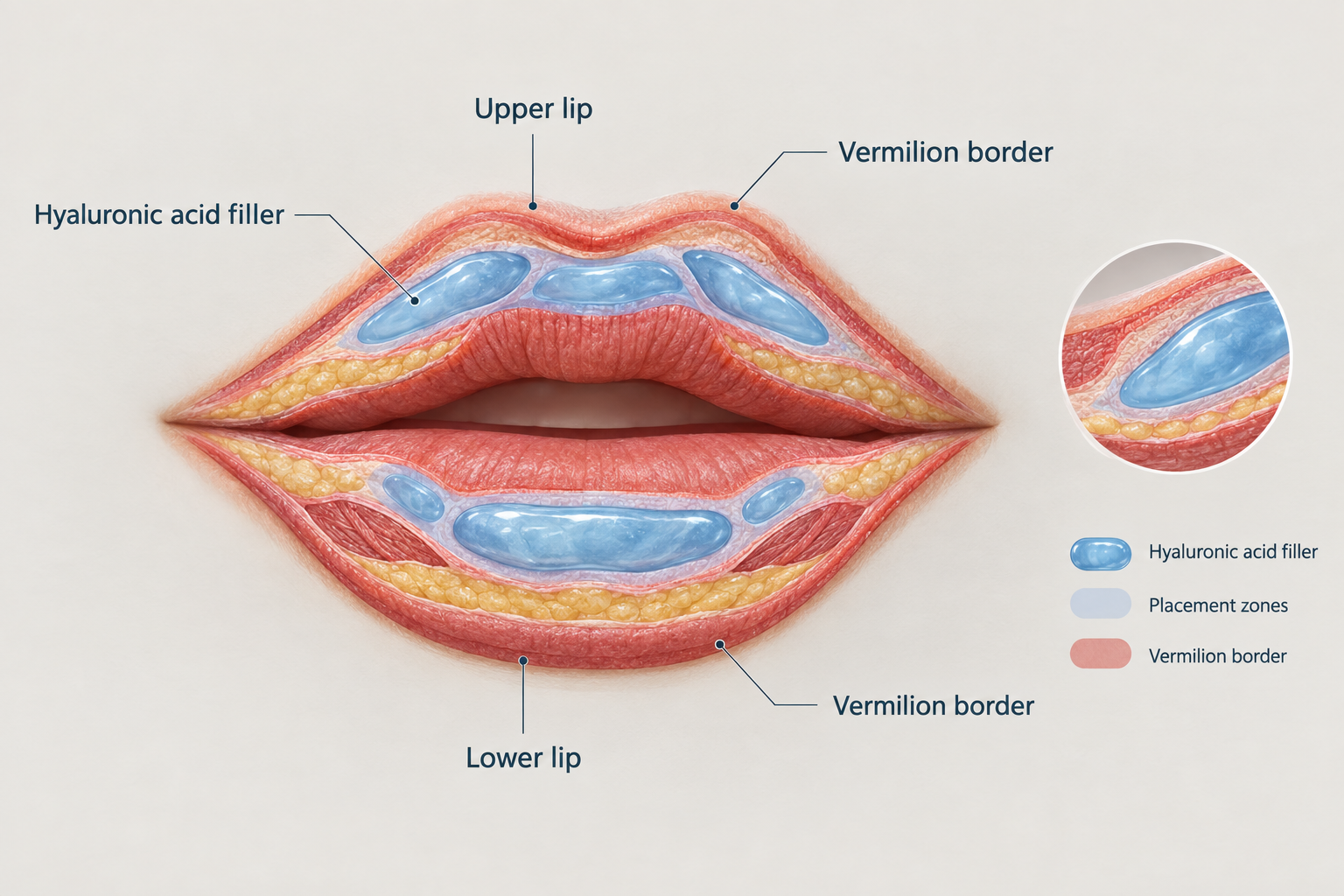

One millilitre of lip filler is the standard starting amount offered at most aesthetic clinics, yet patients frequently arrive at consultations unsure what that volume actually means for their lips. Whether 1ml will look subtle or noticeable depends on your natural lip anatomy, the product used, the injection technique, and your individual goals — and understanding these factors before your appointment helps set realistic expectations.
Key Takeaways
- 1ml of hyaluronic acid filler is the most common starting volume for lip enhancement, but the visible result varies considerably depending on your natural lip size and shape.
- Results from 1ml lip filler typically last between six and twelve months, with individual variation influenced by product choice, metabolism, and lifestyle.
- Common side effects include swelling, bruising, and tenderness; serious complications are rare but possible and require prompt assessment by a qualified practitioner.
- Not everyone is a suitable candidate — a thorough consultation should assess your medical history, anatomy, and goals before treatment proceeds.
- Hyaluronic acid fillers are dissolvable with hyaluronidase, which provides a meaningful safety advantage if results are unsatisfactory or a complication occurs.
What Is 1ml Lip Filler?
Lip filler treatment involves injecting a gel-like substance into and around the lips to add volume, improve definition, or alter their shape. The vast majority of lip fillers used in reputable aesthetic clinics contain hyaluronic acid (HA), a naturally occurring substance found in skin and connective tissue. Hyaluronic acid attracts and retains water molecules, which is what creates the volumising and hydrating effect in the lips.
One millilitre is a standard unit of measurement equivalent to roughly one-fifth of a teaspoon. In practical terms, 1ml of lip filler is a relatively modest volume — enough to create a noticeable but not dramatic change in most patients. It is typically supplied in a single pre-filled syringe and represents the amount most practitioners recommend for a first treatment, particularly for patients who have never had lip filler before.
Popular hyaluronic acid lip filler brands include Juvederm, Restylane, Belotero, and Teosyal, among others. These products differ in their cross-linking technology, gel consistency, and water-binding capacity, which influences how they feel, how they spread within the tissue, and how long they last. The choice of product is a clinical decision made by the practitioner based on your anatomy and the result you are hoping to achieve.
What Results Does 1ml Lip Filler Typically Produce?
The result of 1ml lip filler is not a fixed outcome — it is a starting point that interacts with your existing lip anatomy. For someone with naturally thin or flat lips, 1ml may produce a clearly visible increase in volume and a more defined lip border. For someone who already has fuller lips, the same volume may create a subtler refinement rather than a dramatic size change.
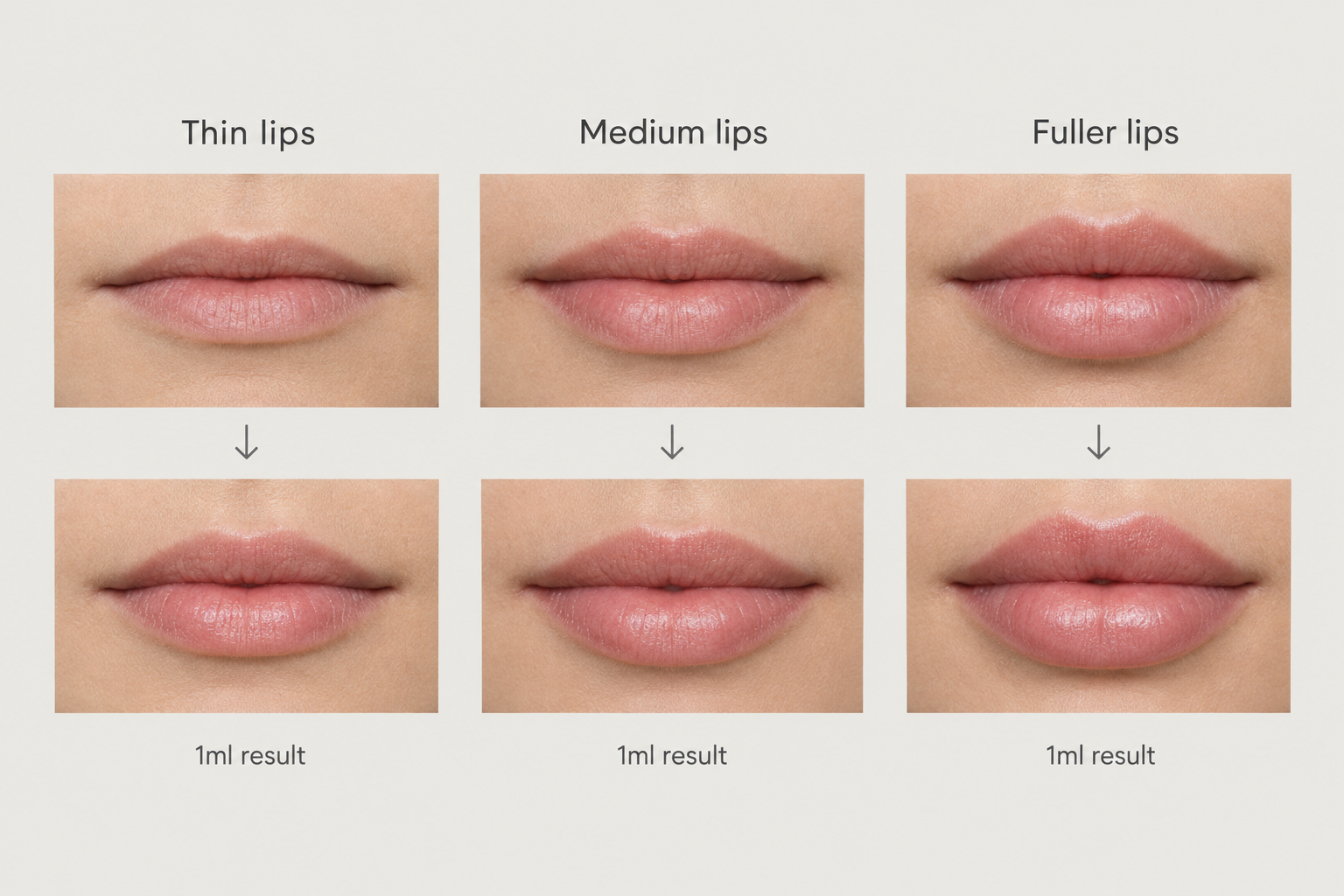
Practitioners commonly use 1ml to achieve one or more of the following: adding volume to the body of the upper or lower lip, defining the cupid's bow, enhancing the vermilion border (the edge that separates the lip from the surrounding skin), reducing the appearance of fine lines around the mouth, or improving lip symmetry. The distribution of the filler across these areas is determined by your individual goals and the practitioner's assessment of your anatomy.
It is worth understanding that 1ml is not always divided equally between the upper and lower lip. Many practitioners apply a greater proportion to the upper lip if it is significantly thinner, or concentrate volume in specific zones to achieve a more balanced appearance. The technique — whether cannula or needle, and the injection depth — also influences the final shape and feel of the result.
Immediately after treatment, the lips will appear more swollen than the final result. This initial swelling can make the outcome look more pronounced than it will be once it settles, typically within one to two weeks. Photographs taken at the two-week mark are generally a more accurate representation of the lasting result than those taken on the day of treatment.
How Does Lip Volume Relate to Facial Proportions?
Aesthetic practitioners assess lip enhancement in the context of the whole face rather than the lips in isolation. Facial proportions, the relationship between the upper and lower lip, the distance between the nose and the upper lip border, and the overall balance with the chin and cheeks all influence what a given volume of filler will look like on a specific person.
A commonly referenced aesthetic guideline suggests that the lower lip should appear slightly fuller than the upper lip, roughly in a ratio of approximately 1:1.6, though this is a general principle rather than a universal rule. Individual preferences and ethnic diversity mean that ideal lip proportions vary considerably between patients, and a skilled practitioner will tailor the treatment to suit your face rather than applying a standardised formula.
For patients with a longer philtrum (the area between the nose and the upper lip), adding volume to the upper lip border can create the appearance of a slightly shorter, more youthful distance. For patients with asymmetry between the left and right sides of the lips, 1ml can be distributed unevenly to improve balance. These nuances are part of why a thorough consultation matters before any filler is placed.
Is 1ml Enough, or Will You Need More?
Whether 1ml is sufficient depends entirely on your starting point and your goals. For patients with naturally thin lips seeking a modest, natural-looking enhancement, 1ml is often adequate and may even be more than enough. For patients with very thin lips who want a more significant change, or for those who have had previous filler that has partially dissolved, 1ml may produce a subtler result than expected.
Some practitioners recommend starting with 0.5ml for first-time patients who are uncertain about how much change they want, allowing them to assess the result before committing to a full millilitre. Others prefer to use 1ml as a standard starting volume and adjust at a follow-up appointment if needed. There is no universally correct approach — the right amount is the one that achieves your goals safely and proportionately.
It is important to be cautious about repeatedly increasing filler volume over time without allowing previous filler to fully dissolve. Accumulation of hyaluronic acid filler across multiple treatments can lead to an overfilled appearance, migration of product beyond the lip border, or a heavy, unnatural look. A responsible practitioner will assess the amount of residual filler present before adding more.
How Long Does 1ml Lip Filler Last?
Hyaluronic acid lip filler is gradually broken down by the body's natural enzymes over time. For most patients, 1ml of lip filler in the lips lasts approximately six to twelve months, though this range varies depending on several factors.
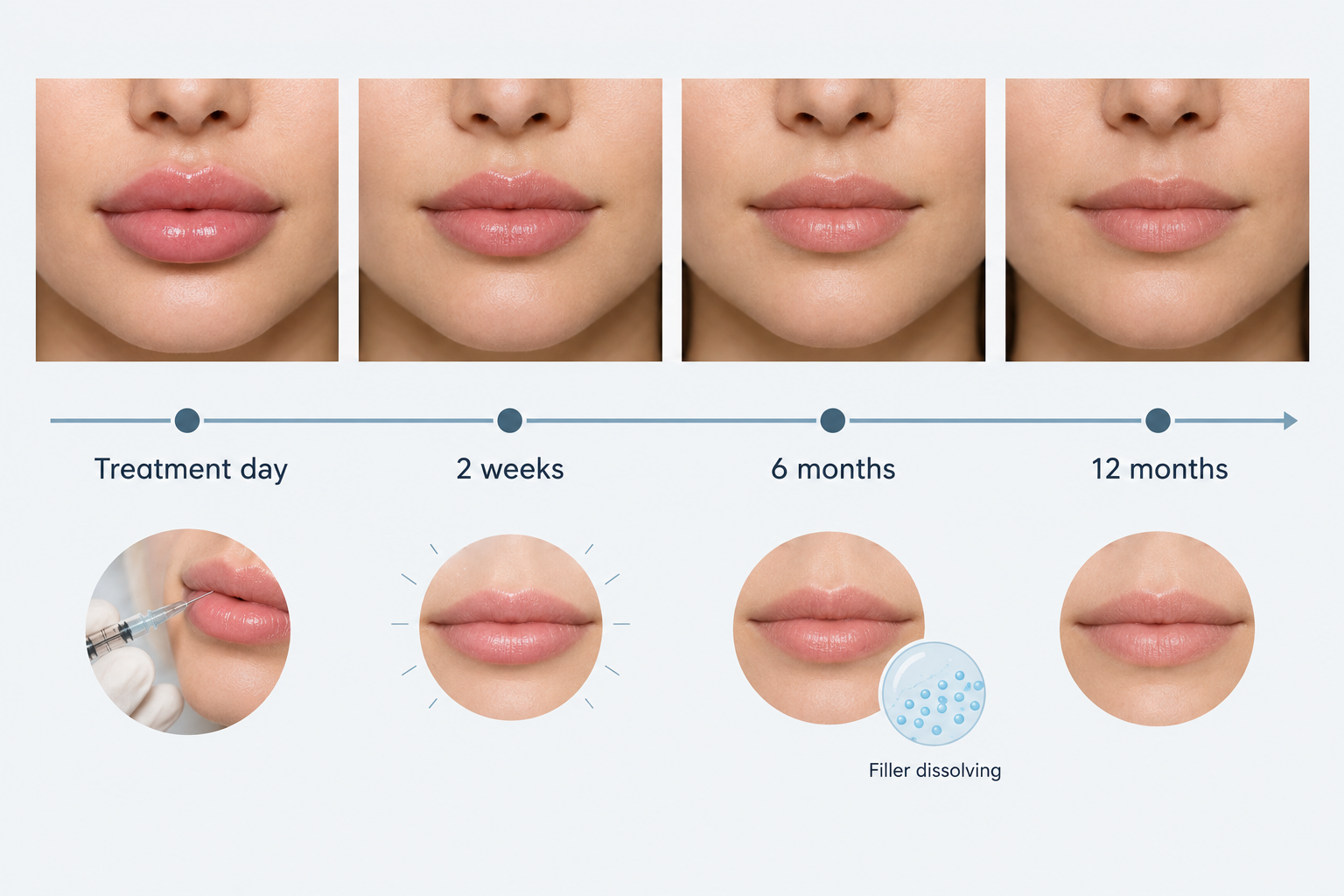
The lips are a high-movement area — they are used constantly for speaking, eating, and facial expression — which means filler in this location tends to break down more quickly than filler placed in lower-movement areas such as the cheeks or tear troughs. Metabolic rate, lifestyle factors such as smoking or significant sun exposure, the specific product used, and the injection technique all influence how long the result persists.
Some patients find their filler lasts closer to six months; others retain visible volume for up to a year or slightly beyond. Denser, more cross-linked hyaluronic acid products may last longer in some patients, though they may also feel firmer. Your practitioner can advise on which product characteristics may be most appropriate for your anatomy and goals.
Maintenance treatments are typically needed every six to twelve months to sustain the result. Some patients choose to allow the filler to fully dissolve between treatments rather than topping up continuously, which can help prevent gradual volume accumulation.
What Happens During a Lip Filler Appointment?
A lip filler appointment at a reputable clinic begins with a consultation, which may be a separate appointment or take place immediately before treatment. During this stage, the practitioner should review your medical history, discuss your goals, assess your lip anatomy, and explain what 1ml of filler is likely to achieve for your specific lips. This is also the appropriate time to ask questions and raise any concerns.
Before the injections begin, a topical anaesthetic cream is usually applied to the lips and surrounding area and left for approximately fifteen to twenty minutes to reduce discomfort. Many hyaluronic acid lip fillers also contain lidocaine, a local anaesthetic, within the gel itself, which further reduces discomfort during injection.
The injections are administered using either a fine needle or a blunt-tipped cannula, depending on the practitioner's technique and the areas being treated. The entire injection process typically takes between fifteen and thirty minutes. Patients generally describe the sensation as a mild stinging or pressure rather than sharp pain, though individual pain tolerance varies.
After the injections, the practitioner will usually massage the lips gently to distribute the product evenly and assess the symmetry of the result. You will be given aftercare instructions before leaving the clinic.
Recovery and Downtime After Lip Filler
Lip filler does not require significant downtime, but the recovery period in the first few days should be factored into your planning. Swelling is the most common and expected response after lip filler treatment and is typically most pronounced in the first twenty-four to forty-eight hours. The lips may appear considerably fuller than the intended final result during this period, which can be alarming if you are not prepared for it.
Bruising is also common, particularly around the injection sites, and may take several days to resolve. Tenderness and sensitivity in the lips are normal in the first day or two. Applying a cold compress gently to the area can help reduce swelling, and most patients find that over-the-counter pain relief is sufficient if needed.
Standard aftercare advice typically includes avoiding strenuous exercise for twenty-four to forty-eight hours, avoiding alcohol for at least twenty-four hours, not applying pressure to the lips (such as sleeping face-down), avoiding extreme heat such as saunas or steam rooms for a few days, and refraining from wearing lip makeup for the first twenty-four hours. Your practitioner will provide specific guidance based on the product used and your individual treatment.
Most patients feel comfortable returning to work and social activities within a day or two, though visible bruising or swelling may persist for up to a week or ten days in some cases. Planning your treatment at least two weeks before a significant event is generally advisable.
Risks and Side Effects of Lip Filler
Lip filler treatment carries a range of possible side effects and risks that every patient should understand before proceeding. The majority of side effects are mild and temporary, but more serious complications, while uncommon, can occur and require prompt medical attention.
Common and Expected Side Effects
- Swelling: Expected after treatment and usually resolves within one to two weeks.
- Bruising: Common at injection sites; typically fades within five to ten days.
- Tenderness: The lips may feel sensitive for a few days after treatment.
- Redness: Mild redness around injection points is normal and usually short-lived.
- Asymmetry: Minor asymmetry immediately after treatment often resolves as swelling subsides; persistent asymmetry should be reviewed at a follow-up appointment.
Less Common but Possible Complications
- Lumps or nodules: Small lumps can form if filler is not distributed evenly; these may resolve on their own or require massage or dissolution with hyaluronidase.
- Infection: Any injectable procedure carries a small risk of infection; signs include increasing redness, warmth, pain, or discharge and require prompt assessment.
- Cold sore reactivation: Patients with a history of cold sores (herpes simplex) may experience a flare-up after lip filler; antiviral prophylaxis may be recommended before treatment.
- Allergic reaction: Rare with hyaluronic acid fillers but possible; symptoms may include significant swelling, itching, or rash.
- Tyndall effect: A bluish discolouration that can occur if filler is placed too superficially; more commonly associated with tear trough treatment but possible in the lips.
- Vascular occlusion: A rare but serious complication in which filler inadvertently enters or compresses a blood vessel, potentially restricting blood flow to surrounding tissue. This requires immediate treatment and is a medical emergency. Choosing a qualified, experienced practitioner significantly reduces this risk.
- Tissue necrosis: In very rare cases, vascular occlusion can lead to tissue damage if not treated promptly.
The risk profile of lip filler is meaningfully influenced by practitioner skill, product choice, and injection technique. Seeking treatment from a qualified medical professional with specific training in facial anatomy and injectable treatments is one of the most important steps you can take to reduce the likelihood of complications.
Who May Be Suitable for 1ml Lip Filler?
Lip filler with hyaluronic acid may be appropriate for adults who want to add volume, improve definition, or address asymmetry in the lips, and who have realistic expectations about what 1ml can achieve. Suitable candidates are generally in good overall health, are not pregnant or breastfeeding, and do not have active infection or inflammation in or around the treatment area.
Patients who have a history of cold sores should inform their practitioner, as antiviral medication may be recommended before treatment. Those taking blood-thinning medications such as aspirin, warfarin, or certain supplements may have an increased risk of bruising and should discuss this with their practitioner and, where appropriate, their prescribing doctor before proceeding.
Lip filler is not recommended for patients with certain autoimmune conditions, those with known hypersensitivity to hyaluronic acid or lidocaine, or those with active skin conditions such as cold sores, acne, or infection in the treatment area at the time of the appointment. A thorough medical history review at consultation is essential to identify any factors that may affect suitability or require additional precautions.
Alternatives to 1ml Lip Filler
Hyaluronic acid lip filler is not the only option for patients interested in lip enhancement or improvement. Understanding the alternatives helps you make a more informed decision about which approach may best suit your goals.
Lip flip with botulinum toxin: A small amount of botulinum toxin injected into the orbicularis oris muscle around the upper lip can cause the lip to relax and roll slightly outward, creating the appearance of a fuller upper lip without adding volume. The lip flip does not add physical volume and produces a subtler result than filler; it may suit patients who want a minor change or who are not ready for filler. Results typically last two to three months.
Lip blushing (cosmetic tattooing): A semi-permanent cosmetic tattooing technique that adds colour and definition to the lips without injecting volume. Lip blushing can improve the appearance of the lip border and create the illusion of fuller lips through pigment, but it does not address volume loss or structural changes.
Polynucleotide injections: Polynucleotides (PDRN) are increasingly used in aesthetic medicine to improve skin quality and hydration. Some practitioners use them in the perioral area to improve skin texture and fine lines around the mouth, though they do not add volume in the same way as hyaluronic acid filler.
Surgical lip augmentation: Surgical options such as lip implants or a lip lift procedure offer more permanent results but carry greater risks, longer recovery, and higher cost. These are typically considered when non-surgical options have not achieved the desired outcome or when a patient is seeking a lasting structural change.
Each alternative has its own mechanism, evidence base, limitations, and risk profile. A qualified practitioner can help you assess which option is most appropriate for your anatomy and goals.
Questions to Ask Before Your Lip Filler Appointment
- What qualifications and training do you have in facial anatomy and injectable treatments?
- Which hyaluronic acid product do you recommend for my lips, and why?
- How much filler do you think is appropriate for my goals, and what result can I realistically expect?
- What is your approach if I am unhappy with the result or experience a complication?
- Do you have hyaluronidase available on-site in case dissolution is needed?
- What aftercare will I need to follow, and when should I contact you if I have concerns?
- How much residual filler do I have from previous treatments, and does this affect how much new filler is appropriate?
Frequently Asked Questions
Will 1ml of lip filler look natural?
For most patients with naturally thin or moderately sized lips, 1ml of hyaluronic acid filler can produce a natural-looking result when placed by an experienced practitioner using appropriate technique. The outcome depends on your starting anatomy, the product used, and how the volume is distributed. Patients with already full lips may find that 1ml creates a more noticeable change than they intended, which is why a thorough consultation and conservative approach are important.
How painful is lip filler?
Most patients describe lip filler as uncomfortable rather than severely painful. Topical anaesthetic cream applied before treatment and lidocaine within the filler itself significantly reduce discomfort during the procedure. Individual pain tolerance varies, and the lips are a sensitive area, but the injection process is generally brief and well-tolerated by most patients.
Can lip filler be dissolved if I don't like the result?
Yes. Hyaluronic acid lip filler can be dissolved using an enzyme called hyaluronidase, which breaks down the hyaluronic acid gel. Dissolution is not instantaneous and may require more than one treatment session, but it provides a meaningful safety net if you are unhappy with the result or if a complication such as a lump or vascular concern arises. This is one of the key advantages of hyaluronic acid over non-dissolvable filler materials.
How soon will I see the final result?
The final result of 1ml lip filler is generally visible once the initial swelling has fully resolved, which typically takes one to two weeks. Results assessed at the two-week mark are a more accurate reflection of the lasting outcome than those seen immediately after treatment, when swelling can make the lips appear considerably larger than intended.
Can I have more than 1ml at my first appointment?
Some practitioners will place more than 1ml at a first appointment if the patient's anatomy and goals clearly support it, but many prefer to start conservatively and review the result before adding more volume. Starting with 1ml and assessing the outcome at a follow-up appointment reduces the risk of overfilling and allows you to make an informed decision about whether additional volume is needed.
Does lip filler affect how the lips feel?
Immediately after treatment, the lips may feel firm, tender, or slightly numb. As swelling resolves over the following one to two weeks, the lips generally return to a more natural feel. Well-placed hyaluronic acid filler in an appropriate volume should feel soft and natural to the touch. Overfilling or superficial placement can result in a firmer or less natural texture.
Making an Informed Decision About Lip Filler
One millilitre of lip filler is a reasonable starting point for most patients seeking lip enhancement, but it is not a one-size-fits-all solution. The result you can expect from 1ml depends on your natural lip anatomy, the product selected, the practitioner's technique, and your individual goals — all of which should be discussed in detail at a consultation before any treatment takes place.
Hyaluronic acid lip filler offers the advantage of being temporary and dissolvable, which provides flexibility if your preferences change or if the result is not what you hoped for. However, like all injectable treatments, it carries real risks that should be understood and weighed against the potential benefits. Choosing a qualified, experienced practitioner who can assess your suitability, explain realistic outcomes, and manage complications if they arise is the most important factor in achieving a safe and satisfying result.
If you are considering lip filler for the first time, a consultation with a qualified aesthetic practitioner is the appropriate next step. A good consultation should give you a clear picture of what 1ml is likely to achieve for your specific lips, which product may be most suitable, and what the treatment, recovery, and maintenance process will involve.
