

Anti-wrinkle injections are one of the most widely performed non-surgical cosmetic treatments in the UK, used to soften expression lines and restore a more rested appearance without surgery or significant downtime. Whether you are considering treatment for the first time or want a clearer picture of what the procedure actually involves, this guide covers the mechanism, treatment areas, realistic results, risks, and what to look for when choosing a provider.
Key Takeaways
- Anti-wrinkle injections use botulinum toxin type A, a purified protein that temporarily relaxes targeted facial muscles to reduce the appearance of dynamic wrinkles.
- Results typically become visible within 3–14 days and last approximately 3–6 months, after which repeat treatment is needed to maintain the effect.
- In the UK, botulinum toxin is a prescription-only medicine; treatment must be prescribed and administered by a licensed practitioner following a face-to-face consultation.
- Common treatment areas include forehead lines, frown lines, and crow's feet; therapeutic uses include hyperhidrosis, bruxism, and chronic migraine.
- Side effects are usually mild and temporary, but choosing a qualified, regulated provider significantly reduces the risk of complications.
What Are Anti-Wrinkle Injections?
Anti-wrinkle injections — also called wrinkle-relaxing injections or neuromodulator treatments — deliver a small, precisely measured amount of botulinum toxin type A into specific facial muscles. Botulinum toxin is a purified protein derived from Clostridium botulinum bacteria. In the highly diluted, controlled doses used in aesthetic medicine, it temporarily reduces muscle activity rather than causing any systemic effect. The result is a softening of lines and wrinkles that form through repeated facial movement, without altering the underlying structure of the face.
Several brands of botulinum toxin type A are licensed for use in the UK, including Botox®, Azzalure®, Bocouture®, Alluzience®, Letybo®, and Nuceiva®. Each formulation has slightly different characteristics in terms of onset speed, diffusion, and duration, though all work through the same fundamental mechanism. Botox® remains the most widely recognised brand name and is often used colloquially to describe the treatment category as a whole, though it refers to one specific licensed product (onabotulinumtoxinA).
How Do Anti-Wrinkle Injections Work?
The mechanism centres on the neuromuscular junction — the point where a nerve communicates with a muscle. Under normal circumstances, nerve signals trigger the release of a chemical messenger called acetylcholine, which causes the muscle to contract. Botulinum toxin type A blocks this process by preventing acetylcholine from being released at the neuromuscular junction. Without the signal, the targeted muscle relaxes, and the overlying skin smooths out.
This effect is temporary. Over a period of months, the nerve endings gradually regenerate new pathways, acetylcholine release resumes, and muscle activity returns. This is why results are not permanent and why maintenance treatments are needed to sustain the effect. The temporary and reversible nature of the treatment is considered one of its key safety advantages.
Dynamic Wrinkles vs. Static Wrinkles
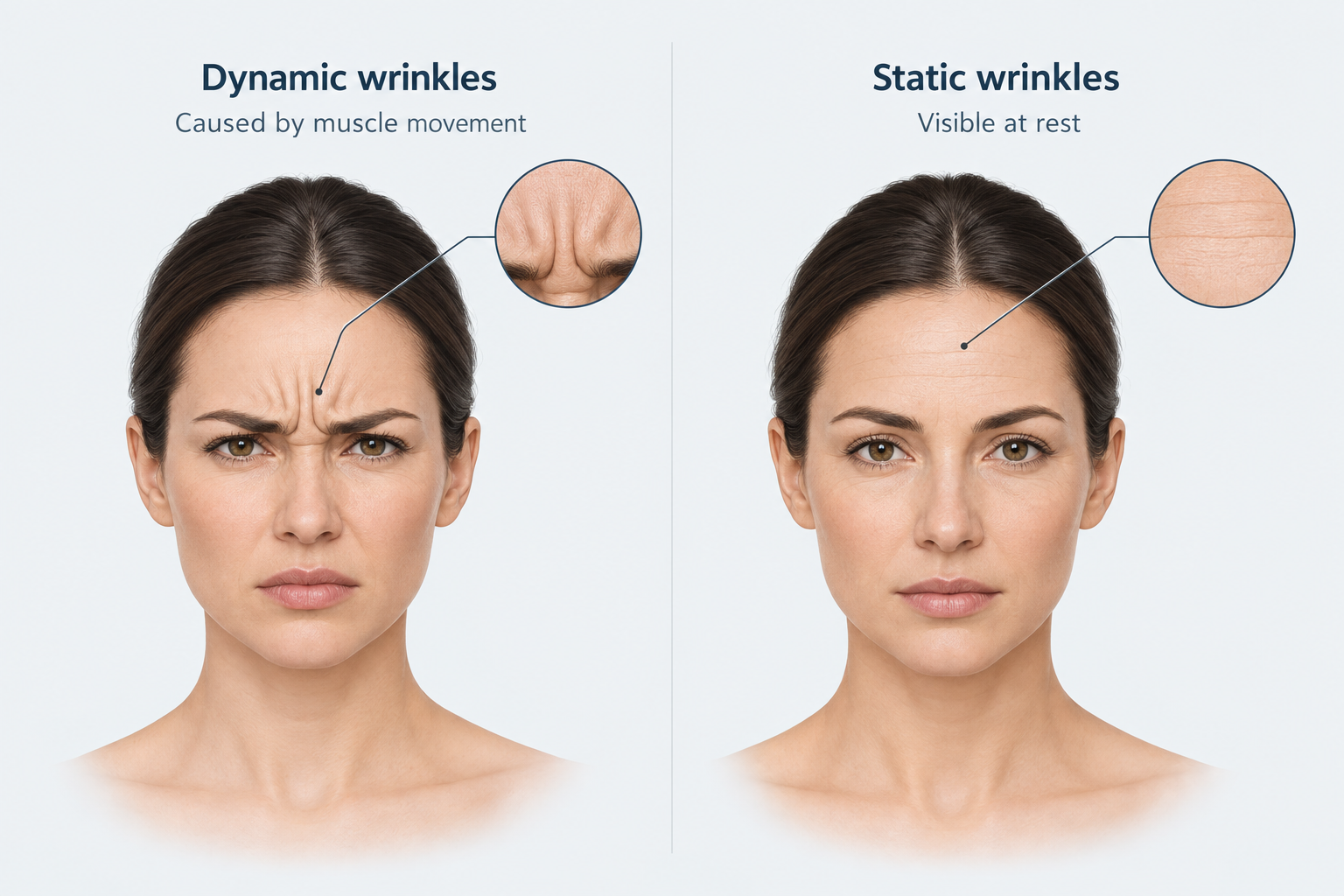
Dynamic wrinkles form as a direct result of repeated muscle contraction — smiling, squinting, frowning, and raising the eyebrows all create creases in the overlying skin over time. Anti-wrinkle injections are most effective for dynamic wrinkles because relaxing the muscle reduces the movement that causes them. Static wrinkles, by contrast, are visible even when the face is at rest and are caused by volume loss, reduced collagen and elastin, and cumulative sun damage. Botulinum toxin has limited effect on static wrinkles; dermal fillers or skin resurfacing treatments are generally more appropriate for these concerns. Many patients have a combination of both types, and a thorough assessment by a qualified practitioner will help determine which approach — or combination of approaches — is most suitable.
Treatment Areas
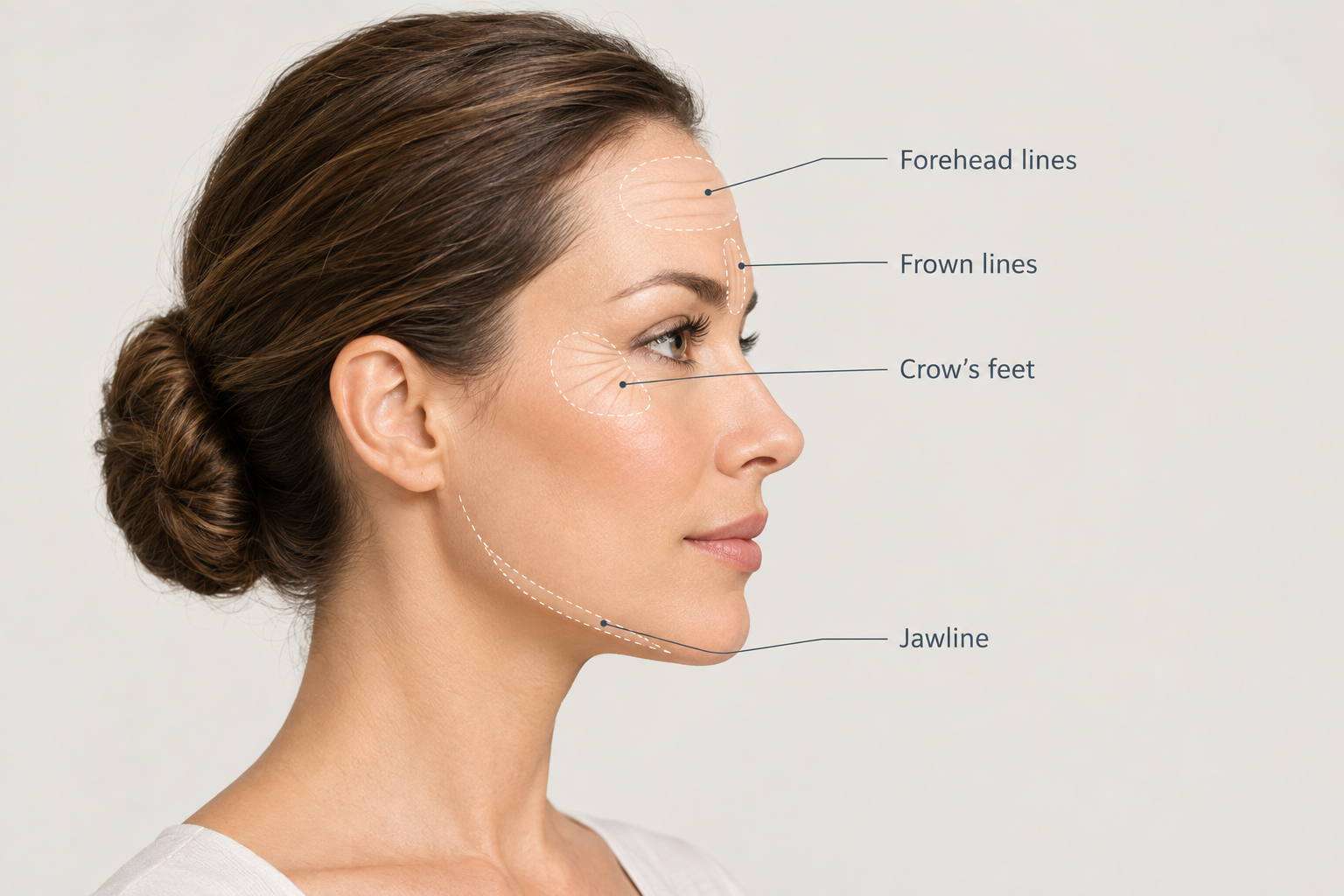
Anti-wrinkle injections can address a range of cosmetic concerns across the face and neck, as well as several medical conditions. The most commonly treated cosmetic areas are the upper face, where dynamic wrinkles tend to develop earliest and most visibly.
Common Cosmetic Treatment Areas
- Forehead lines — horizontal creases caused by contraction of the frontalis muscle when raising the eyebrows
- Frown lines (glabellar lines) — vertical lines between the brows produced by the corrugator and procerus muscles
- Crow's feet (canthal lines) — fine lines radiating from the outer corners of the eyes, caused by the orbicularis oculi muscle during smiling and squinting
- Bunny lines — diagonal creases across the bridge of the nose
- Brow lift — subtle elevation of the brow arch by adjusting the balance between muscles that lift and depress the brow
- Lip lines and lip flip — softening of fine lines around the mouth and slight eversion of the upper lip border
- Gummy smile — reducing the elevation of the upper lip to show less gum when smiling
- Chin dimpling (pebble chin) — smoothing irregular texture caused by the mentalis muscle
- Downturned mouth corners — relaxing the depressor anguli oris muscle to lift the corners of the mouth
- Neck bands (platysmal bands) — softening vertical cords in the neck caused by the platysma muscle
- Jawline slimming (masseter reduction) — reducing the bulk of the masseter muscle to slim the lower face
Medical and Therapeutic Uses
Botulinum toxin has well-established therapeutic applications beyond cosmetic use. Hyperhidrosis (excessive sweating) of the underarms, palms, or feet responds well to injections that block the nerve signals responsible for sweat gland activation. Treatment for chronic migraine using botulinum toxin is approved and widely used in neurology. Bruxism (teeth grinding) and temporomandibular joint (TMJ) discomfort can be managed with masseter injections, which reduce the force of jaw clenching. Other established medical uses include cervical dystonia, blepharospasm, overactive bladder, and certain types of muscle spasticity. Medical uses are typically managed by specialist clinicians and may be available through the NHS for qualifying conditions.
UK Brands: What You Should Know
Only botulinum toxin products that are licensed by the Medicines and Healthcare products Regulatory Agency (MHRA) should be used in the UK. The six currently MHRA-approved brands for aesthetic and therapeutic use are Botox®, Azzalure®, Bocouture®, Alluzience®, Letybo®, and Nuceiva®. Each has a specific licensed indication, and practitioners should only use products within their licensed parameters.
Unlicensed products — including Botulax, reNTox, and Innotox — are not approved for use in the UK and have been the subject of warnings from local authorities and patient safety organisations. These products are sometimes offered at significantly lower prices, which can be a warning sign. Using an unlicensed product carries unknown safety risks, and practitioners who use them may not hold adequate indemnity insurance. If you are unsure whether a clinic is using a licensed product, you are entitled to ask before treatment proceeds.
The UK Regulatory Framework
Botulinum toxin is classified as a prescription-only medicine in the UK, meaning it cannot legally be administered without a valid prescription from a qualified prescriber. Since 2021, the Botulinum Toxin and Cosmetic Fillers (Children) Act has prohibited the administration of these treatments to anyone under 18 for cosmetic purposes. Regulatory requirements have continued to tighten: from 2025, updated guidance from the Nursing and Midwifery Council (NMC) reinforces the requirement for a face-to-face consultation with a prescriber before treatment can be provided. This means that online-only consultations followed by a nurse or therapist administering the product without a prescriber present are not compliant with current professional standards.
In practice, this means you should expect to have a proper in-person assessment before any treatment is carried out. Practitioners registered with the GMC, GDC, NMC, or GPhC are subject to professional regulation and can be held accountable through their respective bodies. Organisations such as Save Face maintain accredited registers of practitioners who meet defined safety and training standards, and checking these registers before booking is a practical step any patient can take.
Who May Be Suitable for Anti-Wrinkle Injections?
Anti-wrinkle injections may be appropriate for adults who have noticeable dynamic wrinkles they would like to soften, or who are seeking a preventative treatment to slow the deepening of expression lines before they become static. There is growing interest in lower-dose approaches — sometimes called baby Botox — among younger adults in their mid-to-late twenties who wish to maintain a smoother baseline without significantly altering their natural movement. These approaches use smaller amounts of product to preserve most facial expression while reducing the repetitive creasing that leads to deeper lines over time.
Men can also benefit from anti-wrinkle injections, though male facial anatomy typically involves stronger, larger muscles — particularly in the forehead and jaw — which may require different dosing considerations. Aesthetic goals also differ; many male patients prefer a result that looks refreshed rather than visibly treated. A practitioner experienced in treating male patients will take these factors into account during assessment.
Who May Not Be Suitable
Certain factors may make anti-wrinkle injections unsuitable or require careful evaluation. These include:
- Pregnancy or breastfeeding
- Known allergy to botulinum toxin or any component of the formulation (including human albumin)
- Neuromuscular conditions such as myasthenia gravis or Lambert-Eaton syndrome, which affect how nerves and muscles communicate
- Active skin infection or inflammation at the planned injection site
- Certain medications, including blood thinners, that may increase bruising risk
- Unrealistic expectations about the degree of change achievable
A thorough medical history taken during the face-to-face consultation will identify any contraindications. It is important to disclose all medications, supplements, and relevant health conditions to your practitioner before treatment.
What Happens During Treatment?
A typical anti-wrinkle injection appointment follows a structured process. At the consultation, the practitioner assesses your facial anatomy, discusses your concerns and goals, reviews your medical history, and explains what the treatment can and cannot achieve. This is also the appropriate time to ask questions about the product being used, the practitioner's qualifications, and what to do if you experience any concerns after treatment.
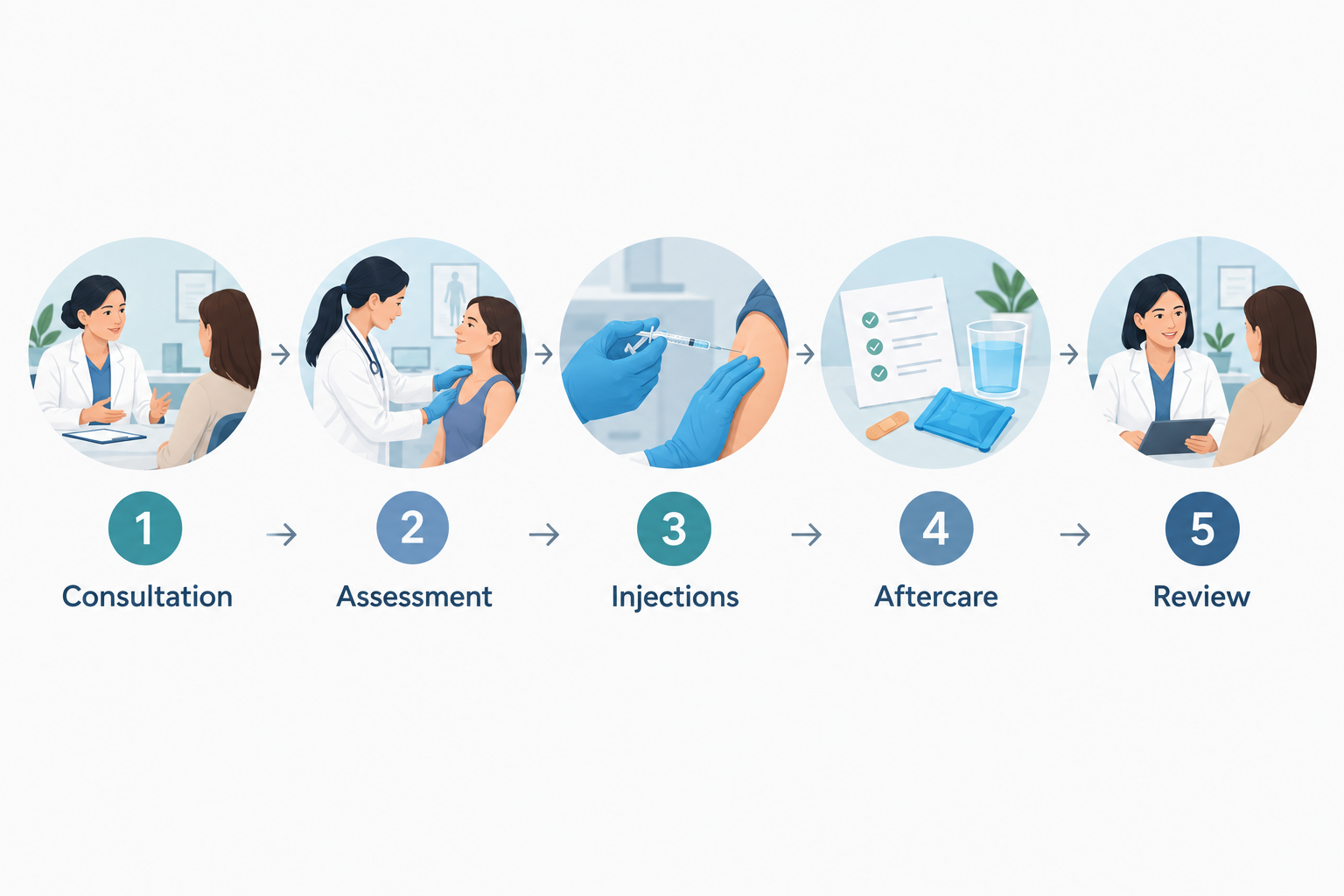
The injections themselves are administered using a very fine needle. Most patients describe the sensation as a brief, mild sting at each injection point. A topical anaesthetic cream is not usually necessary, though it can be applied beforehand if preferred. The procedure typically takes between 15 and 30 minutes depending on the number of areas being treated. There is no requirement for sedation or recovery time in a clinical setting.
After treatment, the practitioner should provide clear aftercare advice. Standard guidance includes avoiding touching or rubbing the treated areas, refraining from strenuous exercise for 24 hours, avoiding lying flat for several hours after treatment, and postponing facial massage or heat treatments such as saunas for at least 48 hours. A follow-up review appointment at around two weeks allows the practitioner to assess the result and address any asymmetry if needed.
Onset and Duration of Results
The onset and duration of anti-wrinkle injections vary between individuals and between products. Most patients begin to notice a reduction in muscle movement within 3–5 days of treatment, with the full effect typically visible by 10–14 days. Results generally last between 3 and 6 months, after which muscle activity gradually returns and the lines reappear. Some newer formulations, such as Daxxify® (not currently licensed in the UK), have demonstrated longer duration in clinical trials, though this product is not yet available through UK-licensed channels.
With repeated treatments over time, some patients find that their results last slightly longer, possibly because the muscles become conditioned to reduced activity. However, this varies considerably between individuals and should not be assumed. If you decide to stop having treatments, the muscles will gradually return to their pre-treatment level of activity; wrinkles do not worsen beyond what they would have been without any treatment at all.
Risks and Side Effects
Anti-wrinkle injections have a well-established safety profile when administered by a trained and qualified practitioner using licensed products. Side effects are usually mild and resolve without intervention.
Common Side Effects
- Redness, swelling, or tenderness at injection sites — typically resolves within a few hours
- Bruising — may last several days and is more likely in patients taking blood-thinning medications
- Mild headache — usually short-lived
- Temporary tightness or a feeling of heaviness in the treated area
Less Common Side Effects
- Asymmetry — uneven results that may require a review appointment
- Eyelid ptosis (drooping of the upper eyelid) — occurs when product migrates to the levator palpebrae muscle; this is temporary and resolves as the product wears off, but it can be distressing. It is more likely with inexperienced technique or failure to follow aftercare instructions such as avoiding rubbing the area.
- Brow drooping — a similar migration effect affecting the brow position
- Flu-like symptoms in the days following treatment
Rare but Serious Risks
- Allergic reaction — rare but possible; seek immediate medical attention if you experience difficulty breathing, significant swelling, or rash
- Difficulty swallowing or speaking — extremely rare at cosmetic doses but documented in cases of product spread
- Vision changes — seek urgent assessment if these occur
The risk of serious complications is substantially reduced by choosing a practitioner who uses MHRA-approved products, performs a thorough pre-treatment assessment, and provides clear aftercare guidance and access to follow-up care.
Red Flags When Choosing a Provider
The quality and safety of anti-wrinkle injection treatment depends heavily on the practitioner. The following are practical warning signs that a provider may not meet appropriate standards:
- No face-to-face consultation required before treatment
- No prescriber involved in the process
- Prices significantly below the typical market range (UK: approximately £150–£350 per area) without clear explanation
- Inability or unwillingness to confirm which product is being used
- No clear aftercare instructions or follow-up process
- No verifiable registration with a professional regulatory body (GMC, GDC, NMC, or GPhC)
- Pressure to book immediately or purchase multiple sessions upfront
Checking a practitioner's registration on the relevant regulatory body's public register takes only a few minutes and provides meaningful reassurance. Save Face accreditation is an additional quality marker specific to the aesthetics sector.
How Anti-Wrinkle Injections Compare to Other Treatments
Anti-wrinkle injections address dynamic wrinkles caused by muscle movement, but they are not the only option for facial rejuvenation, and they are not always the most appropriate one. Dermal fillers use hyaluronic acid or other substances to restore volume, define contours, and address static wrinkles or hollowing — concerns that botulinum toxin cannot effectively treat. Many patients benefit from a combination of both approaches: wrinkle-relaxing injections to soften expression lines and fillers to restore lost volume or improve facial proportions.
Skin quality concerns such as texture, pigmentation, and laxity may be better addressed through treatments such as polynucleotides, skin boosters, chemical peels, or laser resurfacing. A practitioner who offers a range of treatments and takes a holistic approach to facial assessment is better placed to recommend the most appropriate option — or combination — for your individual concerns rather than defaulting to a single treatment type.
Frequently Asked Questions
Will anti-wrinkle injections make me look frozen or expressionless?
When administered correctly by an experienced practitioner, anti-wrinkle injections should produce natural-looking results that soften lines without eliminating facial expression. The frozen appearance associated with over-treatment is a result of excessive product or poor technique, not an inevitable outcome of the treatment itself. Discussing your preference for a subtle result during the consultation helps the practitioner calibrate the approach accordingly.
Do anti-wrinkle injections hurt?
Most patients describe the sensation as a brief, mild sting at each injection point, similar to a small scratch. The needles used are very fine, and the procedure is generally well tolerated without anaesthetic. If you are particularly sensitive, a topical numbing cream can be applied beforehand.
How much do anti-wrinkle injections cost in the UK?
Pricing in the UK is typically structured per area, with costs ranging from approximately £150 to £350 per area depending on the clinic, practitioner, and location. Some clinics offer multi-area packages at a reduced combined rate. Be cautious of prices significantly below this range, as they may indicate the use of unlicensed products or undertrained practitioners.
What happens if I stop having treatments?
If you choose to stop having anti-wrinkle injections, the treated muscles will gradually return to their normal level of activity over the months following your last treatment. Your wrinkles will return to approximately where they would have been without any treatment — they do not worsen as a result of having had injections. Some patients find that lines are slightly less deep after a period of regular treatment, possibly because reduced muscle movement has slowed the deepening process.
Can anti-wrinkle injections be used for medical conditions?
Yes. Botulinum toxin has well-established medical applications including treatment of hyperhidrosis (excessive sweating), chronic migraine, bruxism (teeth grinding), cervical dystonia, and blepharospasm, among others. Some of these indications are available through the NHS for eligible patients; others are offered privately. Medical uses are managed by appropriately trained clinicians and involve different assessment and dosing considerations compared to cosmetic treatment.
Is there any downtime after anti-wrinkle injections?
There is no significant downtime. Most patients return to normal daily activities immediately after treatment. Minor redness or swelling at injection sites typically resolves within a few hours. Bruising, if it occurs, may take several days to fade. Strenuous exercise, alcohol, and heat exposure are generally advised against for the first 24–48 hours.
Making an Informed Decision About Anti-Wrinkle Injections
Anti-wrinkle injections are a well-established, minimally invasive option for reducing the appearance of dynamic wrinkles and expression lines. The treatment has a strong safety record when performed by a qualified prescriber using MHRA-approved products, and results — while temporary — are predictable and reversible. For patients with realistic expectations and appropriate candidacy, the treatment can meaningfully improve the appearance of forehead lines, frown lines, crow's feet, and a range of other concerns, with minimal disruption to daily life.
The most important factor in a safe and satisfying outcome is the choice of practitioner. A thorough face-to-face consultation, transparent communication about the product being used, clear aftercare advice, and access to follow-up care are all markers of a responsible provider. If you are considering treatment, use the regulatory body registers and accredited directories to verify credentials before booking, and do not hesitate to ask questions about qualifications, products, and what to do if you have concerns after treatment. A practitioner who welcomes these questions is one worth trusting.
