
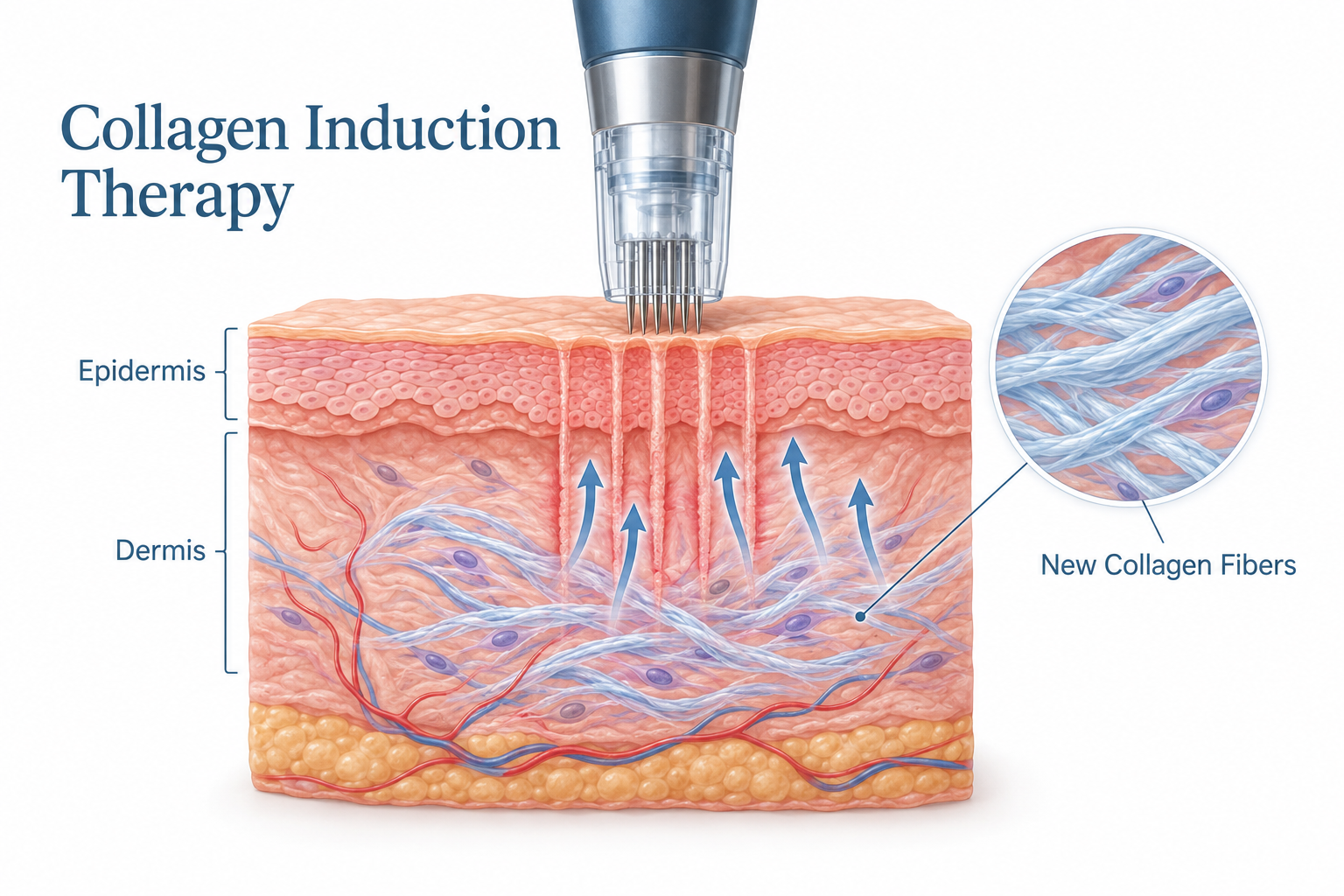

A microneedling facial is one of the most widely studied minimally invasive skin treatments available today, used to address concerns ranging from acne scars and fine lines to uneven skin texture and enlarged pores. Understanding what the procedure actually does — and what it realistically cannot do — helps you decide whether it is worth discussing with a qualified practitioner.
Key Takeaways
- Microneedling works by triggering the skin's natural healing response to stimulate collagen and elastin production, a process known as collagen induction therapy.
- It is considered safe for all skin tones, which distinguishes it from certain laser treatments that carry a higher risk of pigmentation changes in darker skin.
- Most people require a series of three to six sessions spaced four to six weeks apart, followed by maintenance treatments to sustain results.
- Common side effects include temporary redness, swelling, and sensitivity; serious complications are uncommon when the procedure is performed by a trained professional.
- Results vary depending on the concern being treated, skin type, and the number of sessions completed — realistic expectations are essential before starting.
What Is a Microneedling Facial?
A microneedling facial — also called collagen induction therapy or percutaneous collagen induction — uses a pen-shaped device fitted with sterile needle cartridges to create controlled micro-injuries across the surface of the skin. These microscopic punctures are precisely calibrated in depth, typically between 0.5 mm and 2.5 mm depending on the area being treated and the concern being addressed. The physical disruption is intentional: it activates the skin's natural healing response, setting off a biological cascade that ultimately leads to dermal remodeling and the production of new structural proteins.
The procedure is performed in a clinical setting by a trained practitioner, often a board-certified dermatologist or licensed aesthetician working under medical supervision. A topical numbing cream is applied beforehand to minimize discomfort, and the treatment itself typically takes between 20 and 40 minutes depending on the area covered. Microneedling is distinct from at-home dermarollers, which use much shallower needle depths — usually around 0.25 mm — and therefore produce a significantly different biological response with more limited clinical outcomes.
How Microneedling Works: The Healing Cascade
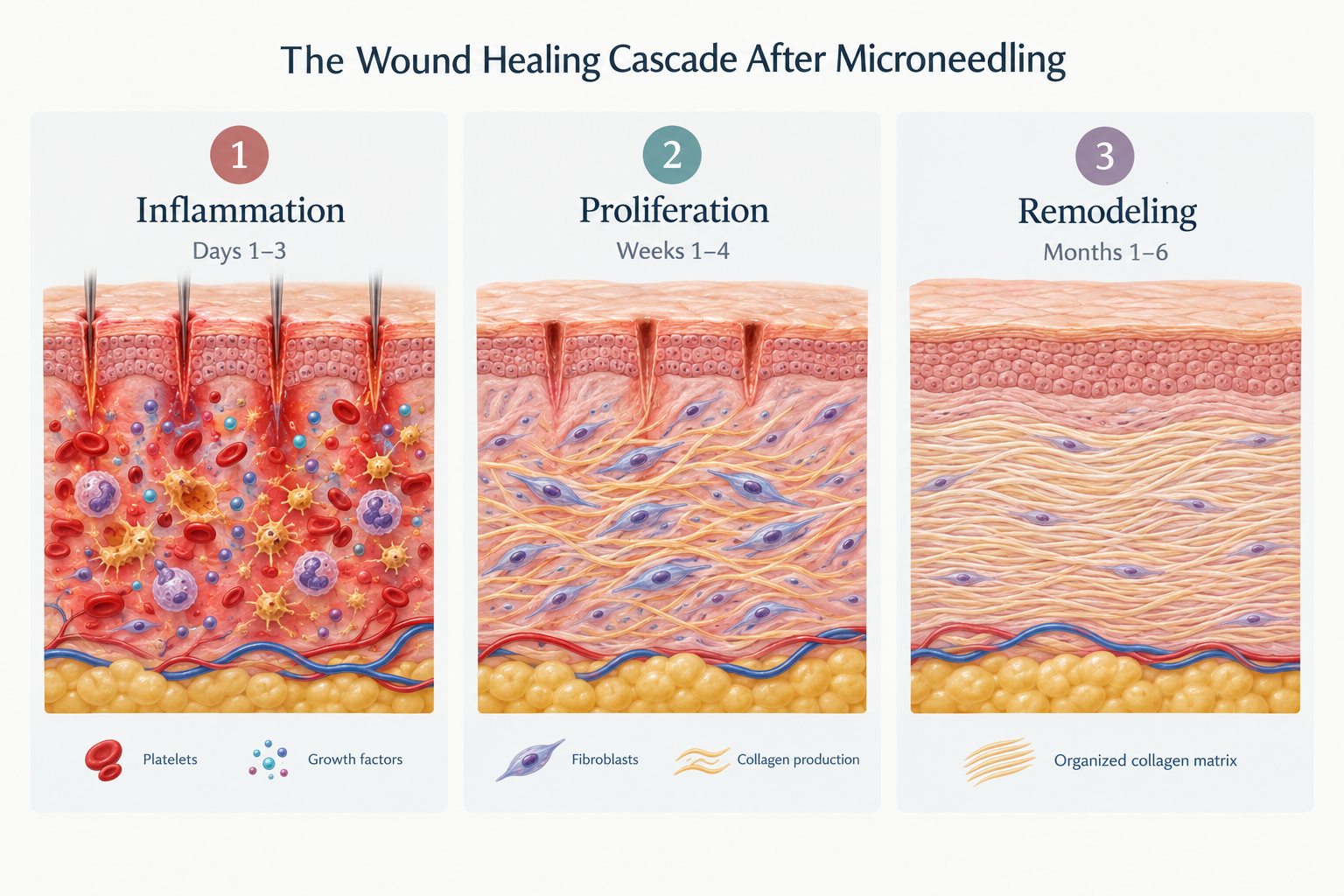
The mechanism behind microneedling is rooted in the body's wound healing biology, which unfolds in three overlapping phases. Understanding these phases helps explain why results take time and why multiple sessions are usually necessary.
Phase 1 — Inflammation: Immediately after the controlled micro-injuries are created, the body responds with an inflammatory reaction. Platelets aggregate at the wound sites and release growth factors and cytokines — signalling proteins that recruit repair cells to the area. This phase typically lasts one to three days and is responsible for the redness and mild swelling seen after treatment.
Phase 2 — Proliferation: Over the following days to weeks, fibroblasts migrate into the treated dermis and begin synthesizing new collagen fibers and elastin fibers. New blood vessels form to support the regenerating tissue. This is the phase during which the foundational structural changes begin to take shape beneath the surface.
Phase 3 — Remodeling: The final and longest phase can continue for three to six months after a single session. During remodeling, the newly deposited collagen matures and reorganizes into a more ordered structure, improving skin firmness, elasticity, and overall quality. This is why the most noticeable improvements from a full treatment series often appear gradually over several months rather than immediately after the last session.
Key Benefits of a Microneedling Facial
- Reduction of Fine Lines and Wrinkles
By stimulating collagen and elastin production in the dermis, microneedling can help soften the appearance of fine lines and wrinkles, particularly around the eyes, mouth, and forehead. The improvement is gradual and reflects the underlying dermal remodeling process rather than a surface-level effect. Results are generally more pronounced for fine lines than for deep static wrinkles, which may require additional or alternative treatments.
- Improvement of Acne Scars
Acne scars — particularly atrophic types such as rolling scars and boxcar scars — are among the most well-supported indications for microneedling. Clinical studies suggest that a full series of treatments may produce meaningful improvement in scar depth and texture, with some research indicating reductions in scar severity of roughly 50 to 75 percent over a complete course. Ice-pick scars, which are narrow and deep, tend to respond less predictably and may require combination approaches such as subcision or ablative laser resurfacing for optimal results.
- Refinement of Skin Texture and Tone
Microneedling promotes cell turnover and encourages the replacement of older, damaged skin cells with healthier ones. Over a series of sessions, many patients notice a smoother surface texture, more even skin tone, and a reduction in rough or dull patches. This benefit is relevant for people dealing with sun damage, age spots, and general skin quality concerns associated with aging or environmental exposure.
- Minimization of Enlarged Pores
Enlarged pores are partly a structural issue related to reduced collagen support around the pore walls. As microneedling stimulates new collagen formation in the surrounding dermis, the pore walls receive better structural support, which can make pores appear smaller and less prominent. This effect tends to be more visible in areas such as the nose, cheeks, and chin where pore size is most noticeable.
- Improvement of Hyperpigmentation and Uneven Skin Tone
Microneedling can help address hyperpigmentation, including sun spots, melasma, and post-inflammatory discoloration, by accelerating cell turnover and dispersing excess melanin deposits as the skin renews itself. One important advantage is that microneedling is considered safe for all skin tones, including darker skin tones where certain laser treatments carry a meaningful risk of causing or worsening pigmentation changes. This makes it a useful option for patients with Fitzpatrick skin types IV through VI who have limited access to laser-based alternatives.
- Improvement of Skin Laxity and Firmness
The collagen and elastin produced during the healing cascade contribute to improved skin elasticity and a modest tightening effect. Microneedling alone is not a substitute for surgical lifting procedures, but it may help address mild to moderate skin laxity — particularly in areas such as the neck, jawline, and cheeks — and can complement other non-surgical treatments. For patients with more significant laxity, radiofrequency (RF) microneedling, which combines needle penetration with thermal energy delivery, may produce a more pronounced tightening effect.
- Enhanced Serum and Product Penetration
The microscopic channels created during a microneedling session temporarily increase the permeability of the skin's outer barrier, allowing topically applied serums and active ingredients to penetrate more deeply into the dermis than they would under normal conditions. Practitioners commonly apply hyaluronic acid, growth factors, vitamin C, or peptide serums immediately after treatment to take advantage of this enhanced absorption window. This benefit is often underappreciated but can meaningfully amplify the effects of high-quality skincare actives when applied at the right moment.
- Stretch Mark Reduction
Microneedling has been used to improve the appearance of stretch marks, particularly those on the abdomen, thighs, and upper arms. The mechanism is similar to its effect on acne scars — stimulating collagen remodeling in the affected dermis. Results for stretch marks tend to be more variable than for facial concerns, and improvement is generally partial rather than complete. Older, white or silver stretch marks may respond differently than newer, red or purple ones.
Who May Be a Suitable Candidate?
Microneedling is broadly suitable for adults who want to improve skin texture, reduce the appearance of scars, address signs of aging, or correct mild to moderate hyperpigmentation. Because it does not rely on heat or light energy, it is generally well-tolerated across a wide range of skin tones and types. A clinical assessment is required to confirm suitability, as individual factors including skin condition, medical history, and treatment goals all influence whether microneedling is the most appropriate option.
Good candidates are typically in reasonable general health, have realistic expectations about the degree of improvement possible, and are willing to commit to a series of sessions rather than expecting significant change from a single treatment.
Who Should Avoid Microneedling?
Microneedling is not appropriate for everyone. The following factors may be contraindications or reasons to delay treatment, and should be discussed with a qualified practitioner before proceeding:
- Active skin infection, open wounds, or active acne breakouts in the treatment area — needling over inflamed or infected skin risks spreading bacteria and worsening the condition.
- History of keloid scarring — people prone to raised, hypertrophic, or keloid scars may experience abnormal healing responses.
- Blood clotting disorders or use of anticoagulant medications — these can increase bleeding risk and affect healing.
- Active rosacea flares or eczema in the treatment area — inflamed or compromised skin is not suitable for needling.
- Pregnancy or breastfeeding — microneedling is generally avoided during this period as a precaution.
- Recent isotretinoin (Accutane) use — most practitioners recommend waiting at least six months after completing a course before undergoing microneedling, as the medication affects skin healing.
- Active fever or systemic illness — treatment should be postponed until the person has fully recovered.
Microneedling also has limitations that are worth understanding honestly. Deep ice-pick acne scars, significant skin laxity, and severe sun damage may not respond adequately to microneedling alone and may require ablative laser resurfacing, surgical intervention, or combination approaches for meaningful improvement.
What to Expect During and After a Session
A typical microneedling appointment begins with a consultation or skin assessment, followed by thorough cleansing of the treatment area and application of a topical anesthetic cream, which is left on for approximately 20 to 30 minutes. Once the skin is sufficiently numbed, the practitioner passes the microneedling pen across the treatment area in a systematic pattern, adjusting needle depth according to the zone being treated — shallower around delicate areas such as the under-eye region and deeper over thicker skin such as the cheeks or forehead.
During the procedure, most patients experience a mild scratching or vibrating sensation rather than sharp pain. Immediately after treatment, the skin typically appears red and feels warm, similar to a moderate sunburn. Pinpoint bleeding is normal and expected in some areas. A soothing serum or hyaluronic acid is usually applied at the end of the session to support initial recovery.
Recovery and Downtime
Microneedling is associated with minimal downtime compared to more aggressive resurfacing procedures. Most people experience redness and mild swelling for 24 to 72 hours, with some experiencing light flaking or dryness in the days that follow. Pinpoint bruising is possible but uncommon. The majority of patients feel comfortable returning to work or social activities within one to two days, provided they avoid heavy makeup for the first 24 to 48 hours and protect the skin from sun exposure.
Aftercare guidance typically includes using a gentle cleanser, avoiding harsh exfoliants and active ingredients such as retinoids or acids for several days, applying a broad-spectrum SPF daily, and keeping the skin well hydrated. Temporary breakouts or skin purging can occur in the first week as the accelerated cell turnover brings congestion to the surface — this is generally self-limiting and not a sign of infection.
A less common but important risk is post-inflammatory hyperpigmentation (PIH), which refers to darkening of the skin in response to the treatment-induced inflammation. PIH risk is higher in darker skin tones and can usually be minimized by ensuring the skin is not treated while inflamed, using appropriate needle depths, and following diligent sun protection after each session.
How Many Sessions Are Needed and How Long Do Results Last?
Most practitioners recommend an initial series of three to six sessions spaced four to six weeks apart, with the exact number depending on the concern being treated and the individual's response. Acne scarring and stretch marks typically require more sessions than general skin texture improvement or anti-aging maintenance.
Early improvements in skin radiance and texture may be noticeable within two to four weeks of the first session, but the most significant changes — particularly those related to collagen remodeling — continue to develop over three to six months following the completion of the full series. Results are not permanent, as the skin continues to age and collagen naturally degrades over time. Most practitioners recommend two to three maintenance sessions per year after the initial series to sustain the improvements achieved. This ongoing commitment is an important practical and financial consideration when evaluating whether microneedling is the right long-term approach.
Microneedling Add-Ons and Variants
Standard microneedling can be combined with additional treatments to enhance specific outcomes. The most commonly offered combinations include:
- Radiofrequency (RF) microneedling — devices such as Morpheus8 deliver radiofrequency energy through the needles at the point of penetration, adding a thermal component that further stimulates collagen contraction and skin tightening. RF microneedling is particularly useful for patients with more pronounced skin laxity or those seeking a more significant firming effect than standard microneedling alone can provide.
- Platelet-rich plasma (PRP) — sometimes called a vampire facial, this combination involves applying the patient's own concentrated plasma — rich in growth factors — to the skin immediately after microneedling, taking advantage of the enhanced serum absorption window. PRP may accelerate healing and amplify the regenerative response, though the evidence base for PRP as an add-on is still developing and results vary between individuals.
- Hyaluronic acid or growth factor serums — applied immediately post-treatment to hydrate the skin and support the healing environment. These are the most straightforward and widely used add-ons, with a well-established rationale based on the temporary increase in product penetration that follows needling.
Add-ons increase the cost of each session and are not always necessary. Whether they are worth the additional investment depends on the individual's specific concerns and the practitioner's clinical assessment.
How Much Does Microneedling Cost?
The cost of a single microneedling session typically ranges from approximately £150 to £500 in the UK, or $200 to $700 in the US, depending on the clinic, the practitioner's qualifications, the geographic location, and whether add-ons are included. A full initial series of three to six sessions therefore represents a total investment that can range from under £500 to well over £2,000. RF microneedling sessions are generally priced higher than standard microneedling due to the additional technology involved.
Maintenance sessions — typically two to three per year after the initial series — represent an ongoing annual cost that should be factored into the decision. Microneedling is a cosmetic procedure and is not covered by health insurance or the NHS. Clinics may offer package pricing for a full series, which can reduce the per-session cost compared to booking individually.
Frequently Asked Questions
Is microneedling painful?
Most patients find the procedure tolerable with topical numbing cream applied beforehand. The sensation is often described as a mild scratching or vibrating feeling. Discomfort varies depending on needle depth and the sensitivity of the area being treated.
How soon will I see results from a microneedling facial?
Some patients notice an initial glow or subtle tightening within a few days of their first session. More meaningful improvements in skin texture, tone, and scar appearance typically become visible four to six weeks after treatment, with continued progress over three to six months as collagen remodeling matures.
Can microneedling be done on the body as well as the face?
Yes. Microneedling is used on body areas including the neck, décolletage, abdomen, thighs, and upper arms, particularly for stretch marks and skin laxity. Needle depths and session protocols may differ from facial treatments.
Is professional microneedling different from using a dermaroller at home?
Yes, significantly. Professional microneedling devices reach depths of 0.5 mm to 2.5 mm and are calibrated for consistent, controlled penetration. At-home dermarollers typically operate at around 0.25 mm, which is insufficient to trigger the same wound healing cascade and collagen response. Professional treatment also carries a lower infection risk when performed in a clinical environment with sterile single-use cartridges.
Can microneedling make acne worse?
Microneedling should not be performed over active acne breakouts, as needling inflamed skin can spread bacteria and worsen the condition. Once active breakouts have resolved, microneedling may be appropriate for addressing the residual scarring. Some patients experience temporary skin purging in the week after treatment as cell turnover accelerates, but this is different from an acne flare.
How does microneedling compare to laser resurfacing?
Laser resurfacing — particularly ablative laser treatments — can produce more dramatic results for deep wrinkles and severe scarring, but typically involves longer downtime, higher cost, and a greater risk of pigmentation changes in darker skin tones. Microneedling offers a more gradual improvement with shorter recovery and broader suitability across skin tones. The best option depends on the specific concern, skin type, and the degree of improvement required.
Is a Microneedling Facial the Right Choice for Your Skin?
A microneedling facial offers a well-supported, minimally invasive route to improving a range of common skin concerns — from acne scars and fine lines to uneven skin texture and enlarged pores. Its safety profile across all skin tones, relatively short recovery period, and ability to be combined with complementary treatments make it a versatile option within non-surgical skin rejuvenation. At the same time, it is not a single-session solution, results develop gradually over months, and some concerns — such as deep ice-pick scars or significant skin laxity — may require additional or alternative approaches.
The most important step before committing to a course of treatment is a thorough consultation with a board-certified dermatologist or qualified aesthetic practitioner who can assess your skin, discuss your goals honestly, and recommend whether microneedling alone or in combination with other treatments is the most appropriate path forward for your individual situation.
