
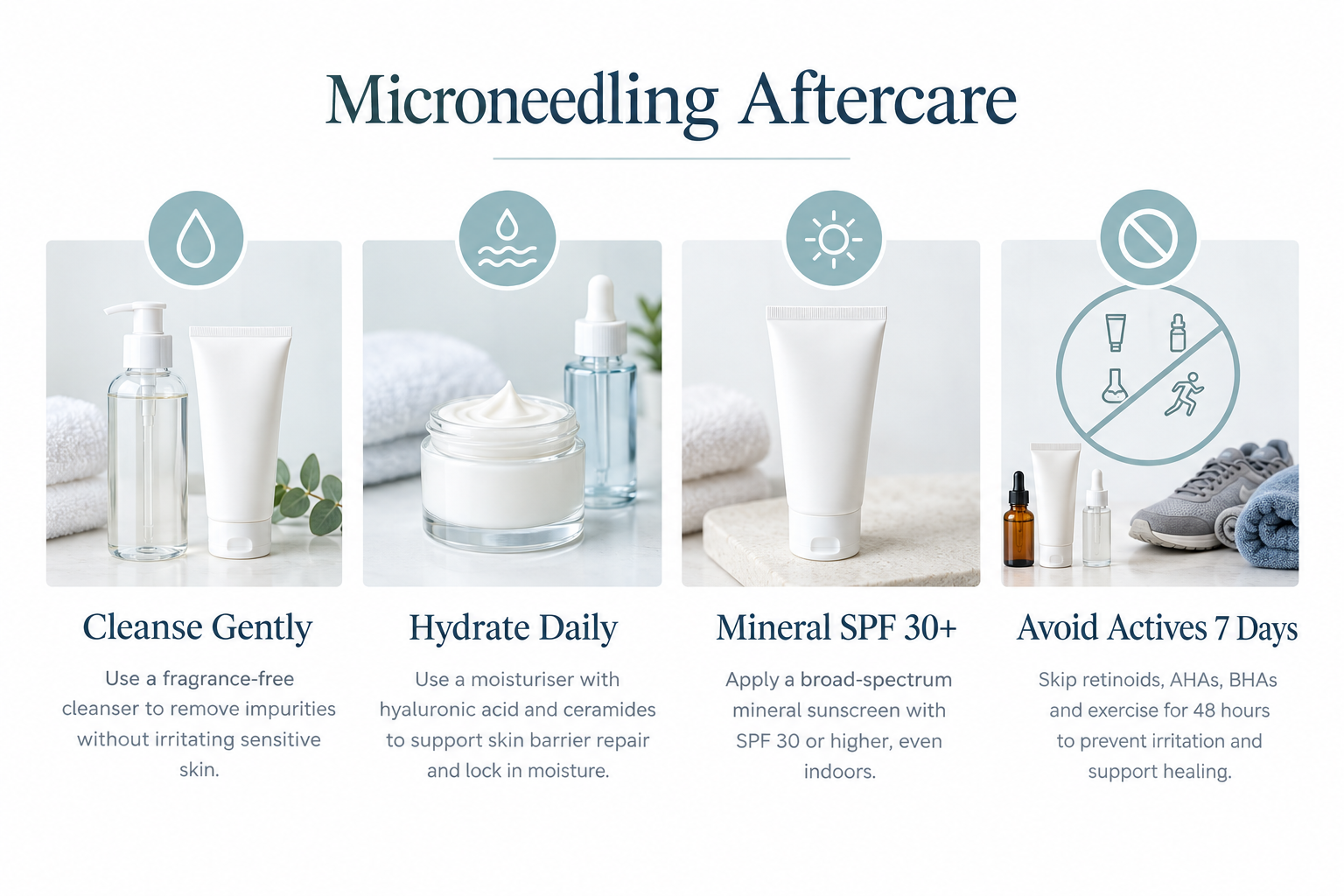

Microneedling aftercare is just as important as the treatment itself. The controlled micro-injuries created during a session trigger your skin's natural repair response, but how you care for your skin in the days that follow directly influences how well that process unfolds. This guide walks you through each stage of recovery, explains which products and activities to avoid, and highlights the warning signs that warrant a call to your provider.
Key Takeaways
- Keep skin clean, hydrated, and protected from the sun for at least the first week after treatment.
- Avoid retinoids, AHAs and BHAs, vitamin C (ascorbic acid), and all exfoliating actives for a minimum of seven days post-treatment.
- Redness, tightness, and mild swelling are normal for the first two to three days; worsening pain or pus after 48 hours is not.
- Visible improvement in skin texture and tone may take four to six weeks to appear as collagen remodeling continues beneath the surface.
- RF microneedling and microneedling combined with PRP follow the same core aftercare rules but with slightly extended timelines.
What Happens to Your Skin After Microneedling
Microneedling — also called collagen induction therapy — uses fine needles to create thousands of micro-channels in the upper layers of the skin. These controlled micro-injuries stimulate the production of collagen and elastin as part of the body's natural wound-healing cascade. Immediately after treatment, those micro-channels remain temporarily open, which means the skin is more permeable, more reactive, and more vulnerable to irritation, infection, and transepidermal water loss than it would be under normal circumstances.
Most patients notice a sunburn-like sensation, visible redness, and mild swelling within the first few hours. The skin may feel tight and warm to the touch. These reactions are a normal part of the inflammatory phase of healing and typically begin to settle within 24 to 48 hours. Understanding why these reactions occur helps explain the reasoning behind each aftercare step: the goal is to support the skin barrier repair process, minimize moisture loss, and avoid introducing anything that could disrupt or delay healing.
Day-by-Day Recovery Timeline
Recovery from professional microneedling generally follows a predictable pattern, though individual experience varies depending on needle depth, the number of passes performed, skin type, and overall skin health. The following timeline reflects a typical professional treatment at moderate depth.
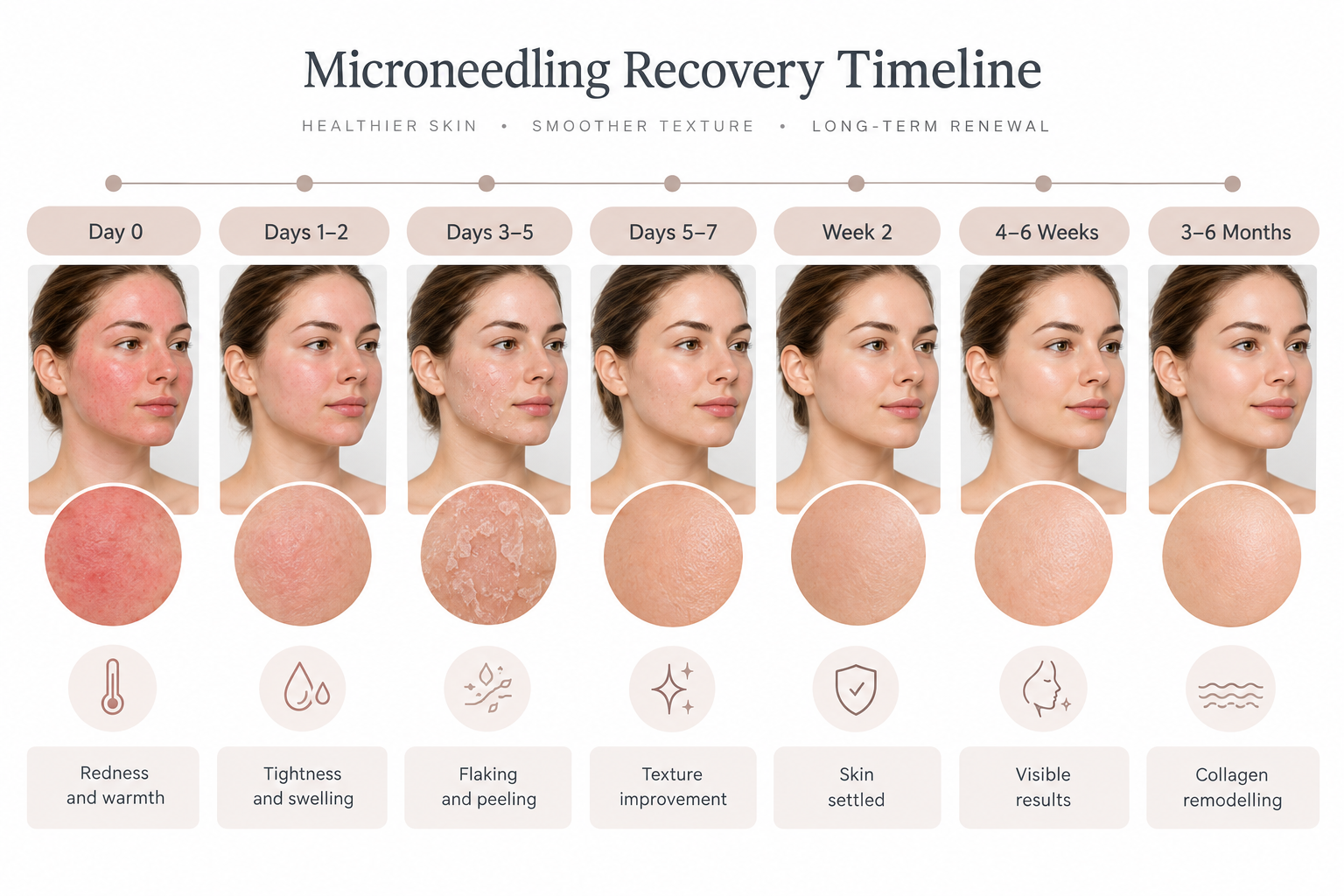
| Day(s) | What to Expect | Skincare Focus |
|---|---|---|
| Day 0 (treatment day) | Redness, warmth, mild swelling, sunburn-like sensation | Wait 4–6 hours before washing; no actives, no makeup |
| Days 1–2 | Continued redness and tightness; possible pinpoint bruising | Gentle fragrance-free cleanser, hyaluronic acid serum, ceramide-rich moisturizer, mineral sunscreen SPF 30+ |
| Days 3–5 | Redness fades; flaking and peeling begin as skin cell turnover accelerates | Continue gentle routine; do not pick or peel flaking skin |
| Days 5–7 | Peeling resolves; first signs of improved texture and glow may appear | Mineral makeup acceptable from day 3 onward if needed; continue SPF |
| Week 2 onward | Skin largely settled; gradual improvement continues | Reintroduce actives cautiously from day 7–10 with provider guidance |
| 4–6 weeks | Visible results from a single session become more apparent | Normal routine; collagen remodeling continues for 3–6 months |
Immediate Aftercare: The First 24 Hours
The first 24 hours after microneedling are the most critical window for protecting the skin. Because the micro-channels created during treatment remain open for several hours, anything applied to the skin during this period — including bacteria from unwashed hands — can penetrate more deeply than usual. For this reason, most practitioners advise waiting four to six hours before washing the face, and using only cool or lukewarm water when you do.
Avoid touching your face with unwashed hands, and resist the urge to apply any serums, toners, or makeup during this initial window. If your skin feels uncomfortably warm, a clean cold compress applied gently for ten minutes at a time may help reduce the sensation. Staying well hydrated and avoiding alcohol on treatment day is also advisable: alcohol acts as a vasodilator and can worsen redness and swelling, while also contributing to dehydration at a time when the skin needs moisture most.
If you take over-the-counter pain relief, acetaminophen (paracetamol) is generally preferred over NSAIDs such as ibuprofen. NSAIDs have anti-inflammatory properties that may interfere with the inflammatory phase of healing that microneedling is specifically designed to trigger. Always follow your provider's individual guidance on this point.
Cleansing After Microneedling
For the first week after treatment, cleansing should be as gentle as possible. Choose a mild, fragrance-free cleanser — ideally non-foaming and free from alcohol, essential oils, and active ingredients. Wash with lukewarm water rather than hot, which can increase redness and irritation. Pat the skin dry with a clean, soft towel rather than rubbing, and always wash your hands thoroughly before touching your face.
Avoid electric cleansing brushes, exfoliating cloths, or any mechanical tool that creates friction on the skin surface. The skin's barrier is temporarily compromised after microneedling, and physical abrasion during this period can prolong redness, cause micro-tears, and increase the risk of post-inflammatory hyperpigmentation — a concern that is particularly relevant for patients with medium to deeper skin tones.
Hydration and Moisturising
Keeping the skin well hydrated after microneedling supports barrier repair and helps counteract transepidermal water loss, which increases when the skin's protective layer is disrupted. A hyaluronic acid serum applied to slightly damp skin is a practical first step: hyaluronic acid is a humectant that draws moisture into the skin without introducing any active ingredients that could cause irritation.
Follow the serum with a ceramide-rich moisturizer. Ceramides are lipid molecules that form a key part of the skin barrier, and replenishing them after treatment helps the barrier recover more efficiently. Other barrier-supportive ingredients that are generally well tolerated in the first week include glycerin, panthenol (vitamin B5), squalane, niacinamide at low concentrations, and centella asiatica (cica). Aloe vera gel can also be soothing, provided the formulation is free from added fragrance and alcohol.
Apply moisturiser at least twice daily during the first week. The skin may feel unusually dry or tight as it heals, and consistent hydration helps manage this discomfort while supporting the healing process.
Sun Protection Is Non-Negotiable
Freshly treated skin is significantly more sensitive to ultraviolet radiation than normal skin. Sun exposure in the days following microneedling can cause increased redness, delay healing, and raise the risk of post-inflammatory hyperpigmentation — particularly in patients with Fitzpatrick skin types III to VI. Mineral sunscreen SPF 30+ should be applied every morning from day one of recovery, even on overcast days or when spending most of the day indoors near windows.
Mineral sunscreens containing zinc oxide are generally preferred over chemical UV filters in the first week because they sit on the surface of the skin rather than being absorbed, reducing the risk of irritation. Reapply every 60 to 90 minutes when outdoors, and consider wearing a wide-brimmed hat for additional protection. Avoid direct sun exposure as much as possible for the first five to seven days after treatment.
Ingredients and Products to Avoid
The open micro-channels created during microneedling make the skin temporarily more permeable. Introducing active ingredients during this window can cause stinging, inflammation, and in some cases, deeper penetration of compounds that would not normally reach the lower layers of the skin. The following ingredients should be avoided for at least seven days after a professional microneedling session, or until your provider confirms the skin has fully recovered.
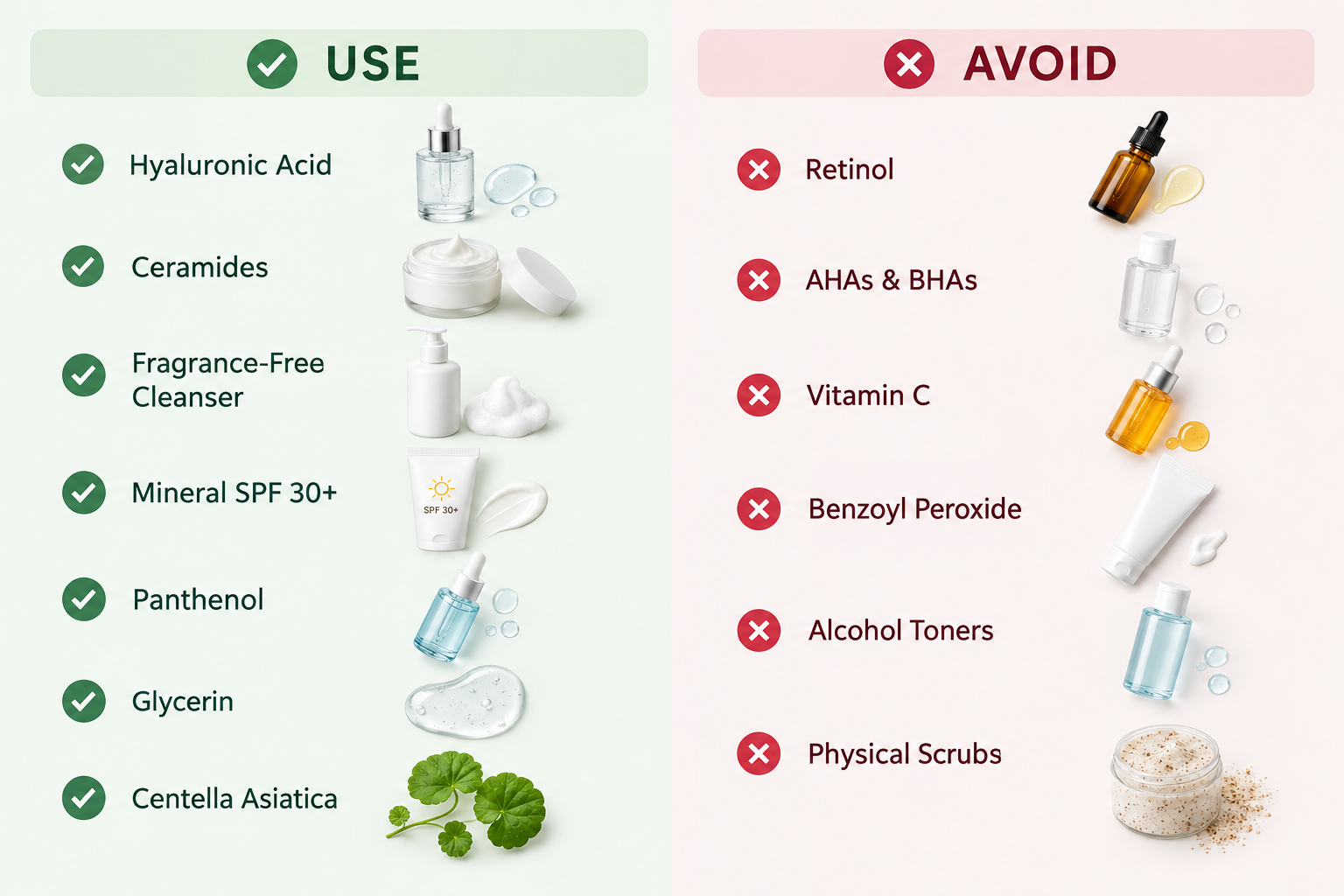
- Retinoids (retinol, Retin-A, tretinoin): Highly active and potentially irritating; avoid for a minimum of seven days post-treatment.
- AHAs and BHAs: Glycolic acid, lactic acid, and salicylic acid are exfoliating acids that can disrupt healing skin and cause significant irritation.
- Vitamin C (ascorbic acid form): Ascorbic acid is acidic and can sting or inflame compromised skin; wait at least seven days before reintroducing.
- Benzoyl peroxide: Drying and potentially irritating; avoid during the healing phase.
- Alcohol-based toners and astringents: Strip moisture and disrupt the skin barrier.
- Fragrance and essential oils: Common sensitisers that can trigger reactions on compromised skin.
- Physical exfoliants: Scrubs, exfoliating brushes, and similar tools should be avoided for at least one to two weeks.
When reintroducing actives after the first week, do so gradually and one product at a time. If you experience stinging, increased redness, or breakouts when reintroducing a product, stop using it and allow more time before trying again.
Activities to Avoid After Microneedling
Physical activity that raises body temperature and causes sweating should be avoided for at least 48 hours after treatment. Sweat contains bacteria and can introduce irritants into the micro-channels while the skin is still healing. Saunas, steam rooms, hot yoga, and hot baths carry the same risk and should be avoided for 48 to 72 hours. Swimming pools and open water should be avoided for at least 72 hours due to chlorine, bacteria, and other potential contaminants.
Waxing, laser treatments, chemical peels, and other skin treatments should be postponed for a minimum of two weeks, or until the skin has fully recovered and your provider has confirmed it is safe to proceed. Combining treatments too soon can cause excessive inflammation and increase the risk of adverse effects.
Makeup After Microneedling
Most practitioners advise avoiding all makeup for at least 24 to 48 hours after microneedling. Applying makeup to skin with open micro-channels introduces bacteria and potential irritants directly into the healing tissue. When you do return to makeup — typically from day three onward — choose mineral-based, non-comedogenic formulas that are free from fragrance, alcohol, and heavy occlusive ingredients. Mineral makeup is generally better tolerated during the early recovery phase than liquid foundations containing active ingredients or fragrances.
Ensure all makeup brushes and sponges are thoroughly cleaned before use. Dirty applicators are a common source of bacterial contamination and can cause breakouts or infection on skin that is still in the process of healing.
Sleep Hygiene During Recovery
Sleep position and bedding hygiene are practical aftercare factors that are often overlooked. Sleeping on your back with your head slightly elevated for the first two to three nights can help reduce facial swelling by encouraging lymphatic drainage. Sleeping face-down presses the treated skin against a pillow surface, which can cause friction and introduce bacteria.
Use a clean pillowcase on the night of treatment and change it again after 24 hours. Pillowcases accumulate skin cells, oils, and bacteria over time, and contact with a contaminated surface during the healing phase increases the risk of breakouts and infection. Silk or satin pillowcases create less friction than cotton and may be more comfortable when the skin is sensitive.
Skin-Type Considerations
While the core aftercare principles apply to everyone, certain skin types benefit from additional attention during recovery.
Dry skin: The skin barrier is already more prone to transepidermal water loss in dry skin types. Apply a ceramide-rich moisturizer more frequently — up to three times daily if needed — and consider adding a thin layer of squalane over the top to seal in moisture overnight.
Oily and acne-prone skin: Some patients experience a temporary increase in breakouts in the first week after microneedling, sometimes referred to as skin purging. This is generally a normal part of the healing process as the skin turns over more rapidly. Avoid heavy, occlusive creams and stick to lightweight, non-comedogenic hydrators. Do not use salicylic acid or benzoyl peroxide during the healing phase, even if you normally rely on them for acne management.
Sensitive skin: Patch-test any new product before applying it to the full face, even if it is marketed as suitable for post-procedure use. Keep the routine as minimal as possible — a gentle cleanser, a hyaluronic acid serum, a simple ceramide moisturizer, and mineral sunscreen is sufficient for the first week.
Deeper skin tones (Fitzpatrick III–VI): Post-inflammatory hyperpigmentation is a meaningful risk after microneedling in patients with more melanin-rich skin. Strict sun avoidance and consistent mineral sunscreen use are especially important. Discuss PIH prevention strategies with your provider before treatment, and report any unusual darkening of the skin promptly.
Aftercare for RF Microneedling and Microneedling with PRP
RF microneedling (radiofrequency microneedling) combines the needle-based micro-injury with radiofrequency energy delivered into the deeper layers of the skin. This additional energy increases the depth and intensity of the treatment, which typically results in more pronounced redness and swelling lasting three to five days rather than the one to two days seen with standard microneedling. The same aftercare rules apply, but the avoidance windows for actives, exercise, and sun exposure should be extended accordingly.
Microneedling combined with PRP (platelet-rich plasma) involves applying the patient's own plasma — which is rich in growth factors — to the skin immediately after needling, allowing it to penetrate through the open micro-channels. If you have had PRP applied, your provider will typically advise leaving it on the skin for four to eight hours before washing. Do not wash the face during this window, as removing the PRP prematurely reduces its potential benefit. After washing, follow the standard aftercare routine.
At-Home Microneedling vs. Professional Treatment
At-home microneedling devices use much shorter needles — typically 0.2 to 0.5 mm — compared to the 0.5 to 2.5 mm depths used in professional settings. This shallower depth means less downtime and a lower risk of adverse effects, but it also means the aftercare rules are sometimes treated too casually. The same principles apply: avoid actives immediately after use, keep the skin clean and hydrated, and apply sun protection. Because at-home devices are used more frequently, consistency with aftercare is particularly important to avoid cumulative irritation.
Warning Signs: When to Call Your Provider
Some degree of redness, swelling, and sensitivity is expected after microneedling and is not a cause for concern. However, certain signs suggest a complication that requires prompt assessment by your treating practitioner.
- Pus, yellow or green discharge, or crusting that develops after the first 24 hours
- Redness that spreads beyond the treated area or feels hot to the touch after 48 hours
- Pain that worsens rather than improves after the first two days
- Fever or chills following treatment
- Redness that has not begun to resolve by day five
- Unusual darkening of the skin (possible post-inflammatory hyperpigmentation)
- Cold sore outbreak in or around the treated area — patients with a history of herpes simplex should inform their provider before treatment, as microneedling can trigger reactivation
Do not attempt to self-treat a suspected infection or complication. Contact your provider or seek medical advice promptly if any of these signs appear.
Common Aftercare Mistakes to Avoid
Even well-informed patients sometimes make avoidable errors during recovery. The most common mistakes include applying vitamin C serum or retinol too soon — often because these products are part of an established routine and the patient forgets they need to be paused. Returning to the gym within 24 to 48 hours is another frequent error; the combination of heat, sweat, and bacteria can cause breakouts and prolong redness. Using a facial cleansing brush on day two, picking at flaking skin, and skipping sunscreen on cloudy days are also common and can meaningfully affect the outcome.
A practical approach is to simplify your routine to three steps — cleanser, moisturizer, sunscreen — for the first week, and resist the temptation to add anything else until the skin has fully settled.
Realistic Results and the Collagen Remodeling Timeline
Managing expectations is an important part of the aftercare process. Many patients expect to see dramatic results within a few days of treatment and feel disappointed when the skin looks similar to — or temporarily worse than — before. The visible improvements from microneedling are largely driven by collagen remodeling, a biological process that unfolds over weeks and months rather than days.
Collagen synthesis begins within days of treatment but the structural changes it produces take time to become visible. Most patients notice a meaningful improvement in skin texture, pore appearance, and overall radiance at around four to six weeks after a single session. Continued improvement is possible for three to six months as collagen remodeling progresses. A course of three to six sessions spaced four to six weeks apart is commonly recommended for concerns such as acne scarring or significant skin laxity, though the appropriate number of sessions depends on the individual and should be discussed with a qualified practitioner.
Frequently Asked Questions
How long after microneedling can I wash my face?
Most providers recommend waiting four to six hours before washing the face after microneedling. When you do cleanse, use cool or lukewarm water and a mild, fragrance-free cleanser. Pat the skin dry gently rather than rubbing.
When can I use retinol after microneedling?
Retinoids should be avoided for a minimum of seven days after professional microneedling. Reintroduce them gradually and only once the skin has fully settled. If you experience any irritation when restarting, allow additional time before trying again.
Is peeling after microneedling normal?
Yes. Mild flaking and peeling between days three and seven is a normal part of the healing process as accelerated skin cell turnover takes place. Do not pick or peel the skin manually, as this can cause scarring or post-inflammatory hyperpigmentation.
Can I exercise after microneedling?
Strenuous exercise that causes significant sweating should be avoided for at least 48 hours after treatment. Sweat can introduce bacteria into the micro-channels and prolong redness. Light walking is generally acceptable, but avoid anything that raises your core body temperature significantly.
When can I wear makeup after microneedling?
Most practitioners advise avoiding all makeup for 24 to 48 hours. From day three onward, mineral-based, non-comedogenic makeup is generally acceptable. Ensure all applicators are clean before use.
Why does my skin look worse before it looks better?
The initial redness, tightness, and flaking are part of the inflammatory and proliferative phases of wound healing. The visible improvements from collagen induction therapy take several weeks to emerge. Skin that appears temporarily dull or uneven during the first week is undergoing the cellular processes that lead to longer-term improvement.
Does aftercare differ for RF microneedling?
The core aftercare principles are the same, but RF microneedling typically causes more pronounced redness and swelling that may last three to five days. Extend the avoidance windows for actives, exercise, and sun exposure accordingly, and follow your provider's specific post-treatment instructions.
Getting the Most from Your Microneedling Recovery
Microneedling aftercare is not complicated, but it does require consistency and a willingness to simplify your routine for a short period. The skin's ability to repair itself after collagen induction therapy is well established, and the aftercare steps described in this guide are designed to support that process rather than interfere with it. Keeping the skin clean, hydrated, and protected from the sun, while avoiding actives and activities that could cause unnecessary irritation, gives the healing process the best possible conditions to proceed.
If you are unsure about any aspect of your recovery — whether a product is safe to use, whether a reaction is normal, or when to reintroduce a particular active — contact your treating practitioner rather than guessing. Individual skin responses vary, and the guidance of a qualified professional who knows your skin and the specifics of your treatment is always more reliable than general advice. A follow-up appointment at four to six weeks is a useful opportunity to assess your results and discuss whether additional sessions may be appropriate for your goals.
