
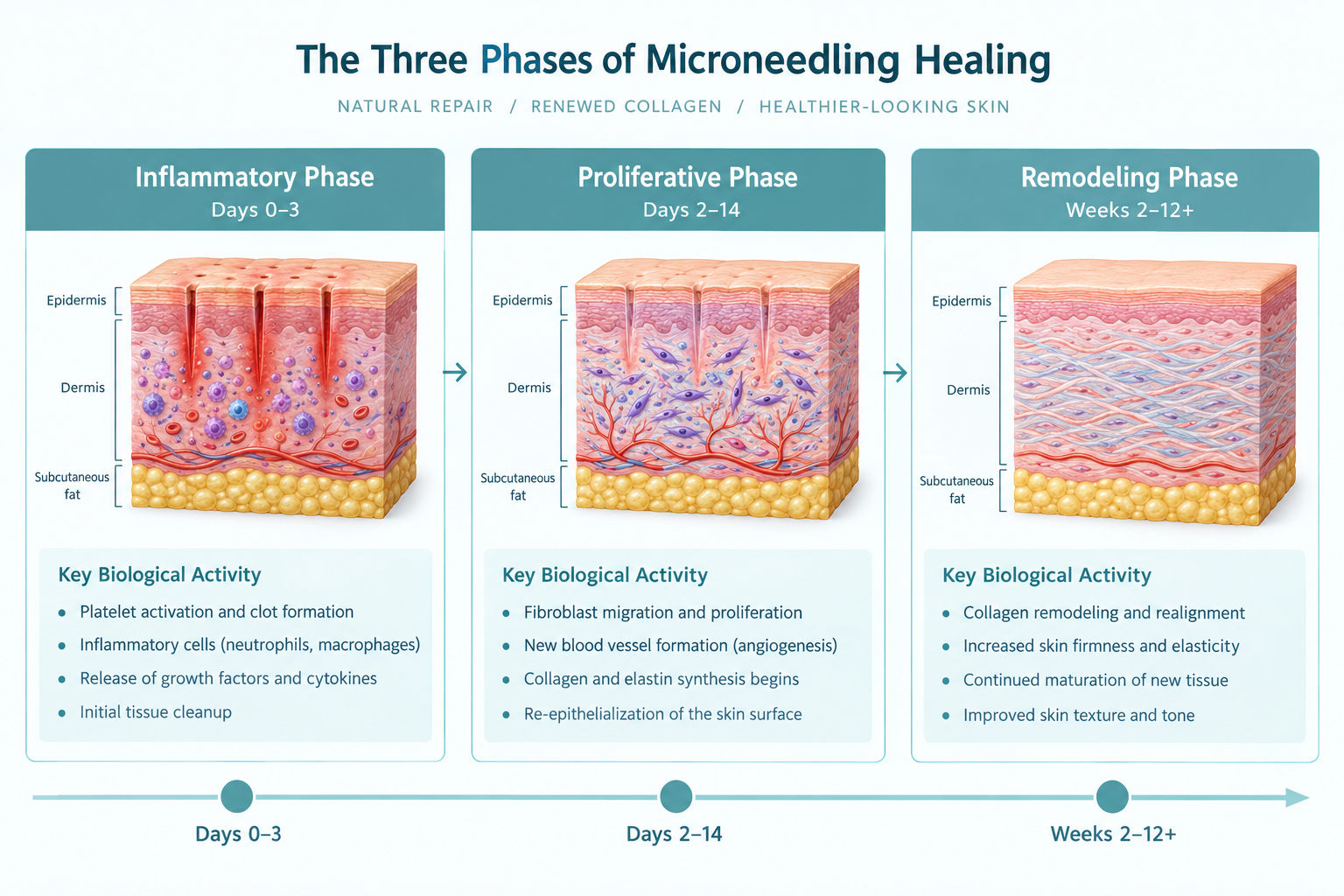

Microneedling creates thousands of controlled micro-injuries in the skin, triggering a natural wound healing cascade that gradually rebuilds collagen and elastin. Most patients experience visible redness and mild swelling for one to three days, followed by subtle peeling and, over the following weeks, a progressive improvement in skin texture and tone. Understanding each of the microneedling healing stages helps you manage expectations, follow the right aftercare at the right time, and recognize the rare signs that something needs professional attention.
Key Takeaways
- Microneedling healing unfolds in three overlapping biological phases — inflammatory, proliferative, and remodeling — each with distinct skin changes and aftercare needs.
- Visible recovery typically takes five to seven days for the skin surface to normalize, while deeper collagen maturation continues for up to three to six months.
- Needle depth, treatment area, age, skin type, and lifestyle factors all influence how quickly your skin moves through each stage.
- Post-inflammatory hyperpigmentation (PIH) is a meaningful risk for patients with Fitzpatrick skin types IV–VI and requires specific precautions before and after treatment.
- Knowing what is normal versus what warrants a call to your practitioner reduces unnecessary anxiety and helps you act quickly when it matters.
What Microneedling Actually Does to Your Skin
A microneedling device — whether a professional pen such as SkinPen or a radiofrequency microneedling platform such as Morpheus8 — drives fine needles into the skin at a controlled needle depth, typically between 0.5 mm and 2.5 mm depending on the treatment goal and area. Each pass creates microscopic channels through the epidermis and into the dermis. The skin does not interpret these channels as cosmetic events; it responds to them exactly as it would to any wound, initiating the same wound healing cascade that repairs a cut or graze.
This cascade is the mechanism behind every result microneedling can offer. The controlled injury prompts platelet activation and the release of growth factors and cytokines, which in turn recruit immune cells and signal fibroblast activation in the dermis. Fibroblasts are the cells responsible for producing collagen and elastin — the structural proteins that give skin its firmness and elasticity. By deliberately triggering this process across a broad treatment area, microneedling encourages the skin to lay down new dermal tissue in a way that gradually improves texture, tone, and density.
RF microneedling adds a thermal injury component through radiofrequency energy delivered at the needle tips, which intensifies the stimulus for collagen remodeling and typically extends the recovery period compared with standard microneedling at equivalent depths.
The Three Biological Phases of Healing
Skin repair after microneedling follows the same four-phase wound healing model described in peer-reviewed literature, though for practical patient purposes the process is most usefully understood as three overlapping phases. These phases do not switch on and off like a light; they overlap and transition gradually.
Phase 1: Inflammatory Phase (Hours 0 to 72)
The inflammatory phase begins the moment the needles enter the skin and peaks within the first 24 to 48 hours. Platelets aggregate at each microchannel, releasing growth factors and cytokines including interleukins and tumour necrosis factor that attract neutrophils and macrophages to the treatment site. This immune response is the source of the redness, warmth, swelling, and tightness that patients notice immediately after treatment — sensations often compared to a mild sunburn. Pinpoint bleeding may be visible on the skin surface during or immediately after the procedure, particularly at deeper needle depths, and this is a normal part of the process. The inflammatory phase is not a problem to suppress; it is the essential first signal that drives everything that follows.
Phase 2: Proliferative Phase (Days 2 to 14)
As acute inflammation resolves, the proliferative phase takes over. Fibroblasts migrate into the treatment area and begin synthesizing new collagen — initially collagen type III, a softer, more flexible form — along with elastin and other components of the extracellular matrix (ECM). Re-epithelialization, the process by which new epidermal cells migrate across the microchannels to restore the skin surface, is largely complete within 24 to 72 hours at standard treatment depths. Patients notice this phase as dryness, a rough or sandpaper texture, and light peeling or flaking as old surface cells shed to reveal newer skin beneath. The skin barrier function is partially compromised during this window, which is why aftercare product choices matter significantly.
Phase 3: Remodeling Phase (Weeks 2 to 12, and Beyond)
Collagen remodeling is the longest and most clinically significant phase. Over weeks to months, the initial collagen type III is progressively replaced by the stronger, more organized collagen type I that gives skin its structural density. Elastin fibers are also reorganized during this period. Collagen maturation is gradual — most patients notice meaningful improvement in skin texture and firmness from around week four, with results continuing to develop through months three to six. This is why a single microneedling session can produce changes that are still evolving long after the skin surface looks completely normal.
Day-by-Day Recovery Timeline
| Day / Period | What You May Notice | What Is Happening Biologically |
|---|---|---|
| Day 0 (treatment day) | Redness, warmth, mild swelling, pinpoint bleeding, tightness; skin feels sensitive | Platelet activation, growth factor release, acute inflammatory response begins |
| Day 1 | Redness and puffiness peak; skin feels tight and warm; mild sunburn sensation | Neutrophil and macrophage recruitment; cytokine signaling at its highest |
| Day 2–3 | Redness begins to fade; skin feels dry, rough, and tight; sandpaper texture develops | Re-epithelialization largely complete; fibroblast migration begins; skin barrier partially restored |
| Day 3–5 | Light peeling and flaking; skin may look dull or uneven; the "awkward stage" | Epidermal cell turnover; old surface cells shed; new collagen type III synthesis underway |
| Day 6–7 | Surface normalizes; redness largely resolved; skin may appear brighter or smoother | Skin barrier function largely restored; proliferative phase continues in dermis |
| Weeks 2–4 | Skin looks and feels normal; subtle improvements in texture may begin to emerge | Active collagen and elastin synthesis; ECM remodeling underway |
| Weeks 4–12 | Progressive improvement in firmness, texture, and tone; pores may appear refined | Collagen type I replaces type III; collagen maturation and fiber organization |
| Months 3–6 | Full results visible; skin density and quality at their best for this treatment cycle | Remodeling phase complete; dermal density increased |
How Needle Depth Affects Your Recovery
Needle depth is one of the most direct determinants of how long the visible recovery period lasts. Shallower treatments disturb less tissue and resolve more quickly; deeper treatments create a more significant stimulus for collagen production but require more downtime.
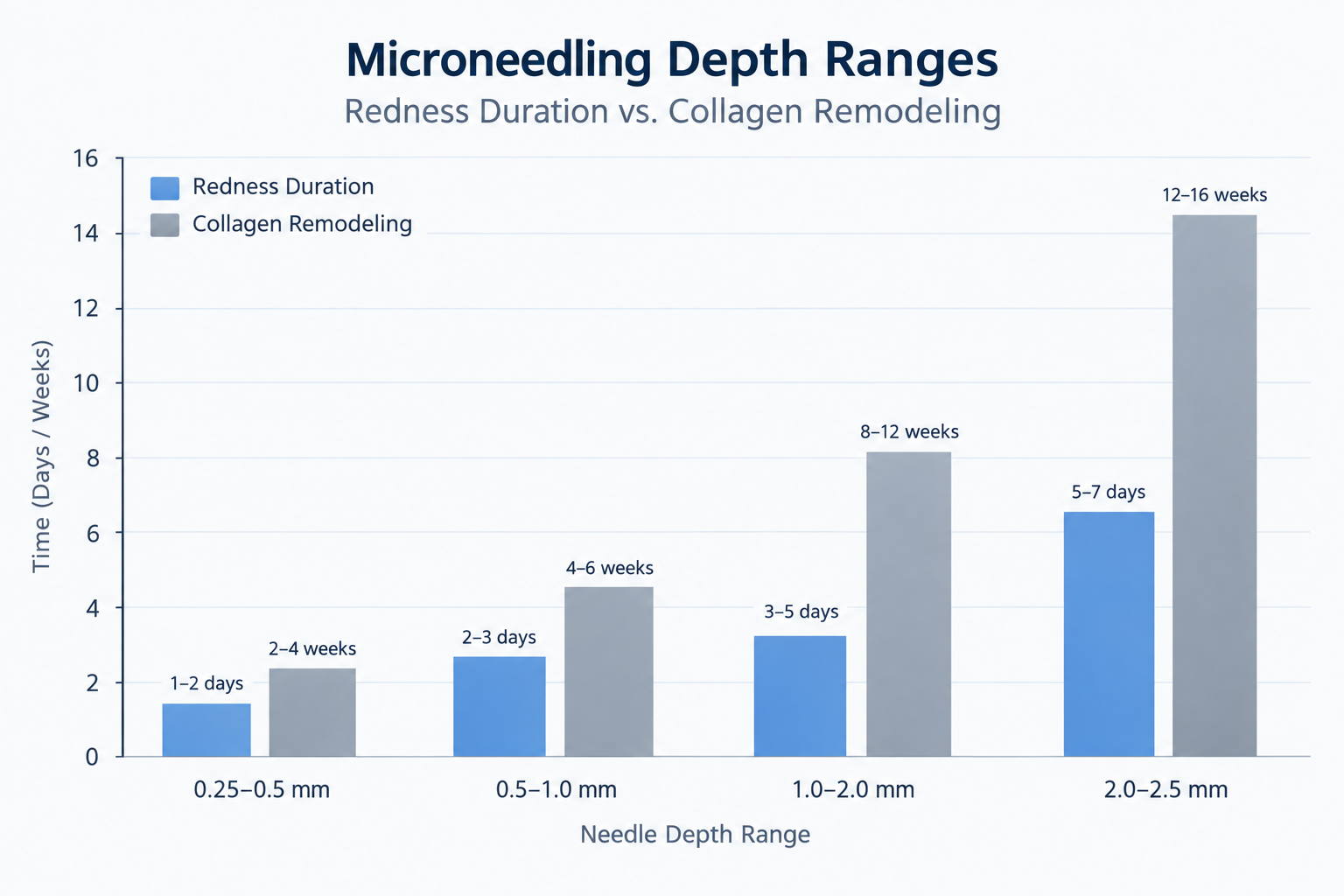
| Needle Depth | Typical Redness Duration | Peeling / Texture Changes | Collagen Remodeling |
|---|---|---|---|
| 0.25–0.5 mm (at-home / superficial) | 12–24 hours | Minimal to none | 4–6 weeks |
| 0.5–1.0 mm (professional, superficial to mid) | 24–48 hours | Mild dryness, light flaking | 6–8 weeks |
| 1.0–2.0 mm (professional, mid to deep) | 48–72 hours | Moderate peeling, days 3–5 | 8–12 weeks |
| 2.0–2.5 mm (professional, deep / RF microneedling) | 3–5 days or longer | More pronounced peeling; possible crusting | Up to 6 months |
At-home microneedling with dermarollers or stamps typically uses shallower depths and produces a noticeably faster and milder recovery than professional in-clinic treatments. The trade-off is a less intense collagen stimulus and more modest results. Professional treatments at deeper depths carry greater downtime but a stronger remodeling response — the right choice depends on the patient's goals, skin type, and tolerance for social downtime.
Factors That Influence How Quickly You Heal
Recovery is not identical for every patient, even when the same device and depth are used. Several biological and lifestyle factors shape how efficiently the skin moves through each healing stage.
Age and Intrinsic Healing Capacity
Younger patients, generally those under 35, tend to show faster barrier recovery because their inflammatory response is more robust and their stem cell activity is higher. After age 40, collagen synthesis slows and the resolution of the inflammatory phase may take longer, meaning visible redness and dryness can persist for an additional day or two compared with younger skin. This does not mean older patients benefit less from microneedling — the remodeling stimulus is still effective — but realistic recovery expectations should account for age.
Fitzpatrick Skin Type and PIH Risk
Skin type significantly affects both the recovery experience and the risk of complications. Patients with darker skin tones — Fitzpatrick skin types IV through VI — face a higher risk of post-inflammatory hyperpigmentation (PIH), a darkening of the skin that can develop as the inflammatory phase resolves. PIH may persist for weeks to months after the skin surface has otherwise healed. Practitioners working with higher Fitzpatrick skin types typically use more conservative needle depths, longer intervals between sessions, and may recommend pre-treatment skin preparation with agents such as topical vitamin C or azelaic acid to reduce PIH risk. Broad-spectrum mineral sunscreen is essential for all patients during recovery but is particularly critical for those with higher PIH risk.
Medications and Pre-Treatment Preparation
Certain medications meaningfully affect the healing timeline. Prescription retinoids (tretinoin) increase skin sensitivity and can intensify the inflammatory response; most practitioners advise discontinuing retinoid use three to five days before treatment. Blood thinners may increase pinpoint bleeding during the procedure. Immunosuppressant medications can impair the immune signaling that drives the proliferative phase, potentially slowing healing. Patients taking isotretinoin for acne are generally advised to wait six to twelve months after completing a course before undergoing microneedling, as the drug significantly alters skin healing. Always disclose your full medication list to your practitioner before treatment.
Treatment Area: Face vs. Body
Facial skin recovers faster than skin on the body because the face has significantly higher vascularity and a greater density of sebaceous glands and hair follicles — both of which support rapid re-epithelialization. Microneedling on the neck, décolletage, or scalp typically involves a slightly longer surface recovery period than the same depth on the face, and practitioners often use more conservative settings in these areas. Body areas such as the abdomen or thighs may show redness and texture changes for an additional one to two days beyond what a comparable facial treatment would produce.
Sleep, Nutrition, and Lifestyle
Quality sleep is an underappreciated factor in microneedling recovery. During deep sleep, the body releases growth hormone, which supports tissue repair and collagen production in the dermis. Aiming for seven to eight hours of sleep in the days following treatment is a practical and evidence-consistent recommendation. Adequate protein intake provides the amino acid building blocks for collagen synthesis, and vitamin C is an essential co-factor in the enzymatic process that stabilizes collagen fibers. Staying well hydrated supports skin barrier function during the proliferative phase. Conversely, smoking impairs microvascular circulation and reduces the oxygen delivery that healing tissue depends on, and may extend the recovery period.
Stage-by-Stage Aftercare Guide
Aftercare choices during each healing stage directly affect both the speed of recovery and the quality of the final result. The microchannels created during treatment temporarily increase skin permeability, which means both beneficial ingredients and potentially irritating ones are absorbed more readily than usual.
Days 0–2: Protect and Soothe
On the day of treatment and the day after, the priority is to protect the compromised skin barrier and avoid anything that could provoke additional irritation. Use a gentle, non-foaming, fragrance-free cleanser with lukewarm water — avoid hot water, which increases vasodilation and prolongs redness. Apply a fragrance-free moisturizer containing hyaluronic acid or peptides to support hydration and barrier recovery. Mineral sunscreen with SPF 30 or higher is essential if you go outdoors; chemical sunscreen filters may cause stinging on freshly treated skin. Avoid makeup for at least 24 hours, and ideally 48 hours, to reduce infection risk through open microchannels.
Days 2–5: Support Peeling Without Interference
As peeling and flaking begin, the temptation to exfoliate or pick at the skin is understandable but should be firmly resisted. Mechanical exfoliation, active ingredients such as retinoids, AHAs, BHAs, or high-concentration vitamin C serums, and any form of heat exposure — saunas, steam rooms, hot showers, strenuous exercise that causes significant sweating — should all be avoided during this window. These active ingredients can penetrate more deeply than usual through partially restored skin and provoke irritation, prolonged redness, or increase PIH risk. Continue with the gentle cleanser, fragrance-free moisturizer, and mineral sunscreen routine. If your practitioner has supplied a specific post-treatment serum containing growth factors or peptides, this is the appropriate window to use it.
Days 6–14: Gradual Reintroduction
Once the skin surface has normalized — typically by day six or seven — most patients can cautiously reintroduce their usual skincare routine. Hyaluronic acid serums and peptide-based products are generally well tolerated from this point. Retinoids and other active ingredients are usually reintroduced no earlier than seven to ten days post-treatment, and only when the skin shows no residual sensitivity. Confirm the reintroduction timeline with your practitioner, as it may vary depending on the depth of your treatment and your individual healing response.
Microneedling with Add-Ons: PRP, Exosomes, and Growth Factors
When microneedling is combined with platelet-rich plasma (PRP), exosomes, or topical growth factor serums applied directly to the open microchannels, the healing timeline may be subtly altered. These add-ons deliver concentrated biological signals into the dermis at a time when the skin is maximally receptive, potentially amplifying the proliferative response. Some patients report that PRP-enhanced treatments produce slightly more initial redness and swelling in the first 24 to 48 hours, followed by a perception of faster surface normalization. Evidence for these combinations is still developing, and the degree of additional benefit varies between patients and formulations.
The Awkward Stage: Days 3–5
Days three to five represent what many patients privately describe as the most socially challenging part of the recovery process. The acute redness has faded, but the skin may look dull, uneven, or visibly flaky — not obviously post-procedure, but not quite normal either. This is the stage at which some patients feel self-conscious about going to work or social events. It helps to know that this appearance is temporary and is actually a sign that the skin is actively renewing its surface. Light, non-comedogenic mineral makeup can generally be applied from day three onward if needed, though checking with your practitioner first is advisable. Planning treatment around a quieter social period — a long weekend, for example — can reduce the practical impact of this stage significantly.
Normal Healing vs. Signs That Need Attention
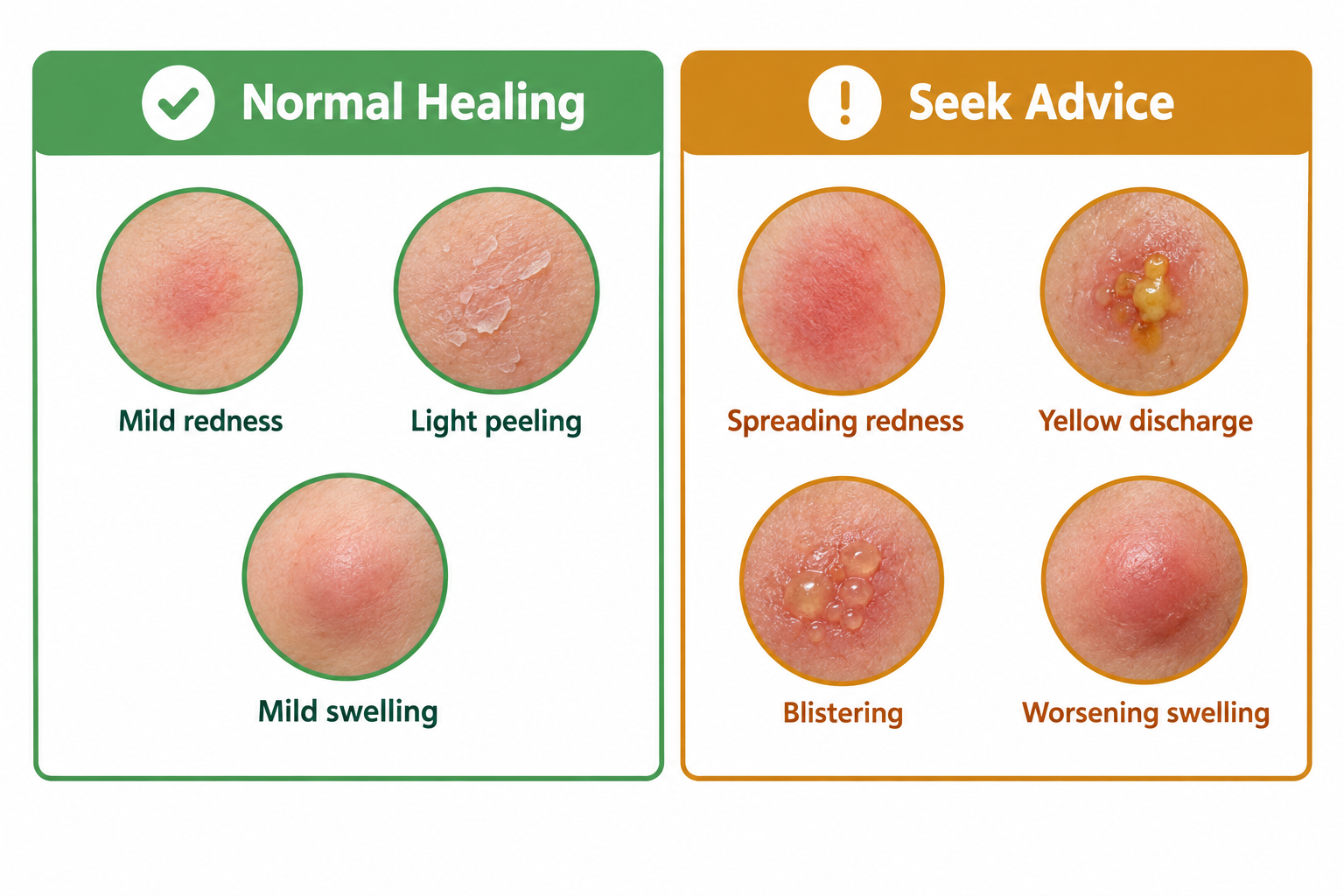
Most microneedling recoveries follow a predictable and uneventful course. Knowing the difference between expected changes and genuine warning signs allows patients to respond appropriately without unnecessary alarm.
| Symptom | Normal | Seek Advice If… |
|---|---|---|
| Redness | Uniform pink-red, fading within 48–72 hours | Deepening or spreading after day 3, or accompanied by fever |
| Swelling | Mild puffiness, resolving by day 2–3 | Worsening after day 4, or asymmetric and firm |
| Peeling | Light flaking, days 3–5 | Blistering, open sores, or crusting with discharge |
| Itching | Mild, associated with dryness | Intense itching with hives or spreading rash (possible allergic reaction) |
| Skin color changes | Temporary pinkness resolving within a week | Darkening patches persisting beyond two weeks (possible PIH) |
| Texture | Sandpaper feel, days 2–4 | Raised track marks, milia, or persistent rough patches beyond week 2 |
| Discharge | None expected after day 1 | Yellow or green discharge at any point (possible infection) |
If you notice signs that fall into the "seek advice" column, contact your treating practitioner promptly. Infection after microneedling is uncommon when performed in a clinical setting with sterile technique, but it can occur and requires early treatment. Allergic reactions to topical products applied through open microchannels are another reason to use only practitioner-recommended products in the first 48 hours.
When to Schedule Your Next Session
Most practitioners recommend spacing microneedling sessions four to six weeks apart for a standard course of treatment. This interval allows the inflammatory and proliferative phases to complete and gives the remodeling phase time to establish meaningful new collagen before the next treatment adds a fresh stimulus. Treating too frequently does not accelerate results and may impair the skin's ability to complete each healing cycle properly. A typical course for skin texture or acne scarring involves three to four sessions, with results assessed at the three-month mark after the final session when collagen maturation is well advanced. Maintenance sessions every three to six months may be appropriate depending on the treatment goal and individual response.
Frequently Asked Questions
How long does microneedling recovery actually take?
The skin surface typically normalizes within five to seven days. However, the deeper biological process of collagen remodeling continues for three to six months after treatment. "Recovery" in the sense of looking normal again is relatively quick; the full result develops gradually over months.
When can I wear makeup after microneedling?
Most practitioners advise waiting at least 24 to 48 hours before applying makeup to reduce the risk of introducing bacteria or irritants through open microchannels. Mineral-based, non-comedogenic formulations are preferable when you do return to makeup. Confirm the specific timeline with your practitioner based on your treatment depth.
Is it normal for my skin to look worse before it looks better?
Yes. The peeling and dull appearance of days three to five can make the skin look temporarily worse than it did before treatment. This is a normal part of the epidermal renewal process and resolves as the skin surface normalizes, usually by day six or seven.
Can I exercise after microneedling?
Strenuous exercise that causes significant sweating should be avoided for at least 48 to 72 hours after treatment. Sweat contains lactic acid and bacteria that can irritate compromised skin and increase infection risk. Light walking is generally acceptable from day two onward.
Does RF microneedling have a longer recovery than standard microneedling?
RF microneedling typically involves a longer and more pronounced recovery than standard microneedling at comparable depths because the radiofrequency energy creates an additional thermal injury component in the dermis. Redness and swelling may persist for three to five days or longer, and the remodeling phase may extend further. The trade-off is a more intense collagen stimulus and, for many patients, more significant skin tightening results.
What should I avoid putting on my skin during recovery?
During the first five to seven days, avoid retinoids, AHAs, BHAs, high-concentration vitamin C, physical exfoliants, fragranced products, and alcohol-based toners. These active ingredients can penetrate more deeply through partially restored skin and cause irritation or increase PIH risk. Stick to a gentle cleanser, a fragrance-free moisturizer, and mineral sunscreen until your practitioner confirms it is safe to reintroduce actives.
Why does my skin feel rough and tight on days two and three?
The rough, tight sensation on days two and three reflects the skin's re-epithelialization process. New epidermal cells are migrating across the treated area, and the surface layer is beginning to shed. The skin barrier function is partially restored but not yet complete, which is why the skin feels dry and tight. Consistent application of a fragrance-free moisturizer helps manage this discomfort and supports barrier recovery.
Planning Your Recovery Around Real Life
Understanding the microneedling healing stages in advance allows you to time your treatment sensibly, choose the right aftercare products for each phase, and distinguish normal skin changes from the rare signs that need professional attention. The visible recovery period — redness, tightness, and peeling — is typically brief, lasting five to seven days for most standard professional treatments. The more meaningful biological work, the collagen remodeling that produces lasting improvements in skin texture, firmness, and tone, unfolds quietly over the following months without any visible disruption to daily life.
If you are considering microneedling and want to understand how the recovery timeline applies to your specific skin type, treatment goals, and medical history, a consultation with a qualified aesthetic practitioner is the appropriate next step. Individual factors including Fitzpatrick skin type, needle depth, and any medications you take can all shift the recovery experience meaningfully, and a practitioner can tailor both the treatment parameters and the aftercare plan to your circumstances.
