
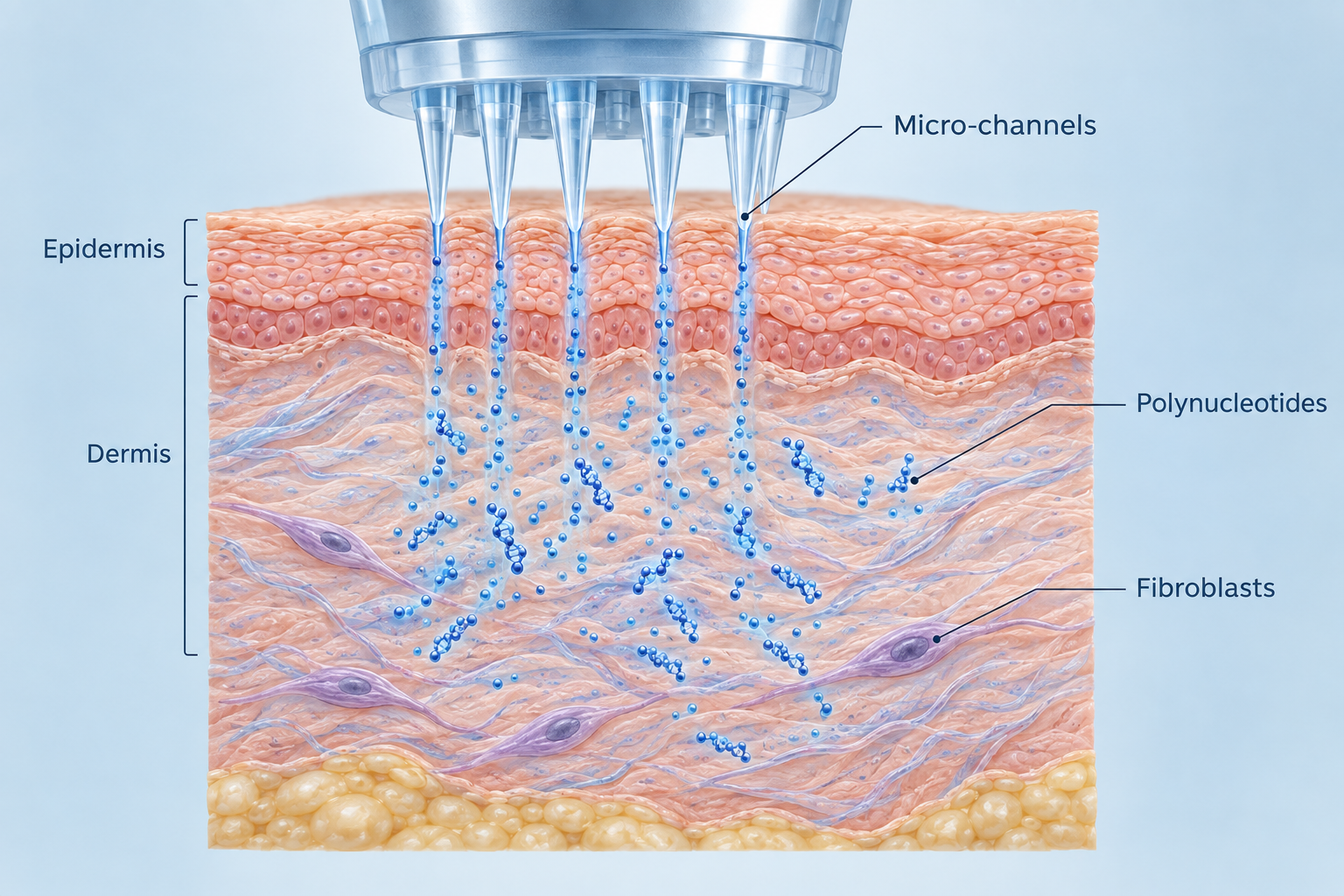

Microneedling with polynucleotides is a skin repair combination therapy that pairs two established aesthetic treatments to address skin quality concerns including fine lines, texture irregularities, loss of firmness, and dullness. By combining the controlled micro-injury stimulus of microneedling with the regenerative properties of polynucleotide (PDRN) formulations, practitioners aim to amplify the skin's natural repair response beyond what either treatment may achieve alone. This article explains how the combination works, what the evidence suggests, what to realistically expect, and who may or may not be a suitable candidate.
Key Takeaways
- Microneedling with polynucleotides combines two complementary mechanisms: microneedling stimulates collagen remodelling while polynucleotides support cellular repair and tissue regeneration.
- The combination may improve skin texture, hydration, fine lines, and overall skin quality, though individual results vary and multiple sessions are typically required.
- Evidence for the combination therapy is still developing; most available data comes from small clinical studies and case series rather than large randomised controlled trials.
- Downtime is generally mild to moderate, with redness and sensitivity lasting one to several days in most patients.
- A thorough consultation is essential to assess suitability, as certain medical conditions, medications, and skin concerns may affect candidacy.
What Are Polynucleotides and How Do They Work?
Polynucleotides are long-chain DNA fragments derived from purified salmon or trout sperm DNA, processed to remove proteins and reduce the risk of allergic reaction. In aesthetic medicine, polynucleotide formulations are used as injectable or topically applied biorevitalisation agents. The active component, polydeoxyribonucleotide (PDRN), interacts with adenosine A2A receptors in skin tissue, which are involved in promoting cell proliferation, reducing inflammation, and stimulating fibroblast activity. Fibroblasts are the cells responsible for producing collagen, elastin, and hyaluronic acid — the structural proteins that give skin its firmness, elasticity, and hydration.
Unlike hyaluronic acid skin boosters, which primarily add volume and hydration through water-binding, polynucleotides work at a cellular level by supporting the skin's own regenerative processes. This distinction is clinically relevant: polynucleotide treatment is generally considered a tissue repair and biostimulation approach rather than a volumising one. The result, when it occurs, tends to be a gradual improvement in skin quality rather than an immediate visible change.
What Is Microneedling and How Does It Complement Polynucleotides?
Microneedling, also referred to as collagen induction therapy, uses a device fitted with fine needles to create thousands of controlled micro-channels in the skin surface. These micro-injuries trigger the skin's wound-healing cascade, stimulating the production of new collagen and elastin fibres. The process also temporarily increases the permeability of the skin barrier, which is the basis for combining microneedling with topically applied active ingredients.
When polynucleotide formulations are applied to the skin during or immediately after microneedling, the micro-channels created by the needles allow deeper penetration of the polynucleotide molecules than would be possible through intact skin alone. This transdermal delivery mechanism is a key rationale for the combination approach. The microneedling stimulus activates the wound-healing response, while the polynucleotides may support and extend the regenerative process at a cellular level, potentially enhancing the overall outcome compared with either treatment used independently.
It is important to note that the depth of polynucleotide penetration via microneedling differs from direct intradermal injection of polynucleotide products. Some practitioners use injectable polynucleotide formulations administered via mesotherapy-style microinjections alongside or instead of topical application, and the delivery method can influence the clinical outcome. Patients should clarify with their practitioner which approach is being used and why.
What Skin Concerns May the Combination Address?
Microneedling with polynucleotides is most commonly used to address skin quality concerns rather than structural or volumetric changes. Conditions that may respond to this combination therapy include:
- Fine lines and superficial wrinkles, particularly in areas where skin thinning and reduced collagen density are contributing factors
- Skin texture irregularities, including enlarged pores, rough surface texture, and uneven tone
- Dullness and loss of radiance, often associated with reduced cellular turnover and diminished hydration
- Early skin laxity, where collagen stimulation may provide modest tightening effects
- Acne scarring, particularly atrophic (depressed) scars, where collagen remodelling may improve surface contour over time
- Photoaged skin, including sun-damaged skin showing early signs of ageing such as uneven pigmentation and reduced elasticity
- Dehydrated or thin skin, where polynucleotide biostimulation may support improved moisture retention and skin thickness
The combination is not a treatment for deep structural volume loss, significant skin laxity, or pronounced dynamic wrinkles caused by repeated muscle movement. These concerns typically require different approaches such as dermal fillers, botulinum toxin, or energy-based skin tightening devices.
What Does the Evidence Say?
The evidence base for microneedling as a standalone treatment for skin rejuvenation and acne scarring is reasonably well established, with multiple clinical studies and systematic reviews supporting its efficacy for collagen induction and scar improvement. Polynucleotide formulations also have a growing body of clinical literature supporting their use in skin biorevitalisation, wound healing, and tissue repair, particularly in the context of intradermal injection.
Evidence specifically for the combination of microneedling with polynucleotides is more limited. Available data comes primarily from small clinical studies, pilot trials, and case series, which generally report improvements in skin hydration, elasticity, and texture following a course of combination treatments. However, these studies often lack control groups, have short follow-up periods, and use varying treatment protocols, making it difficult to draw firm conclusions about the superiority of the combination over either treatment alone.
Practitioners and patients should approach the combination therapy with realistic expectations. The available evidence is encouraging but not yet definitive. Larger, well-designed randomised controlled trials are needed to establish the optimal treatment protocol, the magnitude of benefit over monotherapy, and the durability of results. This does not mean the combination is ineffective, but it does mean that claims of dramatic or guaranteed outcomes are not supported by the current evidence base.
What Happens During a Treatment Session?
A typical microneedling with polynucleotides appointment begins with a consultation or pre-treatment assessment to review the patient's skin concerns, medical history, and suitability. The skin is cleansed and a topical anaesthetic cream is applied to the treatment area and left for approximately 20 to 45 minutes to reduce discomfort during the procedure.
Once the skin is adequately numbed, the practitioner performs the microneedling pass using a medical-grade device. The needle depth is adjusted according to the treatment area and the specific concern being addressed — for example, deeper settings may be used for acne scarring, while shallower settings are typically used for general skin quality improvement and sensitive areas. During or immediately after the microneedling pass, the polynucleotide formulation is applied to the skin surface, allowing it to penetrate through the open micro-channels. In some protocols, polynucleotides are administered via microinjection (mesotherapy) either before or after the microneedling step.
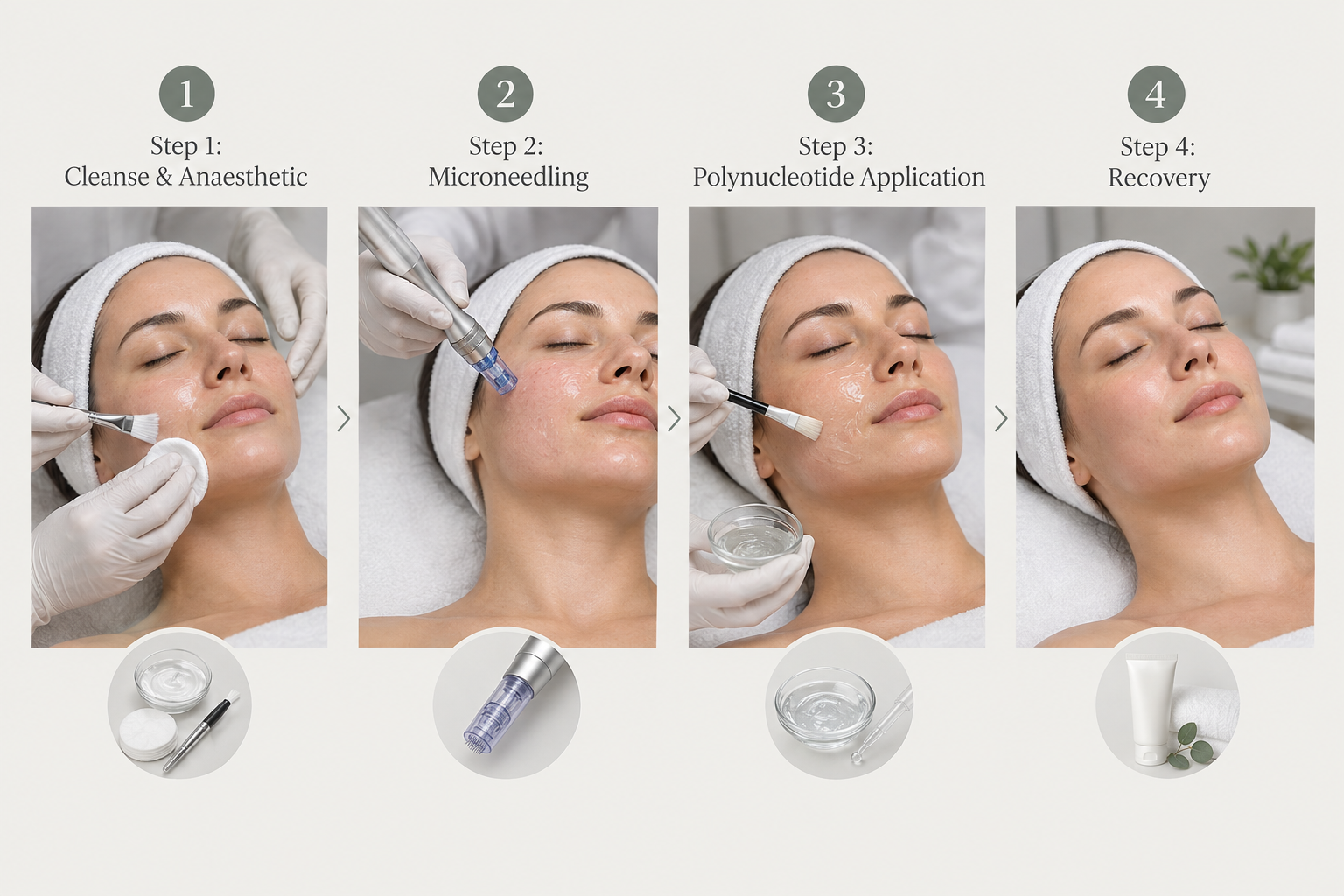
The treatment area typically appears red and may feel warm or sensitive immediately after the session, similar in appearance to mild sunburn. The appointment itself usually takes between 60 and 90 minutes in total, including preparation time. Patients are generally advised to avoid makeup, active skincare ingredients, and sun exposure for at least 24 to 48 hours following treatment.
How Many Sessions Are Typically Required?
Most practitioners recommend a course of three to six sessions spaced approximately two to four weeks apart for initial skin improvement. The exact number of sessions depends on the individual's skin concerns, the severity of the condition being treated, and the response to treatment. Acne scarring, for example, typically requires more sessions than general skin quality improvement.
Maintenance treatments are often recommended every three to six months after the initial course to sustain results, as the skin's collagen remodelling process is ongoing and the effects of both microneedling and polynucleotide biostimulation are not permanent. Patients should factor in the cumulative time and cost commitment of a full course when considering this combination therapy.
When Do Results Appear and How Long Do They Last?
Results from microneedling with polynucleotides are gradual rather than immediate. The skin's collagen remodelling process takes time, and meaningful improvements in texture, tone, and firmness typically become more visible over four to eight weeks following each session. Some patients notice improved hydration and a subtle radiance relatively early in the course, while structural improvements such as reduced fine lines or improved scar appearance tend to develop more slowly.
The longevity of results varies between individuals and depends on factors including age, skin condition, lifestyle, sun exposure, and the number of sessions completed. Results from a full course of treatment may last six to twelve months in many patients, though this is not guaranteed. Ongoing collagen loss due to natural ageing means that maintenance sessions are generally needed to preserve the improvements achieved.
Downtime and Recovery
Downtime following microneedling with polynucleotides is generally mild to moderate. Most patients experience redness, mild swelling, and skin sensitivity for one to three days after treatment. Some individuals may notice pinpoint bleeding or minor bruising during the session, which typically resolves quickly. Skin may feel tight or slightly dry during the initial healing phase.
The following general aftercare principles are commonly recommended, though patients should follow the specific guidance provided by their treating practitioner:
- Avoid touching or rubbing the treated area for the first 24 hours
- Use only gentle, fragrance-free skincare products during the healing phase
- Avoid active ingredients such as retinoids, AHAs, BHAs, and vitamin C for at least 48 to 72 hours post-treatment
- Apply broad-spectrum SPF daily and minimise direct sun exposure during recovery
- Avoid saunas, steam rooms, and intense exercise for 24 to 48 hours
- Do not apply makeup for at least 24 hours, or as directed by the practitioner
Most patients are able to return to normal daily activities within two to three days, though the skin may remain slightly pink or sensitive for longer in some individuals.
Risks and Side Effects
Microneedling with polynucleotides is generally considered to have a manageable safety profile when performed by a trained and experienced practitioner using appropriate equipment and sterile technique. However, as with any skin treatment, risks and side effects exist and should be discussed before proceeding.
Common side effects include temporary redness, swelling, sensitivity, and mild bruising at the treatment site. These typically resolve within a few days. Less common but possible adverse effects include:
- Post-inflammatory hyperpigmentation (PIH): darkening of the skin following inflammation, which is more common in individuals with darker skin tones (Fitzpatrick skin types IV–VI) and may require additional management
- Infection: a risk with any procedure that breaches the skin barrier; proper sterile technique and aftercare significantly reduce this risk
- Prolonged redness or sensitivity: some individuals experience a more prolonged inflammatory response than expected
- Allergic reaction: although polynucleotide formulations are highly purified, allergic reactions are possible and should be discussed, particularly in individuals with known fish allergies
- Scarring: rare when treatment is performed correctly, but a risk if inappropriate needle depths are used or if the skin is treated while actively infected or inflamed
- Herpes simplex reactivation: individuals with a history of cold sores may experience a flare following microneedling; prophylactic antiviral treatment may be recommended in some cases
The risk profile of the combination therapy is broadly similar to that of microneedling alone, with the addition of the small possibility of a reaction to the polynucleotide formulation itself.
Who May Be Suitable for This Combination Therapy?
Microneedling with polynucleotides may be worth discussing with a qualified practitioner if you are experiencing skin quality concerns such as fine lines, dullness, uneven texture, mild laxity, or acne scarring, and are looking for a treatment that works with the skin's natural repair mechanisms rather than adding external volume or temporarily relaxing muscles.
Candidates who may respond well to this combination generally include adults with mild to moderate skin ageing, those seeking gradual and natural-looking improvement, individuals with dehydrated or thin skin, and patients who have not achieved sufficient results from topical skincare alone. The combination may also be considered as part of a broader treatment plan alongside other aesthetic procedures, depending on individual goals.
Who May Not Be Suitable?
Certain individuals may not be appropriate candidates for microneedling with polynucleotides. A thorough medical history and skin assessment are essential before treatment. Factors that may affect suitability include:
- Active skin infections, open wounds, or inflammatory skin conditions such as active acne, eczema, or rosacea in the treatment area
- Known allergy to fish or fish-derived products (relevant to salmon or trout DNA-derived polynucleotide formulations)
- Pregnancy or breastfeeding, as a precautionary measure given limited safety data in these populations
- Use of blood-thinning medications, which may increase bruising risk
- History of keloid scarring or hypertrophic scarring, which may be exacerbated by microneedling
- Recent use of isotretinoin (roaccutane), as this medication affects skin healing; most practitioners advise waiting six to twelve months after completing a course before undergoing microneedling
- Immunosuppression or conditions affecting wound healing
- Very dark skin tones where the risk of post-inflammatory hyperpigmentation is higher and requires careful assessment
This list is not exhaustive. A qualified practitioner will assess individual suitability based on a full consultation.
Alternatives to Consider
Patients considering microneedling with polynucleotides should be aware of alternative or complementary approaches that may address similar concerns:
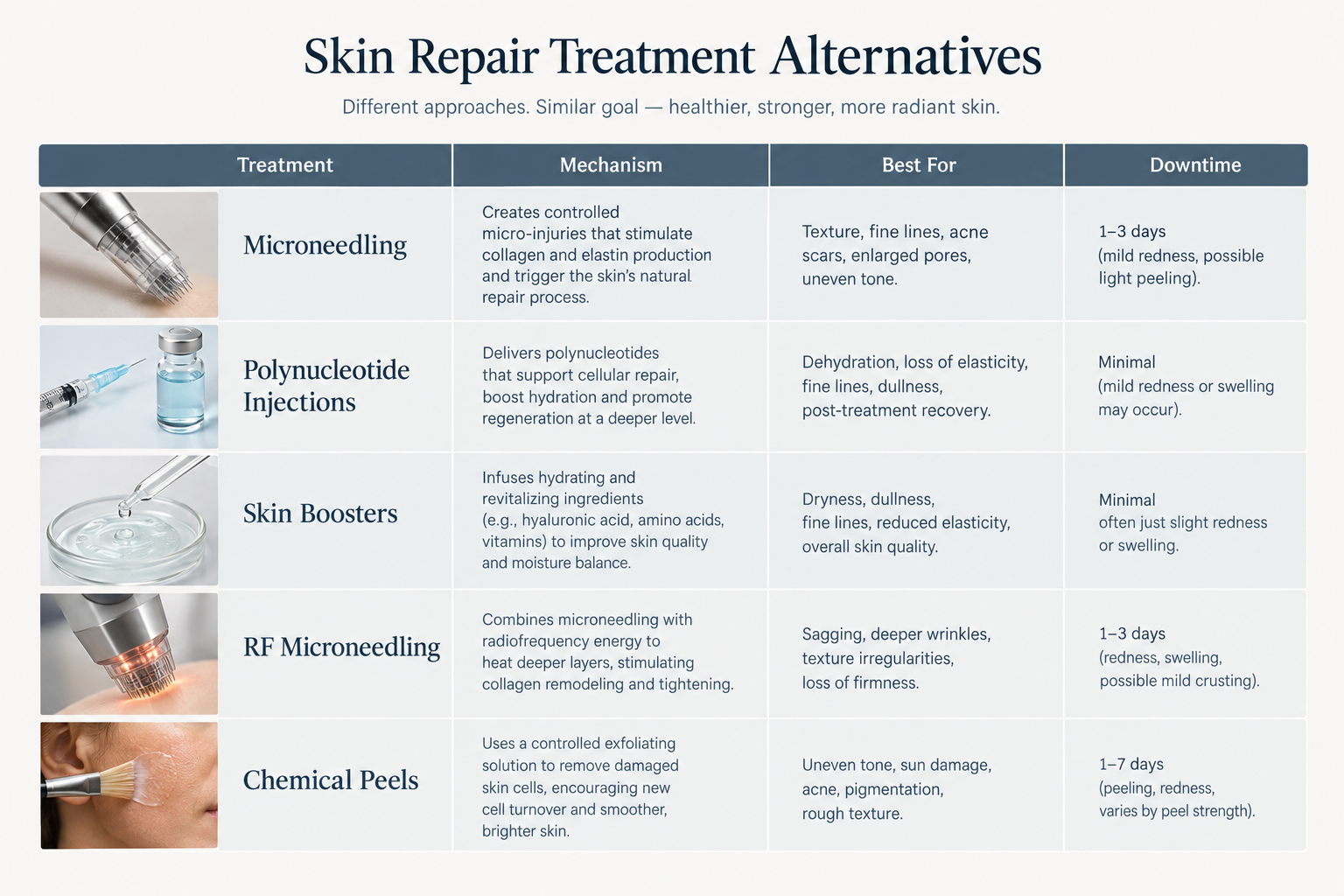
- Microneedling alone: a well-established treatment for collagen induction and scar improvement without the addition of polynucleotides; suitable for patients who prefer a simpler protocol or who are uncertain about polynucleotide formulations
- Polynucleotide injections alone: intradermal injection of polynucleotide formulations as a standalone biorevitalisation treatment, which may be preferred for patients who are not suitable for microneedling
- Skin boosters (hyaluronic acid): injectable hyaluronic acid treatments that primarily improve hydration and superficial skin quality; a different mechanism from polynucleotides but sometimes used for similar concerns
- Radiofrequency microneedling: combines microneedling with radiofrequency energy to enhance collagen stimulation and skin tightening; may be more appropriate for patients with more pronounced laxity
- Chemical peels: surface resurfacing treatments that improve skin texture, tone, and pigmentation; may be used alongside or instead of microneedling depending on the concern
- Laser resurfacing: ablative or non-ablative laser treatments that can address skin texture, pigmentation, and collagen remodelling; typically associated with more downtime but potentially more pronounced results for certain concerns
- Topical retinoids and evidence-based skincare: for patients with mild concerns or those not yet ready for in-clinic procedures, a structured skincare regimen including retinoids, antioxidants, and SPF may provide meaningful improvement over time
The most appropriate approach depends on the individual's specific concerns, skin type, medical history, and treatment goals. A qualified practitioner can help determine which option or combination of options is most likely to be beneficial.
Frequently Asked Questions
Is microneedling with polynucleotides painful?
Most patients find the procedure tolerable when topical anaesthetic cream is applied beforehand. Some discomfort, warmth, or a scratching sensation during the microneedling pass is common, particularly over bony areas. The level of discomfort varies between individuals and treatment areas.
Can polynucleotides be used on the face and body?
Polynucleotide treatments are most commonly applied to the face, neck, décolletage, and hands. Microneedling can also be performed on body areas such as the abdomen or thighs for concerns like stretch marks or skin laxity. Whether the combination is appropriate for a specific area should be discussed with a practitioner.
How soon after treatment can I wear makeup?
Most practitioners advise avoiding makeup for at least 24 hours after microneedling with polynucleotides to reduce the risk of irritation or infection while the skin barrier is temporarily compromised. Specific guidance will depend on the practitioner's protocol and the individual's skin response.
Can this combination be used alongside other aesthetic treatments?
Microneedling with polynucleotides is sometimes incorporated into a broader treatment plan alongside botulinum toxin, dermal fillers, or other skin treatments. The timing and sequencing of treatments should be carefully planned by a qualified practitioner to avoid interactions and allow adequate healing between sessions.
Is there a risk of the polynucleotide formulation causing an allergic reaction?
Polynucleotide formulations derived from salmon or trout DNA are highly purified to remove proteins, but a small risk of allergic reaction remains. Individuals with a known fish allergy should inform their practitioner before treatment, as this may affect suitability or require additional precautions.
How does microneedling with polynucleotides differ from PRP (platelet-rich plasma) microneedling?
PRP microneedling uses the patient's own blood, processed to concentrate growth factors, which is then applied to the skin during microneedling. Polynucleotide microneedling uses a standardised pharmaceutical-grade formulation derived from fish DNA. Both aim to support skin repair and collagen production, but through different mechanisms and with different evidence profiles. Neither approach has been conclusively shown to be superior to the other for all indications.
Is Microneedling with Polynucleotides Worth Considering for Skin Repair?
Microneedling with polynucleotides represents a logical combination of two treatments with complementary mechanisms: one that physically stimulates the skin's repair response and one that may support cellular regeneration at a biological level. For patients with skin quality concerns such as fine lines, texture irregularities, dullness, or mild acne scarring, the combination may offer a meaningful improvement over time, particularly when delivered as a structured course of treatments.
The evidence base is encouraging but still developing. Patients should approach this combination therapy with realistic expectations — gradual, natural-looking improvement rather than dramatic transformation, and results that require maintenance to sustain. The treatment is not appropriate for everyone, and a thorough consultation with a qualified and experienced practitioner is the essential first step to determine whether this approach is suitable for your specific concerns, skin type, and medical history.
If you are considering microneedling with polynucleotides, look for a practitioner who can explain the rationale for the combination in your individual case, discuss the realistic outcomes and limitations honestly, and provide a clear aftercare plan. A well-informed decision made in partnership with a qualified professional is the foundation of a safe and satisfying treatment experience.
