
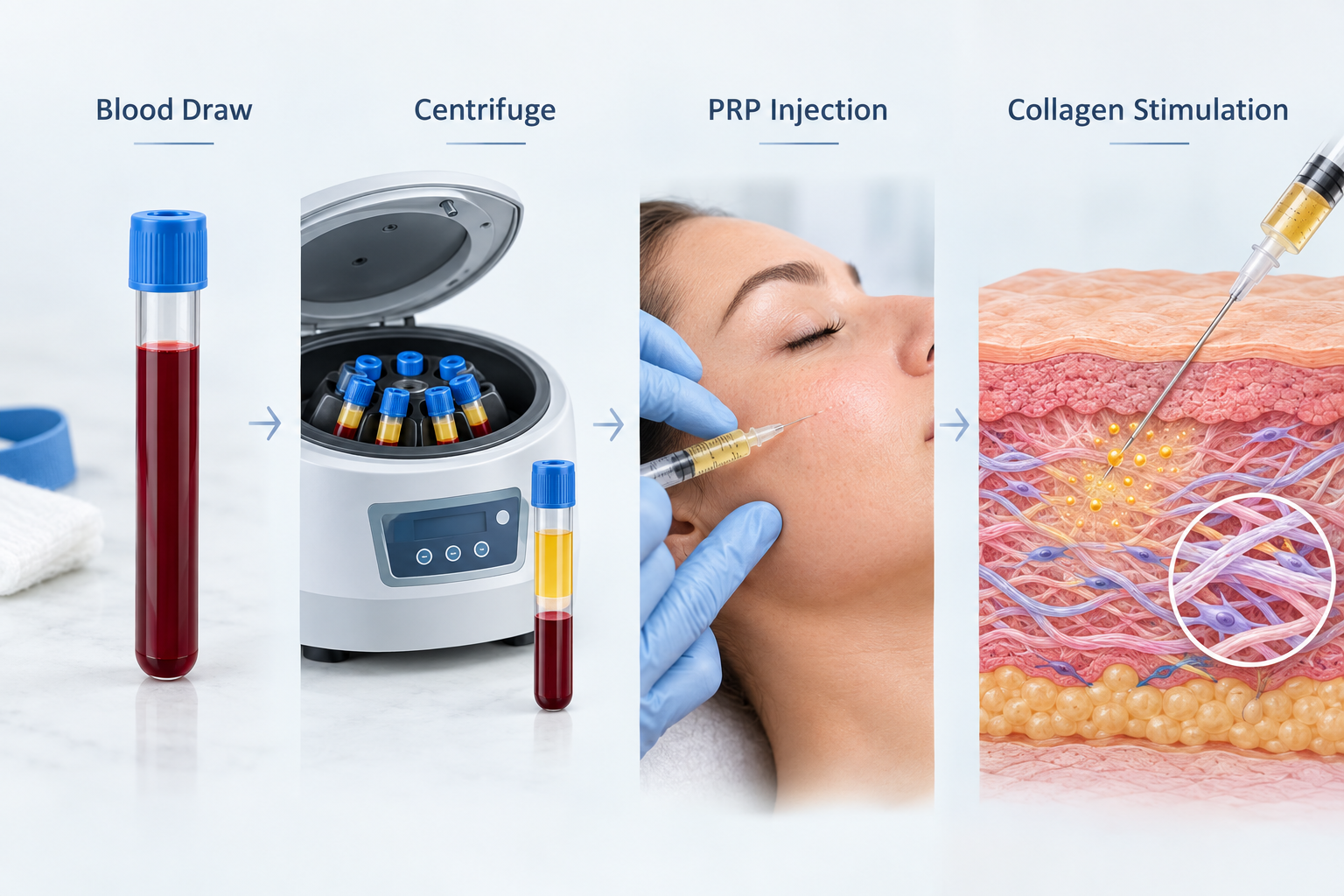

Platelet-rich plasma (PRP) treatment for the face uses a concentrated preparation of your own blood to deliver growth factors directly into the skin, with the aim of stimulating collagen production, improving skin texture and tone, and supporting natural tissue repair. Interest in PRP facials has grown considerably as patients look for nonsurgical anti-aging options that work with the body's own biology rather than introducing synthetic substances. This guide explains how the treatment works, what the procedure involves, what results are realistic, who may be suitable, and how PRP compares to other popular facial treatments.
Key Takeaways
- PRP facial treatment uses your own platelet-rich plasma to deliver growth factors that may stimulate collagen remodeling and improve skin quality over several months.
- Most patients require a treatment series of three to six sessions spaced four to six weeks apart before seeing peak results, which typically develop gradually over three to six months.
- PRP is an autologous treatment, meaning it is derived from your own blood, which eliminates the risk of allergic reaction but does not remove all procedural risks.
- Evidence supporting PRP for facial rejuvenation is promising but still developing; results vary between individuals and are not guaranteed.
- A qualified, board-certified provider working in a sterile environment is essential for both safety and outcome quality.
What Is PRP Treatment for the Face?
Platelet-rich plasma therapy is a minimally invasive procedure in which a small amount of the patient's own blood is drawn, processed in a centrifuge to concentrate the platelets, and then applied or injected into targeted areas of the face. Because the preparation comes entirely from the patient, it is described as an autologous treatment, meaning there is no donor material and no foreign substance introduced into the skin.
Platelets are best known for their role in blood clotting, but they also carry a rich payload of growth factors — signaling proteins that regulate tissue repair, cell proliferation, and collagen synthesis. When concentrated PRP is delivered into the dermis, these growth factors interact with local fibroblasts and other skin cells, potentially triggering a cascade of regenerative activity. The treatment is sometimes called a vampire facial, particularly when combined with microneedling, a name that reflects the blood-draw element rather than anything about the experience itself.
PRP is used for a range of facial concerns including fine lines and wrinkles, acne scarring, enlarged pores, uneven skin tone, skin laxity, and dullness. It is also used for under-eye rejuvenation in the tear trough area, where the skin is thin and conventional fillers carry a higher risk profile. The treatment does not add volume in the way that dermal fillers do; instead, it aims to improve the quality and structure of the skin itself over time.
How Does PRP Work? The Science Behind the Treatment
The mechanism behind PRP facial treatment centres on growth factor signaling. Normal blood contains platelets at a concentration of roughly 150,000 to 400,000 per microlitre. A properly prepared PRP preparation concentrates platelets to approximately three to five times that baseline level, delivering a significantly higher density of bioactive proteins to the treatment site.
Key growth factors present in PRP include platelet-derived growth factor (PDGF), vascular endothelial growth factor (VEGF), and transforming growth factor (TGF), among others. Once delivered into the dermis, these proteins bind to receptors on fibroblasts — the cells responsible for producing collagen and elastin — and stimulate fibroblast activity. This process, known as neocollagenesis, involves the synthesis of new collagen fibres and the remodelling of existing ones, gradually improving skin firmness, elasticity, and surface texture.
Because collagen remodeling is a biological process that unfolds over weeks and months, PRP results are not immediate. The skin's response to growth factor stimulation continues long after the treatment appointment itself, which is why the most noticeable improvements typically appear between three and six months after a course of treatment. This gradual timeline is a meaningful distinction from treatments like botulinum toxin or hyaluronic acid fillers, which produce visible changes within days to weeks.
Delivery Methods: Injections, Microneedling, and the Vampire Facelift
PRP can be delivered to the face in several ways, and the method chosen affects both the experience and the areas that can be targeted.
Direct intradermal injection involves using a fine-gauge needle to deposit PRP into specific areas of the dermis. This approach allows precise targeting of zones such as the tear trough, nasolabial folds, and forehead lines. Injected PRP sits within the tissue and releases growth factors locally over time.
Microneedling with PRP — often referred to as the vampire facial — combines mechanical skin needling with topical application of PRP. The microneedling device creates thousands of micro-channels in the skin surface, allowing the PRP to penetrate into the dermis rather than remaining on the surface. This combination may enhance the depth of growth factor delivery compared to topical application alone, and some practitioners consider it more effective for overall skin texture and tone improvement than either treatment used independently.
The vampire facelift is a distinct procedure that should not be confused with the vampire facial. It combines PRP injections with hyaluronic acid filler to address both skin quality and volume loss simultaneously. The filler provides structural support and immediate volume, while the PRP aims to stimulate longer-term collagen production. This approach is typically used for patients with more significant volume depletion alongside skin quality concerns.
The choice between these delivery methods depends on the patient's primary concerns, skin condition, and the practitioner's clinical assessment. A consultation with a qualified provider is necessary to determine which approach, or which combination, is most appropriate.
What Skin Concerns Can PRP Address?
PRP facial treatment is used for a range of concerns, though the strength of evidence varies across different indications.
- Fine lines and wrinkles: PRP may help soften superficial lines by improving skin thickness and elasticity through collagen stimulation. It is generally more effective for fine, static lines than for deep dynamic wrinkles caused by repeated muscle movement.
- Acne scarring: Several studies suggest PRP, particularly when combined with microneedling, may improve the appearance of atrophic acne scars by promoting tissue remodeling in the affected dermis.
- Skin texture and tone: Patients often report improvements in overall skin smoothness, radiance, and hydration following a treatment series, attributed to increased fibroblast activity and collagen synthesis.
- Enlarged pores: Improved skin structure and elasticity may contribute to a reduction in the visible appearance of enlarged pores, though this is a secondary rather than primary effect.
- Hyperpigmentation and sun damage: Some evidence suggests PRP may support more even skin tone by influencing cell turnover and reducing photodamage, though results for pigmentation concerns tend to be more variable.
- Under-eye rejuvenation: The tear trough area is a common treatment zone for PRP injections. PRP may improve skin quality and reduce the appearance of fine lines and dark circles caused by skin thinning, though it does not address hollowness caused by volume loss in the same way that fillers do.
- Skin laxity: Mild to moderate skin laxity may respond to PRP through improved collagen density, though significant sagging typically requires more structural interventions.
What Happens During a PRP Facial Appointment?
Understanding the procedure helps set realistic expectations about the experience and recovery.
- Consultation and assessment: Before treatment, a qualified provider reviews your medical history, skin concerns, and goals to confirm suitability and recommend the appropriate delivery method.
- Topical numbing: A topical numbing cream or topical anesthetic is applied to the treatment area and left for approximately 20 to 30 minutes to minimise discomfort during the procedure.
- Blood draw: A small blood sample — typically 10 to 20 millilitres — is drawn from a vein in the arm, similar to a routine blood test.
- Centrifuge processing: The blood sample is placed in a centrifuge, which spins at high speed to separate the blood components. This concentrates the platelets into the plasma layer, producing the PRP preparation.
- Application or injection: Depending on the chosen method, the PRP is either injected directly into targeted facial areas using a fine-gauge needle, applied topically during microneedling, or both.
- Post-treatment care: The provider applies soothing products and gives aftercare instructions. The appointment typically takes between 45 and 75 minutes in total.
Most patients describe the procedure as tolerable with numbing in place, though some discomfort, pressure, or a mild stinging sensation is common, particularly around more sensitive areas such as the under-eye region.
PRP Facial Results: Timeline and Realistic Expectations
One of the most important aspects of PRP treatment for the face is understanding that results develop gradually and are not visible immediately after the appointment. Initial improvements in skin hydration and a subtle glow may be noticeable within three to four weeks as early cellular activity begins. More meaningful changes in skin texture, firmness, and fine line appearance typically become visible between six and twelve weeks, with peak results generally reached at three to six months as collagen remodeling progresses.
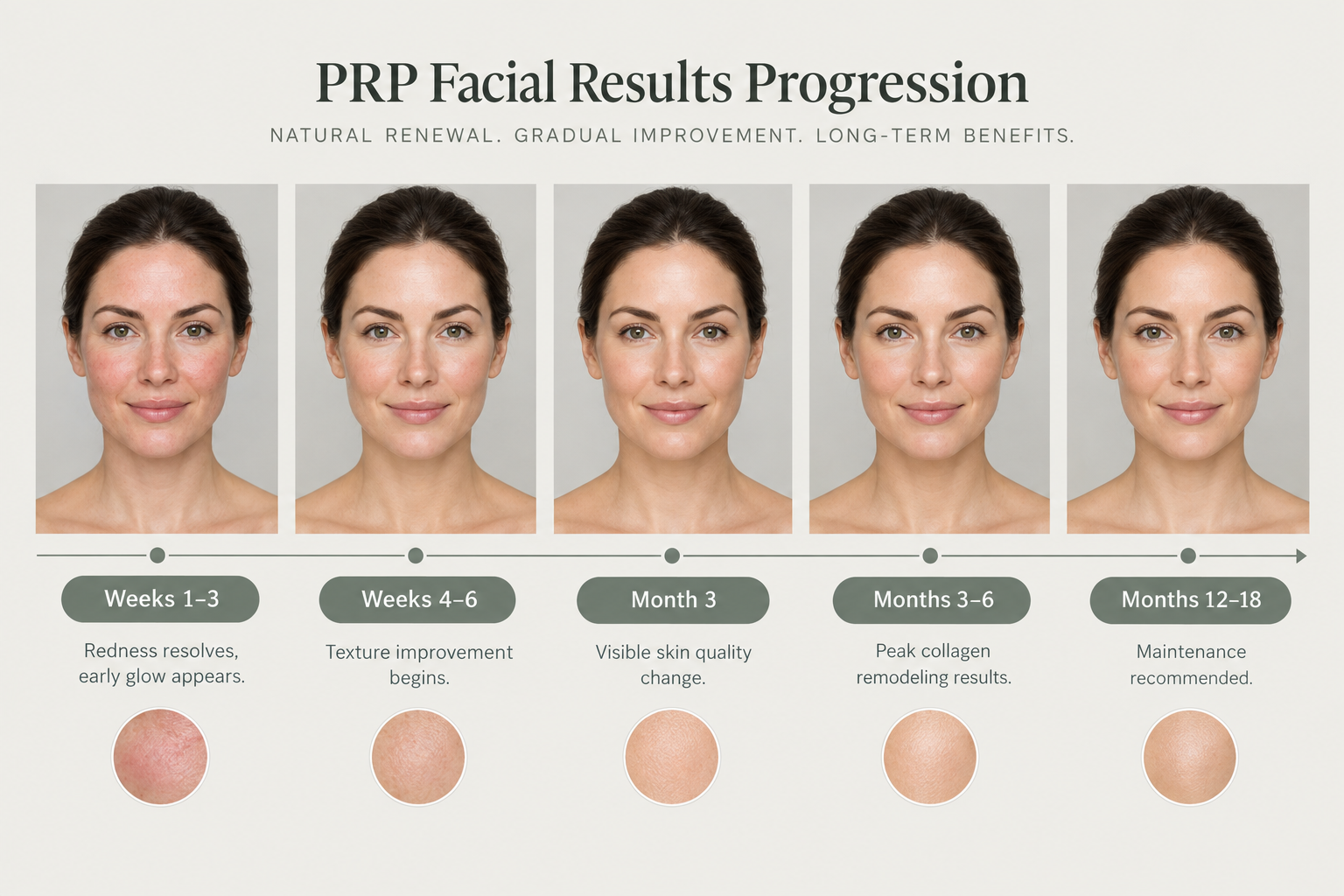
Results from a full treatment series may last approximately 12 to 18 months, after which a maintenance session every six to twelve months is typically recommended to sustain the improvements. Individual outcomes vary considerably depending on age, skin condition, lifestyle factors such as sun exposure and smoking, the number of sessions completed, and the delivery method used.
It is important to approach PRP with realistic expectations. While clinical studies and patient reports are generally positive, the evidence base is still developing. A 2024 review published in peer-reviewed literature noted that PRP shows promise for skin rejuvenation but that study quality and standardisation of PRP preparation methods vary, making it difficult to draw definitive conclusions about efficacy across all indications. PRP is unlikely to produce the same degree of visible change as surgical procedures or more aggressive resurfacing treatments, and it works best for patients with mild to moderate concerns rather than advanced aging.
How Many Sessions Are Needed?
A single PRP session rarely produces the full benefit of the treatment. Most protocols recommend an initial treatment series of three to six sessions, spaced four to six weeks apart, to build a cumulative collagen response. The exact number depends on the severity of the concerns being addressed, the delivery method, and how the individual's skin responds to the initial sessions.
After completing the initial series, many patients choose to schedule a maintenance session once or twice a year to preserve the results. Some practitioners recommend combining PRP with complementary treatments — such as botulinum toxin for dynamic lines or hyaluronic acid filler for volume loss — at appropriate intervals, since PRP addresses skin quality rather than muscle activity or structural volume. The timing and sequencing of combination treatments should be guided by a qualified provider based on individual assessment.
PRP vs. Other Facial Treatments
| Treatment | Mechanism | Primary Goal | Onset | Longevity | Downtime | Key Limitation |
|---|---|---|---|---|---|---|
| PRP facial | Growth factor stimulation, collagen remodeling | Skin quality, texture, fine lines | 3–6 months (peak) | 12–18 months | 1–3 days | Gradual results; multiple sessions needed |
| Botulinum toxin (Botox) | Muscle relaxation | Dynamic wrinkles | 3–14 days | 3–4 months | Minimal | Does not improve skin quality or texture |
| Dermal fillers | Volume replacement, structural support | Volume loss, deep lines | Immediate | 6–18 months (varies by product) | 1–3 days | Does not stimulate collagen; adds volume only |
| Microneedling alone | Controlled micro-injury, collagen induction | Texture, scars, pores | 4–8 weeks | 6–12 months | 1–3 days | Less growth factor stimulation than PRP combination |
| Chemical peel | Controlled exfoliation, cell turnover | Pigmentation, texture, tone | 1–4 weeks | Variable | 3–14 days (depth-dependent) | Not suitable for all skin types; more downtime at deeper levels |
| Laser resurfacing | Thermal injury, collagen stimulation | Wrinkles, pigmentation, texture | 1–3 months | 1–3 years | 5–14 days | Higher downtime; pigmentation risk on darker skin tones |
PRP occupies a distinct position in this landscape: it is one of the few treatments that uses the body's own biology to drive skin improvement, making it particularly relevant for patients who prefer to avoid synthetic injectables or who have concerns about reactions to foreign substances. However, it is not a replacement for treatments that address different mechanisms — muscle activity, volume loss, or significant surface damage — and is often most effective when used as part of a broader, personalised treatment plan.
PRP and PRF: Understanding the Difference
Platelet-rich fibrin (PRF) is a next-generation variant of PRP that is gaining attention in aesthetic medicine. Unlike PRP, which is processed with anticoagulants and spun at higher centrifuge speeds, PRF is prepared without additives and at a lower spin speed. This produces a fibrin matrix — a natural scaffold — that releases growth factors more slowly and over a longer period than standard PRP.
Some practitioners consider PRF to offer a more sustained growth factor release profile, which may translate to a longer-lasting stimulatory effect. PRF also tends to contain a higher concentration of white blood cells, which may contribute additional regenerative signaling. However, the comparative clinical evidence between PRP and PRF for facial rejuvenation is still limited, and neither preparation has been definitively shown to be superior across all indications. If you are considering either option, discussing the specific preparation method and rationale with your provider is worthwhile.
PRP for Different Skin Types
One practical advantage of PRP facial treatment is that it is generally considered suitable for all skin types, including darker skin tones on the Fitzpatrick scale (types IV through VI). Because PRP does not involve heat, light energy, or chemical exfoliation, it does not carry the same risk of post-inflammatory hyperpigmentation that can occur with laser resurfacing or certain chemical peels in patients with more melanin-rich skin. This makes PRP a relevant option for a broader patient population than some alternative skin rejuvenation treatments. Individual assessment is still important, as contraindications relate to health status rather than skin tone.
Who May Be a Good Candidate for PRP?
PRP facial treatment may be worth discussing with a qualified provider if you have mild to moderate skin aging concerns, acne scarring, or skin quality issues and are in good general health. Ideal candidates typically have realistic expectations about gradual, natural-looking improvement rather than dramatic or immediate transformation. Because PRP works by stimulating the body's own repair processes, patients with good baseline health and adequate platelet function tend to respond most predictably.
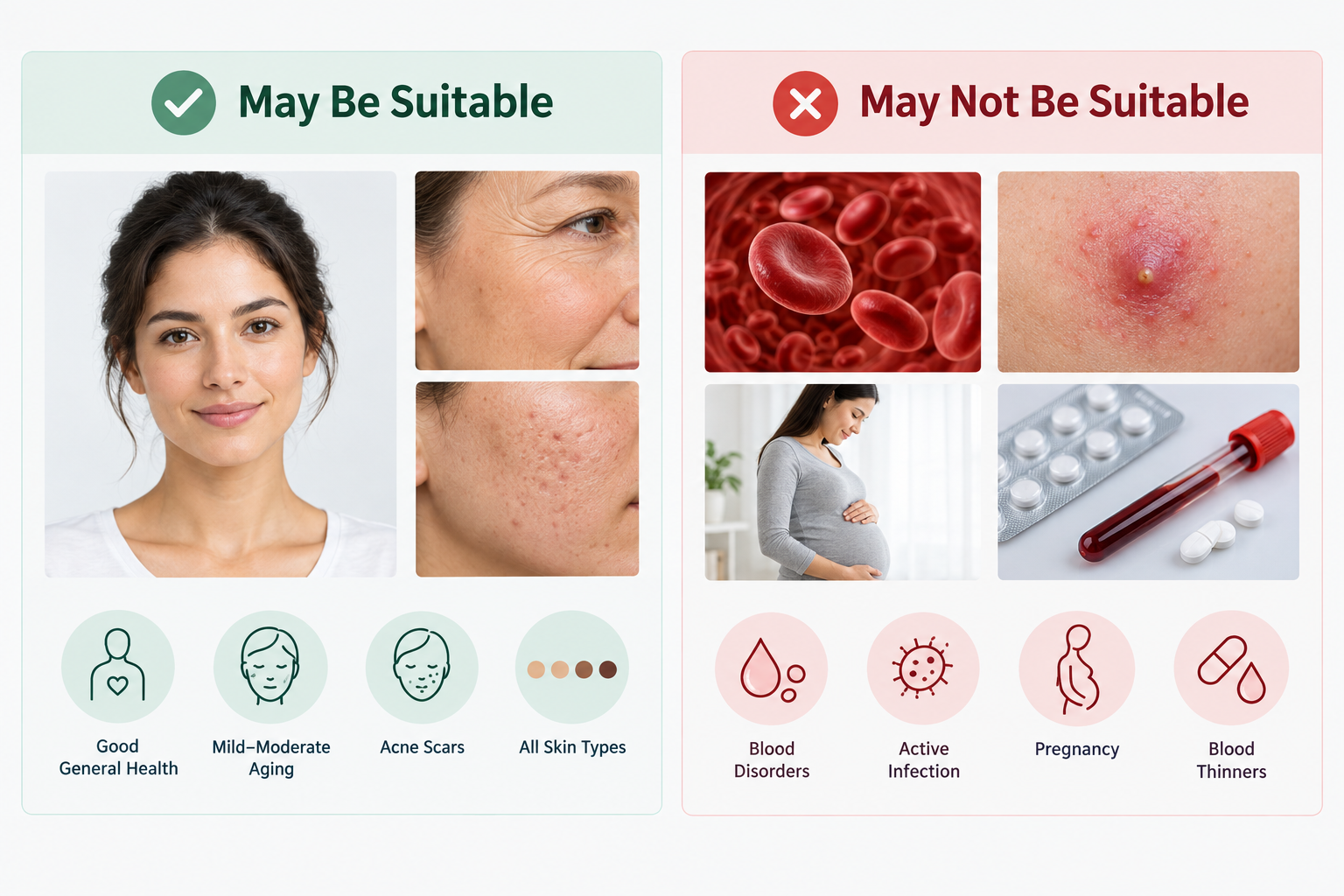
Patients who may be particularly well suited to PRP include those who prefer an autologous approach, those who have not responded fully to topical skincare alone, and those looking to complement other treatments such as botulinum toxin or fillers with a skin quality intervention.
Who Should Avoid PRP Treatment?
PRP is not appropriate for everyone. A thorough medical history review before treatment is essential. Contraindications include:
- Active skin infections, open wounds, or inflammatory skin conditions in the treatment area
- Blood disorders, including thrombocytopenia (low platelet count) or platelet dysfunction
- Chronic liver disease or conditions affecting blood clotting
- Active cancer or a history of certain cancers, particularly blood-related malignancies
- Use of anticoagulant medications (blood thinners) that cannot be safely paused
- Pregnancy or breastfeeding
- Certain autoimmune conditions
- Sepsis or systemic infection
Because PRP is derived from the patient's own blood, the risk of allergic reaction is virtually zero — a meaningful advantage over treatments that introduce synthetic or donor materials. However, procedural risks such as infection, bruising, and, in rare cases, scarring remain possible if the treatment is not performed correctly in a sterile environment.
Side Effects and Recovery
PRP facial treatment is associated with minimal downtime compared to more aggressive resurfacing procedures, though some temporary side effects are expected. Common reactions in the 24 to 72 hours following treatment include redness, swelling, tenderness, and bruising at injection or needling sites. These effects are generally mild and resolve within a few days.
Rare but possible complications include infection (particularly if sterile protocols are not followed), prolonged swelling, and, in very rare cases, scarring. Choosing a board-certified provider who works in a clinical setting with appropriate sterile protocols significantly reduces these risks.
Aftercare Guidelines
- Avoid applying makeup for 24 to 48 hours after treatment
- Protect the skin from sun exposure and use SPF 50 or higher consistently
- Avoid vigorous exercise and activities that cause significant sweating for 24 to 48 hours
- Avoid heat exposure — saunas, steam rooms, and very hot showers — for approximately one week
- Do not use retinoids, exfoliating acids, or other active skincare ingredients for seven to ten days
- Avoid chemical peels or laser treatments for at least two weeks following PRP
- Stay well hydrated in the days around treatment, as adequate hydration supports platelet quality
Before Your Appointment: Preparation Tips
Pre-treatment preparation is an area that many patients overlook but that can influence both the quality of the PRP preparation and the comfort of the procedure. In the days before your appointment, it is generally advisable to avoid non-steroidal anti-inflammatory drugs (NSAIDs) such as ibuprofen and aspirin, as these can impair platelet function. Alcohol should also be avoided for at least 24 hours before treatment. If you take prescription blood thinners, discuss this with your provider well in advance, as stopping these medications requires medical guidance. Staying well hydrated and avoiding retinoids or exfoliating products for several days before the appointment helps prepare the skin and supports a more comfortable recovery.
How to Choose a Provider for PRP Facial Treatment
The quality of PRP treatment depends significantly on the provider's training, the preparation protocol used, and the clinical environment. Not all PRP preparations are equivalent — the centrifuge system, spin speed, and processing technique affect the final platelet concentration and growth factor content. A provider who uses a validated, medical-grade centrifuge system and follows consistent sterile protocols is more likely to produce a preparation that delivers meaningful results.
When evaluating a provider, look for board-certified credentials in dermatology, plastic surgery, or a related medical specialty, or a qualified aesthetic practitioner with documented training in PRP procedures. Ask about the specific PRP system used, the typical platelet concentration achieved, and how many sessions they recommend for your concerns. Be cautious of providers who guarantee specific outcomes, offer unusually low prices that may reflect compromised preparation quality, or perform treatments in non-clinical settings without appropriate sterile protocols.
Cost of PRP Facial Treatment
PRP treatment for the face is an elective cosmetic procedure and is not covered by health insurance. Costs vary considerably depending on the provider's credentials and location, the delivery method used, and the number of areas treated. As a general guide, a single session of PRP injections may range from approximately £200 to £600 in the UK, while microneedling with PRP sessions tend to fall in a similar or slightly higher range. A vampire facelift combining PRP with hyaluronic acid filler carries a higher cost reflecting the additional filler component. Package pricing for a full treatment series of three to six sessions is commonly offered and may represent better value than individual session pricing. Always confirm what is included in the quoted price — consultation, the PRP preparation, and aftercare products — before committing to treatment.
Frequently Asked Questions
Does PRP facial treatment actually work?
Clinical studies and patient outcomes suggest PRP can produce meaningful improvements in skin texture, fine lines, and acne scarring for many patients, particularly when a full treatment series is completed. However, the evidence base is still developing, results vary between individuals, and PRP is unlikely to produce the same degree of change as surgical or more aggressive resurfacing procedures. Realistic expectations and a thorough consultation are important before proceeding.
Is one PRP session enough?
A single session is unlikely to produce the full benefit of PRP treatment. Most protocols recommend three to six sessions spaced four to six weeks apart to build a cumulative collagen response. Some patients with mild concerns may see satisfactory improvement after two or three sessions, but this varies.
Is PRP treatment painful?
Most patients find PRP treatment tolerable when a topical numbing cream is applied beforehand. Some discomfort, pressure, or mild stinging is common during injection or microneedling, particularly in sensitive areas such as around the eyes. The blood draw itself is similar to a routine blood test.
How long do PRP facial results last?
Results from a completed treatment series typically last approximately 12 to 18 months. Maintenance sessions every six to twelve months are generally recommended to sustain improvements. Individual longevity depends on age, skin condition, lifestyle, and the number of initial sessions completed.
Is PRP safe for darker skin tones?
PRP is generally considered suitable for all skin types, including darker Fitzpatrick skin tones, because it does not involve heat or light energy that can trigger post-inflammatory hyperpigmentation. This makes it a relevant option for patients who may not be ideal candidates for certain laser or chemical peel treatments.
Can PRP be combined with Botox or fillers?
Yes, PRP is frequently used alongside botulinum toxin or dermal fillers as part of a combination approach, since each treatment addresses different aspects of facial aging. The timing and sequencing of these treatments should be guided by your provider to avoid interference between procedures and to optimise results.
What is the difference between a vampire facial and a vampire facelift?
A vampire facial refers to microneedling with PRP applied topically, targeting skin texture and quality. A vampire facelift combines PRP injections with hyaluronic acid filler to address both skin quality and volume loss. The two procedures have different indications and price points, and the appropriate choice depends on the patient's specific concerns.
Is PRP Facial Treatment Worth Considering for Your Skin Goals?
PRP treatment for the face offers a biologically grounded approach to skin rejuvenation that may suit patients looking for gradual, natural-looking improvement in skin quality, texture, and fine lines without synthetic injectables or significant downtime. Its autologous nature eliminates allergic reaction risk, and its suitability across all skin types makes it accessible to a broad range of patients. The treatment is particularly relevant for those with mild to moderate aging concerns, acne scarring, or skin dullness who are willing to commit to a treatment series and accept that results develop over months rather than days.
The limitations are equally important to understand. PRP is not a replacement for treatments that address volume loss, significant skin laxity, or deep dynamic wrinkles, and the evidence base, while promising, is still maturing. Results are not guaranteed and vary meaningfully between individuals. The quality of the outcome is closely tied to the provider's training, the preparation protocol, and the clinical environment — making the choice of practitioner one of the most important decisions in the process.
If PRP facial treatment aligns with your skin concerns and expectations, a consultation with a qualified, board-certified provider is the appropriate next step. A thorough assessment of your skin, medical history, and goals will determine whether PRP is suitable for you, which delivery method is most appropriate, and how it might fit within a broader skin health plan.
