
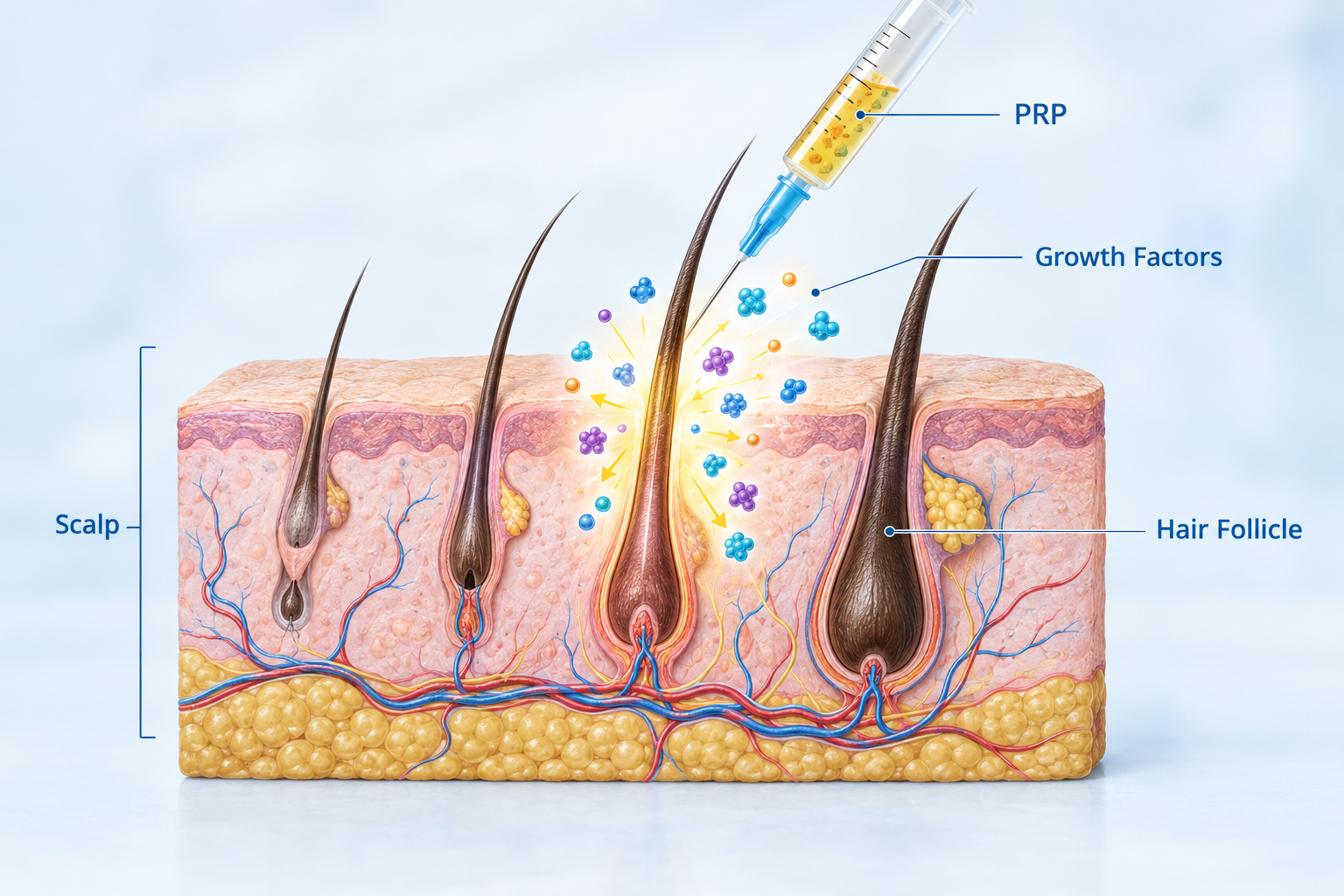

Platelet-rich plasma (PRP) hair treatment has become one of the more widely discussed non-surgical options for people experiencing hair thinning or early hair loss. The approach uses a concentration of the patient's own blood platelets, which are injected into the scalp with the aim of stimulating hair follicles and potentially improving hair thickness and density. Interest in PRP for hair has grown considerably over the past decade, partly because it avoids synthetic drugs and partly because the evidence base, while still developing, is more substantial than for many other aesthetic hair treatments. This article explains how PRP hair treatment works, what the clinical evidence currently suggests, who may be a suitable candidate, what the treatment experience involves, and what realistic outcomes look like.
Key Takeaways
- PRP hair treatment uses concentrated platelets from the patient's own blood, injected into the scalp to support follicle activity and may improve hair thickness and density in suitable candidates.
- Evidence is most consistent for androgenetic alopecia (pattern hair loss), though results vary between individuals and are not guaranteed.
- Multiple sessions are typically required, and maintenance treatments are usually needed to sustain any improvement.
- PRP is generally considered low-risk because it uses the patient's own blood, but side effects and contraindications exist and should be discussed with a qualified practitioner.
- PRP is not a cure for hair loss and works best as part of a broader hair health strategy; it is unlikely to regrow hair in areas where follicles are no longer active.
What Is PRP Hair Treatment?
Platelet-rich plasma is a preparation derived from a small sample of the patient's own blood. Blood contains red cells, white cells, plasma, and platelets. Platelets are best known for their role in clotting, but they also carry a range of growth factors — proteins that play a role in tissue repair, cell proliferation, and the regulation of local biological processes. When blood is processed in a centrifuge, the platelets and plasma can be separated and concentrated into a volume significantly richer in platelets than whole blood. This concentrated preparation is what practitioners refer to as PRP.
In the context of hair treatment, PRP is injected directly into the scalp at the level of the hair follicles. The rationale is that the growth factors released by activated platelets — including platelet-derived growth factor (PDGF), vascular endothelial growth factor (VEGF), and insulin-like growth factor (IGF) — may support follicle health, prolong the active growth phase of the hair cycle (known as the anagen phase), and potentially stimulate follicles that have become less active. The treatment does not introduce any foreign substance; the plasma is entirely derived from the patient's own blood, which is one reason it is often described as an autologous procedure.
How PRP May Improve Hair Thickness
Hair thickness is determined partly by the diameter of individual hair shafts and partly by the overall density of active follicles on the scalp. In androgenetic alopecia — the most common form of pattern hair loss in both men and women — follicles gradually miniaturize under the influence of dihydrotestosterone (DHT), producing progressively finer and shorter hairs before eventually becoming inactive. PRP does not block DHT, so it does not address the underlying hormonal driver of pattern hair loss in the same way that medications such as finasteride do. Instead, PRP is thought to work by creating a more supportive biological environment around the follicle.
The growth factors delivered through PRP injections may help to increase blood supply to the follicle, encourage follicular cells to remain in the active growth phase for longer, and reduce the rate at which follicles enter the resting or shedding phases of the hair cycle. Over a course of treatments, this may translate into hairs that appear thicker, a reduction in the rate of shedding, and in some cases an increase in the number of visible hairs per unit area of scalp. Clinical studies have used measures such as hair count per square centimetre, hair shaft diameter, and standardized photographic assessment to evaluate these changes. Results across published studies are generally positive for patients with early to moderate androgenetic alopecia, though the quality and consistency of evidence varies, and not all patients respond equally.
What the Evidence Currently Shows
The clinical evidence for PRP as a hair loss treatment has grown meaningfully over the past ten years. Several randomized controlled trials and systematic reviews have reported improvements in hair density and thickness in patients with androgenetic alopecia following a course of PRP injections. A number of studies have also compared PRP to minoxidil, a topical medication commonly used for hair loss, with some finding comparable or complementary effects when the two are used together. However, it is important to note that the field lacks large-scale, long-term, standardized trials, and the preparation methods for PRP — including the centrifugation protocol, platelet concentration, and activation technique — vary between clinics and studies, making direct comparisons difficult.
Evidence for PRP in other types of hair loss, such as alopecia areata (an autoimmune condition causing patchy hair loss) or scarring alopecias, is more limited and less consistent. Some small studies suggest a potential benefit in alopecia areata, but this remains an area where the evidence is still developing and where specialist dermatological assessment is particularly important before considering treatment. PRP is generally not considered appropriate for scarring alopecias, where follicle destruction has already occurred.
Overall, the current evidence supports PRP as a reasonable option for selected patients with androgenetic alopecia, particularly those in the earlier stages of hair loss, but it should be understood as a treatment that may slow progression and improve appearance rather than one that reverses advanced hair loss or provides a permanent solution.
Who May Be a Suitable Candidate
PRP hair treatment tends to produce the most meaningful results in patients who still have a reasonable number of active or partially active follicles. Candidates who are often considered suitable include adults experiencing early to moderate androgenetic alopecia, those who have noticed increased hair shedding or a gradual reduction in hair volume, and individuals who prefer to avoid or complement pharmaceutical treatments. Both men and women may be assessed for PRP, though the pattern and cause of hair loss can differ between sexes and should be evaluated individually.
Patients who may benefit less, or for whom PRP may not be appropriate, include those with advanced hair loss where large areas of the scalp show no active follicular activity, individuals with certain blood disorders or platelet dysfunction, those taking anticoagulant medications, and patients with active scalp infections or inflammatory skin conditions affecting the treatment area. People with a history of certain cancers, particularly haematological malignancies, are generally advised to avoid PRP. Pregnancy is also typically considered a contraindication. A thorough medical history and scalp assessment by a qualified practitioner is essential before proceeding.
It is also worth noting that hair loss can have multiple causes — including nutritional deficiencies, thyroid dysfunction, hormonal changes, stress, and medication side effects — and these should be identified and addressed before or alongside PRP treatment. PRP is unlikely to produce meaningful results if an underlying correctable cause of hair loss has not been managed.
What the Treatment Involves
A PRP hair treatment session typically begins with a blood draw from the patient's arm, usually around 10 to 60 millilitres depending on the protocol used. The blood sample is then placed in a centrifuge, which spins at a controlled speed to separate the blood components and concentrate the platelets within the plasma fraction. This process generally takes around 10 to 15 minutes. The resulting PRP is then prepared for injection, and in some protocols a calcium chloride solution or other activating agent is added to encourage platelet activation before injection.
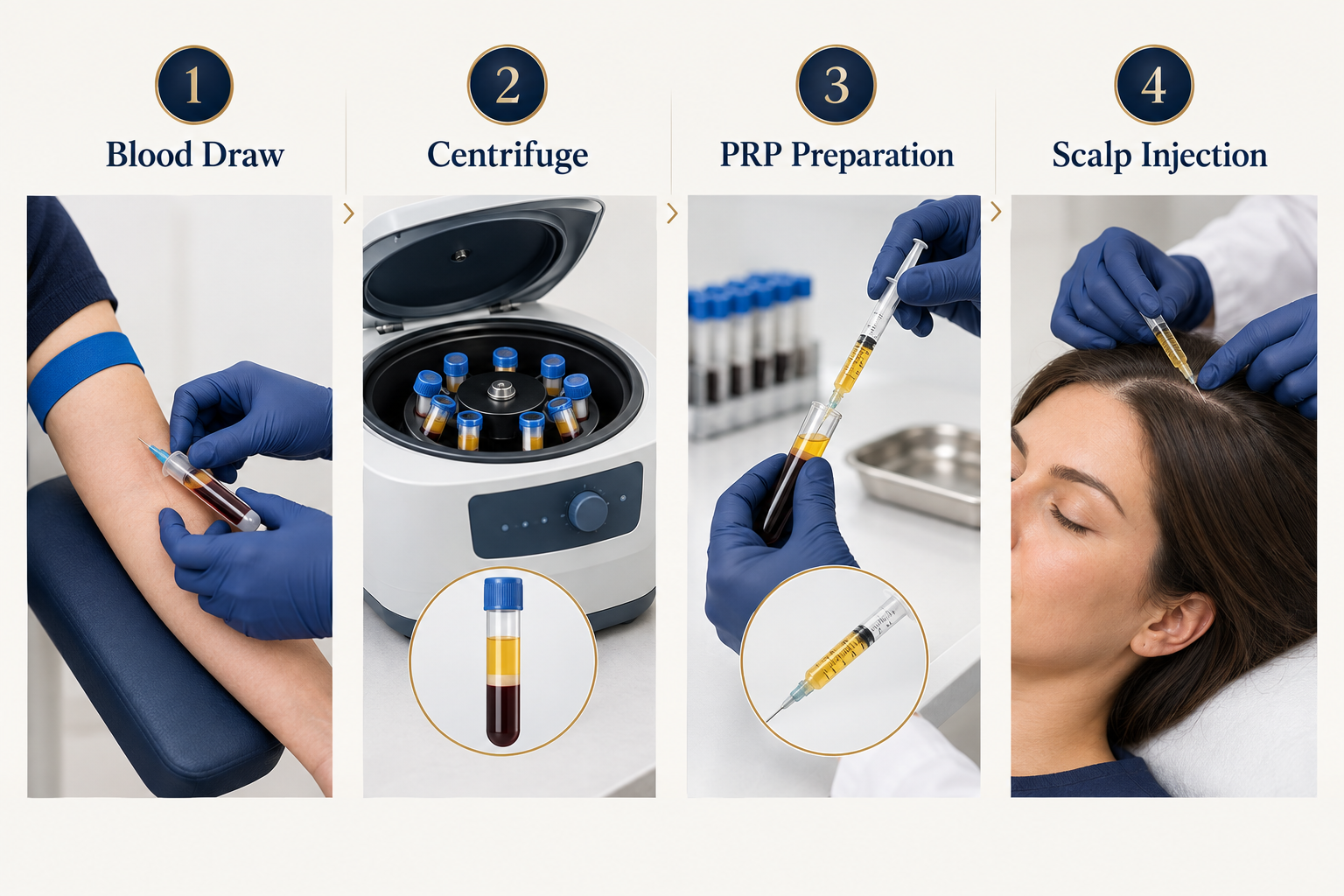
The PRP is injected into the scalp using a fine needle, typically across the areas of thinning or concern. The number of injection points and the depth of injection are determined by the practitioner based on the treatment area and the individual's scalp anatomy. Some practitioners apply a topical anaesthetic cream to the scalp beforehand to reduce discomfort, and others use local anaesthetic injections. The injections themselves can cause a sensation of pressure or mild stinging. The entire appointment, from blood draw to completion of injections, typically takes between 45 minutes and 90 minutes.
Most treatment protocols involve an initial course of three to four sessions spaced approximately four weeks apart, followed by maintenance sessions every three to six months. The specific protocol may vary depending on the clinic, the PRP preparation system used, and the individual patient's response. Patients should discuss the proposed schedule and rationale with their practitioner before beginning treatment.
Recovery and Downtime
PRP hair treatment generally involves minimal downtime. Most patients are able to return to their normal daily activities on the same day. The scalp may feel tender, tight, or mildly sore for a day or two after treatment, and some patients notice small areas of redness, swelling, or pinpoint bruising at the injection sites. These effects are typically short-lived and resolve within a few days without intervention.
Practitioners usually advise patients to avoid washing their hair for at least 24 hours after treatment, to refrain from applying styling products or heat to the scalp for a short period, and to avoid vigorous exercise or activities that cause significant sweating on the day of treatment. Alcohol and anti-inflammatory medications such as ibuprofen are sometimes recommended to be avoided around the time of treatment, as these may affect platelet function, though patients should follow the specific guidance provided by their own practitioner and should not stop prescribed medications without medical advice.
When Results May Become Visible
PRP hair treatment does not produce immediate visible changes. Hair growth is a slow biological process, and any improvement in hair thickness or density following PRP typically becomes noticeable over a period of months rather than weeks. Many patients begin to notice a reduction in shedding within the first few weeks after starting a course of treatment, which can be an early indicator of follicular response. More visible changes in hair thickness and coverage generally become apparent around three to six months after beginning the initial treatment course.
Individual response varies considerably. Some patients report a meaningful improvement in hair volume and thickness after a full course of treatment, while others notice more modest changes or find that the primary benefit is a stabilization of hair loss rather than a visible increase in density. Factors that may influence response include the degree of hair loss at the time of treatment, the patient's age, the underlying cause of hair loss, the quality of the PRP preparation, and individual biological variation. Practitioners should set realistic expectations before treatment begins, and patients should be aware that results are not guaranteed.
How Long Results May Last
The effects of PRP hair treatment are not permanent. Because PRP does not address the underlying genetic or hormonal drivers of androgenetic alopecia, hair loss is likely to continue or resume if treatment is discontinued. Most patients who respond well to an initial course of PRP are advised to continue with maintenance sessions, typically every three to six months, to sustain the improvement. Without maintenance, the benefits achieved during the initial course tend to diminish gradually over time.
This ongoing treatment requirement is an important practical consideration. Patients should factor in the time commitment and cumulative cost of maintenance sessions when deciding whether PRP is a suitable long-term approach for them. Some patients choose to combine PRP with other treatments — such as topical minoxidil or, where appropriate, oral medications — to achieve a more sustained effect with potentially fewer maintenance sessions, though the optimal combination strategy should be discussed with a qualified practitioner.
Risks and Side Effects
Because PRP uses the patient's own blood, the risk of allergic reaction or immune rejection is very low. However, PRP hair treatment is not without risk, and patients should be aware of the possible side effects before proceeding. The most commonly reported side effects are temporary and include scalp tenderness, mild swelling, redness at injection sites, and occasional bruising. These typically resolve within a few days.
Less common but more significant risks include infection at the injection sites, which can occur if sterile technique is not maintained, and injury to scalp structures if injections are not performed correctly. Nerve irritation causing temporary numbness or tingling has been reported in some cases. Calcification at injection sites is a rare but documented complication associated with certain PRP activation protocols. There is also a small risk of post-treatment hair shedding in the weeks following treatment, which can be alarming but is generally temporary and may reflect follicular cycling rather than treatment failure.
The safety profile of PRP is generally considered favourable compared to surgical hair restoration or long-term pharmaceutical use, but this does not mean the treatment is risk-free. Choosing a practitioner with appropriate training, experience, and a sterile clinical environment is important for minimizing risk.
Alternatives to PRP for Hair Thinning
PRP is one of several approaches that may be considered for hair thinning, and it is worth understanding how it compares to other options before making a decision.
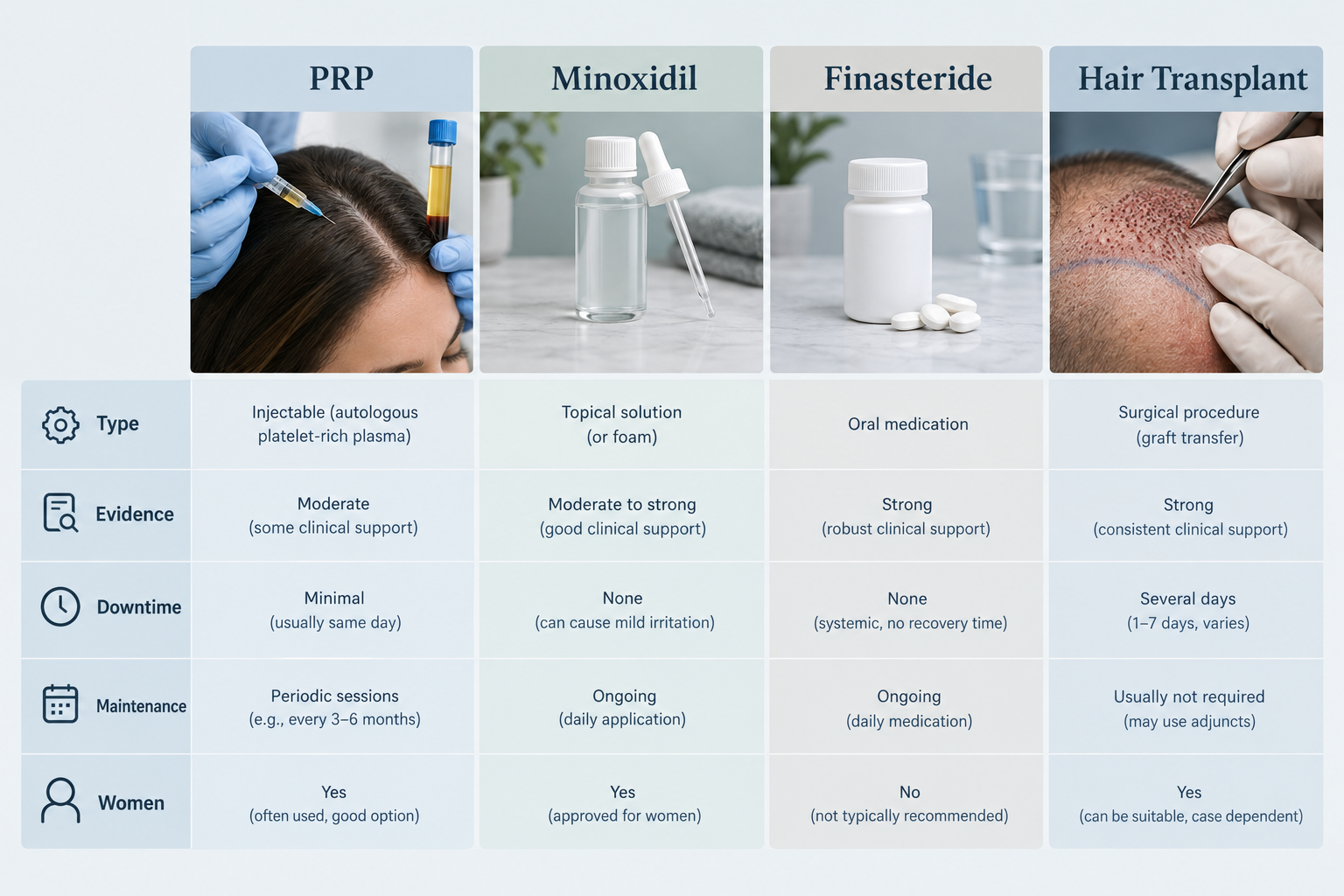
Topical minoxidil is a well-established, evidence-backed treatment for androgenetic alopecia in both men and women. It is applied directly to the scalp and works by prolonging the anagen phase and increasing blood flow to follicles. Minoxidil requires consistent daily use and results diminish if treatment is stopped. It is available without prescription in many countries and is often used alongside PRP.
Oral finasteride is a prescription medication used primarily in men with androgenetic alopecia. It works by inhibiting the conversion of testosterone to DHT, addressing one of the key hormonal drivers of pattern hair loss. Finasteride has a strong evidence base but carries potential side effects, including sexual dysfunction in a proportion of users, and is generally not recommended for women of childbearing age.
Low-level laser therapy (LLLT), delivered through devices such as laser caps or combs, is another non-invasive option with a developing evidence base for androgenetic alopecia. It is typically used at home and requires consistent long-term use.
Hair transplant surgery is the most definitive option for restoring hair in areas of significant loss, but it is a surgical procedure with associated costs, recovery time, and suitability requirements. It is generally considered for patients with more advanced or stable hair loss rather than as a first-line approach.
Nutritional supplementation may be relevant where deficiencies in iron, vitamin D, zinc, or biotin are contributing to hair thinning, but supplementation is unlikely to improve hair thickness in the absence of a genuine deficiency.
The most appropriate approach depends on the individual's pattern and cause of hair loss, medical history, preferences, and goals. A consultation with a practitioner experienced in hair loss assessment can help identify which options are most likely to be beneficial.
Frequently Asked Questions
How many PRP sessions are needed for hair thickness?
Most protocols involve an initial course of three to four sessions spaced approximately four weeks apart. After the initial course, maintenance sessions every three to six months are typically recommended to sustain results. The exact number of sessions depends on the individual's response and the degree of hair loss being treated.
Does PRP hair treatment hurt?
The injections can cause mild to moderate discomfort, often described as a stinging or pressure sensation. Many practitioners apply a topical anaesthetic to the scalp before treatment to reduce discomfort. Most patients find the procedure tolerable, though individual pain thresholds vary.
Can PRP regrow hair in completely bald areas?
PRP is unlikely to produce meaningful regrowth in areas where follicles are no longer active. The treatment works best when there are still viable follicles present, even if they have become miniaturized or less productive. For areas of complete or long-standing baldness, hair transplant surgery is generally a more appropriate consideration.
Is PRP hair treatment suitable for women?
PRP may be suitable for women experiencing androgenetic alopecia or diffuse hair thinning, provided there are no contraindications. Female hair loss can have a wider range of causes than male pattern hair loss, so a thorough assessment to identify any underlying hormonal, nutritional, or medical factors is particularly important before beginning treatment.
Can PRP be combined with other hair loss treatments?
PRP is often used alongside topical minoxidil or other hair loss treatments. Some evidence suggests that combining PRP with established treatments may produce better outcomes than either approach alone, though the optimal combination depends on the individual. Any combination approach should be discussed with a qualified practitioner.
How soon after PRP can I wash my hair?
Most practitioners advise waiting at least 24 hours before washing the hair after a PRP session. Specific aftercare instructions may vary between clinics, and patients should follow the guidance provided by their own practitioner.
Is PRP hair treatment regulated?
The regulatory status of PRP varies by country. In many jurisdictions, PRP is classified as a medical procedure and should be performed by or under the supervision of a qualified medical professional. Patients should verify the credentials and clinical environment of any practitioner they are considering.
Is PRP Hair Treatment Worth Considering for Hair Thickness?
PRP hair treatment occupies a reasonable middle ground for patients with early to moderate androgenetic alopecia who are looking for a non-surgical, drug-free option to support hair thickness and slow the progression of thinning. The evidence base, while not yet definitive, is more developed than for many other aesthetic hair treatments, and the safety profile is generally favourable given that the treatment uses the patient's own blood. For patients who respond well, PRP may produce a meaningful improvement in hair density and shaft thickness, particularly when combined with other evidence-based approaches.
The limitations are equally important to understand. PRP requires a commitment to multiple sessions and ongoing maintenance, results are not guaranteed, and the treatment is unlikely to restore hair in areas where follicles are no longer active. The cost of a full course and maintenance sessions can be significant, and the quality of PRP preparation varies between clinics, which may affect outcomes. Patients should approach PRP as one component of a broader hair health strategy rather than a standalone cure.
If you are considering PRP for hair thinning, a consultation with a practitioner experienced in hair loss assessment is the appropriate starting point. A thorough evaluation of the cause and pattern of your hair loss, your medical history, and your goals will help determine whether PRP is a suitable option and how it might fit alongside other treatments. Realistic expectations and a clear understanding of the treatment commitment involved are essential before proceeding.
