
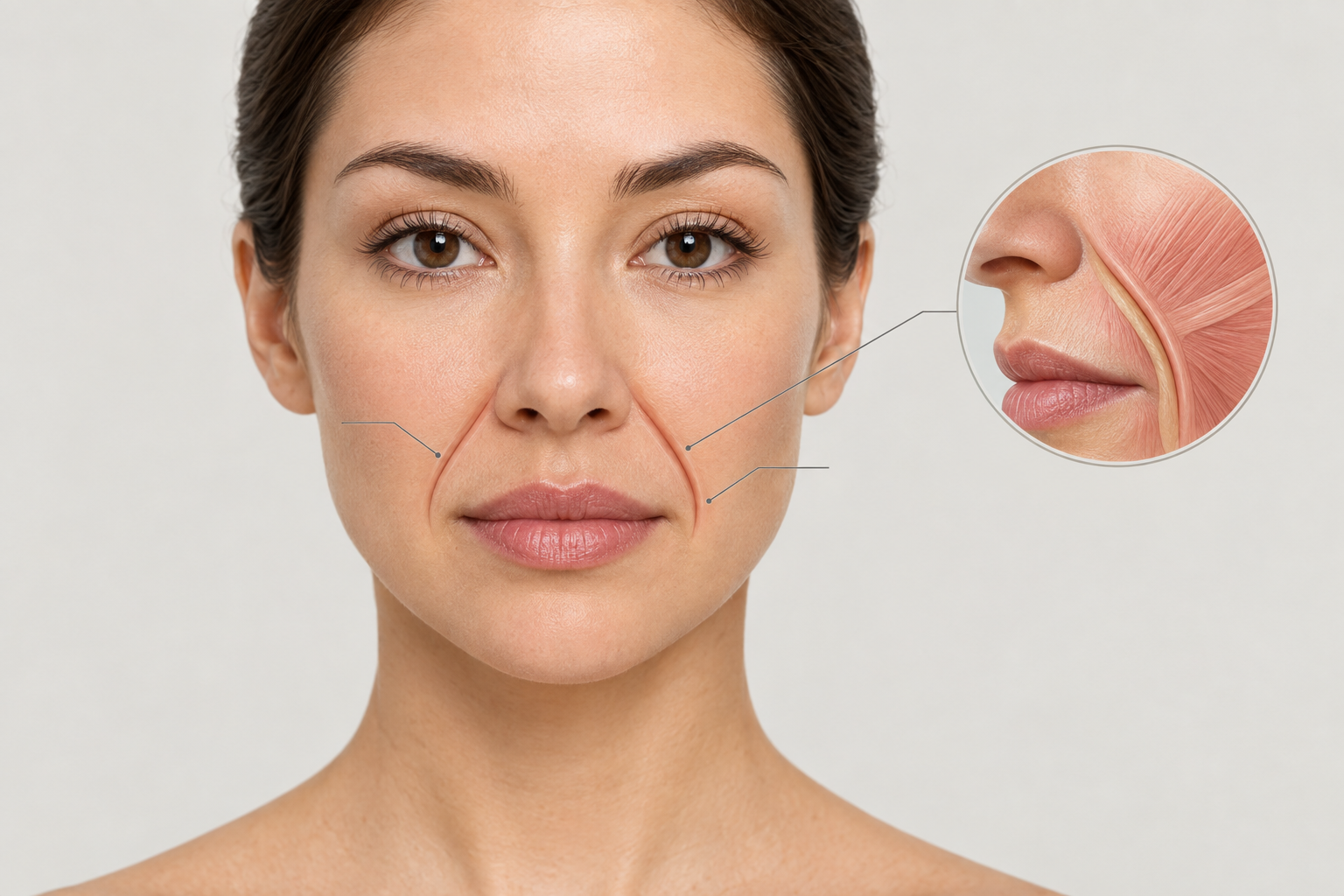

Nasolabial folds — the creases that run from the sides of the nose down to the corners of the mouth — are one of the most common concerns patients bring to aesthetic consultations. Dermal filler placed in or around this area can soften their appearance, but the treatment involves more nuance than simply injecting volume. Understanding how smile lines form, what filler can realistically achieve, and what the limitations are will help you approach a consultation with informed expectations.
Key Takeaways
- Nasolabial folds deepen with age due to a combination of volume loss, skin laxity, and changes in facial fat compartments — filler addresses volume but cannot reverse all contributing factors.
- Hyaluronic acid filler is the most commonly used product for this area; results typically last between 9 and 18 months depending on the product, placement, and individual metabolism.
- Overfilling the nasolabial area is a recognised risk; a conservative, staged approach generally produces more natural-looking outcomes.
- Filler alone may not be the most appropriate solution for everyone — skin laxity, mid-face volume loss, and jowling may each require different or combined approaches.
- A thorough consultation with a qualified, experienced practitioner is essential before proceeding, as anatomy, skin quality, and overall facial structure all influence treatment planning.
Why Nasolabial Folds Deepen Over Time
Nasolabial folds are a normal anatomical feature present from birth, but they become more prominent with age for several interconnected reasons. The mid-face contains distinct fat compartments — including the malar fat pad and the nasolabial fat — that descend and deflate over time. As this volume shifts downward, the overlying skin loses its support, causing the fold to deepen and lengthen. Simultaneously, the underlying bone structure of the midface gradually resorbs, reducing the scaffold that once held soft tissue in a higher position.
Collagen and elastin production also declines with age, reducing skin elasticity and making it less able to spring back after repeated movement. Smiling, chewing, and speaking all involve muscular activity that repeatedly compresses the nasolabial area, and over decades this contributes to crease formation. Sun exposure accelerates collagen breakdown, which is why individuals with significant lifetime UV exposure often develop more pronounced folds earlier. Genetics, body weight fluctuations, and smoking also influence how quickly and deeply these lines develop.
Understanding these mechanisms matters because it clarifies what filler can and cannot do. Dermal filler can restore some of the lost volume and provide structural support beneath the fold, but it does not address skin laxity, bone resorption, or the muscular activity that continues to compress the area. This is why treatment planning for nasolabial folds often involves considering the broader facial context rather than treating the fold in isolation.
How Smile Lines Filler Works
Dermal fillers used for nasolabial folds are most commonly based on hyaluronic acid (HA), a naturally occurring substance found in skin and connective tissue. Hyaluronic acid fillers are injected beneath the skin to add volume, lift the overlying tissue, and reduce the shadow and depth of the fold. Different HA products vary in their cross-linking density, which affects their firmness, lift capacity, and how they integrate with surrounding tissue. Practitioners select a product based on the depth of the fold, the quality of the overlying skin, and the degree of correction required.
Injection technique significantly influences the outcome. Filler may be placed directly within the fold itself, along the cheek above the fold to provide indirect lift, or in the mid-face to address the volume loss that is driving the fold's prominence. Many experienced practitioners favour a combination approach — restoring mid-face volume first and then addressing residual fold depth — rather than simply filling the crease directly. Placing large volumes directly into the fold can create an unnatural, pillow-like appearance and may not address the underlying structural cause.
Cannulas (blunt-tipped instruments) are sometimes preferred over sharp needles for this area because they may reduce bruising and the risk of inadvertent vascular injury, though both techniques are used in clinical practice. The choice depends on the practitioner's training, the specific injection plane, and patient anatomy.
What Results Are Realistically Achievable
Smile lines filler can meaningfully soften the appearance of nasolabial creases, creating a smoother transition between the cheek and the upper lip area. In patients with moderate folds and good skin quality, the improvement can be quite visible. In patients with deep folds, significant skin laxity, or jowling, the achievable improvement is more limited, and attempting to fully correct the fold with filler alone may produce an overfilled, unnatural result.
Results are not uniform across patients. Factors that influence the degree of improvement include the depth and length of the fold, the quality and thickness of the overlying skin, the degree of mid-face volume loss, and whether there is significant descent of the malar fat pad. Patients with thinner skin may show filler more visibly, including any irregularities, while those with thicker skin may require more product to achieve a visible change.
It is also worth noting that nasolabial folds are dynamic — they deepen when smiling and soften at rest. Filler primarily improves the appearance at rest; the fold will still be visible during animated expression, which is entirely normal and expected. Attempting to eliminate the fold completely during animation would require volumes that would look unnatural at rest.
Treatment Experience: What to Expect at Your Appointment
A consultation should precede any treatment. During this appointment, the practitioner will assess your facial anatomy, skin quality, the depth and character of the folds, and your overall facial structure. They should discuss realistic outcomes, the amount of product likely to be needed, the injection approach they plan to use, and the associated risks. This is also the appropriate time to disclose your full medical history, any medications you take, and any previous treatments to the face.
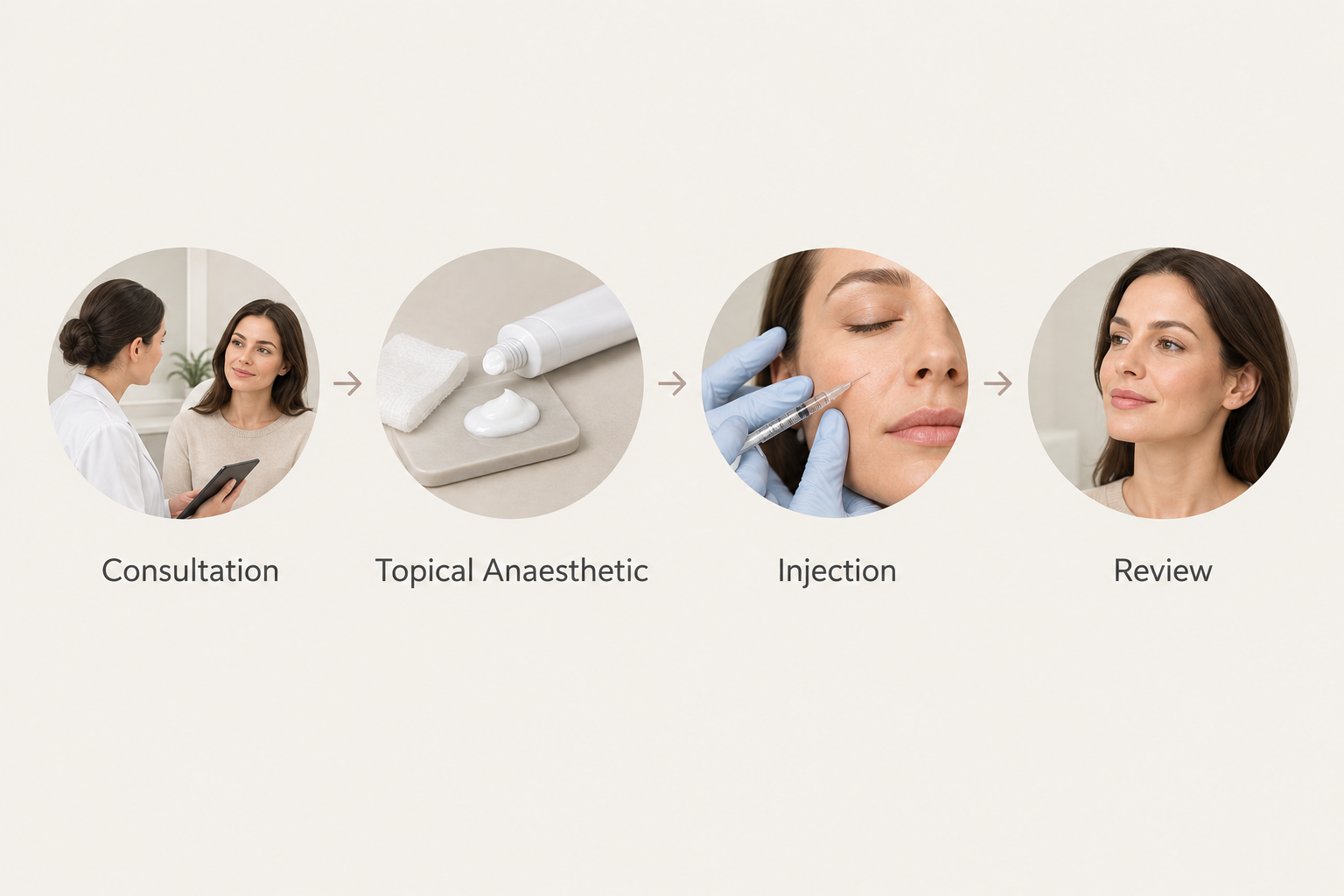
On the day of treatment, a topical anaesthetic cream is typically applied to the area for 20 to 30 minutes before injection to reduce discomfort. Many hyaluronic acid fillers also contain lidocaine, a local anaesthetic, within the formulation, which further reduces discomfort during injection. Most patients describe the sensation as mild pressure or a brief stinging feeling rather than significant pain, though individual pain tolerance varies.
The injection process itself usually takes between 15 and 30 minutes. Immediately after treatment, the area may appear slightly swollen, and there may be some redness at the injection sites. Bruising is possible, particularly in patients who take blood-thinning medications or supplements such as aspirin, ibuprofen, fish oil, or vitamin E. Practitioners often advise avoiding these where medically safe to do so in the days before treatment. Mild swelling typically resolves within a few days, and bruising, if it occurs, usually fades within one to two weeks.
Results are generally visible immediately after treatment, though initial swelling can make the area appear slightly overfilled. The final result becomes clearer once swelling has fully resolved, usually within one to two weeks. Some practitioners prefer to under-correct slightly at the first appointment and review the patient two weeks later to assess whether a small top-up is appropriate.
How Long Does Smile Lines Filler Last
The longevity of hyaluronic acid filler in the nasolabial area varies between patients and depends on several factors. Most patients find that results last between 9 and 18 months, though some individuals metabolise filler more quickly and may notice the effect diminishing sooner. The nasolabial area is subject to repeated movement from facial expression, which can accelerate the breakdown of filler compared with less mobile areas such as the tear trough.
The specific product used also influences longevity. Denser, more cross-linked hyaluronic acid formulations generally last longer than softer products, though they may not be appropriate for all patients or all injection planes. Lifestyle factors such as high levels of physical activity, significant sun exposure, and smoking may also affect how quickly filler is metabolised.
Hyaluronic acid filler is not permanent. It is gradually broken down by the body's own hyaluronidase enzyme. This is considered a safety advantage because, if a result is unsatisfactory or a complication occurs, the filler can be dissolved using an injectable enzyme called hyaluronidase. Maintenance treatments are typically needed every 9 to 18 months to sustain the effect, though some patients find that with repeated treatments over time, they require less product to maintain a similar result.
Risks and Side Effects
Dermal filler treatment carries risks that patients should understand before proceeding. Common, expected side effects include temporary swelling, redness, tenderness, and bruising at the injection sites. These typically resolve within a few days to two weeks and are considered normal responses to injection rather than complications.
Less common but more significant risks include the following:
- Vascular occlusion: Filler injected into or near a blood vessel can block blood flow to surrounding tissue. In the nasolabial area, this is a recognised risk because several named arteries run in close proximity to common injection sites. Vascular occlusion can cause tissue damage and, in rare cases, more serious consequences including skin necrosis or, extremely rarely, vision changes if filler migrates toward the ophthalmic circulation. This is a medical emergency requiring immediate treatment with hyaluronidase.
- Nodules and irregularities: Filler can occasionally form lumps or uneven areas beneath the skin, particularly if placed too superficially or if the product is not well-suited to the injection plane.
- Tyndall effect: Superficially placed hyaluronic acid filler can create a bluish discolouration visible through the skin.
- Infection: Any injection carries a small risk of introducing bacteria. Signs of infection include increasing redness, warmth, pain, and swelling beyond the expected post-treatment period.
- Delayed inflammatory nodules: These can occur weeks, months, or even years after treatment and may be triggered by illness, dental procedures, or other immune stimuli. They require assessment and appropriate management by a qualified practitioner.
- Overfilling and unnatural appearance: Placing too much product in the nasolabial area can create a heavy, unnatural look. This is one of the most common aesthetic complications and underscores the importance of a conservative, staged approach.
Choosing a practitioner with appropriate medical training, a thorough understanding of facial anatomy, and access to hyaluronidase for emergency use is an important safety consideration. Filler treatments should not be approached as a purely cosmetic commodity.
Who May Be Suitable for Nasolabial Filler
Adults who are bothered by moderate nasolabial folds, have reasonable skin quality, and have realistic expectations about the degree of improvement achievable may be suitable candidates for smile lines filler. Patients with mild to moderate folds and good skin elasticity tend to achieve the most natural-looking results. Those with significant skin laxity, deep jowling, or very deep folds may find that filler alone provides limited improvement and that other approaches warrant discussion.
Filler treatment is generally not recommended during pregnancy or breastfeeding. Patients with active skin infections, inflammatory skin conditions, or autoimmune conditions affecting the skin should discuss their history carefully with a practitioner before proceeding. Those with a history of cold sores (herpes simplex) in or near the treatment area may be advised to take antiviral medication prophylactically, as injection can trigger an outbreak. Patients taking anticoagulant medications should discuss the increased bruising risk with both their prescribing doctor and their aesthetic practitioner.
A history of previous filler treatments in the area is relevant because product can accumulate over time. Practitioners should assess for residual filler before adding more volume, as layering product without accounting for what is already present can contribute to overfilling.
Alternatives to Smile Lines Filler
Dermal filler is not the only option for addressing nasolabial folds, and for some patients it may not be the most appropriate first-line approach. Understanding the alternatives helps in making a well-informed decision.
Mid-face or cheek filler: Rather than filling the nasolabial fold directly, restoring volume to the mid-face and cheek area can lift the overlying tissue and reduce the prominence of the fold indirectly. This approach is often considered more anatomically appropriate for patients whose folds are primarily driven by mid-face volume loss and descent rather than localised crease depth.
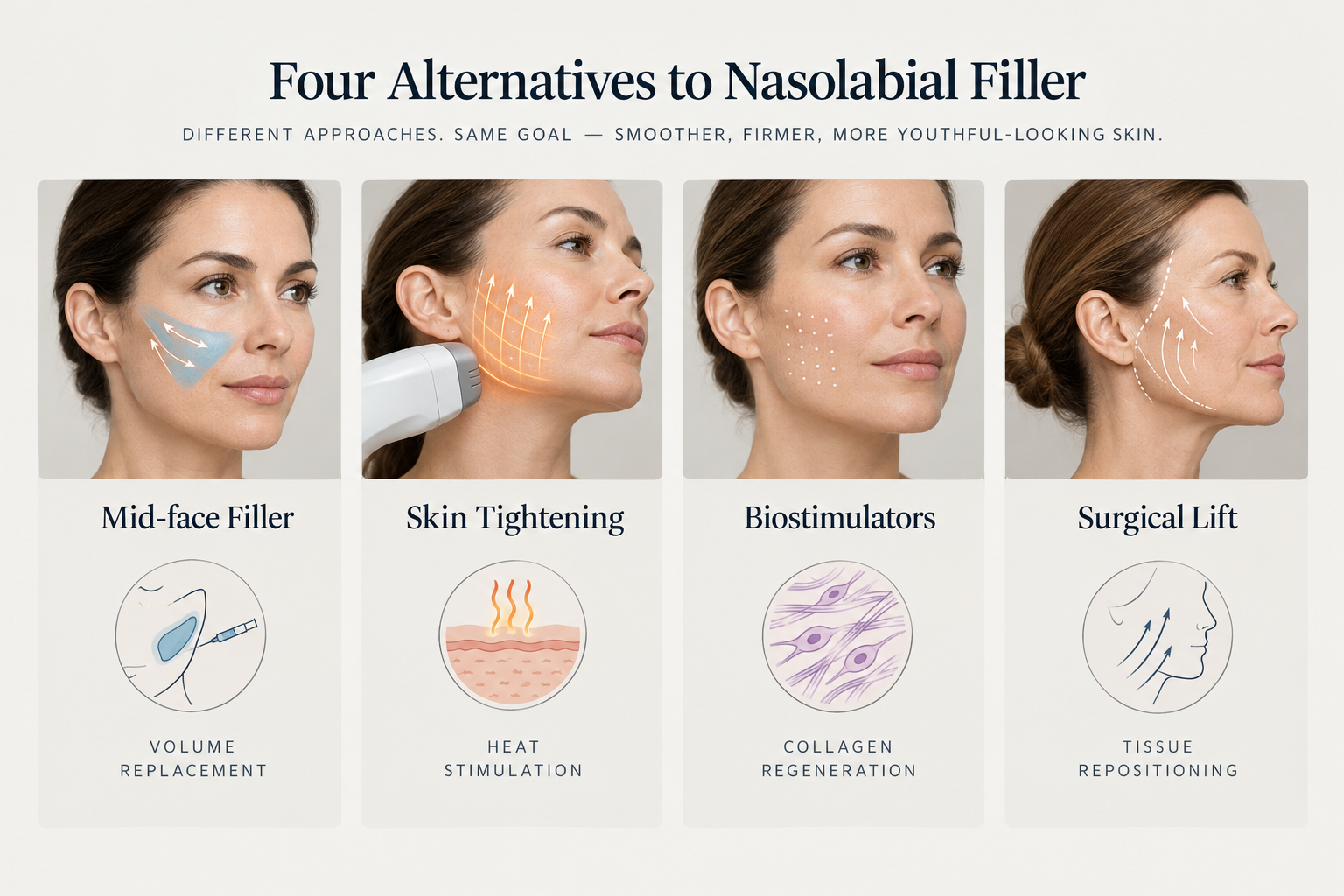
Skin-tightening treatments: Radiofrequency, ultrasound-based treatments such as high-intensity focused ultrasound (HIFU), and laser resurfacing can improve skin laxity and stimulate collagen production. These may be more appropriate than filler for patients whose nasolabial prominence is primarily related to skin looseness rather than volume loss. Results from these treatments develop gradually over several months as new collagen forms.
Polynucleotides and biostimulators: Injectable treatments such as polynucleotides or calcium hydroxylapatite-based biostimulators work by stimulating the body's own collagen production rather than adding immediate volume. These may be suitable for patients seeking gradual skin quality improvement and mild structural support, though they are not direct substitutes for volume replacement.
Surgical options: For patients with significant skin laxity, jowling, or deep folds that are unlikely to respond adequately to non-surgical approaches, surgical options such as a mid-face lift or facelift may provide more durable and comprehensive improvement. These carry greater risks and recovery time but can address structural changes that injectables cannot.
Combination approaches: Many patients benefit from a combination of treatments — for example, mid-face filler to restore volume, skin-tightening treatment to improve elasticity, and targeted nasolabial filler for residual crease depth. A practitioner experienced in facial aesthetics can help determine which combination, if any, is appropriate for a given patient's anatomy and goals.
Frequently Asked Questions
How much filler is typically needed for nasolabial folds?
The amount varies considerably between patients depending on the depth of the fold, the degree of mid-face volume loss, and the approach used. Some patients require less than 1 ml per side, while others may need more, particularly if mid-face volume restoration is included in the treatment plan. A conservative approach — starting with less and reviewing the result — is generally preferable to placing large volumes in a single session.
Will the filler look natural?
When placed by an experienced practitioner using an appropriate product and technique, nasolabial filler can produce a natural-looking softening of the fold. The risk of an unnatural appearance increases with overfilling, incorrect product selection, or placement that does not account for the patient's overall facial structure. Reviewing before-and-after photographs of the practitioner's previous work and discussing your aesthetic goals clearly during consultation can help align expectations.
Can filler make nasolabial folds worse over time?
There is some discussion in the aesthetic medicine literature about whether repeated filler in the nasolabial area can, over time, contribute to tissue heaviness or alter the natural movement of the face. This is one reason why many practitioners favour treating the underlying mid-face volume loss rather than repeatedly filling the fold directly. Regular review with a practitioner who can assess cumulative product and adjust the approach accordingly is advisable for patients having ongoing maintenance treatments.
Is the treatment painful?
Most patients find nasolabial filler tolerable with topical anaesthetic and lidocaine-containing filler. Discomfort is typically described as mild pressure or brief stinging. Individual pain tolerance varies, and some areas within the nasolabial region may be more sensitive than others. If you have concerns about discomfort, discuss pain management options with your practitioner before the appointment.
What should I avoid after treatment?
Practitioners commonly advise avoiding strenuous exercise, alcohol, excessive heat (such as saunas or hot baths), and significant sun exposure for 24 to 48 hours after treatment. Pressing or massaging the treated area should also be avoided unless specifically instructed by the practitioner. These precautions help minimise swelling and reduce the risk of filler displacement in the early post-treatment period.
Can nasolabial filler be reversed?
Hyaluronic acid filler can be dissolved using an injectable enzyme called hyaluronidase. This is an important safety feature and is also used in the emergency management of vascular occlusion. Dissolution is not always complete in a single session, and the enzyme can also affect naturally occurring hyaluronic acid in the tissue. Non-HA fillers such as calcium hydroxylapatite cannot be dissolved in the same way, which is one reason HA products are generally preferred for this area.
Is Smile Lines Filler the Right Approach for You?
Nasolabial filler can be a genuinely useful treatment for patients with moderate folds, good skin quality, and realistic expectations. When performed by a qualified practitioner with a thorough understanding of facial anatomy, it can soften the appearance of smile lines and contribute to a more rested, refreshed look without altering the fundamental character of the face. The key is appropriate patient selection, conservative product volumes, and a treatment plan that considers the whole face rather than the fold in isolation.
For patients with significant skin laxity, deep jowling, or folds that are primarily driven by structural changes rather than localised volume loss, filler alone is unlikely to provide a satisfying result. In these cases, a combination approach or a surgical consultation may be more appropriate. Equally, patients who are primarily concerned with skin texture, fine lines, or overall skin quality may benefit more from skin-quality treatments than from volume replacement.
If you are considering smile lines filler, a consultation with a medically qualified aesthetic practitioner is the appropriate starting point. A thorough assessment of your facial anatomy, skin quality, and goals will help determine whether filler is the right tool, which approach is most suitable, and what realistic improvement you can expect. Arriving at that consultation with a clear understanding of the treatment, its limitations, and the questions worth asking puts you in a much stronger position to make an informed decision.
