
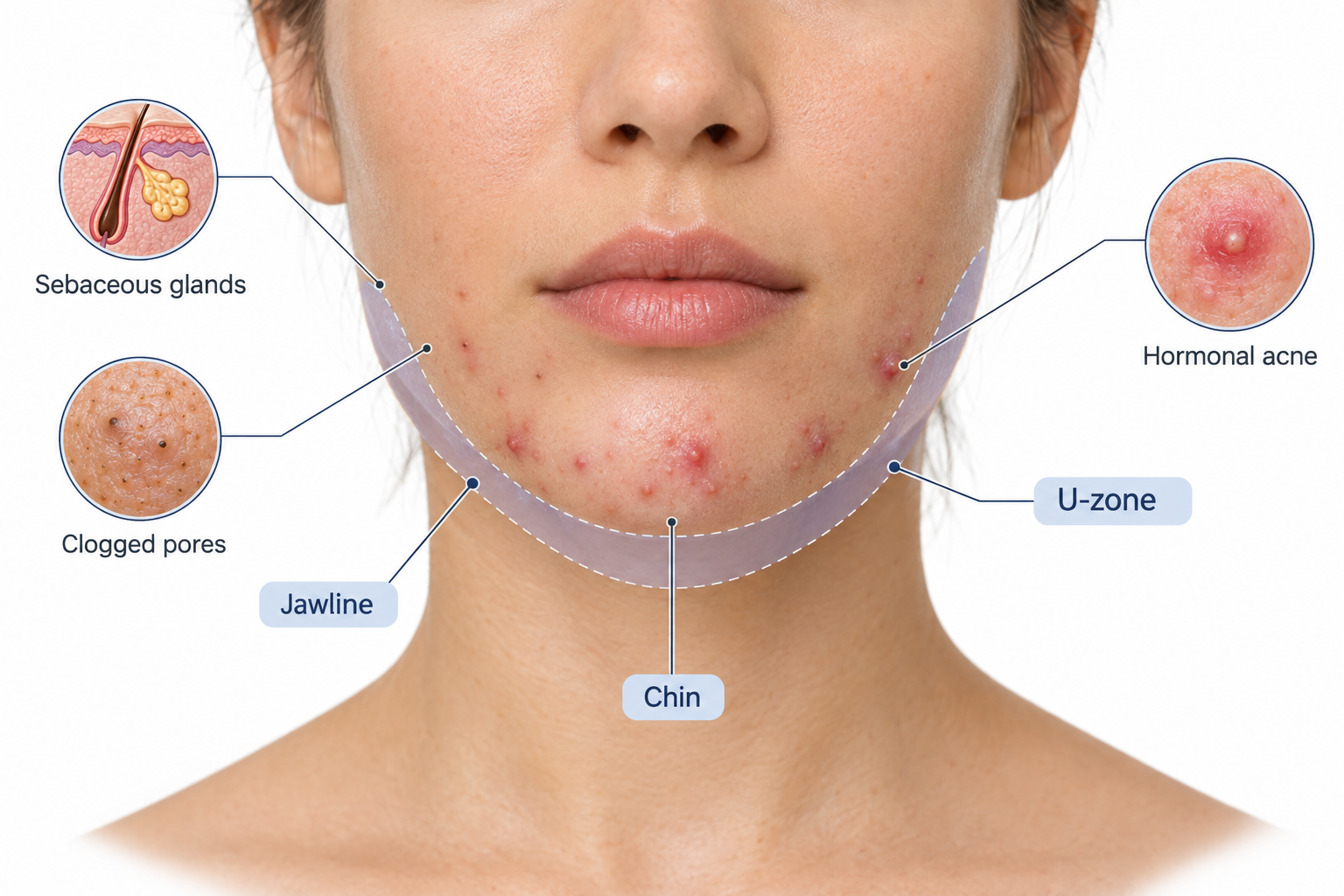

Spots on the chin are one of the most common skin complaints across all age groups, yet they are frequently misunderstood. Unlike breakouts scattered across the forehead or cheeks, chin spots tend to be persistent, often deep, and closely linked to internal factors such as hormonal fluctuations, stress, and gut health. Understanding why spots cluster in this area is the first step toward managing them effectively — whether through targeted skincare, lifestyle changes, or professional treatment.
Key Takeaways
- The chin and jawline sit within the U-zone, an area particularly sensitive to hormonal changes and androgen activity.
- Hormonal chin acne is the most common cause in adult women, often linked to the menstrual cycle, PCOS, or changes in contraception.
- External triggers — including comedogenic products, phone contact, face masks, and diet — can worsen or independently cause chin breakouts.
- Not every spot on the chin is acne; conditions such as perioral dermatitis, milia, and folliculitis can look similar but require different treatment approaches.
- Persistent, painful, or scarring chin spots warrant assessment by a dermatologist, particularly when over-the-counter treatments have not improved the skin after six to eight weeks.
Why Do Spots Form on the Chin Specifically?
The chin and lower jaw form part of what dermatologists call the U-zone — the lower third of the face that includes the cheeks, jawline, and chin. This region has a high concentration of sebaceous glands, which produce sebum (the skin's natural oil). When sebum production increases, dead skin cells accumulate, or acne-causing bacteria such as Cutibacterium acnes (formerly known as Propionibacterium acnes) proliferate within a follicle, a spot forms. The U-zone is especially reactive to androgens — hormones that directly stimulate sebaceous gland activity — which explains why chin breakouts so often follow a hormonal pattern rather than appearing randomly across the face.
The chin is also a contact zone. It is touched frequently, rested on hands, pressed against phone screens, and covered by face masks — all of which introduce bacteria, friction, and occlusion that can trigger or worsen breakouts. This combination of internal hormonal sensitivity and external mechanical exposure makes the chin a particularly vulnerable site.
The Main Causes of Spots on the Chin
- Hormonal Imbalance
Hormonal chin acne is the leading cause of persistent chin spots in adult women. Androgens — including testosterone — bind to receptors in the sebaceous glands of the lower face, stimulating excess oil production and increasing the likelihood of clogged pores. Even when androgen levels fall within a technically normal laboratory range, the sebaceous glands in the U-zone can be disproportionately sensitive to these hormones, producing breakouts that feel out of proportion to what blood tests might suggest.
Hormonal chin acne typically presents as deep, tender papules, pustules, or cystic spots on chin and jawline rather than the surface-level blackheads more common on the nose. Breakouts often follow a predictable monthly pattern, worsening in the week before menstruation when oestrogen falls and androgen influence becomes relatively stronger.
- The Menstrual Cycle
Menstrual cycle breakouts are among the most recognisable patterns in adult female acne. In the days leading up to a period, oestrogen levels drop while progesterone rises, and the relative increase in androgen activity stimulates the sebaceous glands. Many women notice that chin and jawline spots appear or worsen predictably at this point in their cycle, then improve once menstruation begins. Tracking this pattern can help confirm a hormonal cause and guide treatment decisions.
- Polycystic Ovary Syndrome (PCOS)
PCOS and acne are closely connected. PCOS is a hormonal condition in which the ovaries produce higher-than-normal levels of androgens, leading to a range of symptoms that can include irregular periods, excess facial or body hair, and persistent acne — particularly along the chin and jawline. Chin spots that are severe, do not respond to standard topical treatments, or occur alongside other symptoms such as irregular cycles or unexplained weight changes may warrant investigation for PCOS. A GP or dermatologist can arrange relevant hormone testing to assess androgen levels, alongside other markers.
- Stress and Cortisol
The relationship between cortisol and skin is well established. When the body experiences stress, the adrenal glands release cortisol, which in turn stimulates the sebaceous glands to produce more oil. Cortisol also promotes inflammation, which can turn a minor blocked pore into a red, painful spot. Stress-related chin breakouts often appear during or shortly after periods of high pressure — exam periods, work deadlines, or significant life events — and may not follow the same monthly hormonal pattern as cycle-related acne.
- Diet and the Gut–Skin Axis
Evidence linking diet to acne has grown considerably in recent years. High glycaemic index foods — including refined carbohydrates, sugary drinks, and processed snacks — cause rapid spikes in blood glucose and insulin, which in turn raise androgen levels and stimulate sebum production. Dairy products, particularly skimmed milk, have also been associated with acne in some studies, possibly due to the presence of hormones and growth factors in milk. The gut–skin axis is an emerging area of research suggesting that imbalances in the gut microbiome may contribute to systemic inflammation and skin conditions including acne. While the evidence is still developing, a diet rich in fibre, fermented foods, and low-glycaemic carbohydrates is broadly consistent with good skin health.
- Skincare and Cosmetic Products
Comedogenic products — those containing ingredients that block pores — are a frequently overlooked cause of chin spots. Heavy moisturisers, occlusive foundations, certain sunscreens, and lip balms that migrate onto the chin area can all contribute to what is known as acne cosmetica. Checking product labels for non-comedogenic formulations and avoiding thick, oil-based products around the lower face can make a meaningful difference, particularly for those already prone to chin breakouts.
- Acne Mechanica and Maskne
Acne mechanica refers to breakouts caused by physical friction, pressure, or occlusion on the skin. On the chin, common triggers include resting the chin on the hand, wearing a face mask (sometimes called maskne), using a chin strap for sports equipment, or the friction of a scarf or high collar. The combination of warmth, moisture, and repeated pressure disrupts the skin barrier and encourages bacterial overgrowth within follicles. Chin spots caused by acne mechanica often appear in a localised pattern corresponding to the area of contact.
- Phone and Hand Contact
Mobile phones carry significant quantities of bacteria and are frequently pressed against the lower face during calls. Similarly, habitually resting the chin or jaw on the hand transfers bacteria and sebum from the fingers to the skin. Both habits can introduce or worsen chin breakouts, particularly in people who are already prone to hormonal or stress-related acne.
- Poor Sleep
Sleep deprivation elevates cortisol levels and impairs the skin's overnight repair processes. Consistently poor sleep can therefore contribute to increased sebum production, greater skin inflammation, and slower healing of existing spots. While poor sleep alone is rarely the sole cause of chin acne, it frequently acts as an amplifying factor alongside hormonal or dietary triggers.
- Genetics
A family history of acne increases the likelihood of developing it. Genetic factors influence sebaceous gland activity, the skin's inflammatory response, and sensitivity to androgens. If close relatives experienced persistent chin or jawline acne, particularly into adulthood, this may partly explain a similar pattern in other family members.
Chin Spots in Men
While much of the discussion around hormonal chin acne focuses on women, men are not immune. Testosterone levels in men are significantly higher than in women, and the chin and jawline are common sites for male acne. Shaving can further aggravate the area through razor friction, ingrown hairs, and the use of comedogenic aftershave products. Men who shave regularly may experience a combination of true acne and folliculitis — inflammation of the hair follicles — which can look similar but may respond differently to treatment. Using a sharp, clean razor, applying non-comedogenic shaving products, and shaving in the direction of hair growth can help reduce irritation-related breakouts.
Types of Spots That Appear on the Chin
Not all chin spots are the same, and identifying the type can help guide the right approach to treatment.
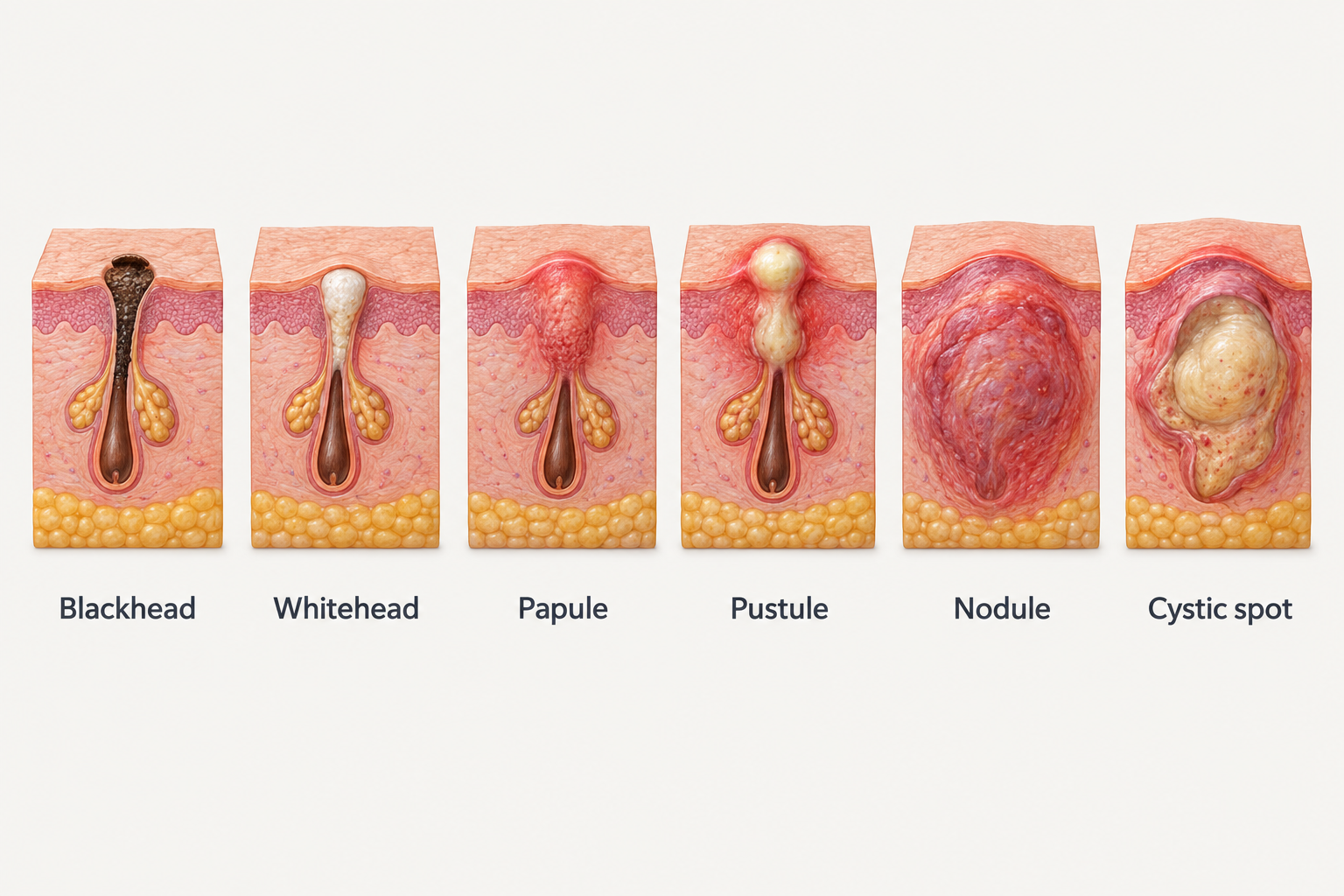
| Spot Type | Appearance | Typical Cause | Approximate Duration |
|---|---|---|---|
| Blackhead (open comedone) | Small dark plug at pore surface | Oxidised sebum and dead skin cells | Weeks to months if untreated |
| Whitehead (closed comedone) | Small white or flesh-coloured bump | Blocked pore sealed beneath skin | 1–2 weeks |
| Papule | Small, firm, red bump | Inflammation around blocked follicle | 1–2 weeks |
| Pustule | Red base with white or yellow tip | Bacterial activity and pus formation | 1–2 weeks |
| Nodule | Large, hard, painful lump under skin | Deep inflammation, hormonal acne | 4–8 weeks |
| Cystic spot | Large, soft, fluid-filled, painful | Severe hormonal or inflammatory acne | 4–8 weeks or longer |
Cystic spots on the chin are among the most challenging to treat and carry the highest risk of post-inflammatory hyperpigmentation and scarring if picked or squeezed. They are most commonly associated with hormonal acne and often require professional intervention rather than over-the-counter products alone.
Could It Be Something Other Than Acne?
Several skin conditions can produce spots around the chin and mouth that are sometimes mistaken for acne. Perioral dermatitis is one of the most common — it presents as clusters of small red papules and pustules around the mouth, chin, and nose, and is often worsened by topical steroid use or heavy moisturisers. Unlike acne, perioral dermatitis does not typically involve blackheads and tends to respond poorly to standard acne treatments. Milia are small, hard white cysts caused by trapped keratin just beneath the skin surface; they are not inflamed and are not caused by bacteria. Folliculitis — inflammation of hair follicles, often triggered by shaving or occlusion — can also produce red, spot-like lesions on the chin. Contact dermatitis from skincare ingredients or cosmetics may cause a rash that resembles acne. If spots on the chin do not respond to typical acne treatments, or if the pattern seems unusual, a dermatologist can help establish the correct diagnosis.
Acne Face Mapping: What Does the Evidence Say?
Acne face mapping is a concept rooted in Traditional Chinese Medicine (TCM) and a practice sometimes called mien shiang, which proposes that spots in specific facial zones reflect imbalances in corresponding internal organs. Under this framework, chin and jawline spots are linked to the reproductive system and hormonal health. While the idea that chin acne correlates with hormonal activity does have genuine scientific support — the U-zone's sensitivity to androgens is well documented — the broader claim that specific facial zones map directly to specific organs is not supported by current clinical evidence. Face mapping can be a useful prompt to consider hormonal or lifestyle factors when chin spots are persistent, but it should not replace a proper medical assessment or be used to self-diagnose internal conditions.
Treatment Options for Chin Spots
Treatment choice depends on the type, severity, and likely cause of the spots. Mild to moderate chin acne can often be managed with evidence-based topical treatments, while persistent, cystic, or hormonally driven breakouts may require prescription options or professional procedures.
Topical Over-the-Counter Treatments
Salicylic acid is a beta-hydroxy acid that penetrates into the pore lining, helping to dissolve the mixture of sebum and dead skin cells that causes blockages. It is particularly effective for blackheads and whiteheads and is available in cleansers, toners, and spot treatments. Benzoyl peroxide works by releasing oxygen within the follicle, killing acne-causing bacteria and reducing inflammation. It is effective for papules and pustules but can cause dryness and bleach fabrics. Both ingredients are well supported by clinical evidence for mild to moderate acne.
Topical Retinoids
Topical retinoids — including adapalene, available over the counter in some countries — work by accelerating skin cell turnover, preventing dead skin cells from accumulating within follicles, and reducing inflammation. Adapalene is one of the most evidence-backed topical treatments for acne and is suitable for long-term use. Stronger prescription retinoids such as tretinoin may be recommended by a dermatologist for more persistent cases. Retinoids can cause initial dryness and increased sun sensitivity, so gradual introduction and daily SPF use are important.
Prescription and Systemic Treatments
For hormonal chin acne that does not respond adequately to topical treatments, a GP or dermatologist may consider oral options. Combined oral contraceptives can help regulate androgen levels in women and are an established treatment for hormonal acne. Spironolactone, an anti-androgen medication, is increasingly used for adult female acne and works by blocking androgen receptors in the sebaceous glands. Oral antibiotics may be prescribed for inflammatory acne but are generally used for limited periods to reduce the risk of antibiotic resistance. Isotretinoin (commonly known by the brand name Roaccutane) is reserved for severe, scarring, or treatment-resistant acne and requires careful medical supervision due to its side effect profile.
Professional Clinic Treatments
Chemical peels using salicylic acid or glycolic acid can help reduce comedones, improve skin texture, and address post-inflammatory hyperpigmentation left by previous spots. Professional extractions performed by a trained aesthetician or dermatologist can safely clear blocked pores without the trauma of self-squeezing. Corticosteroid injections can rapidly reduce the size and pain of large nodular or cystic spots. Blue light therapy targets acne-causing bacteria in the skin and may be useful as an adjunct treatment. A qualified practitioner can advise on which combination of treatments is most appropriate based on the individual's skin type, acne severity, and medical history.
Prevention: Reducing the Risk of Chin Breakouts
Consistent habits can meaningfully reduce the frequency and severity of chin spots, even when a hormonal predisposition exists.
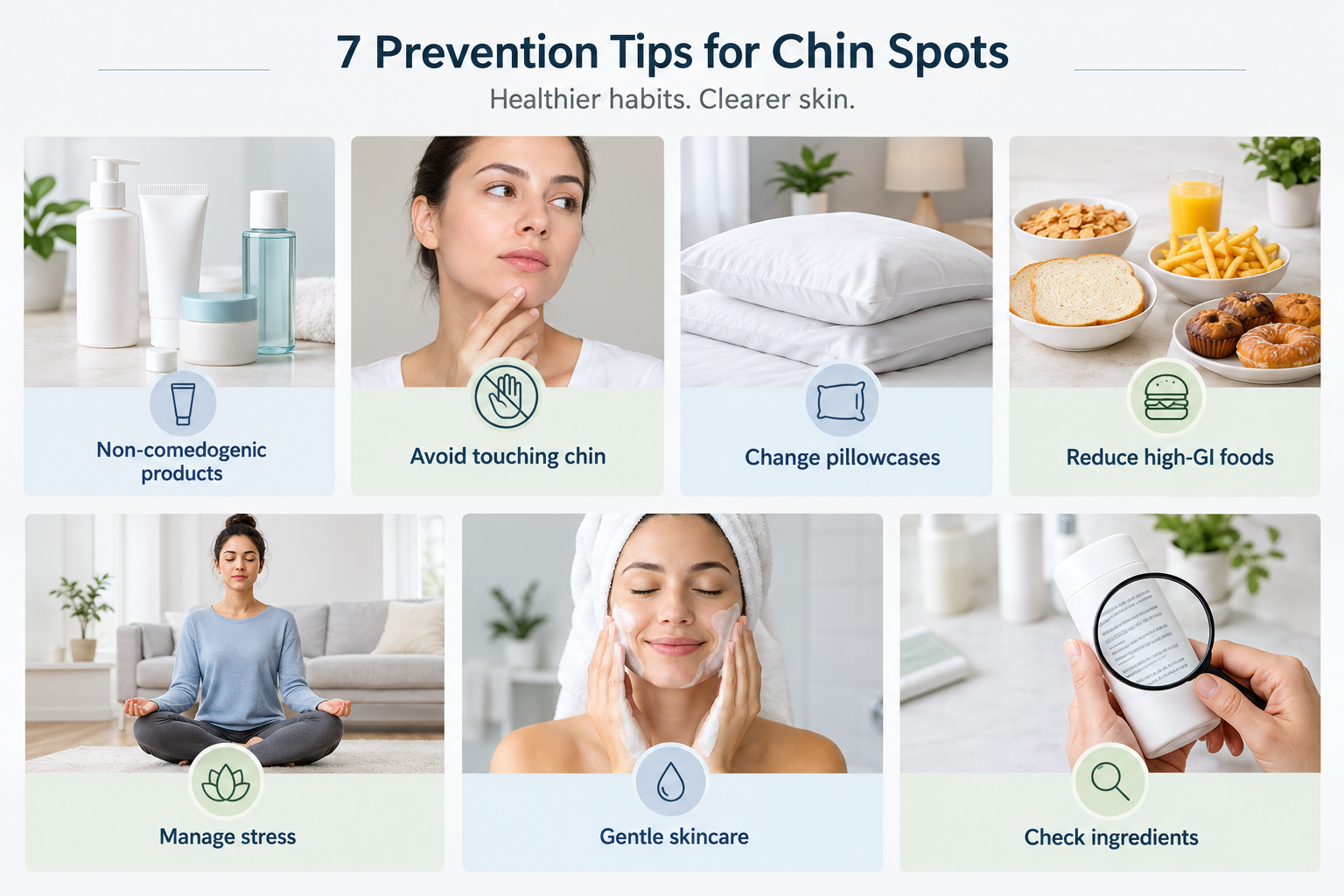
- Choose non-comedogenic skincare and makeup — look for this label on moisturisers, foundations, and sunscreens, particularly products applied to the lower face.
- Avoid touching the chin — minimise hand-to-face contact and clean your phone screen regularly.
- Change pillowcases frequently — at least once or twice a week, as pillowcases accumulate sebum, dead skin cells, and bacteria overnight.
- Review your diet — reducing high-glycaemic index foods and dairy may help some individuals, though dietary triggers vary between people.
- Manage stress — regular exercise, adequate sleep, and stress-reduction practices can help moderate cortisol levels and their effect on the skin.
- Use a gentle, consistent skincare routine — over-cleansing or using harsh products can strip the skin barrier and trigger compensatory oil production.
- Avoid comedogenic ingredients — common offenders include coconut oil, isopropyl myristate, and certain silicones in high concentrations; a dermatologist or aesthetician can advise on specific ingredients to avoid based on your skin type.
When to See a Dermatologist
Many cases of mild chin acne respond well to consistent over-the-counter treatment within six to eight weeks. However, professional assessment is advisable in several situations. Cystic spots on the chin that are large, painful, and recurring carry a significant risk of permanent scarring and are unlikely to resolve with topical treatments alone. Spots that have not improved after a consistent six-to-eight-week trial of appropriate over-the-counter products warrant a dermatologist review. If chin breakouts are accompanied by other symptoms — such as irregular periods, unexplained weight changes, or excess hair growth — hormone testing to assess androgen levels and rule out PCOS or thyroid imbalance is a reasonable next step. Post-inflammatory hyperpigmentation, the dark marks left after spots heal, can persist for months and may benefit from targeted professional treatment. The psychological impact of persistent chin acne should not be underestimated; recurring breakouts can significantly affect confidence and quality of life, and this alone is a valid reason to seek professional support.
Frequently Asked Questions
Why do I only get spots on my chin and nowhere else?
The chin and jawline are part of the U-zone, which has a high density of sebaceous glands and is particularly sensitive to androgen hormones. If your breakouts are confined to this area, a hormonal cause is likely — especially if they follow a monthly pattern or worsen under stress. External factors such as phone contact, hand-resting habits, or comedogenic products applied to the lower face can also produce localised chin breakouts.
Are chin spots always hormonal?
Not always. While hormonal imbalance is the most common cause of persistent adult chin acne, external triggers — including comedogenic skincare, acne mechanica from face masks or chin straps, diet, and poor sleep — can independently cause or worsen chin spots. Conditions such as perioral dermatitis or folliculitis can also produce spots in this area without a hormonal cause.
How long do chin spots typically last?
Duration varies by spot type. Surface whiteheads and papules often resolve within one to two weeks with appropriate treatment. Deeper nodules and cystic spots driven by hormonal acne can persist for four to eight weeks or longer, particularly without targeted treatment. Recurring hormonal breakouts may reappear each month without addressing the underlying cause.
Can diet really cause spots on the chin?
Diet can be a contributing factor for some people. High glycaemic index foods and dairy have the strongest evidence linking them to acne, though individual responses vary considerably. Dietary changes alone are unlikely to resolve severe hormonal acne but may reduce the frequency and severity of breakouts when combined with appropriate skincare and, where needed, medical treatment.
Is it safe to squeeze spots on the chin?
Squeezing or picking chin spots — particularly deep nodules and cysts — significantly increases the risk of spreading bacteria, worsening inflammation, and causing post-inflammatory hyperpigmentation or permanent scarring. Professional extraction by a trained practitioner is a safer alternative for persistent or deep spots.
When should I consider hormone testing for chin acne?
Hormone testing is worth discussing with a GP or dermatologist if chin acne is severe, persistent, and accompanied by other symptoms such as irregular periods, excess facial hair, or unexplained weight changes. Testing androgen levels and other relevant hormones can help identify conditions such as PCOS that may be driving the breakouts and inform more targeted treatment choices.
Getting to the Root of Persistent Chin Spots
Spots on the chin are rarely caused by a single factor. For most adults — particularly women — hormonal sensitivity in the U-zone plays a central role, but diet, stress, skincare habits, and external mechanical triggers all contribute to the overall picture. Identifying the most likely cause or combination of causes makes it possible to choose treatments and preventive strategies that address the problem at its source rather than simply managing individual spots as they appear. Mild chin acne often responds well to consistent use of salicylic acid, benzoyl peroxide, or topical retinoids alongside non-comedogenic skincare. More persistent, cystic, or clearly hormonal breakouts are likely to benefit from a professional assessment, where prescription treatments, hormone testing, or clinic-based procedures can be considered. If chin spots are affecting your confidence or have not improved with self-care, a consultation with a dermatologist or qualified aesthetic practitioner is a practical and worthwhile next step.
