
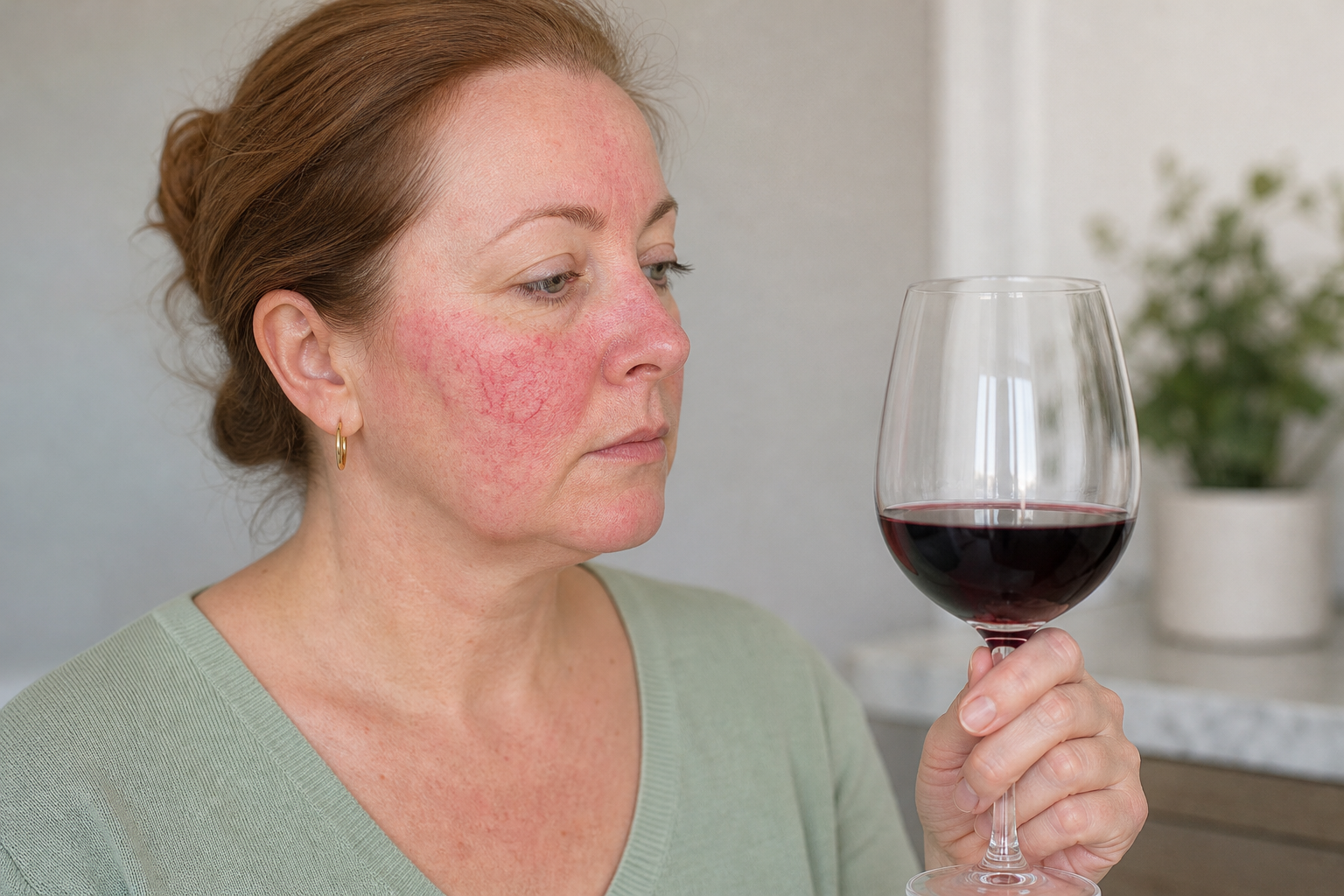

Alcohol is one of the most commonly reported triggers for rosacea flare-ups, yet the relationship between the two is more nuanced than simply “drinking causes rosacea.” Understanding exactly why alcohol provokes facial flushing, which types of drinks carry the highest risk, and how individual biology shapes your response can help you make more informed choices — whether that means adjusting your habits, identifying your personal threshold, or discussing treatment options with a dermatologist.
Key Takeaways
- Alcohol does not cause rosacea, but it is a well-established trigger that can worsen existing symptoms through multiple biological mechanisms including vasodilation, histamine release, and acetaldehyde accumulation.
- Red wine is consistently ranked as the most problematic drink for rosacea sufferers, combining ethanol, histamine, tyramine, and sulfites in a single glass.
- According to National Rosacea Society survey data, a significant proportion of rosacea patients experience a flare-up with as little as half a drink or even a few sips.
- Trigger stacking — combining alcohol with heat, spicy food, or sun exposure — can multiply flare severity beyond what any single trigger would cause alone.
- Keeping a rosacea diary to identify personal thresholds, choosing lower-histamine spirits, and staying hydrated are practical harm-reduction strategies that may help reduce flare frequency.
Does Alcohol Cause Rosacea?
Alcohol does not cause rosacea. Rosacea is a chronic inflammatory skin condition with roots in genetic predisposition, immune dysregulation, and vascular hyperreactivity. People who have never consumed alcohol can and do develop rosacea, and the condition existed long before modern drinking culture. What alcohol does is act as a reliable trigger — a stimulus that provokes or worsens symptoms in people who already have the condition. This distinction matters because it shapes realistic expectations: reducing or eliminating alcohol may significantly reduce flare frequency and severity, but it is unlikely to resolve rosacea entirely.
Research published in the Journal of the American Academy of Dermatology, examining alcohol intake and risk of rosacea in US women, found that regular alcohol consumption — particularly white wine and liquor — was associated with a modestly increased risk of developing rosacea over time. This suggests alcohol may play a role in disease progression or unmasking latent susceptibility, not just in triggering existing symptoms. However, the relationship is probabilistic rather than deterministic: many people who drink regularly never develop rosacea, and the condition’s underlying causes remain incompletely understood.
How Alcohol Triggers a Rosacea Flare-Up
Several overlapping biological mechanisms explain why alcohol so reliably provokes facial flushing and rosacea flare-ups. These pathways are distinct from one another, which is why even small amounts of alcohol can produce a noticeable reaction in sensitive individuals.
Vasodilation and Blood Vessel Response
Ethanol — the active compound in all alcoholic drinks — is a direct vasodilator. It causes the superficial blood vessels beneath the skin to widen, increasing blood flow to the face and producing the characteristic redness and warmth associated with a rosacea flare. In people with rosacea, the vascular system is already prone to hyperreactivity, meaning blood vessels dilate more readily and take longer to return to their baseline state. This vascular hyperreactivity means that even modest alcohol consumption can produce a disproportionate and prolonged flushing response compared with someone without rosacea.
Acetaldehyde and Histamine Release
When the body metabolizes ethanol, it produces acetaldehyde as an intermediate compound. Acetaldehyde is itself a vasodilator and also stimulates histamine release from mast cells in the skin and gut. Histamine causes further vasodilation, increases vascular permeability, and contributes to the inflammatory cascade that sustains a rosacea flare beyond the initial flush. This is why facial redness after drinking can persist for hours rather than resolving quickly once alcohol is no longer being absorbed.
The DAO Enzyme Pathway
Diamine oxidase (DAO) is the primary enzyme responsible for breaking down histamine in the gut. Alcohol inhibits DAO activity, meaning that histamine from both the drink itself and from food consumed alongside it accumulates rather than being efficiently cleared. This DAO inhibition is particularly relevant when drinking wine or beer, which already contain significant amounts of histamine and other biogenic amines such as tyramine. The result is a compounded histamine load that the body struggles to process, prolonging and intensifying the flushing response. For individuals with naturally lower DAO activity — a form of functional alcohol intolerance — even small amounts of histamine-rich drinks can provoke a pronounced reaction.
Neurogenic Inflammation and TRPV1 Activation
Ethanol also activates TRPV1 receptors — heat-sensitive ion channels found in sensory nerve endings in the skin. When these receptors are stimulated, they trigger the release of neuropeptides such as substance P and calcitonin gene-related peptide (CGRP), which promote neurogenic inflammation. This pathway is separate from the histamine mechanism and helps explain why alcohol can cause flushing even in drinks with low histamine content. Mast cell degranulation — the release of inflammatory mediators from immune cells in the skin — further amplifies this response, contributing to the redness, swelling, and sometimes the papules associated with a flare.
The Gut-Skin Axis
Chronic or heavy alcohol use may also affect rosacea through the gut-skin axis. Alcohol disrupts the gut microbiome, reducing populations of beneficial bacteria and increasing intestinal permeability. This dysbiosis can promote systemic low-grade inflammation, which may worsen rosacea over time rather than simply triggering acute flares. While this mechanism is more relevant to habitual drinking than to occasional consumption, it represents an important reason why dermatologists often discuss overall lifestyle factors — not just individual drinking occasions — when managing rosacea.
Which Alcoholic Drinks Are Worst for Rosacea?
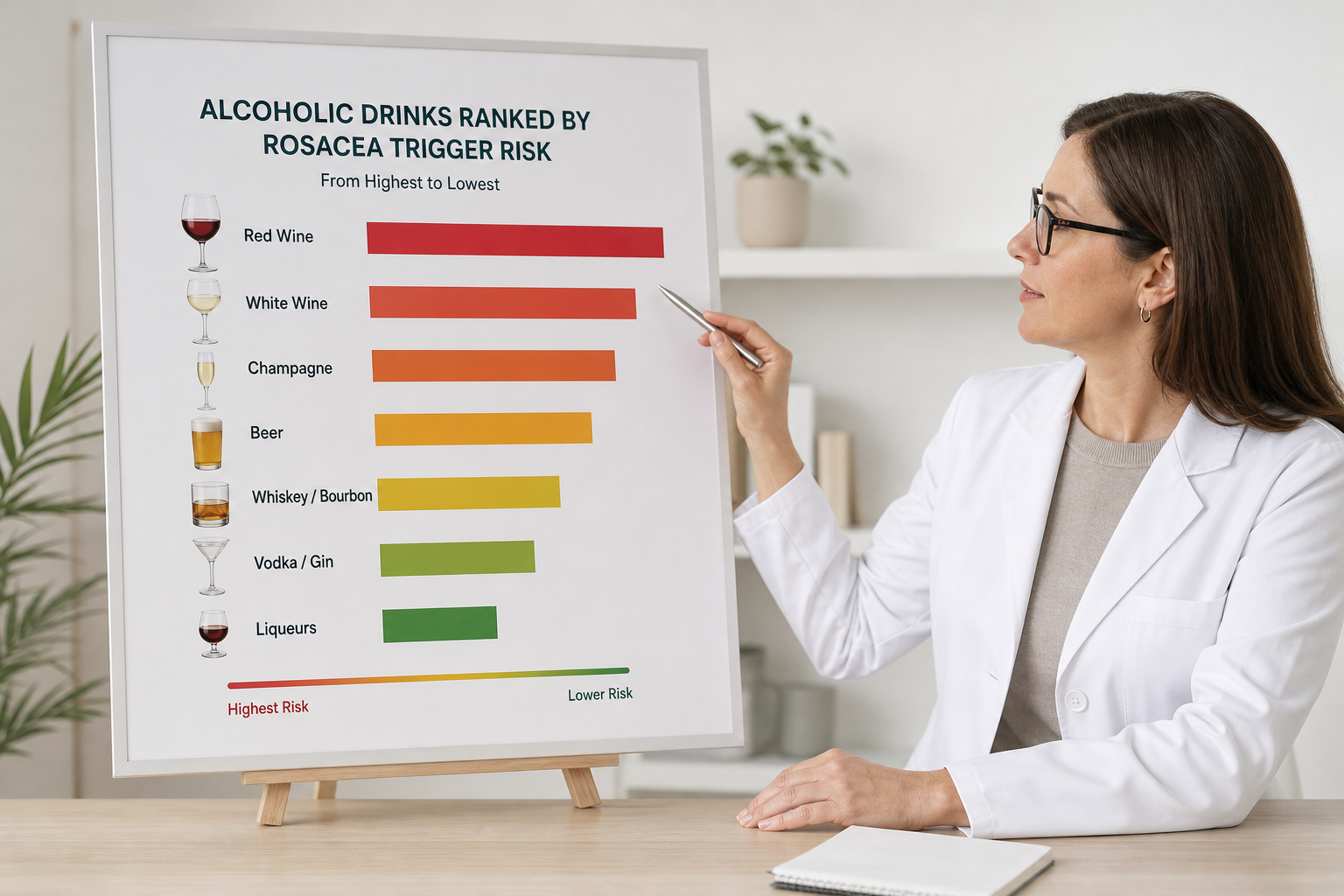
Not all alcoholic drinks carry equal trigger risk. The combination of ethanol content, histamine levels, tyramine, sulfites, and fermentation byproducts known as congeners determines how likely a particular drink is to provoke a rosacea flare-up. The following table summarizes the relative risk of common alcoholic beverages.
| Drink | Key Trigger Compounds | Relative Rosacea Risk | Notes |
|---|---|---|---|
| Red wine | Ethanol, histamine, tyramine, sulfites, DAO inhibition | Highest | Named top alcohol trigger by National Rosacea Society surveys; multiple simultaneous mechanisms |
| White wine | Ethanol, sulfites, DAO inhibition | High | Lower histamine than red wine but still a significant trigger; high sulfite content |
| Champagne / sparkling wine | Ethanol, histamine, sulfites, carbonation | High | Carbonation may accelerate alcohol absorption |
| Beer | Ethanol, histamine, tyramine, congeners | Moderate–High | Fermentation produces histamine; darker beers generally higher risk than pale lagers |
| Whiskey / bourbon / rum | Ethanol, congeners, acetaldehyde | Moderate | Aged spirits contain more congeners; lower histamine than wine |
| Vodka / gin | Ethanol, minimal congeners | Lower (but not low) | Lowest histamine among common spirits; still a vasodilator via ethanol |
| Liqueurs | Ethanol, sugar, variable additives | Variable | Lower prevalence as a trigger in surveys; sugar content may compound dehydration |
Red wine rosacea is the most widely documented pattern. The National Rosacea Society has consistently identified red wine as the single most commonly reported alcohol trigger across patient surveys, and the biochemistry supports this: a single glass combines ethanol-driven vasodilation, high histamine content, tyramine, sulfites, and DAO inhibition into what researchers sometimes describe as a “triple mechanism” trigger. Clear spirits such as vodka or gin represent a lower-histamine alcohol option, but they are not trigger-free — ethanol alone is sufficient to cause vasodilation and flushing in rosacea-prone skin.
How Much Alcohol Triggers a Flare?
The threshold for triggering a rosacea flare-up varies considerably between individuals, but survey data from the National Rosacea Society paints a striking picture of how sensitive many patients are. Approximately 31% of respondents reported flaring with just one drink, another 31% reported flaring with half a drink, and around 15% experienced a reaction with only a sip or two. These figures suggest that for a substantial proportion of rosacea patients, there is no truly “safe” amount of alcohol — only a lower-risk choice of drink combined with careful management of other factors.
Individual variability is real and significant. Some people with rosacea tolerate occasional moderate drinking with minimal impact on their skin, while others find that even trace amounts reliably provoke a flare. Factors that influence personal threshold include rosacea subtype, baseline skin sensitivity, DAO enzyme activity, overall histamine load from diet, and whether other triggers are present simultaneously. This variability is why a rosacea diary — a systematic record of drinks consumed, foods eaten, environmental conditions, and skin response — is one of the most clinically useful tools for identifying personal patterns.
Trigger Stacking: Why Context Matters as Much as the Drink
One of the most underappreciated aspects of alcohol and rosacea is the concept of trigger stacking — the way that combining multiple triggers simultaneously can produce a flare far more severe than any single trigger would cause alone. Alcohol consumed in a hot environment, alongside spicy food, after sun exposure, or during a period of emotional stress does not simply add these effects together; the interaction between vasodilatory stimuli can amplify the overall inflammatory response significantly.
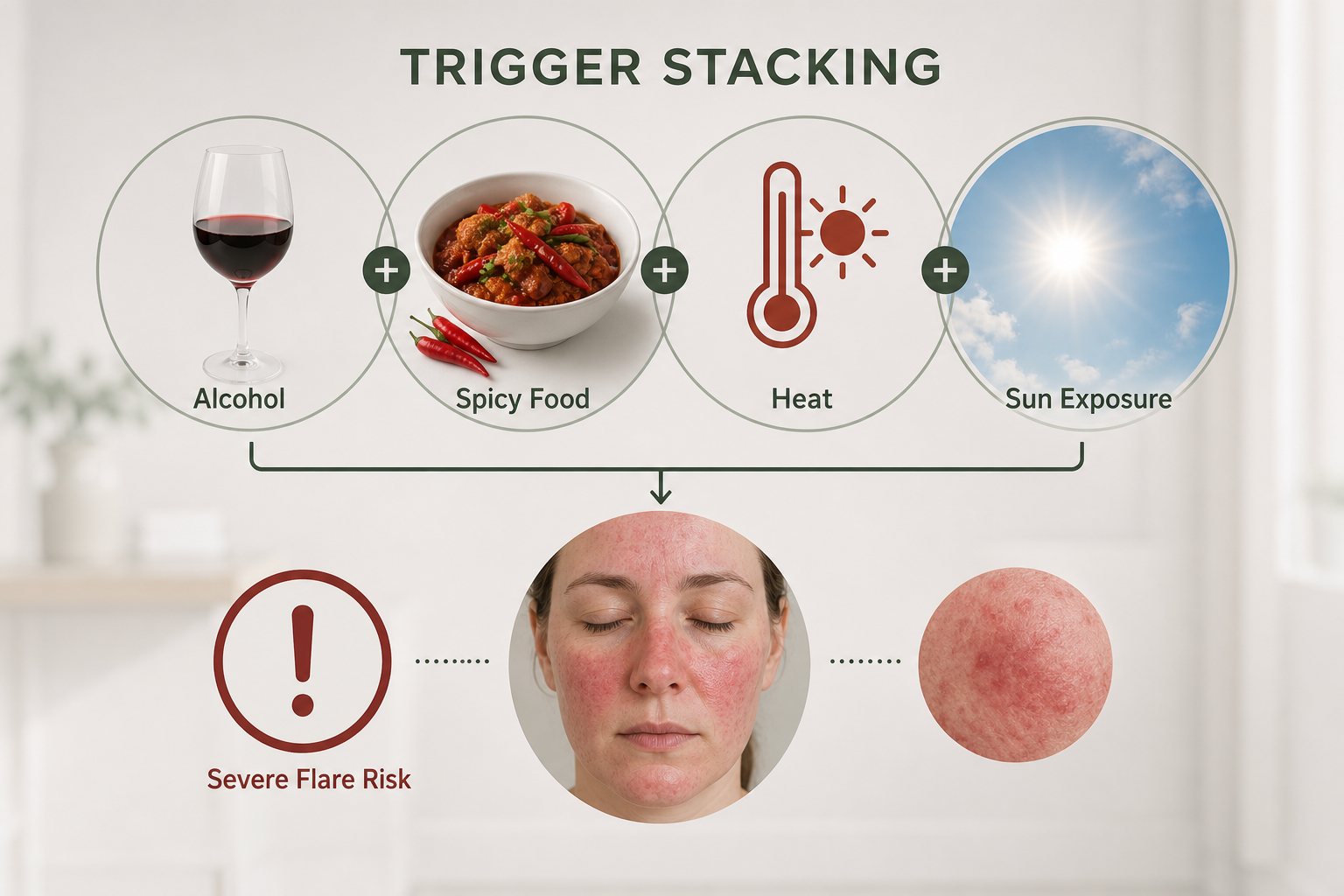
A practical example: drinking red wine at an outdoor summer event while eating spicy food combines ethanol, histamine, tyramine, heat, UV exposure, and potentially exercise-related temperature elevation into a single occasion. Each of these is an established rosacea trigger independently. Together, they can provoke a prolonged, intense flare that takes days to settle. Understanding trigger stacking helps explain why some people find alcohol manageable in certain contexts but not others — it is not always the drink alone that determines the outcome. Avoiding the combination of alcohol with other known personal triggers is often more effective than focusing solely on the type or quantity of drink consumed.
Alcohol Flush Reaction vs. Rosacea: An Important Distinction
Facial redness after drinking does not automatically indicate rosacea. The alcohol flush reaction — sometimes called Asian flush — is a genetically determined condition caused by a deficiency of the enzyme aldehyde dehydrogenase 2 (ALDH2). People with this variant accumulate acetaldehyde more rapidly after drinking, producing intense facial flushing, nausea, and sometimes a rapid heartbeat. This reaction is distinct from rosacea: it occurs in people without the condition, it is caused by a specific genetic variant rather than chronic skin inflammation, and it does not involve the same vascular hyperreactivity or immune mechanisms that characterize rosacea.
The distinction matters clinically because the management approach differs. Someone experiencing alcohol flush reaction without rosacea does not have a chronic inflammatory skin condition requiring dermatological treatment. Conversely, someone with rosacea who also has reduced ALDH2 activity may experience particularly severe reactions to alcohol because both mechanisms are operating simultaneously. If you are uncertain whether your flushing after drinking represents rosacea, alcohol intolerance, or another condition, a dermatologist can assess your skin and history to clarify the diagnosis.
Rosacea Subtypes and Alcohol Sensitivity
Rosacea is not a single uniform condition. Dermatologists recognize four main subtypes: erythematotelangiectatic rosacea (characterized by persistent facial redness and visible blood vessels), papulopustular rosacea (with acne-like breakouts alongside redness), phymatous rosacea (involving skin thickening, most commonly on the nose), and ocular rosacea (affecting the eyes). Alcohol as a trigger is most directly relevant to erythematotelangiectatic rosacea, where vascular reactivity is the dominant feature and facial flushing is the primary symptom. Patients with this subtype tend to report the most pronounced and consistent responses to alcohol.
Those with papulopustular rosacea may also find that alcohol worsens their inflammatory lesions, partly through the histamine and mast cell degranulation pathways. The relationship between alcohol and phymatous or ocular subtypes is less well characterized in the literature, though chronic inflammation from any source is generally considered unhelpful for all rosacea subtypes. Discussing your specific subtype with a dermatologist can help clarify how much alcohol is likely to be contributing to your individual pattern of symptoms.
Topical Alcohol in Skincare: A Separate Concern
It is worth distinguishing between ingested alcohol and topical alcohol in skincare products, as both can affect rosacea-prone skin but through different mechanisms. Many toners, astringents, and some serums contain denatured alcohol (ethanol or isopropyl alcohol) as a solvent or preservative. Applied directly to rosacea-prone skin, these ingredients can disrupt the skin barrier, increase transepidermal water loss, and provoke irritation and redness — independently of any alcohol consumed by mouth.
Patients managing rosacea are generally advised to avoid skincare products containing high concentrations of alcohol, particularly in leave-on formulations. Checking ingredient lists for ethanol, alcohol denat., isopropyl alcohol, or SD alcohol near the top of the list is a practical step. This is a separate consideration from dietary alcohol management, but both are relevant to overall rosacea control.
Practical Strategies for Managing Alcohol as a Rosacea Trigger
Complete avoidance of alcohol is the most reliable way to eliminate it as a trigger, but it is not the only option, and it may not be realistic or desirable for every patient. The following evidence-informed strategies may help reduce flare risk for those who choose to drink occasionally.
- Keep a rosacea diary. Record what you drink, how much, the environmental conditions, foods consumed, and your skin’s response over the following 24–48 hours. Patterns often emerge within a few weeks that reveal your personal threshold and highest-risk combinations.
- Choose lower-histamine spirits. If wine consistently triggers flares, switching to a clear spirit such as vodka or gin mixed with a non-alcoholic, non-spicy mixer may reduce — though not eliminate — the histamine component of the trigger.
- Eat before and during drinking. Food slows alcohol absorption, reducing peak blood ethanol levels and potentially moderating the vasodilatory response.
- Alternate with water. Staying hydrated helps counteract alcohol’s dehydrating effect and may reduce the intensity of flushing. Dehydration itself can worsen rosacea symptoms.
- Drink slowly and in small quantities. Lower intake over a longer period produces lower peak ethanol levels, which may reduce the severity of vasodilation.
- Avoid trigger stacking. If you choose to drink, minimize other simultaneous triggers — avoid spicy food, hot environments, direct sun exposure, and strenuous activity on the same occasion.
- Consider alcohol-free alternatives. Dealcoholized wines, low-ABV beers, and well-crafted mocktails have improved considerably in quality and are increasingly available in social settings. These options remove the ethanol-driven vasodilation mechanism entirely, though some dealcoholized wines may still contain histamine.
- Discuss medication interactions with your doctor. Metronidazole, a commonly prescribed topical and oral treatment for rosacea, can interact with alcohol — producing nausea, flushing, and rapid heartbeat in some patients. If you are taking oral metronidazole for rosacea, your prescribing doctor should advise you on alcohol avoidance during the course of treatment.
Will Stopping Alcohol Cure Rosacea?
Stopping alcohol will not cure rosacea, but it may produce meaningful improvements for many patients. Because rosacea has multiple causes and triggers beyond alcohol — including UV exposure, temperature extremes, certain foods, stress, and genetic factors — eliminating one trigger reduces the overall burden on an already reactive skin system without resolving the underlying condition.
What patients who reduce or stop drinking often report is a decrease in the frequency and severity of flares, improved baseline skin hydration, and a reduction in persistent background redness over time. These are clinically meaningful improvements even if rosacea remains present. For patients whose alcohol consumption has been heavy or chronic, the gut-skin axis benefits of reduced drinking — including improved microbiome diversity and reduced systemic inflammation — may contribute to gradual skin improvement over weeks to months. Realistic expectations are important: rosacea management is typically a long-term process involving trigger avoidance alongside appropriate medical treatment, not a condition that resolves with a single lifestyle change.
Frequently Asked Questions
Is there any alcohol that is completely safe for rosacea?
No alcoholic drink is completely safe for rosacea-prone skin, because ethanol itself causes vasodilation regardless of the drink’s histamine or sulfite content. However, clear spirits such as vodka or gin tend to contain fewer additional trigger compounds than red wine or dark beers, making them a relatively lower-risk choice for some patients. Individual response varies, and a rosacea diary is the most reliable way to identify your personal tolerance.
Why does red wine seem to trigger rosacea more than other drinks?
Red wine combines several trigger mechanisms simultaneously: ethanol-driven vasodilation, high histamine content from fermentation, tyramine, sulfites, and inhibition of the DAO enzyme that normally breaks down histamine. This combination of biogenic amines and DAO inhibition makes red wine particularly potent as a rosacea trigger — more so than drinks that rely on ethanol alone.
What is the difference between alcohol flush reaction and rosacea?
Alcohol flush reaction is caused by a genetic deficiency of the ALDH2 enzyme, which leads to acetaldehyde accumulation and intense flushing after drinking. It is not a skin condition and does not involve chronic inflammation or vascular hyperreactivity. Rosacea is a chronic inflammatory skin condition that can be triggered by alcohol but exists independently of drinking. The two can coexist, but they are distinct conditions with different causes and management approaches.
Can alcohol make rosacea permanently worse over time?
Chronic heavy alcohol use may contribute to progressive worsening of rosacea through sustained vascular damage, gut microbiome dysbiosis, and ongoing systemic inflammation. Repeated dilation of superficial blood vessels over time may contribute to the development of telangiectasia — permanently visible broken blood vessels — in rosacea-prone skin. This is distinct from acute flares and represents a longer-term concern for patients who drink regularly and heavily.
Should I tell my dermatologist about my alcohol consumption?
Yes. Alcohol consumption is directly relevant to rosacea management, both as a trigger and because of potential interactions with medications such as oral metronidazole. Your dermatologist can help you understand how alcohol fits into your overall trigger profile and advise on any medication-specific precautions.
Does drinking water after alcohol help prevent a rosacea flare?
Staying hydrated may help moderate the dehydrating effect of alcohol and could reduce the intensity of flushing for some patients, but it does not neutralize the vasodilatory or histamine-related mechanisms that drive a rosacea flare. Hydration is a useful harm-reduction measure rather than a reliable preventive strategy on its own.
Managing Rosacea and Alcohol: What a Realistic Approach Looks Like
Alcohol is one of the most biologically plausible and consistently reported rosacea triggers, and the mechanisms behind its effects — vasodilation, histamine release, acetaldehyde accumulation, DAO inhibition, and neurogenic inflammation — are well supported by dermatological research. For patients with rosacea, understanding these mechanisms is more useful than a blanket instruction to avoid all alcohol, because it allows for informed, personalized decisions about risk.
The most practical approach combines systematic trigger identification through a rosacea diary, thoughtful drink selection that minimizes histamine and congener load, awareness of trigger stacking, and open communication with a dermatologist about both lifestyle factors and medical treatment options. Rosacea is a manageable condition for most patients, and alcohol management is one component of a broader strategy that may also include topical treatments, sun protection, and skincare adjustments. If facial flushing, persistent erythema, or rosacea flares are affecting your quality of life, a consultation with a qualified dermatologist is the most reliable next step toward an individualized management plan.
