
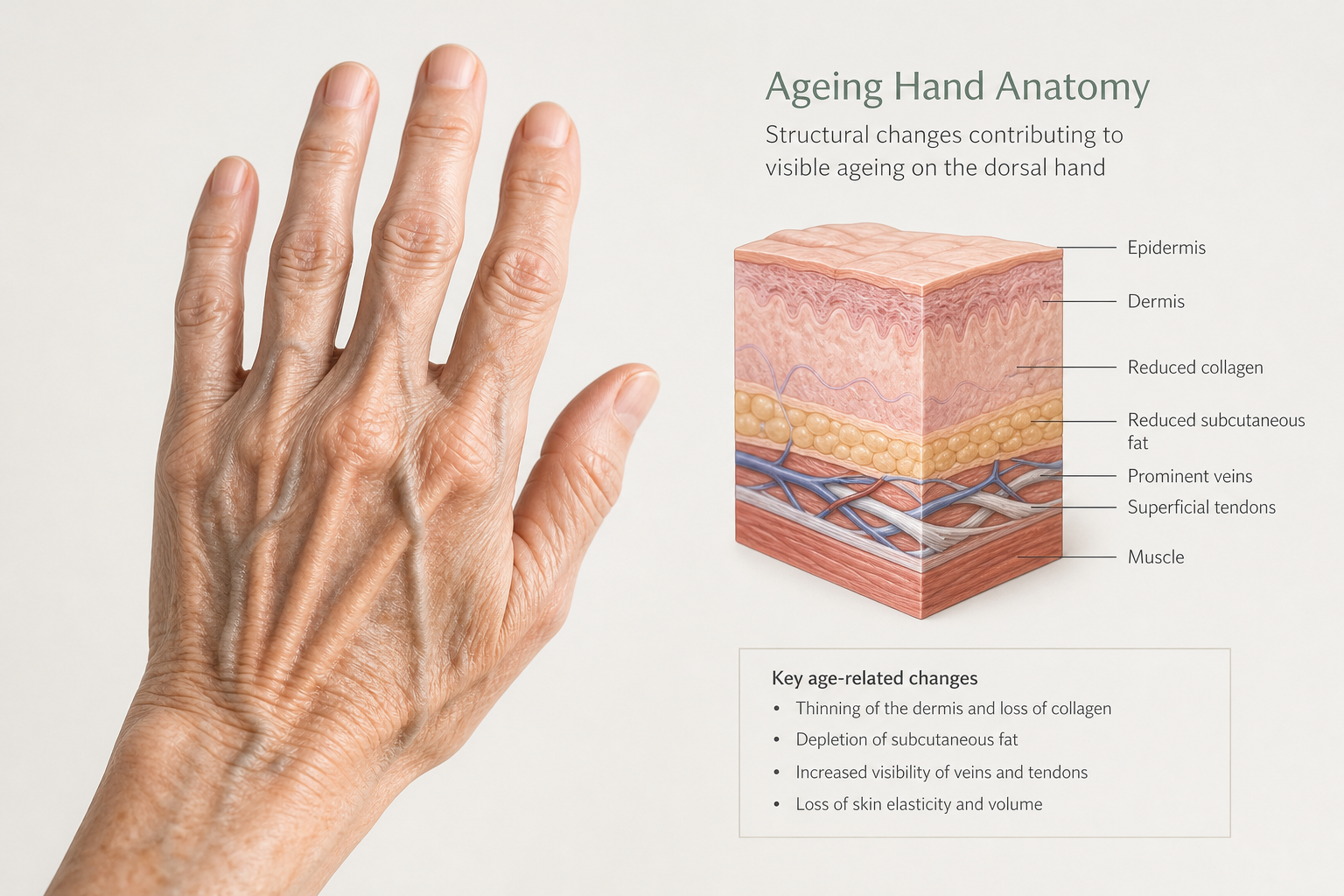

The hands are one of the most reliable indicators of biological age, yet they receive far less protective attention than the face. Constant sun exposure, frequent washing, and the natural loss of collagen and subcutaneous fat combine to produce wrinkles, crepey texture, prominent veins, and age spots that can make hands look significantly older than the rest of the body. Fortunately, a range of evidence-supported treatments — from targeted daily skincare to clinical procedures — can meaningfully improve the appearance of ageing hands. This guide explains why hands age the way they do, which treatments are available, what realistic results look like, and how to decide which approach may suit your concerns.
Key Takeaways
- Hand ageing is driven by both intrinsic ageing (collagen and fat loss over time) and photoaging (UV-induced damage), making prevention and treatment a two-part strategy.
- Daily broad-spectrum SPF and a retinol-based moisturiser are the most evidence-supported at-home steps for slowing further deterioration.
- Dermal fillers such as Radiesse and Restylane Lyft are FDA-approved for hand rejuvenation and remain the most effective clinical option for volume restoration.
- Combination treatment — for example, filler followed by laser or IPL — typically delivers better outcomes than any single procedure alone.
- A personalised treatment plan developed with a board-certified dermatologist or qualified aesthetic practitioner is essential, as the right approach depends on which signs of ageing are most prominent.
Why Do Hands Age Faster Than the Face?
The dorsal hand — the back of the hand — has structurally thinner skin than the face and contains far fewer sebaceous (oil) glands. This means it produces less natural moisture, loses water more readily through a process called transepidermal water loss (TEWL), and has less inherent protection against environmental stressors. The result is that hand skin dries out faster, becomes more fragile earlier, and shows the effects of intrinsic ageing more visibly.
Photoaging compounds this significantly. Hands are almost constantly exposed to UV radiation — including through car windows while driving, a source of cumulative UV damage that is frequently overlooked. UV exposure triggers a cascade in which reactive oxygen species (ROS) activate enzymes called matrix metalloproteinases (MMPs) that degrade collagen and elastin fibres. Over years, this produces the characteristic thinning, wrinkling, and solar lentigines (flat brown spots commonly called age spots or liver spots) seen on sun-damaged hands.
Subcutaneous fat loss accelerates the visible ageing of hands further. As the fat padding beneath the skin diminishes with age, the underlying veins, tendons, and bony structures become increasingly prominent. This volume depletion is a key reason hands can look skeletal even when the skin surface itself is relatively smooth. Rapid weight loss — including that associated with GLP-1 receptor agonist medications used for weight management — can accelerate this process noticeably, making hand volume loss an emerging concern for a growing group of patients.
Signs of Ageing Hands: What to Look For
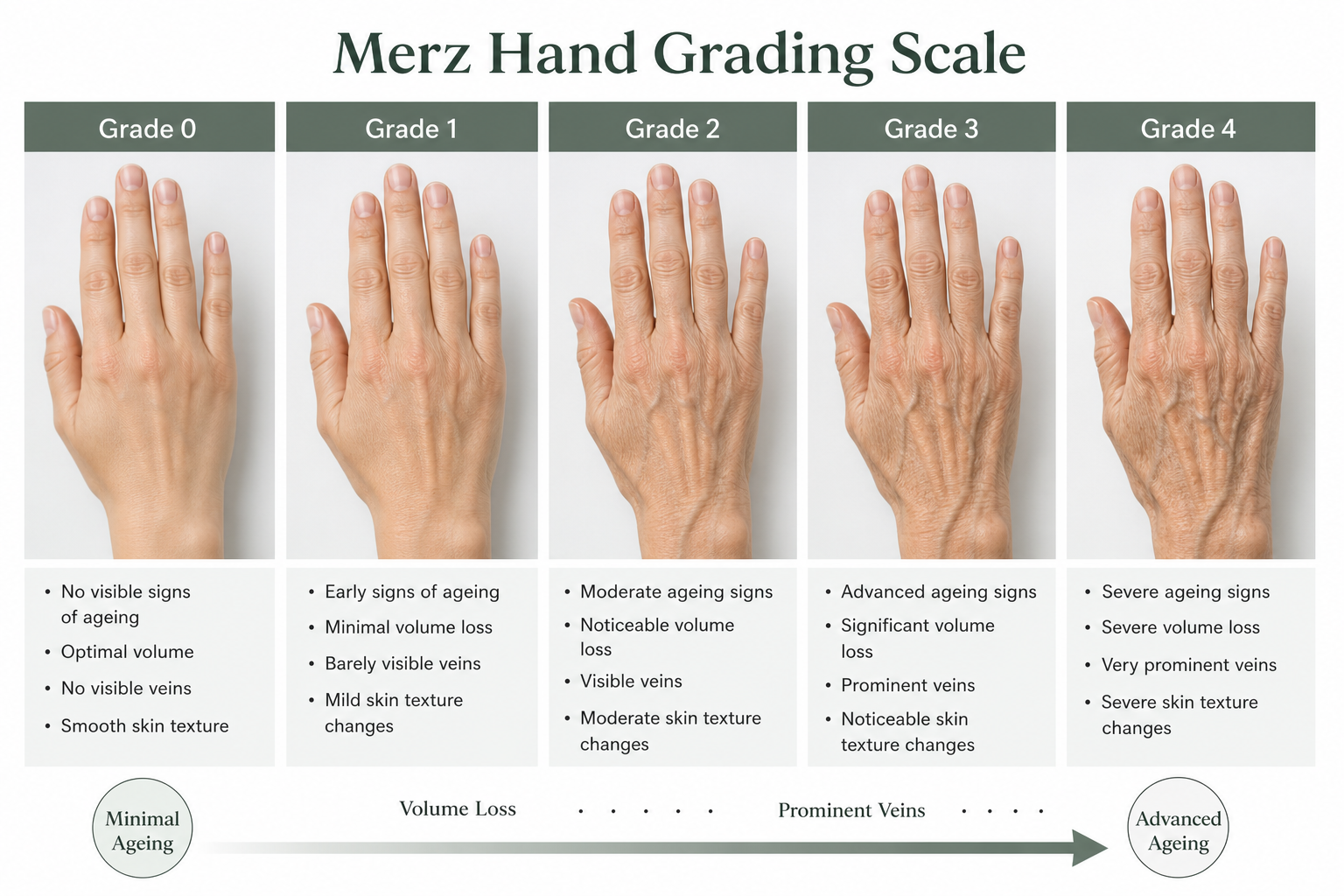
Recognising which signs are most prominent helps guide treatment selection. The Merz Hand Grading Scale, used in clinical practice, rates hand ageing from Grade 0 (no visible veins or tendons, full volume) to Grade 4 (very severe volume loss with very prominent veins, tendons, and bony structures). Understanding where your hands fall on this spectrum — even informally — helps set realistic expectations before a consultation.
- Fine lines and wrinkles on the dorsal hand, particularly visible when the skin is pinched or the hand is relaxed
- Crepey texture — thin, papery skin that crinkles easily and lacks resilience
- Volume loss causing prominent veins, tendons, and knuckles
- Age spots (solar lentigines) — flat, brown or tan patches caused by cumulative UV exposure
- Uneven skin tone and dullness from photoaging and reduced cell turnover
- Skin laxity — loose, sagging skin that no longer sits tightly over the hand’s structure
- Dryness and rough texture from reduced oil production and increased TEWL
It is also worth noting that persistent rough, scaly patches on sun-exposed hands may represent actinic keratosis — a pre-cancerous skin lesion that warrants medical assessment rather than cosmetic treatment alone. If you notice lesions that bleed, crust, or fail to resolve, a dermatologist should evaluate them before any aesthetic procedure is considered.
At-Home Care: What Topicals Can and Cannot Do
A consistent daily skincare routine can slow further deterioration and modestly improve skin texture and tone. However, topical products cannot reverse significant volume loss, eliminate prominent veins, or remove established solar lentigines. Understanding this distinction helps set realistic expectations and avoids disappointment.
The Most Important Daily Steps
Broad-spectrum SPF is the single most impactful preventive measure. Applying a broad-spectrum SPF 30–50+ sunscreen to the hands every morning — and reapplying after washing — significantly reduces ongoing photoaging. This step is consistently cited as the foundation of any hand rejuvenation strategy, yet it is routinely skipped because hands are not thought of as a sun-exposed area in the same way as the face.
Retinol (a vitamin A derivative) stimulates collagen production and accelerates cell turnover, gradually improving skin texture and reducing the appearance of fine lines. On the thinner skin of the hands, it is advisable to start with a low concentration (0.025–0.05%) applied two to three nights per week, increasing frequency as tolerance builds. Retinol can cause initial dryness and sensitivity, so pairing it with a ceramide-rich moisturiser is important. Prescription-strength retinoids offer greater potency but require clinical supervision.
Moisturisers containing ceramides, glycerin, hyaluronic acid, and shea butter help restore the skin barrier, reduce TEWL, and improve the feel and appearance of dry, rough skin. These ingredients do not rebuild lost collagen or fat, but they meaningfully improve comfort and surface texture with consistent use.
Vitamin C applied topically acts as an antioxidant, helping to neutralise UV-induced free radical damage and brighten uneven skin tone. A stable vitamin C serum (L-ascorbic acid at 10–20%) applied in the morning under sunscreen can complement retinol used at night.
Niacinamide (vitamin B3) helps reduce hyperpigmentation and supports the skin barrier. It is well tolerated and can be used alongside most other actives, making it a practical addition for those concerned about uneven tone.
Overnight hand masks — applied generously and covered with cotton gloves — can deliver an intensive moisture boost and improve the penetration of active ingredients. Wearing protective gloves during cleaning, gardening, and dishwashing reduces chemical and mechanical damage that accelerates skin ageing.
Professional Treatments for Hand Rejuvenation
Clinical treatments address concerns that topical products cannot meaningfully resolve: significant volume loss, established solar lentigines, prominent veins, and marked skin laxity. The most effective approach is usually a combination treatment tailored to the individual’s specific pattern of ageing.
Dermal Fillers for Volume Restoration
Dermal fillers are the most widely used and best-evidenced clinical treatment for hand rejuvenation, particularly for volume loss. Two products are FDA-approved specifically for hand rejuvenation: Radiesse (calcium hydroxyapatite, CaHA) and Restylane Lyft (a hyaluronic acid filler). Both work by physically restoring lost volume beneath the skin, reducing the prominence of veins and tendons and creating a smoother, fuller appearance.
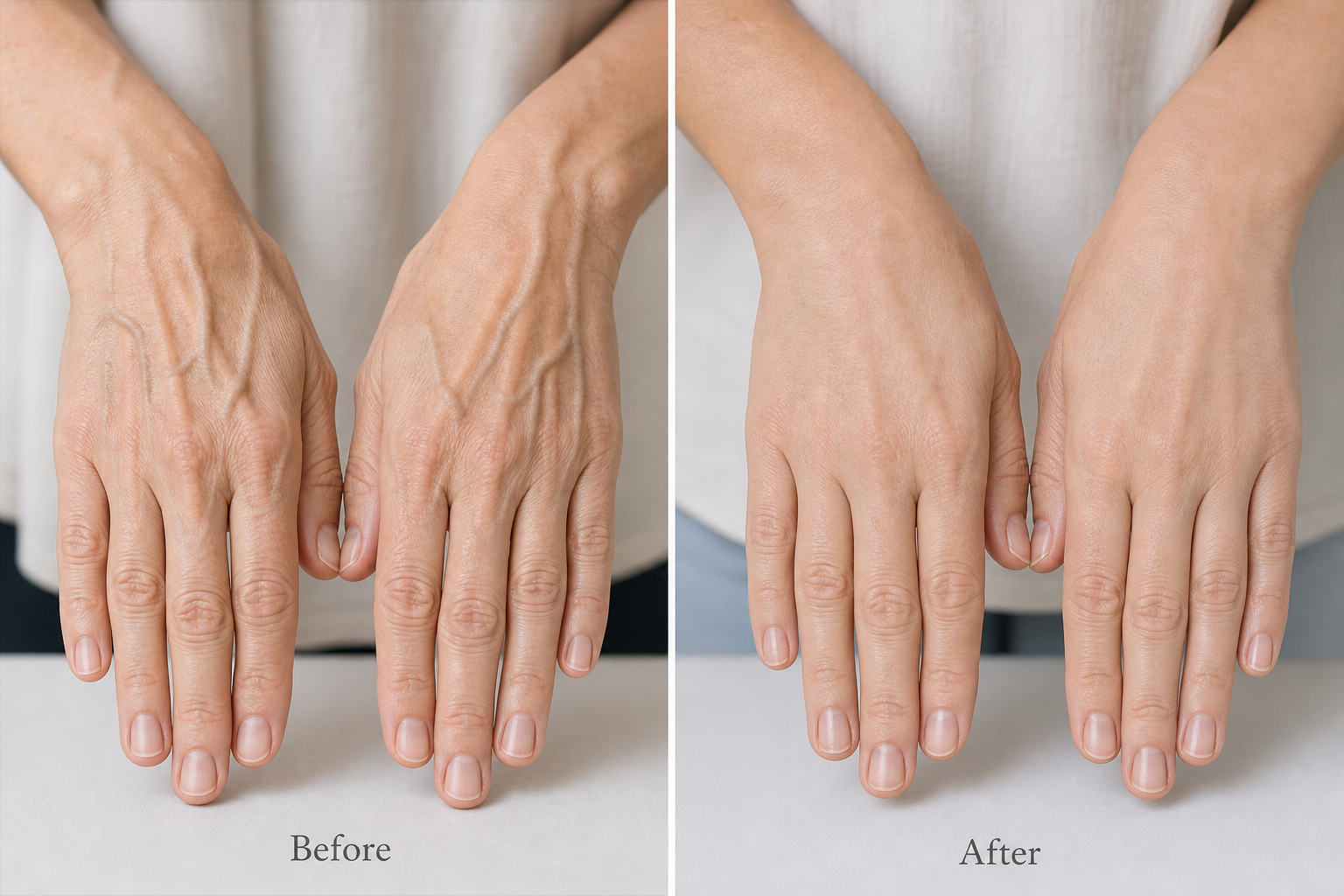
Radiesse functions both as an immediate volumiser and as a collagen stimulator: the CaHA microspheres gradually stimulate the body’s own collagen production over several months, providing results that may last approximately 12–15 months. Restylane Lyft, as a hyaluronic acid filler, provides immediate volume restoration with results typically lasting 6–9 months before the material is naturally broken down. Other hyaluronic acid fillers such as Juvederm may also be used off-label for the hands, depending on the practitioner’s assessment.
Sculptra (poly-L-lactic acid) is another collagen stimulator used in some clinics for hand rejuvenation. It works more gradually than immediate-volume fillers, stimulating collagen over a series of sessions, with results developing over several months. Evidence for its use in the hands is less extensive than for Radiesse or Restylane Lyft.
Filler treatments for the hands are typically performed with a cannula (a blunt-tipped needle) to reduce bruising and the risk of vascular complications. Mild swelling and bruising are common in the days following treatment. Results are visible almost immediately, though final results settle over one to two weeks.
Skin Boosters and Profhilo
Skin booster treatments such as Profhilo and Restylane Skinboosters deliver highly concentrated hyaluronic acid into the skin through a series of small injections. Unlike volumising fillers, skin boosters are designed to improve skin hydration, elasticity, and overall quality rather than to restore structural volume. They may be particularly useful for patients with crepey texture and skin laxity who have mild rather than severe volume loss. Multiple sessions are typically required, and results generally last around six months.
Laser and Light-Based Treatments
Laser and light-based treatments are the primary clinical option for addressing solar lentigines, uneven skin tone, and surface texture on the hands.
IPL (Intense Pulsed Light) photofacial treatments target melanin in age spots and can significantly reduce the appearance of solar lentigines with minimal downtime. Multiple sessions are usually required, and results depend on the depth and density of pigmentation. IPL also has a mild collagen-stimulating effect that may improve overall skin texture over time.
Non-ablative fractional laser treatments such as Fraxel Dual or Clear + Brilliant create microscopic columns of thermal injury in the skin, stimulating collagen remodelling without removing the entire skin surface. This approach can improve skin texture, fine lines, and mild pigmentation with a recovery period of a few days to one week. Results develop gradually over several months as new collagen forms.
Ablative laser resurfacing (such as CO2 or Er:YAG laser) removes the outer skin layers more aggressively, producing more dramatic improvements in texture and pigmentation but requiring a longer recovery period of one to two weeks or more. It is less commonly used on the hands than on the face due to the hands’ slower healing capacity.
Picosecond lasers (such as PicoSure or PicoWay) deliver ultra-short pulses of energy that shatter pigment particles with less thermal damage to surrounding tissue, making them a useful option for stubborn solar lentigines with relatively low downtime.
Chemical Peels and Resurfacing
Chemical peels using glycolic acid, lactic acid, or trichloroacetic acid (TCA) can improve skin texture, tone, and mild pigmentation on the hands. Superficial peels require little downtime but produce modest results; medium-depth TCA peels offer more significant improvement but require a recovery period of one to two weeks. Chemical peels are generally less precise than laser treatments for targeting discrete age spots but can be a cost-effective option for overall skin quality improvement.
Microdermabrasion offers gentle mechanical exfoliation that may improve surface texture and dullness with no downtime, though results are subtle and multiple sessions are needed.
Regenerative Treatments
PRP (Platelet-Rich Plasma) therapy involves drawing a small amount of the patient’s own blood, processing it to concentrate growth factors, and injecting it into the hands. PRP may stimulate collagen production and improve skin quality, though the evidence base for its use specifically in hand rejuvenation remains limited and results are variable. It is sometimes combined with other treatments such as microneedling or laser.
Mesotherapy involves microinjections of a customised cocktail of vitamins, minerals, hyaluronic acid, and other active ingredients into the skin. Evidence for mesotherapy in hand rejuvenation is limited, and results are generally modest compared to filler or laser treatments.
Treatments for Prominent Veins
Prominent hand veins are primarily a consequence of volume loss rather than the veins themselves enlarging. Restoring volume with dermal fillers often reduces their visibility significantly. For patients in whom veins remain prominent after volume restoration, sclerotherapy (injection of a solution that causes the vein to collapse) or laser vein removal may be considered, though these are less commonly performed on the hands than on the legs and require specialist assessment.
Surgical Options
Fat grafting (lipofilling) involves harvesting fat from another area of the body and transferring it to the hands to restore volume. It offers the longest-lasting results of any volume restoration technique, as a proportion of the transferred fat integrates permanently. However, it requires a minor surgical procedure under local or general anaesthesia, carries a longer recovery period, and results can be variable due to unpredictable fat survival rates. It is generally considered when non-surgical options have been exhausted or when very significant volume restoration is needed.
Combination Treatment: Why Sequencing Matters
Most patients with moderate to advanced hand ageing benefit most from a combination treatment approach rather than a single procedure. A common and logical sequence is to address volume loss with dermal fillers first, establishing a structural baseline, and then to treat pigmentation and surface texture with IPL or laser in a subsequent session. Performing laser treatment on a hand that has already had volume restored tends to produce more aesthetically balanced results, as the skin sits more naturally over the underlying structure.
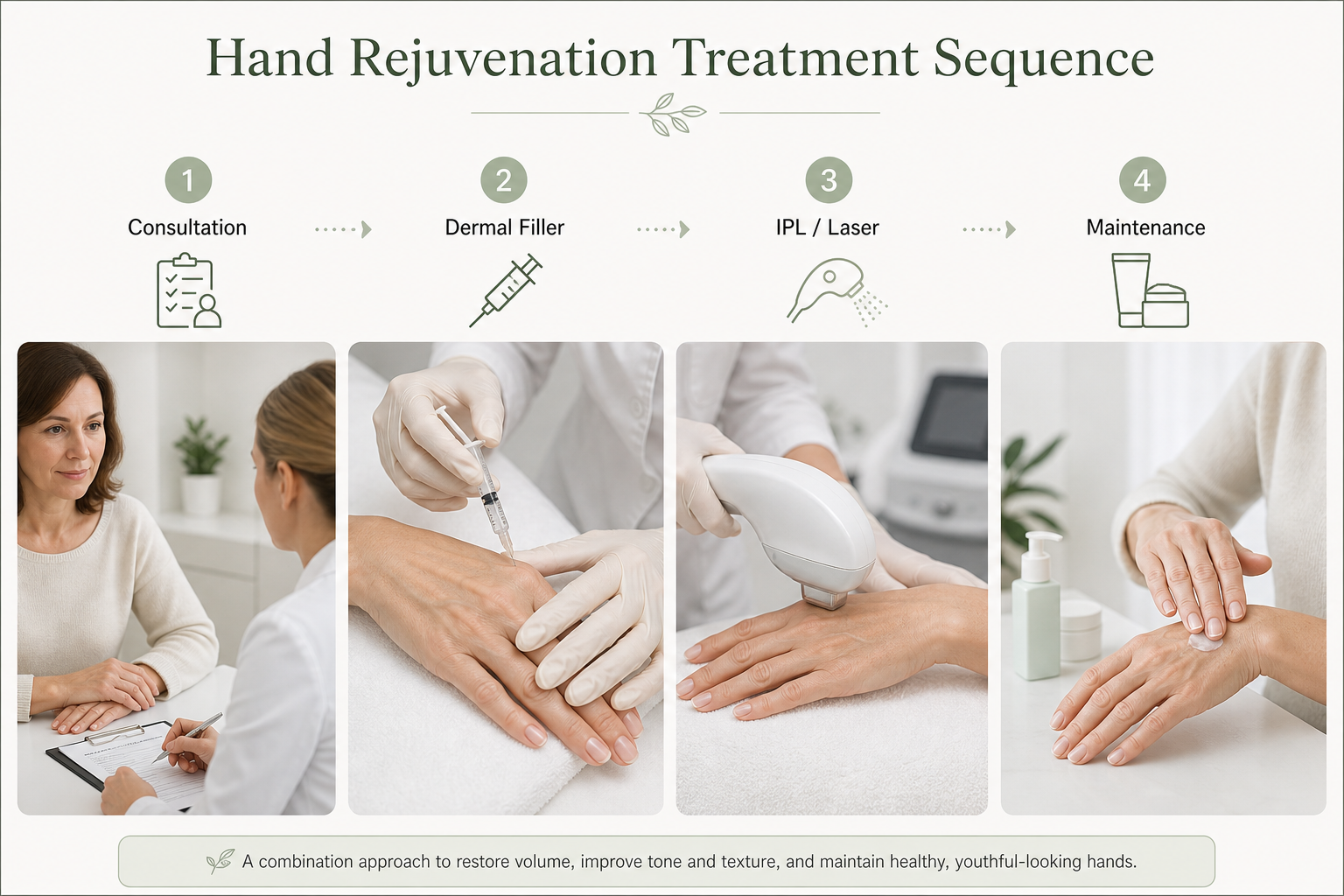
Combining a collagen stimulator such as Radiesse with a non-ablative fractional laser, for example, addresses both the structural and surface dimensions of hand ageing simultaneously over a treatment course. A qualified practitioner will assess which concerns are most prominent and recommend a sequenced plan accordingly. Attempting to address all concerns in a single session is not always appropriate and may increase the risk of adverse effects.
Realistic Expectations and Limitations
Hand rejuvenation treatments can produce meaningful improvements, but they work within biological limits. Topical skincare can slow further ageing and modestly improve texture and tone; it cannot reverse established volume loss or eliminate prominent veins. Clinical treatments can restore volume, reduce age spots, and improve skin quality, but they do not stop the ageing process — maintenance treatments are required to sustain results over time.
Results vary between individuals depending on the degree of ageing, skin type, lifestyle factors, and the specific treatments chosen. Patients with very advanced volume loss and severe skin laxity may achieve improvement but are unlikely to achieve the appearance of significantly younger hands without surgical intervention. Honest discussion of realistic outcomes during a consultation is essential before committing to any treatment.
Frequently Asked Questions
What is the most effective treatment for hand wrinkles?
There is no single best treatment, as the most effective approach depends on which signs of ageing are most prominent. For volume loss and prominent veins, dermal fillers (particularly Radiesse or Restylane Lyft, both FDA-approved for hand rejuvenation) are the most evidence-supported option. For age spots and uneven tone, IPL or laser treatments are more appropriate. A combination treatment addressing multiple concerns typically produces the best overall result.
How long do hand filler results last?
Results from Restylane Lyft typically last approximately 6–9 months. Radiesse, which also acts as a collagen stimulator, may last 12–15 months. Fat grafting offers the longest-lasting results, with a proportion of transferred fat potentially persisting indefinitely, though fat survival rates vary. Maintenance treatments are required for all injectable options to sustain results.
Is hand rejuvenation treatment painful?
Most patients find hand filler treatments tolerable. Topical anaesthetic cream is typically applied before the procedure, and many fillers contain lidocaine (a local anaesthetic) within the formulation. Laser treatments may cause a sensation of heat or snapping; cooling devices are usually used to improve comfort. Discomfort levels vary between individuals and treatment types.
Can moisturiser get rid of hand wrinkles?
Moisturisers can improve the appearance of dry, rough skin and reduce the visibility of fine surface lines by hydrating the skin, but they cannot reverse structural changes such as collagen loss, subcutaneous fat depletion, or established solar lentigines. A moisturiser containing retinol, ceramides, and hyaluronic acid will produce better results than a basic emollient, but topical products have meaningful limits compared to clinical treatments.
What vitamin deficiency causes wrinkly hands?
Vitamin C deficiency impairs collagen synthesis, as vitamin C is an essential cofactor in collagen production. Vitamin A (retinol) deficiency reduces skin cell turnover and barrier function. B-vitamin deficiencies can also affect skin health. However, in most people with ageing hands, the primary causes are chronological ageing and UV damage rather than nutritional deficiency. A balanced diet rich in antioxidants, vitamin C, and protein supports skin health but is unlikely to reverse established ageing changes on its own.
Are hand rejuvenation treatments safe?
When performed by a qualified and experienced practitioner, hand rejuvenation treatments have a well-established safety profile. As with any injectable or energy-based treatment, risks exist — including bruising, swelling, infection, and, rarely, vascular complications with fillers. Choosing a board-certified dermatologist or appropriately trained aesthetic practitioner and disclosing your full medical history reduces these risks significantly.
How can I prevent my hands from ageing further?
Daily application of broad-spectrum SPF to the hands is the most impactful preventive step. Using a retinol-containing hand cream, wearing protective gloves during cleaning and gardening, avoiding prolonged UV exposure (including through car windows), staying well hydrated, and not smoking all contribute to slowing the rate of hand ageing over time.
Planning Your Hand Rejuvenation: Where to Start
If you are considering treatment for ageing hands, the most practical starting point is a consultation with a board-certified dermatologist or qualified aesthetic practitioner who can assess the specific pattern of ageing — volume loss, pigmentation, texture, or a combination — and recommend a personalised treatment plan. Bringing a clear sense of your priorities (for example, whether prominent veins or age spots bother you most) helps focus the conversation and ensures the proposed approach matches your goals.
For those not yet ready for clinical treatment, establishing a consistent daily routine with broad-spectrum SPF, a retinol-based product, and a ceramide-rich moisturiser is a meaningful and evidence-supported first step. These measures will not reverse significant ageing changes, but they will slow further deterioration and improve the baseline condition of the skin before any clinical treatment is considered. Hand rejuvenation is not a single event but an ongoing process — the most sustainable results come from combining good daily habits with appropriately timed clinical interventions.
